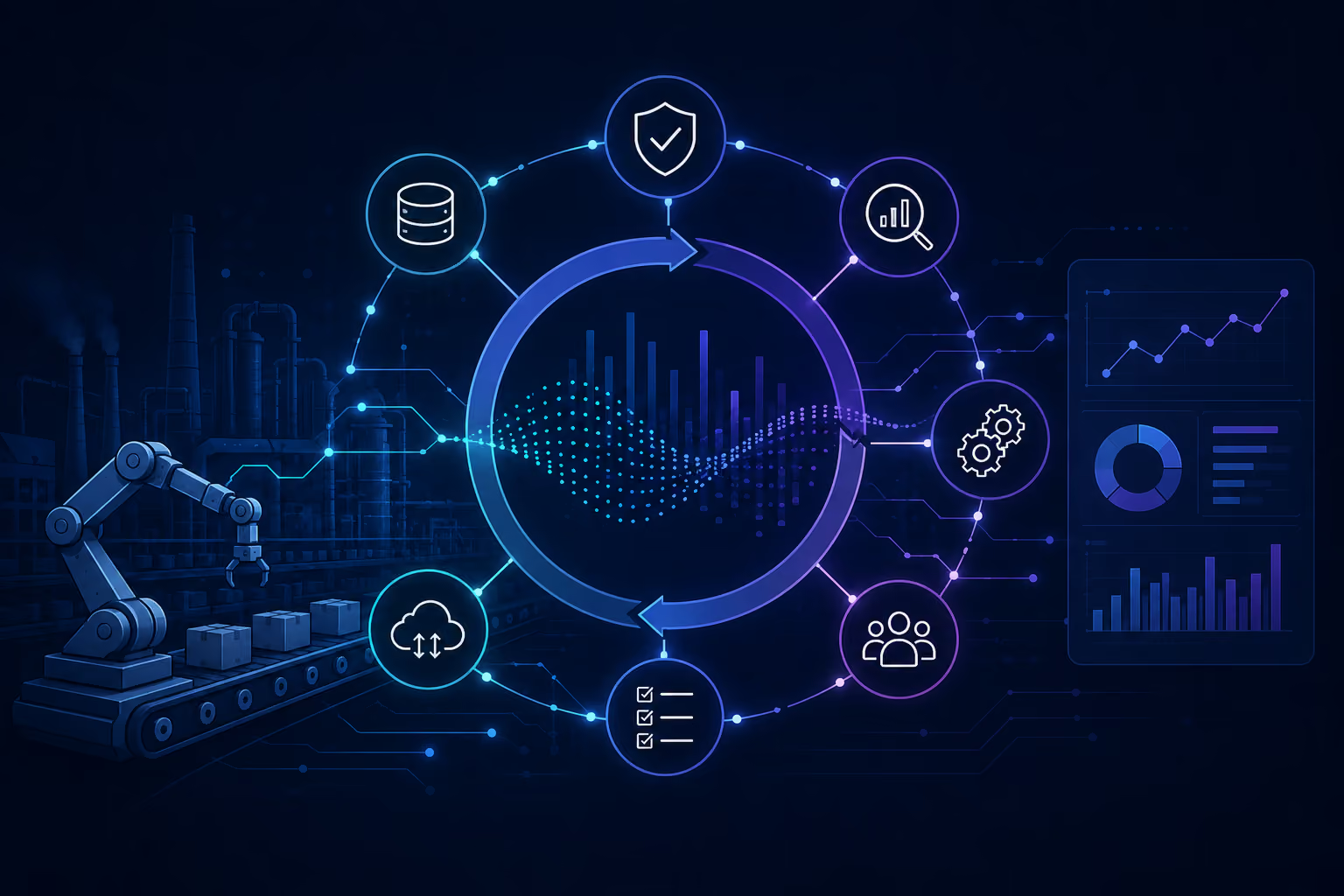

Brownfield IoT development is the practice of connecting existing industrial machinery, sensors, and control systems to modern data platforms without replacing the underlying equipment. It is the dominant path to predictive maintenance for most manufacturers, because the majority of production assets on the floor today were never built for connectivity in the first place.
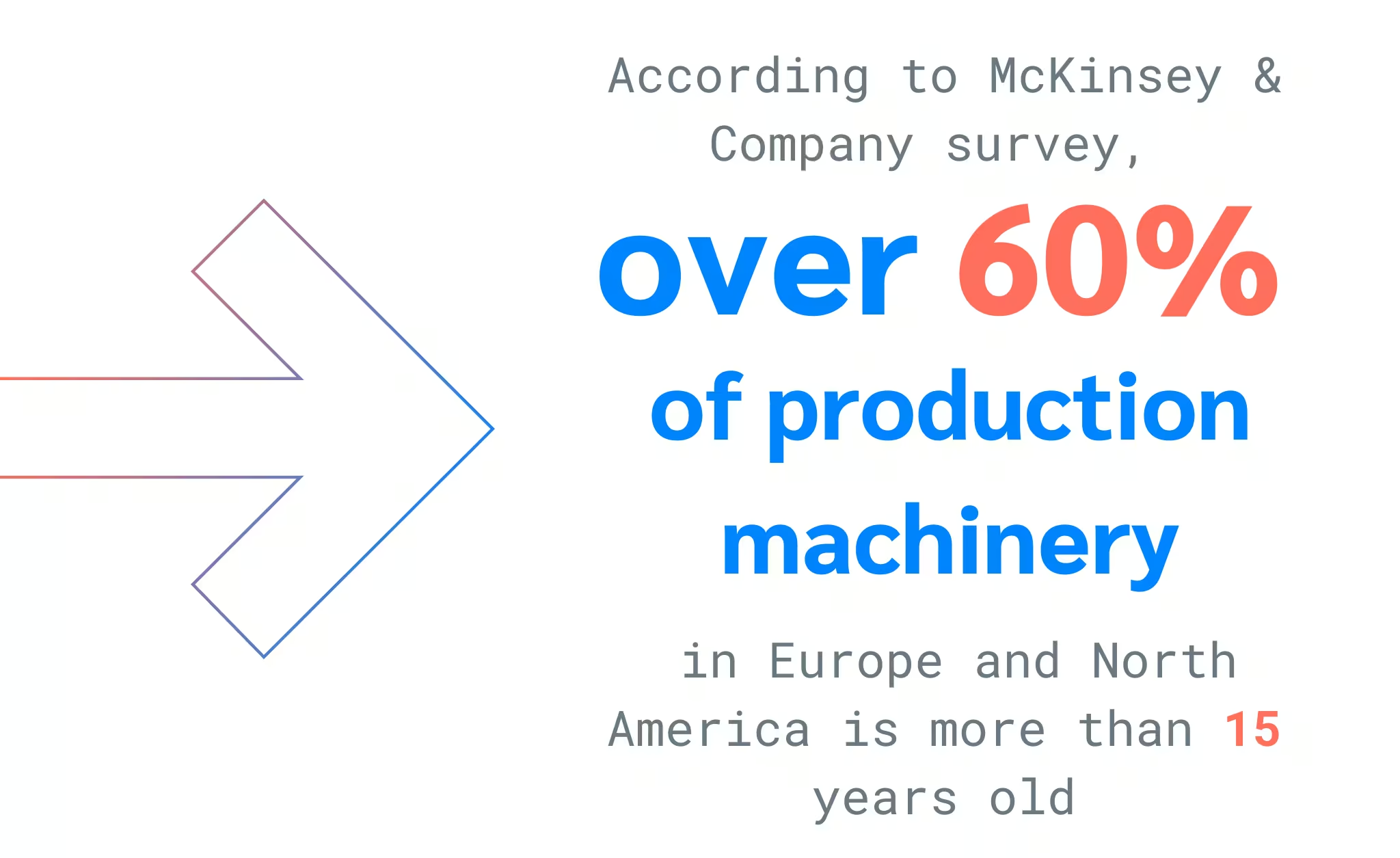
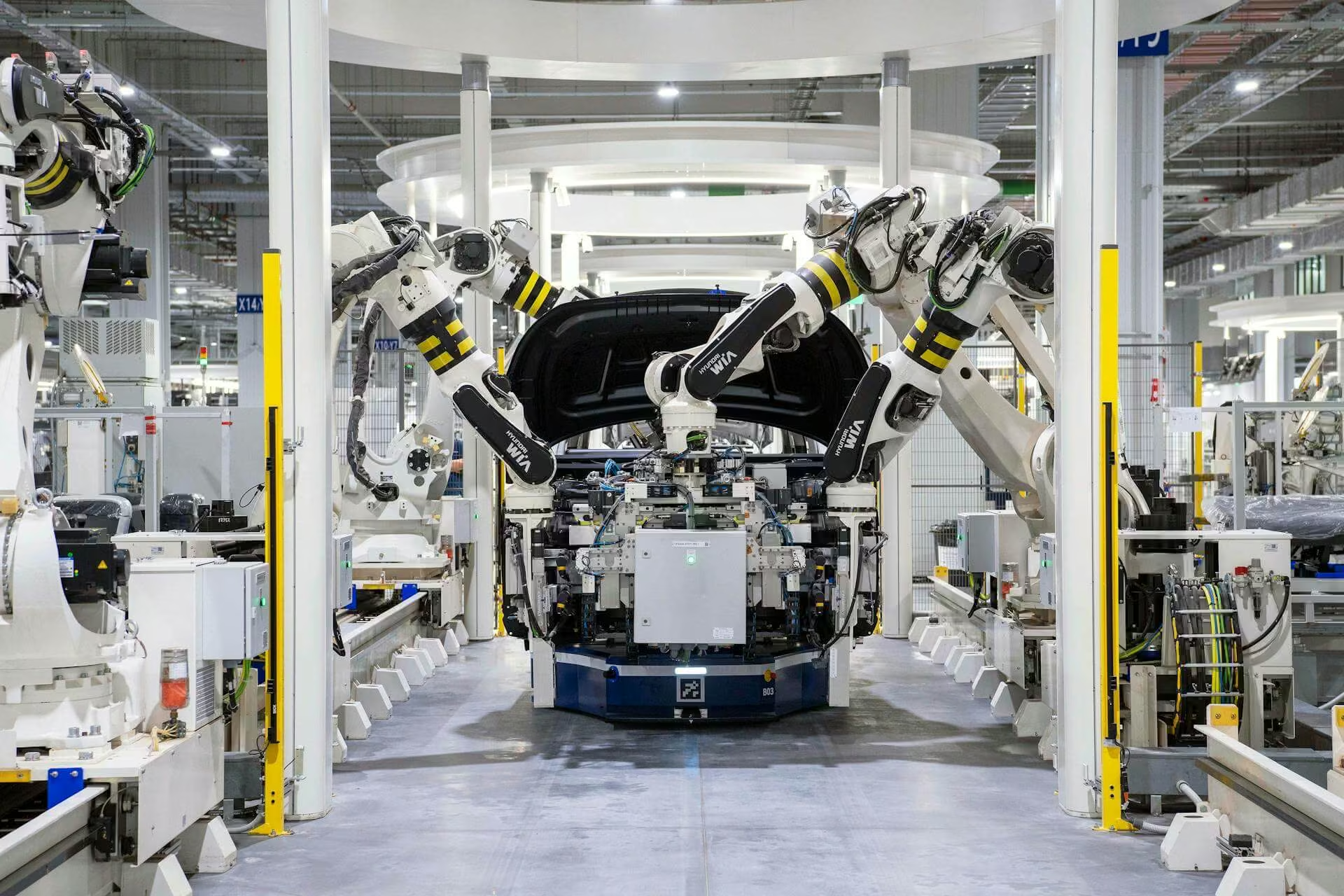
In many plants, machines with operational lifespans exceeding 10 to 20 years still carry core production processes. They are mechanically reliable, but they were never designed to expose the data that predictive analytics needs. Brownfield IoT development closes that gap: it integrates IoT connectivity with legacy systems, without costly capital upgrades or extended production downtime.
Manufacturers have reason to prioritize this path. According to McKinsey's research on discrete manufacturing, only about 30% of companies capture value from Industry 4.0 initiatives at scale, with most stuck in what McKinsey calls "pilot purgatory," unable to move proven pilots into production (McKinsey, 2022). Retrofitting existing investments, rather than waiting for a full equipment replacement cycle, is one of the more direct ways out of that trap.
This article explains how brownfield IoT development bridges the physical world of legacy machinery and the digital systems built for analytics, where it differs from greenfield IoT projects, and what it actually takes to retrofit legacy equipment without disrupting production.
Ready to Replace Costly Chaos with Structured Efficiency?
We design custom Preventive Maintenance (PM) roadmaps that guarantee long-term asset reliability. Optimise operations, reduce downtime, and secure predictable results for your assets.
Explore Our Custom Strategy Service →
Brownfield IoT refers to the practice of implementing Internet of Things connectivity in existing industrial facilities, on machines and production lines that were designed before the digital era. These machines often lack built-in sensors and modern communication interfaces, yet they remain operational and critical to production.
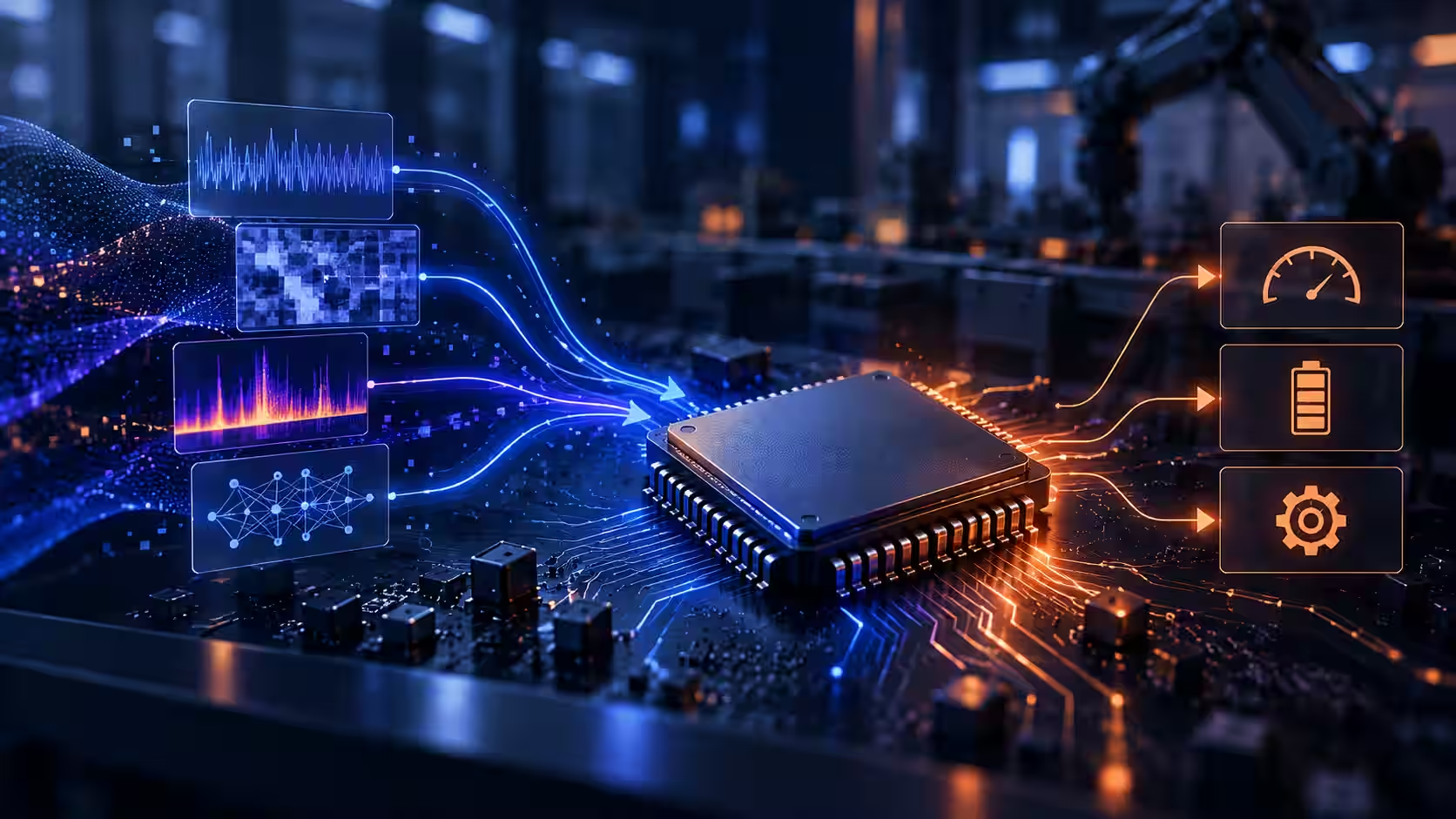
The goal of brownfield IoT development is to collect data from this equipment without replacing it. That is achieved through retrofitting: adding external sensors, edge devices, or communication gateways that deliver near real time data to a monitoring or analytics platform. Sampling frequency depends entirely on what is being measured. Process data (temperature, pressure, current) is often sampled around 1 Hz, while vibration analysis for bearing or gearbox diagnostics typically requires 10 to 25 kHz. These retrofit solutions run alongside existing control systems. They do not interfere with machine logic or the production process itself.
Brownfield IoT connectivity differs fundamentally from greenfield IoT projects, where systems are designed from a blank sheet. In a brownfield environment, solutions must adapt to technical and organizational constraints that already exist: incomplete documentation, closed OT systems, and machines that predate any concept of IoT connectivity. Operational continuity, safety, and regulatory compliance stay the top priority throughout.
Done well, brownfield IoT development allows gradual digitalization of a plant. It builds the operational and technical data foundation that predictive maintenance depends on, improving reliability without the capital cost of replacing the existing machine park.
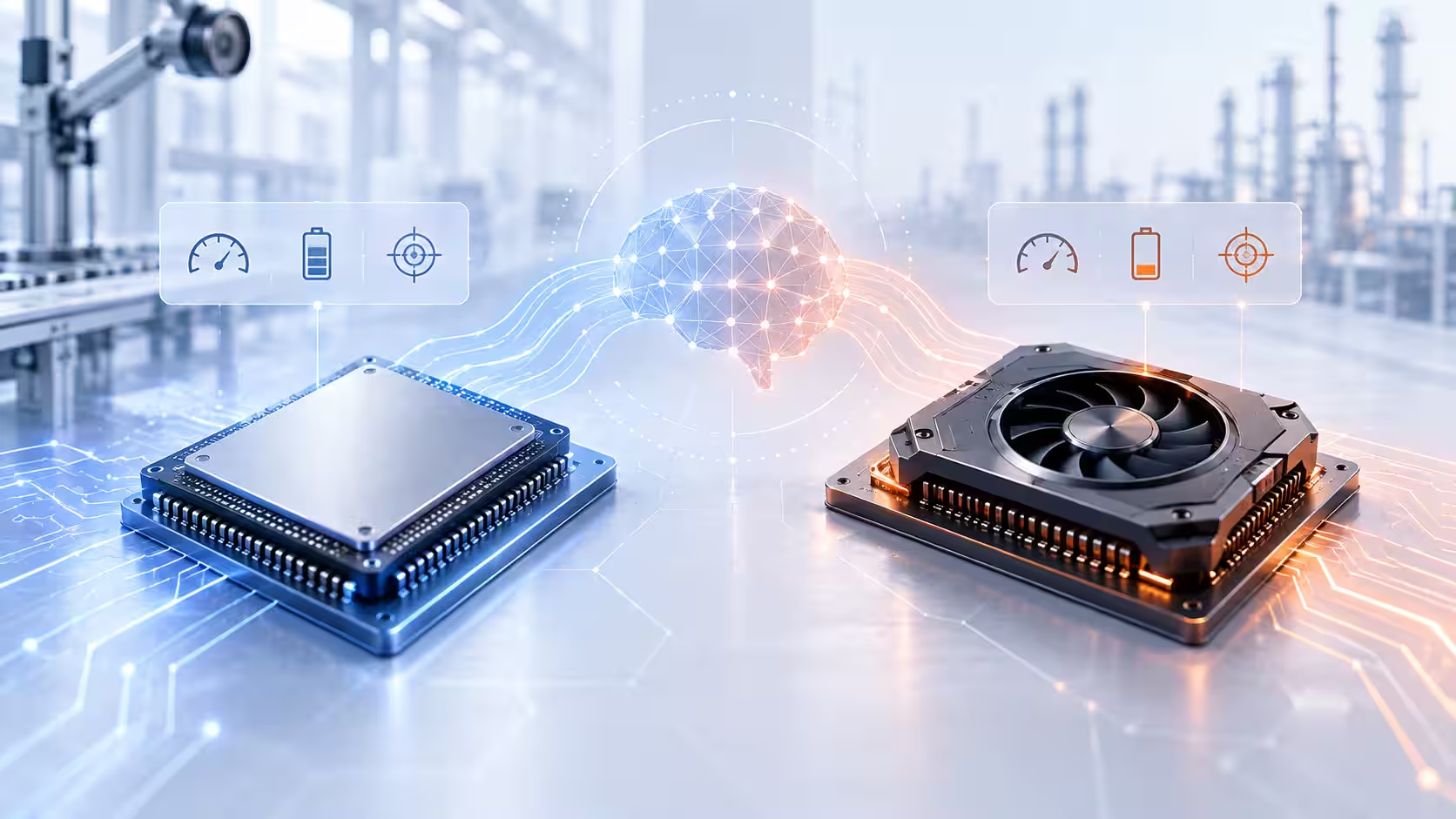
Brownfield and greenfield IoT development solve the same underlying problem (getting usable data out of industrial equipment) but they start from opposite positions. Greenfield IoT projects design connectivity, software, and testing into new equipment from day one. Brownfield IoT development has to retrofit that same connectivity onto machines that were never meant to have it, which changes almost every engineering decision along the way.
The cost difference is one of the more practical distinctions for teams evaluating where to start. Brownfield IoT development can be less expensive than greenfield projects precisely because it reuses existing investments: the machine itself, its mechanical structure, its power infrastructure, and often years of informal operator knowledge about how it behaves. Greenfield projects carry the full cost of new equipment, new controls, and a connectivity stack built from scratch.
| Dimension | Brownfield IoT Development | Greenfield IoT Development |
|---|---|---|
| Starting point | Existing machinery and investments already operating on the production floor | New equipment specified and built with IoT connectivity in mind |
| Upfront hardware cost | Typically lower, since existing assets are reused instead of replaced | Typically higher, since sensors, controllers, and machines are procured as one package |
| Data architecture | Often begins with fragmented data silos across machine generations and protocols, requiring additional integration work | Designed as a connected architecture from the outset, with consistent formats and timestamps |
| Documentation | Frequently incomplete or missing, requiring reverse engineering of signals and wiring | Typically complete, since documentation is produced during the design phase |
| Disruption risk | Must be engineered to avoid disrupting live production | Lower disruption risk, since connectivity is built in before commissioning |
| Software and tools | Must support legacy protocols such as Modbus, proprietary fieldbuses, and RS-232/485 | Can standardize on modern protocols and software stacks such as OPC UA and MQTT |
| Developers involved | Embedded and OT specialists who understand legacy control systems and machine behavior | IoT developers and software engineers working with a clean, standardized architecture |
| Testing | Validated incrementally, often machine by machine, in a live production environment | Validated as part of standard commissioning and factory acceptance testing |
Discover The Best 10 Predictive Maintenance Companies & AI Solutions (2026)
Not sure which predictive maintenance partner to choose? We've analyzed and ranked the best companies across the globe based on expertise, technology, quality certifications, and client reviews.
Legacy machines are industrial devices designed and deployed many years ago, built for the reliable execution of a single production task. Integration with IT systems was not part of that original design.
Most legacy machines lack built-in diagnostic sensors. A large share provide only binary on/off signals rather than the analog process values needed for trend analysis, and historical operating data is rarely archived at all. There is often no record of how the machine behaved when it was new, which is exactly the baseline that predictive maintenance with machine learning needs.
You do not need new equipment to start predictive maintenance. We specify sensors, gateways and data paths that fit around production instead of stopping it.
Retrofit your existing machines instead of replacing them
Communication interfaces on this equipment are frequently outdated or proprietary: serial links such as RS-232/RS-485, or vendor-specific fieldbuses that are no longer supported. Technical documentation is often incomplete or missing entirely. In many plants, knowledge about a given machine exists only in the experience of operators and maintenance technicians, sometimes called "tribal knowledge," which becomes a real operational risk as skilled workers retire.
Legacy machines are tightly integrated with the production process, so stopping them for retrofit work carries real cost and can disrupt the supply chain. Any technical intervention on this class of equipment involves risk. Control systems are usually stable, but they offer little flexibility for adding sensors or communication paths.
At the same time, this equipment is often robust and proven, with many machines operating well past their original design life. That makes them strong candidates for retrofitting, provided the approach stays cautious and minimally invasive.
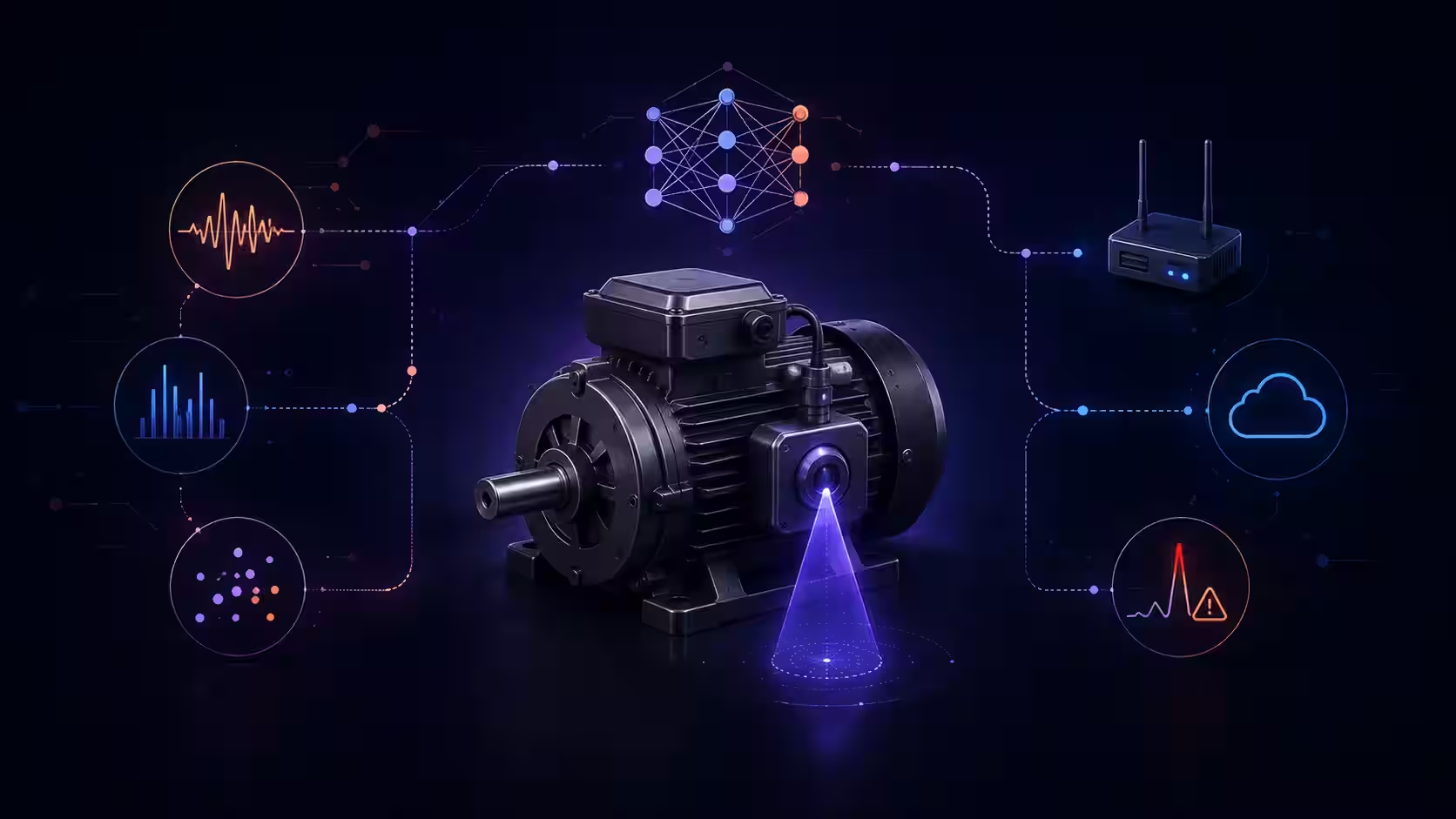
Predictive maintenance on an existing machine base focuses on assessing technical condition from operational data, aiming to catch component degradation before a functional failure occurs. In brownfield environments, that data is not natively available. It has to be acquired indirectly, most commonly through a few classes of measurement signals:
Each signal class reflects a different degradation mechanism, and combining them gives a more complete picture of machine condition than any single signal on its own. As predictive-maintenance practitioners in the field often put it, sensor readings only become useful once they are interpreted against how the specific machine actually operates; the same vibration signature can mean nothing on one asset and a bearing failure two weeks out on another.
A common challenge is the absence of reference data: there is often no record of the machine's condition right after installation or overhaul, so analysis has to rely on trends and relative comparisons instead of a fixed baseline. Signal stability over time becomes critical to that comparison.
Predictive models also have to account for variable operating conditions. Changes in speed, load, or operating mode all affect signal characteristics, and without proper normalization, that variability produces false alarms. This is why data segmentation and correlation with process parameters matter as much as the sensors themselves.
Predictive maintenance in brownfield environments works best with close cooperation from maintenance teams, the same principle that runs through our guide to step-by-step predictive maintenance implementation. Technician expertise supports result interpretation and connects anomalies to specific technical causes, which is what makes service decisions accurate rather than reactive. Making room for that technician input from the first pilot onward is one of the decisions a PdM roadmap for manufacturing should settle early.
Retrofitting industrial machinery in a brownfield environment requires a clearly defined strategy. The objective is to collect technical data without disrupting production operations, and every decision has to account for downtime risk and machine safety while still improving overall equipment effectiveness (OEE).
The first decision concerns where the data comes from. Two main approaches are used:
A core requirement across both approaches is minimal intrusion. Retrofit solutions should run in read-only mode and must not alter control logic or affect the machine cycle. Safety and production continuity stay the highest priority throughout.
Retrofitting should also be phased rather than rolled out all at once. Starting with a single machine or a critical node, then expanding step by step, avoids the risks that come with a "big bang" deployment and lets the team learn from real data as the scope grows.
Integrating OT and IT layers in existing manufacturing infrastructure is one of the harder technical challenges in brownfield IoT development, driven largely by how diverse and undocumented that infrastructure tends to be. In many cases, machines have no PLC at all. Where controllers do exist, they are sometimes undocumented: schematics, signal descriptions, and memory maps are missing, and access to data is only indirect.
Closed or outdated controllers add another layer of difficulty. These systems often don't support modern communication interfaces, so the only available signal may be motor current or a single binary state. That level of information needs additional processing before it means anything, which is why integration alone is never sufficient; signal interpretation in the context of the process is essential.
Edge computing plays a critical role here as the intermediary layer between the machine and the cloud. Edge devices collect data at the source, filter and aggregate it locally, and pass on a reduced, structured stream rather than raw signals, which meaningfully cuts the data volume sent upstream while keeping the system operational during network interruptions. That local processing also enables preliminary analysis and anomaly detection close to the machine, shortening response time and reducing dependence on centralized infrastructure.
Integration relies on established industrial protocols, most commonly Modbus, OPC UA, Profibus, and Ethernet/IP, and brownfield projects frequently need protocol gateways to bridge them. Each protocol has its own limitations: Modbus offers simple communication but a very limited data model, while OPC UA offers richer semantics but is often unavailable on older systems. In practice, protocol converters or gateways are a standard part of the toolkit, not a special case.
OT and IT integration in brownfield environments always involves trade-offs, and operational stability has to win those trade-offs. Solutions need to be passive and resilient. That is the only way to build a coherent data system without putting production at risk.
Data architecture in a brownfield environment has to be simple, resilient, and scalable. Its job is to reliably deliver data for predictive analytics while protecting industrial assets from operational failures and security risks, without overloading machines or the industrial network. The recommended structure is Edge → Gateway → Cloud.
The edge layer sits closest to the machine. It includes the sensors and edge devices that collect raw signals at high resolution, filter out obvious noise, and remove clear measurement errors, so only useful data moves to the next layer.
The gateway layer sits between the shop floor and higher-level systems. It aggregates data from multiple sources, normalizes formats and units, and keeps timestamps consistent across machines. Local buffering, commonly 24 to 72 hours of data, protects against connectivity loss, and the gateway also manages protocol translation and keeps a clear separation between OT and IT networks.
The cloud layer handles advanced analytics and scale: storing historical data, training and versioning models, supporting long-term trend analysis, and integrating with systems such as CMMS (Computerized Maintenance Management System) and BI platforms. It gives multiple teams access to results and lets algorithm updates happen without touching the OT layer.
In brownfield environments, a handful of data quality challenges show up repeatedly:
Each of these issues affects how much you can trust the resulting analysis. As reliability-centered maintenance practitioners routinely warn, a maintenance decision built on unreliable data can do more damage than making no data-driven decision at all. The architecture has to plan for these limitations from the start: detecting gaps, flagging data quality, and treating fragmented, siloed sources as the normal starting state rather than an exception to be fixed later. That discipline is what separates a brownfield IoT development project that delivers reliable predictive maintenance from one that just adds more dashboards.
If you want to build a robust preventive maintenance strategy on top of this data foundation, see our guide: Essential Guide to Building Preventive Maintenance.
Read also:
A water utility operator needed to move from delayed, reactive monitoring (issues often surfaced hours or even a full day after they started) to near real-time detection of leaks, bursts, and irregular consumption. InTechHouse developed water meter overlays that collect high-resolution flow and pressure data directly from the utility's existing infrastructure, without replacing the meters themselves, and paired them with a centralized analytics platform built on IoT and machine learning. The result was a shift from delayed reporting to continuous monitoring, with anomaly detection typically surfacing irregularities within 15 to 30 minutes rather than the hours or days the previous approach required. Operators gained a unified dashboard for consumption and alerts, and the retrofit approach kept the existing meter infrastructure in place rather than replacing it.
Read the full, publicly available case study: Predictive Analytics and Anomaly Detection in Water Utility Management.
Brownfield IoT development shows that digital transformation does not require a costly, risky replacement of the entire machine park.
Retrofitting existing equipment makes IoT predictive maintenance achievable even in plants built on long-established infrastructure. That means less downtime, longer service life for existing machinery, and decisions grounded in data rather than operator experience alone. Manufacturers that deliberately pursue brownfield IoT development build a solid foundation for further automation and a genuine move toward Industry 4.0, rather than staying stuck in the pilot-purgatory pattern McKinsey describes.
A partner for this work needs both strong engineering fundamentals and hands-on experience retrofitting real production equipment. InTechHouse supports machine retrofitting, data integration, and the development of predictive maintenance systems built for the realities of existing industrial infrastructure, not a theoretical greenfield build. That combination of OT knowledge and practical delivery is what helps manufacturers turn pilot projects into scalable, business-justified deployments. If improving production reliability is the goal, schedule a free consultation with our team.
See How We've Helped Companies Like Yours
Explore our portfolio of successful implementations of predictive maintenance systems. Real case studies with technical details and measurable results.
We map assets, failure modes and available signals first, so the pilot you fund is the one that survives contact with the factory floor.
Get a brownfield predictive maintenance roadmap
Not sure where to start? We work with companies at every stage, from early ideas to enterprise-level builds. A 30-minute call can save you months of guesswork.
Yes. Even very old machines can be included in predictive maintenance programs, provided they perform high-value functions in the production process and basic parameters such as vibration, temperature, or power consumption can be measured.
In most cases, no. Many brownfield IoT development solutions allow sensors to be installed and the system commissioned without prolonged downtime, and sometimes without stopping the machine at all. That is one of the key advantages of retrofitting over a full replacement of the machinery fleet.
Yes. Modern IoT platforms are designed to integrate with systems such as SCADA, MES, CMMS, and ERP. That means machine data can be used not only by maintenance teams but also by planning, quality, and production management.
Pilot implementations typically run several weeks up to a few months, depending on project scale and the number of machines involved. Full production rollout is usually phased, which reduces risk and gets initial business benefits realized sooner.
Often, yes, at least on upfront hardware cost. Brownfield IoT reuses existing investments (the machine, its power infrastructure, its physical footprint) instead of specifying and purchasing new equipment, which tends to keep initial capital costs lower than a greenfield build. Total cost still depends on integration complexity, especially where legacy protocols or missing documentation add engineering time.
Because legacy machines were installed at different times, by different vendors, on different protocols, with no shared plan for how their data would eventually be combined. Fragmented data silos are a normal starting condition in brownfield IoT development, not a sign something went wrong. A layered data architecture (edge, gateway, cloud) is what turns those silos into one usable dataset over time.
Adam Szychulec is Deputy CTO at InTechHouse and an electronics and embedded systems engineer with over 13 years of experience in hardware development, FPGA-based systems, embedded software, and technical leadership.
He specializes in electronic system architecture, analog and digital PCB design, FPGA and SoC development, embedded C/C++ software, and managing the complete lifecycle of complex engineering products - from early feasibility studies and technical architecture through development, testing, production introduction, and product modernization.
Adam has extensive experience leading multidisciplinary R&D teams and coordinating electronics, embedded software, mechanical engineering, testing, and project delivery. His responsibilities have included technical decision-making, project planning, risk and change management, budgeting, product testing, new product introduction, and mid-life upgrades of existing electronic systems.
His project experience includes FPGA modules for space applications, electronic systems and payloads for unmanned aerial vehicles, environmental monitoring and multispectral imaging platforms, power electronics, DC-DC converter assessment, and embedded systems developed for demanding industrial and defence-related applications.
Adam works with FPGA and SoC platforms, Xilinx Zynq, VHDL, Vivado, Altium Designer, ARM microcontrollers, embedded C/C++, Linux, digital electronics, and power electronics. He holds bachelor's and master's degrees in Electrical Engineering and is an IPC Certified Interconnect Designer. He writes about FPGA architectures, electronics design, embedded systems, hardware product development, technical risk management, UAV electronics, power electronics, and engineering leadership.
From first prototype to production, our engineers can help you scope it, build it and get it certified.
This initial conversation is focused on understanding your product, technical challenges, and constraints.
No sales pitch - just a practical discussion with experienced engineers.
Share a few details about your product and context. We’ll review the information and suggest the most appropriate next step.