


Industrial Data Platform Development
We design and implement industrial data platforms that unify OT and IT data into a governed, production-grade industrial data platform. Built for real industrial context, our platforms allow secure integration, audit-ready compliance, and scalable industrial data infrastructure across sites and systems.


Industrial data platforms engineered for scale and control
We build industrial data platforms that standardize industrial data integration across sites, eliminate manual data handling, and establish a governed enterprise data platform for industry with full lineage, role-based access, and compliance built in.
Production-grade industrial data platforms for complex environments
We deliver industrial data platform development that establishes a governed environment for secure OT IT integration, scalable data infrastructure, and compliance across regulated, multi-site operations.
Industrial data architecture and integration foundation
- Integration of SCADA, PLC, MES, ERP, and IoT through robust industrial data integration patterns
- Vendor-agnostic industrial data architecture supporting Data Lake, Data Mesh, and federated models
- Foundation for time series data analytics and advanced industrial use cases
Governance, compliance, and operational reliability
- Full lineage and traceability for audit-ready GxP data platforms
- Role-based access control across the platform with 100% coverage
- Stable integration of industrial data systems without impact on production operations
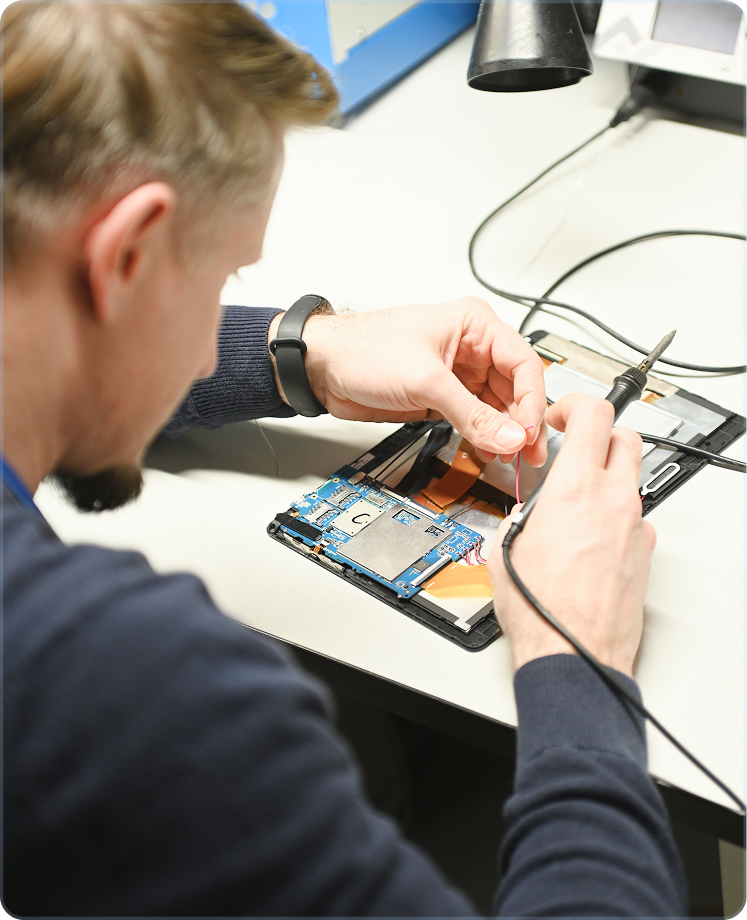
Industrial data platforms built for operational continuity and control
We deliver industrial data platform development that unifies OT and IT data into a governed environment, enabling reliable industrial data integration, scalable industrial data infrastructure, and compliance in complex, regulated industrial context. We integrate modern platforms with legacy industrial systems using file-based exchange, SQL, SOAP, and REST/GraphQL interfaces. This lets existing infrastructure keep running while data flows into the new platform.

Integration of SCADA, PLC, MES, and IoT is designed to run alongside existing operations, ensuring stable OT IT integration without impacting performance or uptime.

We design industrial data architecture and industrial data systems architecture that scale across sites, support cross-site enterprise data integration, and eliminate one-off, non-reusable solutions.

Built-in lineage, traceability, and role-based access control ensure compliance, support GxP data platforms, and provide full visibility across the industrial data platform.
Use Cases
We design and implement IoT-based data platforms that centralize event data from distributed industrial devices into a unified data environment. This allows real-time operational visibility, supports BI analytics, and implementation of automated control and management logic across production environments. The architecture is built to ensure scalability, data consistency, and seamless integration with existing systems.
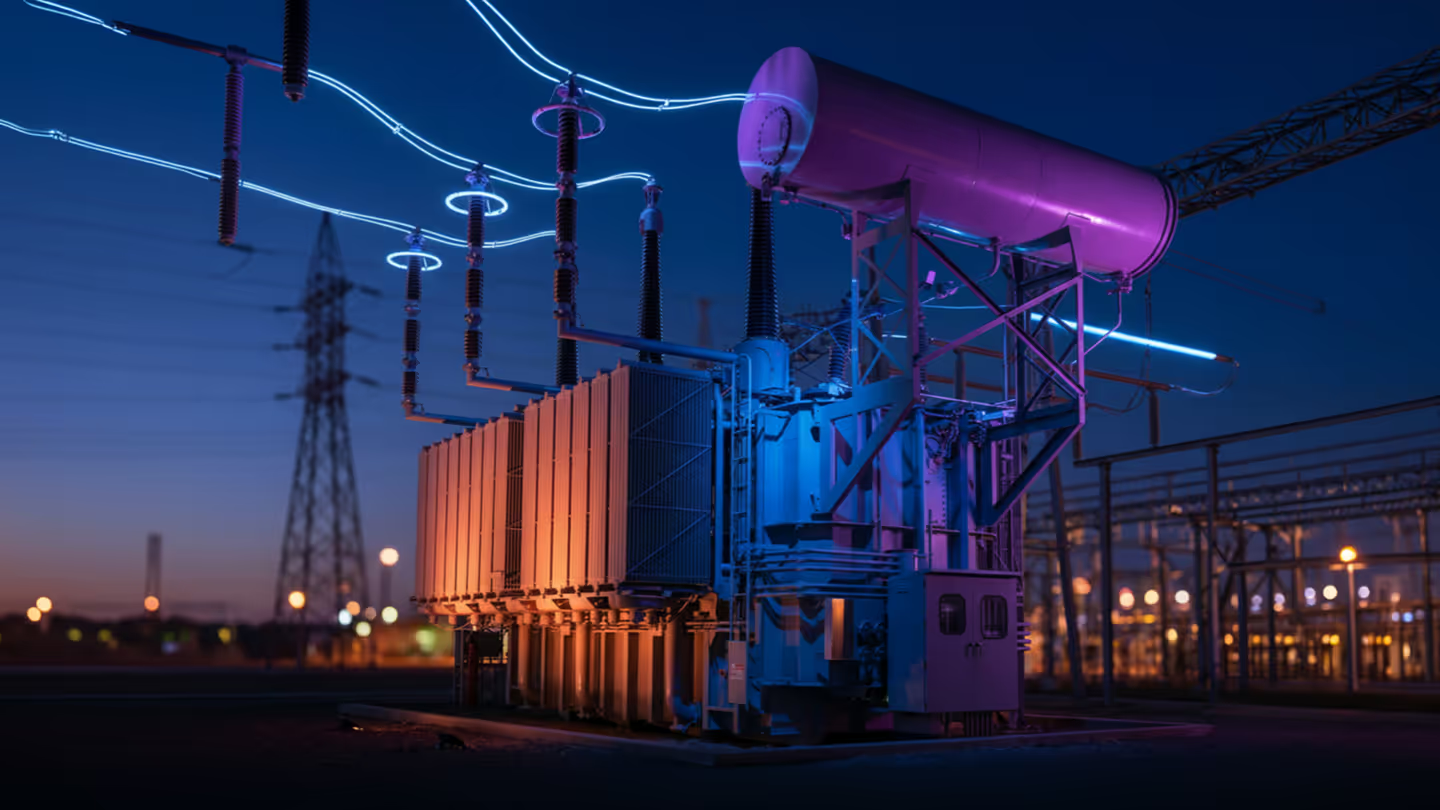


We design and develop IoT and AI-powered data platforms for utility infrastructure operators, enabling real-time anomaly detection, predictive analytics, and automated alerting across distributed metering networks. Such a solution can significantly reduce incident detection time from 24 hours to 15–30 minutes, improving operational response, system reliability, and decision-making speed.

Predictive Analytics and Anomaly Detection in Water Utility Management


We design and develop data platforms for environments, where reliability and integration with physical systems are critical. They support real-time data collection, processing, as well as system monitoring in harsh operating conditions. The architecture allows robust performance, seamless integration with field infrastructure, and consistent data availability for operational and analytical use.


We design and build data architectures for regulated industries, where compliance, data integrity, and auditability are essential. These systems support secure data access, full traceability, and consistent data governance across operations. The architecture is aligned with regulatory requirements and designed to ensure reliability, transparency, and long-term data integrity.


We develop centralized data platforms that digitize technical documentation and connect operational information with existing infrastructure management systems. Our solutions integrate GIS data, digital archives, and automated workflows to improve information accessibility and support field operations. Each platform is designed for reliable data processing, scalable storage, and consistent access to critical infrastructure records.
We build scalable data lake architectures that consolidate structured and unstructured data across disconnected business systems. Our engineering work covers data ingestion, Change Data Capture (CDC), streaming pipelines, and data transformation to support consistent processing and timely access to information. These platforms provide a reliable foundation for business intelligence, advanced analytics, and evolving data requirements.


Industries We Serve
Our engineering capabilities are deployed across regulated, mission-critical and industrial sectors.

Industrial data platforms and OT/IT integration for Oil & Gas operations - audit-ready, production-grade.

GxP-compliant data platforms, Data Mesh and OT/IT integration for pharmaceutical manufacturing and. diagnostics.

Industrial IoT platforms, energy monitoring and OT/IT integration for
manufacturing operations - Vossloh, Mondi reference.
FAQs
If you have additional questions or would like to discuss your requirements, feel free to get in touch with our team.
An industrial data platform is a unified foundation that brings together data from machines, sensors, control systems, and enterprise applications into a single, accessible environment. The platform replaces the fragmented landscape of disconnected data sources that most industrial organisations accumulate over time, where each system holds part of the operational picture but no single view of the whole exists.
The problem an industrial data platform solves is data silos. In most industrial environments, machine data sits in the control system, maintenance records sit in a separate management platform, production data sits in the MES, and quality data sits somewhere else again. Each of these systems was implemented to serve a specific function, and each does that function adequately in isolation. The cost of the silo structure shows up when decisions require data from more than one source, which in practice means most operational and management decisions. Searching across disconnected systems for the data needed to answer a question increases the time it takes to get an answer, introduces the risk that data from different sources is inconsistent or refers to different time periods, and means that analysis which should be straightforward becomes a data gathering exercise before it can begin.
Data silos increase operational costs and risks in ways that are often underestimated because they are distributed across many small inefficiencies rather than concentrated in a single visible problem. Consolidated data access addresses this by unifying data assets into a platform where all relevant data sources are available through a consistent interface, with a shared data model that makes combining data from different origins reliable rather than error-prone.
The productivity benefit of centralised data access compounds across the organisation. Teams that previously spent significant time locating and reconciling data before they could begin analysis can work directly with the data foundation the platform provides. The data assets that were previously locked inside individual systems become accessible to the people and tools that can generate value from them.
Industrial data platform development covers the full build from raw machine data arriving at the ingestion layer to a structured, governed, queryable foundation that supports advanced analytics and operational decision-making.
Data ingestion and connectivity is where the platform connects to the sources that generate operational data: machines, sensors, control systems, historians, and enterprise applications. This layer handles the protocol diversity of industrial environments, translating data from OT communication standards into the formats the platform works with, and managing the reliability of those connections so that data arrives completely and in the right sequence.
Data storage provides the infrastructure to store data at the scale and with the access characteristics that industrial analytics requires. Operational data has different storage requirements at different stages of its lifecycle: high-frequency recent data needs fast read access for real-time monitoring, while historical data needs cost-effective long-term storage that remains queryable for trend analysis and model training. Platform development defines and implements the storage architecture that serves both needs.
Data governance establishes the rules, ownership, and quality standards that make the platform reliable over time. A data catalog documents what data exists, where it comes from, what it means, and who is responsible for it. Data management processes ensure that the platform remains accurate, consistent, and trustworthy as new sources are added and existing ones change.
Data processing transforms raw ingested data into the clean, structured, enriched form that analytics and applications can work with. This includes normalisation, aggregation, enrichment with contextual information, and the software development required to implement processing pipelines that run reliably at production scale.
Analytics is the layer where the data foundation delivers its value. Reporting, dashboards, anomaly detection, and advanced analytics capabilities are built on top of the processed data, giving operational and management teams the insights that the platform was built to provide.
Integrating data from OT systems and industrial devices into a unified platform requires more than establishing a connection to each source. The data arriving from different systems needs to be understood in relation to the physical and organisational structure it describes, which is what makes it useful for analysis rather than just voluminous.
IoT devices and machine sensors are the most granular data source. Device connectivity covers the communication protocols, authentication, and device authorisation required to collect machine data reliably from potentially large numbers of endpoints. Managing this at scale means handling device registration, credential management, and the monitoring of connection health so that gaps in data collection are detected and addressed rather than silently producing incomplete records.
Data historians are the primary repository for time-series process data in most industrial environments. Connecting to historians requires working with the specific software and protocols of the historian platform in use, and extracting data in a way that preserves the temporal accuracy and completeness that time-series analysis depends on.
ERP systems and other enterprise systems hold the business and operational context that gives machine data meaning: asset registers, work orders, production schedules, and material records. Integrating these transactional systems into the platform alongside OT data is what allows machine behaviour to be connected to business outcomes rather than analysed in isolation.
Mapping all of these sources to an asset hierarchy is what provides that connection. An asset hierarchy organises data by the physical and functional structure of the operation, so that data from a sensor is understood as belonging to a specific component, within a specific machine, within a specific production line, within a specific facility. Standardising data ingestion protocols across sources and mapping ingested data to this hierarchy improves the contextualisation of industrial data significantly, because every data point carries with it the information about what it describes and where it fits in the operational structure.
Building an industrial data platform that works reliably at production scale is a more demanding engineering problem than connecting data sources and storing what arrives. The challenges that determine whether a platform delivers on its potential are concentrated in a small number of areas that are technically difficult and easy to underestimate at the outset.
Creating a unifying schema across diverse sources is the foundational challenge. Manufacturing data arrives from systems that were built at different times, by different vendors, using different data models and different naming conventions for the same physical concepts. A temperature reading from a SCADA system, a historian, and an IoT sensor on the same piece of equipment may be stored in three different formats, labelled with three different identifiers, and sampled at three different rates. Defining a schema that maps all of these representations to a consistent model, without losing the specificity that makes the raw data useful, is technically challenging work that requires both domain knowledge of the industrial environment and deep experience in data modelling.
Handling both structured and unstructured data adds complexity to the storage and processing architecture. Structured data, time-series sensor readings, transactional records, and tabular manufacturing data, fits naturally into relational and time-series databases. Unstructured data, maintenance notes, inspection images, equipment manuals, and alarm logs in free text, requires different storage and processing approaches and cannot be integrated into the same analytical workflows without additional transformation. A platform that handles only structured data leaves a significant portion of the operational information in the environment outside its reach.
Maintaining data quality and data observability at scale is the ongoing challenge that determines whether the platform remains trustworthy over time. Raw data from industrial sources contains gaps, outliers, duplicate records, and values that fall outside physically plausible ranges. These quality issues need to be detected, handled, and logged at the ingestion and processing stages rather than passed through to analytics where they corrupt results. Data observability, the ability to monitor the health, completeness, and accuracy of data flows across the platform, is what makes it possible to identify and resolve quality problems before they affect the decisions the platform is built to support.
Data reliability in an industrial platform is not a property of the sources. Machine data arrives with gaps, outliers, timestamp inconsistencies, and values that reflect sensor faults or communication errors rather than actual process conditions. The controls that make platform data trustworthy are built into the ingestion, processing, and governance layers, not assumed from the quality of the inputs.
Validation at ingestion is the first line of defence. As data arrives from OT systems, IoT devices, and historians, automated checks assess whether values fall within physically plausible ranges, whether timestamps are consistent and correctly sequenced, and whether expected data streams are arriving at the frequency the source should be producing. Data that fails these checks is flagged, quarantined, or handled according to defined rules rather than passed through to storage and analytics where it would silently corrupt results.
Data governance provides the organisational and process framework that validation alone cannot supply. Defining who owns each data source, what quality standards apply to it, how changes to source systems are communicated and managed, and what the authoritative definition of each data element is, prevents the ambiguity and inconsistency that accumulate over time in platforms where these questions are left unresolved. Data operations that follow documented governance processes produce quality data that teams across the organisation can trust for decisions, rather than data whose reliability depends on which team prepared it.
Data observability is what makes the health of the platform visible on an ongoing basis. Real time monitoring of data flows, completeness metrics, latency from source to platform, and quality check outcomes gives the team responsible for the platform the visibility they need to identify and resolve problems before they affect downstream users. Manual tests required during commissioning and after changes to source systems complement automated monitoring by verifying end-to-end data flow under controlled conditions.
The combination of these controls does not eliminate data quality problems, which are a permanent feature of industrial environments. It detects them reliably, handles them consistently, and gives the teams using the platform the confidence that what they are working with reflects operational reality.
Real-time data processing is what separates an industrial data platform that supports operational decision-making from one that supports historical reporting. The difference is not just speed. It is whether the platform can influence what happens in production processes as they unfold, or only explain what happened after the fact.
Real-time ingestion means that data from machines, sensors, and control systems flows into the platform continuously, with latency measured in seconds or less between the event occurring on the plant floor and the data being available for analysis. This requires an ingestion architecture that can handle high-frequency data streams from large numbers of sources without buffering delays that would make the data stale by the time it arrives.
Real-time analysis applied to that ingested data is what produces the actionable insights that operational teams need during a shift rather than in the following day's report. Anomaly detection running against live sensor streams identifies developing faults as they emerge. Process monitoring checks that production parameters remain within specification and raises alerts when they drift. Equipment performance metrics calculated in real time give operators the information they need to respond to changing conditions before those conditions affect output quality or equipment health.
Real-time monitoring at the operator and management level is the interface through which this analysis reaches the people who act on it. Dashboards that reflect current plant status, alert systems that notify the right person when a threshold is crossed, and visualisations that show how production processes are performing against targets all depend on the underlying platform delivering current data rather than data that is minutes or hours old.
The operational value of real-time analytics compounds in environments where conditions change quickly. A fault that is identified within seconds of developing can be addressed before it affects production. The same fault identified an hour later in a batch report has already caused downtime, quality issues, or equipment damage that real-time detection would have prevented.
The choice between data lakes and data warehouses is one of the foundational architecture decisions in industrial data platform development, and in most industrial environments the answer involves both rather than one or the other.
Traditional data warehouses store structured data in predefined schemas, optimised for querying and reporting against well-understood data models. For industrial data that fits this structure, such as production counts, quality measurements, and transactional records from ERP systems, a data warehouse delivers fast, reliable query performance and supports the reporting and dashboards that operational and management teams use regularly. The limitation of traditional data warehouses becomes apparent when the data does not fit the predefined schema. Adding new data types, accommodating the variety of formats that industrial sources produce, or storing unstructured data such as maintenance notes, alarm logs, and equipment images requires schema changes that slow down ingestion and limit flexibility.
Data lakes store structured and unstructured data in its native format at any scale, without requiring a predefined schema. Raw sensor streams, historian exports, images, documents, and transactional records can all be landed in a data lake without transformation, making it well suited to industrial environments where data variety is high and the analytical use cases are still evolving. The trade-off is that data lakes require more work to analyze data reliably, because the structure that makes querying efficient in a warehouse has to be applied at the time of analysis rather than at the time of ingestion.
Modern data platform architectures for industrial environments typically combine both approaches. Raw and unstructured data is stored in the data lake, where it is available for exploration, machine learning model training, and advanced analytics that benefit from access to the full, unprocessed record. Curated, structured data that supports known reporting and monitoring use cases is moved into a warehouse layer where it can be queried efficiently by the tools and teams that depend on it. The combination gives the platform the flexibility of a data lake and the performance of a warehouse, matched to the workload each layer is best suited to handle.
Industrial data platforms are rarely built on a single architectural pattern. The diversity of data sources, the mix of real-time and historical analytical needs, and the physical distribution of industrial operations across sites and facilities make a hybrid architecture the practical standard for platforms that need to perform reliably across all of these dimensions.
Edge processing handles the first stage of data management close to the source. High-frequency sensor data generated by machines and control systems is filtered, validated, and aggregated at the edge before anything is transmitted upstream. This reduces the volume of data crossing the network significantly, because raw readings that fall within normal parameters and carry no analytical signal do not need to travel to a central platform. What reaches the cloud layer is a filtered, contextualised stream rather than the complete raw output of every connected device. For time-critical detection, edge processing also ensures that the latency between an event occurring and an alert being generated is measured in milliseconds rather than in the round-trip time to a cloud platform.
Cloud computing provides the storage capacity, processing power, and analytical capabilities that edge devices cannot match. Historical data accumulated across months and years, machine learning model training, cross-site analytics, and the reporting and dashboards that management functions depend on are all handled in the cloud layer, where resources can scale to the workload without the physical constraints of edge hardware.
Unified namespace architecture is the approach that makes the data flowing through this hybrid structure coherent rather than fragmented. Rather than each system and data source maintaining its own naming conventions and data models, a unified namespace defines a single, consistent way of organising and referencing data across the entire platform. Every data point has a defined place in a shared structure that reflects the physical and functional organisation of the operation, which is what allows data connectivity between edge, cloud, and integrated solutions to produce a platform where data from any source can be combined with data from any other without transformation work at the point of analysis.
An industrial data platform is the foundation that makes analytics and artificial intelligence practical in an industrial environment, rather than aspirational. The quality of what analytics and AI can produce is bounded by the quality, completeness, and structure of the data they work from, which is why the platform layer matters as much as the analytical tools built on top of it.
Advanced analytics applied to industrial data requires a consistent, well-governed data foundation. Trend analysis, process optimisation, and performance benchmarking across assets or sites all depend on data that has been collected reliably, stored completely, and organised in a way that makes cross-source comparison valid. Analytics tools connected to fragmented, inconsistent data produce conclusions that cannot be trusted, regardless of how sophisticated the analytical methods are.
Machine learning models have the same dependency on data quality, compounded by the volume requirements of model training. A model trained on incomplete or poorly labelled historical data learns the wrong patterns. The industrial data platform provides the historical depth, the consistency of schema, and the completeness of records that machine learning models need to produce predictions that hold up against real equipment behaviour.
Anomaly detection is one of the most direct applications of machine learning on industrial platform data. Models trained on normal operating patterns identify deviations that signal developing faults, process drift, or quality issues, generating alerts that reach operational teams in time to act rather than in time to document what went wrong.
Data contextualisation is what turns raw sensor readings into actionable insights. Adding metadata to raw data, identifying which asset it came from, what operating mode the equipment was in, what production was running at the time, and how the reading relates to the asset hierarchy, transforms a number into information that has meaning for both analytical tools and the people interpreting their outputs.
This foundation powers use cases including predictive maintenance, where platform data feeds the condition monitoring and failure prediction models that maintenance teams act on. Full details are available on our predictive maintenance page.
Industry 4.0 describes the shift in the manufacturing industry toward connected, data-driven operations where physical production processes and digital systems operate as a unified whole rather than as parallel activities with periodic information exchange. An industrial data platform is the infrastructure that makes this shift possible in practice rather than in concept.
Smart manufacturing depends on data being available where and when decisions are made. Machines that adjust their operating parameters based on real-time process data, production lines that rebalance automatically when a constraint appears, and quality systems that catch deviations as they develop rather than in end-of-line inspection all require a data foundation that delivers current, accurate, contextualised information to the systems and people acting on it. Without unified data, each of these capabilities operates in isolation, and the compounding benefit of connecting them across the operation is lost.
Digital transformation in the manufacturing industry is not a technology project in isolation. It is a change in how manufacturing companies use information to manage their operations, and the industrial data platform is what gives that information the consistency and accessibility it needs to drive real change. Transformation programmes that attempt to deploy analytics, AI, or automation on top of fragmented data infrastructure find that the data problems absorb the effort that should be going into operational improvement.
Maintaining optimal operating conditions across a manufacturing facility requires continuous visibility into process parameters, equipment health, and production performance. An industrial data platform consolidates this visibility into a single operational picture that production, engineering, and management teams share, replacing the fragmented, time-lagged view that manual reporting produces.
Operational efficiency improvements come from both the decisions the platform enables and the automation it supports. Processes that previously required manual data collection, reconciliation, and reporting can be automated through the platform, reducing operational costs and freeing the people involved to focus on work that benefits from human judgment rather than data handling.
Discuss your product with our R&D team
This initial conversation is focused on understanding your product, technical challenges, and constraints.
No sales pitch - just a practical discussion with experienced engineers.



Share a few details about your product and context. We’ll review the information and suggest the most appropriate next step.