


Gas Detection & Environmental Monitoring Systems
We design custom detection and monitoring systems for industrial and environmental applications where off-the-shelf solutions fail. Our systems support gas detection, air and water quality monitoring, and field deployment across fixed, mobile, and UAV-based platforms.







Custom Gas Detection Systems: Engineered to Order
We build complete, custom gas detection systems as a product: electrochemical sensor front-end, detection electronics, firmware, and a sealed industrial enclosure engineered for your environment, including ATEX-aware design for explosive atmospheres.
Our engineering covers fixed gas detection systems for site installations as well as dedicated detectors built for a single industry's requirements. We deliver qualified, field-ready instruments in the tens-to-hundreds volumes this market needs, not adapted off-the-shelf units.
From sensor selection to calibrated detection systems
We design detection systems starting at the sensor level, selecting and calibrating electrochemical, particulate, radiological, pressure, temperature, humidity, and capacitive sensors for specific substances and operating conditions. This includes excitation, analog front-end design, signal conditioning, embedded data acquisition, calibration, and temperature compensation, so measurement accuracy and stability hold up under real field conditions. For explosive atmospheres, our designs account for ATEX requirements from the architecture stage.
Detection systems built for real-world deployment
Multi-sensor data acquisition systems
We combine gas, particulate, and environmental sensors into unified systems with synchronized data collection and real-time transmission.
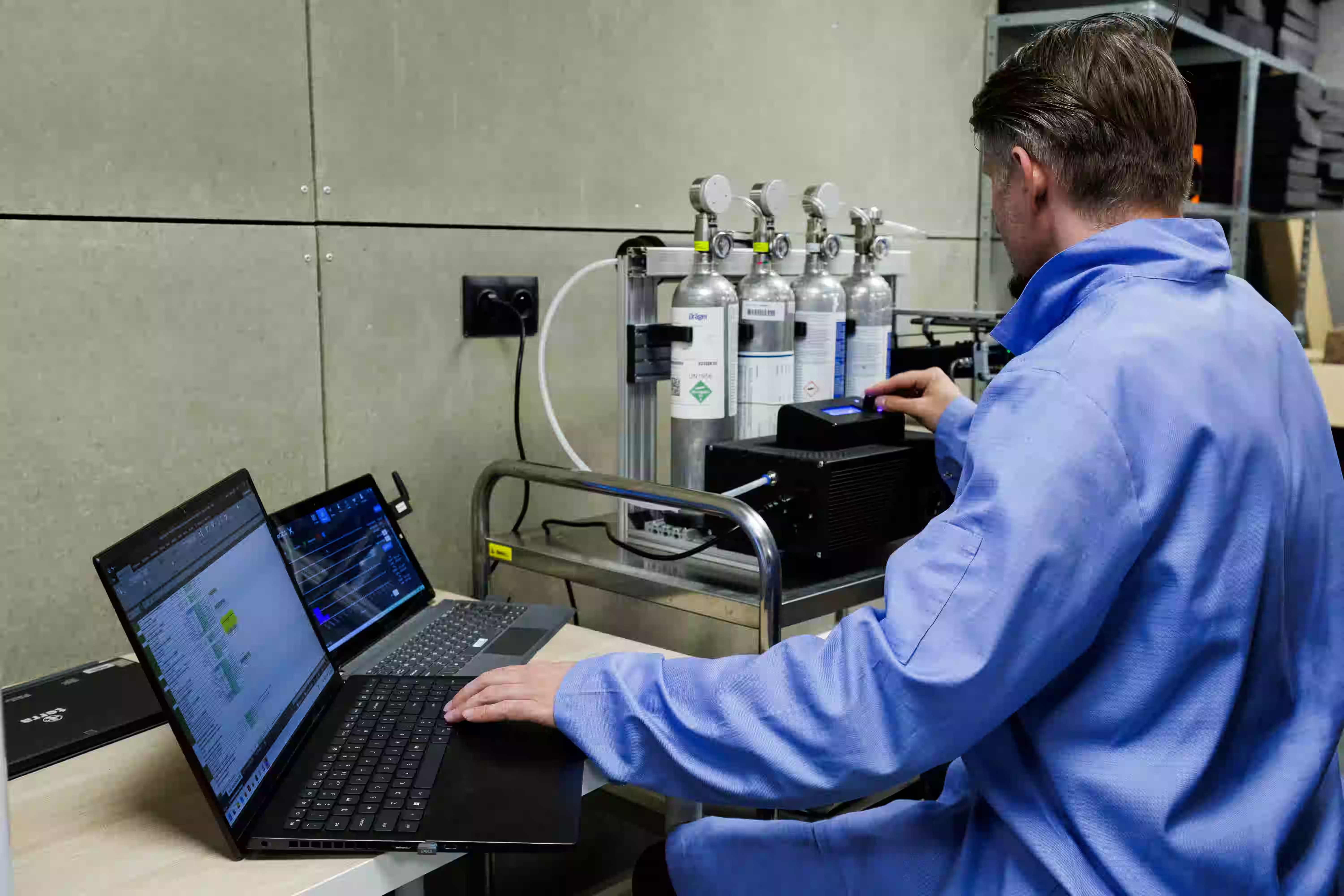
Lower power consumption in field systems
Low-power electronics and firmware design enable continuous monitoring in battery-powered and remote deployments.
Higher measurement accuracy after calibration
Custom calibration of electrochemical sensors improves selectivity and stability in environments with interfering gases and changing conditions.
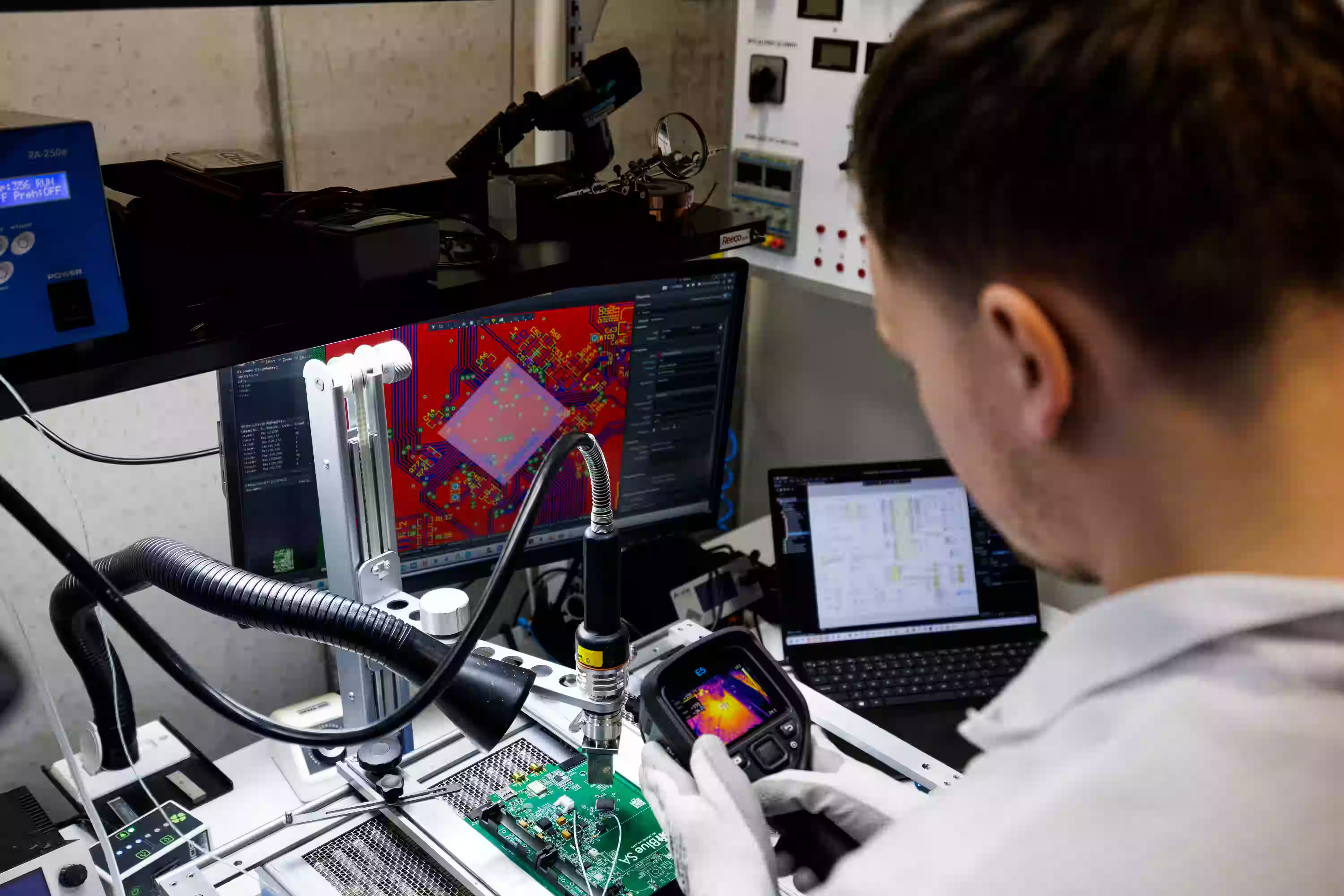
Engineering capabilities for detection and monitoring systems
We design custom detection and monitoring systems tailored to specific environmental conditions, measurement requirements, and deployment scenarios across industrial, public, and research environments.
Detection Hardware & Embedded Systems
We design detection systems at the hardware level, including sensor selection, analogue front-end circuits, and embedded firmware for real-time data acquisition. Systems are built for gas detection, particulate monitoring, radiological sensing, and water quality analysis.
Mobile & Field-Deployable Systems
We design systems for deployment outside controlled environments - on UAVs, vehicles, buoys, and portable devices. Solutions support continuous monitoring, field measurements, and operation without fixed infrastructure.
Data Collection & Monitoring Platforms
We build software and data layers for collecting, processing, and visualising measurement data. Systems support real-time alerts, environmental mapping, and integration with external platforms.
Development process for detection and monitoring systems
We design and deliver detection systems tailored to specific substances, environments, and deployment models, combining sensor engineering, embedded systems, and data layers into complete monitoring solutions.
Measurement Requirements
We define what needs to be measured, under what conditions, and select appropriate sensors for target substances, including gases, particulates, radiation, and water parameters.
Design
We design analogue frontend circuits and calibrate sensors for accuracy, selectivity, and stability, adapting them to real operating conditions and potential interference.
System Integration
We integrate sensors, embedded processing, communication modules, and mechanical design into complete systems adapted for fixed, mobile, or UAV-based deployment.
Field Validation
We validate system performance in real environments, verifying measurement accuracy, data transmission, and system stability under operational conditions.
Deployment & Monitoring
We support deployment, data collection, and ongoing system operation, including alerting, reporting, and integration with monitoring platforms.
"We had the opportunity to collaborate with InTechHouse on a technically demanding, time-sensitive project. Their team demonstrated strong engineering expertise, ensuring that hardware and software components were developed cohesively and aligned with system-level requirements.
InTechHouse proved to be a reliable partner, capable of executing complex hardware–software systems and successfully navigating regulatory qualification processes."


Selected case studies

Predictive Analytics and Anomaly Detection in Water Utility Management

Ready to discuss your next project?
The first conversation is focused on your product, challenges, and the most effective way forward.
.avif)
FAQs
If you have additional questions or would like to discuss your requirements, feel free to get in touch with our team.
Custom detection systems are needed when standard devices cannot meet environmental, technical, or operational requirements. This includes situations with mixed gases, extreme conditions, mobile deployment, or the need to integrate detection with existing systems and workflows.
Industrial detection systems can monitor a wide range of substances, including toxic gases (CO, NO2, H2S, NH3), volatile organic compounds (VOCs), explosive gases, and particulate matter such as PM2.5 and PM10. Systems can also be adapted for radiation detection or multi-parameter water quality monitoring.
Electrochemical sensors can provide high accuracy when properly calibrated for specific gases and operating conditions. However, their performance can be affected by temperature, humidity, and the presence of interfering substances, which is why calibration and signal conditioning are critical.
Mobile monitoring systems are mounted on vehicles or UAVs and collect environmental data across different locations. Combined with GPS data, this enables the creation of air quality maps and identification of pollution sources in real time.
Yes. Many systems are designed for field deployment and can operate using battery power and wireless communication such as LoRa, LTE, or ISM bands. This allows monitoring in remote areas without access to permanent network infrastructure.
Water quality can be monitored using sensor probes that measure parameters such as pH, dissolved oxygen, turbidity, and conductivity. These systems can be installed on buoys or fixed points and transmit data continuously for analysis and reporting.
Discuss your product with our experts
This initial conversation is focused on understanding your product, technical challenges, and constraints.
No sales pitch - just a practical discussion with experienced engineers.


Share a few details about your product and context. We’ll review the information and suggest the most appropriate next step.