German rail technology company with energy-intensive operations
A global rail technology company headquartered in Germany, delivering integrated solutions that support transportation systems worldwide. Operating in an energy-intensive environment, the company relies on efficient resource management to maintain operational performance and control costs.
No device-level insight into energy and gas consumption
The volatility of the energy market, combined with rising costs and potential consumption restrictions, created pressure to better manage energy usage across operations.
At the same time, the client lacked detailed insight into how energy and gas were consumed at the level of individual devices and production areas.
Without this visibility, it was difficult to:
- identify inefficiencies and energy losses
- control peak demand and power usage
- allocate costs accurately across departments
- define and measure the impact of optimization efforts
As a result, opportunities to reduce costs and improve efficiency remained largely untapped.
Requirements for real-time energy and gas monitoring
To improve control and reduce costs, the organization needed a system that could:
- provide real-time visibility into energy and gas consumption
- track usage at the level of individual devices and installations
- support power demand control and prevent overloads
- enable cost allocation across departments and production units
- provide measurable insights into optimization efforts
The goal was to move from limited visibility to data-driven energy management.
Energy monitoring system built on Autonomous Data Controllers
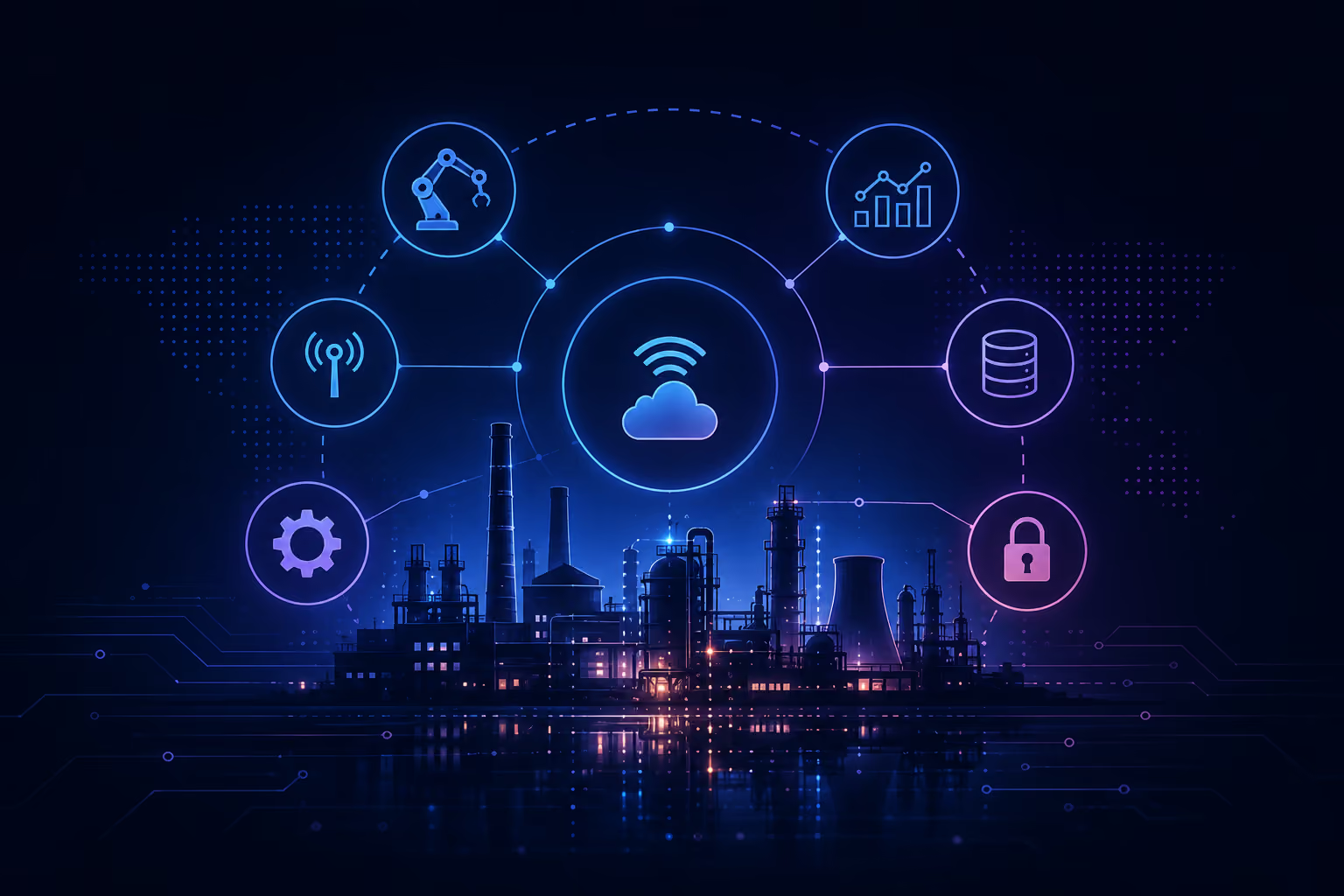
A scalable energy monitoring system was introduced, combining an ADC-based data acquisition layer with a central application for data processing and analytics. The architecture enables centralized analysis of energy and gas consumption data collected across industrial equipment and installations.
Custom measurement infrastructure was designed to capture consumption data from key power receivers as well as gas and energy connections.
The system integrates data collection, processing, and visualization, enabling a complete view of resource usage across the facility.
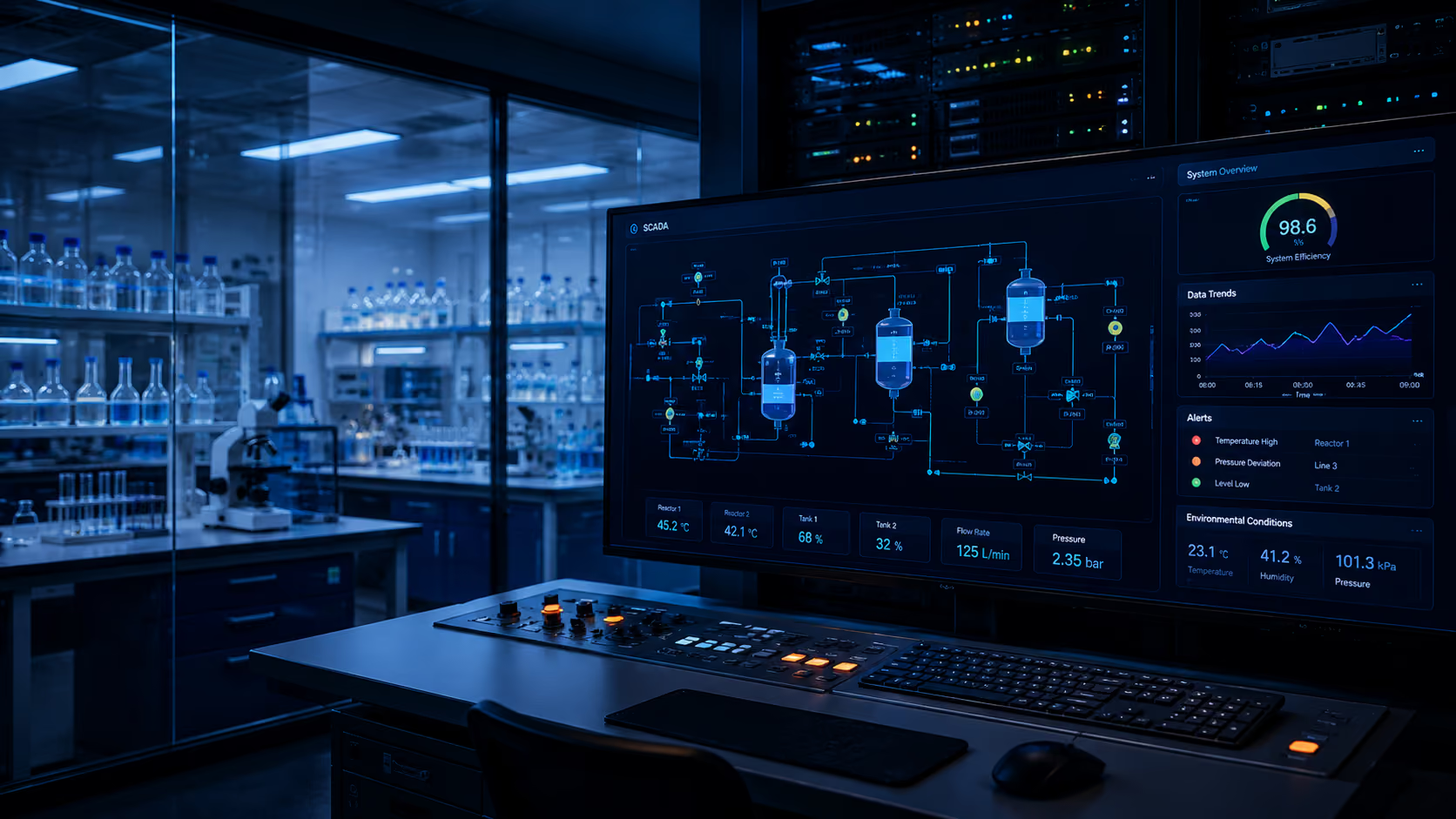
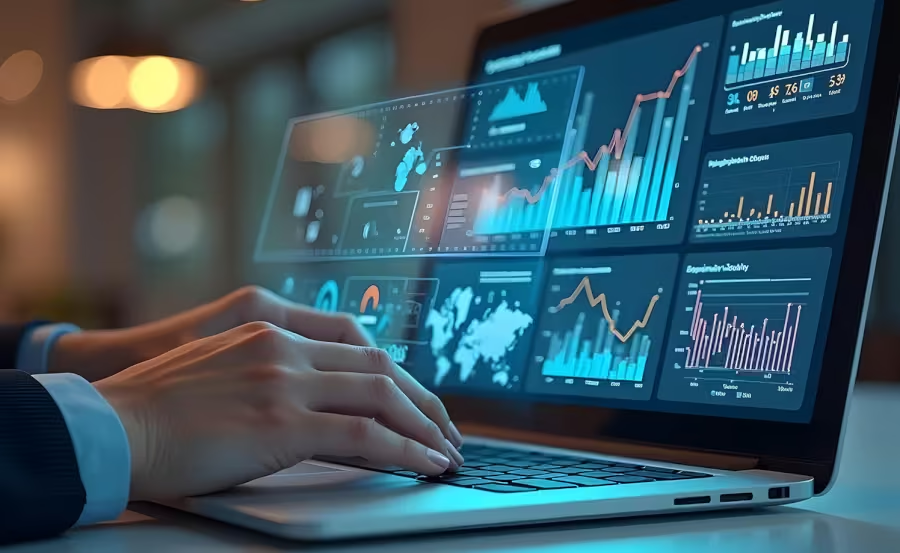
Analytical dashboards were developed to present insights in a clear and actionable way, supporting both operational monitoring and strategic decision-making.
By centralizing consumption data and presenting it through analytical dashboards, the system helps operators identify inefficiencies, monitor demand peaks, and evaluate resource usage patterns. Our guide to advanced data analytics explains the techniques organizations can use to extract further operational insights from collected data.
The system combines hardware and software components designed for industrial environments:
- ADC (Autonomous Data Controller) for real-time data acquisition
- EFFECT_basic for data processing and system management
How ADC devices record consumption across installations
Data is collected directly from devices and installations using an Autonomous Data Controller (ADC), which continuously records energy and gas consumption.
This data is then processed and made available through a central application, where users can monitor usage patterns, identify anomalies, and track performance over time.
The system supports features such as power demand control and threshold monitoring, helping prevent overloads and manage peak consumption.
Dashboards provide a clear view of consumption across departments and production areas, enabling more accurate cost allocation and better operational control.
Real-time control of power demand and consumption
The system introduced real-time visibility into energy and gas consumption, allowing teams to monitor usage and respond to inefficiencies more quickly. Operational control improved through better management of power demand and more accurate tracking of consumption across installations. Teams can now make informed decisions based on actual data rather than assumptions.
Results: full visibility and cost allocation for energy use
The system delivered measurable improvements across key areas:
- Full visibility into energy and gas consumption, across devices and departments
- Improved cost control, through accurate allocation of energy usage
- Power demand management, reducing the risk of overloads and penalties
- Identification of inefficiencies, enabling targeted optimization actions
- Documented optimization results, supporting continuous improvement
- Reduced energy costs, through data-driven decision-making
Frequently asked questions
How can a rail technology manufacturer track energy and gas consumption at the level of individual devices?
With an Autonomous Data Controller (ADC) layer that continuously records consumption directly from devices and installations. The data is processed in a central application where users monitor usage patterns, identify anomalies, and track performance over time. In this project, InTechHouse designed custom measurement infrastructure capturing data from key power receivers and from gas and energy connections at a German rail technology company.
Can an industrial energy monitoring system help prevent power overloads and peak demand penalties?
Yes. Power demand control and threshold monitoring help prevent overloads and manage peak consumption, while dashboards show consumption across departments and production areas. In this project, InTechHouse built these features into the energy monitoring system for a German rail technology company, and the results include power demand management that reduces the risk of overloads and penalties.
How does an energy monitoring system support cost allocation across production departments?
An energy monitoring system supports cost allocation by showing consumption per department and production area on analytical dashboards, so teams decide based on actual data rather than assumptions. In this project, InTechHouse centralized energy and gas consumption data for a German rail technology company, which enabled more accurate cost allocation, identification of inefficiencies, and documented optimization results supporting continuous improvement.
We’ll review your goals, technical constraints, and opportunities to design a solution that fits your organization.
Planning a data platform, analytics system, or AI solution? Our team can help design scalable architectures and deliver production-ready solutions tailored to your business.