
Disclosure: This ranking is published by InTechHouse, which is included in the list. Companies were assessed on technological advancement, scalability, documented results, ecosystem integration, data security, user support and market position, based on publicly available information and company websites as of September 2026.
Predictive maintenance in 2026 combines industrial sensors, edge computing and machine learning to detect equipment failures before they cause downtime. This ranking compares the 10 best predictive maintenance companies, from enterprise platforms such as Siemens and IBM to custom engineering partners.
The best predictive maintenance companies in 2026 are:
| # | Company | Type | Best for | Key product | Proof point |
|---|---|---|---|---|---|
| 1 | InTechHouse | Custom hardware and software engineering partner | Predictive maintenance for non-standard machinery that needs custom sensors and AI models | Custom sensor-to-AI condition monitoring systems | 22+ years in engineering, ISO 9001 |
| 2 | Siemens | Industrial IoT and edge platform | Large manufacturers that need OT/IT integration and edge analytics | Industrial Edge, MindSphere | Scales from single lines to global factory networks |
| 3 | IBM | Enterprise asset management software | Large organisations with strict security and compliance requirements | Maximo Application Suite | Integrates with ERP, CMMS and IoT systems; digital twins |
| 4 | PTC | Industrial IoT platform | Highly automated manufacturers already using PTC CAD and PLM tools | ThingWorx | Integrates with Creo and Windchill; cloud or on-premise |
| 5 | Augury | Machine health sensors and AI (subscription) | Monitoring motors, bearings and other rotating machinery | Multisensor machine health platform | AI trained on millions of machine operating hours |
| 6 | Samsara | Fleet telematics platform | Vehicle fleets in transportation and logistics | IoT telematics and vehicle health monitoring | Real-time monitoring of thousands of vehicles |
| 7 | Hitachi Vantara | Asset performance and digital twin platform | Energy, industrial and infrastructure operators with mature IoT data | Lumada Maintenance Insights | Digital twins of entire production lines |
| 8 | GE Digital | Asset performance management platform | Energy and petrochemical operators running turbines and generators | Predix, APM | Failure-mode libraries built on decades of operational data |
| 9 | Schneider Electric | Asset monitoring platform with remote expert service | Facilities running Schneider electrical, UPS and cooling equipment | EcoStruxure Asset Advisor | Flags critical motor failures up to six months ahead (with Semiotic Labs) |
| 10 | AVEVA | Asset performance management software | Multi-site operators already using the AVEVA PI System | AVEVA APM, CONNECT | Verdantix Green Quadrant APM leader (June 2026); 1,500+ documented failure modes |
Our team has over 22 years of experience designing hardware, software, embedded systems, and predictive maintenance solutions for all industries. We combine data acquisition from vibration sensors and industrial equipment with machine learning models to reduce downtime and support better decision making. We offer comprehensive predictive maintenance services, from concept to implementation.
Our ranking combines market data, technology analysis, and practitioner experience. In sectors where one minute of unplanned downtime can cost up to EUR 10,000 in lost production and scrap, predictive maintenance becomes not just a technical choice, but a strategic one. At the same time, research conducted by McKinsey & Company shows that best-in-class implementations can reduce emergency repairs by 70–75%. They can also increase total economic value by USD 4–7 for each dollar invested when indirect benefits, such as improved asset performance and equipment life, are included.
We focused on predictive maintenance companies whose ai solutions are actively used in industrial environments and who can support large-scale deployments, not just pilot projects, the same bar we applied when ranking the top IoT and industrial IoT development companies. The ranking was created based on an analysis of the following criteria:
A vendor list tells you little until it is checked against your assets, your sensors and your downtime cost. We run that comparison with you and say plainly where we are not the right fit.
Compare us on your failure modes, not on a logo

InTechHouse offers predictive maintenance solutions based on the integration of data from industrial sensors, embedded systems, and IoT platforms, enabling the creation of precise anomaly detection models for production machinery and technical infrastructure. As one of the more hands-on predictive maintenance companies in this ranking, InTechHouse designs both hardware and software, using vibration sensors, oil analysis, and other data acquisition methods to build predictive models grounded in real operating hours rather than generic benchmarks. This allows the company to deliver a complete condition monitoring ecosystem, from the sensor layer to ai algorithms analyzing vibration, temperature, and process parameters.
Full scope and engagement details are on our predictive maintenance services page - including how we handle custom sensor integration for non-standard machinery.
Thanks to flexible, tailor-made implementations and a strong focus on data driven decision making, InTechHouse is a strong alternative to global ai companies, especially in projects requiring specialized integrations, custom machine learning models, and advanced analytical capabilities beyond what off-the-shelf predictive maintenance software typically offers.
Pros:
Cons:
Best for:
InTechHouse is best for companies running non-standard machinery that need custom sensors, niche protocol integration and AI models built on their own operating data.
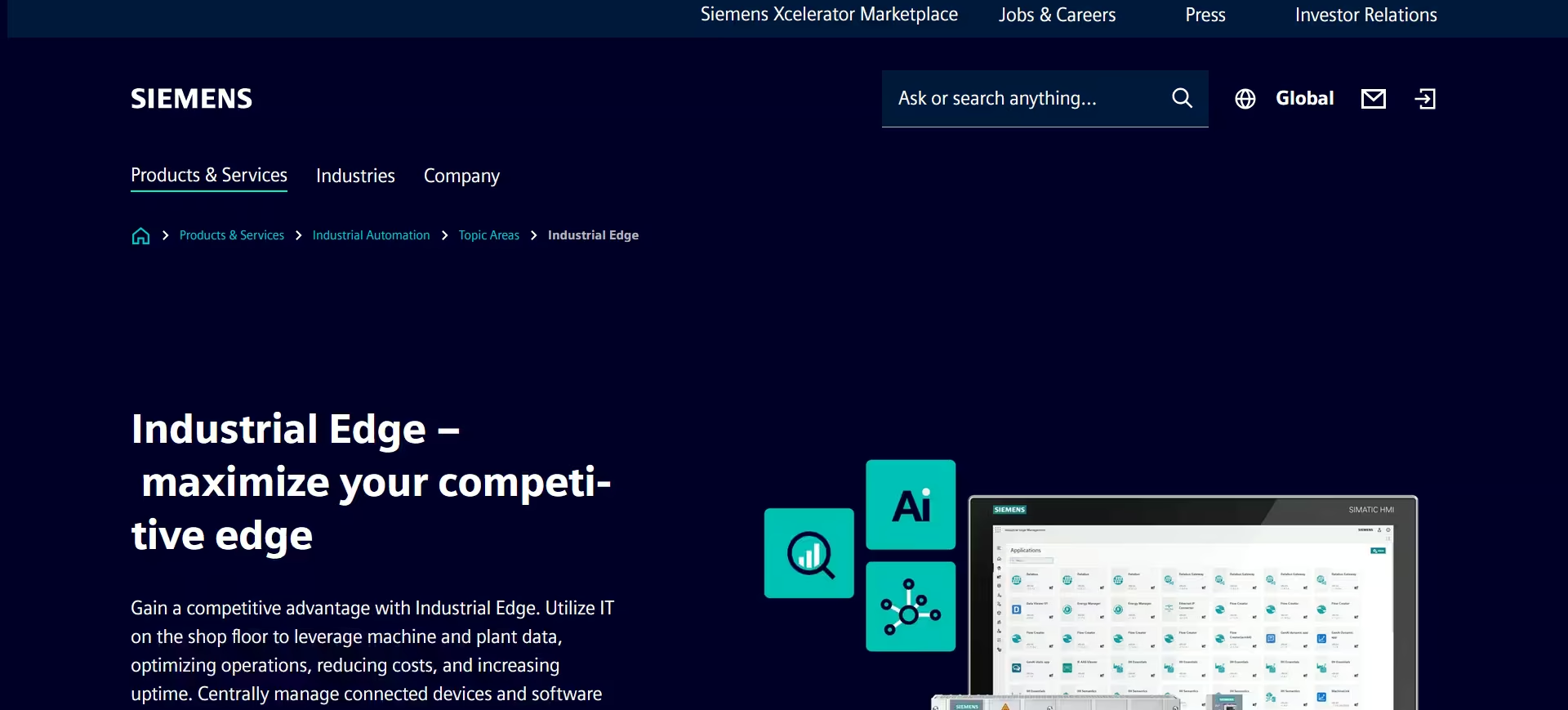
Siemens is one of the global leaders in predictive maintenance thanks to its Industrial Edge and MindSphere platforms, which integrate machine data in real time. The company uses advanced AI algorithms to predict failures and optimize equipment performance in highly complex industrial environments. A key advantage of Siemens is the strong integration of the OT layer with edge analytics, enabling decision-making without cloud latency. Siemens solutions are widely adopted in manufacturing, energy, and transportation due to their scalability and high reliability.
Pros:
Cons:
Best for:
Siemens is best for large manufacturers that need predictive maintenance tightly integrated with OT systems and edge analytics across many plants.
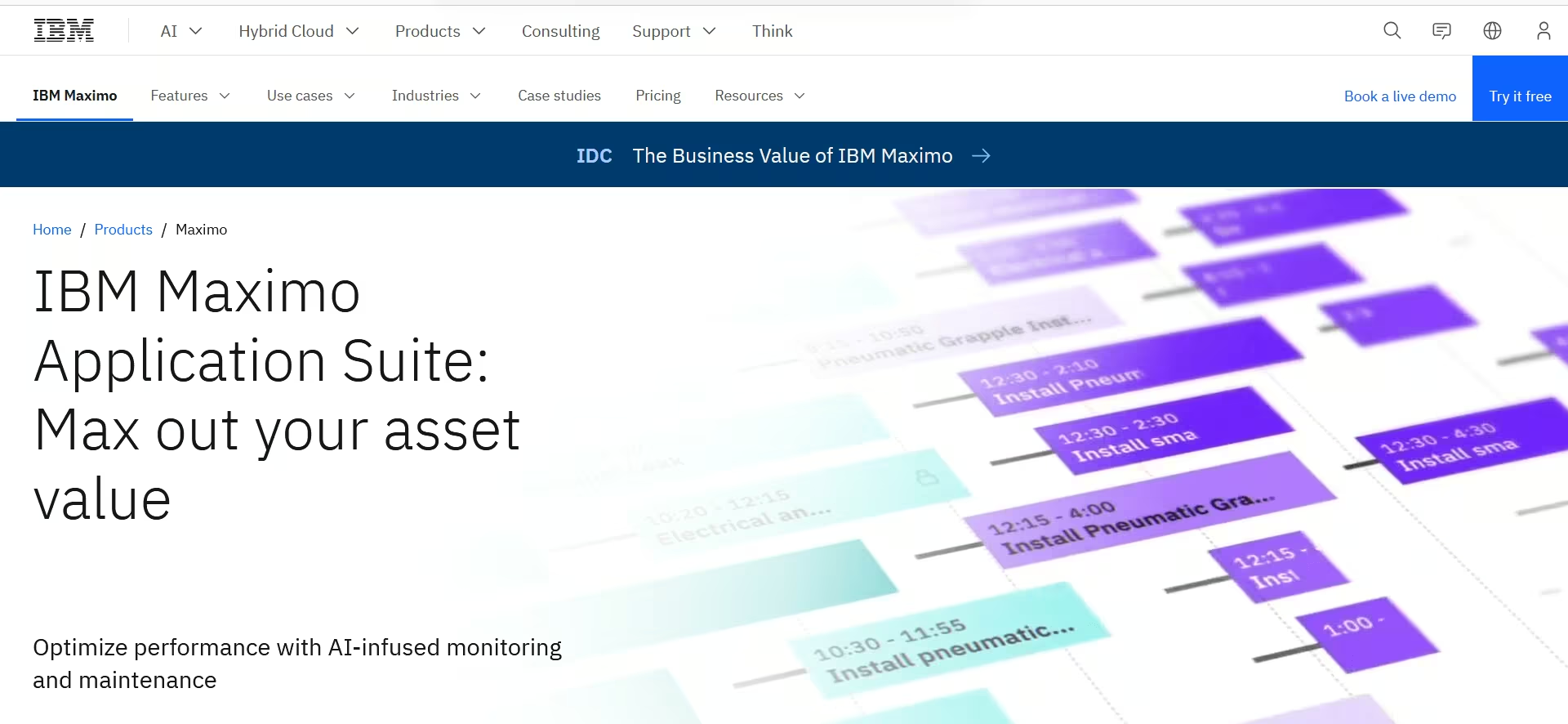
IBM is a leading provider of predictive maintenance solutions thanks to the Maximo Application Suite, which integrates asset management with IoT data and AI-driven analytics. The platform enables the creation of advanced failure-prediction models, supporting maintenance planning and reducing unplanned downtime. IBM stands out for its strong focus on data security and compliance with the requirements of large organizations operating complex infrastructures. An additional advantage is its support for digital twins.
Pros:
Cons:
Best for:
IBM is best for large organisations with complex infrastructure and strict security, audit and compliance requirements.
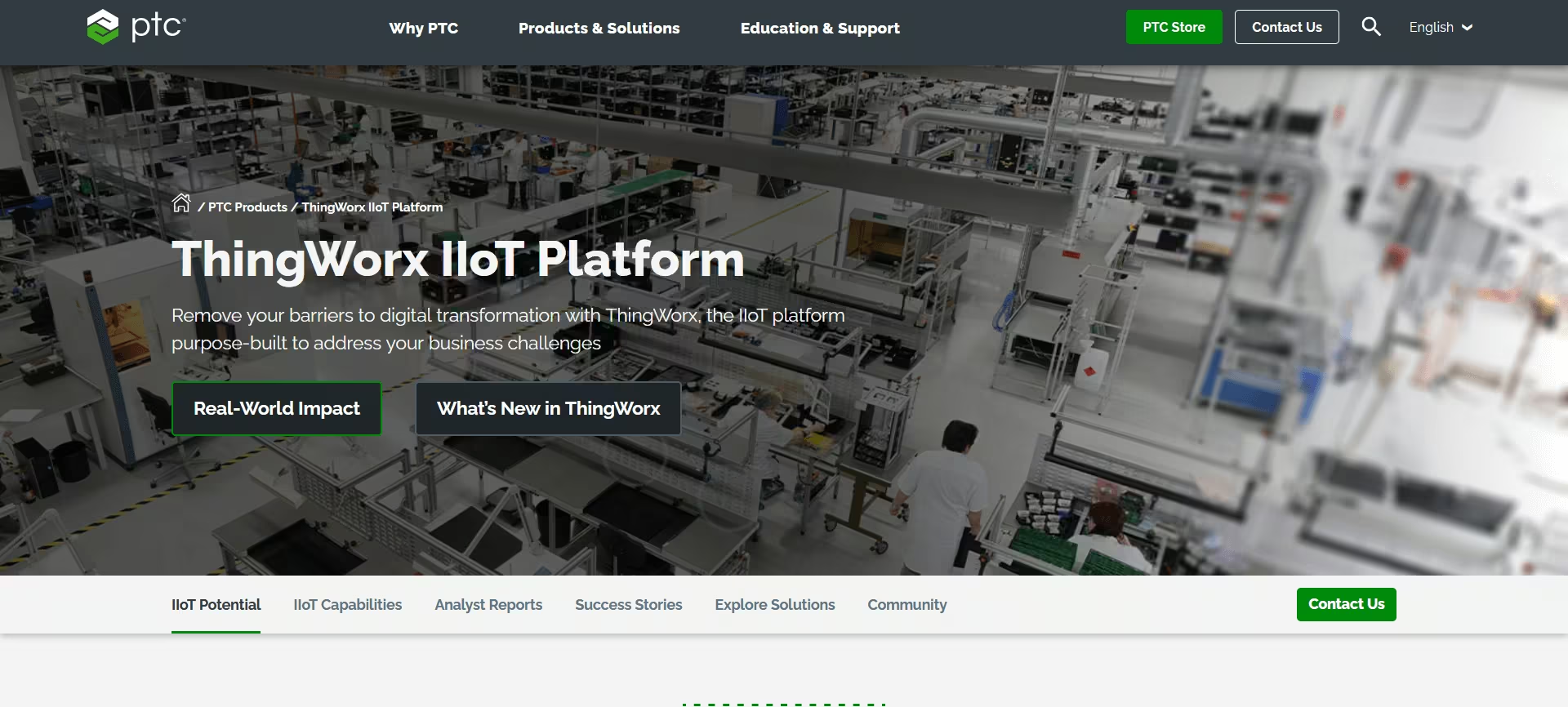
PTC offers some of the most advanced predictive maintenance solutions through its ThingWorx platform, which integrates data from IoT devices with analytical models and process visualizations. The system enables rapid development of industrial applications and the creation of digital twins, supporting precise machine condition monitoring and failure prediction. Thanks to its ability to integrate with a wide range of OEM equipment and production systems, PTC is highly valued in industries with a high level of automation, such as manufacturing, automotive, and machinery.
Pros:
Cons:
Best for:
PTC is best for highly automated manufacturers that already use PTC's Creo and Windchill and want asset data linked to the product lifecycle.
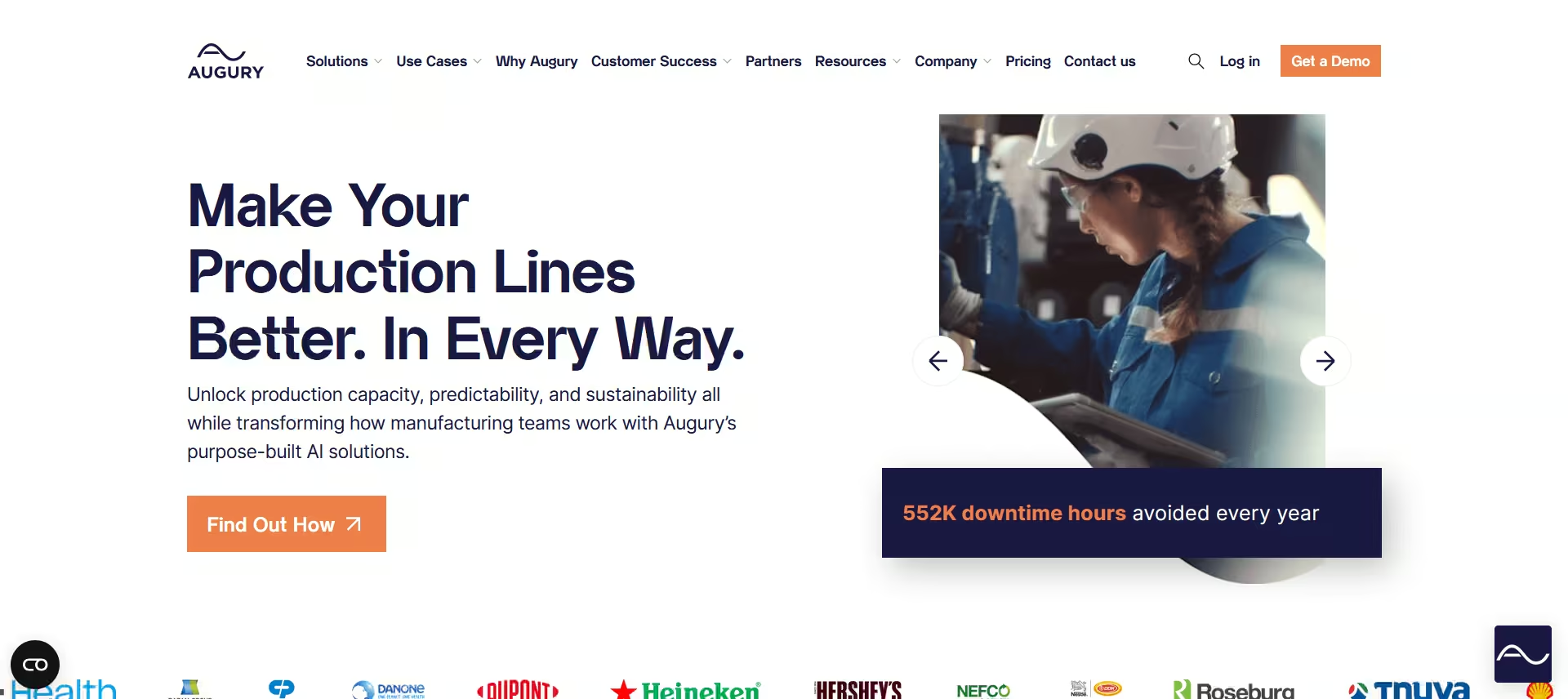
Augury provides predictive maintenance systems based on multisensor technology, using vibration, acoustic, temperature, and other measurements to assess the condition of bearings, motors, or power transmission components. The company develops proprietary AI models trained on millions of machine operating hours, achieving high accuracy in detecting failures such as imbalance, misalignment, bearing defects, and mechanical looseness. The Augury platform integrates with CMMS systems, enabling automatic creation of maintenance work orders while significantly reducing the average response time of maintenance teams.
Pros:
Cons:
Best for:
Augury is best for plants that want subscription-based monitoring of motors, bearings and other rotating machinery.
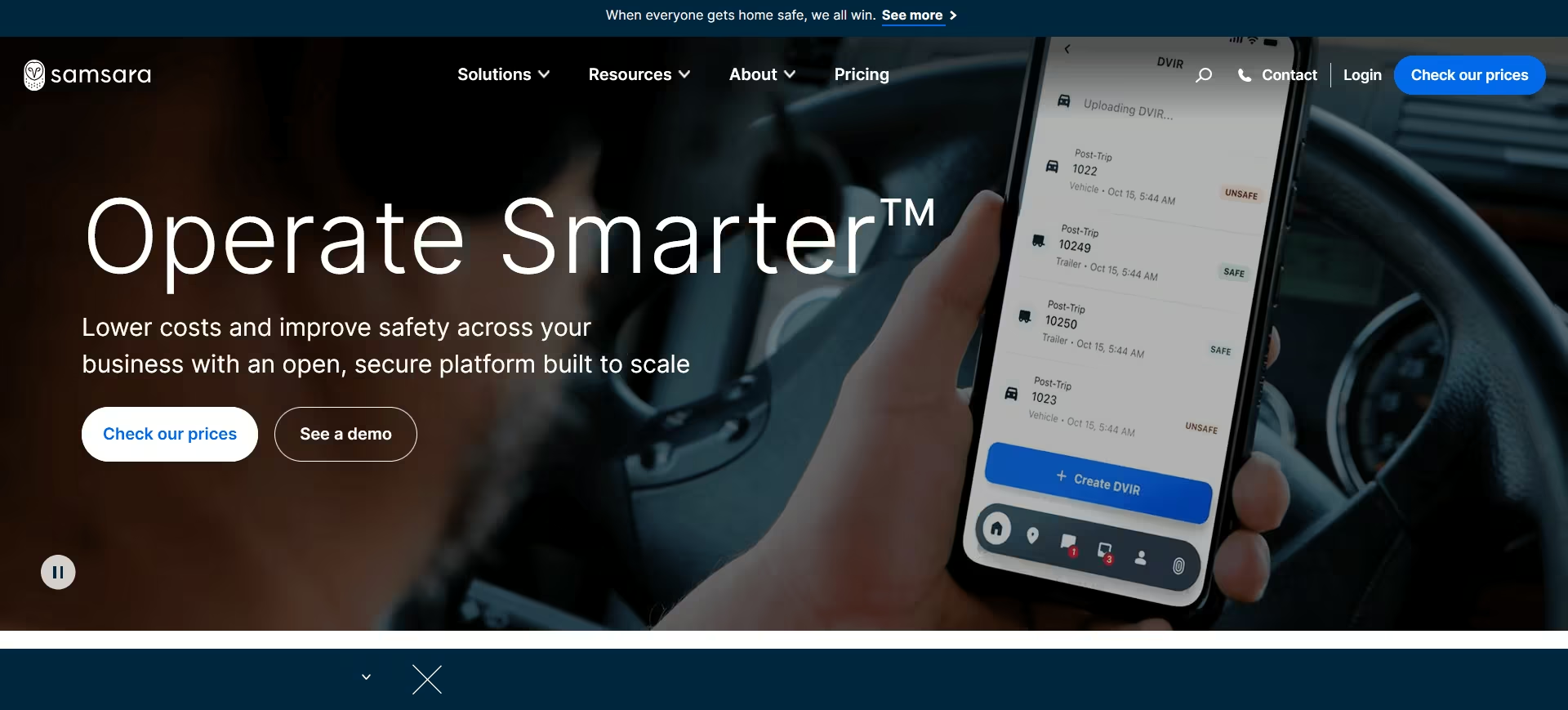
Samsara offers predictive maintenance solutions based on IoT sensors and real-time data analytics, enabling continuous monitoring of vehicle health, machinery performance, and fleet infrastructure. The platform leverages telematics, diagnostic data, and AI-driven alerts to detect early signs of component failures and optimize maintenance schedules. Through integration with fleet management systems, Samsara enables usage-based maintenance planning, significantly reducing operational costs for transportation and logistics companies.
Pros:
Cons:
Best for:
Samsara is best for transportation and logistics companies that need usage-based maintenance for vehicle fleets. Usage-based triggers suit fleets with predictable duty cycles, while operators with mixed asset criticality often prioritise work through risk-based maintenance instead.
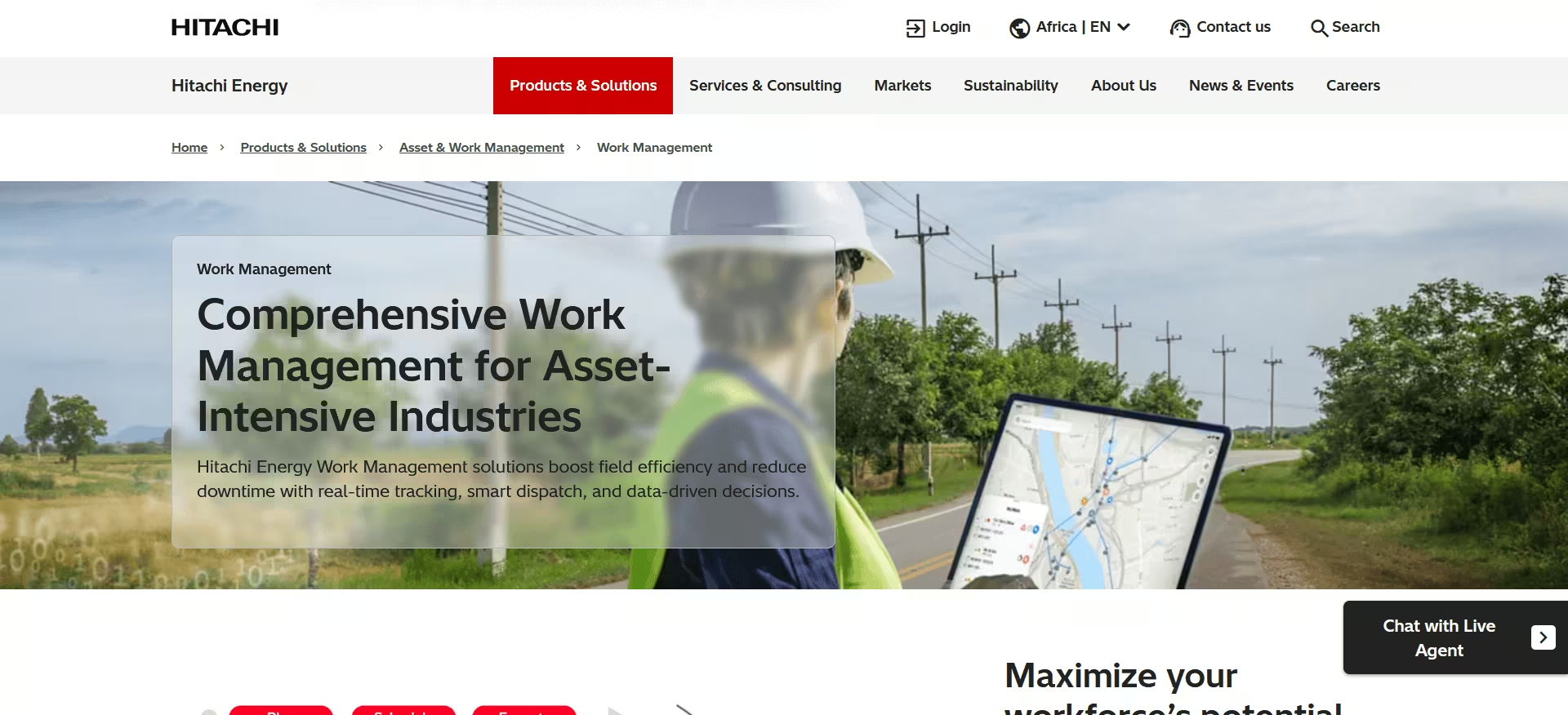
Hitachi Vantara is developing the Lumada Maintenance Insights platform, which uses advanced AI algorithms, physics-based models, and edge analytics. These capabilities allow the system to assess the technical condition of high-criticality assets, such as turbines, transformers, and transportation systems. The solution integrates data from IoT, SCADA, PLC, EAM systems, and process analytics, creating a unified asset model that enables anomaly detection, failure prediction, and precise RUL (Remaining Useful Life) calculations. Lumada is particularly effective in the energy, industrial, and infrastructure sectors.
Pros:
Cons:
Best for:
Hitachi Vantara is best for energy, industrial and infrastructure operators with mature IoT data that want digital twins of entire production lines.
GE Digital offers predictive maintenance solutions within the Predix and APM (Asset Performance Management) platforms. GE Digital leverages extensive libraries of failure mode models developed from decades of operational data from turbines, generators, and process installations. This enables the detection of component degradation before it becomes measurable using standard methods. The APM platform incorporates asset strategy optimization (ASO), which automatically selects the optimal maintenance strategy based on failure risk cost, asset criticality, and load scenarios. The system also integrates data from non-destructive testing (NDT), such as thermography and ultrasound. It combines this information with process data to build a complete, real-time asset health profile.
Pros:
Cons:
Best for:
GE Digital is best for energy and petrochemical operators managing large numbers of critical assets such as turbines and generators.
Read also:
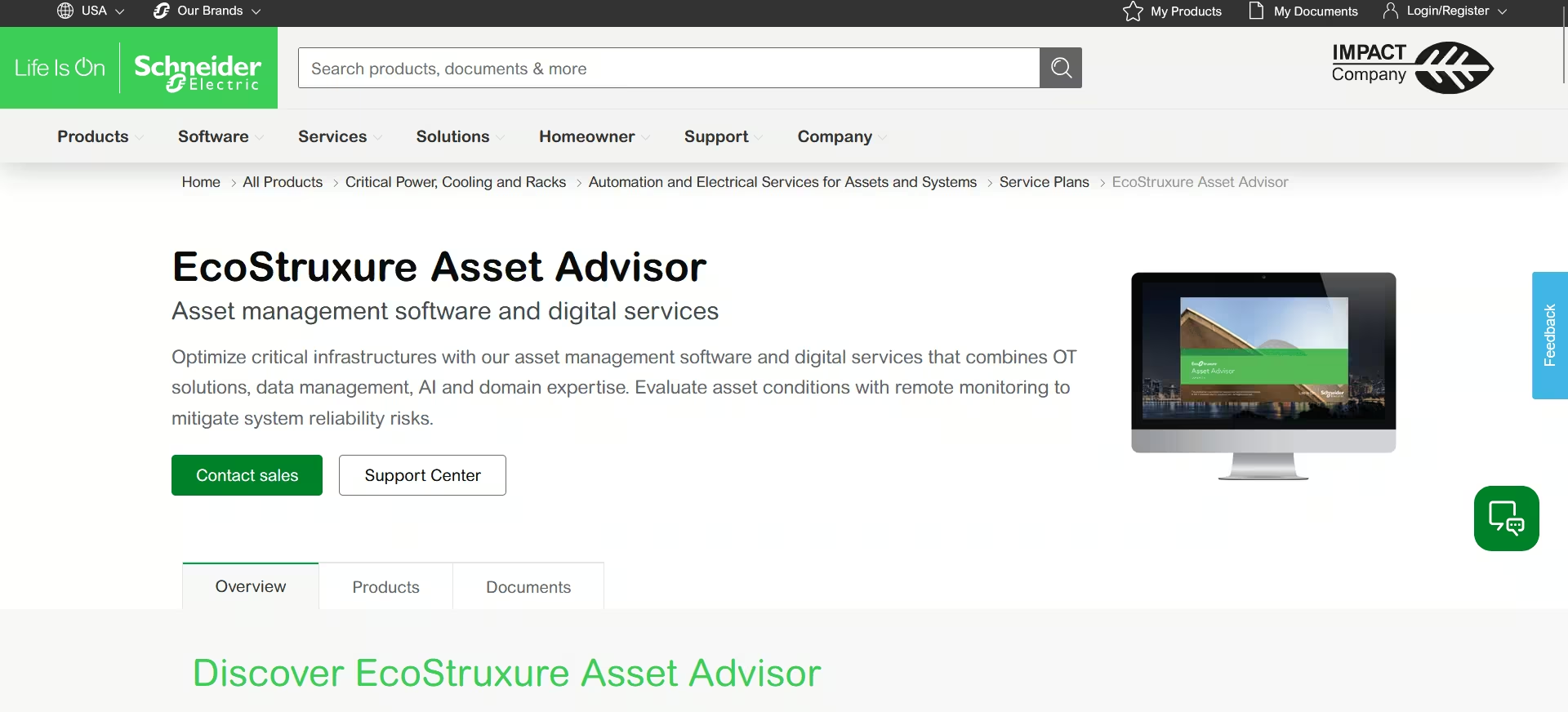
Schneider Electric, founded in 1836 as a manufacturer of steel equipment, has evolved over the decades into a global leader in industrial automation and energy management. As part of this transformation, the company developed the EcoStruxure Asset Advisor platform, which uses advanced analytics and risk-assessment models to monitor critical electrical systems in real time. The platform combines remote monitoring with support from Schneider Electric's domain experts to evaluate the health of critical assets, including electrical distribution equipment, UPS and batteries, cooling systems, drives, and motors. Through a partnership with Semiotic Labs, the platform can also predict upcoming failures in rotating equipment up to six months in advance, giving maintenance teams time to resolve issues before they occur. The solution is used across manufacturing, energy, healthcare, and other critical industries, combining ai driven anomaly detection with human expertise for asset performance management.
Pros:
Cons:
Best for:
Schneider Electric is best for facilities already running Schneider electrical, UPS and cooling equipment that want 24/7 remote expert monitoring.
AVEVA is a global leader in industrial software, offering predictive maintenance through its Asset Performance Management (APM) platform, built on the CONNECT Industrial Intelligence data layer. The platform combines real-time condition monitoring with predictive and prescriptive analytics powered by AI and machine learning to detect early signs of equipment failure and recommend targeted maintenance actions. In June 2026, AVEVA was named a leader in the Verdantix Green Quadrant for Asset Performance Management, with the report highlighting its strength in data management, reliability analysis, and predictive monitoring. Its asset library includes more than 1,500 documented failure modes and thousands of preventive and prescriptive maintenance tasks, giving reliability teams a substantial head start compared to building predictive models from scratch.
Pros:
Cons:
Best for:
AVEVA is best for multi-site operators already invested in the AVEVA PI System that want no-code predictive models.
There is no single best predictive maintenance solution for every organisation. Use this shortlist to match your situation to a company:
Nine of these companies sell predictive maintenance platforms; InTechHouse is an engineering partner that designs custom hardware and software. InTechHouse leads this ranking because it covers the full chain, from the sensor layer to AI models, and adapts to machines and protocols that off-the-shelf platforms don't support, backed by 22+ years of engineering experience and ISO 9001 certification.
We take PdM from vibration data acquisition through model training to alerts that maintenance teams trust, including retrofits on legacy machinery. Ask us for the scope of a first deployment.
See how we deliver predictive maintenance for your product
Not sure where to start? We work with companies at every stage, from early ideas to enterprise-level builds. A 30-minute call can save you months of guesswork.
Preventative maintenance follows a fixed schedule, servicing equipment at set intervals regardless of its actual condition. Predictive maintenance uses condition monitoring, vibration sensors, and machine data to predict equipment failures before they happen, so maintenance only occurs when it's genuinely needed. This shift reduces unnecessary maintenance costs while still avoiding unplanned downtime.
AI technologies process historical maintenance history and real-time sensor data through machine learning models trained to recognize the early signs of equipment failures, such as unusual vibration patterns or temperature drift. As these ai models process more operating hours across similar machines, their predictions typically become more accurate, which is why data quality matters as much as the algorithm itself.
Yes. Equipment operating outside its normal parameters, even before an outright failure, often produces inconsistent output. Continuous condition monitoring can catch this drift early, helping teams maintain product quality alongside the more commonly discussed benefit of reduced downtime.
Not necessarily. Large enterprises with hundreds of assets across multiple sites often need platforms with advanced asset performance management and strong ecosystem integration into existing systems like SCADA or CMMS. Smaller operations with a handful of critical equipment items may get most of the value from simpler condition monitoring and data acquisition, without needing a full enterprise-grade ai platform.
Predictive maintenance is often one of the first practical, measurable use cases companies deploy as part of a larger digital transformation effort, since maintenance costs and unplanned downtime are easy to quantify before and after implementation. Success here tends to build the internal case for expanding data analysis and ai capabilities into other areas, such as quality control or supply chain planning.
Most predictive maintenance software combines several data sources: vibration analysis, oil analysis, temperature readings, and operational data pulled from existing systems like SCADA or PLCs. Cloud infrastructure or cloud services are increasingly used to centralize this data across multiple sites, though on-premises deployment remains common for sites with strict data security requirements.
At enterprise scale the harder question is who owns each of those sources. Organisations that treat vibration, SCADA, and ERP feeds as products maintained by the teams closest to them scale better than a single central data team, which is the argument behind a data mesh, and if you are evaluating that layer our review of top data mesh implementation providers covers the vendors working on it. The predictive maintenance tool then sits on top of whatever data model you chose.
Damian Ledziński, PhD Eng., is an Applied Artificial Intelligence Expert and an Assistant Professor at Bydgoszcz University of Science and Technology. He has over 15 years of academic, research, software-engineering, and technology-development experience.
His work focuses on applying artificial intelligence, machine learning, deep neural networks, and data science to complex real-world systems. His principal research and engineering interests include autonomous unmanned aerial vehicles, drone navigation and swarm intelligence, biomedical engineering, medical signal and image analysis, predictive modeling, industrial IoT, and intelligent water-management systems.
Damian has contributed to multidisciplinary R&D initiatives including AI-assisted medical diagnostics, a Polish ventilator prototype, autonomous indoor drone systems for warehouse inventory, AI-supported water-consumption analysis, virtual medical assistants, and intelligent systems combining embedded devices with machine-learning models.
He is the author or co-author of more than 30 scientific publications. His work has appeared in international scientific publications covering artificial intelligence, biomedical engineering, signal analysis, autonomous systems, environmental monitoring, and data-driven infrastructure.
Damian is a co-creator of academic programs in Engineering in Medicine, AI in Medicine, and Data Science at Bydgoszcz University of Science and Technology. He combines scientific research with hands-on implementation, translating experimental AI methods into deployable technology. He writes about applied AI, machine learning, predictive analytics, autonomous UAV systems, AI in medicine, biomedical signal processing, industrial IoT, and intelligent models in real-world systems.
Damian Ledziński's academic profiles:
https://orcid.org/0000-0003-0796-4390
https://wtie.pbs.edu.pl/pl/pracownik/damian-ledzinski
https://www.researchgate.net/profile/Damian-Ledzinski
https://scholar.google.pl/citations?user=AlQpPB0AAAAJ&hl=pl
https://ludzie.nauka.gov.pl/ln/profiles/DN6pHXU6KZm/publications/f83a8833-6060-4fae-8628-3dbf57661394
From first prototype to production, our engineers can help you scope it, build it and get it certified.
This initial conversation is focused on understanding your product, technical challenges, and constraints.
No sales pitch - just a practical discussion with experienced engineers.
Share a few details about your product and context. We’ll review the information and suggest the most appropriate next step.