

In the contemporary digital age, where data and services drive innovation, “cloud computing” has taken centre stage. From businesses to individuals, its influence spans far and wide, reshaping how we store, access, and utilize information. So, what exactly is cloud computing, and why is it considered a revolutionary force in the world of technology?
Let's search for it in our article! We are 100% sure that you will find some exciting options for your business!
What is Exactly Cloud Computing?
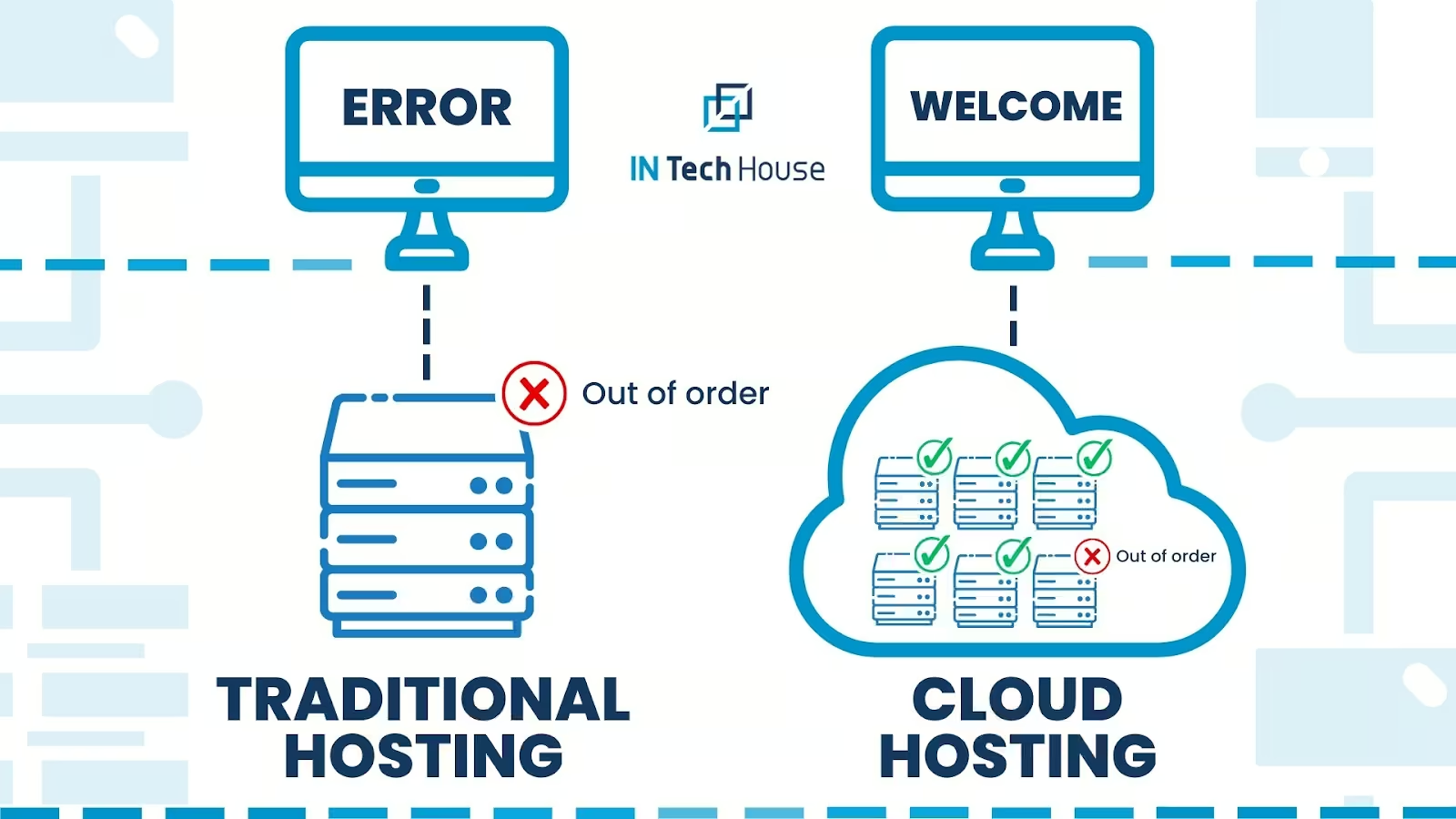
Cloud computing entails accessing diverse IT services and assets via the Internet whenever needed, usually through a flexible pay-as-you-go model. This eliminates the need for managing in-house physical infrastructure, as required in traditional client-server setups. Instead, you can simply lease access to applications, databases, computing capabilities, storage, and more, from a chosen cloud service provider. Embracing a cloud computing approach speeds up digital transformation and becomes essential for attaining and retaining a competitive edge.
The Journey of Cloud Computing Through Time
Cloud computing might appear to be a contemporary concept, yet its origins date back further than anticipated. To unravel its inception, we must journey back in time, all the way to the 1950s. During this era, the US military constructed a foundational infrastructure aimed at interconnecting computer terminals within their internal networks. This early stride, though remarkably expensive, marked the wind of transformation that turned out to be imperative, resonating even in today's digital landscape.
Additional milestones during this period encompass:
- 1969: The dawn of ARPANET (Advanced Research Projects Agency Network) – the maiden network linking four computers via the TCP/IP protocol suite.
- 1972: The emergence of IBM's CP-67/CMS, a virtual machine operating system.
In the subsequent 25 years, “cloud” technologies primarily flourished within the realms of major tech corporations, military entities, and esteemed educational institutions like MIT. Only in the late 1990s did they evolve into cost-efficient and feasible solutions for public marketplace organizations. Salesforce stands as a pioneer, successfully integrating cloud computing into its strategy in 1999.
Today, the global cloud landscape is dominated by four primary players:
- Amazon Web Services (holding a 31% share of the cloud market),
- Microsoft Azure (commanding a 20% share of the cloud market),
- Google Cloud (maintaining a 7% share of the cloud market),
- Alibaba (capturing a 6% share of the cloud market).
From its humble beginnings in military networks to its present dominance by tech giants, the journey of cloud computing underscores its pivotal role in shaping the modern technological world.
Top Benefits of Cloud Computing: 12 Golden Ones

Source: GoogleCloud
Cloud computing has swiftly evolved into an indispensable technological paradigm, revolutionizing the way businesses and individuals engage with technology. Here are some of the top benefits that underscore its significance:
- Cost Efficiency: Cloud computing eliminates the need for investing in and maintaining on-premises hardware and infrastructure. Users pay only for the resources they use, translating into cost savings and enhanced budget management.
- Scalability and Flexibility: Custom cloud solutions for embedded systems offer the ability to scale resources up or down as needed. This flexibility accommodates fluctuating demands, ensuring optimal resource allocation without unnecessary overhead.
- Global Accessibility: Cloud-based services are accessible from anywhere with an internet connection. This empowers remote work, collaboration, and seamless access to applications and data across geographical boundaries.
- Enhanced Collaboration: Cloud platforms facilitate real-time collaboration, allowing multiple users to work on the same documents or projects concurrently. This accelerates decision-making and boosts productivity.
- Disaster Recovery and Data Security: Cloud providers offer robust data backup and recovery mechanisms. This ensures data continuity even in the face of unexpected events, enhancing business resilience.
- Automatic Software Updates: Cloud services provide automatic software updates and maintenance. This alleviates the burden of manual updates and ensures that users always have access to the latest features and security patches.
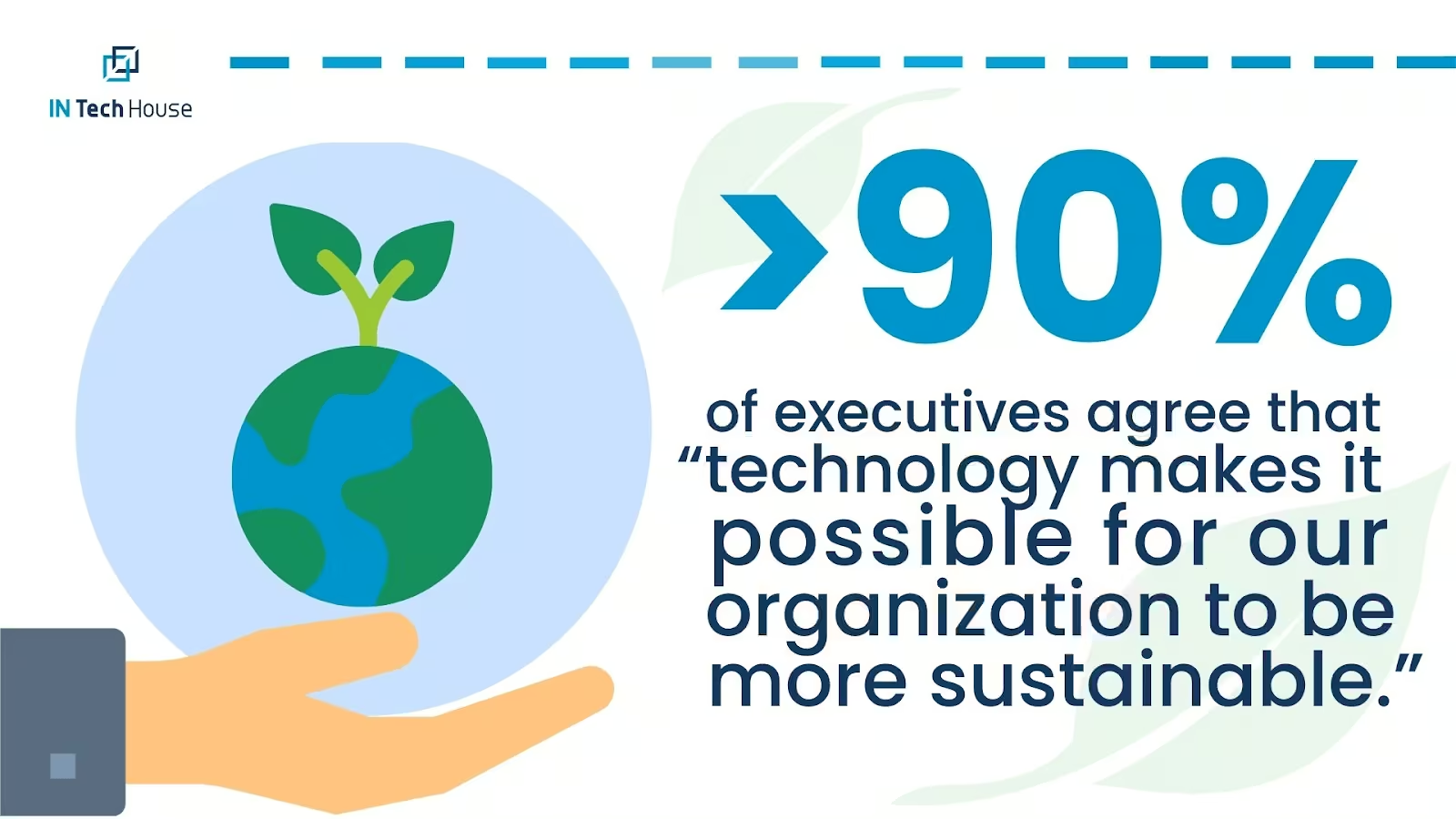
- Environmental Sustainability: Cloud computing reduces the carbon footprint by optimizing resource usage. The shared infrastructure model minimizes energy consumption compared to traditional data centres.
- Innovation Acceleration: Cloud platforms offer a rich ecosystem of tools and services that enable rapid development and innovation. This empowers businesses to bring new products and services to market faster.
- Improved Resource Management: Cloud solutions provide insights into resource usage, enabling businesses to optimize resource allocation based on actual needs. This prevents over-provisioning and underutilization.
- Global Presence: Cloud providers have data centres distributed across the globe. This allows businesses to deliver applications and services to users worldwide with low latency and high performance.
- Reduced Time to Market: Cloud computing expedites development cycles by providing pre-configured environments and services. This accelerates application deployment and time-to-market for new offerings.
- Competitive Edge: Adopting cloud solutions positions businesses to respond swiftly to market changes and technological advancements. This agility enables them to maintain a competitive edge in rapidly evolving industries. Recognition such as the PRO Tiger Award 2025 highlights how technology-driven organizations can build a lasting competitive advantage.
From cost savings to heightened agility, the benefits of cloud computing extend across various dimensions of business operations, empowering organizations to harness the power of technology to its fullest potential.
What are the Different Types of Cloud Computing Services?
Cloud computing offers a spectrum of services to cater to diverse needs. The primary types of cloud services include:
- Infrastructure as a Service (IaaS): Providing virtualized computing resources over the internet, including servers, storage, and networking components.
- Platform as a Service (PaaS): Equipping developers with tools and services for application development, testing, and deployment. • Software as a Service (SaaS): Delivering software applications over the internet on a subscription basis, accessible via web browsers; the IaaS vs PaaS vs SaaS breakdown compares these three tiers in detail.
- Software as a Service (SaaS): Delivering software applications over the internet on a subscription basis, accessible via web browsers.
- Function as a Service (FaaS) / Serverless Computing: Abstracting server management, enabling developers to deploy code without infrastructure concerns.
- Container as a Service (CaaS): Delivering container management and orchestration as a service to streamline application deployment.Container as a Service (CaaS): Delivering container management and orchestration as a service to streamline application deployment.
- Database as a Service (DBaaS): Offering database management and maintenance in a cloud environment
- Backend as a Service (BaaS): Providing backend functionalities for mobile and web applications, reducing development complexity
- Storage as a Service (STaaS): Supplying scalable storage solutions accessible over the internet.
Cloud computing service providers
There are many cloud computing providers worldwide famous.
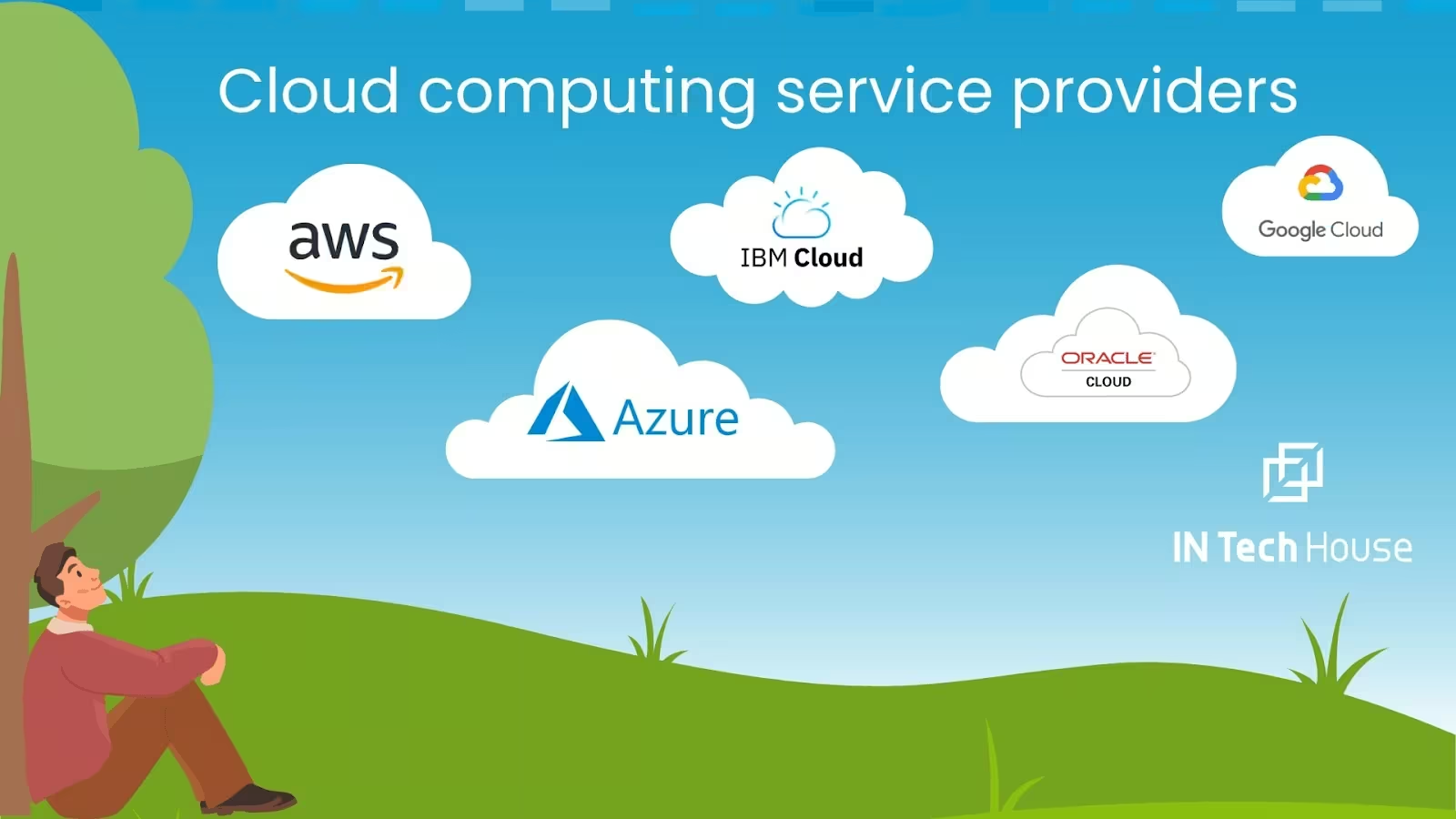
- Amazon Web Services (AWS): A comprehensive suite of cloud services offering computing power, storage, databases, and more.
- Microsoft Azure: Providing a range of services, from computing and analytics to AI and IoT solutions.
- Google Cloud Platform: Offering cloud computing, storage, machine learning, and data analytics services.
- IBM Cloud: Delivering a diverse set of cloud services, including AI, data, and blockchain solutions.
- Oracle Cloud: Providing cloud infrastructure and software services for businesses.
Cloud Computing Security
Security is top! But cybersecurity is what businesses need in the 21st century!
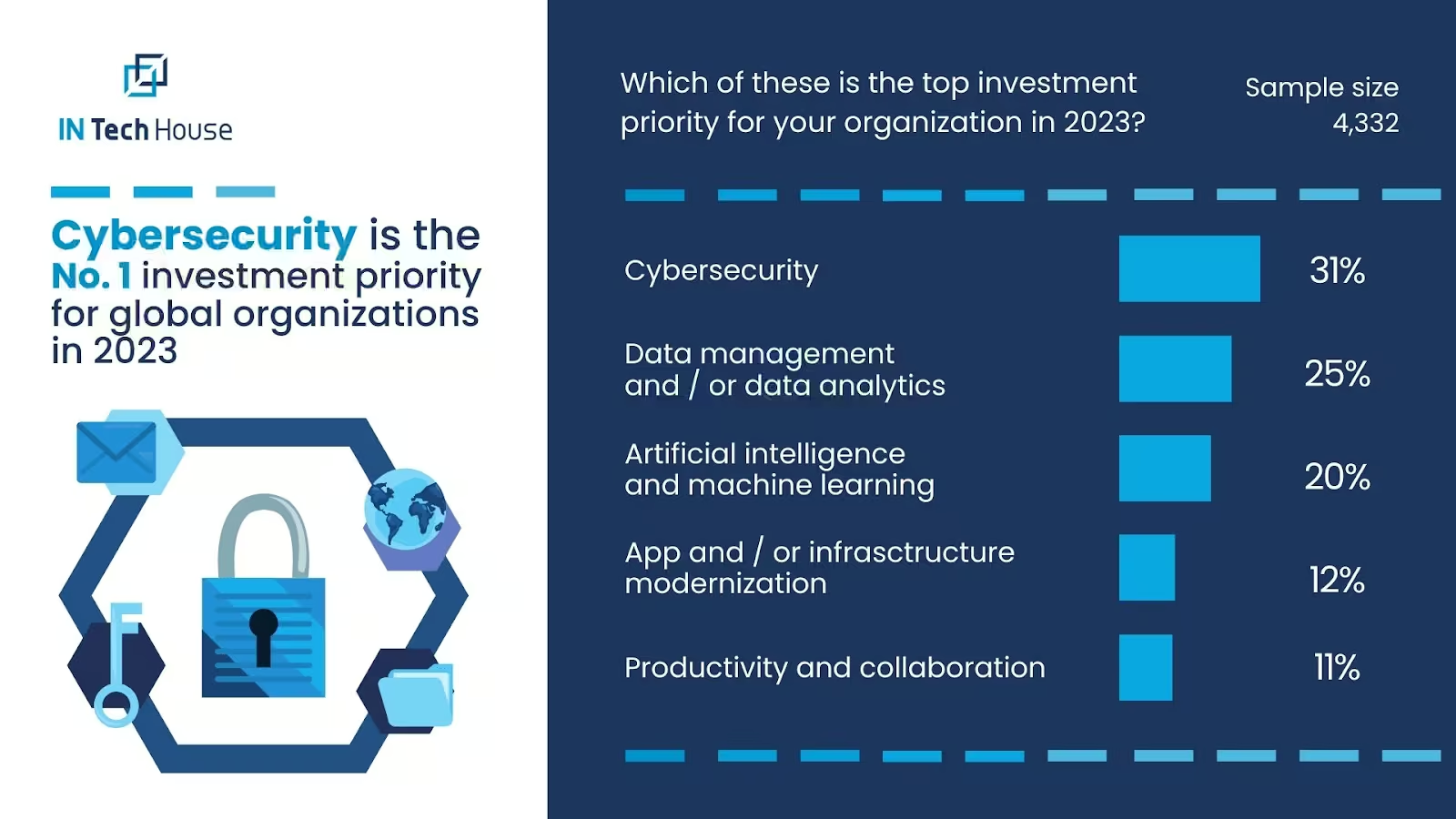
Security is a paramount concern in cloud computing. Cloud providers implement various security measures, including:
- Data Encryption: Encrypting data at rest and during transmission to safeguard sensitive information.
- Access Controls: Enforcing strict access controls and authentication mechanisms to prevent unauthorized access.
- Multi-Factor Authentication (MFA): Adding an extra layer of security by requiring multiple forms of verification.
- Firewalls: Implementing firewalls to protect against unauthorized network access.
- Compliance Standards: Adhering to industry-specific compliance standards to ensure data protection and privacy.
- Regular Audits: Conducting security audits and assessments to identify vulnerabilities and address them promptly.
In the dynamic realm of cloud computing, understanding the services, providers, and security measures is pivotal for businesses seeking to leverage the power of the cloud while prioritizing data protection and operational integrity.
Why is Cloud Computing Security Critical?
Cloud computing has revolutionized the way organizations operate and store data, offering unprecedented scalability and efficiency. However, the very nature of cloud technology, where data and applications are stored off-site and accessed remotely, underscores the paramount importance of cloud computing security. Here's why it is of utmost significance:
- Data Protection: Cloud environments house vast amounts of sensitive data, ranging from personal information to intellectual property. Ensuring robust security measures is crucial to prevent data breaches, unauthorized access, and data theft.
- Regulatory Compliance: Many industries are subject to stringent data protection regulations. Cloud computing security measures are essential to comply with regulations like GDPR, HIPAA, and more, avoiding costly fines and legal repercussions.
- Data Breach Prevention: Cloud breaches can lead to significant financial losses, reputational damage, and legal liabilities. Adequate security protocols mitigate the risk of data breaches and safeguard a company's financial health and reputation.
- Confidentiality: Organizations need to ensure that sensitive business data remains confidential. Strong encryption, access controls, and secure authentication mechanisms protect data from unauthorized exposure.
- Business Continuity: Cloud outages or data loss incidents can disrupt operations and lead to significant downtime. Implementing data backup, disaster recovery, and redundancy strategies safeguards business continuity.
- Multi-Tenancy Concerns: In public cloud environments, multiple customers share the same infrastructure. Robust security measures prevent data leakage or cross-tenant breaches, ensuring isolation between different user environments.
- Identity and Access Management: Cloud security ensures that only authorized users have access to resources. Effective identity and access management prevent unauthorized users from gaining entry and reduce the risk of insider threats.
- Evolving Threat Landscape: Cyber threats are constantly evolving. Cloud security measures need to adapt to new threats, vulnerabilities, and attack vectors to provide effective protection against emerging risks.
- Comprehensive Auditing and Monitoring: Cloud security solutions enable continuous monitoring and auditing of cloud environments. This proactive approach helps identify suspicious activities and address vulnerabilities promptly.
- Trust and Reputation: Demonstrating a commitment to robust cloud security enhances customer trust and reinforces a company's reputation as a responsible custodian of data.
- Secure Cloud Adoption: As cloud adoption accelerates, security concerns can deter organizations from embracing the technology fully. Addressing these concerns ensures a smooth and secure transition to the cloud.
In essence, cloud computing security is the foundation upon which successful cloud adoption and operation rest. By implementing rigorous security measures, organizations can fully reap the benefits of cloud technology while safeguarding their critical data, operations, and stakeholder trust.
Types of Cloud Computing
Diverse customer needs warrant an array of cloud architecture models, types, and services from providers. Aligning solutions with requirements is paramount, beginning with the selection of a cloud deployment type and architecture.
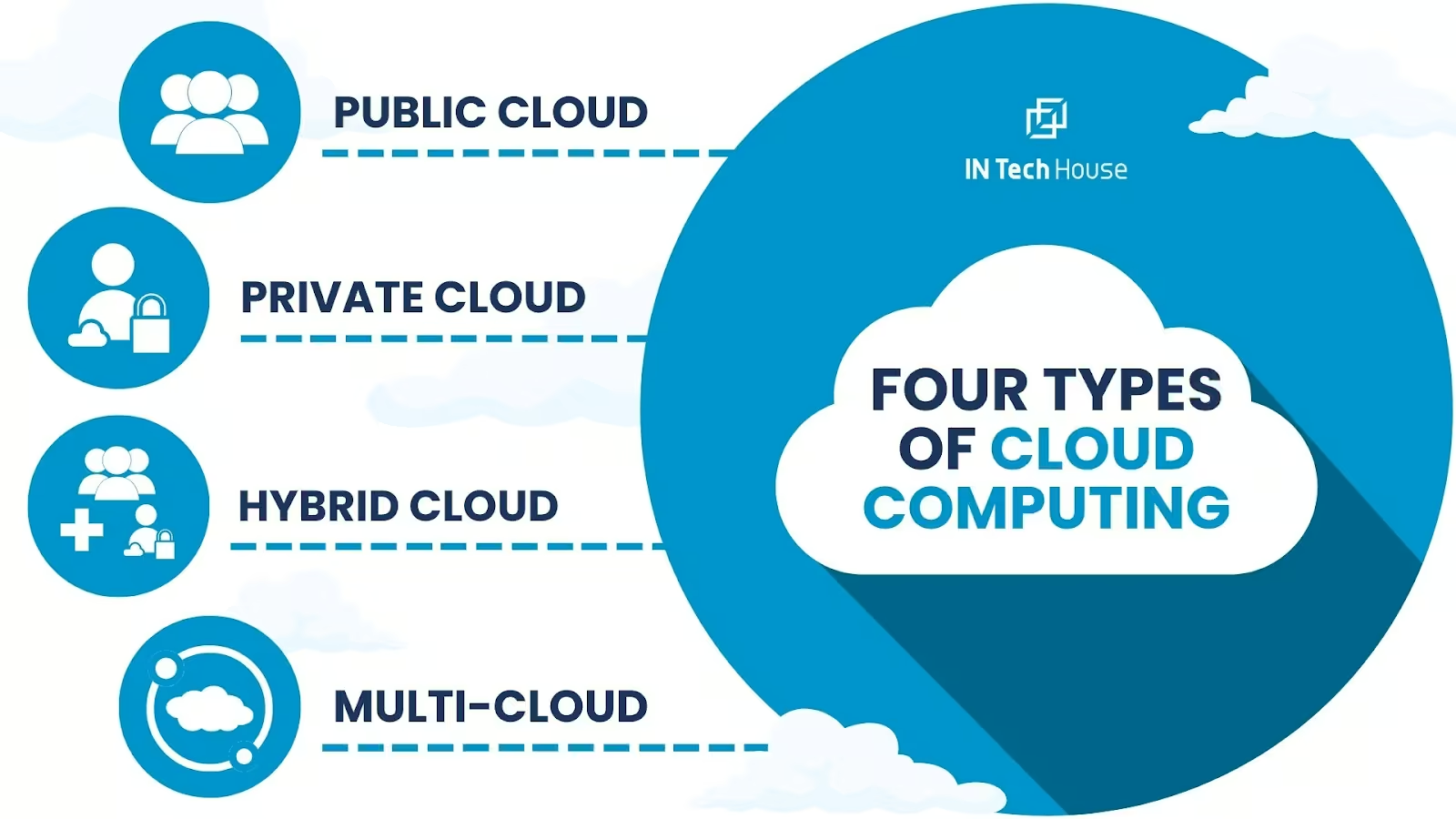
Four primary cloud service types present themselves: public, private, hybrid, and multi-cloud.
- Public Cloud: This encompasses accessible cloud systems like Google Cloud, Amazon Web Services, and Microsoft Azure. Public cloud services are more than popular because they can be free.
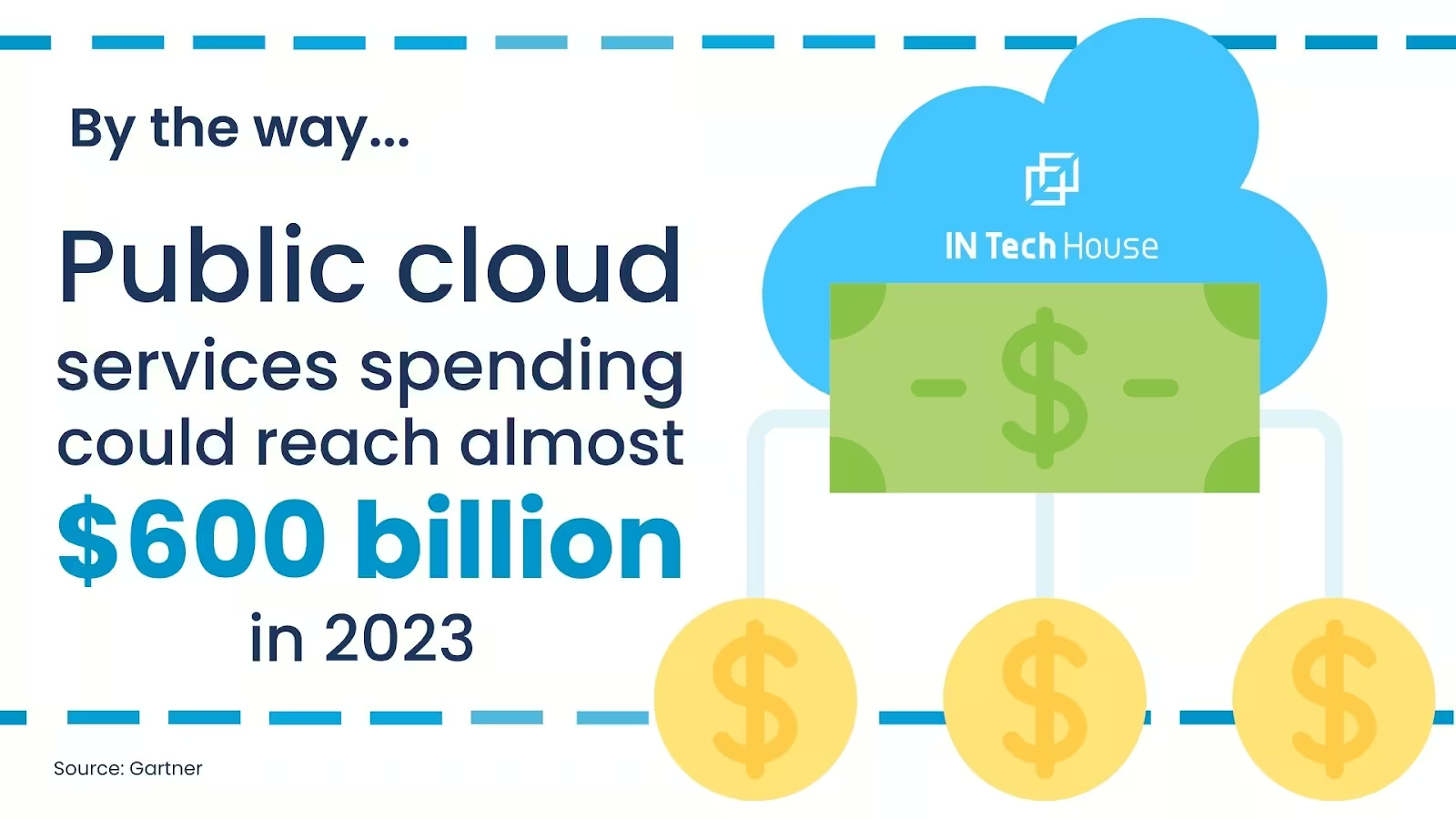
Source: Gartner
- Private Cloud: Local resources exclusively dedicated to an individual or organization constitute this cloud solution.
- Hybrid Cloud: A harmonious amalgamation of on-premises infrastructure and cloud-based storage and computing services.
- Multi-cloud Solution: This configuration involves multiple cloud providers, enabling companies to cherry-pick optimal features from diverse cloud systems to cater to their unique needs.
A clear cloud migration strategy and process is what most businesses need in 2023 and beyond.
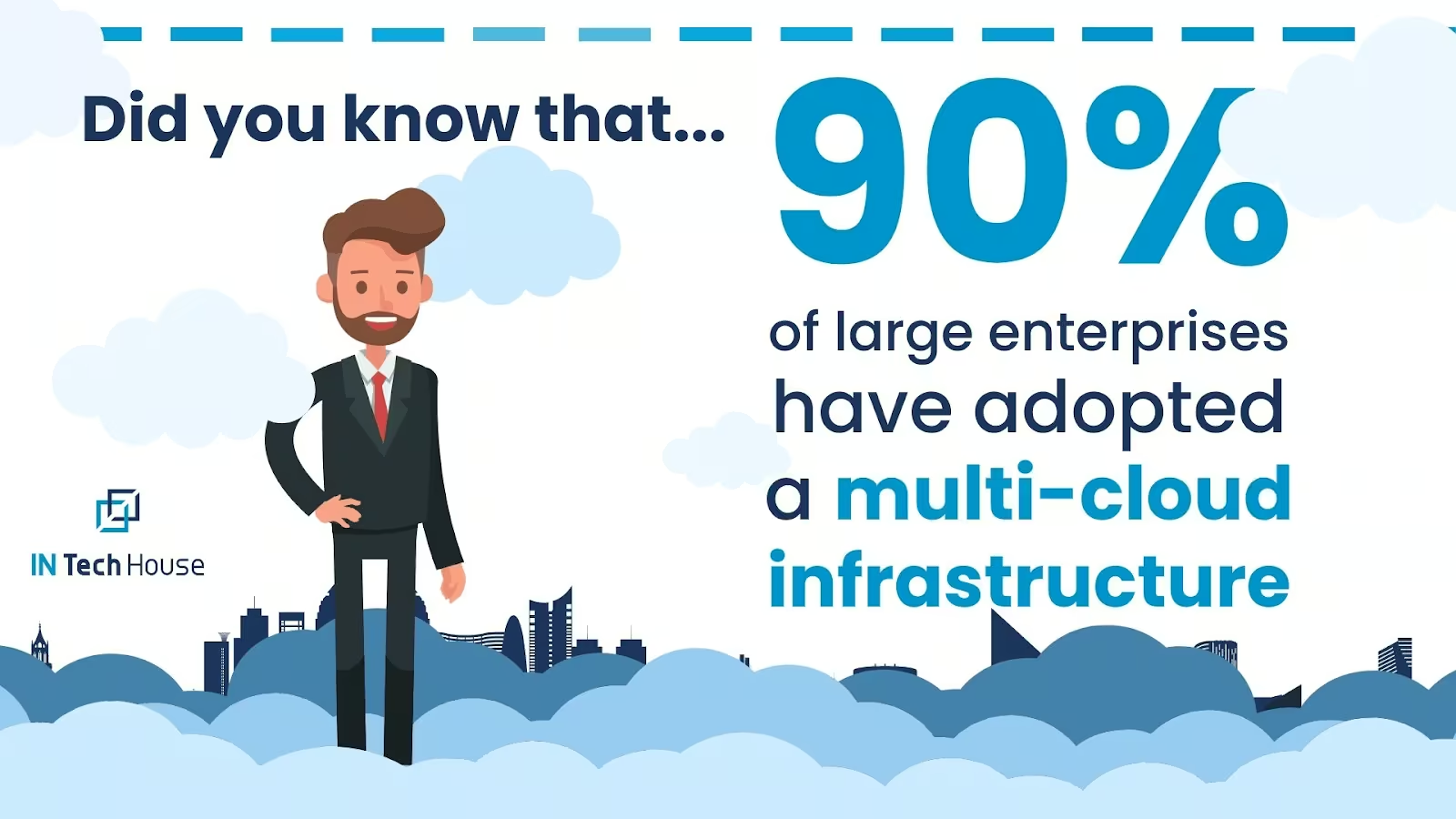
Source: Expodingtopics
Cloud services are easy to buy and hard to feed with reliable plant data. We build the ingestion, buffering and governance layer that makes cloud analytics trustworthy.
Cloud Computing Deployment Models
There are four Navigating Cloud Computing Deployment Models: Unveiling Public, Private, Hybrid, and Multi-Cloud.
The world of cloud computing offers a spectrum of deployment models, each tailored to specific organizational needs and preferences. Here, we explore four fundamental types of cloud computing resources:
- Public Cloud: In the public cloud model, cloud resources are made available to the general public by a service provider. This model offers cost-effective scalability and accessibility, with users sharing resources in a multi-tenant environment.
- Private Cloud: Private cloud deployment involves dedicated resources and infrastructure tailored for a specific organization. It provides enhanced control, security, and customization, making it suitable for businesses with stringent regulatory or data protection requirements.
- Hybrid Cloud: The hybrid cloud model blends the benefits of both public and private clouds. It allows organizations to maintain sensitive data and critical workloads on-premises while leveraging the scalability and flexibility of public cloud resources for less sensitive tasks.
- Multi-Cloud: Multi-cloud deployment involves utilizing services and resources from multiple cloud providers. This strategy allows businesses to select the best features from different providers, optimizing performance, resilience, and cost efficiency.
Each deployment model caters to unique organizational demands, offering a diverse range of options for harnessing the power of cloud computing to drive innovation and business growth.
Types of cloud services: IaaS, PaaS, serverless, and SaaS
The realm of cloud services encompasses a spectrum of options tailored to diverse business needs. Here, we delve into four fundamental types:
- Infrastructure as a Service (IaaS): IaaS offers virtualized computing resources over the Internet, granting users access to servers, storage, and networking components. This empowers organizations to build and manage their virtual data centres without the constraints of physical hardware.
- Platform as a Service (PaaS): PaaS provides a platform equipped with tools and services for application development, testing, and deployment. With PaaS, developers can focus on coding and innovation, leaving infrastructure management to the service provider.
- Serverless Computing: Serverless computing abstracts server management entirely. Developers write and deploy code, and the cloud provider handles the underlying infrastructure. This approach eliminates concerns about scalability, allowing resources to be allocated as needed.
- Software as a Service (SaaS): SaaS delivers software applications over the internet on a subscription basis. Users can access applications via web browsers without installing or maintaining them locally. This fosters hassle-free collaboration and ensures users always have access to the latest software updates.
Each of these cloud service types caters to distinct requirements, enabling organizations to choose the ideal model that aligns with their business goals and technical needs.
Cloud Computing Power
The capabilities of cloud computing extend beyond imagination, enhancing various aspects of business operations. Two key functions that stand out are:
- Test and Build Applications: Cloud computing provides a dynamic environment for testing and building applications. Developers can access scalable resources to develop, test, and deploy applications without the constraints of physical hardware. This accelerates development cycles, promotes innovation, and optimizes resource utilization.
- Store, Back Up, and Recover Data: Cloud platforms offer secure and scalable storage solutions for businesses. Data can be stored, backed up, and recovered seamlessly, ensuring data continuity even in the face of unexpected events. This eliminates the need for complex on-premises backup systems and enhances business resilience.
By embracing cloud computing, businesses can streamline their application development processes and fortify their data management strategies, all while reaping the benefits of scalability, flexibility, and cost efficiency.
The Role of Cloud Computing in the Internet of Things
The convergence of cloud computing and the Internet of Things (IoT) has ignited a transformative era in technology. Cloud computing plays a pivotal role in amplifying the capabilities of IoT, reshaping industries and enriching user experiences. Here's a closer look at how cloud computing fuels the IoT landscape:
Cloud computing work for IoT is precious!
Read also:
- IaaS vs PaaS vs SaaS: 10 Major Differences
- What Is Hybrid Cloud?
- Custom Cloud Solutions: Boosting Embedded System Operations
1. Data Storage and Processing:
IoT devices generate an unprecedented volume of data. Cloud computing provides the necessary storage and processing power to manage and analyze this data. By offloading data processing tasks to the cloud, IoT devices can remain lightweight and efficient, while cloud servers handle the heavy lifting.
2. Scalability and Flexibility:
IoT deployments often experience fluctuations in demand. Cloud computing's scalability ensures that resources can be dynamically allocated to accommodate varying workloads. This scalability optimizes performance and cost-efficiency without overburdening IoT devices.
3. Real-time Analytics:
Cloud platforms offer real-time analytics capabilities, enabling businesses to gain actionable insights from IoT-generated data promptly. This empowers data-driven decision-making and allows businesses to respond swiftly to changing conditions.
4. Remote Monitoring and Management:
Cloud-based dashboards and management tools enable remote monitoring and control of IoT devices. This is particularly valuable in industrial settings, where equipment can be monitored, diagnosed, and even updated remotely.
5. Cost Efficiency:
Cloud services follow a pay-as-you-go model, eliminating the need for upfront hardware investments. IoT projects can leverage cloud resources without the financial burden of maintaining dedicated infrastructure.
6. Firmware Updates and Maintenance:
Cloud computing facilitates seamless firmware updates and maintenance for IoT devices. Manufacturers can remotely deploy updates, patches, and security enhancements to devices, ensuring their longevity and performance.
7. Global Accessibility:
Cloud-enabled IoT devices can be accessed and controlled from anywhere with an internet connection. This global accessibility extends the reach of IoT applications and services, transcending geographical boundaries.
8. Enhanced Security:
Cloud providers often invest heavily in robust security measures. IoT devices can leverage these security features, mitigating the risks associated with data breaches and unauthorized access.
9. Innovation and Rapid Prototyping:
Cloud computing accelerates IoT innovation by providing developers with the necessary tools, platforms, and resources to create and test new applications. This expedites the development lifecycle and fosters continuous improvement.In the synergy of cloud computing and the Internet of Things, a new frontier of possibilities emerges. Businesses can harness the power of cloud resources to amplify the capabilities of their IoT solutions, fostering innovation, efficiency, and a connected future.
InTechHouse Main Cloud Computing Services
At InTechHouse, we empower businesses with a suite of advanced cloud computing solutions designed to catalyze growth and innovation. Our primary cloud computing services encompass:
- Cloud Infrastructure Services: We offer a robust cloud infrastructure that spans virtual servers, storage, and networking components. Leverage our scalable resources to build and manage your digital foundation without the complexities of physical hardware.
- Platform as a Service (PaaS): Experience streamlined application development, testing, and deployment through our PaaS offerings, including industrial data platform development for plant floor and OT data.Focus on coding and innovation, while we manage the underlying infrastructure to accelerate your software development lifecycle.
- Data Storage and Management: Our cloud storage solutions provide secure and scalable repositories for your valuable data. Seamlessly store, back up, and recover data, ensuring business continuity and data integrity.
- Hybrid Cloud Solutions: Navigate the hybrid cloud landscape with confidence. Combine the benefits of on-premises infrastructure with cloud resources to optimize workloads, enhance security, and achieve a harmonious balance between control and scalability.
- Application Hosting: Host your applications in our reliable cloud environment, ensuring optimal performance, availability, and accessibility for users across the globe.
- Managed Cloud Services: Rely on our expertise to manage and optimize your cloud resources. From monitoring to performance optimization, our managed services ensure your cloud environment operates at its peak potential.
- Cloud Security Solutions: Safeguard your digital assets with our robust cloud security solutions. We prioritize data protection and compliance, providing peace of mind in an ever-evolving threat landscape.
Experience the Future of Cloud Computing with InTechHouse. Our tailored solutions empower businesses to harness the power of the cloud, enabling innovation, efficiency, and success.
InTechHouse Great Cloud Computing Cases
Being over 20 years on the market, we have hundreds of cases connected with cloud computing. But it will be a long process of reading. So, we want to mention the brightest cases that we finished not long ago.
Data Analysis Standardisation for our Frech client
We decided to create standardization and preparation of data for analysis in the Data Mesh architecture.
Laboratory Software Optimization for Healthcare Industry
We made stabilization and efficiency improvements to the existing system. Delivery of highly maintainable source code with extended documentation.
Read more about the case Optimizing laboratory operations!
Data Centralization Solution for IoT
We designed and constructed IoT devices collecting and saving information about events in a central database. In this case, internal employees can have easy and streamlined access to different information they need with high-level external protection.
Read more about the case Data centralization solution!
Conclusion
Cloud computing has emerged as a transformative force that is reshaping the landscape of technology and business. Its ability to provide on-demand resources, scalability, and cost-effectiveness has revolutionized how organizations approach IT infrastructure and services. With cloud computing, businesses can rapidly adapt to changing demands, innovate more efficiently, and focus on their core competencies without the burden of managing complex hardware and software.
We design hybrid setups where latency sensitive processing stays local and the cloud handles storage and analytics. Ask for a review of your current split.
Let's talk about your next move
Not sure where to start? We work with companies at every stage, from early ideas to enterprise-level builds. A 30-minute call can save you months of guesswork.
FAQ
What is cloud computing in simple terms?
Cloud computing is on-demand access to compute, storage, databases and software over a network, rented from a provider instead of owned and operated in-house. The provider runs the data centers and hardware; the customer provisions capacity through a console or API and usually pays per hour, per request or per gigabyte. The practical shift is from buying capacity up front (capex) to paying for what is consumed (opex), which rewards variable workloads and penalizes idle, forgotten resources.
How does cloud computing work under the hood?
Cloud computing works by pooling physical servers in large data centers and slicing them into isolated virtual resources with hypervisors and container runtimes. A control plane exposes those resources through APIs, so a virtual machine, a storage bucket or a database can be created in minutes and released just as fast. Multi-tenancy lets many customers share the same hardware while isolation keeps their workloads apart. Metering on every resource is what makes pay-as-you-go billing and autoscaling possible.
What are the four cloud deployment models?
The four cloud deployment models are public, private, hybrid and multi-cloud. Public cloud runs on shared provider infrastructure; private cloud dedicates infrastructure to one organization, on site or hosted; hybrid cloud connects private or on-premises systems with a public cloud so workloads and data can move between them; multi-cloud uses services from more than one public provider. The choice is usually driven by data residency, latency, regulatory constraints and how much operational work the organization is willing to keep.
What is the shared responsibility model in cloud security?
The shared responsibility model defines which security tasks the cloud provider owns and which stay with the customer. The provider secures the physical data centers, hardware and virtualization layer; the customer secures identities, access policies, data, configurations and, on IaaS, the operating system and patches. Most cloud incidents trace back to the customer side, typically misconfigured storage, over-privileged accounts or missing multi-factor authentication. Reading the provider's responsibility matrix before deployment prevents gaps nobody believes they own.
What role does cloud computing play in IoT systems?
In IoT systems, cloud computing provides the fleet-wide layer: device registry, message ingestion, long-term storage, analytics, dashboards and firmware distribution. Devices usually publish telemetry over MQTT or HTTPS, often through a gateway, and the cloud aggregates data from thousands of units that could never store or correlate it locally. Time-critical logic, such as control loops or safety interlocks, stays on the device or edge node, because round trips to a remote region add tens to hundreds of milliseconds.
When is cloud computing not the right choice?
Cloud computing is a weaker fit when workloads are steady and predictable, latency budgets are tight, or data may not leave a site or jurisdiction. A server running flat out for years can cost less on premises than on hourly pricing, and data egress fees add up for high-volume transfers. Air-gapped OT networks, hard real-time control and strict sovereignty rules also favor local infrastructure. Many organizations end up hybrid, keeping these workloads local and moving elastic or analytical ones to the cloud.

Jacek Suty
Jacek Suty is Head of Solution Architecture at InTechHouse, with more than 30 years of experience in system architecture, enterprise IT, infrastructure, information security, and complex digital transformation programs.
He specializes in designing enterprise and solution architectures, translating business and regulatory requirements into scalable technology platforms, and coordinating delivery across software, infrastructure, data, and security teams. His work covers enterprise architecture based on TOGAF, system modeling using UML and BPMN, cloud and on-premise infrastructure, CI/CD processes, data platforms, cybersecurity, and IT governance.
Jacek has contributed to large-scale technology programs for public institutions, finance, energy, education, healthcare, utilities, and digital archives. His project experience includes nationwide public digital infrastructure, distributed document-management and archiving systems, data-exploration platforms using machine learning and predictive analytics, and transaction systems combining blockchain, metadata standards, and computational intelligence.
He holds PRINCE2 Practitioner, Management of Risk, Scrum Master, ITIL Foundation, and ISO/IEC 27001 Lead Auditor qualifications. Jacek is currently pursuing a doctoral degree at Bydgoszcz University of Science and Technology, combining academic research with extensive experience in real-world architecture and technology delivery.
He writes about enterprise architecture, system design, digital transformation, data platforms, cloud infrastructure, cybersecurity, technology governance, and the practical application of AI in complex information systems.
Jacek Suty's academic and professional profiles:
https://pbs.edu.pl/pl/doktorant/uczelniania-rada-samorzadu-doktorantow
https://www.isep.pw.edu.pl/isep/zs/Aktualnosci/Kalendarium-wydarzen2/Seminarium-zakladowe-9.03.2021-Jacek-Suty
https://aionehealth.pl/wp-content/uploads/2026/04/Raport-2026-final.pdf
Let's talk about your next project
From first prototype to production, our engineers can help you scope it, build it and get it certified.



Discuss your product with our R&D team
This initial conversation is focused on understanding your product, technical challenges, and constraints.
No sales pitch - just a practical discussion with experienced engineers.
Share a few details about your product and context. We’ll review the information and suggest the most appropriate next step.