Multinational healthcare company running high-cost diagnostic equipment
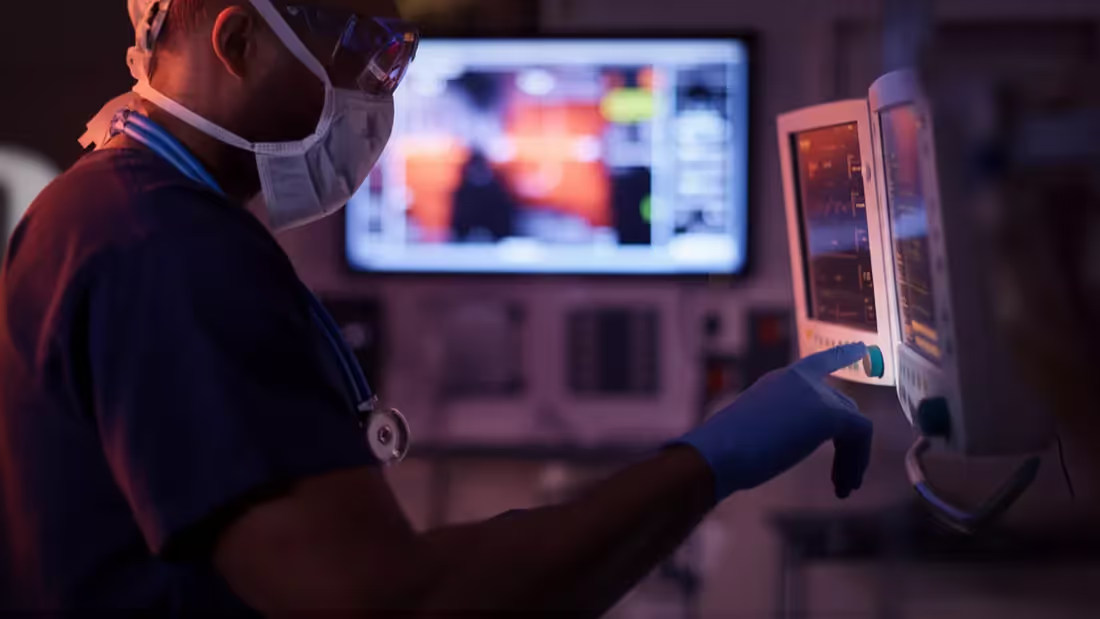
A multinational healthcare company operating across multiple countries and serving millions of patients, recognised as a leading brand in the healthcare sector, where operational reliability and equipment availability are critical to maintaining service quality and efficiency.
Downtime of expensive diagnostic instruments
High-cost diagnostic equipment required better monitoring, maintenance, and availability control.
Laboratory operations relied on complex and expensive diagnostic instruments, where failures or downtime directly impacted service continuity and operational costs.
The client needed to:
- reduce equipment downtime and failure rates
- optimize maintenance schedules
- ensure continuous availability of diagnostic tools
- improve utilization of existing assets
At the same time, limited visibility into equipment condition made it difficult to make informed maintenance and operational decisions.
Requirements for predictive maintenance of lab equipment
To improve efficiency and reduce operational risk, the client needed a system that could:
- monitor equipment performance in real time
- collect and analyze historical data on failures and maintenance
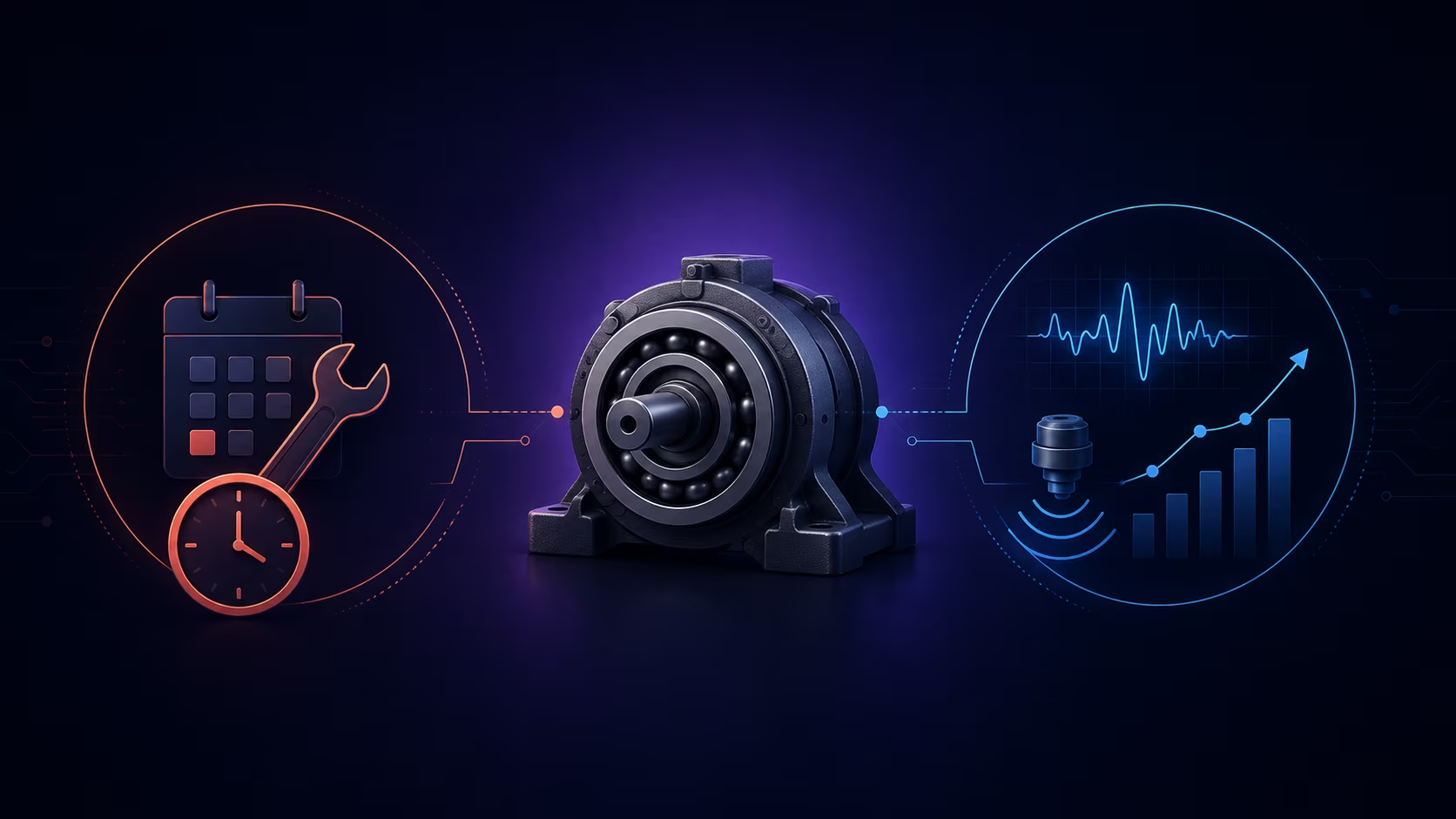
- support predictive maintenance strategies
- optimize service intervals based on actual usage and condition
- enable better coordination across teams
The goal was to move from reactive maintenance to a data-driven operational model.
IoT monitoring and analytics platform for diagnostic instruments
A monitoring and analytics platform was introduced to support laboratory operations and equipment management.
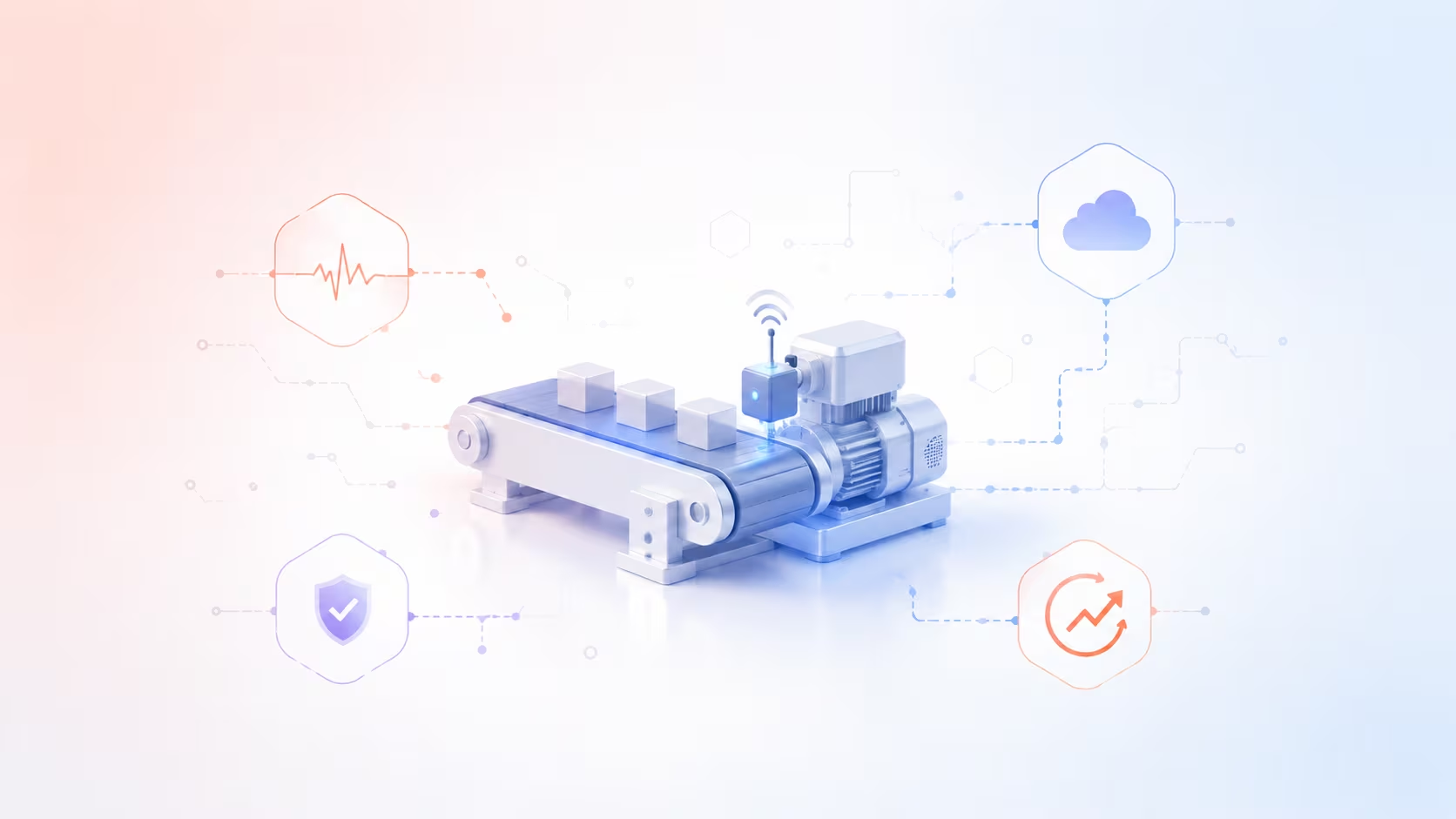
Using IoT integration, the system enables continuous tracking of diagnostic instruments, providing real-time insights into their condition and performance. This approach applies principles of OT/IT integration and industrial data platforms by connecting equipment data with software for operational monitoring, analysis, and maintenance planning.
The platform combines hardware monitoring with workflow management, supporting both operational visibility and maintenance planning.
By integrating predictive maintenance capabilities, the system helps identify potential issues before they lead to failures.
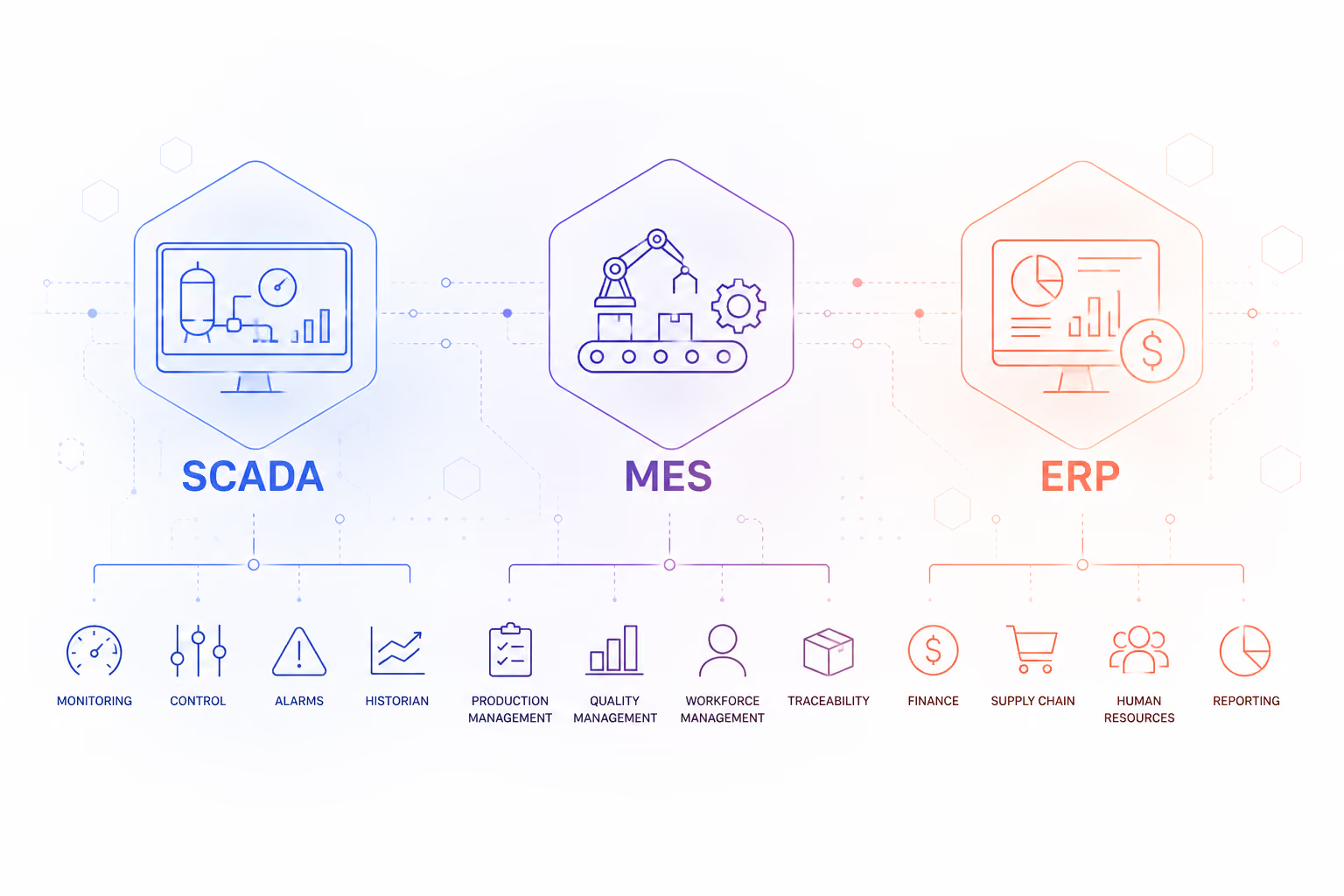
Equipment monitoring and maintenance analytics serve different purposes than production execution and enterprise resource planning. Our comparison of SCADA, MES, and ERP systems explains how these technologies differ and where they fit within industrial operations.
It is built using scalable cloud and data technologies:
- AWS Serverless architecture for scalable infrastructure
- Node.js for backend services and data processing
- React.js for the user interface
- GraphQL (AWS AppSync) for efficient data querying
- AWS Cognito for authentication and access control
- DynamoDB for flexible data storage
- Terraform for infrastructure as code
- GitLab pipelines for CI/CD
How equipment data sets optimal service intervals
The system collects data directly from laboratory equipment and processes it using cloud-based infrastructure.
Historical and real-time data are analysed to detect patterns, identify anomalies, and support maintenance decisions.
Based on usage and performance trends, the platform helps determine optimal service intervals — avoiding both over-maintenance and unexpected failures.
The system also supports coordination of workflows, ensuring that equipment availability aligns with operational demand.
Data-driven maintenance planning for laboratory equipment
Continuous monitoring improved visibility into equipment condition, enabling faster identification of issues and more effective maintenance planning.
Teams can now rely on data rather than assumptions, reducing uncertainty and improving coordination across laboratory workflows.
Optimized service intervals reduce unnecessary maintenance while ensuring equipment reliability.
Results: less downtime and longer service intervals
The system delivered measurable improvements across key areas:
- Reduced equipment downtime, improving operational continuity
- Extended service intervals, lowering maintenance costs
- Improved equipment utilisation, maximising return on assets
- Fewer failures and malfunctions, through predictive insights
- Reduced operational costs, driven by optimised maintenance strategies
- Improved service quality, supported by higher equipment availability
Frequently asked questions
How can predictive maintenance set service intervals for laboratory diagnostic equipment?
By analyzing historical and real-time equipment data. The platform collects data directly from diagnostic instruments, detects patterns and anomalies, and uses usage and performance trends to determine optimal service intervals, avoiding both over-maintenance and unexpected failures. In this project, InTechHouse processed the data on cloud-based infrastructure, and the healthcare client gained extended service intervals, lowering maintenance costs.
Can diagnostic laboratory instruments be connected to a cloud monitoring platform?
Yes, through IoT integration that collects data directly from the laboratory equipment. The approach applies OT/IT integration principles, connecting equipment data with software for operational monitoring, analysis, and maintenance planning. In this project, InTechHouse built the healthcare client's platform on AWS Serverless architecture with Node.js, React.js, AWS Cognito for access control, and Terraform for infrastructure as code.
What results can a predictive maintenance platform deliver for laboratory diagnostic equipment?
Reduced equipment downtime, extended service intervals, and improved equipment utilization are the reported results. Continuous monitoring improves visibility into equipment condition, so teams identify issues faster and plan maintenance on data rather than assumptions. In this project, InTechHouse's platform for a multinational healthcare company also delivered fewer failures and malfunctions through predictive insights, plus reduced operational costs.
We’ll review your goals, technical constraints, and opportunities to design a solution that fits your organization.
Planning a predictive maintenance or anomaly detection project? Our team can help connect your sensor data, build the models, and run them in production.