


In the 21st century, each business is thinking about having cloud migration.
It refers to the process of moving digital assets, such as data, applications, and workloads, from on-premises servers or legacy systems to cloud-based infrastructure. This transition is driven by the allure of scalability, cost-efficiency, and enhanced flexibility offered by cloud computing. In this article, we’ll explore the strategy, process, tools, risks, and benefits associated with cloud migration.
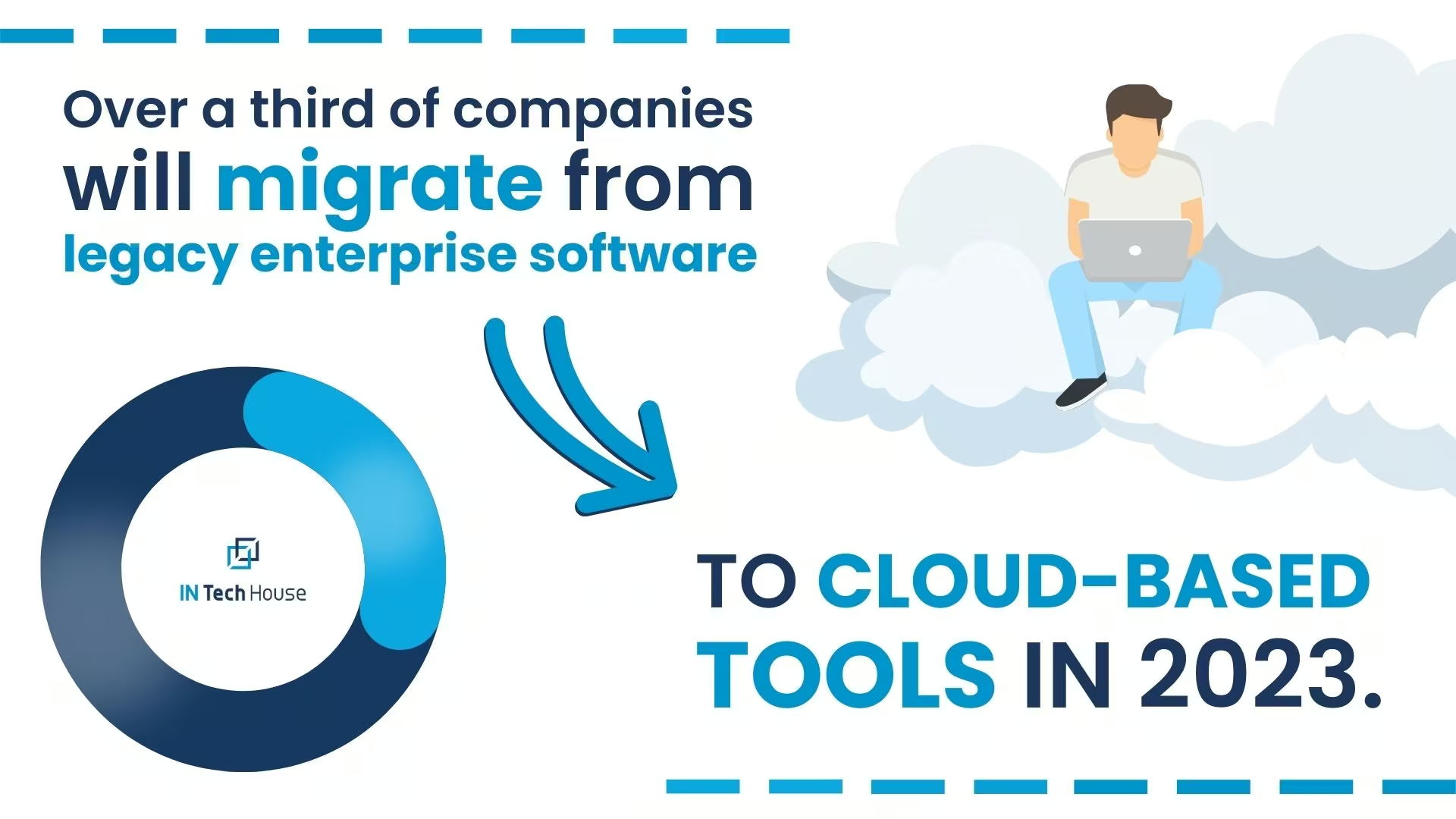
Source: IVision
Cloud Migration Services are more popular than ever.
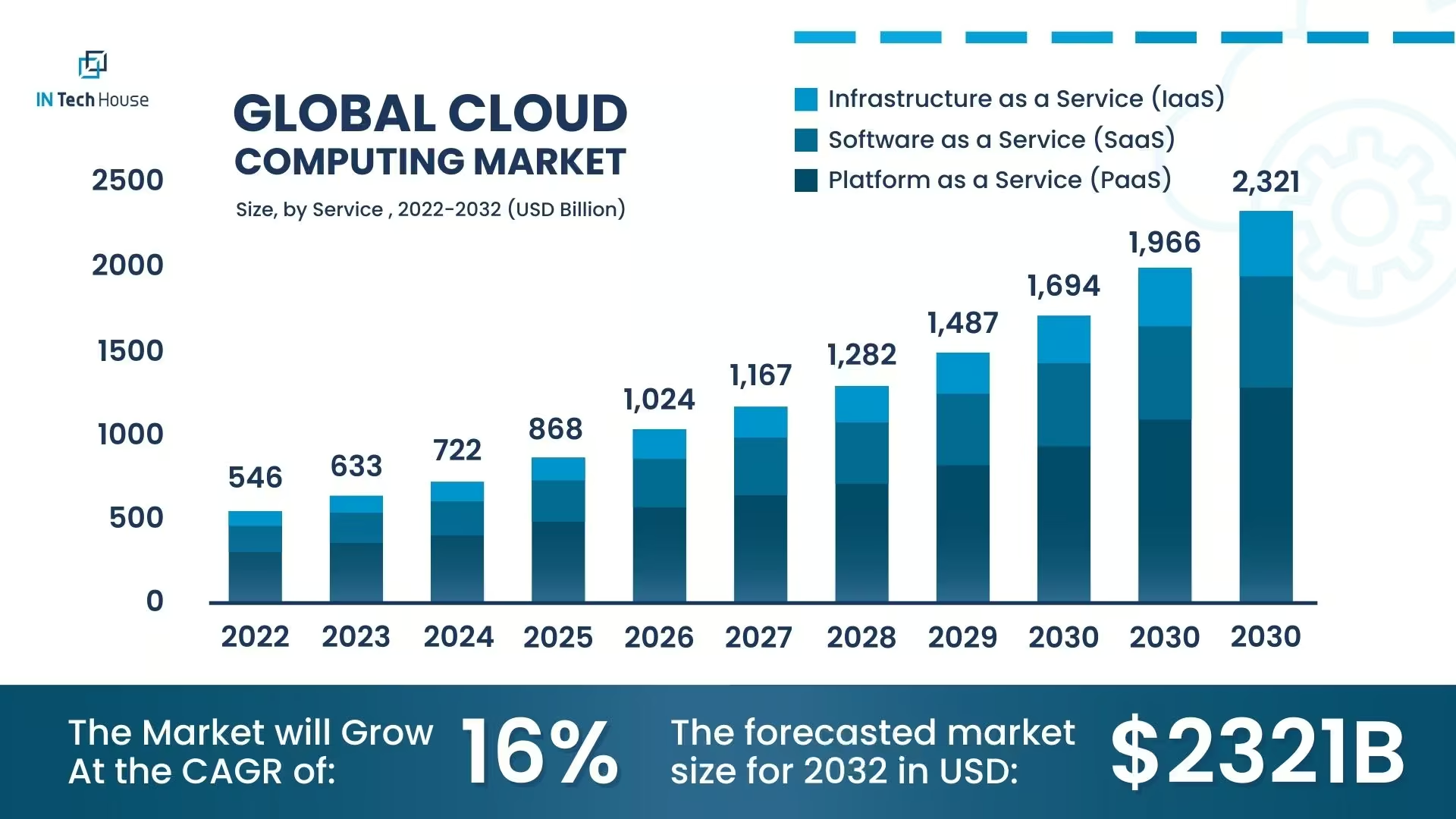
Source: Techopedia
More than half of IT leaders say they’ll consider moving some of their sensitive consumer data (59%) or corporate financial data (52%) to the cloud.Source: Dynatrace Before diving into the nuts and bolts of the cloud migration process, it’s crucial to understand the risks and benefits involved.
Benefits:
Cloud Migration Challenges:
There are several strategies for a cloud migration process, each tailored to specific needs and goals. Here are the common approaches:
Each of these strategies lands the workload on a different service tier, and that choice constrains everything afterwards. Rehosting usually means infrastructure, refactoring often means a platform service and replacing means buying software outright, which is the practical reading of IaaS vs PaaS vs SaaS. Decide the tier per workload, not once for the whole estate.
The risky part of migration is not lifting the servers, it is keeping historian and process data consistent while you move. We plan and run migrations with that constraint in mind.
Before embarking on your cloud migration journey, consider these essential questions:
A cloud migration strategy offers numerous benefits that have been leveraged by famous businesses worldwide. Here are some renowned examples of companies that have successfully harnessed the advantages of migrating to the cloud:
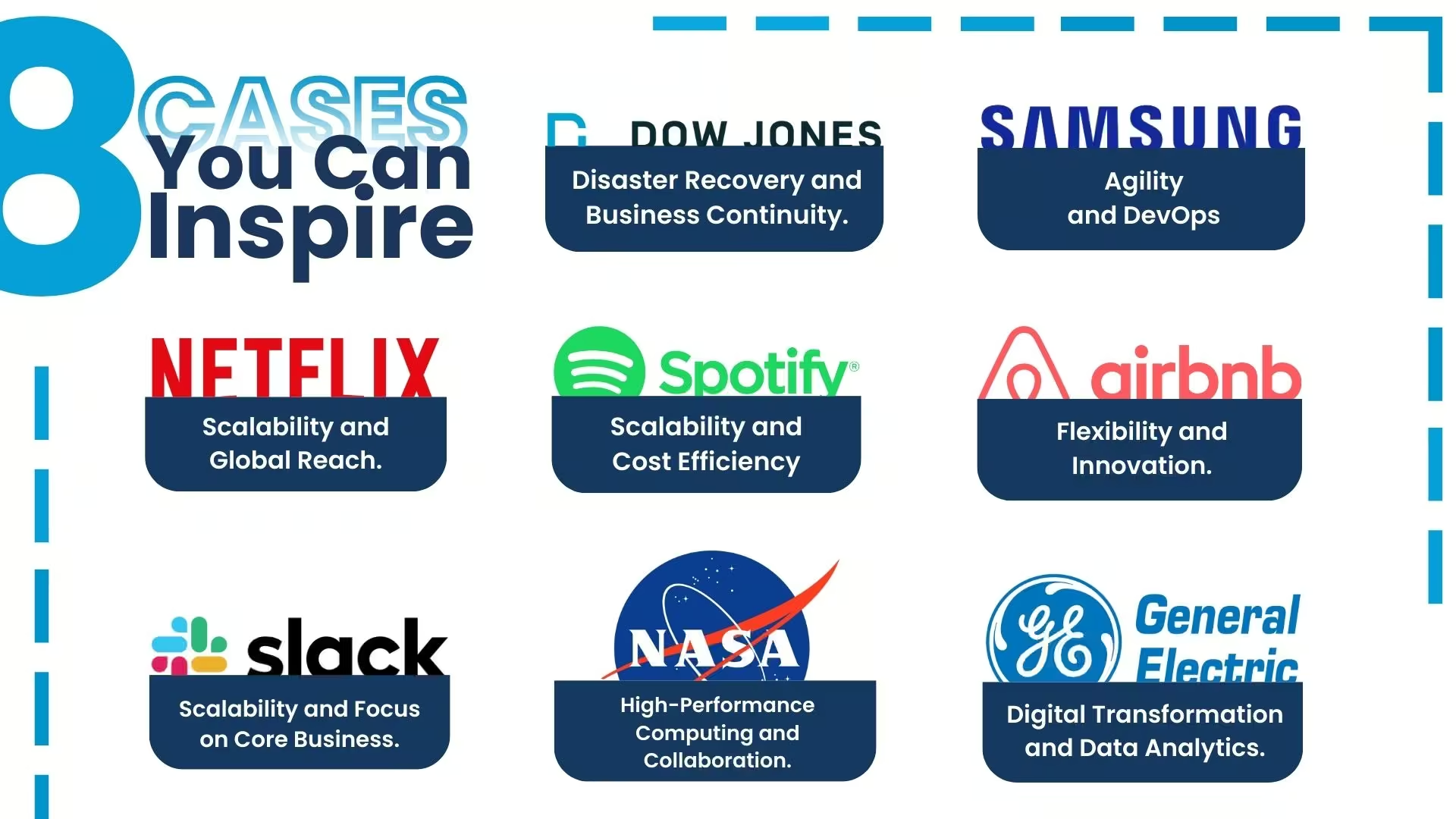
These famous business cases illustrate the diverse advantages of a cloud migration strategy, including scalability, cost-efficiency, flexibility, innovation, enhanced data analytics, and improved disaster recovery capabilities. By embracing the cloud, these companies have positioned themselves for growth, competitiveness, and resilience in the digital age. Industry recognition, such as the PRO Tiger Award 2025, highlights how organizations that successfully embrace innovation and digital transformation can build long-term business value.
Cost management in cloud computing is a critical aspect of optimizing resources, controlling expenses, and maximizing the value derived from cloud services. Once you know how cloud computing works, the model offers the flexibility to scale resources up or down, pay only for what you use, and avoid the upfront costs of physical infrastructure. However, without proper cost management strategies in place, organizations can face unexpected bills and overspending. Here are key aspects of cost management in the cloud:
Effective cost management in cloud computing requires ongoing attention and a proactive approach. By implementing these strategies, organizations can ensure that cloud resources are used efficiently, costs are controlled, and the cloud delivers value while staying within budgetary constraints.
Cloud migration tools and services play a crucial role in simplifying and streamlining the process of moving applications, data, and workloads from on-premises environments to cloud platforms. These tools and services provide automation, efficiency, and management capabilities, making cloud migration more accessible and less error-prone. Here are some of the key cloud migration tools and services:
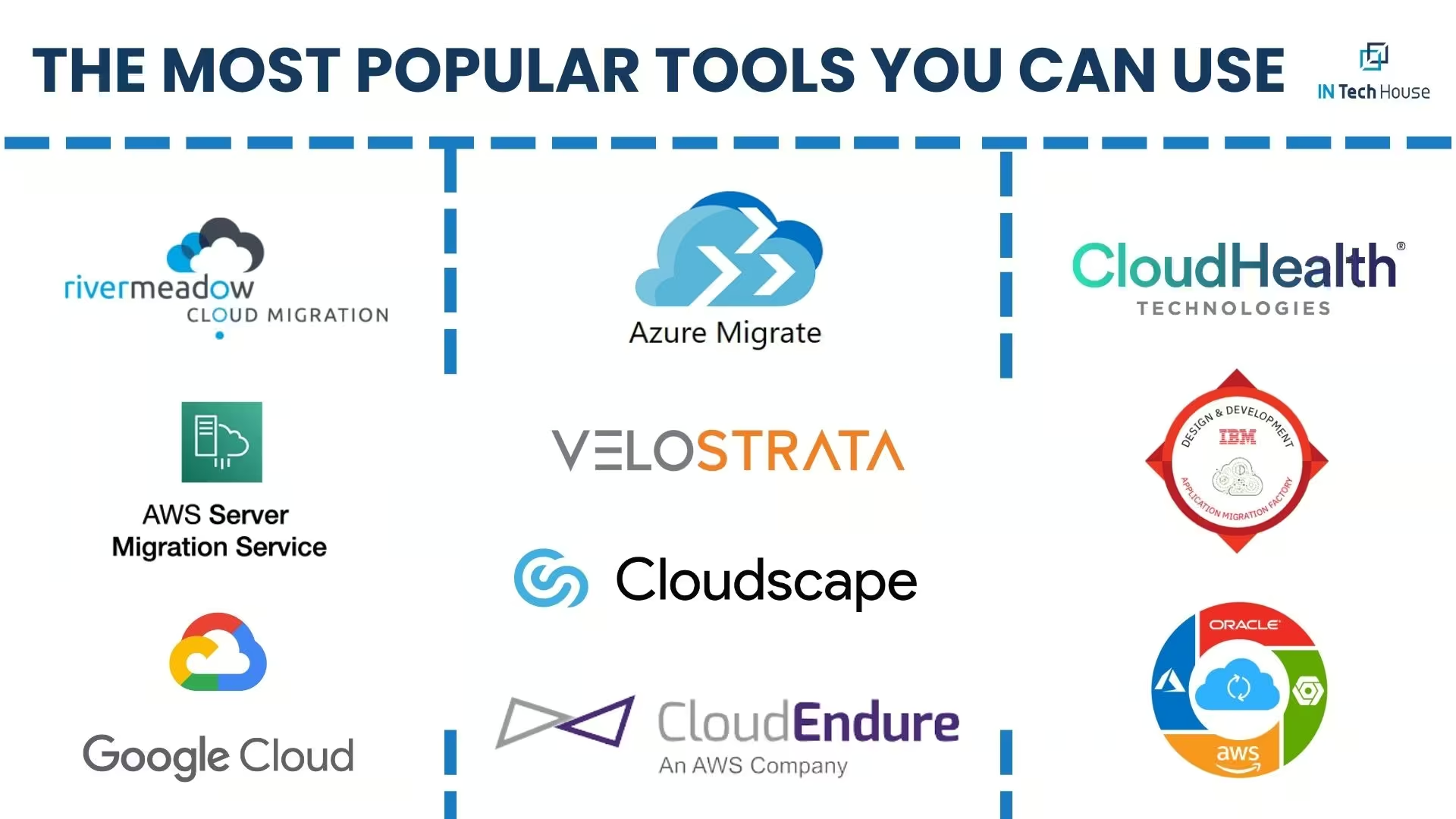
1. AWS Server Migration Service (SMS)
2. Azure Migrate
3. Google Cloud Migrate
4. CloudEndure Migration
5. IBM Cloud Migration Factory
6. Velostrata (by Google Cloud)
7. CloudScape (formerly Turbonomic)
8. CloudHealth (by VMware)
9. RiverMeadow Cloud Migration
10. Cloud Vendors’ Migration Services
These tools and services are designed to address different migration scenarios, such as lift-and-shift, re-platforming, and re-architecting. When planning a cloud migration, it’s essential to assess your specific needs, evaluate the available tools and services, and choose the ones that best align with your migration strategy and goals. Additionally, many third-party consulting firms and managed service providers offer cloud migration services to assist organizations throughout the migration journey.
Data security and compliance are critical aspects of cloud computing, especially as organizations increasingly migrate sensitive data and workloads to the cloud. Ensuring the protection of data and adherence to regulatory requirements is essential to maintaining trust with customers, partners, and regulators. Here’s an overview of data security and compliance considerations in cloud computing:
Data Security in the Cloud:
Compliance in the Cloud:
In cloud computing, there’s often a shared responsibility model, where the cloud provider is responsible for the security of the cloud infrastructure (e.g., data centres), while the customer is responsible for securing their data and applications within the cloud. Understanding this division of responsibilities is crucial for effective data security and compliance.
Organizations should work closely with cloud providers and consider leveraging their security and compliance tools and features to enhance their overall security posture.
Lastly, compliance is an ongoing effort, and it’s essential to stay informed about changes in regulations and best practices to adapt your security and compliance measures accordingly. Regular security assessments and audits can help ensure that your cloud environment remains compliant and secure.
We Created Great Articles about the Cloud. Check Them if you need to know about
Cloud Computing – What is cloud computing and What is hybrid cloud
InTechHouse has developed an AI-powered tool for automating patient service processes within medical facilities. This innovative solution offers a user-friendly graphic wizard accessible from any web browser. The wizard empowers users to create and modify conversation scenarios for EasyBot, our AI chatbot.
The tool comprises several components:
The technology behind this project includes:
Through ASR and TTS systems, spoken language is transcribed to text, processed by the NLU engine, and responded to either vocally through synthesis or recorded voice-overs. The system relies on an extensive knowledge base and semantic search engine to embed responses in context. Additionally, it integrates with CRM/HIS systems, providing essential data for service processes.
This comprehensive AI solution enhances patient service efficiency within medical facilities, offering advanced conversation management and natural language interaction.
Read also:
Cloud migration has become a pivotal strategy for organizations aiming to modernize their IT infrastructure, improve scalability, and enhance overall efficiency. In this sector of the InTechHouse article, we delve into a step-by-step approach to executing a basic cloud migration. Whether you’re considering migrating your applications, data, or entire operations to the cloud, understanding these fundamental steps is essential for a successful transition.
By following these steps, organizations can embark on a successful cloud migration journey with confidence, ensuring that they leverage the full potential of cloud technology while minimizing risks and disruptions to their operations.
Rehosting rarely fixes an old data model. Our architects use migration as the moment to redesign ingestion, quality checks and access control. Ask for a scoping session.
Not sure where to start? We work with companies at every stage, from early ideas to enterprise-level builds. A 30-minute call can save you months of guesswork.
The 7 Rs of cloud migration are rehost, relocate, replatform, refactor, repurchase, retire and retain. Rehost moves a workload as is (lift and shift); relocate moves virtualized hosts, for example VMware, without changing them; replatform makes small optimizations such as a managed database; refactor rebuilds for cloud-native services; repurchase replaces the system with SaaS; retire switches it off; retain keeps it where it is. Each application in the portfolio should get its own R, based on value, risk and effort.
A cloud migration takes anywhere from a few weeks for a single rehosted application to one or more years for a full enterprise estate. Discovery and dependency mapping alone often take several weeks, because undocumented integrations surface late. Most programs migrate in waves of related applications, each with its own testing and cutover window. Refactoring adds months compared with rehosting, while large data volumes may require offline transfer appliances instead of network copies.
Downtime during a cloud migration is minimized by replicating data continuously to the target before cutover, so the final switch only moves the last changes. Block-level replication tools handle servers, and change data capture, for example with AWS Database Migration Service, keeps databases in sync. The cutover itself should be rehearsed, timed and paired with a tested rollback plan. For systems that cannot stop, blue-green or phased traffic shifting through DNS or a load balancer removes the single big-bang moment.
Cloud performance after migration is monitored by comparing live metrics against a baseline captured on premises before the move. Native services such as Amazon CloudWatch, Azure Monitor and Google Cloud Monitoring collect CPU, memory, latency and error rates, while application performance monitoring tools add request traces. Without a pre-migration baseline, nobody can prove whether performance improved or degraded. Alerts should be tied to service-level objectives, such as p95 response time, rather than to raw resource usage.
Cloud costs often rise after a lift-and-shift migration because servers sized for on-premises peak load are copied one to one and then run around the clock at on-demand prices. Data egress, premium storage tiers and forgotten test environments add to the bill. The fix is rightsizing instances from real utilization data, scheduling non-production shutdowns, enabling autoscaling, and committing stable workloads to reserved instances or savings plans. Cost tagging from day one makes the waste visible per team or application.
Commonly used cloud migration tools today include AWS Application Migration Service for server rehosting and AWS Database Migration Service for databases, Azure Migrate for assessment and migration to Azure, and Google Migrate to Virtual Machines for moves into Google Cloud. Several older tools have been retired or merged into these services, so vendor documentation should be checked before planning. Third-party platforms add discovery, dependency mapping and cost modeling. The tool matters less than an accurate inventory of applications and their dependencies.
Jacek Suty is Head of Solution Architecture at InTechHouse, with more than 30 years of experience in system architecture, enterprise IT, infrastructure, information security, and complex digital transformation programs.
He specializes in designing enterprise and solution architectures, translating business and regulatory requirements into scalable technology platforms, and coordinating delivery across software, infrastructure, data, and security teams. His work covers enterprise architecture based on TOGAF, system modeling using UML and BPMN, cloud and on-premise infrastructure, CI/CD processes, data platforms, cybersecurity, and IT governance.
Jacek has contributed to large-scale technology programs for public institutions, finance, energy, education, healthcare, utilities, and digital archives. His project experience includes nationwide public digital infrastructure, distributed document-management and archiving systems, data-exploration platforms using machine learning and predictive analytics, and transaction systems combining blockchain, metadata standards, and computational intelligence.
He holds PRINCE2 Practitioner, Management of Risk, Scrum Master, ITIL Foundation, and ISO/IEC 27001 Lead Auditor qualifications. Jacek is currently pursuing a doctoral degree at Bydgoszcz University of Science and Technology, combining academic research with extensive experience in real-world architecture and technology delivery.
He writes about enterprise architecture, system design, digital transformation, data platforms, cloud infrastructure, cybersecurity, technology governance, and the practical application of AI in complex information systems.
Jacek Suty's academic and professional profiles:
https://pbs.edu.pl/pl/doktorant/uczelniania-rada-samorzadu-doktorantow
https://www.isep.pw.edu.pl/isep/zs/Aktualnosci/Kalendarium-wydarzen2/Seminarium-zakladowe-9.03.2021-Jacek-Suty
https://aionehealth.pl/wp-content/uploads/2026/04/Raport-2026-final.pdf
From first prototype to production, our engineers can help you scope it, build it and get it certified.
This initial conversation is focused on understanding your product, technical challenges, and constraints.
No sales pitch - just a practical discussion with experienced engineers.
Share a few details about your product and context. We’ll review the information and suggest the most appropriate next step.