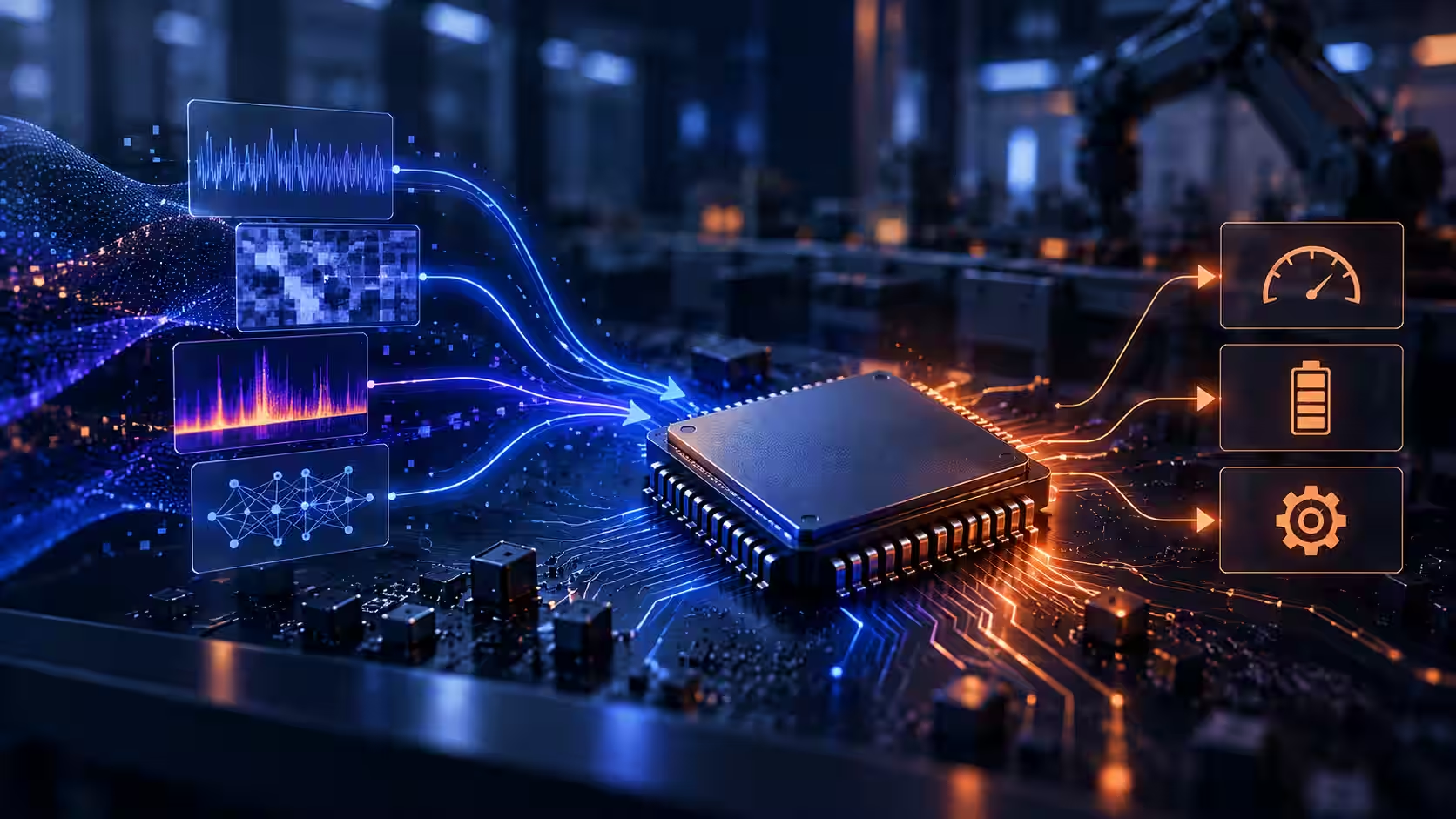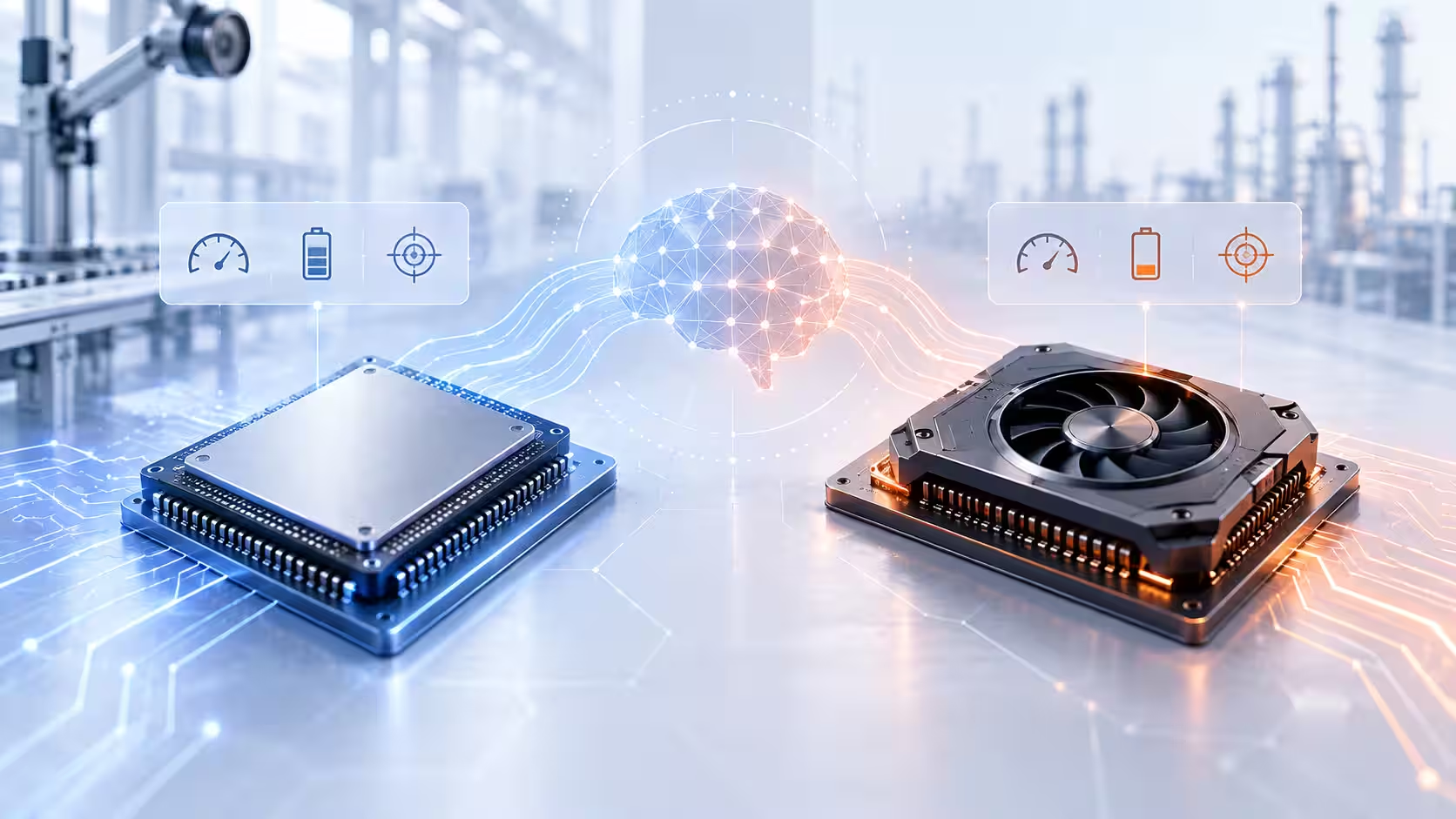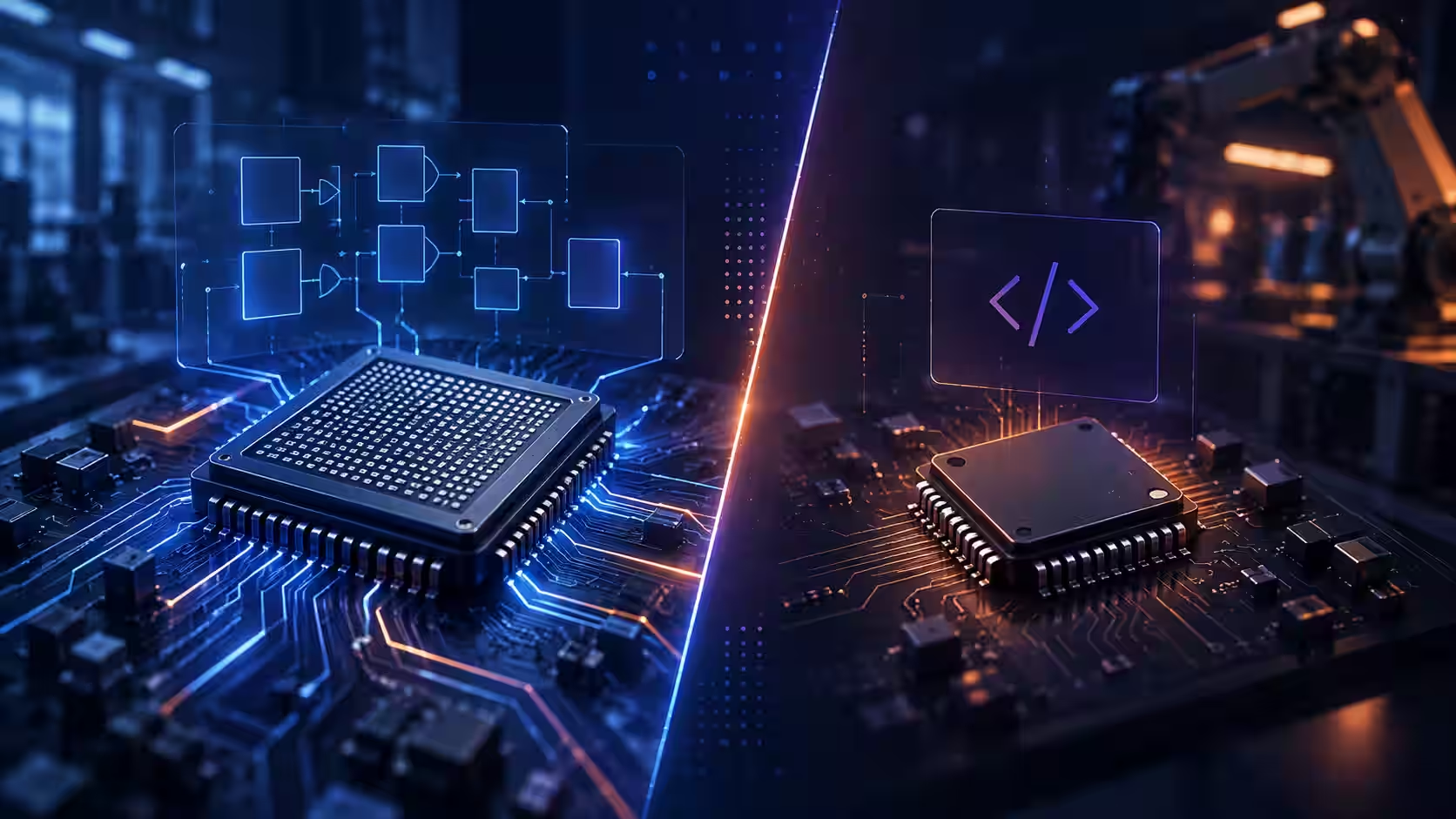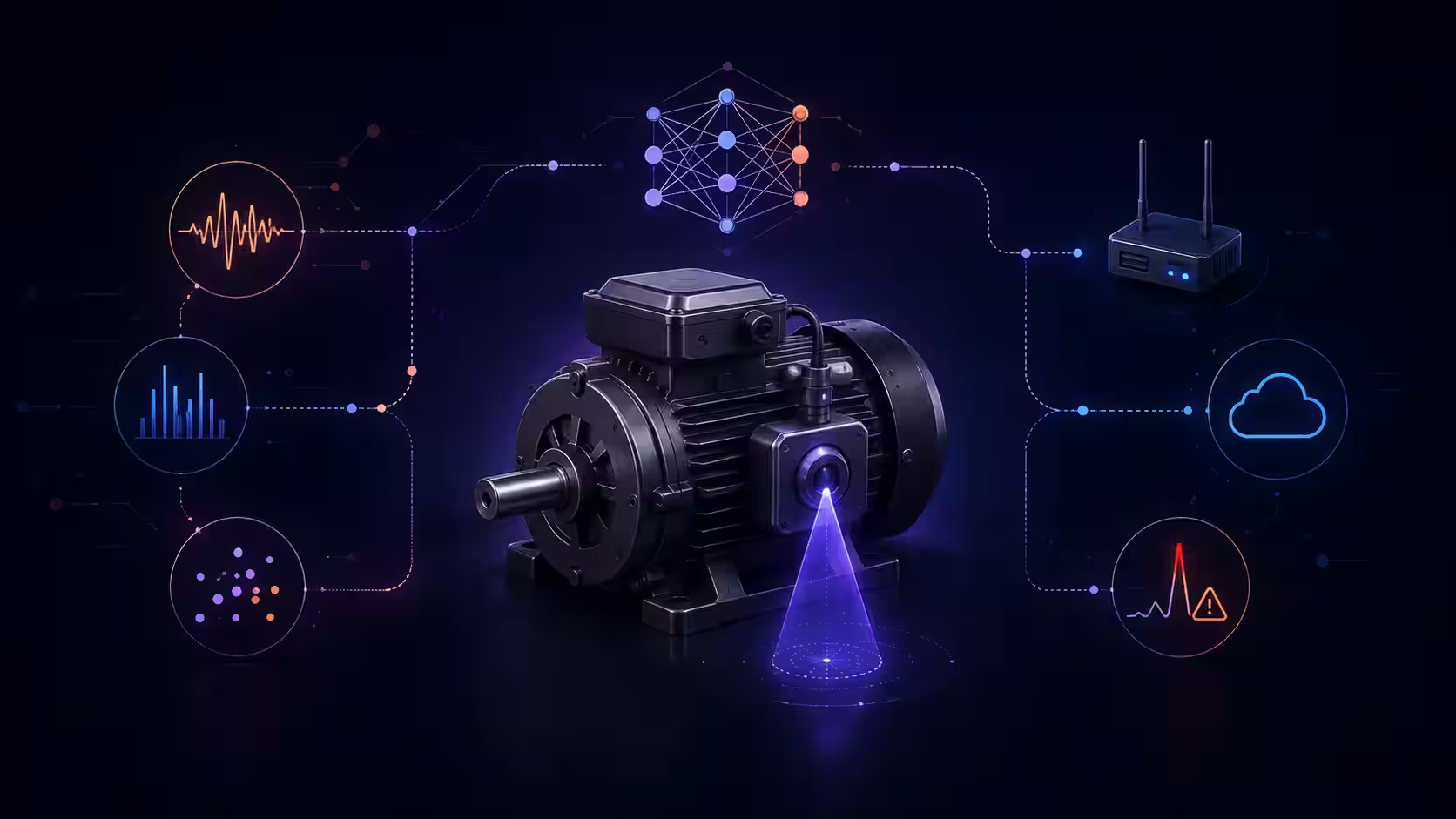
To grasp the concept of computer architecture, we need to understand the basic computer architecture. This introduction to computer architecture basics is essential to make sense of how computers function. It provides an insight into a computer system’s intricate design and structure – much like the blueprint of a building, which lays out the details of every element and how they interact to form a coherent whole. That blueprint idea carries straight into electronic hardware design, where the architecture fixes how processors, memory and interfaces connect long before anyone routes a single trace.
Understanding computer architecture concepts like memory management, process execution, and input/output operations is key to comprehending how a computer works. The computer architecture basics span from the micro-level circuit design to high-level software interfaces. It encompasses every detail that forms the blueprint of a computer system, offering a holistic understanding of how these individual parts work together to create a fully functional machine.
A critical component of the broad field of computer architecture is the hardware architecture of a computer. The architecture of computer system involves the physical aspects like the Central Processing Unit (CPU), memory, input/output (I/O) devices, and address buses, control bus, which are integral to data transfer within the computer, starting with how the Central Processing Unit processes data. Without these components of computer architecture, a computer system would be a lifeless, inoperative collection of parts.
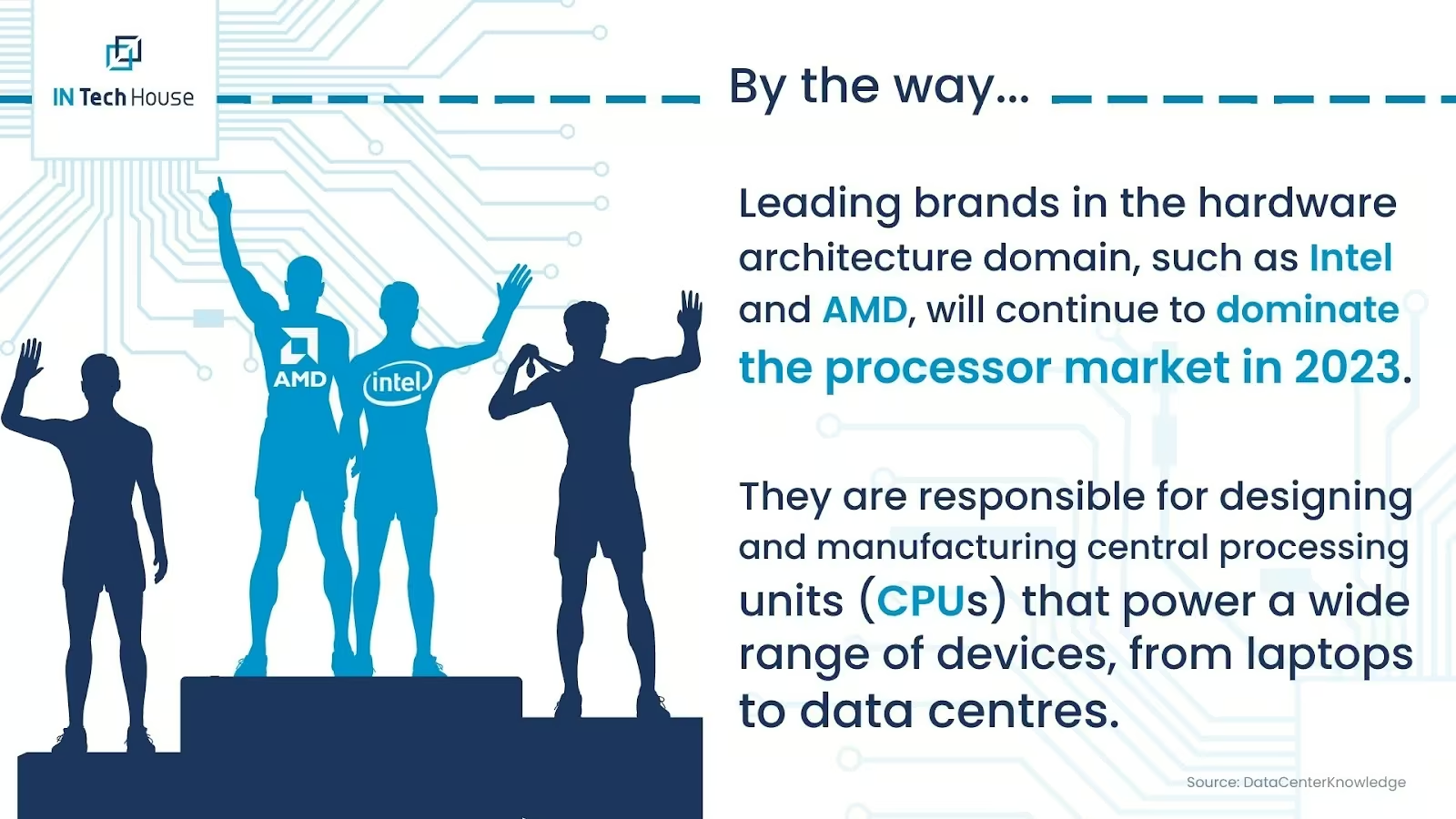
Source: DataCenterKnowledge
For a real-life hardware architecture example, consider the PC hardware architecture. It reflects how a personal computer is built - the components’ arrangement, the internal hardware layout, and the design for optimal performance and cooling. This example illustrates the practical aspect of computer architecture and organization, demonstrating its role in creating a functional and efficient computer system.
Processor, memory and bus decisions set the ceiling on everything the product can do later. We help you make them with the end application and its constraints in view.
Turn architecture choices into a working board
Taking a deeper dive into the introduction to computer architecture, we can explore various key concepts and models. One primary model is the Von Neumann architecture, a crucial historical milestone in the realm of computer design. John von Neumann, a renowned mathematician and physicist, proposed this model, which provided the basis for designing the Electronic Delay Storage Automatic Calculator (EDSAC), the world’s first stored-program digital computer. Studying computer architecture models, such as the Von Neumann or Harvard architecture, reveals the foundational structures that have shaped modern computing.
This elementary computer architecture model is pivotal to understanding the evolutionary trajectory of computer systems. It offers insights into how the earlier computers functioned and evolved into the complex systems we interact with today.
The computer architecture categories help to delineate the working principles of different computer systems, allowing us to design hardware architectures suited for specific tasks. Due to the varied computing requirements, we now have different computer architectures. The list of computer architectures is vast and diverse, from the early Complex Instruction Set Computer (CISC) and Reduced Instruction Set Computer (RISC) models to the advanced Superscalar and Very Long Instruction Word (VLIW) designs of the present day.
Each of these architecture components was developed to cater to specific requirements or to optimise certain performance aspects. Understanding this variety enables us to appreciate the flexibility and adaptability inherent in computer systems, allowing us to customise and optimise them for specific tasks or environments.
The distinction between Complex Instruction Set Computer (CISC) and Reduced Instruction Set Computer (RISC) designs comes down to a fundamental trade-off in how computer instructions get executed. RISC focuses on a small, optimized set of instructions for efficiency, favoring simplicity that lets each instruction execute in as close to a single clock cycle as possible. CISC, by contrast, packs more functionality into individual instructions, reducing the number of instructions a program needs at the cost of more complex hardware to decode them.
This distinction still matters today: modern CPUs following RISC-influenced designs can achieve nearly 1 instruction per cycle (IPC) under favorable conditions, a benchmark that reflects just how much processor efficiency has improved since the early CISC and RISC debates of the 1980s. Higher IPC generally means a processor gets more computer instructions executed per clock tick, which translates directly into faster software programs and more responsive systems.
One way to understand the complexity of computer architecture is by examining the categories of computer architecture. There are three main categories - System Design, Instruction Set Architecture (ISA), and Microarchitecture. The instruction set architecture (ISA) defines the interface between hardware and software: it's the vocabulary of instructions a processor understands, and everything a compiler or programmer writes ultimately gets translated into it. These three categories of computer architecture collectively influence a system's overall performance, power efficiency, cost, and market applicability. Knowing the three categories of computer architecture, namely SISD, SIMD, and MIMD, offers insight into the complex processes behind data handling and computation. SIMD (Single Instruction, Multiple Data) performs the same operation on multiple data elements at once, which is why it's so effective for graphics and signal processing. MIMD (Multiple Instruction, Multiple Data) goes further, allowing multiple processors to execute entirely different instructions on different data simultaneously, the model behind most modern multi-core systems.
A closer look at the types of computer architecture reveals a spectrum of designs and models, each catering to specific computing needs or functions. This diversity can be categorised into uniprocessor, multiprocessor, and multicomputer systems, each with its strengths and specialised application areas. From single-core processors to intricate cloud computing systems, the types of architecture in computer science are diverse and tailored to address varied computing needs.Thus, when someone asks, what are the types of computer architecture? The answer lies in the vast array of designs developed to meet our modern world’s ever-growing and diverse computing needs.
Modern computers are no longer simply about hardware components like the CPU, memory, and I/O devices. The elements of modern computers in computer architecture extend to advanced technologies such as pipelining, parallelism, and virtualisation. These elements significantly enhance computers’ processing power and overall performance, accommodating the increasing demand for high-speed and efficient computing in numerous application areas.
All of these elements need a physical substrate that carries power and signals between them. That substrate is the printed circuit board, and what a printed circuit board is explains how its layers, traces and vias turn an architecture diagram into working hardware.
No discussion of computer hardware is complete without addressing the memory hierarchy, the layered arrangement of storage that balances speed against cost. At the top sit CPU registers and cache, offering the fastest access but the least capacity. RAM comes next, fast enough to hold actively running software programs and data structures, but it loses all the data it holds the moment power is cut.
Storage devices, such as SSDs and hard drives, retain data permanently but are considerably slower than RAM, which is why operating systems are designed to keep frequently accessed data cached in faster memory whenever possible. This gap matters in practice: memory latency is typically measured in nanoseconds for RAM, while storage devices operate on a timescale that's orders of magnitude slower, a difference that shapes how software programs are architected to minimize unnecessary trips to slower storage.
The Harvard architecture, introduced earlier in this article, plays directly into this discussion too: it uses separate memory spaces and buses for instructions and data, allowing a processor to fetch the next instruction and read or write data simultaneously rather than competing for a single shared pathway, in contrast to the Von Neumann model where both share one bus.
These layers are also where everyday failures announce themselves. A drive that is starting to fail, a loosely seated memory module, or a component running too hot produces symptoms long before the machine stops booting, and reading those symptoms against the architecture makes diagnosis much faster. Our walkthrough of common PC hardware problems pairs each symptom with the component behind it.
So, what is computer architecture and its types? It’s a fascinating interplay of strategic design, technology, and performance optimisation to create efficient and effective computing systems. It encompasses everything from the physical hardware architecture of a computer to the unseen realm of microarchitectural design. Applied to dedicated devices instead of general-purpose computers, the same ideas become embedded system architecture, with its own layers and design constraints.
Computer architecture is a vast and dynamic field of study and application, continually evolving to meet rapidly changing technological demands. Understanding these basic concepts and components is fundamental to navigating this dynamic domain and staying ahead in the tech-driven world.
Hardware architecture design is a crucial aspect of the technological landscape that often goes unnoticed by the average consumer. Behind every electronic device and computing system lies a complex hardware architecture that determines its performance, efficiency, and capabilities.
Architecture decisions are made by people with a specific skill set. Reading datasheets, closing timing, planning bring up and standing next to the board during validation are daily work rather than occasional tasks, and what a hardware developer does describes that role in detail.

Source: ScienceDirect
Hardware architecture design plays a pivotal role in optimizing the performance of electronic devices, and it is the starting point of our electronics and hardware engineering services. It involves the careful arrangement of components, data pathways, and processing units to ensure efficient data flow and processing speed. A well-designed hardware architecture can significantly enhance a device’s computational power and responsiveness. Getting those data pathways right on paper is far cheaper than respinning a board, which is why a hardware design company settles the architecture before layout begins.
In an era where energy efficiency is critical, hardware architecture design aims to reduce power consumption while maintaining performance. By minimizing power usage through smart circuit design and low-power components, devices can achieve longer battery life and reduced environmental impact. Recent processor designs increasingly emphasize power efficiency over raw transistor count, and modern designs commonly use performance-per-watt benchmarks, rather than clock speed alone, to compare competing hardware architectures. Power efficiency can also be a deliberate trade-off: a design can sacrifice raw speed, or accept higher manufacturing cost, in exchange for meaningfully lower power draw, a calculation that varies heavily by application.
Source: DataProt
Source: DataProt
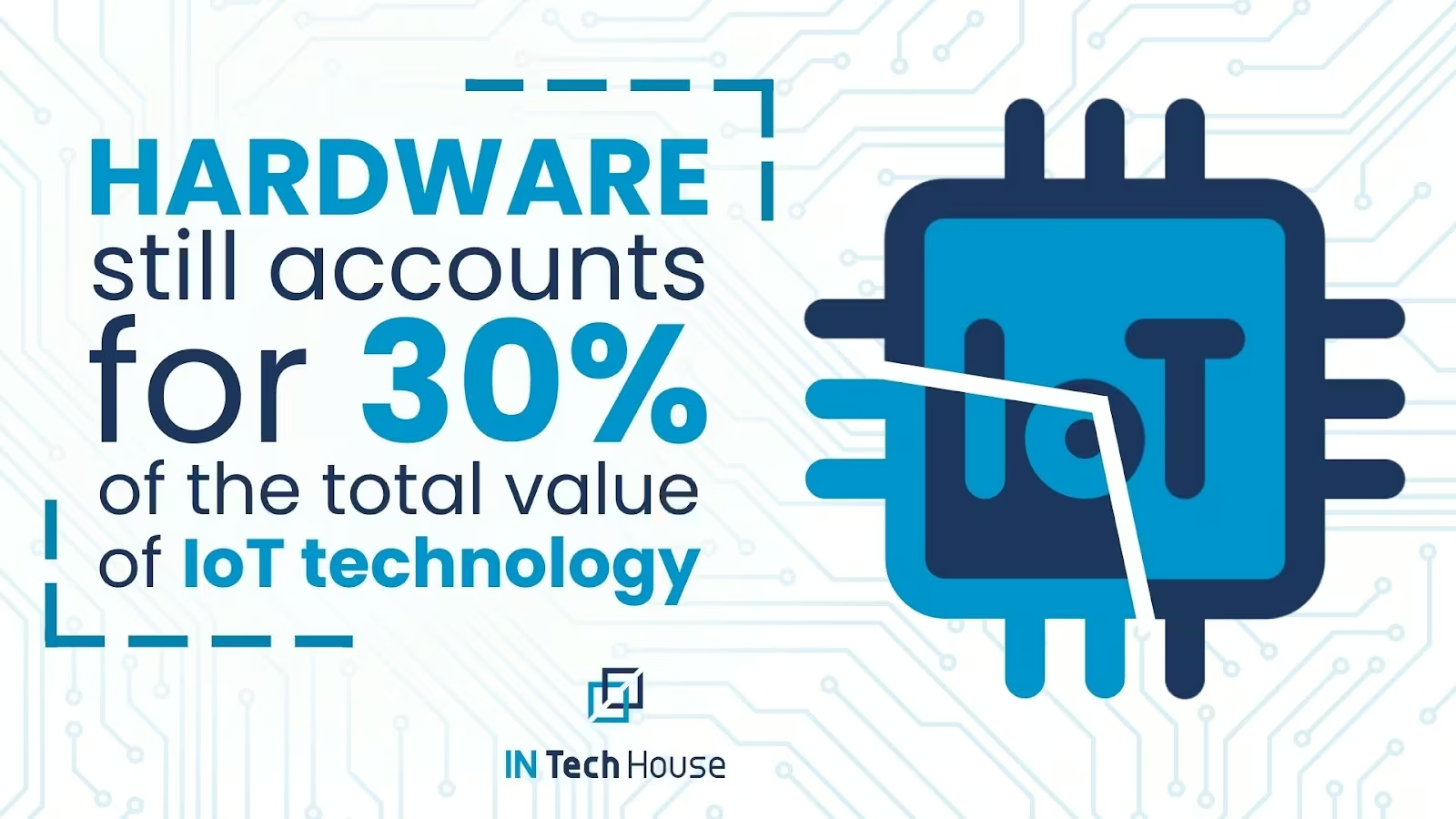
Scalability is a critical consideration in hardware architecture design, especially in modern technology. Whether it’s smartphones, servers, or Internet of Things (IoT) devices, a scalable hardware architecture allows for easy upgrades, expansions, and adaptability to future technological advancements.
Different devices and systems have unique requirements. Hardware architecture design allows for customization to meet specific needs, whether it’s for high-performance computing, artificial intelligence, or specialized industrial applications. Tailoring the hardware to the intended purpose can lead to more efficient and cost-effective solutions.

Hardware and software are inseparable components of technology, even though the software vs hardware differences shape every design decision. A well-designed hardware architecture seamlessly integrates with software, enabling optimized performance and efficient resource utilization. The relationship between hardware and software is a fundamental consideration in the design process.
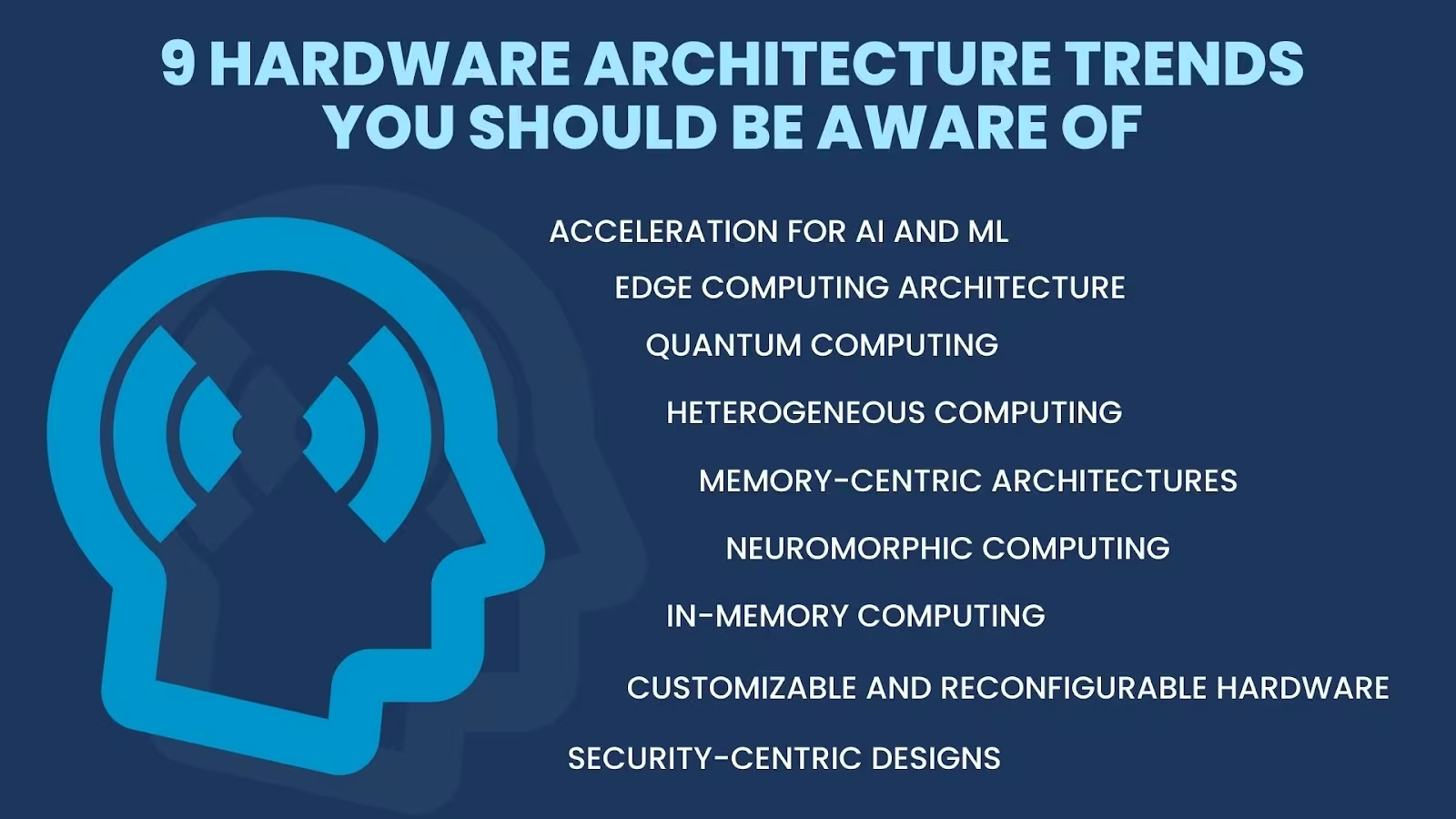
As technology continues to advance, hardware architecture trends are constantly evolving to meet the demands of emerging applications and challenges. Several of these shifts overlap with the embedded system trends shaping microcontroller-based and edge devices. Some of the main hardware architecture trends in recent times include:
Hardware architecture is increasingly being optimized for Artificial Intelligence (AI) and Machine Learning (ML) workloads. Specialized AI accelerators, such as Graphics Processing Units (GPUs), Tensor Processing Units (TPUs), and Field-Programmable Gate Arrays (FPGAs), are being integrated into systems to accelerate AI computations, enabling faster and more efficient training and inference. CPUs remain versatile, handling a wide range of general-purpose operations, but TPUs are purpose-built and optimized for deep learning tasks specifically, delivering high performance where CPUs would struggle. The efficiency gap can be substantial: TPUs have been reported as 20 to 30 times faster per watt than GPUs for certain deep learning workloads, illustrating just how much specialized hardware architecture can outperform general-purpose designs for a narrow set of tasks.
Edge computing is gaining momentum as a trend in hardware architecture. Edge devices and systems are designed to perform data processing and analytics closer to the data source, reducing latency, conserving bandwidth, and enhancing data privacy and security. This trend enables real-time and responsive applications, making it ideal for IoT, autonomous systems, and low-latency applications.
Quantum computing is an emerging trend in hardware architecture that promises to revolutionize computation. Quantum computers leverage quantum bits or qubits, which can exist in multiple states simultaneously, to perform complex calculations that are infeasible for classical computers. Quantum architecture designs are advancing rapidly, and quantum processors are being explored for various applications, including cryptography, optimization, and drug discovery.
Heterogeneous computing involves integrating different types of processing units, such as CPUs, GPUs, and specialized accelerators, within the same system. This trend allows workloads to be offloaded to the most suitable processing unit, maximizing performance and efficiency for specific tasks.
As data-centric applications become more prevalent, hardware architectures are shifting towards memory-centric designs. Memory-centric architectures prioritize data access and movement, utilizing high-bandwidth memory and advanced caching techniques to reduce memory latency and improve overall system performance.
Neuromorphic computing is inspired by the human brain’s neural networks and aims to create hardware architectures that emulate brain-like functionalities. Neuromorphic chips are designed to efficiently process information in parallel, enabling tasks such as pattern recognition, sensory processing, and associative memory.
In-memory computing is a trend in hardware architecture that involves performing computations directly within memory modules, reducing data movement between storage and processing units. This approach enhances performance for data-intensive applications and enables real-time data analysis.
Customisable and reconfigurable hardware architectures are gaining popularity, particularly in domains like software-defined networking (SDN) and adaptive computing. Reconfigurable processors and field-programmable gate arrays (FPGAs) allow hardware resources to be tailored to specific tasks, increasing flexibility and adaptability.
With increasing cybersecurity threats, hardware architectures are emphasizing security features. Hardware-enforced security measures, secure enclaves, and Trusted Execution Environments (TEEs) are integrated into processors to protect sensitive data and prevent unauthorized access.
Hardware architecture trends continue to evolve, driven by advancements in AI, edge computing, quantum computing, memory-centric designs, and other emerging technologies. These trends are shaping the future of computing, enabling more efficient, secure, and robust systems to meet the demands of the digital era. Much of this research gets documented and refined in peer-reviewed venues like IEEE Transactions and ACM Transactions, where hardware architects publish and scrutinize new design principles before they reach commercial systems. As technology progresses, hardware architects will continue to explore new avenues and design principles to unlock the full potential of computing capabilities.
Our electronics team turns a system architecture into schematics, prototypes and validated hardware for regulated industries. Ask us to review your concept before the first board spin.
See how we design electronics from architecture to production
Not sure where to start? We work with companies at every stage, from early ideas to enterprise-level builds. A 30-minute call can save you months of guesswork.
Computer architecture defines what a system does from a programmer's point of view, the instruction set architecture, memory model, and I/O handling exposed to software. Computer organization describes how those capabilities are actually implemented in computer hardware, down to the specific circuits, buses, and internal components used to make that architecture work.
A modern computer system relies on a handful of major components working together: the CPU for executing instructions, RAM for temporary working memory, storage devices such as SSDs or hard drives for permanent data, and various I/O and networking equipment for communication with the outside world. Address buses and control buses connect these parts, allowing them to transfer data between each other in a coordinated way.
Combining the CPU, memory controller, and sometimes even RAM or specialized accelerators onto a single chip reduces the physical distance data has to travel, improving speed and enabling more direct interaction between components. This approach also uses less space and often improves power density, which is one reason system-on-chip (SoC) designs dominate smartphones and other compact devices where every millimeter counts.
Not necessarily. Adding more hardware, whether more cores, more cache, or more accelerators, only helps if the software programs running on the system can actually make use of it. Different tasks benefit from different architectures: a workload built around SIMD or MIMD parallelism scales well with additional processing units, while a task that depends on sequential logic may see little benefit and simply waste power and cost on hardware that sits idle.
Memory hierarchy exists because faster memory is more expensive and physically limited, so systems layer cache, RAM, and storage devices to balance speed against capacity. A system with data that fits comfortably in cache or RAM will run far faster than one constantly reaching out to slower hard drives or SSDs, which is why software and knowledge based systems are often designed specifically to minimize unnecessary memory latency wherever possible.
Adam Szychulec is Deputy CTO at InTechHouse and an electronics and embedded systems engineer with over 13 years of experience in hardware development, FPGA-based systems, embedded software, and technical leadership.
He specializes in electronic system architecture, analog and digital PCB design, FPGA and SoC development, embedded C/C++ software, and managing the complete lifecycle of complex engineering products - from early feasibility studies and technical architecture through development, testing, production introduction, and product modernization.
Adam has extensive experience leading multidisciplinary R&D teams and coordinating electronics, embedded software, mechanical engineering, testing, and project delivery. His responsibilities have included technical decision-making, project planning, risk and change management, budgeting, product testing, new product introduction, and mid-life upgrades of existing electronic systems.
His project experience includes FPGA modules for space applications, electronic systems and payloads for unmanned aerial vehicles, environmental monitoring and multispectral imaging platforms, power electronics, DC-DC converter assessment, and embedded systems developed for demanding industrial and defence-related applications.
Adam works with FPGA and SoC platforms, Xilinx Zynq, VHDL, Vivado, Altium Designer, ARM microcontrollers, embedded C/C++, Linux, digital electronics, and power electronics. He holds bachelor's and master's degrees in Electrical Engineering and is an IPC Certified Interconnect Designer. He writes about FPGA architectures, electronics design, embedded systems, hardware product development, technical risk management, UAV electronics, power electronics, and engineering leadership.
This initial conversation is focused on understanding your product, technical challenges, and constraints.
No sales pitch - just a practical discussion with experienced engineers.
Share a few details about your product and context. We’ll review the information and suggest the most appropriate next step.