


Embedded systems have quietly become the unsung heroes behind the devices and systems that power our daily lives. These specialized computing systems are the engines driving everything from smart appliances and automotive control units to industrial automation and healthcare devices. Embedded systems architecture is the backbone that makes it all possible, determining how these systems function, perform and interact with the physical world.
In this article, brought to you by InTechHouse, we’ll take you on a journey through the intricate world of embedded systems architecture. We’ll explore its fundamental concepts, delve into the key components, and uncover the innovative ways it shapes the future of technology. Let’s dive deeper!
Embedded systems, often described as the unsung heroes of our technology-driven world, are omnipresent but often overlooked. They power everything from your smartphone and smartwatch to your car, home appliances, and even the industrial machines that keep our world running smoothly.
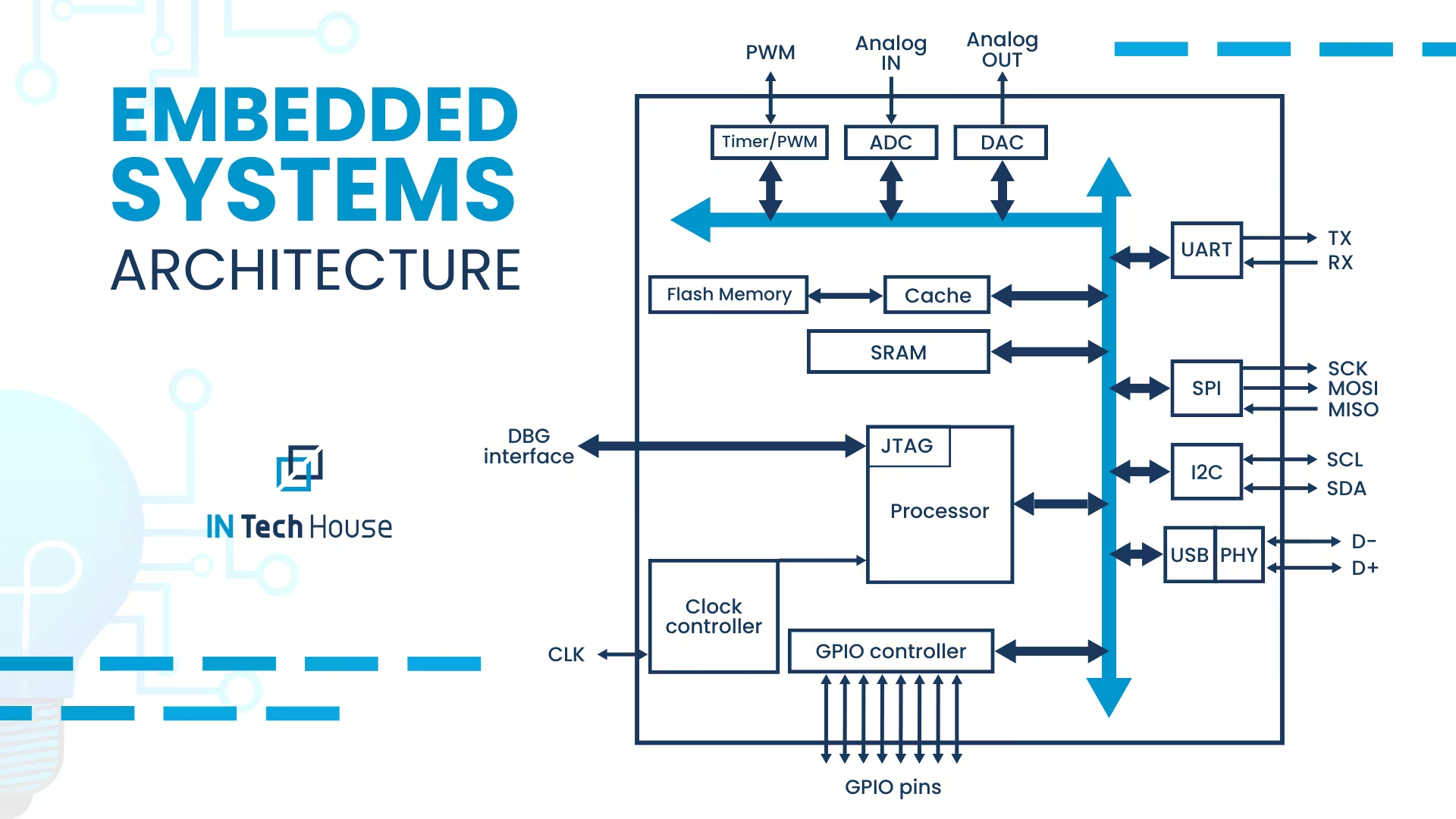
At their core, embedded systems are specialized computing systems designed for specific tasks or functions. They are integrated into a larger system or product, often with real-time computing constraints, making them indispensable in modern life.
Embedded system architecture refers to the fundamental structure and organization of an embedded system’s hardware and software components. It determines how various parts of the system interact, communicate, and function together to perform their designated tasks.

Building on Gates’ thoughts about unseen technology shaping our world, the embedded system’s architecture is one of those unseen but fundamentally influential aspects.
Embedded systems can employ different architectures based on the specific requirements of the application. Some common architectures include:

The split between MCU, external memory and peripherals decides cost and lifetime long before the first line of code. We review or define that architecture for industrial and medical devices.
Get an architecture review before you freeze the design
While hardware architecture defines what an embedded system is built on, embedded software architecture defines how that hardware platform actually gets used, which is why choosing the right hardware platform constrains every software decision that follows. The two are closely linked: a well-designed hardware layer means little without a software system that manages tasks, data flow, and device drivers in a predictable way.
At the lowest level, most processors follow one of two memory models. Von Neumann architecture uses a single shared bus and memory for both data and instructions, which keeps the hardware layer simple but can create a bottleneck when the processor needs to fetch instructions and data at the same time. Harvard architecture solves this by separating instruction and data memory entirely, allowing both to be accessed simultaneously, which is common in signal processing applications where speed and predictability matter. Many modern processors use a modified Harvard architecture, which separates L1 caches for data or instructions but shares a lower-level memory, combining the speed benefits of separation with the practicality of unified storage.
How an embedded system schedules and runs its application code has a major impact on reliability and responsiveness:
As embedded systems grow more complex, the software system itself needs structure, not just the hardware underneath it. A few models have become common across the industry:
Complex systems may require multi-tiered or distributed architectures, particularly where a single device needs to coordinate with other embedded systems or cloud services. Integration needs, more than raw performance, often end up driving the selection of modular architectures, since a system that's difficult to integrate creates ongoing costs long after initial development.
Architectural decisions made early in a project tend to be the hardest to reverse later, which is why documenting guiding principles helps avoid high technical debt as a codebase grows. These architecture decisions should account for more than raw functionality: more than 70 different "ilities" (reliability, maintainability, testability, scalability, and so on) can define a software system's characteristics, and a good architecture makes trade-offs between them explicit rather than accidental.
Reliability in embedded systems is commonly improved using error detection and watchdog timers, which reset or recover a system automatically if it stops responding as expected. Combined with rigorous unit testing at both the module and system level, these practices are what allow an embedded software architecture to meet the strict safety expectations common in automotive, medical, and industrial applications.
Ultimately, the right architecture depends on context: a simple home appliance rarely needs the same layered, service-based approach as a multi-core automotive system, and the ability to match architectural complexity to actual requirements is itself a core skill in the embedded system design process, not an afterthought.
Principles hold only until real constraints push back: limited memory, hard deadlines, thermal limits and certification rules. A practical walkthrough of solving embedded system design challenges shows how teams trade these off without abandoning the architecture they started from.
Embedded systems are specialized computing systems that perform dedicated functions or tasks within a larger system. They aren’t just found in high-tech areas like computers or smartphones; they’re in everyday items such as washing machines, microwaves, and cars. From medical equipment to aerospace controls, embedded systems are fundamental to modern life.
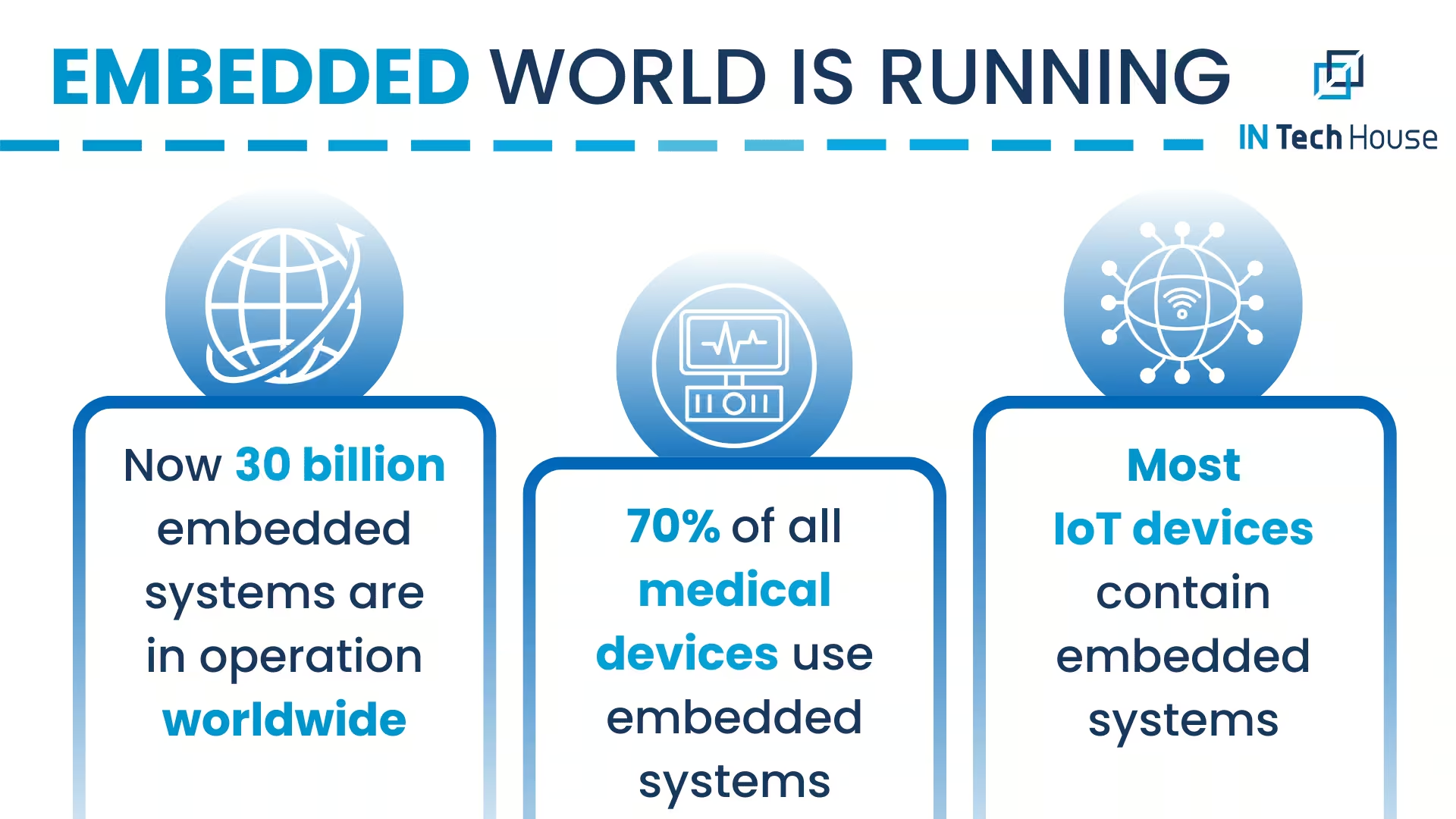
Source: Statista, Precedenceresearch, KBVResearch, Education
As technology advances, embedded system architectures continue to evolve. Some emerging trends include:
These emerging trends in embedded system architectures reflect the ever-evolving demands of the digital age. They pave the way for more efficient, intelligent, and secure embedded systems, enabling a wide range of innovative applications across industries. As technology continues to advance, staying up-to-date with the embedded system trends is crucial for making informed decisions in embedded system design and development, including the growing role of simulation technology in modern embedded system design.
Multi-sensor designs are one of the clearest architectural pressures of recent years, because combining inputs changes how data flows through the system and where processing has to sit. Sensor fusion in embedded systems shows how filtering and fusion layers are placed between drivers and application logic, and why that placement decides both latency and accuracy.
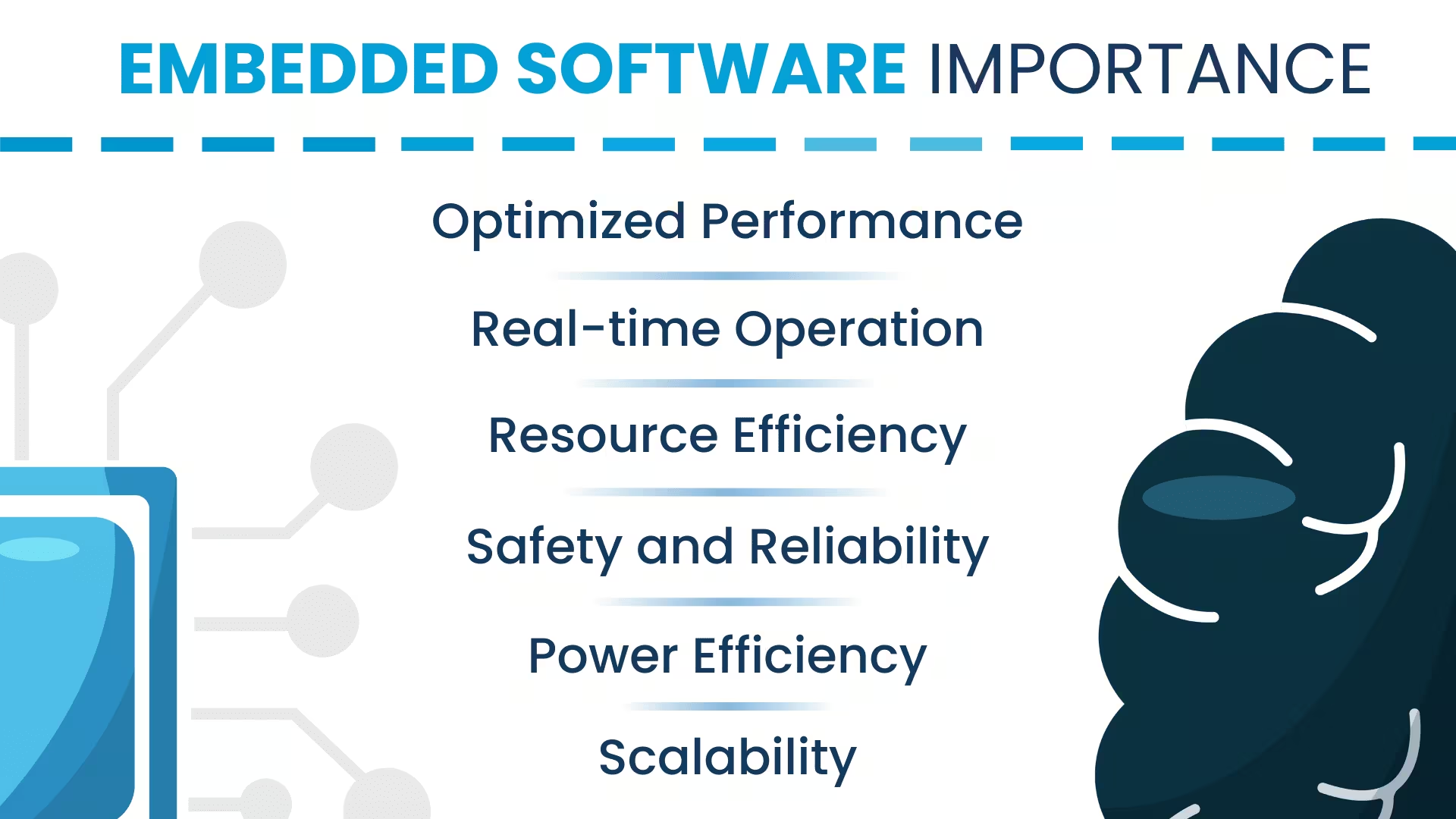
Embedded software is specialized programming embedded within hardware components (usually microcontrollers or microprocessors) that drive specific device functions. Unlike general-purpose computer software, embedded software performs specific tasks or functions and is optimized for a particular application.
Significance of Embedded Software:
ARM (Advanced RISC Machine) architecture is a prevalent choice in the world of embedded systems due to its unique advantages, which include power efficiency, scalability, and versatility. ARM processors are used in a wide range of applications, from mobile devices and IoT sensors to automotive control systems and high-performance computing.
Here are some key aspects of ARM architecture in embedded systems:
InTechHouse is your trusted partner in navigating the world of ARM architecture in embedded systems. Here’s how we can assist you:

Architecture decisions only pay off when they survive implementation. Our embedded systems development services cover that path end to end, from architectural review and hardware abstraction design through firmware, integration and long-term maintenance.
1. Leverage Local Expertise:Poland has a burgeoning tech scene with a pool of highly skilled engineers and developers. Tapping into this local talent can lead to cost-effective, innovative solutions for hardware design and embedded software development.
We run requirements, architecture, hardware and firmware in one team, so integration problems surface in week three rather than at certification. Ask for our delivery model.
Not sure where to start? We work with companies at every stage, from early ideas to enterprise-level builds. A 30-minute call can save you months of guesswork.
Embedded systems architecture refers to the structure and organization of the hardware and software components within an embedded system. It defines how these components interact and work together to perform specific tasks. Embedded system architecture plays a crucial role in determining the system's performance, power efficiency, and functionality.
An embedded device is a specialized computing system designed to perform dedicated functions or tasks within a larger system or product. These devices are integrated into various applications, such as consumer electronics, industrial machinery, and automotive systems. Embedded devices are typically equipped with microcontrollers, microprocessors, and other components to execute specific functions efficiently.
Embedded systems typically consist of the following core components:
Self-contained systems are embedded systems that operate independently, without the need for external input or intervention. They are designed to carry out their functions autonomously. Self-contained systems are often used in applications where reliability and independence from external factors are critical, such as in aerospace, medical devices, or industrial automation. These systems are capable of making decisions and executing tasks without relying on constant human interaction.
Krzysztof Niedźwiedź is a Lead Embedded Systems and Hardware Engineer at InTechHouse with over 11 years of experience developing complex electronic and embedded products from system architecture through production.
He specializes in embedded software development, electronic system architecture, multilayer PCB design, hardware-software integration, system testing, and technical ownership of high-reliability engineering projects. His work spans requirements analysis, architecture and component selection, schematic and PCB design, bare-metal and RTOS firmware development, prototyping, troubleshooting, production documentation, and cooperation with mechanical and high-level software teams.
Krzysztof's project experience includes FPGA and SoC-based onboard computers for the space industry, embedded electronics for advanced optical equipment, low-power environmental-monitoring devices, UAV payloads for real-time air-quality measurement and sample collection, and connected medical and training devices.
He works with C and C++, STM32, LPC and AVR microcontrollers, ARM-based platforms, RTOS, Embedded Linux, FPGA and SoC architectures, DDR3, HDI PCB technology, and industrial communication interfaces including Ethernet, CAN, RS-485, SPI, I2C, UART, USB, Modbus, and MQTT.
Krzysztof holds bachelor's and master's degrees in Electronics and Telecommunications. He is an IPC Certified Interconnect Designer and has completed specialist training in Embedded GNU/Linux kernel internals and device drivers. He writes about embedded system architecture, firmware development, PCB design, MCU and FPGA integration, RTOS, hardware security, low-power electronics, and dependable electronic products.
This initial conversation is focused on understanding your product, technical challenges, and constraints.
No sales pitch - just a practical discussion with experienced engineers.
Share a few details about your product and context. We’ll review the information and suggest the most appropriate next step.