
Choosing the Right Microcontroller for Your Hardware Project: A Comprehensive Guide

In the realm of hardware projects, selecting the right microcontroller plays a pivotal role in ensuring success. The microcontroller serves as the brain of your project, dictating its functionality and performance. With numerous options available, it can be overwhelming to choose the ideal one. This comprehensive guide will navigate you through the process of selecting the perfect microcontroller for your hardware project. From understanding your project requirements to evaluating key factors, such as processing power, I/O capabilities, and programming language support, this article will provide valuable insights to help you make an informed decision. Programming language support only matters in light of the firmware that will run on the chip, which is the domain of embedded software engineering.
What is a Microcontroller?
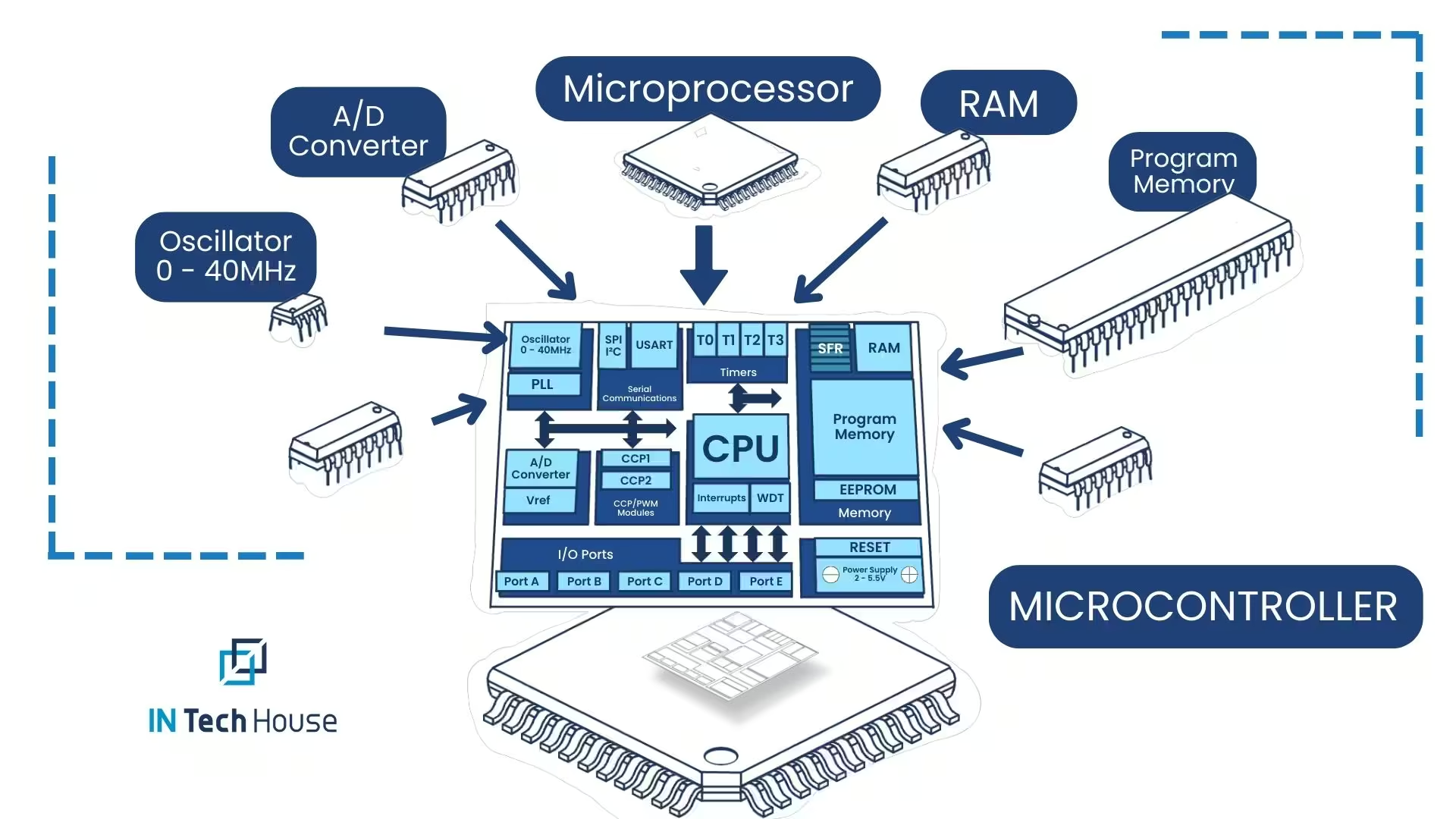
A microcontroller is a small, self-contained computer system housed within a single integrated circuit (IC). It combines a microprocessor core, memory, input/output peripherals, and other essential components on a single chip. Unlike general-purpose computers, microcontrollers are designed for specific tasks and find applications in a wide range of industries and devices. How that single chip connects to sensors, memory and power inside a finished product is a question of embedded system architecture and its layers.
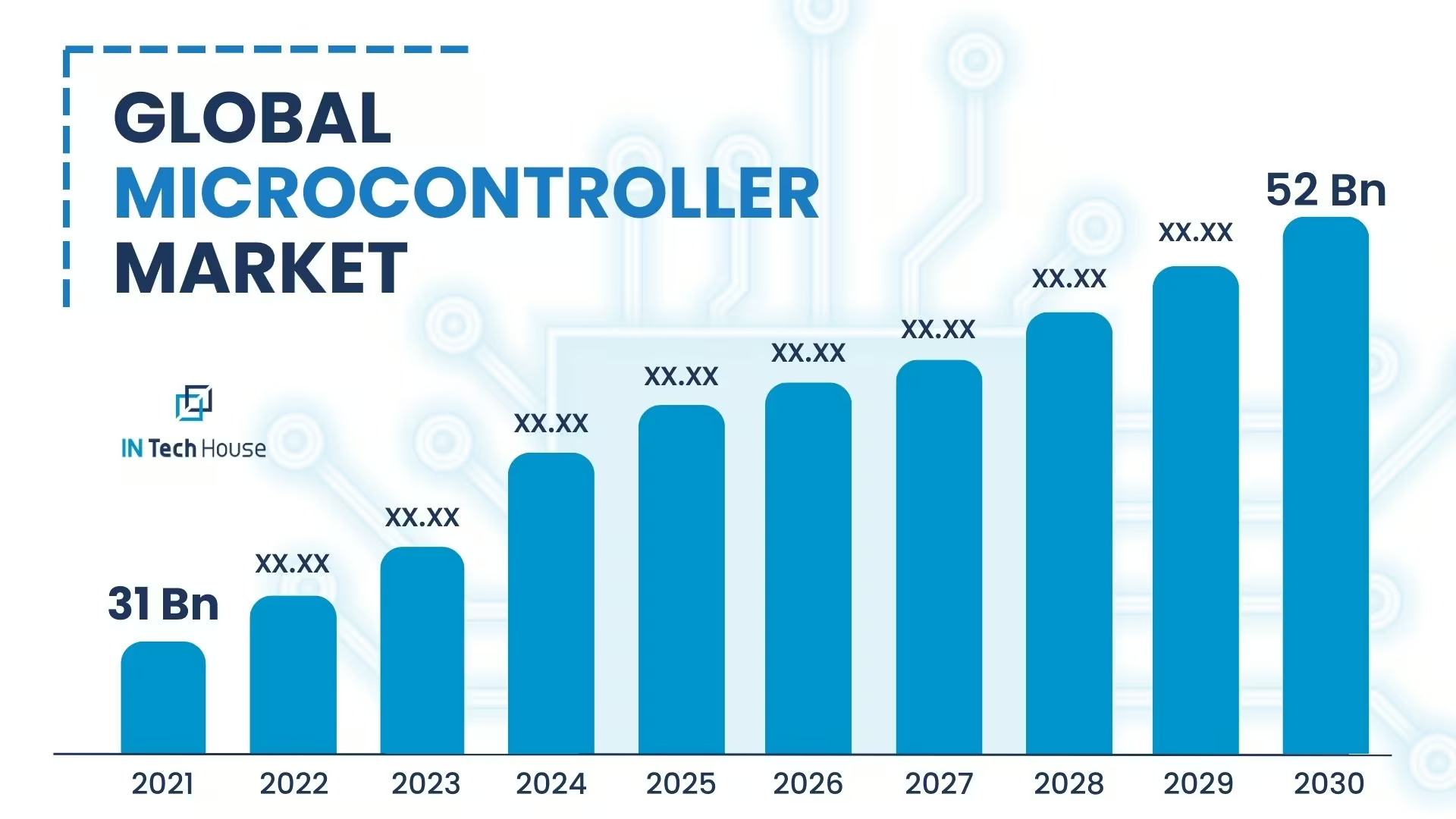
What about the Microcontroller Market?
The Microcontroller market is Growing to $ 52 Billion at a CAGR of 8% from 2022 to 2030.
What About Industries to Use Microcontrollers?
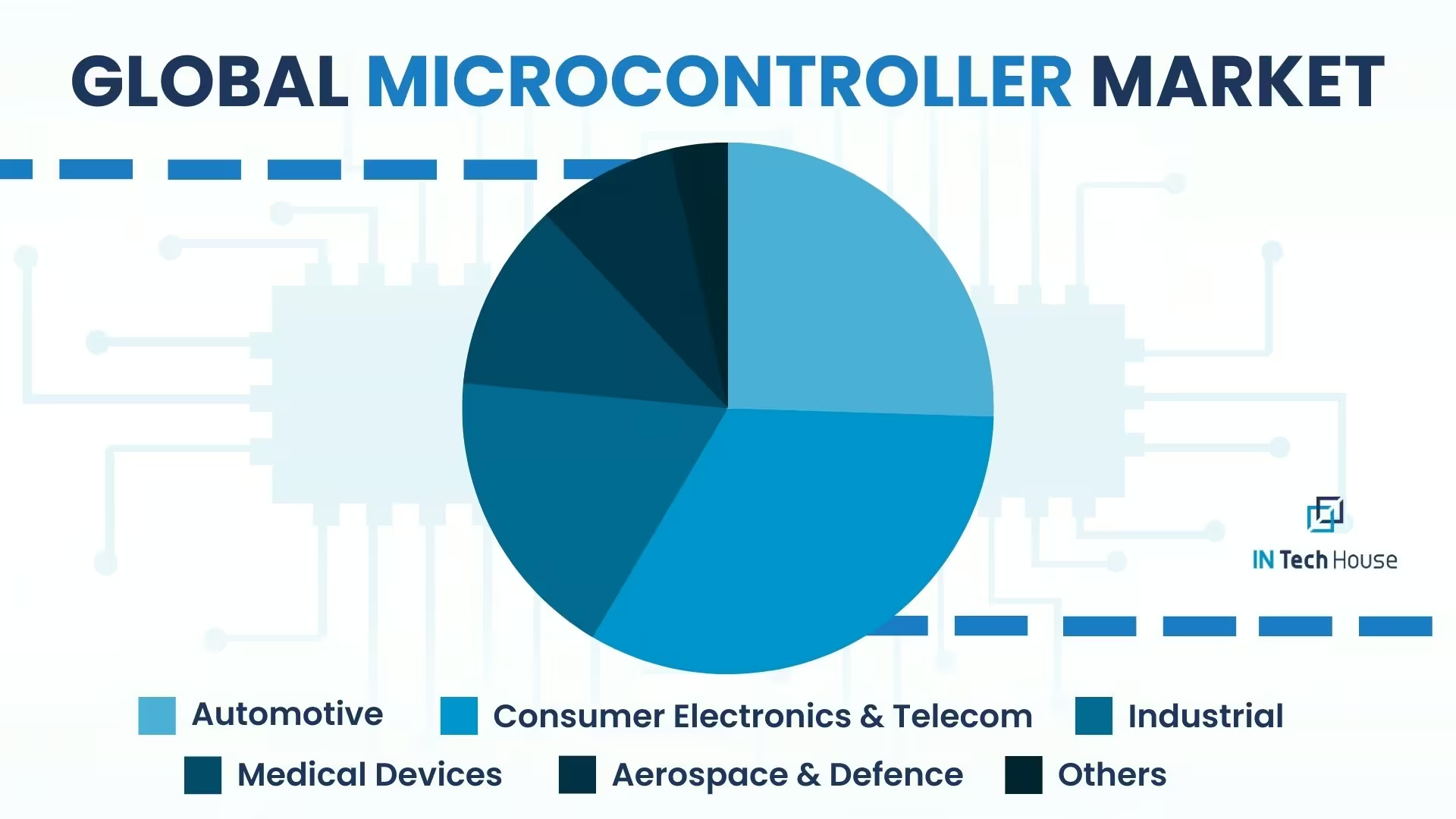
Source: Sphericalinsights, Searchdive, Grandviewresearch, Statista
Components of a Microcontroller:
A microcontroller typically consists of the following key elements:
- Microprocessor Core: This is the central processing unit (CPU) of the microcontroller that executes instructions and performs calculations.
- Memory: It includes both program memory (ROM or flash) for storing the microcontroller’s firmware and data memory (RAM) for temporary storage during program execution.
- Input/Output (I/O) Ports: These ports allow the microcontroller to interact with external devices such as sensors, actuators, displays, and communication modules.
- Timers and Counters: Microcontrollers often incorporate timers and counters to measure time intervals or count events accurately.
- Analogue-to-Digital Converters (ADC): ADCs enable microcontrollers to convert analogue signals from sensors or other sources into digital data for processing.
- Communication Interfaces: Microcontrollers may include serial ports, USB ports, Ethernet interfaces, or wireless communication modules for data exchange with other devices or systems.
Changing the microcontroller after the board is routed costs a full respin. We review processing power, I/O and memory headroom against your roadmap while the change is still cheap.
Check your MCU choice before layout
How Microcontrollers Work
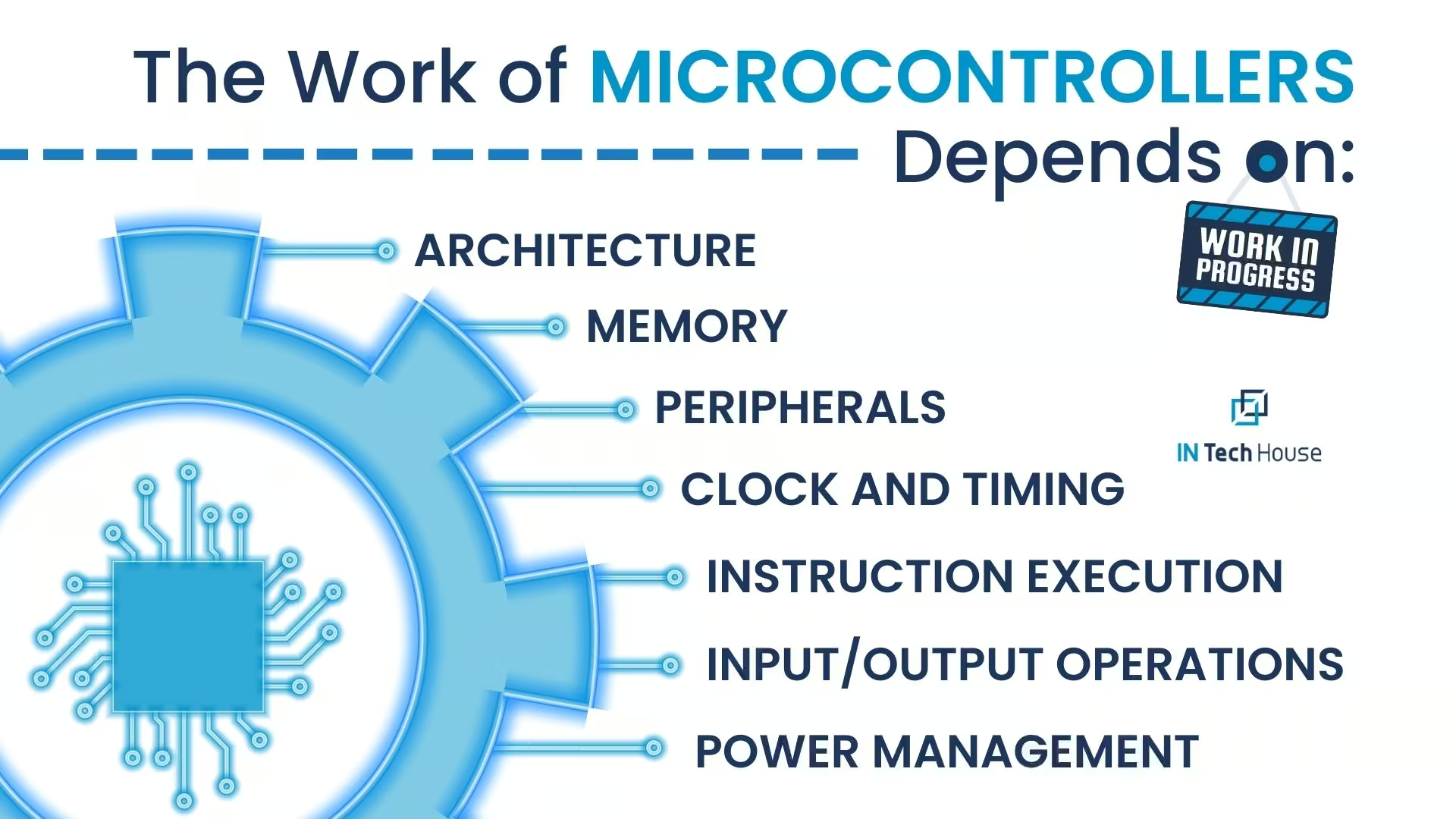
Microcontrollers are small computing devices that are designed to execute specific tasks within embedded systems. They combine a microprocessor core, memory, and various peripherals on a single integrated circuit (IC) chip. Here’s a brief overview of how microcontrollers work:
How much of that hardware you touch directly depends on the software model you choose. Projects that skip the operating system entirely rely on bare metal programming in embedded systems, where the code drives registers, interrupts and timers itself. That decision shapes the memory and peripheral requirements you later set for the chip.
See also:
Choosing the Right Microcontroller for Embedded Systems
STM32 vs ESP32: Choosing the Right Microcontroller for Your Project
What is Embedded System Design: Steps in the Design Process
Microcontroller Architecture
At the heart of a microcontroller is a microprocessor core, which is responsible for executing instructions and performing calculations. The core is typically based on a reduced instruction set computer (RISC) or a complex instruction set computer (CISC) architecture. It fetches instructions from memory and carries out the necessary operations.
Memory
Microcontrollers have built-in memory for program storage (usually flash memory or ROM) and data storage (RAM). The program memory holds the firmware or software instructions that dictate the microcontroller’s behaviour, while the data memory stores temporary data during runtime.
Peripherals
Microcontrollers include peripherals that enable communication with external devices and provide input/output (I/O) capabilities. These peripherals can include analogue-to-digital converters (ADCs) for reading analogue signals, digital-to-analogue converters (DACs) for generating analogue outputs, timers and counters for measuring time or generating precise timing signals, serial communication interfaces (such as UART, SPI, or I2C) for data exchange, and GPIO (General Purpose Input/Output) pins for interfacing with external devices.
Clock and Timing
Microcontrollers rely on a clock signal to synchronize their operations. The clock provides a timing reference for the execution of instructions and the operation of peripherals. The clock speed, measured in megahertz (MHz) or gigahertz (GHz), determines the processing speed of the microcontroller.
Instruction Execution
The microcontroller fetches instructions from the program memory and executes them one by one. It performs calculations, data manipulation, and control operations based on these instructions. The execution flow can be controlled by conditional branching, loops, and other control structures.
Input/Output Operations
Microcontrollers interact with the external world through their I/O pins and peripherals. They can read sensor data, control actuators, communicate with other devices, and respond to external events. This enables them to perform tasks such as sensing, actuation, data acquisition, and communication.
Power Management
Microcontrollers often incorporate power management features to optimize power consumption. They may have sleep modes or power-saving options that allow them to operate in low-power states when not actively processing tasks. This is particularly important for battery-powered or energy-efficient applications.Microcontrollers are programmed with firmware or software instructions that define their behaviour and determine the tasks they perform within an embedded system. The combination of the microprocessor core, memory, and peripherals on a single chip makes microcontrollers compact, cost-effective, and suitable for a wide range of applications, including consumer electronics, industrial automation, automotive systems, and more.
Understand the Application
When choosing a microcontroller for your project, it’s essential to consider the following key factors:
Understand the Application
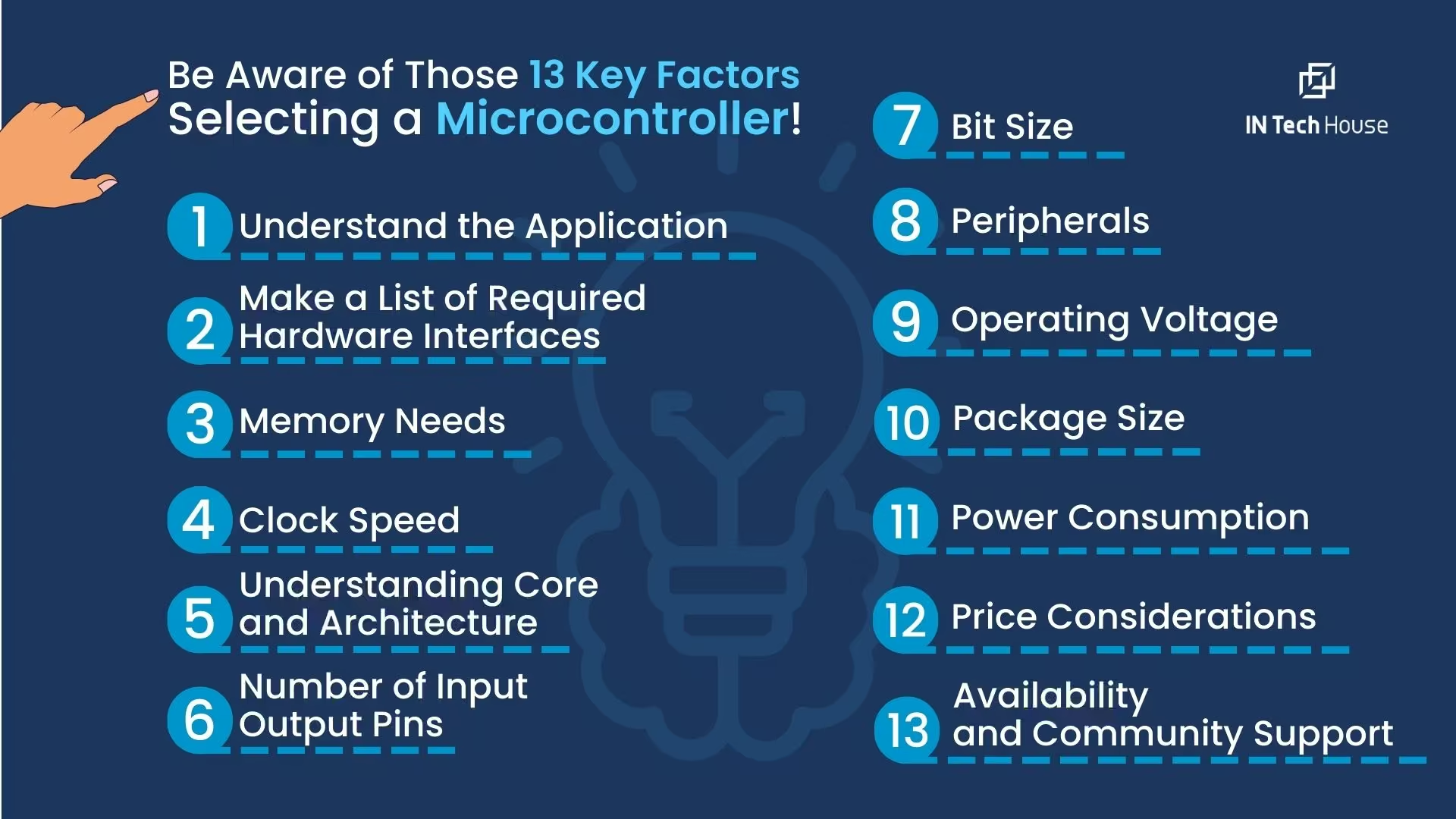
Have a clear understanding of your project requirements and the specific tasks the microcontroller needs to perform. Identify the necessary functionalities, input/output requirements, and any special considerations unique to your application.
Make a List of Required Hardware Interfaces
Determine the hardware interfaces your project requires, such as UART, SPI, I2C, USB, or Ethernet. Ensure that the microcontroller you select has the necessary hardware peripherals to support these interfaces.
Memory Needs
Evaluate the memory requirements of your project, including program memory (ROM or flash) for storing the firmware and data memory (RAM) for temporary storage during program execution. Ensure that the microcontroller has sufficient memory capacity to accommodate your application’s needs.
Clock Speed
Consider the required clock speed based on the processing demands of your project. Higher clock speeds allow for faster execution of instructions but may impact power consumption.
Understanding Core and Architecture
Different microcontrollers employ various core architectures, such as ARM, AVR, PIC, or MSP. Research and understand the capabilities and features of different core architectures to choose the one best suited for your application.
Number of Input/Output Pins
Evaluate the number of input/output pins required for connecting external devices or sensors. Ensure that the microcontroller has an adequate number of pins to accommodate your project’s needs.
Bit Size
Consider the bit size (8-bit, 16-bit, or 32-bit) based on the complexity and computational requirements of your application. Higher bit sizes generally offer increased processing power and more significant memory-addressing capabilities.
Peripherals
Identify the specific peripherals your project requires, such as timers, analogue-to-digital converters (ADC), digital-to-analogue converters (DAC), PWM controllers, and communication interfaces. Choose a microcontroller that offers the necessary peripherals for seamless integration with your project.
Operating Voltage
Ensure that the microcontroller operates within the voltage range compatible with your project’s power supply. Consider the power requirements and voltage tolerance of your application to select a suitable microcontroller.
Package Size
Consider the physical size and package type of the microcontroller. Ensure that it is compatible with your PCB layout and any space restrictions within your project.
Power Consumption
Evaluate the power consumption requirements of your application. Choose a microcontroller with low-power modes or sleep modes if power efficiency is critical for your project.
Price Considerations
Consider the cost of the microcontroller and its affordability within your project budget, a trade-off we illustrate in our STM32 vs ESP32 comparison. Compare prices from different manufacturers and consider any additional development tools or peripherals required.
Availability and Community Support
Ensure that the microcontroller you select is readily available for purchase from reliable sources. Consider the availability of development tools, software libraries, and a supportive community that can provide assistance and resources during your project development.
Microcontrollers in IoT
What about Microcontrollers in IOT?Source:GrandviewResearch
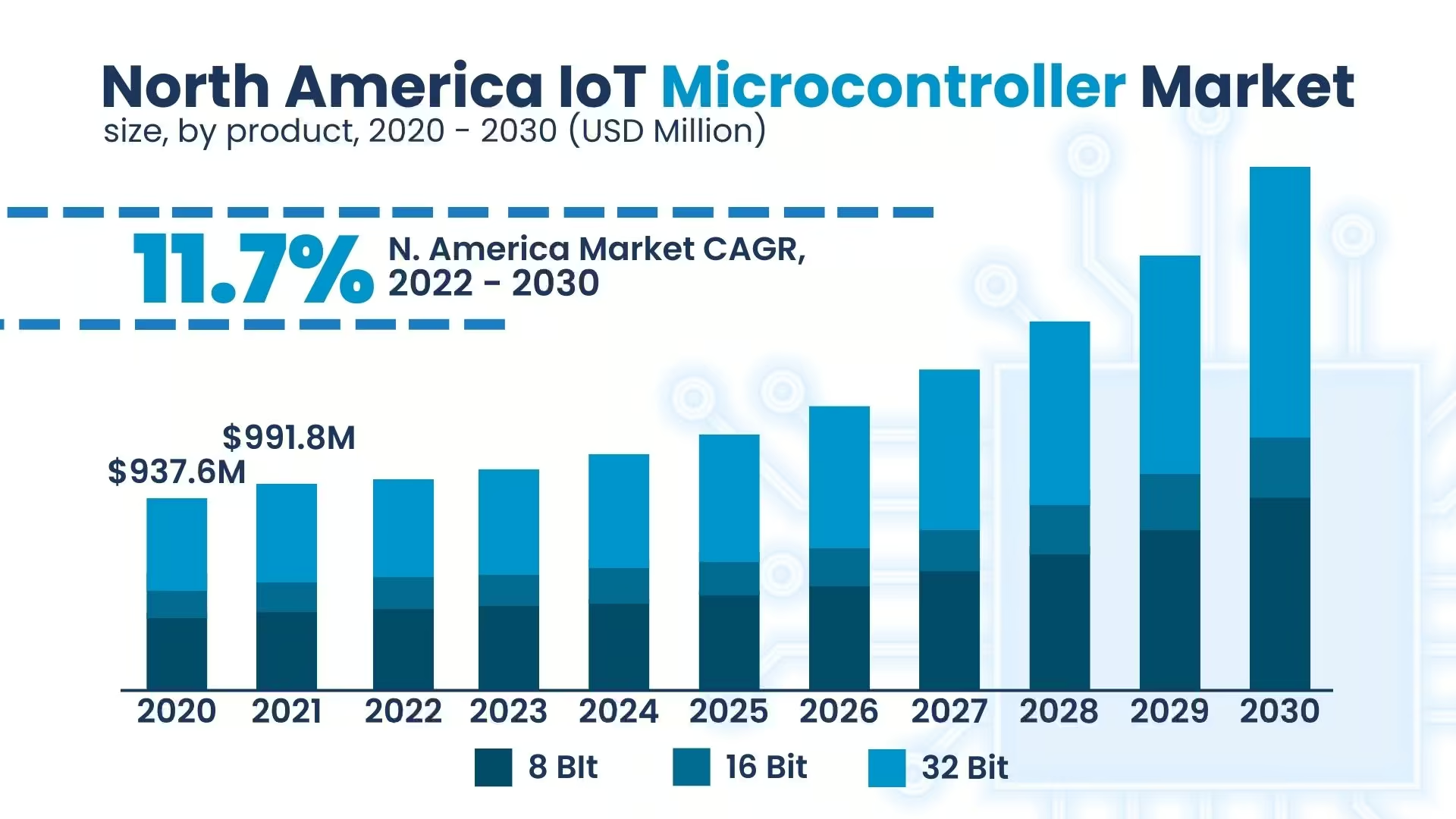
The global market for IoT microcontrollers had a valuation of USD 4.69 billion in 2021 and is projected to witness steady growth with a compound annual growth rate (CAGR) of 12.7% from 2022 to 2030. This growth can be attributed to several factors, including the increasing adoption of IoT devices in both consumer and enterprise sectors and the demand for connected products that offer low power consumption, high performance, and energy efficiency. Additionally, there is a rising preference for embedded Non-Volatile Memory (eNVM) solutions in advanced applications such as industrial automation, smart utilities, and smart transportation, which is expected to positively impact the IoT microcontroller market in the coming years.
However, specific challenges need to be addressed. The lack of industry standards, optimization, and data security in IoT-connected devices may hinder the growth of the market during the forecast period. Industry stakeholders must focus on developing robust standards, enhancing optimization techniques, and implementing effective data security measures to overcome these challenges and unlock the full potential of the IoT microcontroller market.
Difference between Microcontroller and Microprocessor
The main difference between a microcontroller and a microprocessor lies in their integration and purpose:IntegrationA microcontroller is a highly integrated system that incorporates a central processing unit (CPU), memory (both program memory and data memory), and various peripherals (such as input/output interfaces) on a single chip. On the other hand, a microprocessor consists of only the CPU and lacks integrated memory and peripherals. It requires external memory modules and additional circuitry for input/output operations.
Purpose
Microcontrollers are specifically designed for embedded systems and targeted applications, which is why choosing the right microcontroller for embedded systems follows its own set of criteria. They provide control and intelligence within these systems, handling tasks such as real-time control, monitoring, and data processing. Microprocessors, on the other hand, are designed for general-purpose computing and can handle a wide range of tasks and software applications, making them suitable for desktop computers, servers, and other computing devices.
On-chip Memory
Microcontrollers have built-in program memory (usually in the form of ROM or flash memory) and data memory (RAM) on the chip itself. This allows them to store firmware and temporary data without the need for external memory modules. In contrast, microprocessors rely on external memory for program and data storage.
Input/Output
Microcontrollers have dedicated input/output pins that enable them to interact directly with external devices and sensors. These pins can be used for tasks such as reading sensor data, controlling actuators, and communicating with other devices. Microprocessors, on the other hand, require additional circuitry and external interfaces to perform input/output operations.
Power Consumption
Microcontrollers are optimized for low power consumption, making them suitable for battery-powered and energy-efficient applications. They are designed to operate with minimal power requirements and often incorporate power-saving features. Microprocessors, being more versatile and powerful, typically consume more power.
Overall, the main distinction between microcontrollers and microprocessors lies in their level of integration, purpose, and targeted applications. Microcontrollers are highly integrated systems designed for specific tasks within embedded systems, while microprocessors are general-purpose computing devices capable of handling a wide range of tasks and applications.
Microcontroller Applications
Microcontrollers find applications in various fields due to their versatility, compactness, and cost-effectiveness. Some common applications include:
- Consumer Electronics: Microcontrollers power a wide range of consumer devices such as smartphones, digital cameras, televisions, home appliances, and gaming consoles.
- Automotive Industry: They are extensively used in automotive systems for engine management, in-car entertainment, advanced driver assistance systems (ADAS), and vehicle diagnostics.
- Industrial Automation: Microcontrollers play a crucial role in industrial control systems, robotics, process automation, and monitoring equipment.
- Medical Devices: They are integral to medical devices like heart rate monitors, insulin pumps, blood glucose meters, and diagnostic equipment.
- Home Automation: Microcontrollers enable automation and control in smart homes, controlling lighting, HVAC systems, security systems, and home appliances.
- Internet of Things (IoT): Microcontrollers are at the heart of IoT devices, enabling connectivity and intelligent control of smart devices and sensors.
- Wearable Technology: Microcontrollers power wearable devices such as fitness trackers, smartwatches, and healthcare monitoring devices.
- Embedded Systems: They are widely used in embedded systems for various purposes, including industrial control, data logging, and sensor interfacing.
Microcontrollers continue to revolutionize technology by providing intelligence and control in countless applications. Their compact size, low power consumption, and versatility make them an essential component in modern electronics.
InTechHouse Experience with Microcontrollers
At InTechHouse, we have had an enriching experience working with microcontrollers. These small yet powerful devices have allowed us to bring our innovative ideas to life and create exciting electronic projects. From building interactive prototypes to developing IoT solutions, microcontrollers have been the backbone of our hardware design endeavours. Picking the controller is usually the first decision in our custom hardware design work, since it sets the power budget, peripherals and firmware path for the whole prototype.
Their versatility, reliability, and ease of integration have empowered us to unleash our creativity and push the boundaries of technology. With the ability to program and control various peripherals, microcontrollers have enabled us to create customized solutions tailored to specific applications. Our journey with microcontrollers has been a rewarding one, as we continue to explore their potential and harness their capabilities to develop cutting-edge electronic systems.
Once the part is chosen, the work is drivers, timing and test coverage. Our engineers deliver production firmware and the evidence that it behaves under real load.
Bring us in for the firmware build
Conclusion
Selecting the right microcontroller is a critical step in the success of your hardware project. By understanding your project requirements and evaluating factors like processing power, I/O capabilities, memory, programming language support, and power consumption, you can make an informed decision. Remember to consider scalability and future expansion possibilities as your project evolves. Take advantage of online resources, datasheets, and expert communities to gather additional information and insights. Armed with this knowledge, you’ll be able to choose a microcontroller that not only meets your current needs but also lays a solid foundation for future growth and development.
Let's talk about your next move
Not sure where to start? We work with companies at every stage, from early ideas to enterprise-level builds. A 30-minute call can save you months of guesswork.
FAQ
How do you choose a microcontroller for a new hardware project?
Choosing a microcontroller starts with the application's hard requirements, then narrows by peripherals and constraints. List the required interfaces (UART, SPI, I2C, CAN, USB, Ethernet), the number of I/O pins, flash and RAM needs, processing load and power budget. Then filter by operating voltage, package size, temperature range and price. Finally check what is often underestimated: toolchain quality, vendor SDK maturity, community support and guaranteed long-term availability of the part.
Should a product use a microcontroller or a microprocessor?
A product should use a microcontroller when it runs dedicated control tasks with on-chip flash and RAM, needs low power and must start instantly. A microprocessor (MPU) is the better fit when the product needs embedded Linux, a rich graphical interface, heavy networking or hundreds of megabytes of memory. MPUs need external DDR memory, more power rails and a more complex PCB, which raises board cost and design effort, so the choice should follow the software requirements.
How much flash and RAM headroom should a microcontroller have?
A microcontroller should have enough spare flash and RAM to hold the planned roadmap, a firmware update mechanism and debug builds, not just the first release. Over-the-air updates with A/B slots can roughly double the flash needed for the application image. A practical safeguard is choosing a part from a family with pin-compatible variants offering more memory, so if the estimate proves wrong, the fix is a component swap rather than a new PCB layout.
Are 8-bit microcontrollers still worth using?
8-bit microcontrollers are still worth using for simple, cost-sensitive and very low-power tasks such as button handling, basic sensing or power sequencing, where their simplicity and low part cost matter. For most new designs, 32-bit Arm Cortex-M or RISC-V parts are now the default, because they are priced competitively and offer more memory, better toolchains and room for features such as connectivity and security. The deciding factors are the software complexity expected over the product's life and the unit volume.
How does long-term availability affect microcontroller selection?
Long-term availability affects microcontroller selection because replacing an obsolete part forces a board redesign, new firmware drivers and sometimes recertification. Industrial and medical products often stay in production for ten years or more, so engineers check the manufacturer's longevity program, current lead times and whether pin-compatible alternatives exist. Parts that are popular with hobbyists but lack a formal lifecycle commitment can be risky for regulated or long-life products, however attractive their price.
Krzysztof Niedźwiedź
Krzysztof Niedźwiedź is a Lead Embedded Systems and Hardware Engineer at InTechHouse with over 11 years of experience developing complex electronic and embedded products from system architecture through production.
He specializes in embedded software development, electronic system architecture, multilayer PCB design, hardware-software integration, system testing, and technical ownership of high-reliability engineering projects. His work spans requirements analysis, architecture and component selection, schematic and PCB design, bare-metal and RTOS firmware development, prototyping, troubleshooting, production documentation, and cooperation with mechanical and high-level software teams.
Krzysztof's project experience includes FPGA and SoC-based onboard computers for the space industry, embedded electronics for advanced optical equipment, low-power environmental-monitoring devices, UAV payloads for real-time air-quality measurement and sample collection, and connected medical and training devices.
He works with C and C++, STM32, LPC and AVR microcontrollers, ARM-based platforms, RTOS, Embedded Linux, FPGA and SoC architectures, DDR3, HDI PCB technology, and industrial communication interfaces including Ethernet, CAN, RS-485, SPI, I2C, UART, USB, Modbus, and MQTT.
Krzysztof holds bachelor's and master's degrees in Electronics and Telecommunications. He is an IPC Certified Interconnect Designer and has completed specialist training in Embedded GNU/Linux kernel internals and device drivers. He writes about embedded system architecture, firmware development, PCB design, MCU and FPGA integration, RTOS, hardware security, low-power electronics, and dependable electronic products.
Let's talk about your next project
From first prototype to production, our engineers can help you scope it, build it and get it certified.
Discuss your product with our R&D team
This initial conversation is focused on understanding your product, technical challenges, and constraints.
No sales pitch - just a practical discussion with experienced engineers.
Share a few details about your product and context. We’ll review the information and suggest the most appropriate next step.