
Software vs Hardware: Differences and Similarities

Software vs Hardware: Differences and Similarities
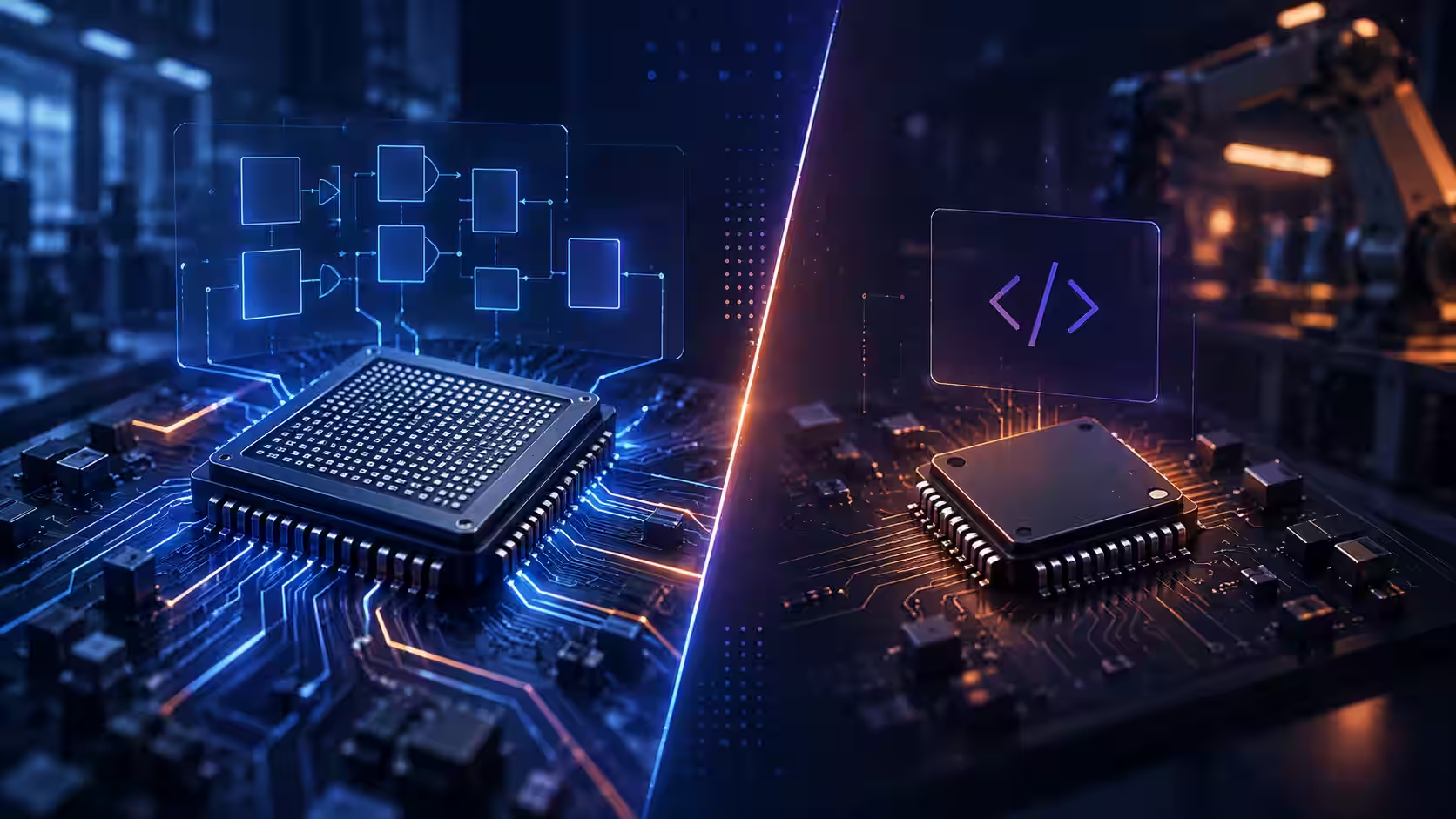
We often divide a computer system into two parts: hardware and software. Both of these components are required for the computer system to function effectively. In this article, we will explain how hardware is different from software. The split matters in practice too: a product team scoping hardware engineering services needs to know which behavior lives in silicon and which can still change in code.
We’ll also show you how to differentiate between hardware and software with examples.
Although the phrases computer hardware vs software appear to be interchangeable, there are substantial distinctions between hardware and software. Before we get into that, let’s look at the basic definitions of hardware versus software.
Hardware Explained
We refer to the physical components of a computer as computer hardware. We consider any visible and touchable component of a computer to be hardware. Input devices, output devices, storage devices, processing devices, and any other internal components are all included.Hardware refers
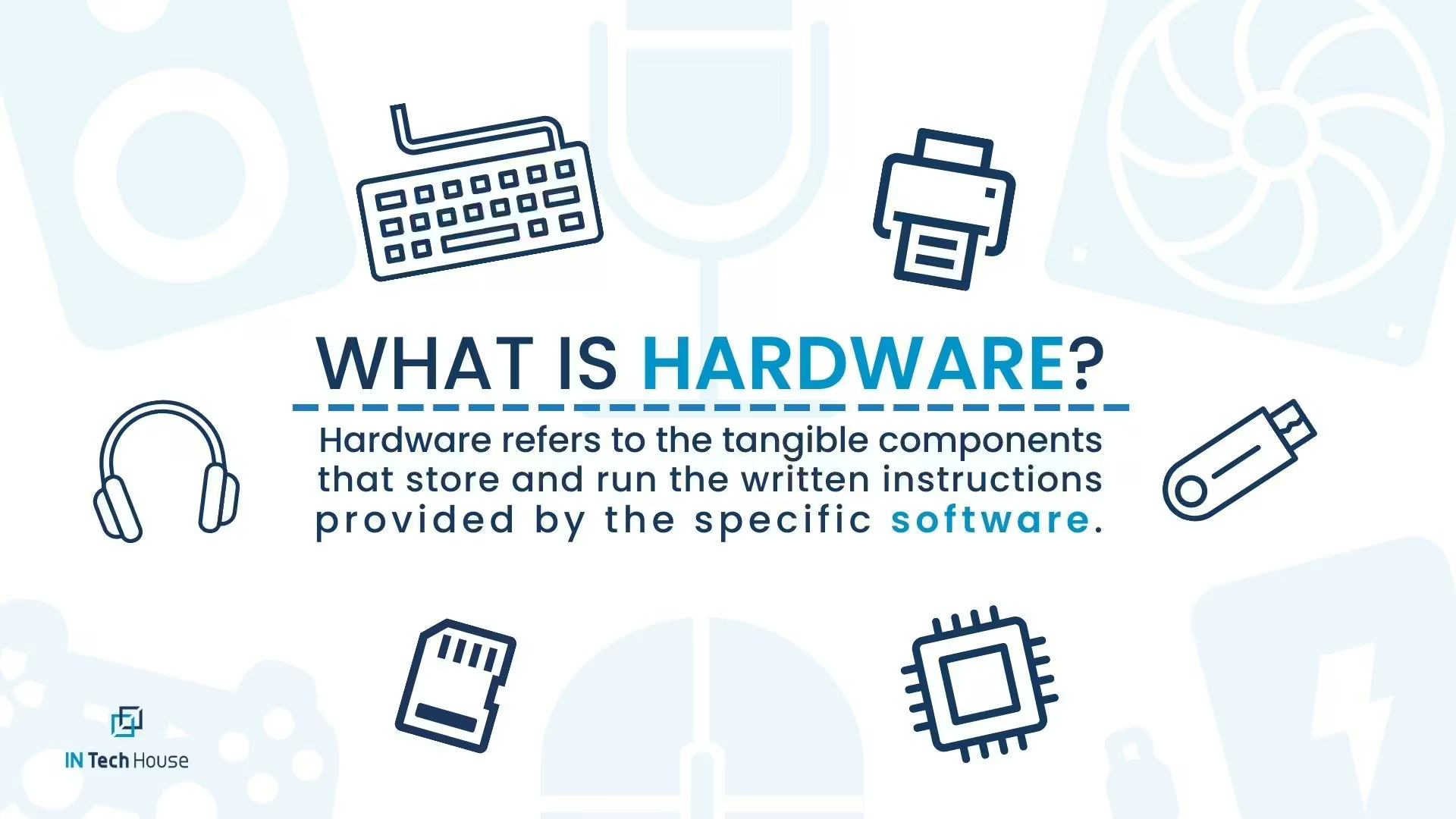
We class internal and external hardware devices or components based on whether we can directly or indirectly view and touch them.
Software Explained
We refer to software as a collection of data, instructions, programmes, or rules that direct a computer system or electrical components to perform effectively and achieve desired results. You cannot physically see or touch software.Software refers
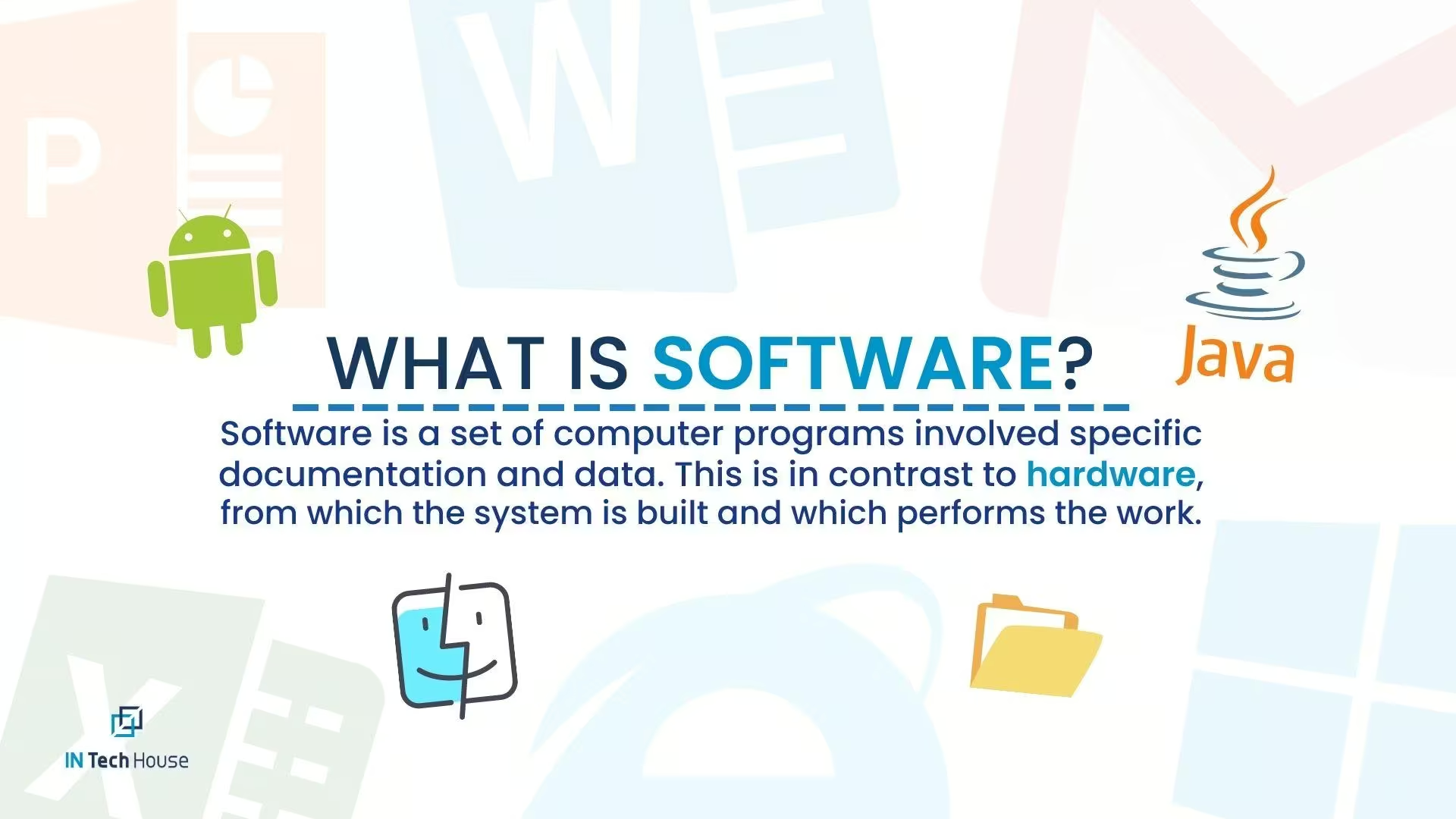
Programmers write programming codes to create software, and then the computer’s CPU executes it. Your computer requires software, such as the operating system, to do fundamental operations, but there are several additional types of software available.
Software and Hardware Examples
Here are some hardware vs software examples.
Examples of Software
Your operating system, internet browsers, and other programs used for various and specific functions such as Microsoft Office, Adobe Reader, and Photoshop are examples of software.
Examples of Hardware
There are two types of computer hardware: internal and external, a split that follows directly from hardware architecture basics and types. You normally can’t see the internal hardware, as it is covered by a protective casing. Internal hardware includes the CPU (Central Processing Unit), motherboard, RAM (Random Access Memory), ROM (Read Only Memory), HDD (Hard Disk Drive), and graphics card.
External hardware includes all the components that you attach to the computer and can easily see. These are things like your monitor, keyboard, external hard drives, mouse, webcam, etc.
Knowing the difference between the board and the code is the easy part. Making them work together under thermal, power and EMC constraints is where our electronics engineers come in.
Turn the hardware side into a working device
What Is the Difference Between Hardware and Software?
It can sometimes be difficult to distinguish between hardware and software. To help you understand how to tell the difference between hardware and software, we’ve broken it down further for you.
Input devices, output devices, storage, and internal components are the four major kinds of computer hardware. There are two types of computer software: system software and application software.
Since hardware is a physical thing, computer viruses do not affect it. Computer viruses may disrupt systems, leak data, and cause serious operational difficulties in software.
You cannot transfer hardware electronically, but you can use it in various computers if the components are compatible. You can transfer software electronically via a computer network, the internet, or an external storage device.
Computer hardware is made up of real components that wear out and need to be replaced with newer parts or upgrades. Over time, the software may acquire flaws and malfunctions, but backup copies and installing upgrades repair it.
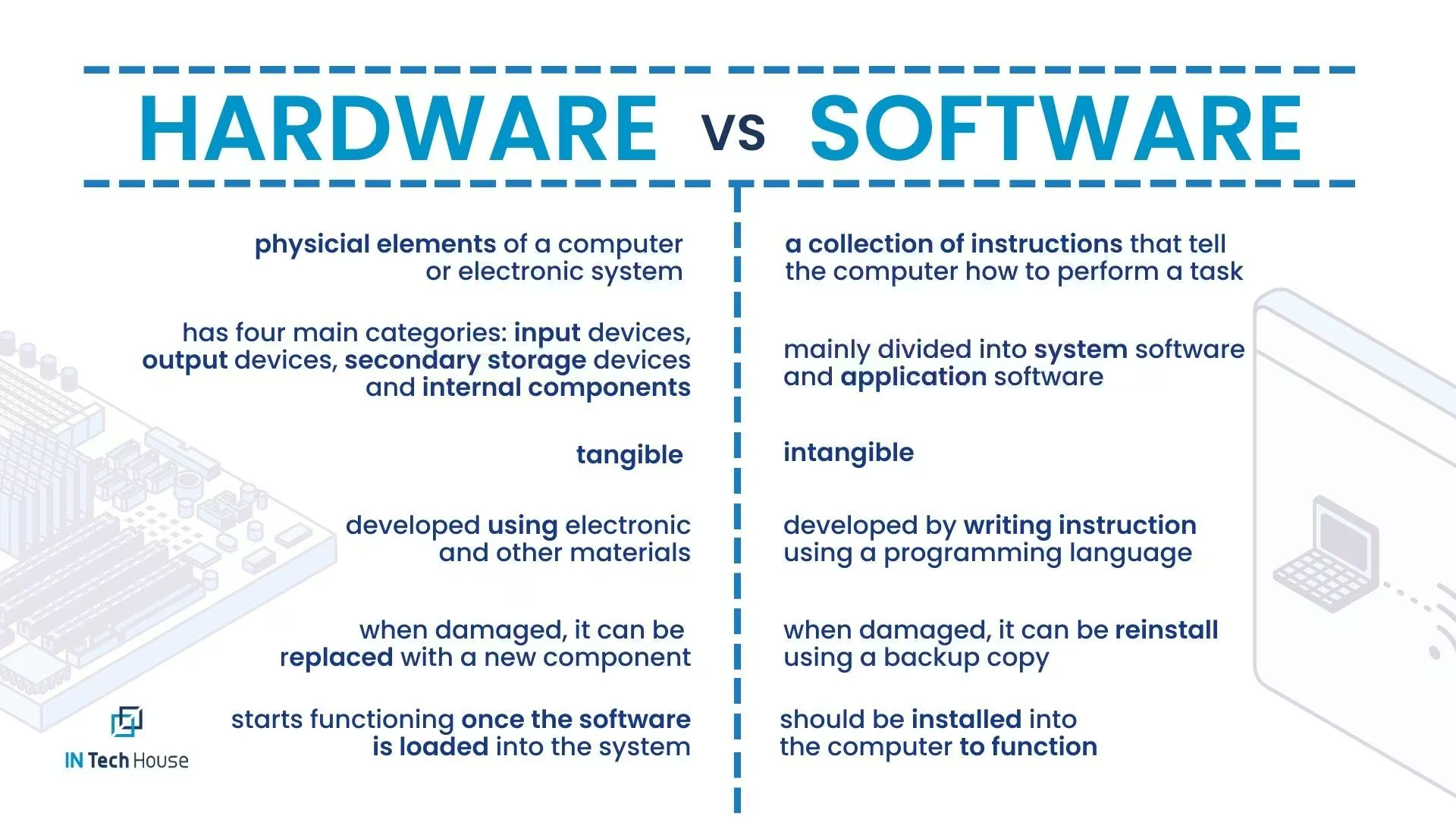
Dust, overheating, and an uncontrolled power source can all cause hardware failures. Overloading, system faults, viruses and version issues can all cause software failures.
Similarities Between Hardware Development and Software Development
Now that you know the software vs. hardware differences, let’s look at some hardware and software similarities.
- Both are necessary parts of a computer system.
- Neither is easy to develop. They both need time, effort, and specialised knowledge.
- They both require ongoing upgrades.
- They are completely reliant on one another.
- They might be rather expensive at times.
Hardware and Software Engineering
When we talk about hardware vs software engineering, there are also significant differences. To help you understand them, here’s a breakdown of a computer hardware engineer vs software engineer.

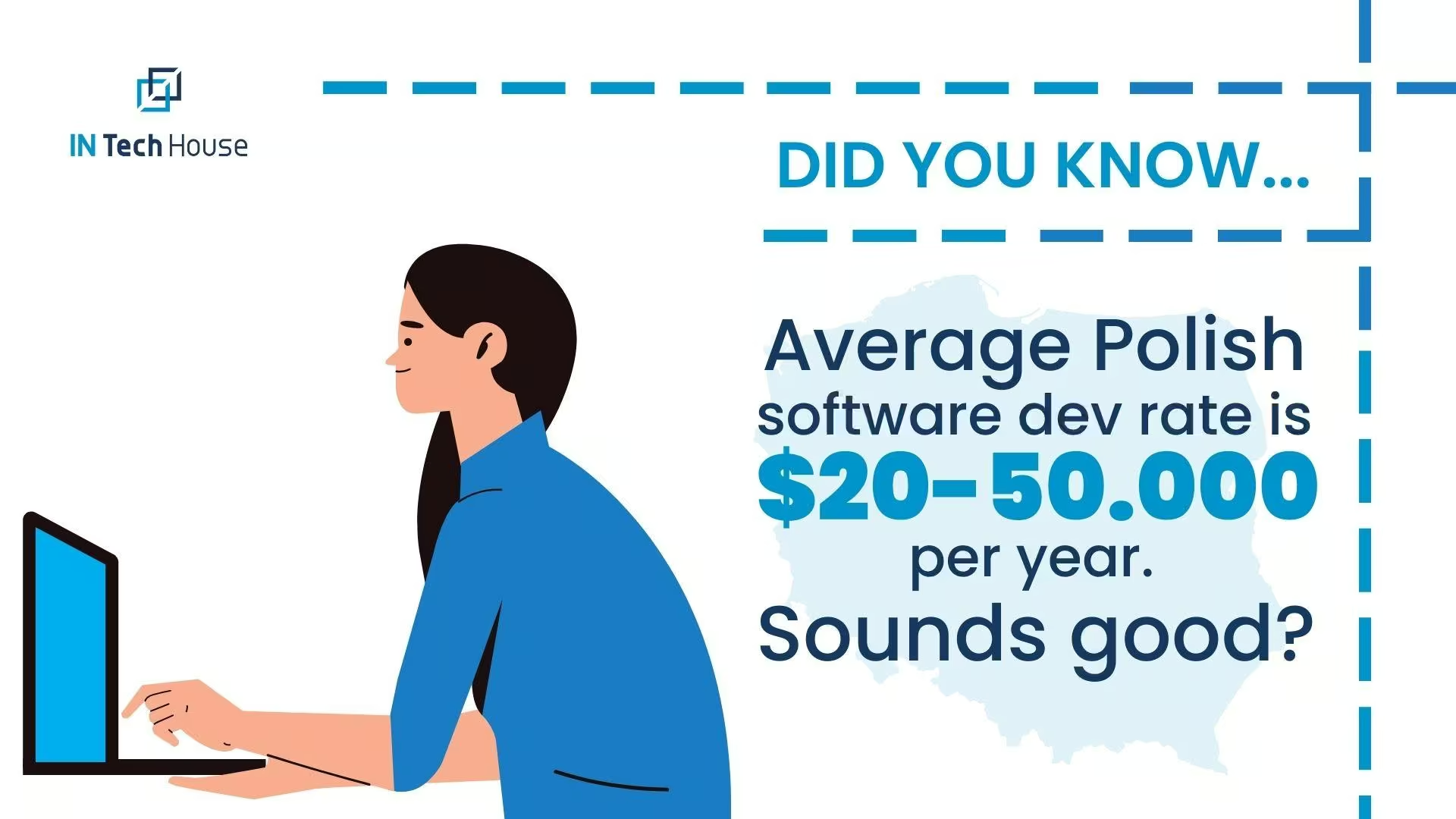
Source: Glassdoor, SalaryExpert
Computer hardware engineers design, build, and test computer hardware and components. They usually work in a lab, developing new hardware components and troubleshooting hardware issues.
Source: Glassdoor, Levels
They are well-versed in computer hardware, such as circuit boards, processors, semiconductors, and other electrical components. Computer software engineers create, test, and maintain computer networks and systems.
They are usually employed in an office. They fulfil their responsibilities by writing programmes that allow the hardware to function and execute necessary tasks. They have vast experience developing architecture, creating code in programming languages, testing, and delivering products.
Difference Between Software Design and Architecture
The process of turning software characteristics into a structured solution that meets business and technical criteria is referred to as software architecture. These include characteristics such as security, adaptability, scalability, and reusability. The skeleton and high-level infrastructure of software are the focus of software architecture.
Software design, on the other hand, focuses on the code level. Building a design plan that digs into the many aspects of a system is fundamental to software design. It demonstrates how they collaborate to meet the system’s needs.
Can One Work Without The Other?
The hardware and software differences mentioned above do prove that they are two different things. However, the theory that one should compare hardware vs. software seems silly if you consider the fact that neither can work without the other.
Software needs to be installed on some type of hardware to function. Likewise, hardware needs software installed on it to function. Therefore, these two very different components rely on each other to be useful.
Why Company that Provides Software and Hardware Services is Better
A company that provides both software and hardware services can offer several benefits to its clients. By combining expertise in both areas, such a company can provide more comprehensive and integrated solutions that meet the specific needs of each client.
For example, a company that develops a software application can also provide the necessary hardware infrastructure to support that application, ensuring a seamless and efficient experience for end-users.
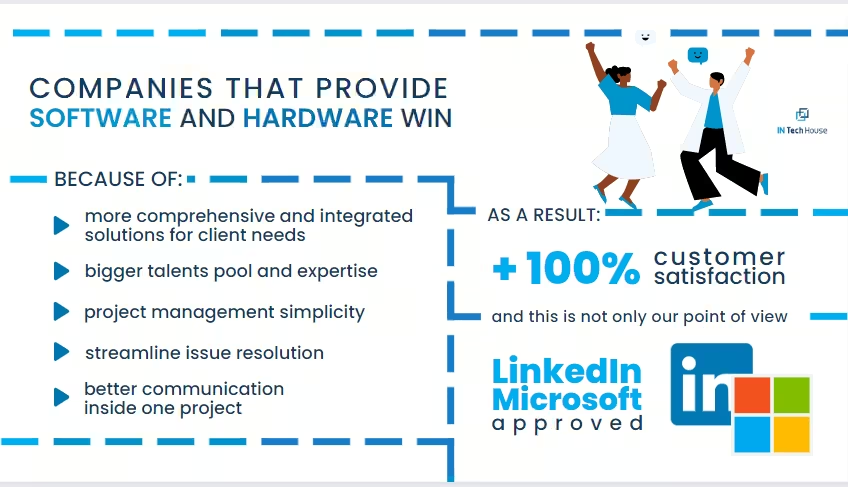
Additionally, having a single point of contact for both hardware and software services can simplify project management, reduce communication overhead, and streamline issue resolution. This can lead to faster turnaround times, higher quality deliverables, and greater overall customer satisfaction. Finally, a company that provides both software and hardware services can also offer more competitive pricing and bundled services, which can help businesses to save money and maximize their return on investment.
We design the physical layer that software depends on, from schematic and PCB through to a validated prototype. Ask us how we approach a new device for a regulated environment.
Let's talk about your next move
Not sure where to start? We work with companies at every stage, from early ideas to enterprise-level builds. A 30-minute call can save you months of guesswork.
FAQ
1. What are the most popular software products in the market?
There are many popular software products such as cloud platforms as a service, applications, games, analytic tools, and web frameworks.
2. What are the necessary software components?
There are four crucial components
3. What are popular hardware devices?
I think the most popular hardware devices include a mouse, keyboard, touchpad, USB flash drive, memory card, microphone, etc.What are specific hardware devices?Specific hardware devices mean devices with software that is embedded in, preinstalled on or otherwise provided specifically for use with hardware.
Robert Obiała
Robert Obiała is a Senior Embedded Systems and Hardware Engineer at InTechHouse with over 12 years of hands-on experience in electronic product development. He specializes in embedded hardware design, multilayer PCB development, firmware engineering, EMC compliance, system integration, and troubleshooting complex electronic devices.
Robert works across the complete product development lifecycle - from system architecture and component selection through schematic and PCB design, embedded software development, prototyping, testing, pre-compliance validation, and preparation for production.
His project experience includes FPGA-based onboard computers for the space industry, low-power IoT and telemetry devices, industrial data acquisition systems, UAV payload electronics, power electronics, and embedded hardware and software for advanced optical equipment. He has designed systems based on STM32, ESP32, AVR, ARM, and AMD Xilinx Zynq platforms, using C, C++, Embedded Linux, and communication technologies including Ethernet, CAN, RS-485, SPI, I2C, UART, Wi-Fi, BLE, MQTT, and LTE-M.
Robert holds an Engineer's Degree in Electronics and Telecommunications and has completed specialist training in EMC-aware electronics design. He writes about practical hardware development, embedded systems, PCB design, firmware engineering, EMC testing, FPGA-based architectures, and bringing reliable electronic products from concept to production.
Let's talk about your next project
From first prototype to production, our engineers can help you scope it, build it and get it certified.
Discuss your product with our R&D team
This initial conversation is focused on understanding your product, technical challenges, and constraints.
No sales pitch - just a practical discussion with experienced engineers.
Share a few details about your product and context. We’ll review the information and suggest the most appropriate next step.