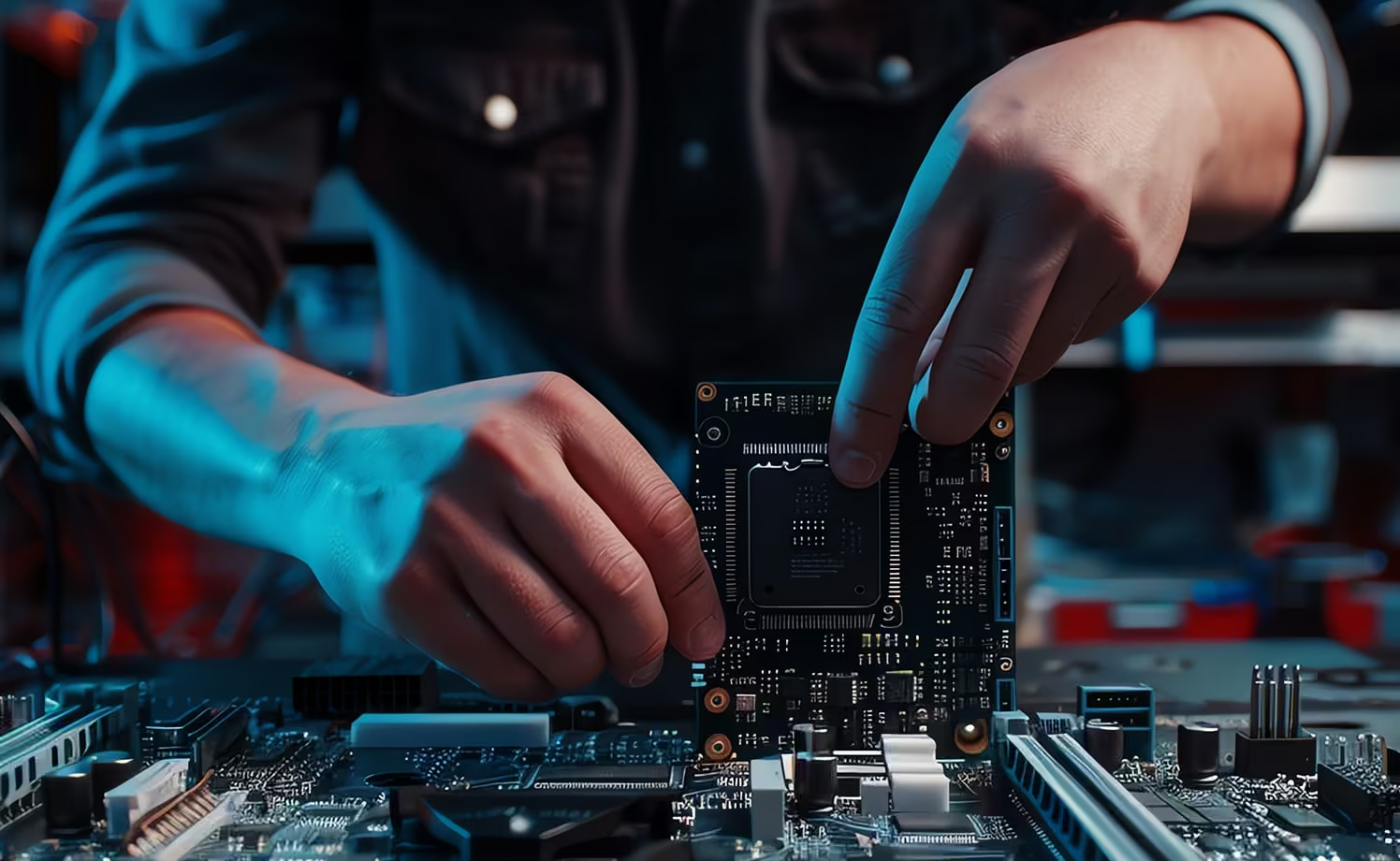
In today’s rapidly evolving technological landscape, hardware engineers play a crucial role in designing, developing, and troubleshooting the physical components that power our digital world. If you have a passion for technology and enjoy working with circuits, devices, and systems, a career in hardware engineering might be the perfect fit for you. In this article, we will explore what hardware engineering entails, the responsibilities of a hardware engineer, and the path to becoming one. Most of that physical work lands on a circuit board, so knowing what a PCB is and how one gets designed is a practical first step.
Given the prevalence of computer systems in today’s world, the field of computer engineering has become remarkably diverse. Whether one’s focus is on personal computers, mobile devices, embedded systems, or other products, the role of a hardware engineer entails working with various components such as circuit boards, routers, networks, memory, and processors. These technologies are utilized collectively to develop a product that fulfills specific requirements.
Furthermore, computer hardware engineers acquire training, typically at the undergraduate level, in areas encompassing the design, development, testing, and debugging processes involved in creating their products. These educational programs often incorporate an element of programming to provide an understanding of the software developers’ needs when using the equipment.
Considering the specialized nature of this profession, pursuing a master’s degree in computer engineering or a related field can be advantageous. Additionally, honing soft skills associated with problem-solving, teamwork, and communication can greatly benefit hardware engineers in their work.
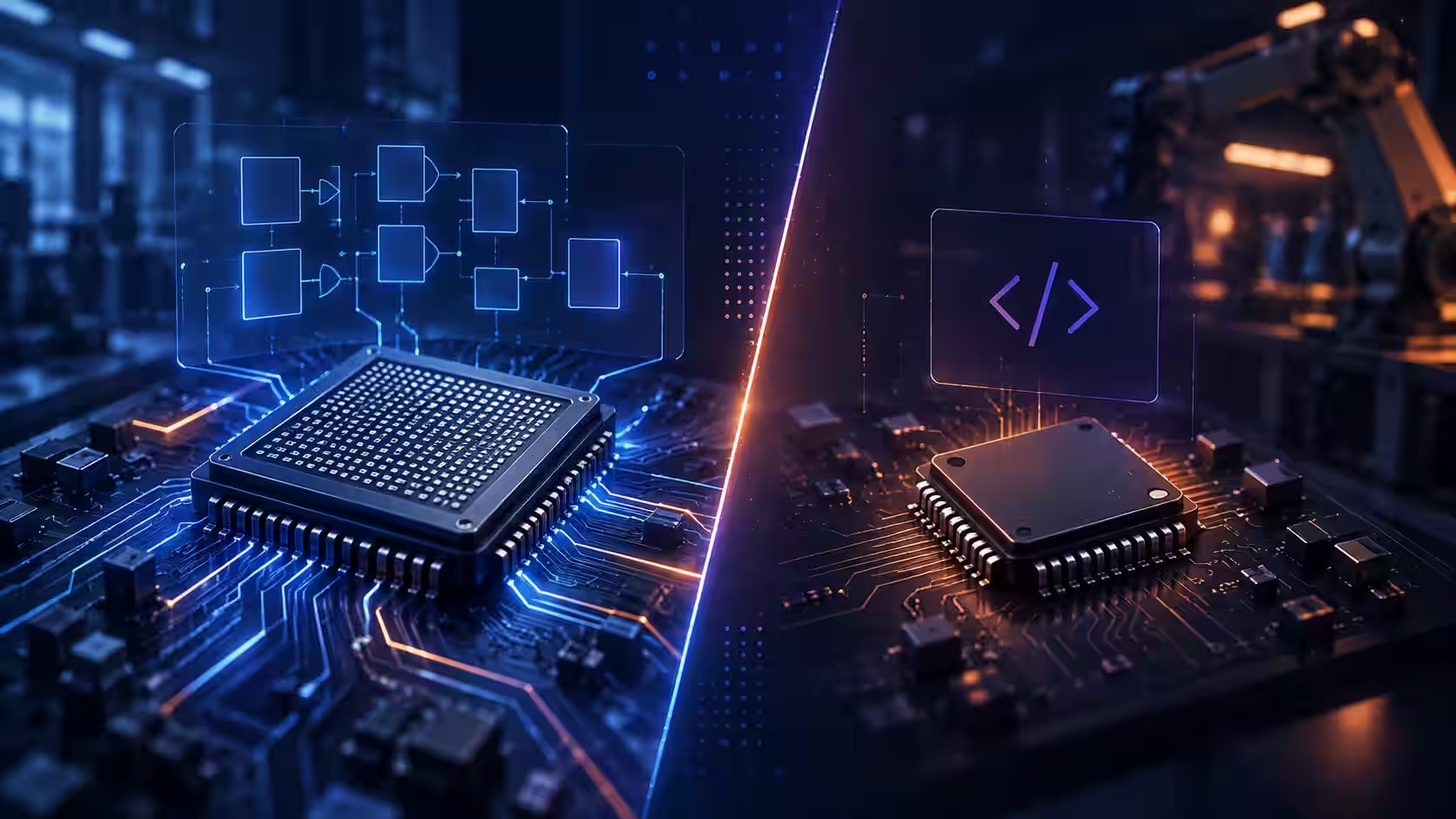
Every task in this discipline starts from a structural decision: which processing model, which memory hierarchy, which interfaces. Engineers who understand hardware architecture basics and types make those calls with the whole system in mind instead of optimising one block at a time.
Businesses across various industries require hardware engineering expertise to meet their technological needs. Some of the sectors that heavily rely on hardware engineering include:
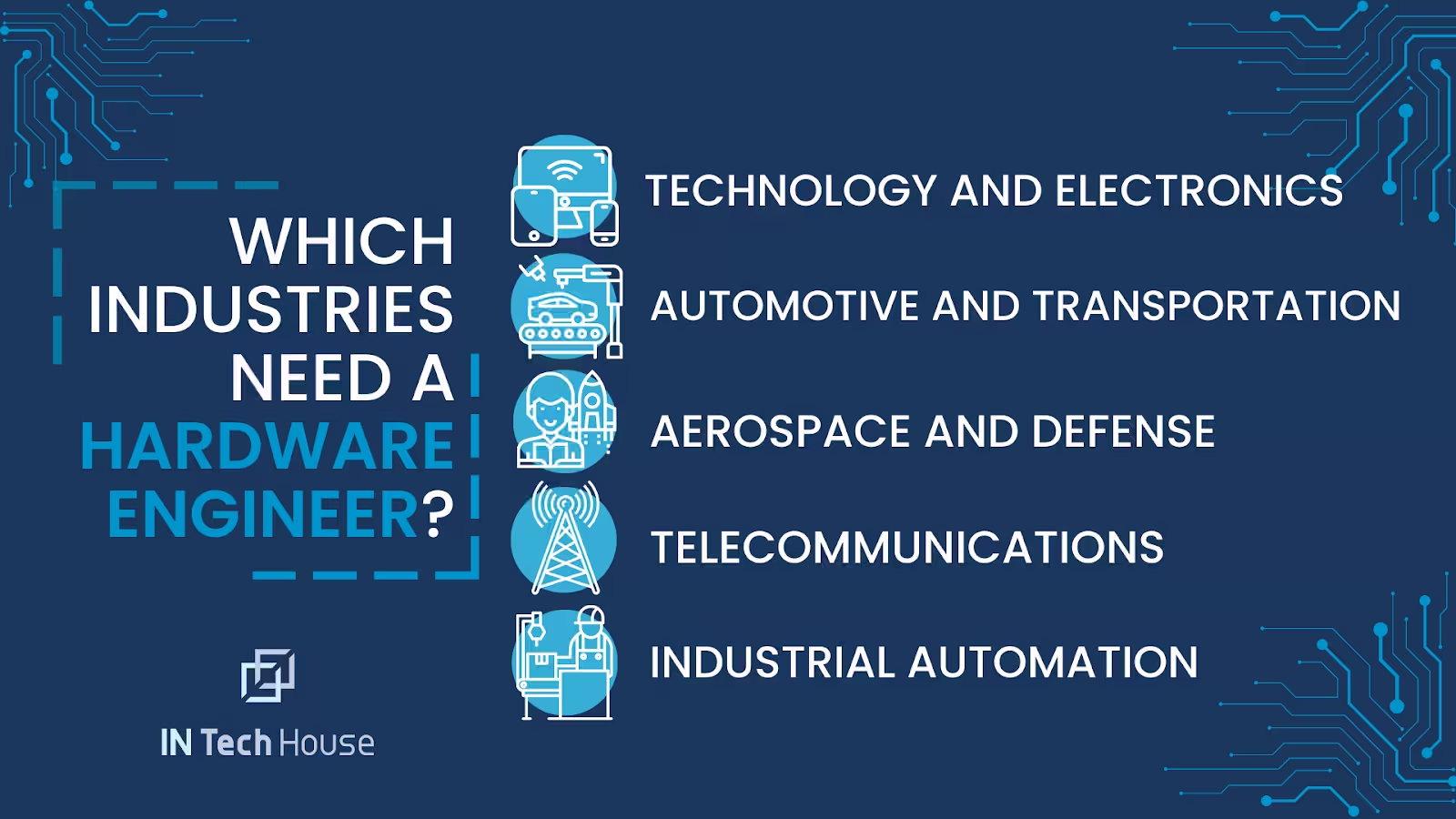
The hardware engineering market has experienced significant growth due to technological advancements and increasing demand for innovative products. The proliferation of IoT, AI, 5G, autonomous vehicles, and smart devices has contributed to the expansion of the hardware market. According to market research reports, the global hardware market is projected to continue growing in the coming years, driven by emerging technologies and the need for advanced hardware solutions in various industries.
Hiring a full in-house hardware team takes months you may not have. We provide electronics and hardware engineers who can own schematics, prototypes and bring-up from day one.
Add hardware engineers to your product team
The responsibilities of a hardware engineer encompass the design, development, and testing of computer systems and components. Depending on the scale of the organization, one may work independently or as part of a small or large team.
When working individually or in a smaller setting, hardware engineers often handle the entire process themselves. However, in larger companies, they may specialize in a specific area of hardware design or testing.This field is rapidly evolving, particularly in relation to embedded systems and mobile devices. Hardware engineers may be involved in extensive research and development projects aimed at creating new products or enhancing existing ones.
Outlined below are some of the key roles that hardware engineers may undertake:
In summary, hardware engineers play a vital role in the design, development, testing, and updating of computer systems and components, staying abreast of technological advancements to contribute effectively in this rapidly evolving field.
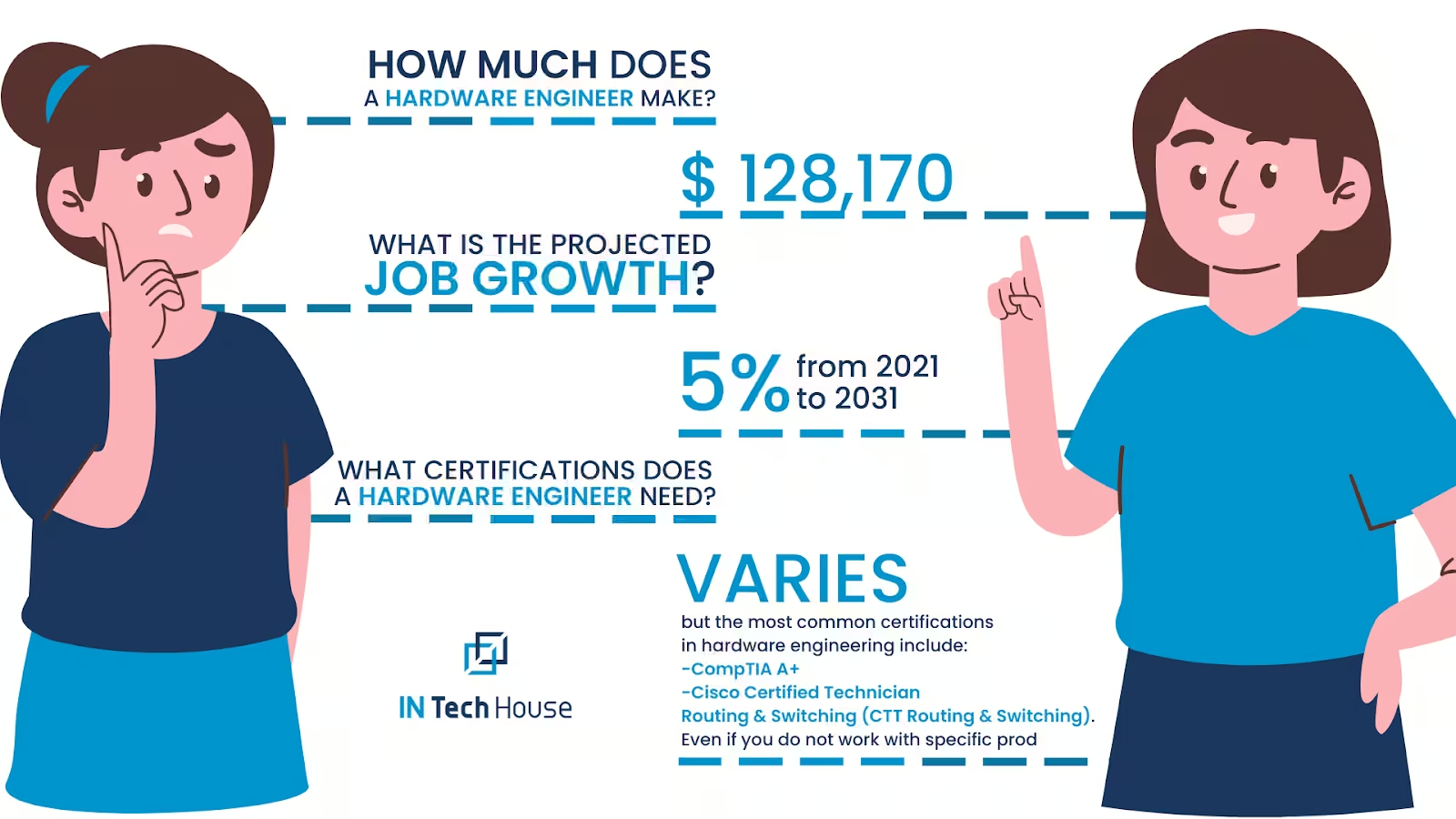
The path to becoming a hardware engineer can vary, but employers often prefer candidates who hold a bachelor’s degree in computer engineering or computer science from an ABET-accredited program. In some cases, a master’s degree may be required for certain positions or organizations.
Through a 4-6 year educational journey, computer hardware engineering students acquire critical thinking skills, general programming knowledge, and hardware design abilities. They also learn to manage the various stages of the hardware design lifecycle and troubleshoot any issues that may arise. In practice, much of that troubleshooting happens where boards meet firmware, which is why engineers benefit from learning PCB design and embedded software together.
Once employed, hardware engineers must keep pace with the ever-changing field. Continuing education courses, certificates, and bootcamps can assist these professionals in staying updated with the latest advancements.
Here are the steps typically involved in becoming a hardware engineer:

By following these steps, individuals can pave their way towards a successful career as a hardware engineer.
The journey to secure a position as a hardware engineer follows similar steps to other STEM fields. Students can initiate their job search even before graduation by utilizing resources offered by their educational institution, such as career fairs, internships, and career services. Joining professional engineering associations can also provide access to valuable networks, conferences, and job boards.
Highlighted below are some popular and beneficial job boards specifically for computer hardware engineering:
These job boards offer a range of resources and connections for hardware engineers during their job search, assisting them in finding suitable positions and networking within the industry.
CTA Are you a hardware developer looking for a job? We have some interesting projects to join. Send a CV.
To excel as a hardware engineer, a combination of technical (hard) skills and soft skills is essential. These encompass the following:
Proficiency in Programming Languages
Hardware engineers need to possess programming skills to develop digital circuit boards and create components that can be utilized by developers and software engineers. Important programming languages for this field include Verilog, C, and C++.
Engineering Design Abilities
Hardware engineers must employ design methodologies, logic, and problem-solving skills to effectively plan and construct their systems. These skills, typically acquired through undergraduate programs, differentiate computer hardware engineering from broader programming and computer science domains.
Circuit Board Design Expertise
Hardware engineers should demonstrate proficiency in designing, testing, and analyzing printed circuit boards, which form the mechanical and electrical components of a computer.
Critical Thinking Skills
These skills are crucial for creating designs that meet specific requirements. They also aid in problem-solving during testing, deployment, and manufacturing stages.
Creativity
Hardware engineers often need to think creatively to develop innovative systems that address problems and fulfill requirements in novel ways.
Communication Skills
While hardware engineers may occasionally work independently, they frequently collaborate within larger teams. Effective communication is essential in such settings. Even those working autonomously need to communicate with software engineers, IT staff, or product managers to ensure that their designs align with the project’s objectives.
These skills are fundamental for all hardware engineers, regardless of their workplace or industry.
See also:
Finding the Best Hardware Engineering Talent: Skills and Opportunities
All You Need to Know About Hardware Design: A Comprehensive Guide
Software vs Hardware: Differences and Similarities
A hardware engineer plays a vital role in the field of technology and engineering. They are responsible for designing, developing, and testing hardware components and systems that power various electronic devices. A hardware engineer possesses a unique combination of technical skills, problem-solving abilities, and creativity.
Their expertise in areas such as circuit board design, programming languages, and engineering principles allows them to bring innovative ideas to life and contribute to the advancement of technology. Additionally, strong communication and teamwork skills enable them to collaborate effectively with other professionals, ensuring the successful integration of hardware and software components.
As technology continues to evolve at a rapid pace, the demand for skilled hardware engineers remains high. Their contributions are essential in industries such as consumer electronics, telecommunications, automotive, aerospace, and more. With their expertise, hardware engineers drive innovation, improve functionality, and enhance the overall performance of electronic devices.
If you are considering a career in hardware engineering, it is crucial to develop a solid foundation in technical skills, stay updated with the latest advancements in the field, and continuously enhance your problem-solving abilities. With dedication and passion, you can become a valuable asset in shaping the future of technology.
From concept and component selection to prototype validation and NPI, our engineers run the full product path. Ask for a walkthrough of a recent build in your industry.
Not sure where to start? We work with companies at every stage, from early ideas to enterprise-level builds. A 30-minute call can save you months of guesswork.
A hardware developer and a hardware engineer are usually the same role, and the job title varies by company. Both design, prototype and test electronic hardware. In practice the role splits by specialization: board design engineers work on schematics and PCBs, FPGA and ASIC engineers write hardware description languages, and power, RF or analog engineers focus on one circuit domain. The listed responsibilities and required tools reveal the actual scope better than the title.
Most hardware engineers hold a bachelor's degree in electrical, electronic or computer engineering, which takes four years in the US and typically three to four years in Europe. US employers often prefer ABET-accredited programs. A master's degree is common in specialized areas such as ASIC design, RF or power electronics, and in many European countries it is the standard engineering qualification. Practical evidence, such as boards designed, brought up and debugged, often weighs as much as the degree.
A hardware engineer needs to know at least one EDA suite for schematics and PCB layout, such as Altium Designer, KiCad, Cadence OrCAD and Allegro, or Siemens Xpedition, plus a circuit simulator such as LTspice. Laboratory skills matter as much: oscilloscope, logic analyzer, multimeter, bench power supply and, for RF or EMC work, a spectrum analyzer. FPGA engineers add vendor toolchains such as AMD Vivado or Intel Quartus, along with simulators for Verilog or VHDL.
Hardware engineers need programming skills, although not necessarily at the level of software developers. C is used for board bring-up code and low-level drivers, Python is widely used for test automation and data analysis, and hardware description languages such as Verilog, SystemVerilog or VHDL are essential for FPGA and ASIC work. Understanding how firmware will use the hardware also leads to better decisions on pin assignments, interrupts, memory and debug access.
During board bring-up, a hardware engineer powers a new board for the first time and verifies it step by step before attempting full functionality. Typical steps are visual inspection, checking power rails for shorts, powering up through a current-limited supply, measuring voltages and sequencing, and confirming clocks and resets before connecting a debugger to load test firmware. Each interface is then exercised in turn, and every deviation is logged to feed the next board revision.
Adam Szychulec is Deputy CTO at InTechHouse and an electronics and embedded systems engineer with over 13 years of experience in hardware development, FPGA-based systems, embedded software, and technical leadership.
He specializes in electronic system architecture, analog and digital PCB design, FPGA and SoC development, embedded C/C++ software, and managing the complete lifecycle of complex engineering products - from early feasibility studies and technical architecture through development, testing, production introduction, and product modernization.
Adam has extensive experience leading multidisciplinary R&D teams and coordinating electronics, embedded software, mechanical engineering, testing, and project delivery. His responsibilities have included technical decision-making, project planning, risk and change management, budgeting, product testing, new product introduction, and mid-life upgrades of existing electronic systems.
His project experience includes FPGA modules for space applications, electronic systems and payloads for unmanned aerial vehicles, environmental monitoring and multispectral imaging platforms, power electronics, DC-DC converter assessment, and embedded systems developed for demanding industrial and defence-related applications.
Adam works with FPGA and SoC platforms, Xilinx Zynq, VHDL, Vivado, Altium Designer, ARM microcontrollers, embedded C/C++, Linux, digital electronics, and power electronics. He holds bachelor's and master's degrees in Electrical Engineering and is an IPC Certified Interconnect Designer. He writes about FPGA architectures, electronics design, embedded systems, hardware product development, technical risk management, UAV electronics, power electronics, and engineering leadership.
From first prototype to production, our engineers can help you scope it, build it and get it certified.
This initial conversation is focused on understanding your product, technical challenges, and constraints.
No sales pitch - just a practical discussion with experienced engineers.
Share a few details about your product and context. We’ll review the information and suggest the most appropriate next step.