

Behind every innovative gadget and cutting-edge technology lies a meticulous process known as hardware design, one stage of the broader hardware product development process. From conceptualizing and selecting components to bringing circuits to life and ensuring flawless functionality, hardware design plays a pivotal role in shaping the devices we rely on. In this article, we invite you to embark on a captivating journey into the realm of hardware design. Inside the article, we picked the most interesting facts about the hardware design. You will be shocked! Let’s get started!
Hardware design involves the selection, integration, and optimization of various hardware elements, such as integrated circuits, printed circuit boards (PCBs), connectors, and power supplies. Broadly speaking, hardware design can be divided into digital and analog categories: digital design deals with discrete signals and logic, often described using a hardware description language, while analog design handles continuous signals like voltage and current. The ultimate goal of hardware design is to create efficient, reliable, and cost-effective electronic systems for consumer electronics, automotive, and industrial applications alike. Connected products add radios, sensors and firmware to those analog and digital choices, and electronics and IoT product design has to balance all of them on one board.

Source: Zippia
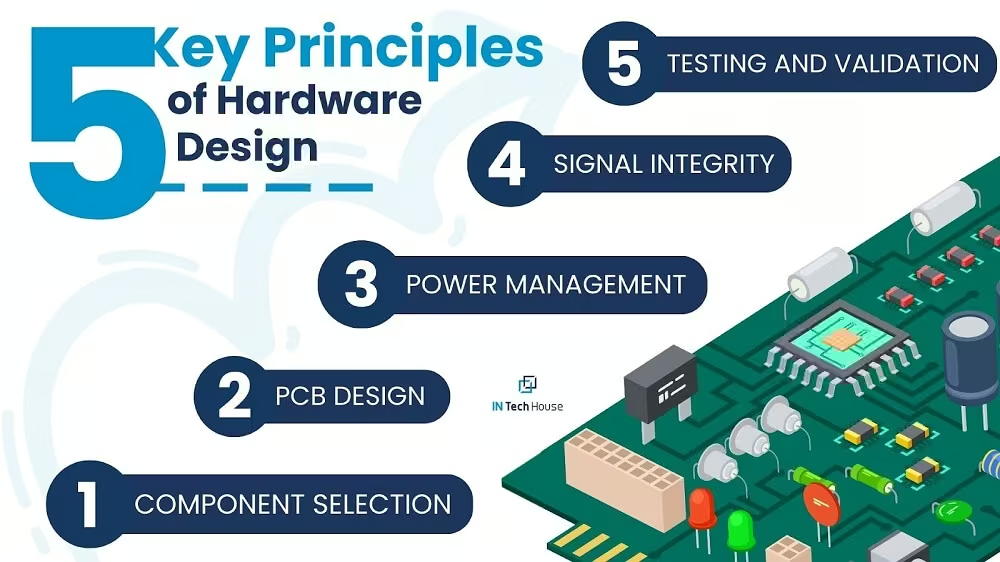
Selecting the right components is crucial for successful hardware design. Factors to consider include functionality, performance, power consumption, compatibility, and cost. It is essential to assess the trade-offs and make informed decisions based on the specific requirements of the device being designed.
Printed circuit board (PCB) design is a critical aspect of hardware design. It involves designing the layout of electronic components on a board, considering factors such as signal integrity, thermal management, and electromagnetic interference. Utilizing specialized software and following best practices ensures an optimized and reliable PCB design.
Efficient power management is vital for maximizing the performance and battery life of electronic devices. Hardware designers need to carefully analyze power requirements, select appropriate power supply solutions, and implement power-saving techniques such as voltage regulation, energy harvesting, and sleep modes.
Signal integrity deals with maintaining the quality and reliability of electrical signals within a hardware system. Designers must consider factors such as impedance matching, signal routing, and noise reduction to ensure proper signal transmission and reception, minimizing signal degradation and interference.
Testing and validation are integral parts of the hardware design process. Rigorous testing ensures that the design functions as intended meets performance specifications, and is reliable. Various techniques, including functional testing, electrical testing, and environmental testing, are employed to validate the design’s functionality and robustness. Iterative testing and refinement help identify and resolve any issues or performance gaps.

The four principles in this guide are where hardware projects quietly go wrong. Our engineers review your component list, power budget and layout intent before the first board is ordered.
Get component, power and signal integrity decisions reviewed early
Not all hardware design work looks the same, and one of the earliest decisions a design team makes is whether a given circuit calls for digital, analog, or mixed-signal design.
Digital hardware design deals with circuits that process discrete, binary signals, the logic gates, microcontrollers, and processors that make up most modern electronics. Engineers working in this space frequently use a hardware description language, such as VHDL or Verilog, to describe circuit behavior before it's synthesized into an actual chip or programmed onto an FPGA. This approach dominates computer engineering work, from consumer electronics to complex automotive control systems.
Analog hardware design, by contrast, works directly with continuous signals: voltage, current, and frequency that vary smoothly rather than switching between discrete states. Power supplies, sensor interfaces, and Wi-Fi radio front-ends typically rely on analog circuit design, which tends to demand a different intuition than digital work, closer to classical electrical engineering than computer science.
Many real hardware products, from a smartphone to an industrial sensor, combine both: an analog front-end capturing real-world signals, feeding into digital logic that processes and stores the data. Building both well, and understanding where the boundary between them should sit in a given design, is part of what separates strong hardware engineers from the rest.
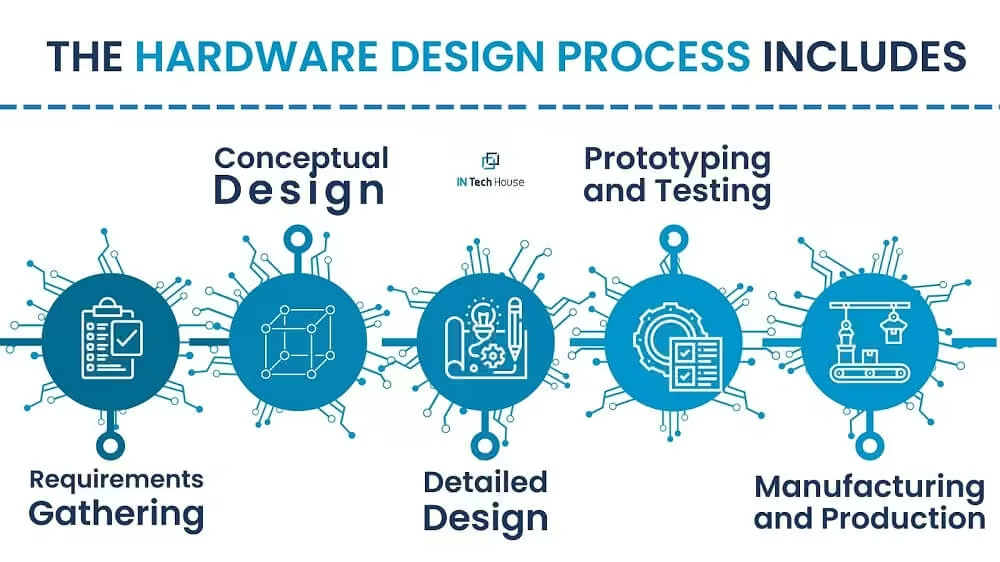
Understanding the device’s purpose and user requirements is the first step in the hardware design process. This involves collaboration between hardware designers, product managers, and other stakeholders to define functional and non-functional requirements.
During the conceptual design phase, designers create high-level architectural diagrams and explore different hardware solutions that meet the requirements. This stage involves brainstorming, feasibility analysis, and prototyping to evaluate design options.
In the detailed design phase, designers create detailed schematics, component footprints, and PCB layouts. This is also the stage where the schematic circuit diagram design follows the preliminary hardware design, and engineers create a Bill of Materials (BOM), the definitive list of every component needed for production, including part numbers, quantities, and approved suppliers. They perform simulations, analyze thermal and electrical characteristics, and verify the design against specifications. Collaborating with other teams, such as software and mechanical engineers, helps ensure a cohesive system design, since hardware/software co-design, developing hardware and embedded software together rather than in sequence, tends to catch integration problems far earlier than treating them as separate workstreams.
Prototyping is a crucial step to validate the hardware design. Physical prototypes are built and subjected to rigorous testing, including functional testing, performance testing, and reliability testing. This iterative process helps identify and rectify design flaws and optimize the hardware system.
Once the hardware design has been thoroughly tested and validated, it moves into the manufacturing and production phase. This involves selecting suitable manufacturing processes, sourcing components, and ensuring quality control throughout the production cycle.
By understanding these challenges and implementing preventive measures, you can enhance the reliability, functionality, and overall performance of your electronic designs.
One of the primary mistakes in hardware design is rushing into the process without a solid plan and thorough requirements analysis. Failing to define project goals, specifications, and constraints at the outset can lead to design iterations, delays, and suboptimal outcomes. Take the time to establish clear objectives, gather comprehensive requirements, and create a well-defined roadmap for your design journey.
Selecting the right components is paramount to the success of your hardware design. Choosing inappropriate or incompatible components can result in compromised functionality, reliability issues, and even safety hazards. Conduct thorough research, consider the specific requirements of your design, and ensure compatibility and quality when selecting components.
The layout and routing of your printed circuit board (PCB) have a significant impact on signal integrity, noise interference, and overall performance. Neglecting proper PCB layout guidelines, such as maintaining signal integrity, minimizing trace lengths, and managing power and ground planes, can lead to signal degradation, cross-talk, and EMI/RFI problems. Invest time and effort in creating an optimized and well-structured PCB layout to avoid these issues. Good routing affects more than signal quality on day one, because PCB design for reliable circuits also determines how a board ages under heat, vibration and power cycling.
Overlooking thermal management can have detrimental effects on the longevity and reliability of your electronic designs. Excessive heat buildup can cause components to fail, leading to performance degradation or complete system failure. Incorporate proper heat sinks, thermal vias, and ventilation mechanisms to dissipate heat effectively and maintain optimal operating temperatures.
Skipping or rushing through the testing and validation phase is a recipe for disaster in hardware design. Failure to thoroughly test and validate your design can result in undetected flaws, functionality issues, and unreliable performance. Implement comprehensive testing methodologies, including functional testing, environmental testing, and stress testing, to ensure the robustness and reliability of your design. Designing for testability (DFT) from the outset, by adding accessible test points and diagnostic interfaces, significantly enhances the verification process rather than leaving it as an afterthought once the hardware product is already built.
Designing a product that is difficult or costly to manufacture can lead to production delays, increased costs, and potential quality issues. Ignoring Design for Manufacturability (DFM) guidelines can hamper the scalability and efficiency of your design. Consider factors such as component availability, ease of assembly, and production yield during the design phase to optimize the manufacturability of your hardware design.
By avoiding these common mistakes, you can significantly improve the quality, functionality, and reliability of your electronic hardware design. It is essential to foster a meticulous and proactive approach, incorporating thorough planning, comprehensive component selection, proper PCB layout, effective thermal management, rigorous testing, and adherence to DFM guidelines.

Beyond avoiding common mistakes, a few best practices consistently separate reliable hardware design work from designs that struggle in the field:
At its core, hardware design involves the creation of electronic systems that meet specific functional requirements. Designers strive to innovate and develop cutting-edge products that deliver exceptional performance and user experience. This stage involves selecting components, designing circuits, creating PCB layouts, and addressing various technical aspects to bring the envisioned product to life.
On the other hand, Design for Manufacturability focuses on streamlining the transition from design to production. It aims to identify and eliminate potential obstacles that could impede the manufacturing process or compromise product quality. The goal is to create a design that can be efficiently and cost-effectively manufactured at scale while meeting the desired specifications and performance requirements.
So, What Sets Design for Manufacturability Apart from Hardware Design?
While hardware design primarily focuses on functionality and performance, Design for Manufacturability zooms in on the manufacturing processes. It takes into account the capabilities, limitations, and requirements of the manufacturing facilities, equipment, and techniques that will be used to produce the final product. By aligning the design with the manufacturing processes, DFM ensures smoother production and minimizes the risk of costly redesigns or production delays.
Hardware design often prioritizes performance, flexibility, and features. In contrast, Design for Manufacturability emphasizes optimizing the design for efficient and cost-effective production. This involves considering factors such as component availability, ease of assembly, material selection, standardized manufacturing techniques, and testing procedures. By incorporating these considerations into the design phase, DFM aims to enhance product manufacturability, reduce production costs, and improve time-to-market.
Design for Manufacturability takes into account the scalability of the design, considering factors such as volume production, yield rates, and supply chain management. It aims to ensure that the design can be reliably reproduced in large quantities without compromising quality or incurring excessive costs. DFM also focuses on consistency across multiple production runs, minimizing variations and ensuring that each unit meets the desired specifications.
While hardware design focuses on creating a functional and innovative product, Design for Manufacturability introduces cost optimization as a crucial factor. DFM seeks to identify opportunities to reduce production costs without sacrificing quality or performance. This can involve simplifying complex designs, minimizing the number of components, optimizing assembly processes, and leveraging economies of scale. By incorporating cost considerations into the design, DFM enables manufacturers to produce the product at a competitive price point.
There are three popular hardware design trends. Let’s check them out!Miniaturization and IntegrationAs consumer demands smaller and more powerful devices increase, hardware designers face the challenge of integrating complex functionalities into compact form factors. This requires innovative design techniques, advanced packaging technologies, and multi-domain expertise.
The proliferation of IoT devices presents new challenges and opportunities for hardware designers. Connecting various sensors, communication modules, and actuators in a secure and power-efficient manner demands specialized hardware design skills.
The rise of AI has led to the emergence of specialized hardware accelerators, such as graphic processing units (GPUs) and tensor processing units (TPUs). Designing hardware optimized for AI workloads requires a deep understanding of parallel computing, memory architectures, and algorithmic requirements.
Hardware design is a fundamental discipline that drives technological innovation and enables the development of sophisticated electronic devices. Understanding the key principles, design processes, and emerging trends in hardware design empowers engineers and enthusiasts to create efficient, reliable, and cutting-edge hardware systems. It's also a well-compensated field: a hardware design engineer typically needs a five-year engineering degree in electrical engineering or computer engineering, and the median salary for hardware design engineers in the US sits around $113,000, though this varies by region — in France, for instance, beginner hardware design engineers typically earn between €33K and €36K. Whether you aspire to become a hardware designer or simply want to appreciate the complexity behind your favourite gadgets, the knowledge shared in this comprehensive guide will serve as a solid foundation in the world of hardware design.
See also:
Hardware Product Development Process in 2024
Essential Guide to Embedded Hardware Design for Innovative Solutions
PCB Design vs. Hardware Design: Understanding the Difference for Better Development
Not sure where to start? We work with companies at every stage, from early ideas to enterprise-level builds. A 30-minute call can save you months of guesswork.
A design for manufacturability (DFM) review checks that a board can be fabricated and assembled at volume with acceptable yield. Typical checks cover trace width and spacing against the fabricator's capabilities, annular rings and via sizes, solder mask slivers, component spacing for pick-and-place and rework, fiducials, panelization, and thermal balance of pads to prevent tombstoning. Fabricators publish capability tables, and running DFM tools such as Valor or built-in EDA checks against them is standard practice.
Design for testability (DFT) means planning how every production unit will be tested before the layout is finished. In practice it requires test points on critical nets for in-circuit or flying probe testing, JTAG boundary scan (IEEE 1149.1) on supporting devices, accessible programming and debug connectors, and firmware test modes that exercise each interface. The cost is board area and occasionally some signal integrity margin, which is usually far smaller than the cost of undiagnosable field returns.
A hardware requirements specification should state what the device must do and under which conditions, using measurable values. It typically covers functions and interfaces, power source and budget, operating and storage temperature, ingress protection, mechanical envelope, target markets and certifications, expected lifetime, production volume and target unit cost. Each requirement should be testable, for example "operates from -40 to +85 °C" rather than "industrial grade", so it can be traced to a verification test later.
A production-ready bill of materials (BOM) needs, for every line, the reference designators, quantity, manufacturer name, manufacturer part number, description, package and any approved alternates. Many teams also record lifecycle status, lead time and RoHS or REACH compliance per part. Generic entries such as "10k resistor 0603" are acceptable only when tolerance, power rating and temperature coefficient are specified, because otherwise the assembler may substitute whatever is cheapest in stock.
Thermal performance is checked before the first prototype by estimating the power dissipated by each component and calculating junction temperature from datasheet thermal resistances and the expected ambient temperature. Parts running close to their maximum ratings are flagged for derating, heat sinking, thermal vias or larger copper areas. For dense or enclosed designs, thermal simulation in tools such as Ansys Icepak or Simcenter FloTHERM refines the estimate, and first prototypes are then verified with thermocouples or a thermal camera.
Adam Szychulec is Deputy CTO at InTechHouse and an electronics and embedded systems engineer with over 13 years of experience in hardware development, FPGA-based systems, embedded software, and technical leadership.
He specializes in electronic system architecture, analog and digital PCB design, FPGA and SoC development, embedded C/C++ software, and managing the complete lifecycle of complex engineering products - from early feasibility studies and technical architecture through development, testing, production introduction, and product modernization.
Adam has extensive experience leading multidisciplinary R&D teams and coordinating electronics, embedded software, mechanical engineering, testing, and project delivery. His responsibilities have included technical decision-making, project planning, risk and change management, budgeting, product testing, new product introduction, and mid-life upgrades of existing electronic systems.
His project experience includes FPGA modules for space applications, electronic systems and payloads for unmanned aerial vehicles, environmental monitoring and multispectral imaging platforms, power electronics, DC-DC converter assessment, and embedded systems developed for demanding industrial and defence-related applications.
Adam works with FPGA and SoC platforms, Xilinx Zynq, VHDL, Vivado, Altium Designer, ARM microcontrollers, embedded C/C++, Linux, digital electronics, and power electronics. He holds bachelor's and master's degrees in Electrical Engineering and is an IPC Certified Interconnect Designer. He writes about FPGA architectures, electronics design, embedded systems, hardware product development, technical risk management, UAV electronics, power electronics, and engineering leadership.
This initial conversation is focused on understanding your product, technical challenges, and constraints.
No sales pitch - just a practical discussion with experienced engineers.
Share a few details about your product and context. We’ll review the information and suggest the most appropriate next step.