
Ensuring Device Reliability: PCB Design and Embedded Software Consultant Company

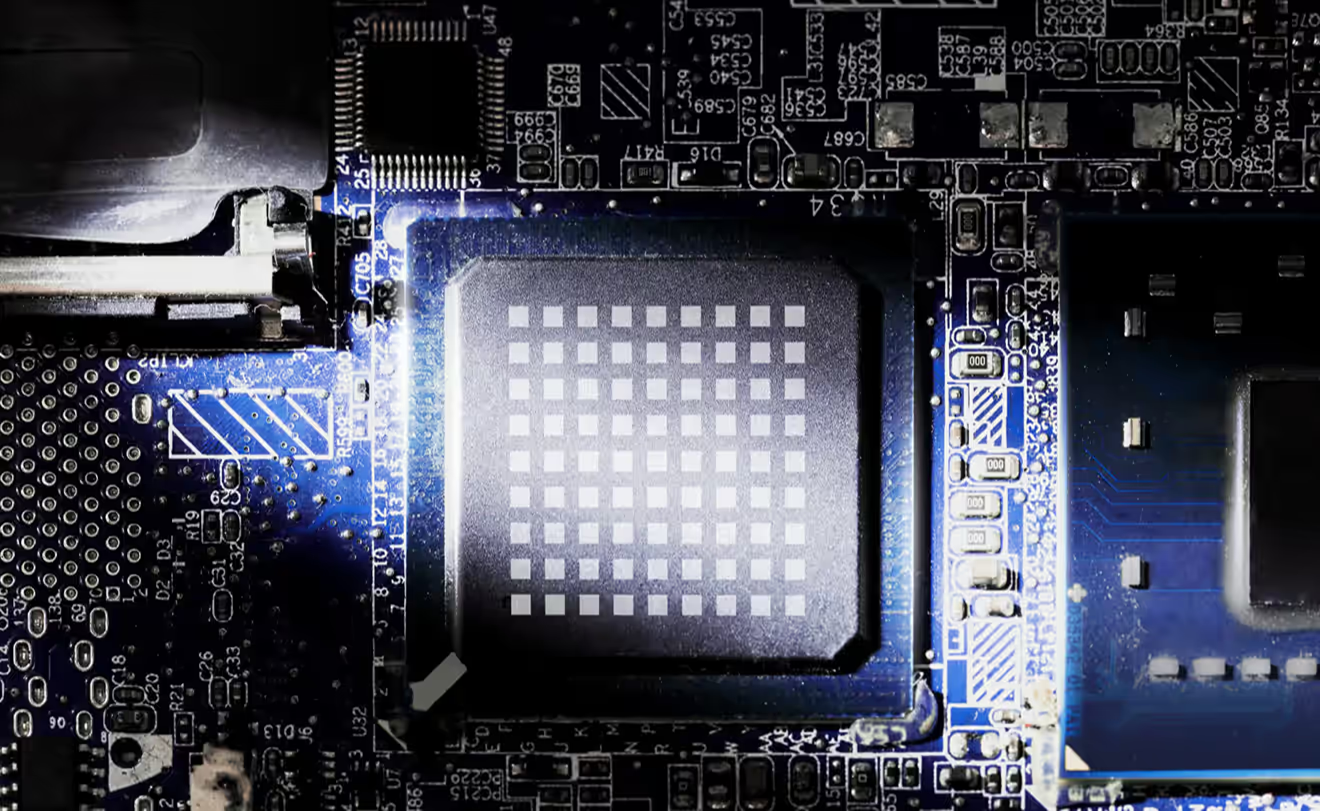
In 2026 and beyond, the critical role of PCB design and embedded software is becoming increasingly crucial. InTechHouse, a consultant company specializing in these domains, plays a pivotal role in ensuring the reliability and efficiency of various devices.
Importance of PCB Design in Device Reliability
PCB design services is the backbone of most electronic devices. A well-designed PCB ensures the efficient functioning of a device by providing a robust platform for component placement and reliable electrical connections.
What about the market?

InTechHouse’s expertise in PCB design encompasses layout design, component selection, and ensuring thermal management, which are critical for the longevity and reliability of devices.
Embedded Systems: The Heart of Modern Devices
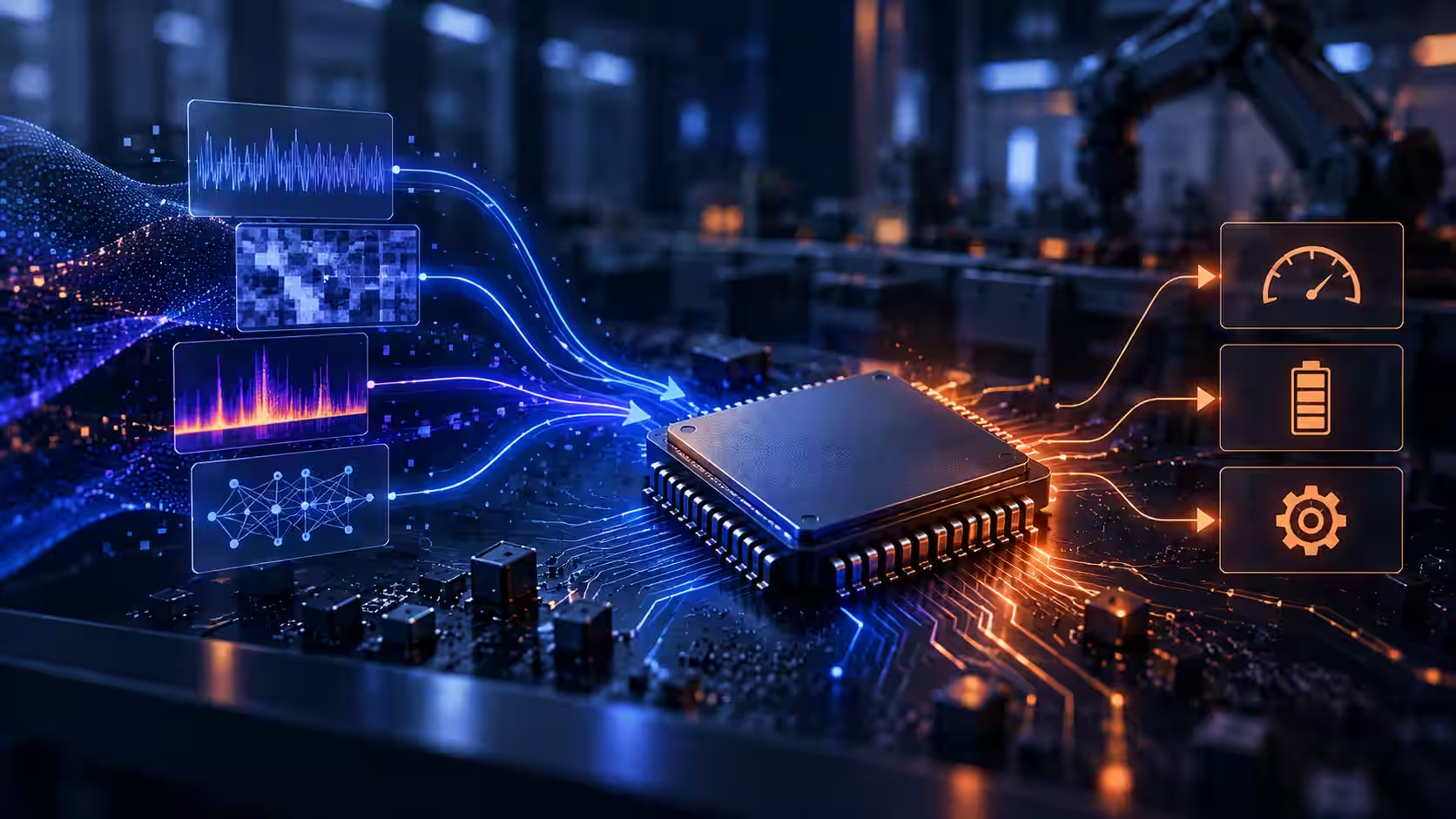
Embedded systems are specialized computing systems that perform dedicated functions within larger mechanical or electrical systems. Examples of embedded systems include:
- Microcontrollers in home appliances like microwaves and refrigerators.
- Automotive control systems in vehicles for engine management and infotainment systems.
- Industrial machines using embedded systems for automation and control processes.
- Medical devices like pacemakers and imaging systems.
What about the market?

Sources: Allied Market Research, Zippia
Examples of Embedded Systems
Embedded systems are specialized, dedicated computers integrated within larger systems for specific functional roles. Their ubiquity in a multitude of modern devices underscores their importance in technological advancements. Here are varied instances where embedded systems are at the forefront:
- In Everyday Gadgets: Think of smart home devices, gaming consoles, and GPS systems, where embedded systems facilitate specific, sophisticated functionalities. 2
- In the Automotive Sphere: Cars today are replete with embedded systems, from managing engine functions to powering advanced driver-assistance systems. 3
- Medical Field Innovations: Critical medical equipment like ECG machines and advanced prosthetics rely on embedded systems for life-saving functionalities. 4
- Industrial and Manufacturing Applications: In this sector, embedded systems play a role in streamlining processes through automation, from assembly line robots to precision CNC machines. 5
- Aviation and Space Exploration: Aircraft and spacecraft leverage embedded systems for a range of functions, including navigation, environmental control, and system monitoring. 6
- Home Appliances Revolution: Everyday appliances, from smart refrigerators to programmable coffee makers, house embedded systems for enhanced user experiences and functionalities
What is an Embedded Consultant?
An embedded consultant is a professional who specializes in the design, development, and implementation of embedded systems. The scope overlaps heavily with the hardware engineer role, though a consultant usually works across several clients and product stages. Their role typically involves:
Software Development: Writing and optimizing the software that runs on embedded systems, tailored to specific tasks and hardware requirements.
System Integration: Ensuring seamless integration of the embedded system with other hardware components, software layers, and external interfaces.
Performance Optimization: Improving the efficiency, speed, and responsiveness of embedded systems to ensure optimal performance under various conditions.
Troubleshooting and Debugging: Identifying and solving issues within embedded systems, which could range from software bugs to hardware integration challenges.
Technical Advisory: Providing expert advice on the selection of appropriate hardware and software technologies, and guidance on best practices in embedded system design.
Most reliability failures we are called in to fix live on the boundary: a layout decision that firmware cannot compensate for, or a driver written against an assumption the board no longer meets. We design both sides together.
Stop treating board layout and firmware as separate projects
What Do the Embedded Software Consultans Do?
For embedded systems consultants, stepping out of their comfort zone can lead to significant professional growth and innovation. Embedded software consultants are experts in designing, developing, and optimizing embedded systems, which are specialized computer systems performing specific functions within larger systems. Their key roles include:
System Design and Development: Creating and integrating software for microcontrollers and embedded systems.
System Optimization: Enhancing the efficiency and performance of embedded systems.
Problem-Solving: Addressing complex technical issues that arise during development.
Quality Assurance: Testing systems rigorously to ensure reliability and functionality.
Project Management: Overseeing the development process and ensuring project goals are met.
Training and Support: Providing expertise and knowledge transfer to in-house development teams.
Staying Current: Keeping up-to-date with the latest advancements in embedded technology.
Client Consultation: Understanding client needs and translating them into technical specifications.
Advisory Role: Offering advice on technology selection and implementation strategies.
Types of Embedded Systems Consultants
Embedded systems consultants vary in their specializations and areas of expertise. Here are some common types:
Software Development Consultants: Specialize in programming and software design for embedded systems, focusing on languages like C, C++, and assembly.
Hardware Design Consultants: Experts in designing and developing the hardware aspects of embedded systems, including microcontrollers, sensors, and circuit design.
Systems Integration Consultants: Focus on integrating various components of embedded systems, ensuring that hardware and software components work seamlessly together.
IoT (Internet of Things) Consultants: Specialize in integrating embedded systems with internet connectivity and IoT platforms, focusing on network security and data analytics.
Real-Time Systems Consultants: Experts in designing systems that require real-time processing capabilities, such as automotive or aerospace applications.
Firmware Development Consultants: Specialize in developing firmware, which is the intermediary software that allows hardware to run application software effectively.
Who Hires Embedded Systems Consultants?

This quote can be applied to the rapidly evolving landscape of embedded systems, where adapting to new technologies and methodologies is essential. A wide range of industries hire embedded systems consultants, including:
Technology and Consumer Electronics Companies: For developing smart gadgets, home appliances, and personal electronics.
Automotive Industry: For designing and improving vehicle electronics, such as engine control units and infotainment systems.
Aerospace and Defense: For systems in aircraft, satellites, and defense equipment requiring precise and reliable embedded solutions.
Medical Device Manufacturers: For creating reliable and efficient medical devices like imaging systems, diagnostic equipment, and therapeutic devices.
Industrial Manufacturing: For automation systems, robotics, and process control systems.
Telecommunications: In developing networking equipment and communication devices.
Do I Need an Embedded Systems Consultant?
Whether you need an embedded systems consultant depends on several factors:
Complexity of the Project: If your project involves complex systems integration or requires specialized embedded software/hardware expertise.
Resource Availability: If your in-house team lacks the necessary skills or bandwidth to handle embedded system development effectively.
Innovation and Competitive Edge: If you aim to stay ahead in technology and innovation, bringing in specialized consultants can provide new perspectives and cutting-edge solutions.
Project Scale and Deadline: Large-scale projects or those with tight deadlines may benefit from the additional expertise and manpower consultants provide.
Quality and Reliability Needs: In industries where reliability is critical (like medical or automotive), consultants can help ensure your systems meet the highest standards.
InTechHouse Embedded Software Development Capabilities
InTechHouse stands as a beacon in the realm of embedded software development, distinguished by its robust capabilities that cater to a broad spectrum of industries. Here’s an overview of what makes InTechHouse’s embedded software development stand out:
- Advanced Programming Expertise: At the core of InTechHouse’s prowess is its deep expertise in embedded programming languages such as C, C++, and Python, ensuring the development of efficient and robust software tailored to specific hardware.
- Customized Firmware Development: Recognizing the critical role of firmware, InTechHouse excels in creating customized firmware solutions that bridge the gap between hardware capabilities and application demands
- Real-Time Operating Systems (RTOS) Implementation: For applications requiring immediate processing, such as in the automotive or aerospace sectors, InTechHouse’s expertise in RTOS is invaluable
- IoT Integration and Development: In an increasingly connected world, InTechHouse’s capability to
Component selection, thermal paths and signal integrity reviewed against the product lifetime you actually need, with findings documented for your team. Send us your current design for a review.
See how we review PCB layouts for long-life devices
Let's talk about your next move
Not sure where to start? We work with companies at every stage, from early ideas to enterprise-level builds. A 30-minute call can save you months of guesswork.
FAQ
What does an embedded systems consultant typically deliver?
An embedded systems consultant is an external engineer who designs, reviews or rescues embedded products, covering firmware, hardware interfaces or both. Typical deliverables include architecture and component selection advice, schematic and firmware reviews, RTOS and driver development, performance optimization, root cause analysis of field failures, and knowledge transfer to the in-house team. Consultants usually specialize, for example in low-level firmware, real-time systems, IoT connectivity or board design, so the specialization should match the problem.
How does PCB layout affect firmware reliability?
PCB layout affects firmware reliability because many faults that look like software bugs originate in the board. Noisy ground returns corrupt ADC readings, weak decoupling causes resets during radio transmit bursts, marginal clock routing produces intermittent communication errors, and an unprotected reset line can reboot the device during ESD events. Firmware can filter or retry, but it cannot fully compensate. Reviewing layout with the firmware engineer present, and logging reset causes in firmware, shortens diagnosis considerably.
Which hardware features help firmware survive faults in the field?
The hardware features that most help firmware survive field faults are an independent watchdog timer, brown-out detection with a clean reset, a readable reset-cause register, and meory protection or ECC where the MCU offers it. A bootloader with a fallback image and CRC checks on application flash allows recovery from corrupted updates. These features only work when firmware uses them deliberately, for example by servicing the watchdog from a main health check rather than from a timer interrupt.
How is an embedded device tested for recovery from power disturbances?
An embedded device is tested for recovery from power disturbances by interrupting and degrading its supply in every operating state and checking that it restarts cleanly without corrupting data. Tests include slow ramps and brown-outs, short dips and interruptions (IEC 61000-4-11 defines them for AC mains, IEC 61000-4-29 for DC ports), and power loss during flash writes or firmware updates. Automating thousands of cycles with a programmable supply finds rare failures that manual testing misses.
Krzysztof Niedźwiedź
Krzysztof Niedźwiedź is a Lead Embedded Systems and Hardware Engineer at InTechHouse with over 11 years of experience developing complex electronic and embedded products from system architecture through production.
He specializes in embedded software development, electronic system architecture, multilayer PCB design, hardware-software integration, system testing, and technical ownership of high-reliability engineering projects. His work spans requirements analysis, architecture and component selection, schematic and PCB design, bare-metal and RTOS firmware development, prototyping, troubleshooting, production documentation, and cooperation with mechanical and high-level software teams.
Krzysztof's project experience includes FPGA and SoC-based onboard computers for the space industry, embedded electronics for advanced optical equipment, low-power environmental-monitoring devices, UAV payloads for real-time air-quality measurement and sample collection, and connected medical and training devices.
He works with C and C++, STM32, LPC and AVR microcontrollers, ARM-based platforms, RTOS, Embedded Linux, FPGA and SoC architectures, DDR3, HDI PCB technology, and industrial communication interfaces including Ethernet, CAN, RS-485, SPI, I2C, UART, USB, Modbus, and MQTT.
Krzysztof holds bachelor's and master's degrees in Electronics and Telecommunications. He is an IPC Certified Interconnect Designer and has completed specialist training in Embedded GNU/Linux kernel internals and device drivers. He writes about embedded system architecture, firmware development, PCB design, MCU and FPGA integration, RTOS, hardware security, low-power electronics, and dependable electronic products.
Let's talk about your next project
From first prototype to production, our engineers can help you scope it, build it and get it certified.
Discuss your product with our R&D team
This initial conversation is focused on understanding your product, technical challenges, and constraints.
No sales pitch - just a practical discussion with experienced engineers.
Share a few details about your product and context. We’ll review the information and suggest the most appropriate next step.