The year 2023 brings a new wave of innovation and advancements in embedded analytics, making it essential for businesses to stay updated with the best tools and software available in the market. In this article, we will explore the top 20 embedded analytics tools and BI software for 2023, highlighting their key features, benefits, and why they deserve your attention.
This is where Embedded Business Intelligence (BI) products come into play, offering powerful solutions to leverage data and unlock its full potential. But why do we need them? Let’s explore:Accelerate Time to MarketEmbedded BI products provide pre-built analytics and reporting capabilities that can be seamlessly integrated into existing applications. This allows organizations to quickly deploy sophisticated analytics functionalities without the need to build them from scratch. By saving time on development and implementation, businesses can accelerate their time to market and stay ahead of the competition.
Traditional BI solutions often involve a time lag between data collection and analysis. With embedded BI products, real-time or near real-time data processing and analysis are made possible. This enables organizations to gain timely insights, make data-driven decisions faster, and respond swiftly to changing market conditions.
Embedded BI products empower end-users with self-service analytics capabilities. Instead of relying on technical experts or data analysts, business users can access and analyze data on their terms. This self-service approach democratizes data analysis, allowing users across the organization to explore data, create reports, and generate insights without extensive technical knowledge.
Embedded BI products provide intuitive visualizations, interactive dashboards, and advanced analytics capabilities. These features enable users to uncover meaningful patterns, trends, and relationships within the data. With access to clear and actionable insights, decision-makers can make informed, data-driven decisions that drive business growth and success.
Embedded BI products enable organizations to monitor key performance indicators (KPIs) and track progress towards strategic goals. By visualizing performance metrics in real-time, businesses can identify areas for improvement, make data-backed optimizations, and drive overall performance improvement across departments and processes.
Embedded BI products seamlessly integrate with existing systems and applications, ensuring a cohesive customer experience and minimal disruption to workflows. This allows organizations to leverage their existing infrastructure and data sources, maximizing more value of their investments in technology and data management.
Organizations across industries are faced with vast amounts of data that hold valuable insights and potential for informed decision-making. This is where Embedded Business Intelligence (BI) products come into play, offering powerful solutions to leverage data and unlock its full potential. But why do we need them? Let’s explore:
When choosing an Embedded BI solution, it’s essential to consider several key factors to ensure you select the right tool that aligns with your organization’s needs and goals. Here are some aspects to look for when evaluating embedded BI solutions:
Embedded BI tools assume clean, business shaped data. Plant floor data is neither, so we build the ingestion and modelling layer that makes those dashboards mean something.
Mobile Business Intelligence (BI) refers to using BI tools and technologies on mobile devices such as smartphones and tablets. It enables users to access and analyze business data on the go, providing real-time insights and facilitating informed decision-making anytime and anywhere.Mobile BI offers several benefits for businesses, including:
1) Accessibility
2) Real-Time Insights
3) Enhanced Collaboration
4) Data Visualization
5) Decision Support on the Go.
The Wisdom of Crowds® Business Intelligence Market Study takes a comprehensive approach to assessing the performance and trends of BI vendors, offering an in-depth analysis based on feedback from actual users and customers. The study collects info from a wide range of organizations, including small businesses, mid-sized companies, and large enterprises, representing various industries and geographies.
The Wisdom of Crowds® studies identifies and analyzes emerging trends and developments in the BI market. It examines factors such as adopting cloud-based BI solutions, integrating AI and machine learning in BI tools, and the growing importance of embedded analytics. These insights help organizations stay informed about the latest industry trends and make strategic decisions to stay ahead of the competition.
What Does a New Report Show: Embedded BI Tools 2023

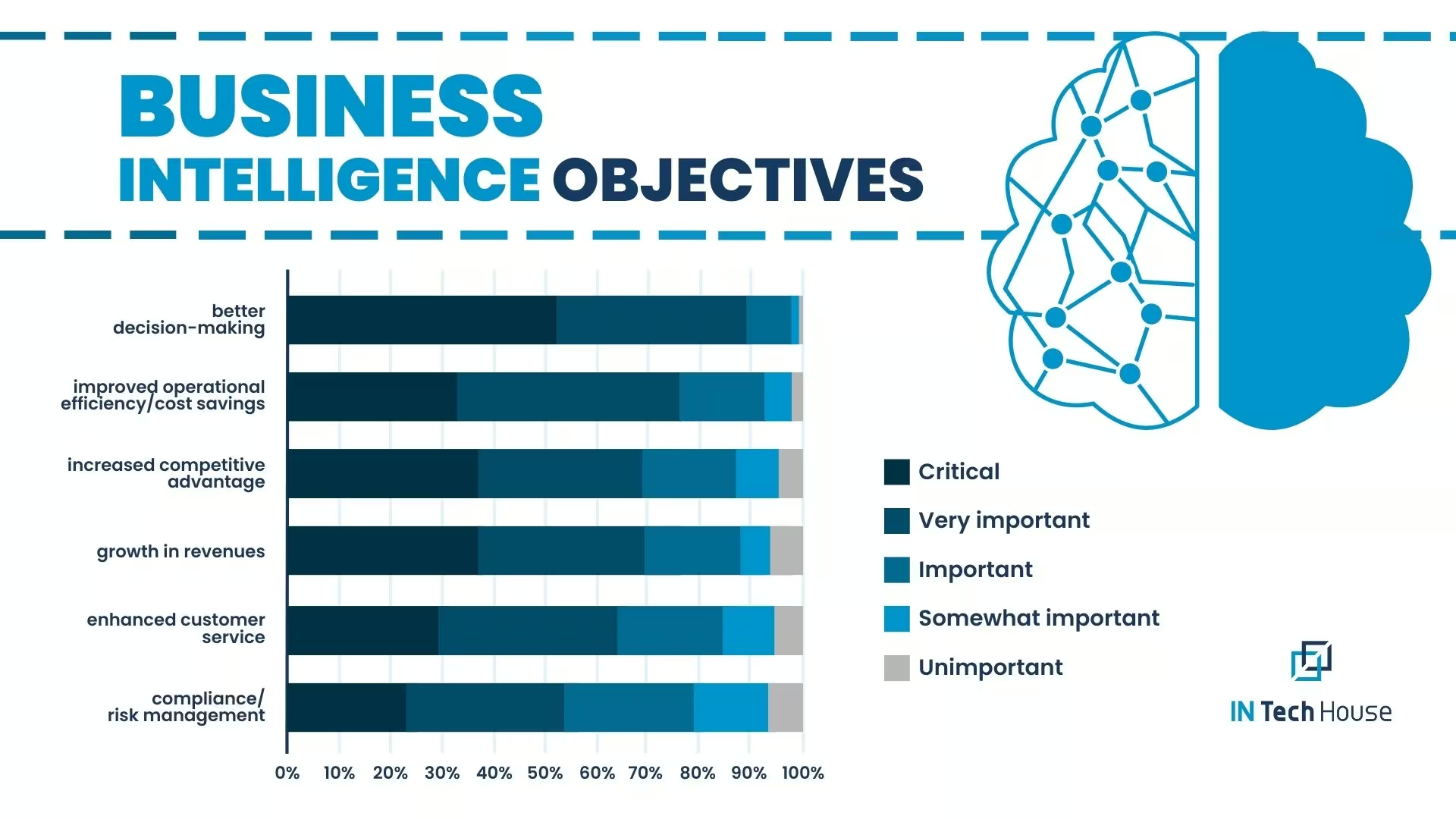
What are the Business Objectives?
What Companies Uses Embedded BI?
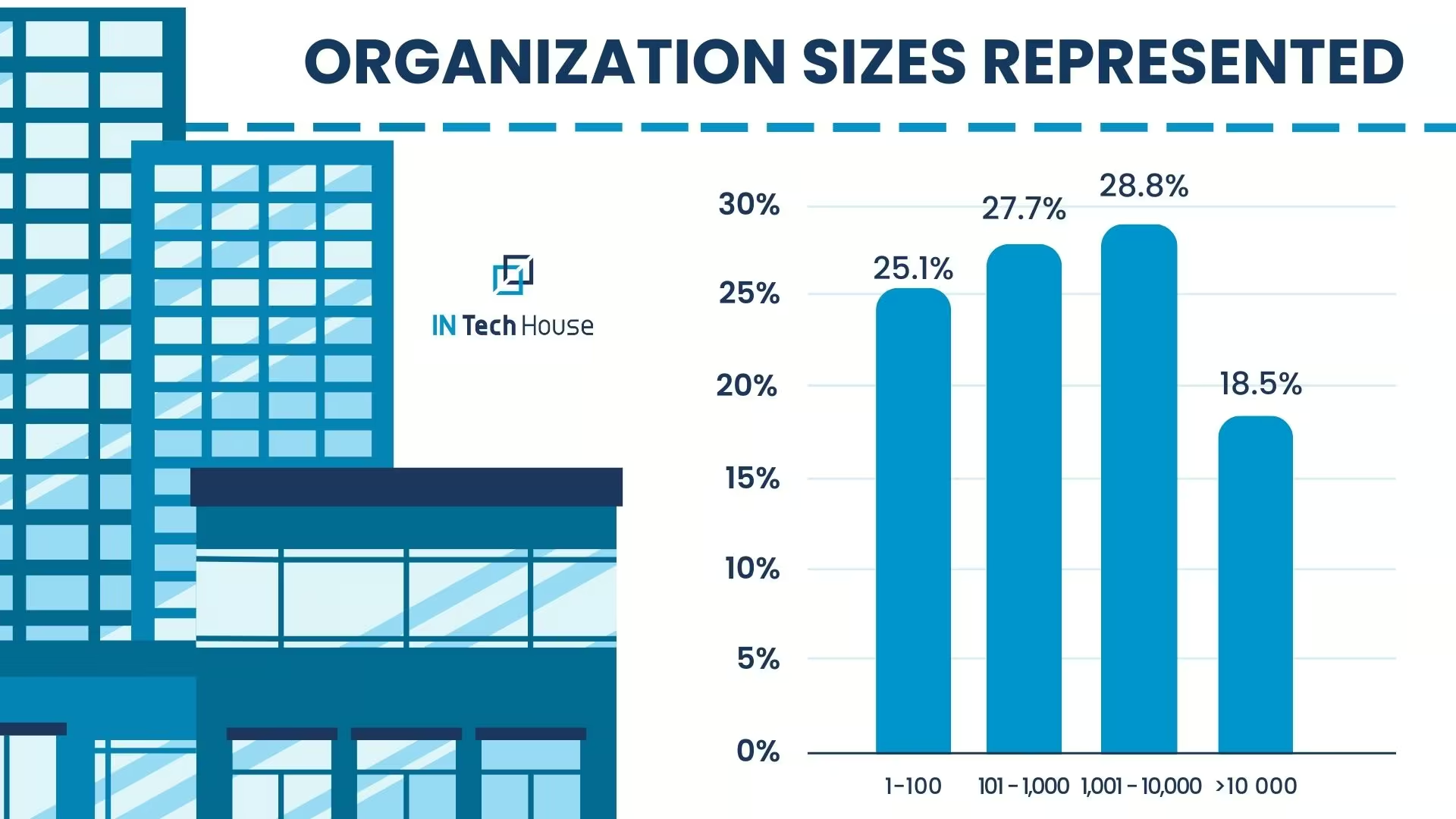
Source: Wisdom New Report
Read the most up-to-date information about the Embedded BI tool:1) Operations, executive management, and finance are critical drivers of business intelligence practices within organizations. Executives, managers, and individual contributors are the most targeted roles for BI initiatives, with a growing focus on customers and other target audiences. The primary objective of BI is to improve decision-making, followed by goals of efficiency/cost reduction and revenue growth.
Embedded BI refers to the integration of robust analytics and reporting capabilities directly into third-party applications, platforms, or systems. Instead of relying on standalone BI tools, organizations can seamlessly embedded BI functionality within their software, creating a unified and cohesive user experience. This enables users to access and interact with real-time insights and visualizations without switching between multiple applications.
Embedded BI is the delivery layer. Underneath it sits the pipeline that collects, stores and models everything being surfaced, so if that layer is still on the drawing board, start with what big data analytics is and the technology stack it assumes.
What Are 20 The Most Popular Embedded BI?

Source: Trustradius, SelectHub, SolutionReview


Read also:
Embedded BI vs. Traditional BI:Embedded BI differs from traditional BI solutions in several ways. Traditional BI typically involves separate tools or platforms used alongside existing applications, resulting in fragmented user experiences. In contrast, embedded BI seamlessly integrates analytics within existing workflows, enhancing usability and productivity.
Moreover, traditional BI often requires significant upfront investment, infrastructure setup, and training. Embedded BI reduces costs and complexities by leveraging existing applications and infrastructure. It eliminates the need for extensive training, as users can leverage familiar interfaces and workflows.
The comparison above concerns delivery models, not the disciplines behind them. Teams that still mix up the two questions should read business analytics vs business intelligence, where the difference between explaining what happened and modelling the next decision is set out.
Embedded Business Intelligence software empowers organizations to unlock the full potential of their data by seamlessly integrating analytics capabilities within their existing applications. The benefits of embedded BI, such as streamlined user experience, real-time insights, improved data governance, and enhanced collaboration, make it an invaluable tool for businesses aiming to make data-driven decisions. By embracing embedded BI, organizations can harness the power of data and gain a competitive advantage in today’s data-centric landscape.
We connect machine and sensor data to analytics that operators actually act on, including anomaly detection and predictive models. Ask us to review your current stack against what your plant needs.
Not sure where to start? We work with companies at every stage, from early ideas to enterprise-level builds. A 30-minute call can save you months of guesswork.
The cost of embedded business intelligence (BI) tools can vary based on factors such as features, scalability, licensing models, and vendor pricing structures. However, some embedded BI tools are known for their affordability. One such example is free-to-use Metabase.
Embedded business intelligence tools are used by organizations across various industries that want to integrate data analytics and reporting capabilities directly into their applications, products, or platforms.
There are four tools best of Awards: GoodData, Zoho Analytics, Sigma Computing, and Qlik Sense.
Jacek Suty is Head of Solution Architecture at InTechHouse, with more than 30 years of experience in system architecture, enterprise IT, infrastructure, information security, and complex digital transformation programs.
He specializes in designing enterprise and solution architectures, translating business and regulatory requirements into scalable technology platforms, and coordinating delivery across software, infrastructure, data, and security teams. His work covers enterprise architecture based on TOGAF, system modeling using UML and BPMN, cloud and on-premise infrastructure, CI/CD processes, data platforms, cybersecurity, and IT governance.
Jacek has contributed to large-scale technology programs for public institutions, finance, energy, education, healthcare, utilities, and digital archives. His project experience includes nationwide public digital infrastructure, distributed document-management and archiving systems, data-exploration platforms using machine learning and predictive analytics, and transaction systems combining blockchain, metadata standards, and computational intelligence.
He holds PRINCE2 Practitioner, Management of Risk, Scrum Master, ITIL Foundation, and ISO/IEC 27001 Lead Auditor qualifications. Jacek is currently pursuing a doctoral degree at Bydgoszcz University of Science and Technology, combining academic research with extensive experience in real-world architecture and technology delivery.
He writes about enterprise architecture, system design, digital transformation, data platforms, cloud infrastructure, cybersecurity, technology governance, and the practical application of AI in complex information systems.
Jacek Suty's academic and professional profiles:
https://pbs.edu.pl/pl/doktorant/uczelniania-rada-samorzadu-doktorantow
https://www.isep.pw.edu.pl/isep/zs/Aktualnosci/Kalendarium-wydarzen2/Seminarium-zakladowe-9.03.2021-Jacek-Suty
https://aionehealth.pl/wp-content/uploads/2026/04/Raport-2026-final.pdf
From first prototype to production, our engineers can help you scope it, build it and get it certified.
This initial conversation is focused on understanding your product, technical challenges, and constraints.
No sales pitch - just a practical discussion with experienced engineers.
Share a few details about your product and context. We’ll review the information and suggest the most appropriate next step.