


We stepped into a new IoT era, where the sheer volume of data generated by connected devices is staggering. To derive meaningful insights and unlock the full potential of IoT deployments, organizations turn to IoT Data Analytics. In this article, we explore the fundamentals of IoT Data Analytics, delve into the various types of IoT analytics, and highlight the compelling benefits that drive its essential role in shaping business strategies. InTechHouse can help businesses with all IoT challenges because we know how to work smart and effective. Running! Predictive analytics is one of those types, and building predictive analytics on custom data platforms is often what turns raw device data into forecasts.
IoT Data Analytics involves the examination and interpretation of the vast amounts of data generated by IoT devices, so it inherits the volume, velocity and variety problems described in what big data analytics is. It encompasses the use of advanced analytical techniques to extract valuable insights, patterns, and trends from this data. By leveraging analytics, organizations can transform raw data into actionable intelligence, enabling informed decision-making and strategic planning. What about the market?
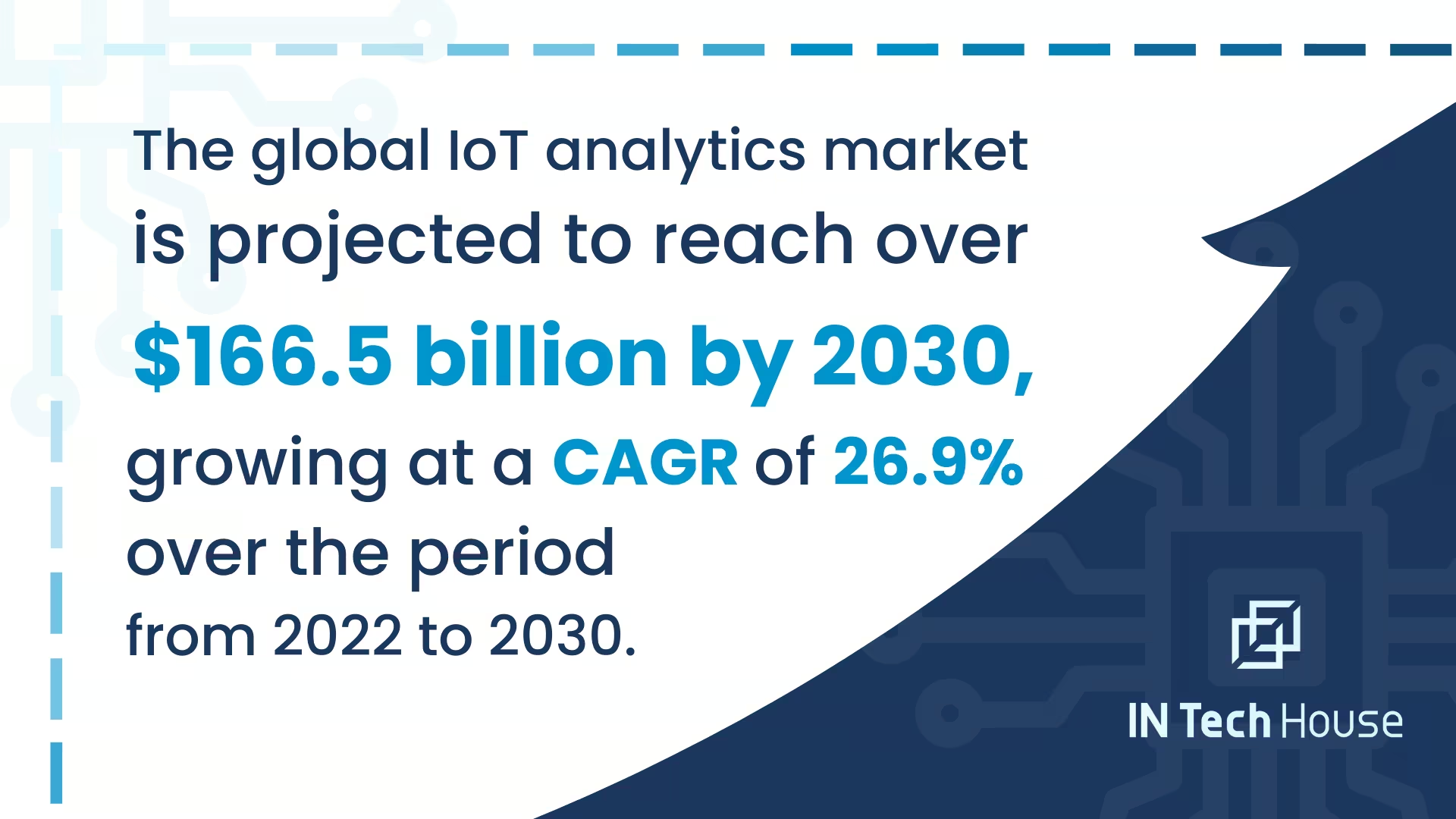
Source: Globenewswire
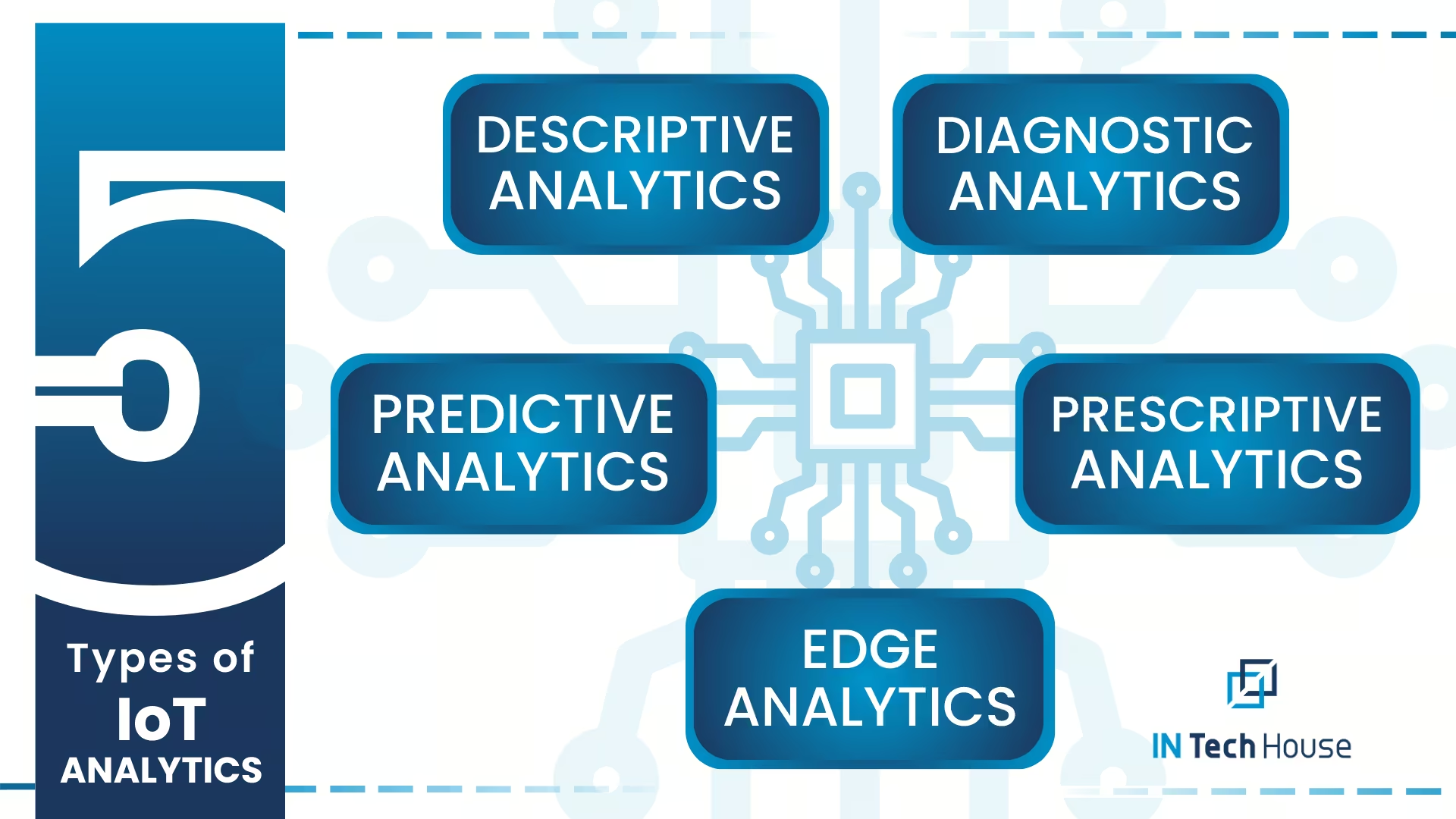
1. Descriptive Analytics:
2. Diagnostic Analytics:
3. Predictive Analytics:
4. Prescriptive Analytics:
5. Edge Analytics:
Descriptive dashboards are the easy part. We build the diagnostic and predictive layers on top of your device data, so anomalies and failures surface before they cost you production hours.
Turn IoT telemetry into decisions
1. Predictive Maintenance:
2. Smart Cities:
3. Healthcare Monitoring:
4. Supply Chain Optimization:
5. Energy Management:
6. Retail Analytics:
7. Agriculture Precision:
See also:
Unlocking the Power of Industrial IoT: How IIoT Transform Industry
Industrial IoT Architecture: Layers and Components
Maximizing Efficiency with IoT and Predictive Maintenance
The main IoT analytics goal is to extract valuable insights, patterns, and trends from this data, enabling informed decision-making and strategic planning. Here’s a step-by-step overview of how IoT analytics works:
1. Data Collection:
2. Data Ingestion:
3. Data Processing:
Every analytics pipeline described here sits on a device, connectivity and platform stack that has to be designed first. Industrial IoT architecture layers and components show where edge preprocessing ends and cloud analytics begins, and why that boundary decides both latency and cost.
From sensor data quality checks to model validation and edge deployment, we run the full analytics chain for industrial clients. Ask us how it maps onto your IoT estate.
Not sure where to start? We work with companies at every stage, from early ideas to enterprise-level builds. A 30-minute call can save you months of guesswork.
There are various types of data, including structured, semi-structured, and unstructured data. Structured data is organized and follows a clear format, while semi-structured and unstructured data lack a predefined structure and may include text, images, and multimedia.
Popular data analysis methods include descriptive analytics for summarizing data, diagnostic analytics to understand reasons behind trends, predictive analytics for forecasting future outcomes, and prescriptive analytics for providing actionable insights.
Yes, analytics is crucial for extracting meaningful insights from large datasets. It helps uncover patterns, trends, and correlations that enable informed decision-making, optimization, and strategic planning.
Several analytics tools dominate the market, including industry leaders such as Tableau, Power BI, Google Analytics, and Apache Spark. The choice of tool depends on specific business needs, data complexity, and desired functionalities.
Damian Ledziński, PhD Eng., is an Applied Artificial Intelligence Expert and an Assistant Professor at Bydgoszcz University of Science and Technology. He has over 15 years of academic, research, software-engineering, and technology-development experience.
His work focuses on applying artificial intelligence, machine learning, deep neural networks, and data science to complex real-world systems. His principal research and engineering interests include autonomous unmanned aerial vehicles, drone navigation and swarm intelligence, biomedical engineering, medical signal and image analysis, predictive modeling, industrial IoT, and intelligent water-management systems.
Damian has contributed to multidisciplinary R&D initiatives including AI-assisted medical diagnostics, a Polish ventilator prototype, autonomous indoor drone systems for warehouse inventory, AI-supported water-consumption analysis, virtual medical assistants, and intelligent systems combining embedded devices with machine-learning models.
He is the author or co-author of more than 30 scientific publications. His work has appeared in international scientific publications covering artificial intelligence, biomedical engineering, signal analysis, autonomous systems, environmental monitoring, and data-driven infrastructure.
Damian is a co-creator of academic programs in Engineering in Medicine, AI in Medicine, and Data Science at Bydgoszcz University of Science and Technology. He combines scientific research with hands-on implementation, translating experimental AI methods into deployable technology. He writes about applied AI, machine learning, predictive analytics, autonomous UAV systems, AI in medicine, biomedical signal processing, industrial IoT, and intelligent models in real-world systems.
Damian Ledziński's academic profiles:
https://wtie.pbs.edu.pl/pl/pracownik/damian-ledzinski
https://www.researchgate.net/profile/Damian-Ledzinski
https://scholar.google.pl/citations?user=AlQpPB0AAAAJ&hl=pl
https://ludzie.nauka.gov.pl/ln/profiles/DN6pHXU6KZm/publications/f83a8833-6060-4fae-8628-3dbf57661394
This initial conversation is focused on understanding your product, technical challenges, and constraints.
No sales pitch - just a practical discussion with experienced engineers.
Share a few details about your product and context. We’ll review the information and suggest the most appropriate next step.