
Big Data Analytics: What It Is And Why It Matters

The volume of data being generated is expanding at an unprecedented rate. Organizations of all sizes and across various industries are realizing the potential of harnessing this vast amount of information to gain valuable insights and drive informed decision-making. Big data analytics has emerged as a revolutionary tool that enables businesses to extract meaningful patterns, trends, and correlations from massive datasets. In this article, we will delve into the world of big data analytics and explore its significance in transforming businesses. Let’s answer some key questions to shed light on this dynamic field.
Why is Big Data Important?
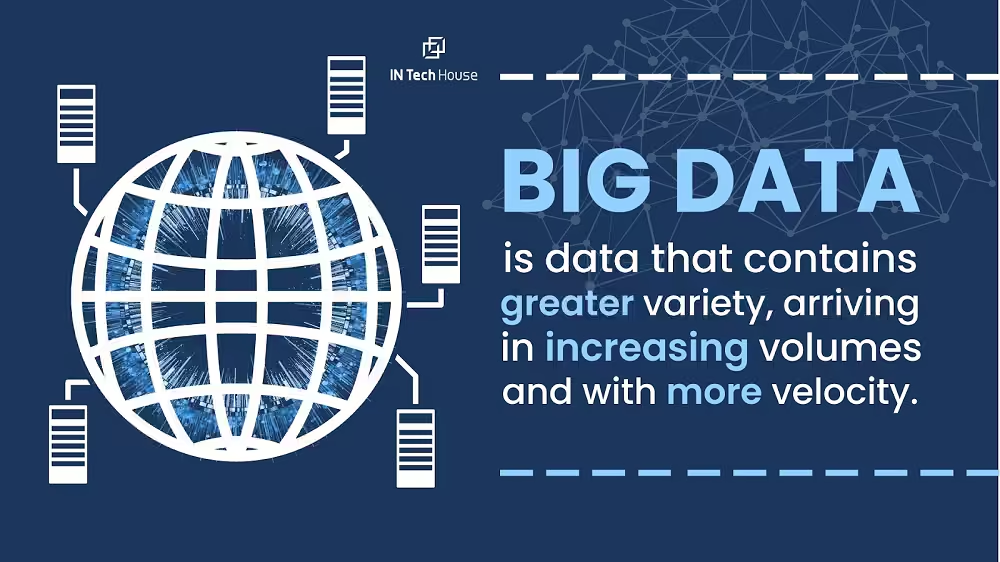
Why big data is important? Big data holds immense importance for businesses due to its potential to reveal valuable insights and trends. The sheer volume, velocity, and variety of data being generated provide organizations with an unprecedented opportunity to gain a comprehensive understanding of their operations, customers, and market dynamics.
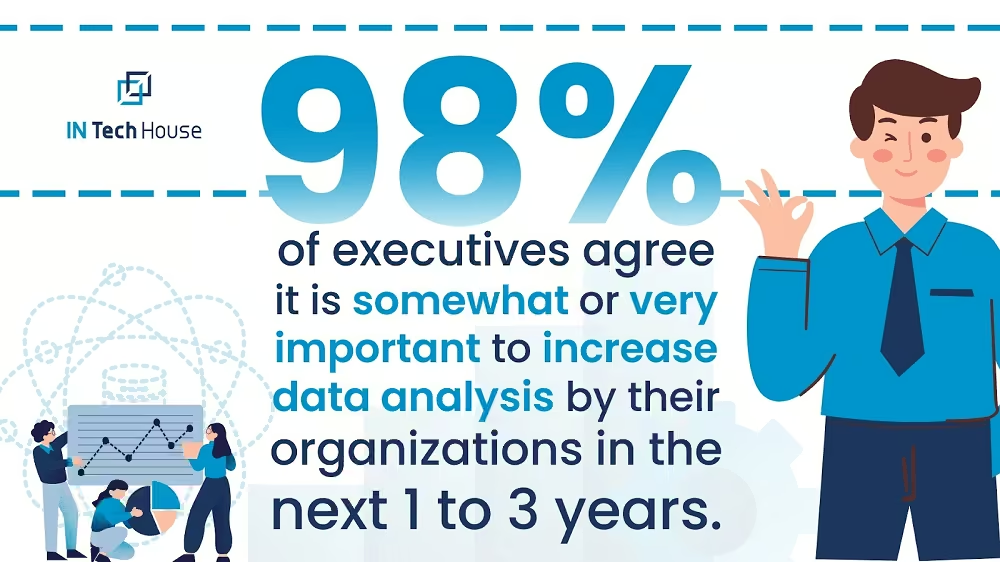
Source: Ocient
By leveraging our expertise in Big Data Analytics, we can help businesses unlock the full potential of their data and gain valuable insights to drive strategic decision-making, and we go through how data analytics helps businesses area by area.
History and Evolution of Big Data Analytics
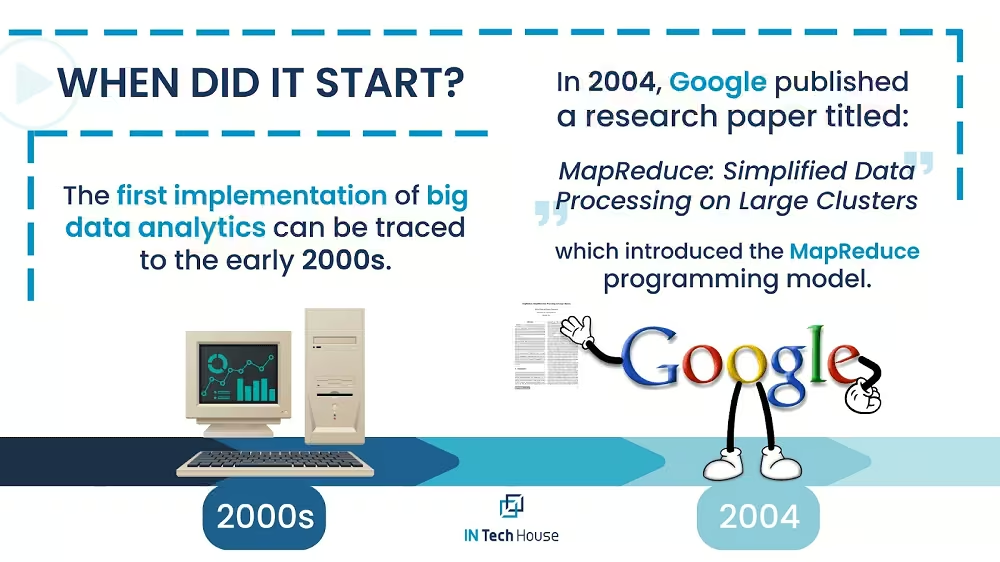
The concept of big data analytics has evolved alongside technological advancements. Initially, data analysis focused on structured data stored in traditional databases. However, with the exponential growth of data from various sources, including social media, sensors, and online transactions, new approaches and technologies were needed to extract insights effectively. Advanced data analytics techniques, together with distributed computing and cloud infrastructure, paved the way for big data analytics as we know it today.
How Big Data Analytics Works and Key Technologies
Big data analytics involves processing and analyzing large and complex datasets to extract meaningful information. It encompasses various techniques, including data mining, machine learning, natural language processing, and predictive modelling.
Advanced technologies such as Hadoop, Spark, and NoSQL databases enable distributed storage and processing of big data.
These technologies provide scalability, fault tolerance, and the ability to handle structured and unstructured data.
What is Еxamples of Big Data?
Examples of big data span multiple industries and domains. In the healthcare sector, electronic health records, medical imaging data, and genomic data contribute to significant volumes of data. Retailers analyze customer transaction data, browsing patterns, and social media interactions to personalize marketing efforts. The transportation industry utilizes data from GPS systems, traffic sensors, and logistics operations to optimize routes and improve efficiency.
Uses and Examples of Big Data Analytics
Big data analytics finds applications in various areas:
Financial institutions leverage it for fraud detection, risk assessment, and trading strategies.
- E-commerce platforms use customer data to recommend products and enhance user experiences
- Manufacturing companies analyze sensor data to optimize production processes and predictive maintenance
- Government agencies utilize big data analytics for urban planning, crime prediction, and policy-making
These use cases also explain why terminology gets blurred inside organisations. Reporting on what already happened and modelling what is likely to happen next are different jobs with different owners, a distinction we unpack in business analytics vs business intelligence.
Characteristics of Big Data Analytics
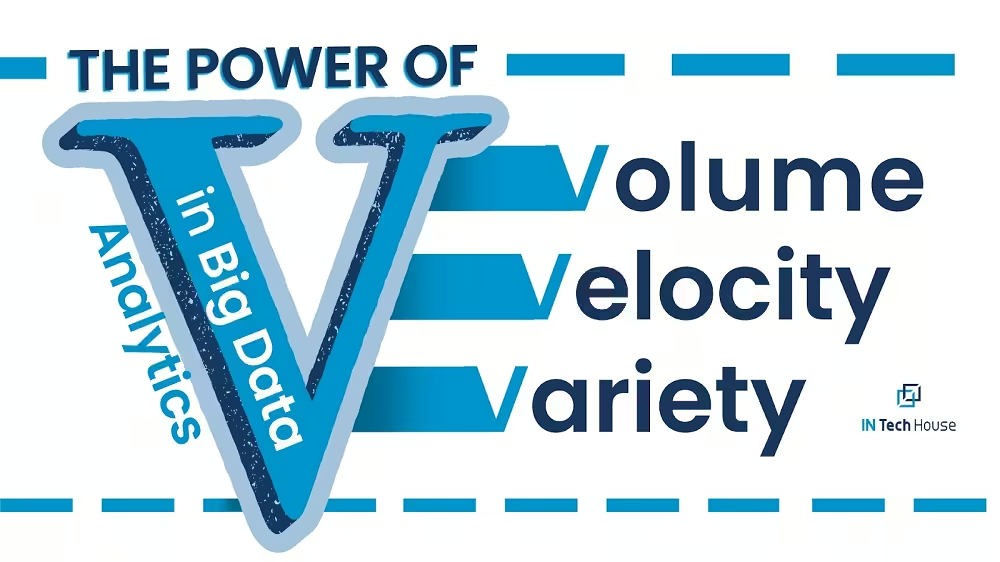
Big data analytics is characterized by the three V’s: volume, velocity, and variety. Volume refers to the vast amount of data generated and stored. Velocity relates to the speed at which data is generated, collected, and analyzed in real-time or near-real-time. Variety refers to the diverse sources and formats of data, including structured, unstructured, and semi-structured data.
Most big data programmes stall between storage and use. We build the analytics layer where the questions your operations team asks actually get answered.
How Big Data Analytics Works
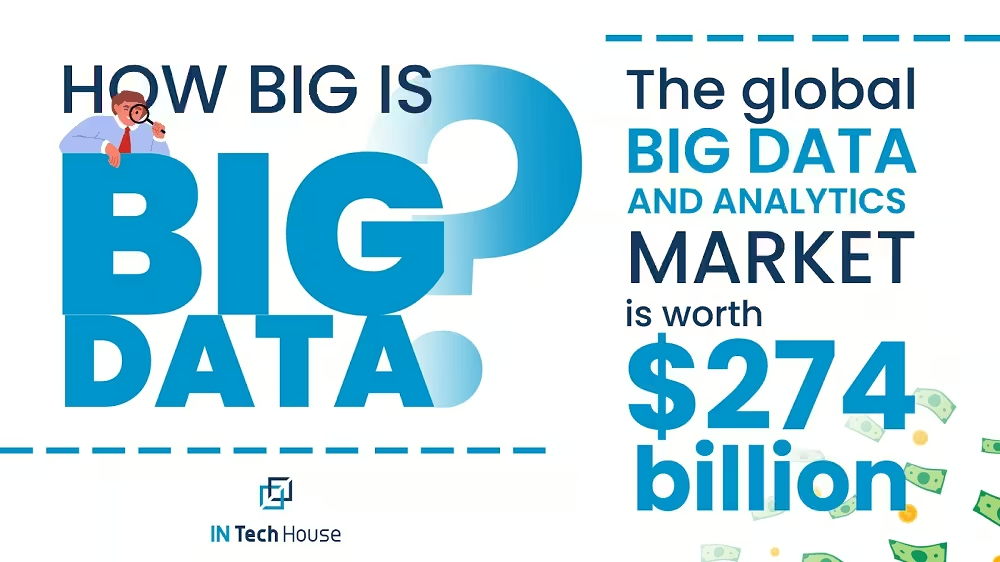
Source: Explodingtopics
Big Data Analytics is a process of examining and uncovering valuable insights from large and complex datasets to support informed decision-making and drive business growth, and we look closely at how data analytics influences decision-making in a separate article. It involves the use of advanced technologies, algorithms, and statistical techniques to analyze vast amounts of data, identify patterns, trends, and correlations, and extract meaningful information.
At InTechHouse, we specialize in providing comprehensive Big Data solutions to help global businesses harness the power of data and gain a competitive edge in their respective industries. Our team of skilled data scientists and analysts are experienced in working with diverse datasets and employing cutting-edge tools and technologies.
We offer a range of services to assist businesses in their Big Data Analytics journey. This includes data collection and integration, data cleansing and preprocessing, data storage and management, advanced analytics and modelling, and data visualization.
By leveraging our expertise in Big Data Analytics, we can help businesses unlock the full potential of their data and gain valuable insights to drive strategic decision-making. Whether it’s optimizing operations, understanding customer behaviour, improving marketing campaigns, or enhancing product development, our tailored solutions can be customized to meet the specific needs and goals of each client.
With our deep understanding of Big Data technologies and a proven track record of delivering successful projects, InTechHouse is well-equipped to support global businesses in their Big Data Analytics initiatives. We strive to empower organizations with actionable insights that enable them to stay ahead in today’s data-driven world.
The Human Side of Big Data Management and Analytics
While big data analytics involves the use of advanced technologies and algorithms, it’s important to recognize the significant role of human expertise in the process.
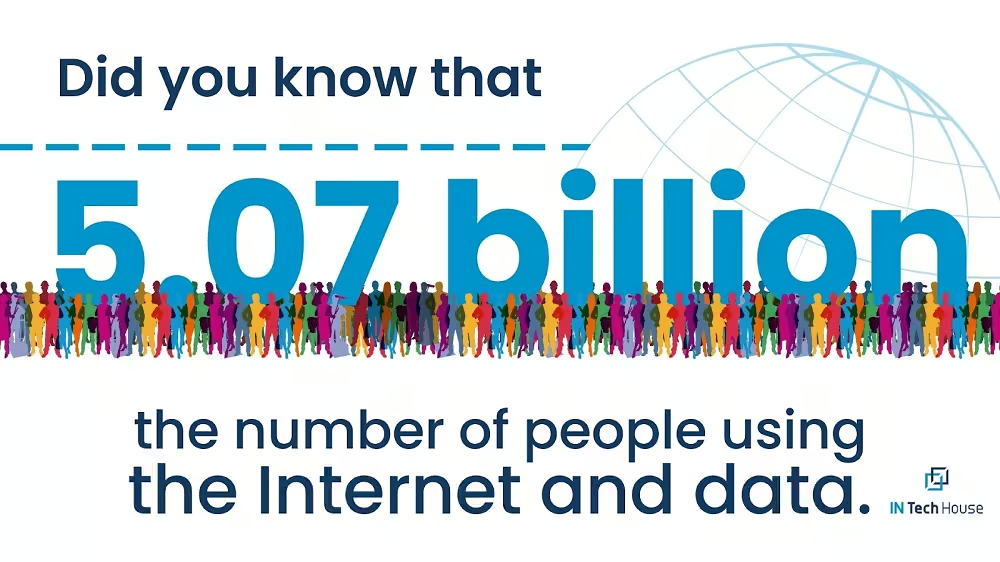
Source: G2
Behind every successful big data initiative, there are skilled data scientists, analysts, and domain experts who possess the knowledge and experience to extract meaningful insights from the vast amount of data. Their understanding of business context, industry trends, and analytical techniques enables them to ask the right questions, formulate hypotheses, and interpret the results. Big data analytics is a collaborative effort that combines the power of technology with human intelligence to drive informed decision-making.
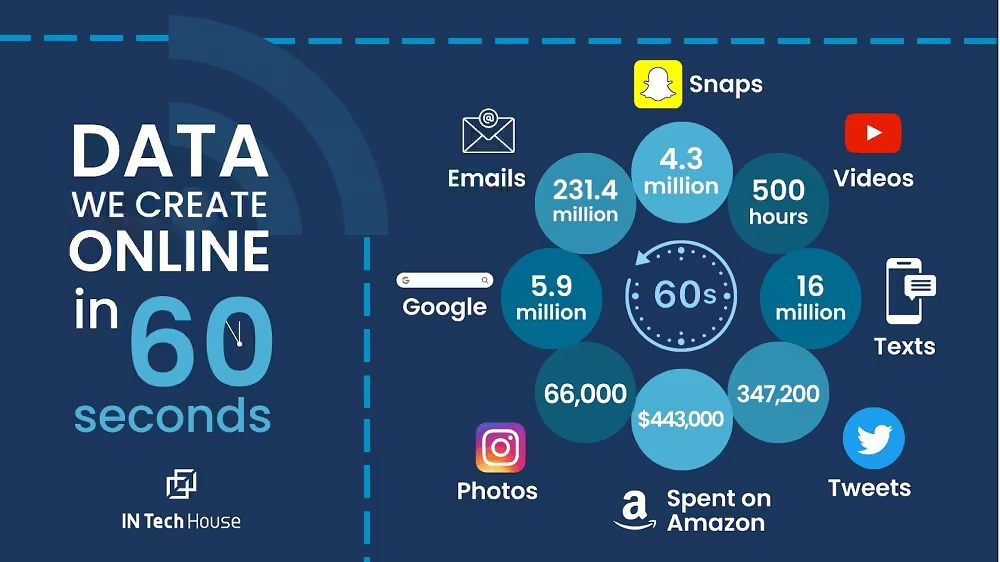
Types of Big Data Analytics:
Diagnostic Analytics:
Diagnostic analytics focuses on understanding why a certain event or outcome occurred by analyzing historical data and identifying patterns or factors that contributed to the result. It helps in uncovering the root causes of problems or anomalies, enabling organizations to learn from past experiences and make necessary improvements.
Descriptive Analytics:
Descriptive analytics involves summarizing and interpreting historical data to gain insights into past performance. It focuses on answering questions like “What happened?” and “What are the key trends?” Descriptive analytics provides a snapshot of the current state of affairs and helps in understanding historical patterns, customer behaviour, market trends, and other important factors.
Prescriptive Analytics
Prescriptive analytics takes a step further by not only providing insights into what happened and why but also suggesting the best course of action. It leverages advanced techniques, such as optimization and simulation, to recommend specific actions or decisions that can optimize outcomes. Prescriptive analytics helps organizations make data-driven decisions and automate decision-making processes.
Predictive Analytics
Predictive analytics uses historical data, statistical modelling, and the wider role of machine learning in data analytics to make predictions or forecasts about future events or outcomes, and that shift from reporting to forecasting drives the future of data analytics. By analyzing patterns and relationships in the data, predictive analytics helps in identifying trends, understanding customer behaviour, anticipating market demand, mitigating risks, and optimizing business processes, which is where it overlaps with what business analytics is as a separate discipline.
Challenges of Big Data Analytics
While big data analytics offers immense opportunities, it also comes with its own set of challenges.

Read also:
- 6 Challenges in Implementing Big Data Analytics Based on Our Client's Experience
- Advanced Data Analytics: Definition and Techniques
- Business Analytics vs Business Intelligence
Source: Techjury
Some of the common challenges in implementing big data analytics include:
- Data Quality and Integration: Managing and integrating data from various sources while ensuring its accuracy, completeness, and consistency can be a complex task.
- Scalability and Infrastructure: Processing and storing massive volumes of data require robust and scalable infrastructure, including storage, computing power, and network capabilities.
- Data Privacy and Security: Handling sensitive and personal data raises concerns about privacy and security. Organizations need to implement robust security measures to protect data from unauthorized access or breaches.
- Skills Gap: The demand for skilled data scientists and analysts exceeds the available talent pool. Finding professionals with the right expertise in data analytics can be a challenge for organizations.
- Ethical Considerations: The use of big data analytics raises ethical questions regarding data collection, usage, and potential biases. Organizations need to ensure ethical practices and compliance with data protection regulations.
Big data collection practices and Regulations
Different Types of Big Data Tools
In the world of big data analytics, there is a wide range of tools available to help organizations collect, store, process, and analyze massive volumes of data, from open-source processing engines to embedded analytics tools and BI software. These tools enable data scientists and analysts to extract valuable insights and make data-driven decisions, and the newest generation of AI tools for data analysts pushes that work further. Let’s explore some of the different types of big data tools:
- Data Collection Tools: Data collection tools facilitate the gathering of large volumes of structured, semi-structured, and unstructured data from various sources such as databases, websites, social media platforms, IoT devices, sensors, and more. These tools help in streamlining the data collection process and ensuring data integrity.
- Data Storage and Management Tools: Managing and storing vast amounts of data require specialized tools. Data storage and management tools provide scalable and distributed storage solutions, including data lakes, data warehouses, and distributed file systems. These tools ensure efficient data organization, accessibility, and retrieval.
- Data Processing Tools: Data processing tools handle the task of processing and transforming raw data into a usable format. They enable data cleansing, transformation, and enrichment, preparing the data for analysis. Popular tools in this category include Apache Hadoop, Apache Spark, and Apache Flink.
- Data Integration Tools: Data integration tools help in combining data from disparate sources into a unified and consistent format. They ensure seamless data integration across different systems, databases, and applications. These tools enable organizations to have a holistic view of their data and facilitate better decision-making.
- Data Analysis and Visualization Tools: Data analysis and visualization tools play a crucial role in exploring and interpreting big data. They provide capabilities for statistical analysis, data mining, machine learning, and visualization. These tools enable analysts to uncover patterns, trends, correlations, and insights from the data, and present them in a visually appealing and understandable manner.
Benefits of Big Data Analytics
Big data analytics offers numerous benefits to organizations across various industries. Here are some of the key advantages:
Improving Decision-Making
Big data analytics provides organizations with actionable insights, enabling informed and data-driven decision-making. It helps identify patterns, trends, and correlations that might otherwise go unnoticed.
Insight only changes a decision when somebody can see it in context, on a dashboard or in a report that reaches the right desk. That presentation layer has its own tooling and its own vocabulary, so it pays to be precise about what business intelligence is before assigning questions to teams.
Enhancing Operational Efficiency
By analyzing large volumes of data, organizations can optimize their processes, identify bottlenecks, and streamline operations. This leads to improved efficiency, cost reduction, and increased productivity.
Improving Customer Experiences
Big data analytics enables organizations to understand customer preferences, behaviours and needs at a granular level. This information can be leveraged to deliver personalized experiences, targeted marketing campaigns, and tailored product offerings.
Risk Mitigation
Analyzing big data helps organizations identify potential risks, detect anomalies, and prevent fraudulent activities. It enhances risk management capabilities and improves security measures.
Competitive Advantage
Organizations that effectively leverage big data analytics gain a competitive edge in the market. They can identify market trends, predict customer demands, and innovate faster than their competitors.
How Big Data Analytics Works and Key Technologies
In industrial settings these technologies rarely stop at dashboards. Models are pushed back into production lines, quality control and predictive maintenance, which is the scope of our industrial AI solutions, where the same pipelines run against OT data instead of office reporting.
We scope a first use case against a measurable target, prove it on your data, then scale the platform behind it.
Let's talk about your next move
Not sure where to start? We work with companies at every stage, from early ideas to enterprise-level builds. A 30-minute call can save you months of guesswork.
FAQ
1. What are some commonly used Big Data Analytics tools?
There are several popular Big Data Analytics tools available in the market, including Apache Hadoop, Apache Spark, SAS, R, Python, Tableau, and Microsoft Power BI. These tools provide capabilities for data processing, analysis, visualization, and machine learning.
2. Who uses Big Data Analytics?
Big Data Analytics is utilized by various organizations across different industries. It is used by businesses ranging from small startups to large enterprises, as well as government agencies, healthcare institutions, financial institutions, retail companies, and more. Essentially, any organization that deals with large volumes of data can benefit from Big Data Analytics.
3. How do I find out the data I already have and what I need for Big Data Analytics?
Conducting a data audit is a useful step in determining the data you already possess and what additional data you may need. Begin by identifying the sources of data within your organization, such as databases, customer relationship management (CRM) systems, social media platforms, and other relevant sources. Assess the quality and relevance of the existing data and identify any gaps that need to be filled to meet your analytics objectives.
4. Why do we need Big Data Analytics?
Big Data Analytics is crucial because it allows organizations to extract valuable insights and make data-driven decisions. It enables the discovery of patterns, trends, correlations, and anomalies within large datasets that may be difficult or impossible to identify through traditional analysis methods. Big Data Analytics helps businesses gain a competitive edge, improve operational efficiency, enhance customer experiences, mitigate risks, and drive innovation.
5. Can I learn Big Data for free?
Yes, there are numerous resources available online that offer free educational materials and courses on Big Data Analytics. Websites like Coursera, edX, and Udemy offer both free and paid courses on Big Data Analytics, data science, and related topics. Additionally, there are online tutorials, forums, and open-source tools that provide opportunities for self-learning and exploration of Big Data Analytics concepts and techniques.
Jacek Suty
Jacek Suty is Head of Solution Architecture at InTechHouse, with more than 30 years of experience in system architecture, enterprise IT, infrastructure, information security, and complex digital transformation programs.
He specializes in designing enterprise and solution architectures, translating business and regulatory requirements into scalable technology platforms, and coordinating delivery across software, infrastructure, data, and security teams. His work covers enterprise architecture based on TOGAF, system modeling using UML and BPMN, cloud and on-premise infrastructure, CI/CD processes, data platforms, cybersecurity, and IT governance.
Jacek has contributed to large-scale technology programs for public institutions, finance, energy, education, healthcare, utilities, and digital archives. His project experience includes nationwide public digital infrastructure, distributed document-management and archiving systems, data-exploration platforms using machine learning and predictive analytics, and transaction systems combining blockchain, metadata standards, and computational intelligence.
He holds PRINCE2 Practitioner, Management of Risk, Scrum Master, ITIL Foundation, and ISO/IEC 27001 Lead Auditor qualifications. Jacek is currently pursuing a doctoral degree at Bydgoszcz University of Science and Technology, combining academic research with extensive experience in real-world architecture and technology delivery.
He writes about enterprise architecture, system design, digital transformation, data platforms, cloud infrastructure, cybersecurity, technology governance, and the practical application of AI in complex information systems.
Jacek Suty's academic and professional profiles:
https://pbs.edu.pl/pl/doktorant/uczelniania-rada-samorzadu-doktorantow
https://www.isep.pw.edu.pl/isep/zs/Aktualnosci/Kalendarium-wydarzen2/Seminarium-zakladowe-9.03.2021-Jacek-Suty
https://aionehealth.pl/wp-content/uploads/2026/04/Raport-2026-final.pdf
Let's talk about your next project
From first prototype to production, our engineers can help you scope it, build it and get it certified.





Discuss your product with our R&D team
This initial conversation is focused on understanding your product, technical challenges, and constraints.
No sales pitch - just a practical discussion with experienced engineers.
Share a few details about your product and context. We’ll review the information and suggest the most appropriate next step.