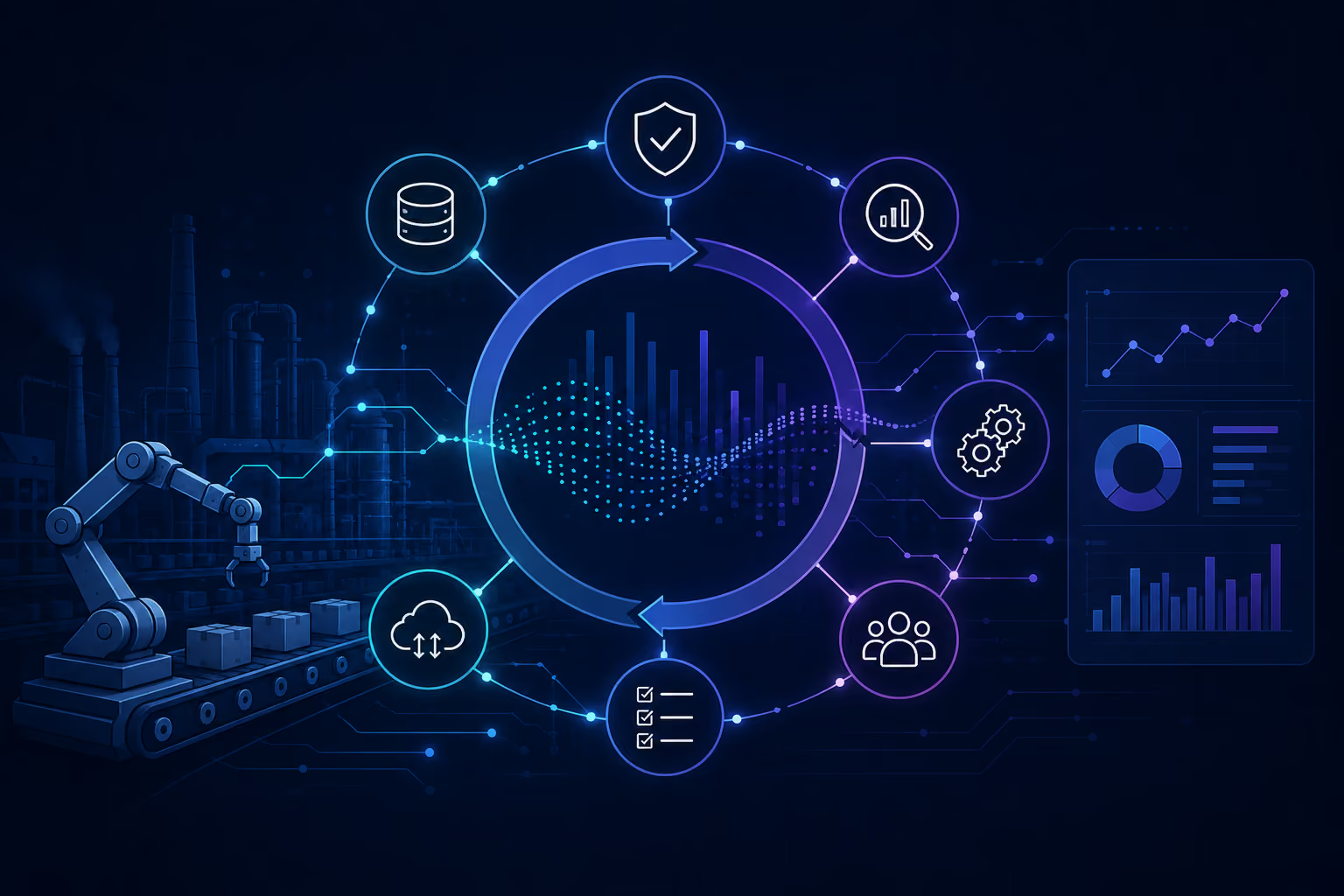
When speaking of business analytics versus business intelligence, data has evolved from just delivering information, to effecting change and impacting the basic operations of business analytics in business intelligence in recent years. Data-driven solutions are increasingly being sought by organisations to address everyday challenges and prosper in the turbulent market of business analysis vs business intelligence.
In the realm of data, two terms have emerged: business intelligence business analytics, (BA) and (BI). But, Talk to our engineering team? While each offers distinct advantages, the argument over business analytics vs business intelligence appears to be ongoing.The labels matter less than which decisions are still made on gut feel. We start from those decisions and work back to the data that supports them.
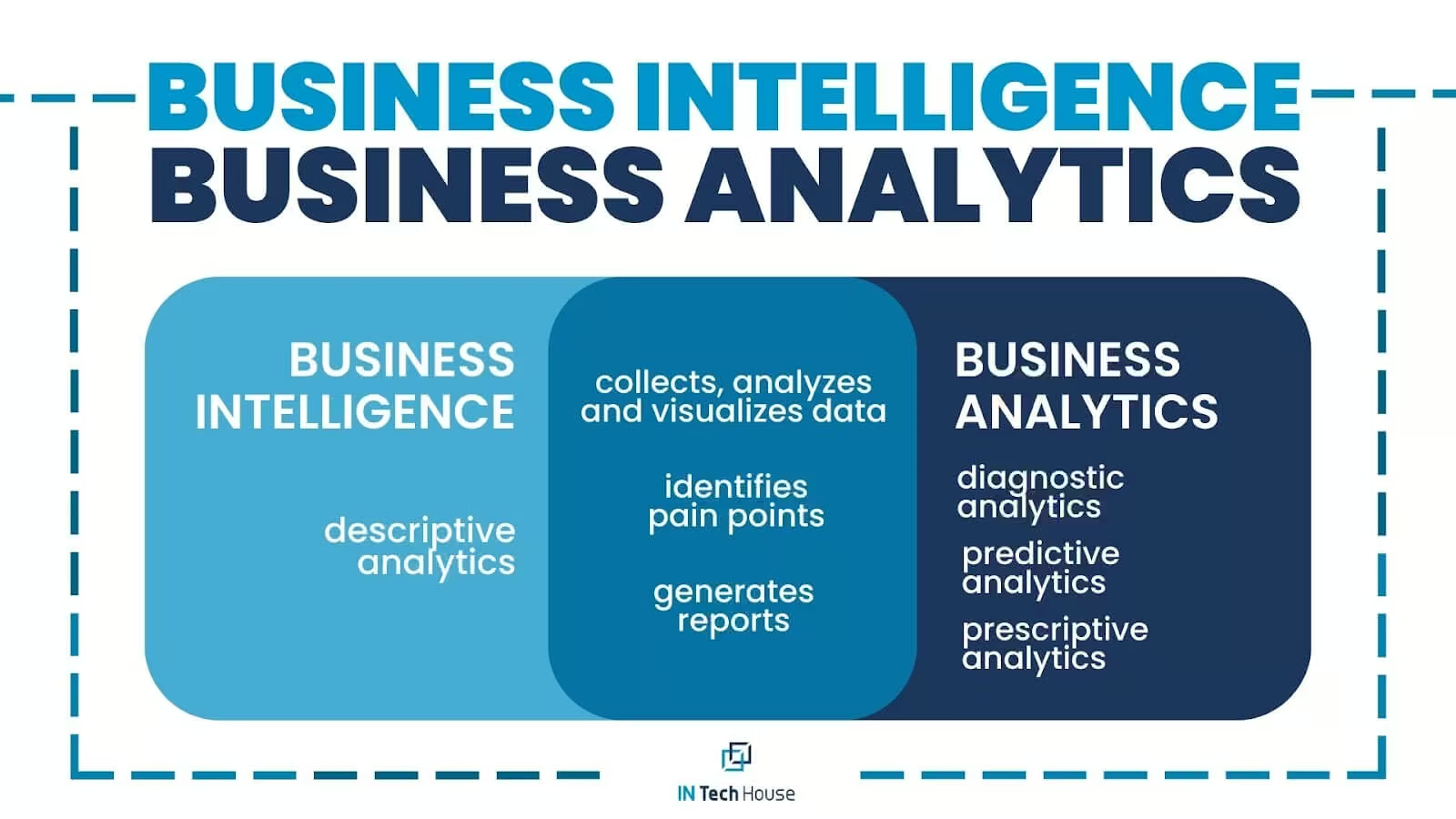
So let us look at the principles of each of these and see what makes them so important to enterprises today.
Business analytics, which is closely related to business intelligence and big data analytics, is a collection of automated data analysis procedures and technologies that shed light on a company’s operational activities.

The Business Analytics market is experiencing significant growth and is poised for further expansion in the coming years.
Mordor Intelligence predicts the business analytics market will grow to $103.65 billion by 2026, which makes a precise reading of what business analytics is commercially relevant rather than academic. A CAGR of 7.3% indicates its slow growth compared to BI, which is 12%.

Source: MordorIntelligence, KnowledgeHutBusiness Analytics is being embraced across various industry verticals, including healthcare, retail, BFSI, manufacturing, and others. Each sector has unique analytics requirements and is leveraging analytics solutions to improve performance, customer experience, and competitive advantage.
Cloud-based solutions are also driving market growth, providing scalability and accessibility to analytics capabilities.The Business Analytics market is highly competitive, with major players such as Microsoft Corporation, IBM Corporation, Oracle Corporation, SAP SE, and SAS Institute Inc. dominating the market. These companies are investing in research and development, strategic partnerships, and acquisitions to enhance their analytics offerings and maintain a competitive edge.
As a result, business analytics business intelligence assists professionals in making educated decisions that can reduce risks and optimise the needs of the future.
Business intelligence vs business analytics is concerned with information. It’s a technical infrastructure that collects, stores, and analyses data using software. The data is then presented in easily accessible and user-friendly ways, such as dashboards, reports, charts, and graphs.
Apart from wise decision-making, the tools are essential for identifying major industry trends, identifying issue areas, and highlighting new company prospects.
The Business Intelligence (BI) market is experiencing rapid growth, fueled by the increasing demand for data-driven insights and analytics across industries.
As businesses recognize the importance of making informed decisions based on accurate and real-time information, the adoption of BI solutions is on the rise. With the advancements in technology, including cloud-based BI platforms, artificial intelligence, and self-service analytics, the market is expanding even further.
Organizations are leveraging BI to improve operational efficiency, enhance customer experience, and gain a competitive edge. The future of the BI market looks promising, with projections of substantial growth in the coming years as businesses harness the power of data to drive success.
According to the statistics, the BI software market will reach $40.50 billion by 2026. Big data, visual analysis and reduced time to market are now the three main reasons for this growth of global businesses.
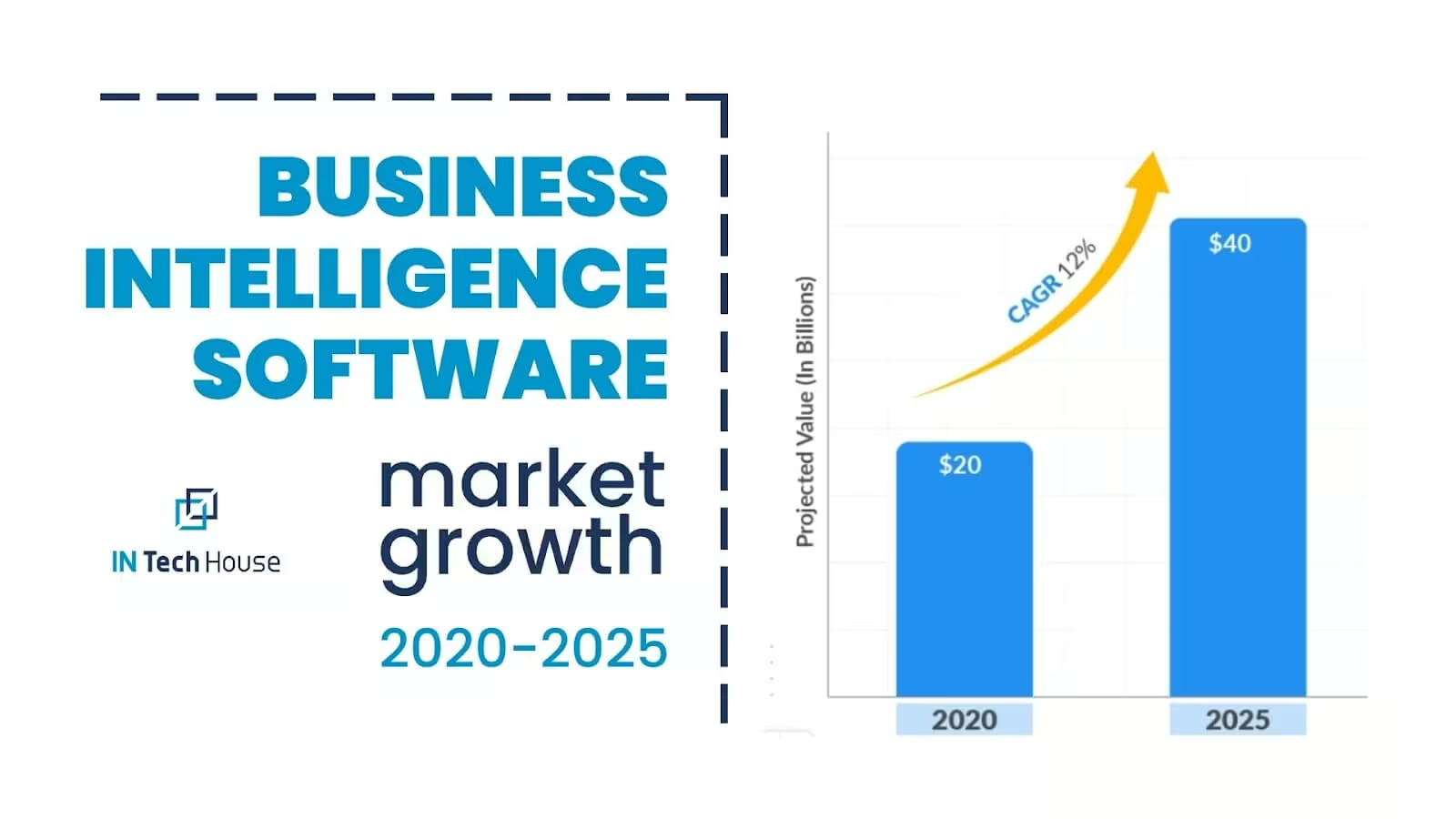
Source: MordorIntelligence, SelectHub, MordorIntelligence
Big Data is the collective term for all information stored, such as your click-through rates and information obtained through social media channels. It’s the collective term for all the information obtained through multiple sources. Big Data is also continuously growing.
Business intelligence and business analytics tools help businesses decipher Big Data so that they can break it down and categorise it in ways that are both understandable and usable, a process we unpack step by step in what big data analytics is.
We have already addressed what business intelligence is in the section above. Concerning the case of a business analyst vs business intelligence, a business analyst uses data analysis to enhance company processes and operations, whereas a business intelligence analyst (BI analyst) drives management decisions using data warehousing.
Both the BI analyst and the business analyst professions have distinct work methods, types of data, types of analysis, and tools.
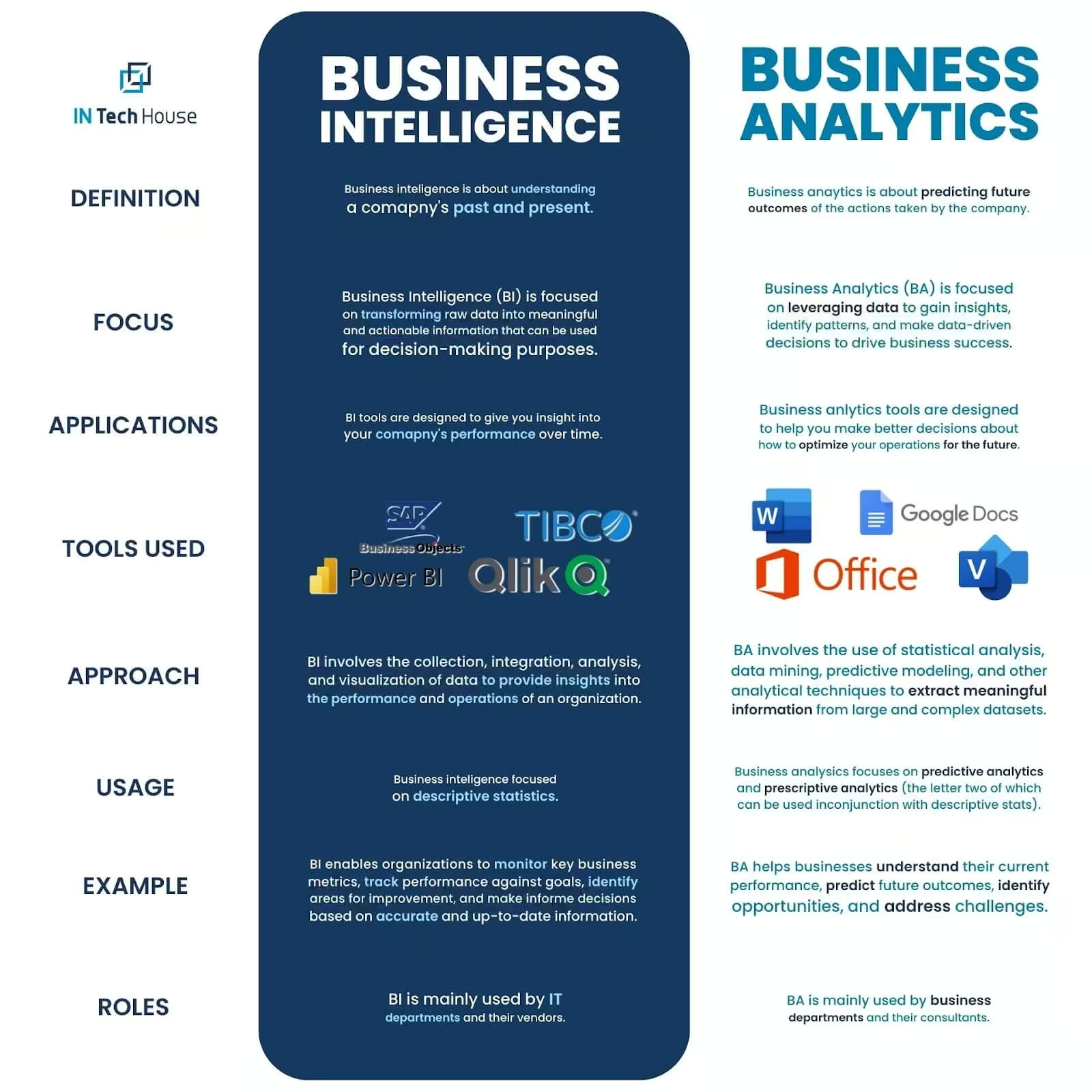
Let us show the difference between business analytics and business intelligence using real-world BI and BA applications. If you offer things via an internet store. Business intelligence delivers useful reports about your company’s past and current status.BI informs you that sales of your single product have increased in a specific location over the last two weeks. As a result, you decide to produce more of that product to meet demand.
“Why did sales of that product in that region?” questions business analytics. You find from your website analytics that the majority of traffic came from a post by a blogger who utilised your product.
Both business analysts and data analysts deal with data. The distinction is in what they do with it. Business analysts use data to make strategic business choices. Data analysts collect data, alter it, extract meaningful information from it, and turn their discoveries into consumable insights.
The world of business analytics and business intelligence (BI) solutions is vast and constantly evolving, with a wide range of tools and platforms available, so our shortlist of embedded analytics tools and BI software narrows it down to what teams actually deploy. While the popularity of specific solutions can vary based on industry, business size, and specific requirements, here are some of the most popular and widely adopted business analytics and BI solutions:
These are just a few examples of the popular business analytics and BI solutions available in the market. The choice of the right solution depends on specific business needs, data complexity, integration requirements, and budget considerations.
Read also:
Several brands have achieved success by leveraging business analytics (BA) and business intelligence (BI) to enhance their decision-making processes, gain insights, and drive business outcomes.
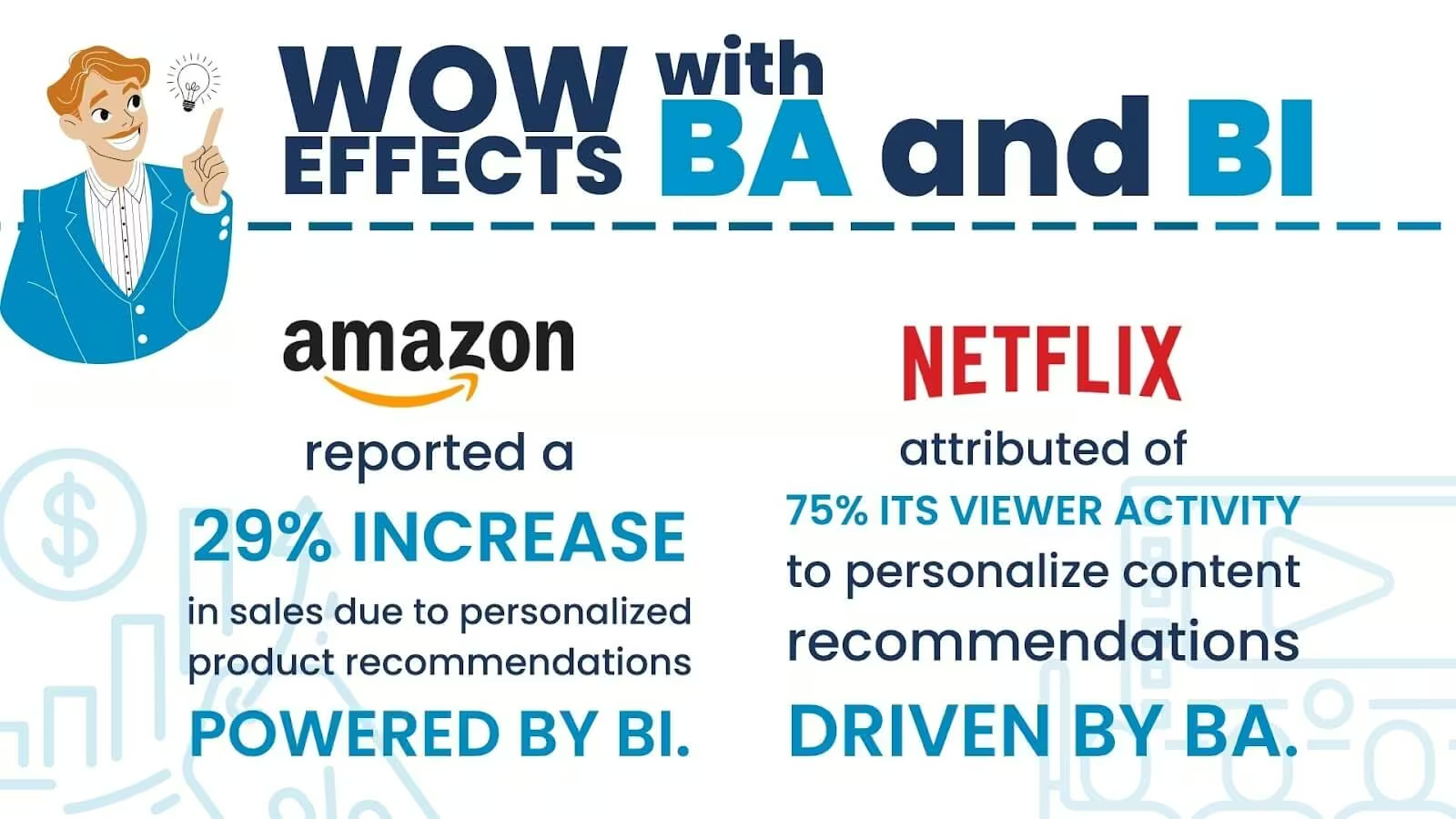
Here are a few notable examples:
These are just a few examples of brands that have successfully leveraged BA and BI to gain a competitive edge and drive business success. Each brand’s specific use cases may vary, but they all share a commitment to data-driven decision-making and extracting valuable insights from their data assets.
Business intelligence and analytics management is the process of gathering historical and current data and utilising statistics and software to evaluate raw data and give insights for making better future decisions in businesses.
Businesses use a plethora of technology and solutions to increase productivity and save labour expenses. Business intelligence and analytics are two such instruments that, when understood and applied correctly, may drive success. Here’s how they can help your company.
Having extensive expertise in monitoring and management software, InTechHouse developed a tailored solution for our French client in the healthcare industry. We implemented a comprehensive monitoring system that tracked equipment performance, maintenance schedules, and overall efficiency. Real-time data analytics were integrated into the system to provide valuable insights and predictive maintenance capabilities.
As a result of the collaboration, our client experienced remarkable improvements. The utilization of equipment significantly increased, as the monitoring software allowed them to identify bottlenecks and optimize production flows. The downtime was drastically reduced, thanks to proactive maintenance based on predictive analytics. The software also provided a queue management feature that ensured a smooth workflow and minimized waiting times.
Less technical users, such as business personnel, can utilise business analytics and business intelligence solutions to model, analyse, explore, share, and manage data, as well as collaborate and share discoveries.
Business analytics and business intelligence solutions may provide the capacity to develop, change, or augment a semantic model with business rules as one of their many personalisation options.
Our team adds the analytics and machine learning layer on top of your existing reporting stack rather than asking you to replace it.
Not sure where to start? We work with companies at every stage, from early ideas to enterprise-level builds. A 30-minute call can save you months of guesswork.
The core difference is the question each answers: business intelligence reports what happened and what is happening, while business analytics investigates why it happened and what is likely to happen next. BI relies on structured, governed data in warehouses, presented through dashboards and scheduled reports. Business analytics uses statistical and predictive methods, often on ad hoc datasets, to test hypotheses. BI optimizes for consistency of numbers across the company; analytics optimizes for depth on specific decisions.
Most companies should invest in business intelligence first, because business analytics depends on the clean, integrated and agreed-upon data that a BI foundation produces. Without shared definitions of revenue, margin or downtime, predictive models inherit the same disputes as the reports. The exception is a narrow, high-value question with a self-contained dataset, such as predicting failures on one machine type, where an analytics pilot can run before enterprise BI is complete.
A single tool such as Power BI or Tableau can cover most business intelligence needs and the lighter end of business analytics, including drill-downs, basic forecasting and what-if parameters. Deeper analytics, such as custom machine learning models, optimization or causal analysis, usually runs in Python, R or a data science platform, with results fed back into the BI tool for distribution. The practical boundary is whether the model needs code and versioning rather than dashboard configuration.
A BI analyst builds and maintains reports, data models and dashboards from the warehouse, a business analyst uses data to redesign processes and requirements, and a data analyst explores and models data to answer specific questions. The BI analyst's core tools are SQL and a BI platform. The business analyst works closer to stakeholders and process maps. The data analyst uses SQL plus Python or R for statistical work. Titles overlap heavily between companies, so job descriptions matter more.
Big data is not a third discipline alongside BI and business analytics but the raw material both can draw on when data volume, velocity or variety exceeds what a traditional relational warehouse handles well. Clickstreams, sensor telemetry and logs are typical examples. BI usually consumes big data after it has been aggregated into warehouse tables. Business analytics more often works on the detailed data directly, for example training models on raw sensor time series.
Jacek Suty is Head of Solution Architecture at InTechHouse, with more than 30 years of experience in system architecture, enterprise IT, infrastructure, information security, and complex digital transformation programs.
He specializes in designing enterprise and solution architectures, translating business and regulatory requirements into scalable technology platforms, and coordinating delivery across software, infrastructure, data, and security teams. His work covers enterprise architecture based on TOGAF, system modeling using UML and BPMN, cloud and on-premise infrastructure, CI/CD processes, data platforms, cybersecurity, and IT governance.
Jacek has contributed to large-scale technology programs for public institutions, finance, energy, education, healthcare, utilities, and digital archives. His project experience includes nationwide public digital infrastructure, distributed document-management and archiving systems, data-exploration platforms using machine learning and predictive analytics, and transaction systems combining blockchain, metadata standards, and computational intelligence.
He holds PRINCE2 Practitioner, Management of Risk, Scrum Master, ITIL Foundation, and ISO/IEC 27001 Lead Auditor qualifications. Jacek is currently pursuing a doctoral degree at Bydgoszcz University of Science and Technology, combining academic research with extensive experience in real-world architecture and technology delivery.
He writes about enterprise architecture, system design, digital transformation, data platforms, cloud infrastructure, cybersecurity, technology governance, and the practical application of AI in complex information systems.
Jacek Suty's academic and professional profiles:
https://pbs.edu.pl/pl/doktorant/uczelniania-rada-samorzadu-doktorantow
https://www.isep.pw.edu.pl/isep/zs/Aktualnosci/Kalendarium-wydarzen2/Seminarium-zakladowe-9.03.2021-Jacek-Suty
https://aionehealth.pl/wp-content/uploads/2026/04/Raport-2026-final.pdf
From first prototype to production, our engineers can help you scope it, build it and get it certified.
This initial conversation is focused on understanding your product, technical challenges, and constraints.
No sales pitch - just a practical discussion with experienced engineers.
Share a few details about your product and context. We’ll review the information and suggest the most appropriate next step.