Embedded systems are everywhere – from automobiles and aeroplanes to medical devices and consumer electronics. These systems rely on software to function, and the quality and reliability of this software are critical. Testing embedded software is essential to ensure that these systems operate as intended and meet the necessary safety and performance standards.

Embedded testing is the process of verifying and validating embedded software and hardware to ensure that they meet the requirements and specifications, and there are proven ways to optimise your embedded software testing process once that baseline works. Embedded testing typically involves testing both the software and the hardware to ensure that they work together as intended. This type of testing is critical for embedded systems, as it is essential to ensure that the system operates reliably and safely.
Several types of tests can be performed on embedded software, and the number of tests can vary depending on the complexity and size of the software. Here are some of the most common types of tests:
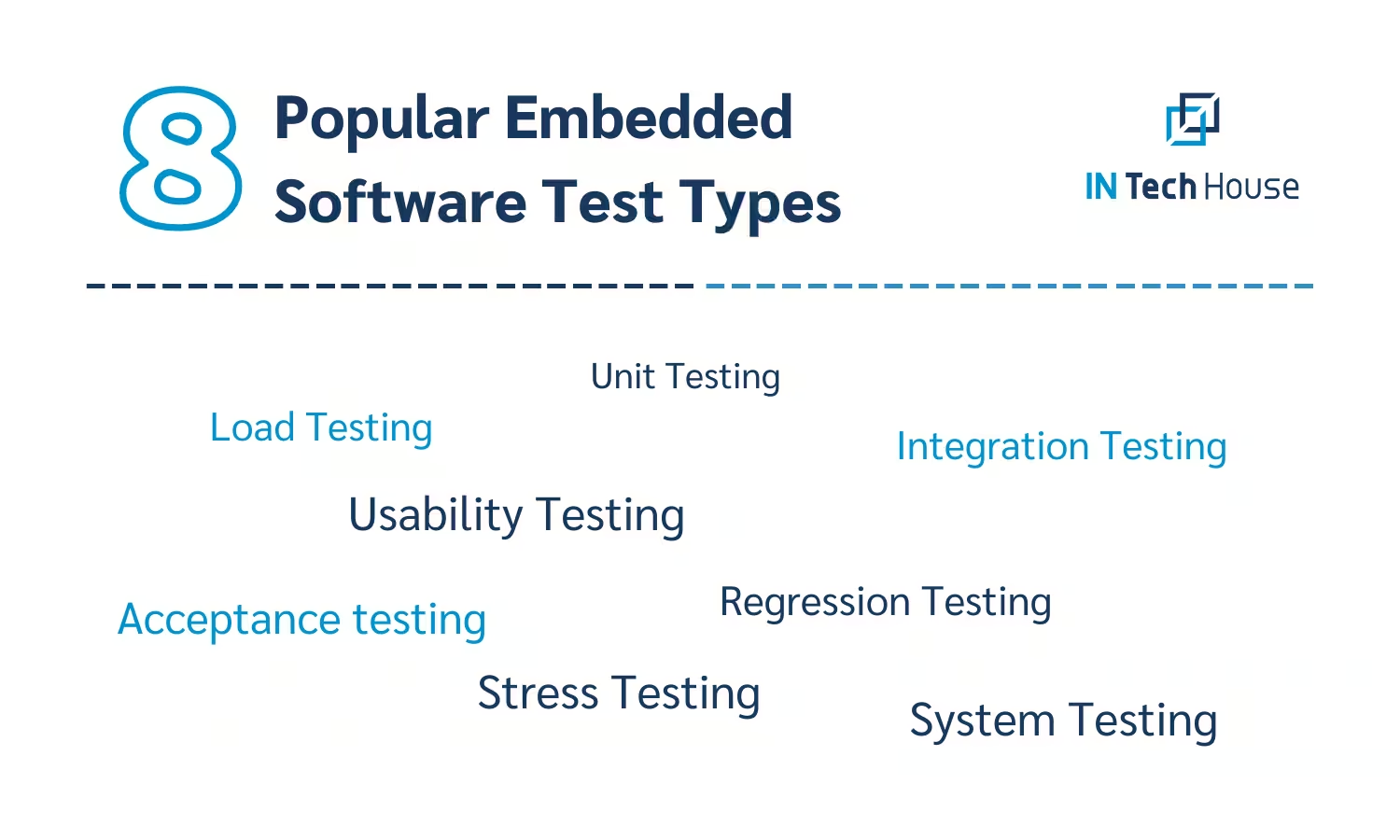
Overall, the number and types of tests required for embedded software can vary depending on the complexity of the software, the requirements, and the environment in which it will be used. It is important to consider all possible scenarios and use cases when testing embedded software to ensure that it is reliable, robust, and performs as expected.
Unit tests that never touch real hardware hide the failures that matter: timing, memory and peripheral behaviour under load. We build test strategies that run on target, not only on a host.
Catch embedded defects before the field does
Several software testing challenges can affect the quality of software and pose significant risks to software projects. Here are some of the most crucial software testing challenges, each of them examined in our guide to common challenges in embedded software testing:
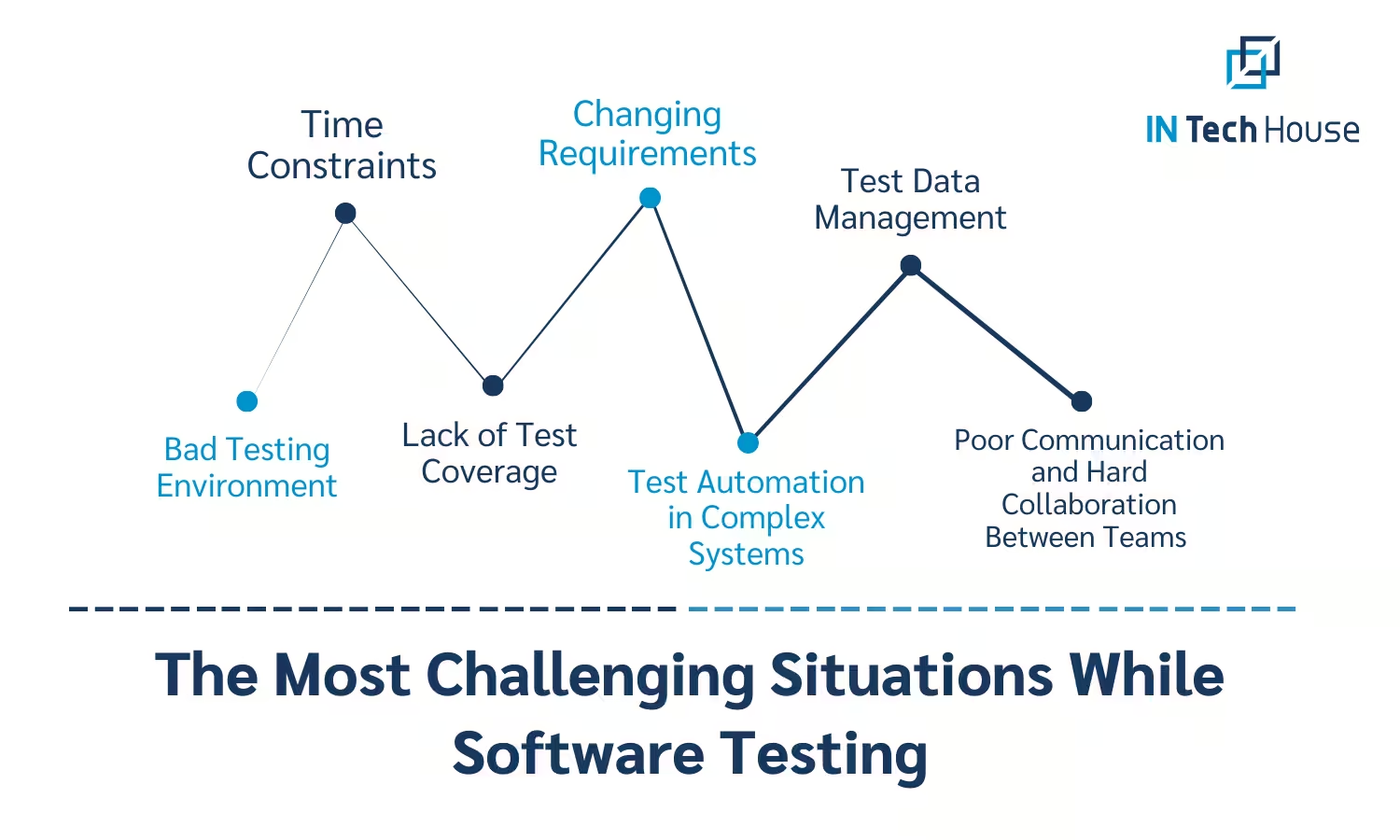
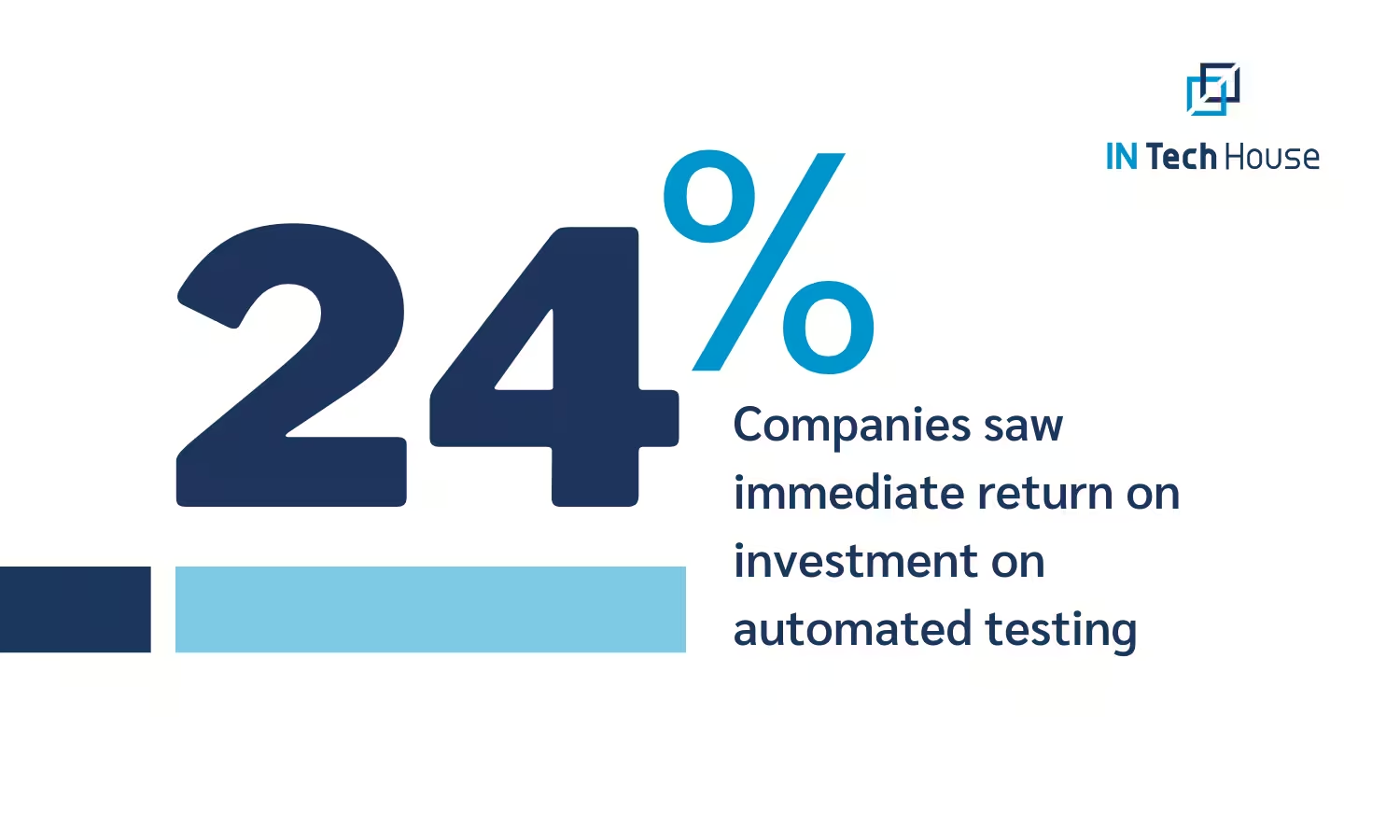
These challenges can significantly impact the quality of software and the success of software projects. Addressing these challenges requires careful planning, resources, and expertise in software testing.
There are multiple embedded hardware testing tools:
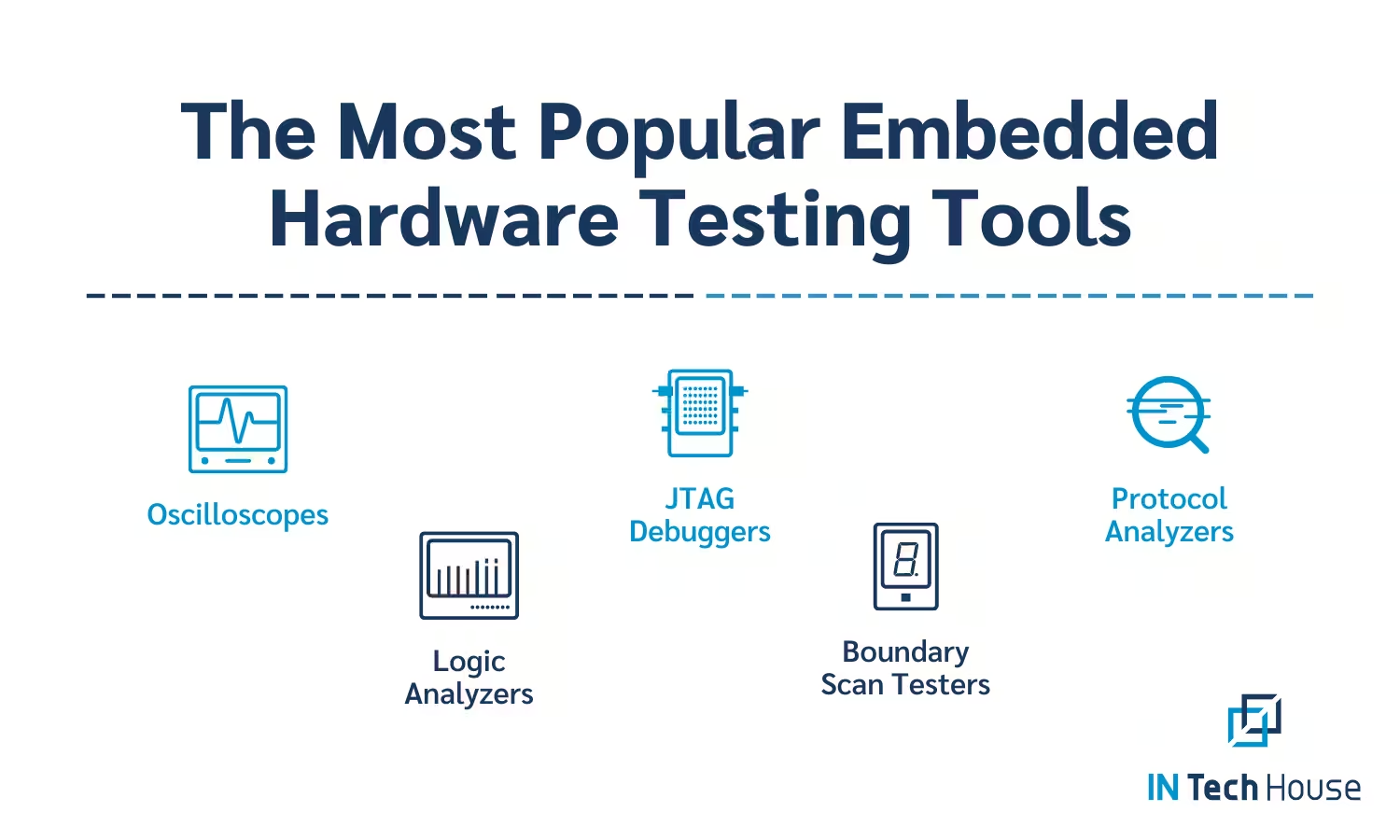
InTechHouse knows how essential is to choose the right testing tools to ensure that embedded systems meet their performance, reliability, and safety requirements.
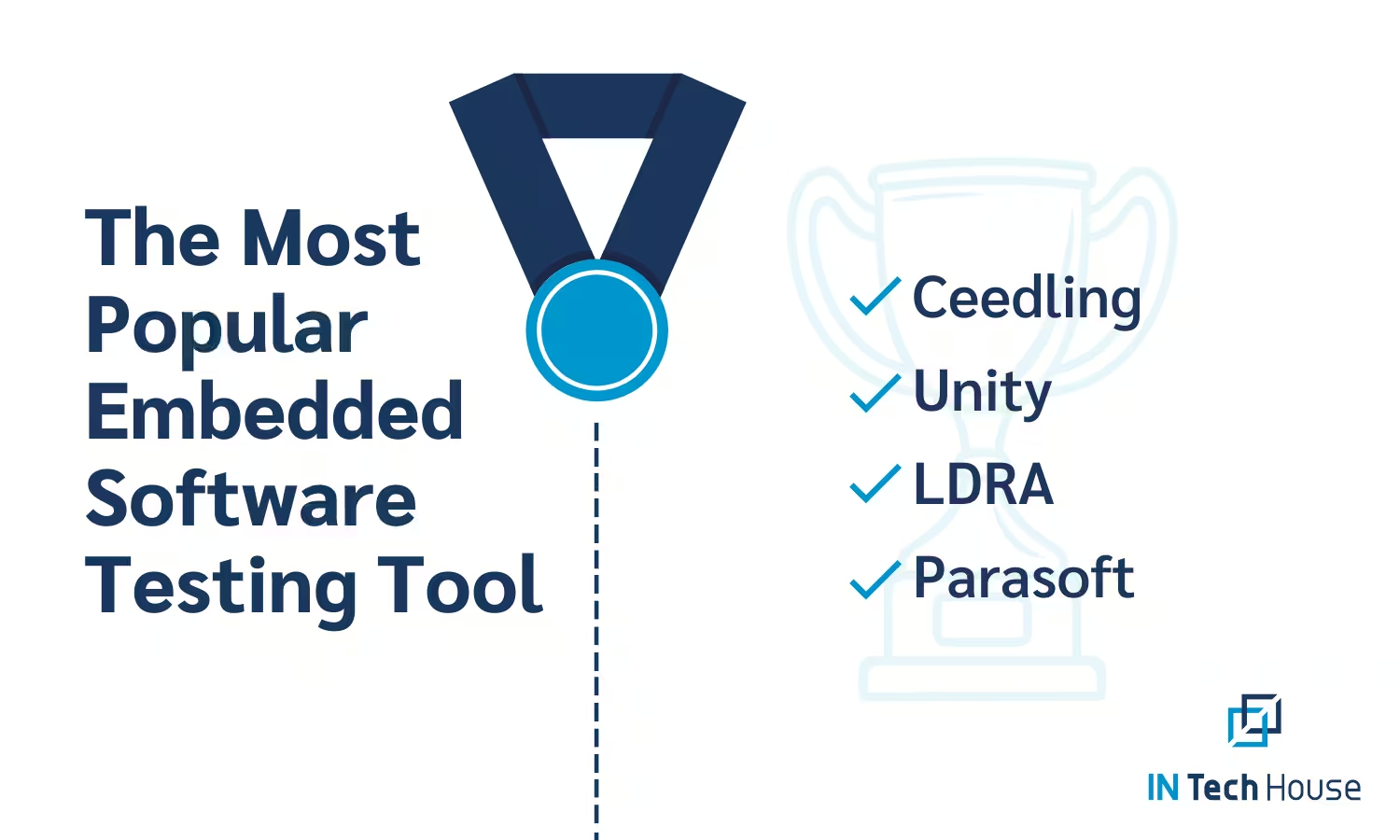
Here are some popular tools for embedded software testing checks:
The quality and reliability of embedded software are critical, as embedded systems are often used in safety-critical applications, so the quality attributes in embedded systems have to be defined before the first test case. A failure in an embedded system can have severe consequences, such as loss of life or property damage. Testing embedded software is essential to ensure that the system operates reliably and safely and meets the necessary safety and performance standards.
Also, it’s necessary to provide embedded security testing. We can describe it as a process of evaluating the security of an embedded system. It involves identifying vulnerabilities and threats to the system and verifying that the security controls in place are effective in protecting the system from attacks. Here is a common software testing technique for embedded security testing:

Source: Truelist
In summary, embedded security testing involves using a combination of techniques, such as penetration testing, fuzz testing, code analysis, protocol analysis, and risk analysis, to identify and mitigate security vulnerabilities in embedded systems. By conducting thorough security testing, embedded systems can be designed to be more secure and better protected against potential security threats.
See also:
Common Challenges in Embedded Software Testing and How to Overcome Them
How to Optimise Your Embedded Software Testing Process for Better Product Quality?
What is Hardware-in-the-Loop (HIL) Testing And Simulation? A Complete Guide for Engineers
To test embedded software effectively, it is essential to develop a comprehensive testing strategy that includes functional testing, integration testing, performance testing, and system testing. It is also crucial to test the software in real-world environments to ensure that it works as intended under various conditions. Testing should also be automated wherever possible to reduce the time and effort required for testing.
Embedded system testing is a specialized field that requires expertise in both software and hardware testing. Here are some entities that can provide embedded system testing:
Designing embedded systems presents several challenges, including selecting the right hardware and software components, managing limited resources, and ensuring the system’s reliability and safety. It is essential to consider these factors carefully during the design phase to ensure that the system meets the requirements and specifications.
The software testing process is critical to ensure that embedded software development works reliably, which is why testing is built into our embedded firmware and software development services. This type of testing presents several challenges, but with the right testing tools and strategies, it is possible to develop high-quality, reliable embedded systems. Quality and reliability are essential in embedded systems, as failures can have severe consequences, making testing an essential aspect of embedded system design and development.
Our engineers build regression suites, hardware in the loop rigs and CI pipelines for devices that have to stay reliable for years. Ask us to review your current test coverage and where it leaks.
See how we set up embedded test automation for your product
Testing embedded software is a crucial process that ensures the reliability, safety, and performance of the software. Effective testing can help identify and fix bugs, optimize performance, and enhance the overall user experience. With the growing demand for embedded software in various industries, it’s important to prioritize thorough testing to ensure that products meet the highest standards of quality and safety.
To improve the testing process for embedded software, companies can consider implementing automated testing tools, leveraging agile methodologies, and investing in employee training and development. By taking these steps, companies can ensure that their embedded software meets the highest standards of quality, while also reducing costs and improving time-to-market.
Not sure where to start? We work with companies at every stage, from early ideas to enterprise-level builds. A 30-minute call can save you months of guesswork.
Embedded software testing verifies that firmware behaves correctly on its target hardware, including timing, memory use, peripheral behavior and response to real electrical signals. Regular software testing can usually run everything on a developer machine or in the cloud. Embedded testing must also cover interrupts, power loss, sensor noise and hardware variants, so it combines host-based unit tests with on-target tests, instrument measurements and system tests on real or simulated hardware.
Host-based unit testing compiles embedded C modules for a PC and runs them with frameworks such as Unity or Ceedling, using mocks in place of hardware registers. It is fast and fits into CI, so it catches logic errors early. On-target testing runs the code on the real microcontroller, where compiler differences, stack limits, interrupt timing and peripheral quirks appear. A sound strategy uses both: host tests for logic, target tests for anything that depends on the hardware.
Hardware-in-the-loop (HIL) testing runs the real controller hardware and firmware against a simulated environment that generates sensor signals and reacts to actuator outputs in real time. It is needed when the real system is expensive, dangerous or slow to test, such as a vehicle, a power converter or a medical device. HIL makes fault scenarios repeatable, for example a sensor failure at full load, and allows those scenarios to run automatically on every firmware release.
Enough code coverage for embedded software depends on the risk of failure and the applicable standard. For general products, high statement and branch coverage from unit tests is a reasonable target. Safety standards go further: DO-178C requires modified condition/decision coverage (MC/DC) for Level A airborne software, and ISO 26262 highly recommends MC/DC at ASIL D. Coverage alone proves only that code ran, not that it was checked, so assertions and requirement traceability matter as much.
Embedded testing uses a mix of software frameworks and bench instruments. On the software side, Unity and Ceedling handle unit tests in C, while LDRA and Parasoft add static analysis, coverage measurement and compliance reporting for standards such as MISRA C. On the hardware side, JTAG or SWD debuggers, logic analyzers, oscilloscopes and protocol analyzers show what the code actually does to pins and buses. Boundary scan testers check board connectivity during production.
Embedded software testing is best split: developers own unit and integration tests in-house, while an independent team or external test provider is useful for system, security or certification testing. Safety standards such as ISO 26262 and DO-178C expect a degree of independence in verification at higher risk levels. An external provider also makes sense when the team lacks HIL rigs, test automation experience or domain knowledge of the target standard, and when release schedules leave no time to build them.
Krzysztof Niedźwiedź is a Lead Embedded Systems and Hardware Engineer at InTechHouse with over 11 years of experience developing complex electronic and embedded products from system architecture through production.
He specializes in embedded software development, electronic system architecture, multilayer PCB design, hardware-software integration, system testing, and technical ownership of high-reliability engineering projects. His work spans requirements analysis, architecture and component selection, schematic and PCB design, bare-metal and RTOS firmware development, prototyping, troubleshooting, production documentation, and cooperation with mechanical and high-level software teams.
Krzysztof's project experience includes FPGA and SoC-based onboard computers for the space industry, embedded electronics for advanced optical equipment, low-power environmental-monitoring devices, UAV payloads for real-time air-quality measurement and sample collection, and connected medical and training devices.
He works with C and C++, STM32, LPC and AVR microcontrollers, ARM-based platforms, RTOS, Embedded Linux, FPGA and SoC architectures, DDR3, HDI PCB technology, and industrial communication interfaces including Ethernet, CAN, RS-485, SPI, I2C, UART, USB, Modbus, and MQTT.
Krzysztof holds bachelor's and master's degrees in Electronics and Telecommunications. He is an IPC Certified Interconnect Designer and has completed specialist training in Embedded GNU/Linux kernel internals and device drivers. He writes about embedded system architecture, firmware development, PCB design, MCU and FPGA integration, RTOS, hardware security, low-power electronics, and dependable electronic products.
From first prototype to production, our engineers can help you scope it, build it and get it certified.
This initial conversation is focused on understanding your product, technical challenges, and constraints.
No sales pitch - just a practical discussion with experienced engineers.
Share a few details about your product and context. We’ll review the information and suggest the most appropriate next step.