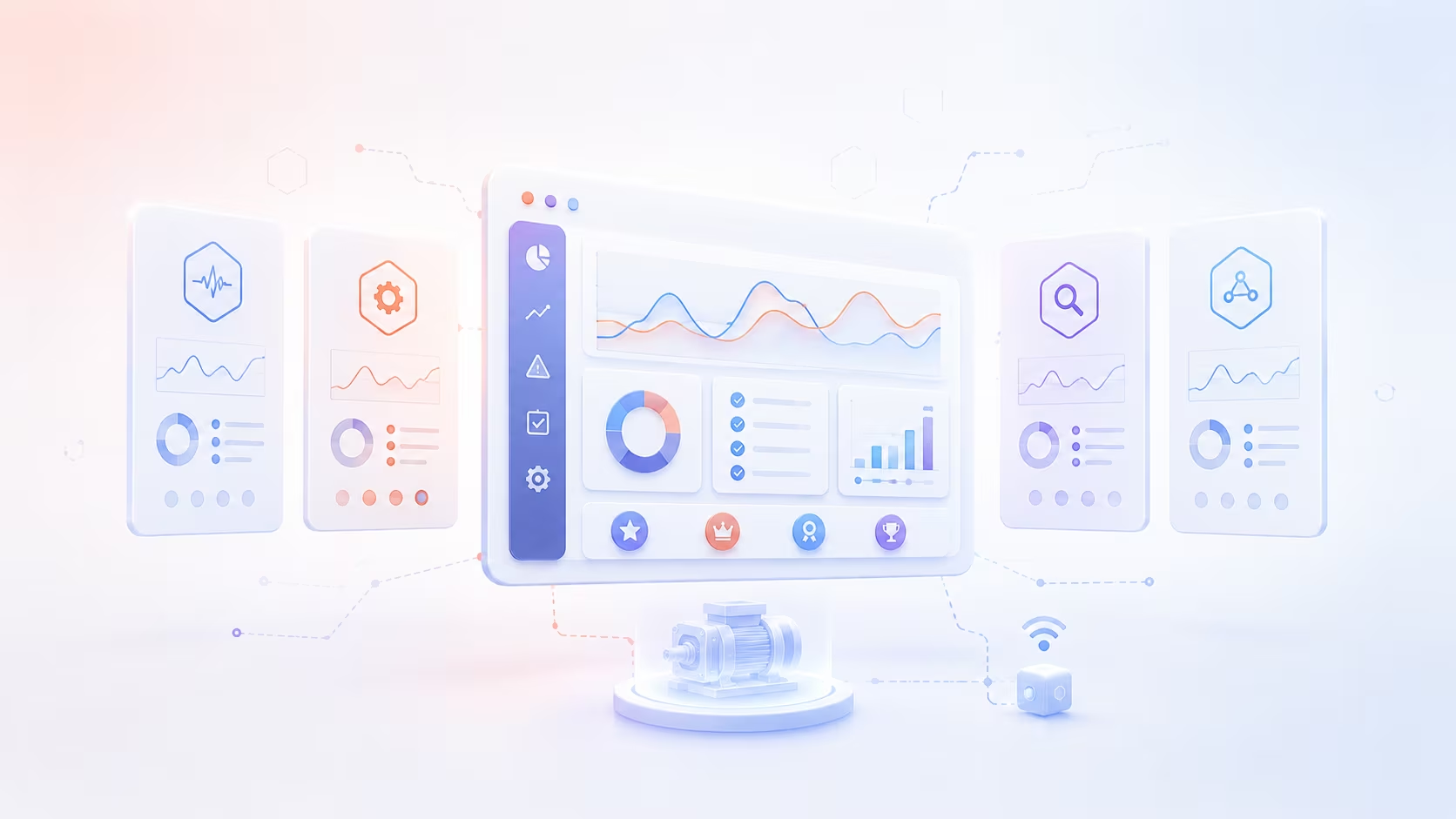
Hardware-in-the-Loop (HIL) is an advanced testing technique that combines real hardware with computer simulation, and it sits alongside the rest of our hardware testing and certification services. As G. Paviglianiti, the representative from Whirlpool Fabric Care's Advanced Development, noted:
"HIL testing elevates testing beyond a mere checkbox on a project plan. It becomes an integral part of the innovation process, helping to maximize product quality and push the boundaries of what's possible".
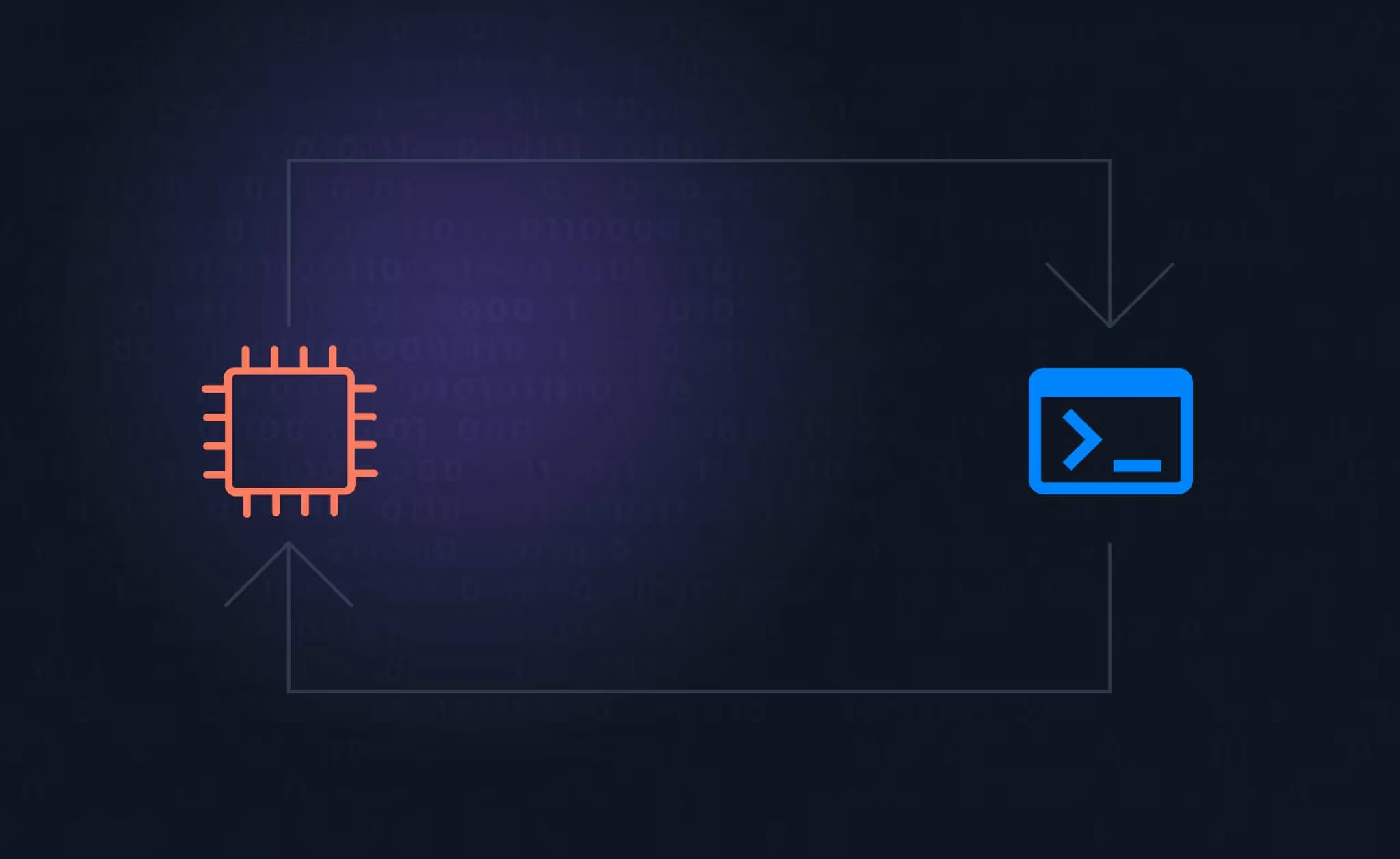
The goal of HIL testing is to replicate real-world operating conditions in a controlled and safe environment. The system being tested within HIL operates in a simulated environment, where certain elements, such as components, sensors, electronic control unit or other interacting systems, are replaced by mathematical models. This allows engineers to test physical devices under realistic yet safe conditions, without needing a full set of physical components.In this article, we will present more advanced technical topics related to HIL testing and how this method can be applied in the broader context of systems engineering and IT. In a full validation plan, HIL sits alongside environmental, EMC and compliance checks, which hardware testing services combine so the simulated results are confirmed on real units.

If your ECU or industrial controller cannot be tested safely against real plant dynamics, a HIL rig closes that gap. We design the simulator, signal conditioning and test scenarios around your device under test.
Build a HIL test bench for your controller
By implementing HIL testing, companies can reduce development costs by 20-30% compared to traditional methods. To understand how HIL testing works, let’s take a step-by-step look at the testing process:
Read more about RTOS in cybersecurity.
In regulated domains this loop is not only an engineering aid, it is evidence. Test records generated this way feed straight into a design history file, which is why hardware design for ISO 13485 treats simulated fault injection as a first-class verification method.
Because the scenarios run on real hardware, the same bench also exposes behaviour that later shows up in a compliance lab, from unstable power sequencing to noisy interfaces under load. Teams that map their test scenarios against the common CE/FCC certification failures usually catch those defects weeks before the first formal test slot. A failed certification round costs far more than the extra simulation cases.
There are various tools available on the market for implementing HIL tests, which support IT specialists and engineers:
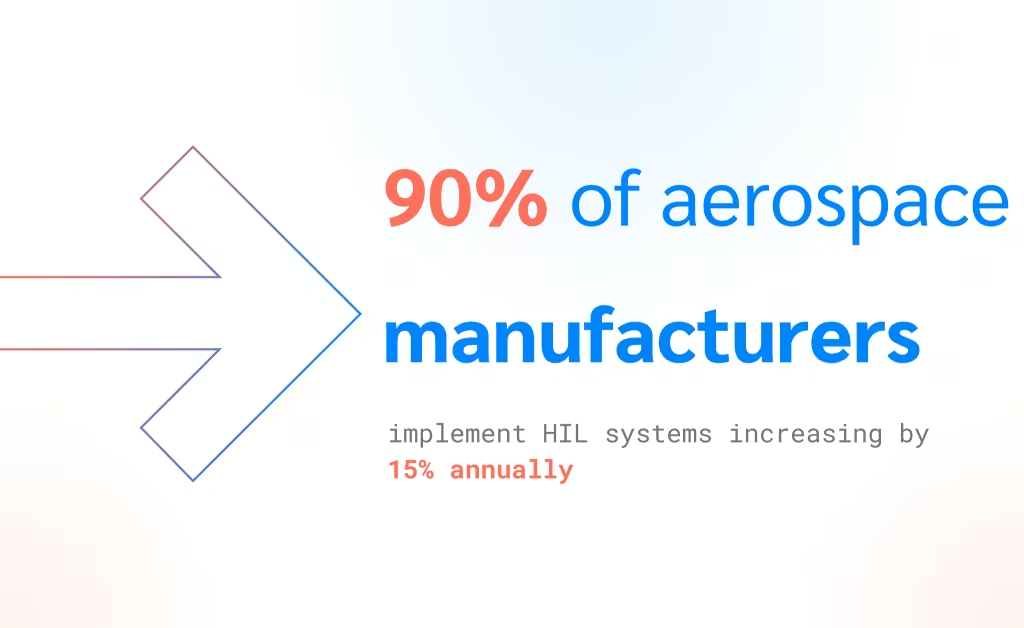
In aerospace engineering, HIL testing plays an indispensable role in validating critical systems such as avionics, flight controls, propulsion, and navigation under realistic yet controlled conditions. By integrating real hardware, like electronic control units or sensor arrays, into a simulated operational environment, engineers can expose systems to edge-case scenarios (e.g. extreme flight conditions, failure modes) without risking actual flight or equipment. This approach enhances safety, accelerates development cycles, and supports regulatory compliance in high-stakes aerospace projects. For a practical implementation and demonstration of such systems, explore this setup: sml.kplabs.space. The firmware running on those control units is the code under test, so firmware engineering services and HIL rigs work best when planned together from the first requirements.
One of the key trends in IT is the automation of deployment and testing processes through CI/CD (Continuous Integration/Continuous Deployment) tools. Integrating HIL testing with CI/CD pipelines allows for the automatic execution of tests for embedded systems, IoT, and distributed applications in real-time, and the same shift-left logic applies to pre-compliance EMC testing, which catches emissions problems while the design can still change.
Advantages of this solution:
Cloud, virtualization, and edge computing are key areas where HIL can offer significant benefits. Simulating complex communication scenarios and testing applications in real-time within distributed environments is a challenge that HIL can address.
HIL in the Cloud:
Functional coverage is only half of what a product needs before launch. Every one of these sectors also has to clear regulatory gates, and in the European Union CE EMC testing and certification decides whether a device that works perfectly on the rig can legally be sold.
As technologies advance and systems become increasingly complex, the role of HIL testing will only grow, becoming a crucial step towards creating reliable, safe, and efficient technological solutions. Its application significantly reduces the risk of errors during the system’s deployment into a real environment, saving both time and costs. Real-time simulation enables engineers to precisely analyze system behavior under various, often extreme, conditions that would be difficult to replicate in real life. As a result, companies and engineering teams that invest in HIL testing gain a significant competitive advantage in a rapidly evolving market.
If you are looking for a technology partner to help you execute the most complex projects, InTechHouse is the ideal choice. We offer comprehensive solutions in software engineering, electronics, and testing, tailored to the specific needs of your company. Our team of experienced specialists, extensive portfolio of successful projects, and innovative approach guarantee that we will provide solutions that enhance your business’s competitiveness. We encourage you to take advantage of a free consultation and discover how our solutions can streamline your business.
Our engineers run HIL and validation programmes for regulated hardware, from model fidelity checks to fault injection and regression suites. Ask us how the same process would apply to your product.
Not sure where to start? We work with companies at every stage, from early ideas to enterprise-level builds. A 30-minute call can save you months of guesswork.
No. Although HIL testing is effective at early issue detection, it cannot fully replace real-world testing scenarios. However, it is a powerful tool that supports system design and development before final tests on actual hardware are conducted.
These challenges may include complex hardware and software setup, high initial costs, and the need for specialized knowledge in simulation and system integration.
The costs of implementing HIL testing can vary depending on the system's complexity, the number of components being tested, and the hardware and software used. While the initial investment may be high, the long-term savings from reducing errors, shortening testing times, and avoiding costly fixes can significantly outweigh these costs.
HIL testing involves both hardware and simulation tests, whereas SIL (Software-in-the-Loop) focuses solely on software simulation without incorporating physical components. HIL enables testing in a realistic environment with actual hardware, while SIL is focused on virtually analyzing algorithms.
HIL testing has some limitations, including the need for a complex setup and high initial costs. Additionally, it may not always fully replicate all aspects of real-world operating conditions, meaning final tests in a real environment are still necessary.
Krzysztof Niedźwiedź is a Lead Embedded Systems and Hardware Engineer at InTechHouse with over 11 years of experience developing complex electronic and embedded products from system architecture through production.
He specializes in embedded software development, electronic system architecture, multilayer PCB design, hardware-software integration, system testing, and technical ownership of high-reliability engineering projects. His work spans requirements analysis, architecture and component selection, schematic and PCB design, bare-metal and RTOS firmware development, prototyping, troubleshooting, production documentation, and cooperation with mechanical and high-level software teams.
Krzysztof's project experience includes FPGA and SoC-based onboard computers for the space industry, embedded electronics for advanced optical equipment, low-power environmental-monitoring devices, UAV payloads for real-time air-quality measurement and sample collection, and connected medical and training devices.
He works with C and C++, STM32, LPC and AVR microcontrollers, ARM-based platforms, RTOS, Embedded Linux, FPGA and SoC architectures, DDR3, HDI PCB technology, and industrial communication interfaces including Ethernet, CAN, RS-485, SPI, I2C, UART, USB, Modbus, and MQTT.
Krzysztof holds bachelor's and master's degrees in Electronics and Telecommunications. He is an IPC Certified Interconnect Designer and has completed specialist training in Embedded GNU/Linux kernel internals and device drivers. He writes about embedded system architecture, firmware development, PCB design, MCU and FPGA integration, RTOS, hardware security, low-power electronics, and dependable electronic products.
From first prototype to production, our engineers can help you scope it, build it and get it certified.
This initial conversation is focused on understanding your product, technical challenges, and constraints.
No sales pitch - just a practical discussion with experienced engineers.
Share a few details about your product and context. We’ll review the information and suggest the most appropriate next step.