In this age of the Internet of Things (IoT), where embedded systems in IoT applications handle sensing and control, the security of embedded systems is vital for any organisation’s computer systems. Security for embedded systems is a methodology whereby organisations create the correct level of protection for the data contained within and transmitted or received by any embedded device. This methodology of security in embedded systems must cover the entire life cycle of the device or system.
Embedded systems are devices with a dedicated function that are part of a more extensive system. For example, the security alarms, air conditioning, refrigerator, and furnace controls could all be embedded systems within a smart house.
Other embedded systems within the business world could be control and instrumentation switches, pumps, computer network switches and routers, blood pressure monitors and oxygen supplies in hospitals, beacons in air traffic control, management systems in aircraft, and collision avoidance systems in cars. Every modern system has many of these small devices doing a specific job, and increasingly they are being viewed as a doorway into the larger system by cyber criminals.
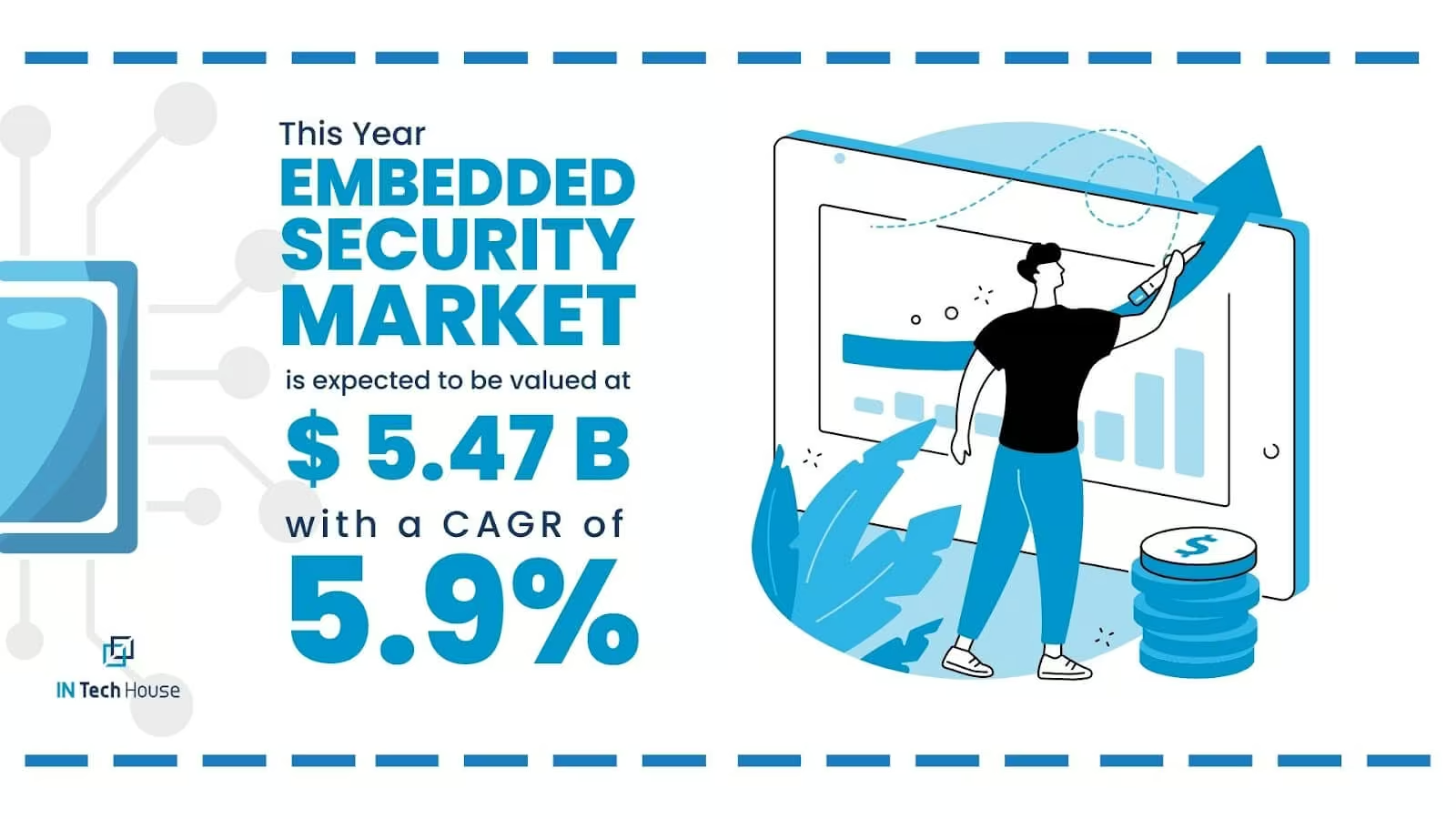
The embedded security market is rapidly growing due to the increasing number of connected devices, including the Internet of Things (IoT device security) and the Industrial Internet of Things (IIoT). Embedded devices require specific security to prevent unauthorized access, protect sensitive data, and ensure system integrity. Much of that protection is implemented in code, from secure boot to encrypted communication, which makes security a core requirement in embedded software development services rather than an add-on.
Source: PRNewswire
The market is expected to grow significantly in the coming years due to increasing demand from various industries such as automotive, healthcare, aerospace, and defence. The market is also being driven by the growing demand for security solutions in the banking and financial sector.
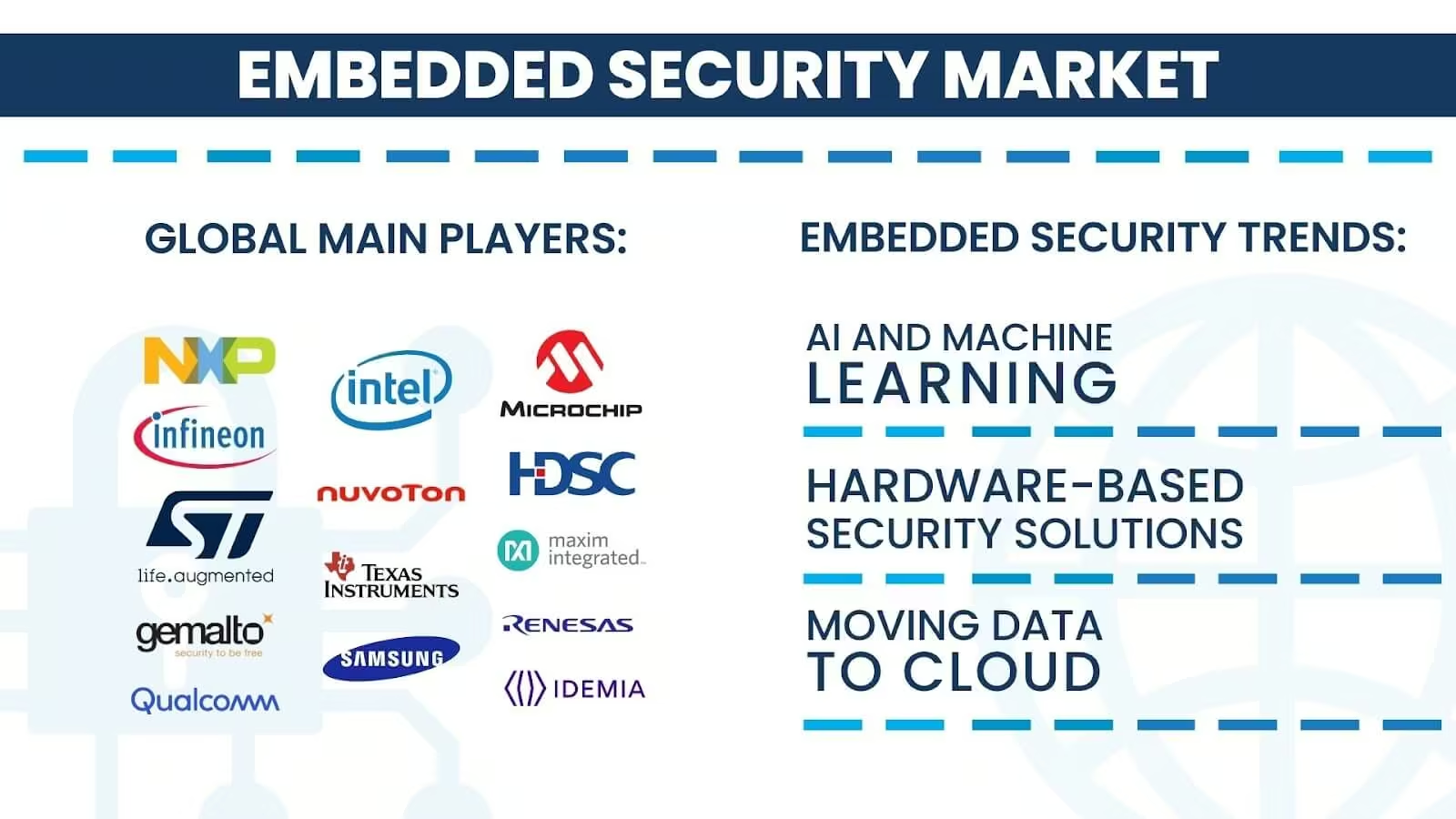
Some of the key trends in the embedded security market include the increasing use of artificial intelligence (AI) and machine learning (ML) to detect and prevent security threats, the integration of hardware-based security solutions, and the adoption of blockchain technology for enhanced security.
Source: MordorIntelligence, The ExpressWire, InTechHouse Projects
The market is also being driven by the increasing demand for cloud-based security solutions, as more organizations are moving their data to the cloud. This is leading to the adoption of advanced security solutions such as secure boot, secure firmware updates, and secure communications.
See also:
Security Architectures in Embedded Systems – From Hardware Layer to Application
Bare Metal Security: Implementing Secure Boot and Trusted Execution Environments (TEE)
RTOS in Cybersecurity: Securing IoT and Embedded Systems Infrastructure
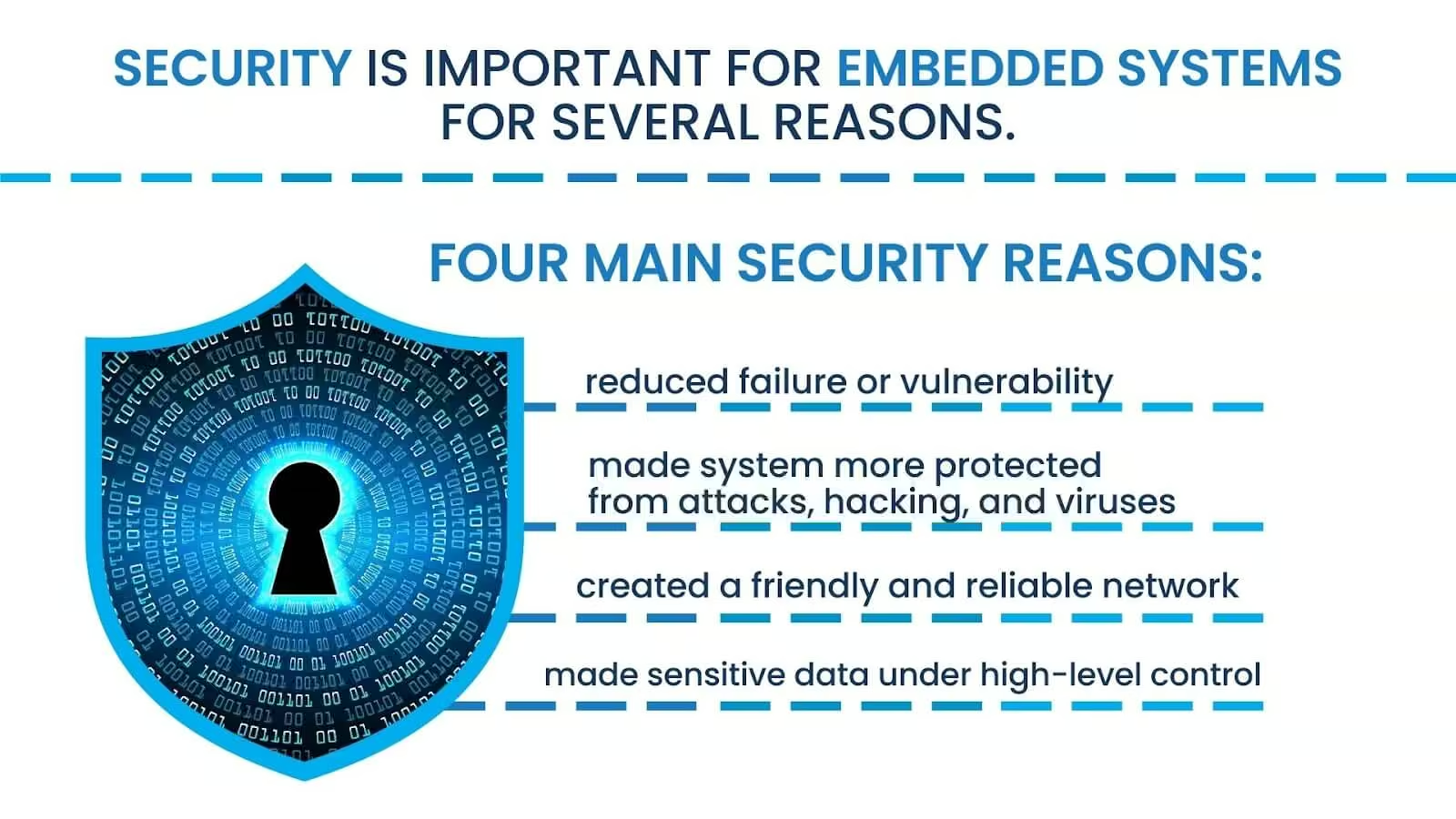
Firstly, embedded systems are often used in critical applications such as healthcare, automotive, and aerospace, where any failure or vulnerability can have serious consequences.
Secondly, embedded systems often have limited resources and may not have the same level of security features as other systems. This makes them vulnerable to attacks such as malware, viruses, and hacking.
Thirdly, embedded systems are often connected to other systems or networks, making them potential entry points for attackers to gain access to sensitive data or systems. Therefore, it is essential to ensure that security measures are implemented in embedded systems to protect against these threats.
Protecting embedded systems begins with the design of any device. Not only must the design team ensure that the device performs its intended job, but they must also consider embedded systems vulnerabilities. It’s no longer sufficient to only look at the embedded hardware security. Design teams must also address issues such as unauthorised access and the modification or destruction of the device. Embedded software security is a vital component of this entire process, and managing and updating this security over the device’s lifecycle is essential as threats constantly evolve.
As we’ve said, securing embedded systems security involves securing the device’s hardware and software, which is exactly what layered security architectures in embedded systems are built to cover. Let’s examine some aspects of how to secure embedded systems.
Physical SecurityThe first step in these processes is to manage the embedded device security. Some hardware vulnerability examples are environmental requirements such as heat, cold, waterproofing, chemical proofing, shock proofing, and hardness. Keypads are inherently vulnerable and must be secured, but the internal components must also be secured. Radiation protection, immutable memory, and eFuses could all be part of this protection, depending on where the embedded device will be used.
Secure boot, signed updates and encrypted communication have to be designed in, not patched later. We implement them on MCU and embedded Linux targets across the full device lifecycle.
Close the firmware attack surface on your device
Embedded software security revolves around managing and responding to malicious attacks at start-ups or during regular running. This includes device authentication, authentication on a network, firewalls and other protection between the device and the network, and hardening of the device software to prevent unauthorised manipulation, especially during any upgrades.
It’s almost impossible to place a monetary value on the data owned by an organisation, making cyber security for embedded systems imperative in our wired world. Modern embedded devices are mission-critical components in many systems, making them popular targets for hackers and cybercriminals. These devices can present a significant security loophole without embedded cyber security.
Cyberattacks on embedded devices range from overcoming anti-theft devices in motor vehicles to downgrading the performance of control systems for electricity grids, petroleum pipelines, defence systems, and other significant manufacturing and infrastructure systems. Confidential commercial information has been stolen by a hacker directing confidential reports to their own printer or delving into a corporate cell phone.

Many businesses simply do not know that they have been attacked and live in a world of illusions that they have good security. As the experience of many companies shows, if you do not think about cyber security, you can become a blind kitten from the network and not be prepared for dangers at all.If you do not deal with security, in most cases it will result sideways for business…maybe not now, but in a couple of years, but it will pour out. And here we will talk not only about losses, but about reputation, values and, it seemed to be, simple savings or inattention to the business process and many years on the market can come to nought. Why take such a risk?
Global brands can emphasize the importance of embedded cyber security in ensuring the safety and reliability of their products. They can highlight the steps they take to ensure that their embedded systems are secure, such as regular security assessments and updates, certain coding practices, and the use of encryption and authentication protocols.
They can also share success stories of how their embedded cyber security measures have prevented cyber attacks and protected their customers’ data and privacy. Doing so can build trust with their customers and stakeholders and demonstrate their commitment to cyber security.
Securing embedded systems involves implementing several methods and techniques to prevent attacks and ensure the safety of the system. Here are some of the most commonly used methods and techniques:
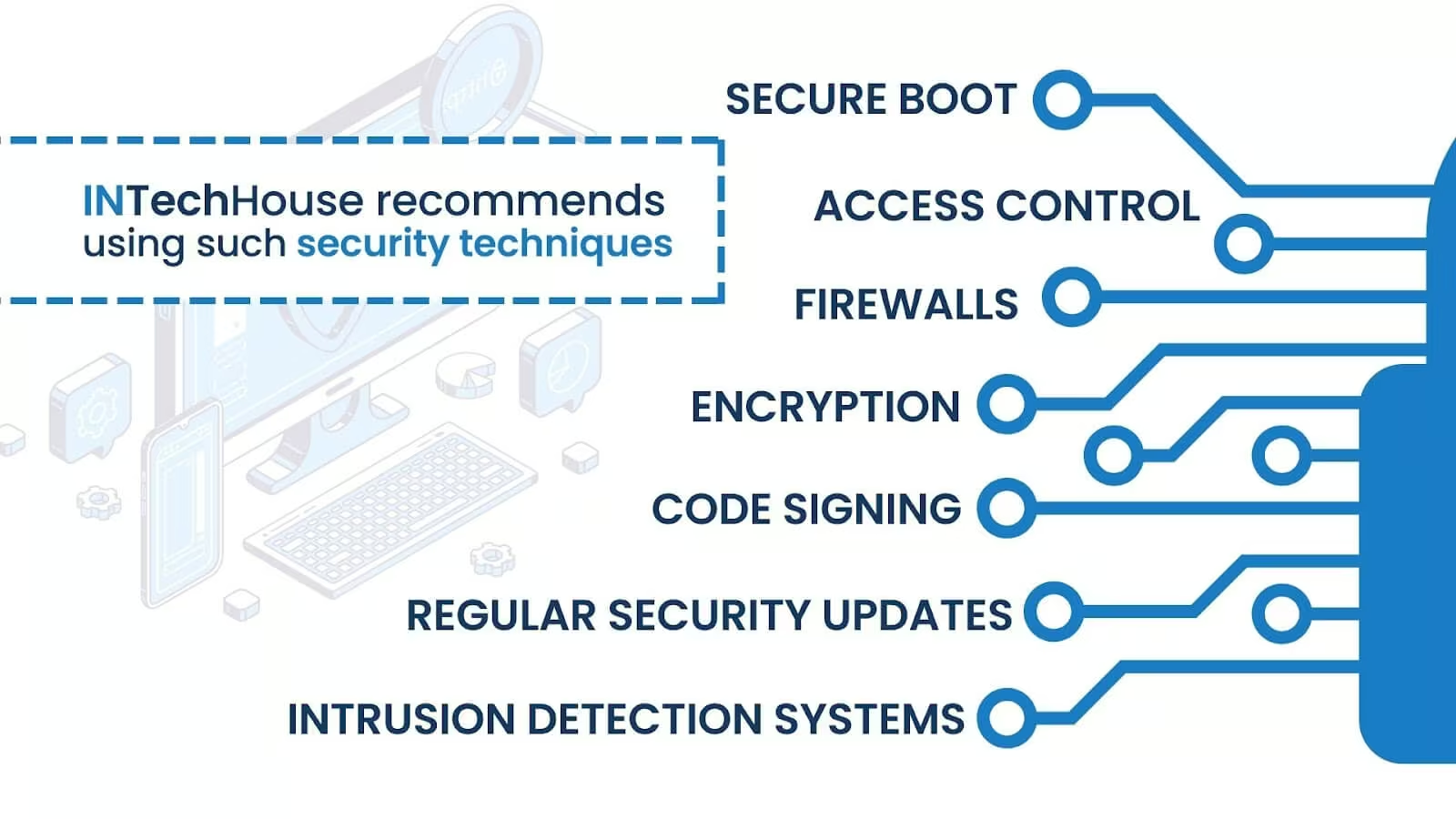
Implementing these methods and techniques can help to ensure the security of embedded systems. However, it’s essential to have a comprehensive security strategy and regularly assess the system’s security to stay protected against emerging threats.
The security in embedded systems design challenges faced by designers can be monumental. The first challenge is the lifecycle of the device. Many devices are installed in systems intended to remain in play for decades. Consider motor vehicles, power plants, and other mission-critical systems with 20 years or longer lifespans. The vulnerabilities and challenges that the device will face are impossible for the designers to predict at the start of the device’s lifespan.
This means the device must be updatable, and the components must be replaceable. As devices age, they cannot process the latest in software, so chips must be able to be replaced. If the device is installed in a hostile environment, it must be replaced by a robot, further complicating the design process.
Updating the software in a fridge, smart TV, or cellphone is easy and has little impact on the user. Updating the software in a mission-critical system or a system protecting life, such as medical systems, has to be managed extremely carefully, as the impact can be deadly.
We review boot chain, key storage, update path and exposed interfaces, then give you a prioritised remediation list. Ask what a security assessment of your fleet would cover.
See how we assess embedded security across a product line
Cyber security embedded systems are vital for any device that is to be installed in any piece of equipment that is to be connected to the internet. The only safe system is turned off; the next is a system isolated from the internet. Unfortunately, neither of these options is available, so designers of these devices must take embedded security seriously.
Physical security is a starting point, but the software must be protected, as must the network, to prevent cyber attacks. Security must be built from when a hand holds a pencil to outline until the device is finally scrapped as it’s declared obsolete and replaced.
Not sure where to start? We work with companies at every stage, from early ideas to enterprise-level builds. A 30-minute call can save you months of guesswork.
The applicable embedded security standard depends on the market. IEC 62443-4-1 and 4-2 cover the development process and component requirements for industrial automation, and ETSI EN 303 645 sets a baseline for consumer IoT. Automotive programs follow ISO/SAE 21434 with UNECE R155 for type approval. In the EU, the Cyber Resilience Act adds mandatory requirements for products with digital elements, including vulnerability handling and security updates over a defined support period. Mapping requirements early avoids redesigning hardware later.
The most common attack vectors on embedded devices are rarely advanced cryptanalysis. They are exposed debug ports (JTAG, SWD, UART consoles), default or hard-coded credentials, unsigned or unencrypted firmware updates, plaintext network protocols, and parsers that trust external input. With physical access, attackers add flash readout, fault injection and side-channel analysis. A threat model that ranks these by attacker access, remote or physical, tells a team which defences to build first rather than applying every control everywhere.
An embedded device needs a secure element or hardware root of trust when it holds keys worth stealing, such as device identity certificates, cloud credentials or firmware signing material, and physical attacks are realistic. A secure element such as a Microchip ATECC608 or NXP SE050 stores private keys so they never leave the chip, and performs signing internally. Many modern MCUs integrate similar protected key storage. The trade-off is added BOM cost and a provisioning step on the production line.
Security across a 10 to 20 year lifecycle has to be designed as a process, not a release feature. Devices need a signed, failure-safe update path such as A/B firmware slots, key rotation and revocation, and some cryptographic agility for algorithm changes. Manufacturers need a software bill of materials to track vulnerable components, a vulnerability disclosure channel, and a defined support period. Decommissioning also matters: credentials should be revoked and stored data erased when a device is retired or resold.
Security cost in embedded products is driven mostly by architecture decisions made early, not by individual features. Hardware choices such as an MCU with crypto acceleration, TrustZone or a secure element add unit cost, while secure boot, signed updates and key provisioning add engineering and production-line effort. Retrofitting the same controls after launch is typically far more expensive, because it can require a board respin or can be impossible on devices already in the field without a secure update path.

Krzysztof Niedźwiedź is a Lead Embedded Systems and Hardware Engineer at InTechHouse with over 11 years of experience developing complex electronic and embedded products from system architecture through production.
He specializes in embedded software development, electronic system architecture, multilayer PCB design, hardware-software integration, system testing, and technical ownership of high-reliability engineering projects. His work spans requirements analysis, architecture and component selection, schematic and PCB design, bare-metal and RTOS firmware development, prototyping, troubleshooting, production documentation, and cooperation with mechanical and high-level software teams.
Krzysztof's project experience includes FPGA and SoC-based onboard computers for the space industry, embedded electronics for advanced optical equipment, low-power environmental-monitoring devices, UAV payloads for real-time air-quality measurement and sample collection, and connected medical and training devices.
He works with C and C++, STM32, LPC and AVR microcontrollers, ARM-based platforms, RTOS, Embedded Linux, FPGA and SoC architectures, DDR3, HDI PCB technology, and industrial communication interfaces including Ethernet, CAN, RS-485, SPI, I2C, UART, USB, Modbus, and MQTT.
Krzysztof holds bachelor's and master's degrees in Electronics and Telecommunications. He is an IPC Certified Interconnect Designer and has completed specialist training in Embedded GNU/Linux kernel internals and device drivers. He writes about embedded system architecture, firmware development, PCB design, MCU and FPGA integration, RTOS, hardware security, low-power electronics, and dependable electronic products.
From first prototype to production, our engineers can help you scope it, build it and get it certified.
This initial conversation is focused on understanding your product, technical challenges, and constraints.
No sales pitch - just a practical discussion with experienced engineers.
Share a few details about your product and context. We’ll review the information and suggest the most appropriate next step.