The Internet of Things (IoT) is revolutionizing the world we live in. From smart homes to connected vehicles, IoT is changing the way we interact with technology. At the heart of IoT are embedded systems, which are responsible for collecting, processing, and transmitting data from sensors and other devices. In this article, we’ll take a closer look at IoT embedded systems and explore their role in the IoT ecosystem.
An embedded system is a computer system that is designed to perform specific tasks. Unlike general-purpose computers, which can perform a wide range of tasks, embedded systems are usually designed to perform a single function. Examples of embedded systems include the controllers in washing machines, the engine management systems in cars, and the flight control systems in aircraft.
IoT embedded systems are specific type of embedded system that is designed to work in conjunction with other devices to form an IoT network. They are typically connected to sensors, which collect data about the physical world. This data is then processed and transmitted to other devices or to the cloud, where it can be analyzed and acted upon.
IoT-embedded systems come in many different shapes and sizes, from tiny sensors that can be embedded in clothing to large industrial control systems. They can be programmed using a wide range of languages and tools, including C, C++, Java, and Python.

Market size for the embedded system was valued at more than $140 B in 2022 and is projected to witness over 6,5% CAGR from 2023-2032.

Source: GlobeNewsWire
See also:
The Impact of 5G Technology on The Development of Intelligent Embedded Systems
Navigating IoT Hardware Development: A Comprehensive Guide
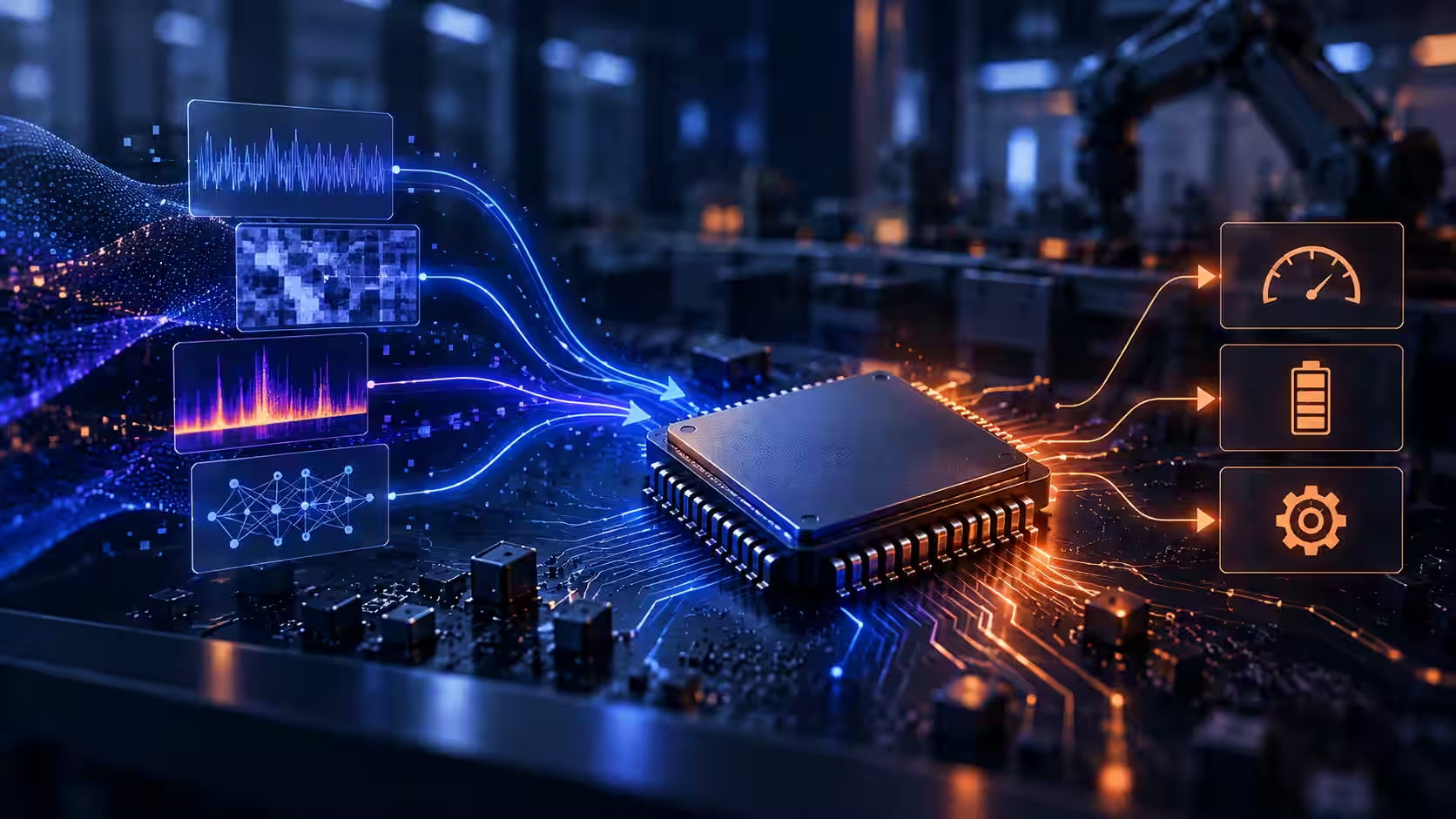
At the heart of an IoT embedded system is a microcontroller, which is a small computer chip that contains a processor, memory, and input/output peripherals. The microcontroller is responsible for controlling the operation of the device and for processing the data that it collects from sensors.

Source: IoT – analytics
In addition to the microcontroller, an IoT embedded system will typically include a range of sensors and other input devices. These sensors can include temperature sensors, humidity sensors, pressure sensors, and motion sensors. Other input devices can include cameras, microphones, and GPS receivers.
Once the data has been collected, it is processed by the microcontroller and transmitted to other devices or the cloud. This is typically done using a wireless communication protocol such as Wi-Fi, Bluetooth, or Zigbee. The data can then be analyzed and used to control other devices, trigger alerts, or provide valuable insights into the physical world.
In the world of technology, the Internet of Things (IoT) has become a game-changer. IoT is a network of interconnected devices, which can communicate with each other over the internet without any human intervention. It has revolutionized the way we live and work, providing us with unparalleled convenience, automation, and control.

Source: Explodingtopics
IoT devices are growing extremely fast because of their popularity, comfort, and huge demand.

Source: IoT-analytics
To make IoT work seamlessly, it needs embedded software. Embedded software is a type of software that is specifically designed to run on specialized hardware, which is typically a microcontroller or microprocessor. This software is designed to perform specific tasks and control the hardware it runs on. Here’s why IoT and IoT devices need embedded software:
As IoT continues to evolve, embedded software engineering will play an even more critical role in shaping our future.
Embedded devices are a critical component of IoT, and securing them is essential to ensure the security of the entire system. Here are some security concerns related to IoT-embedded devices and ways to mitigate them:

Source: IoT-analytics
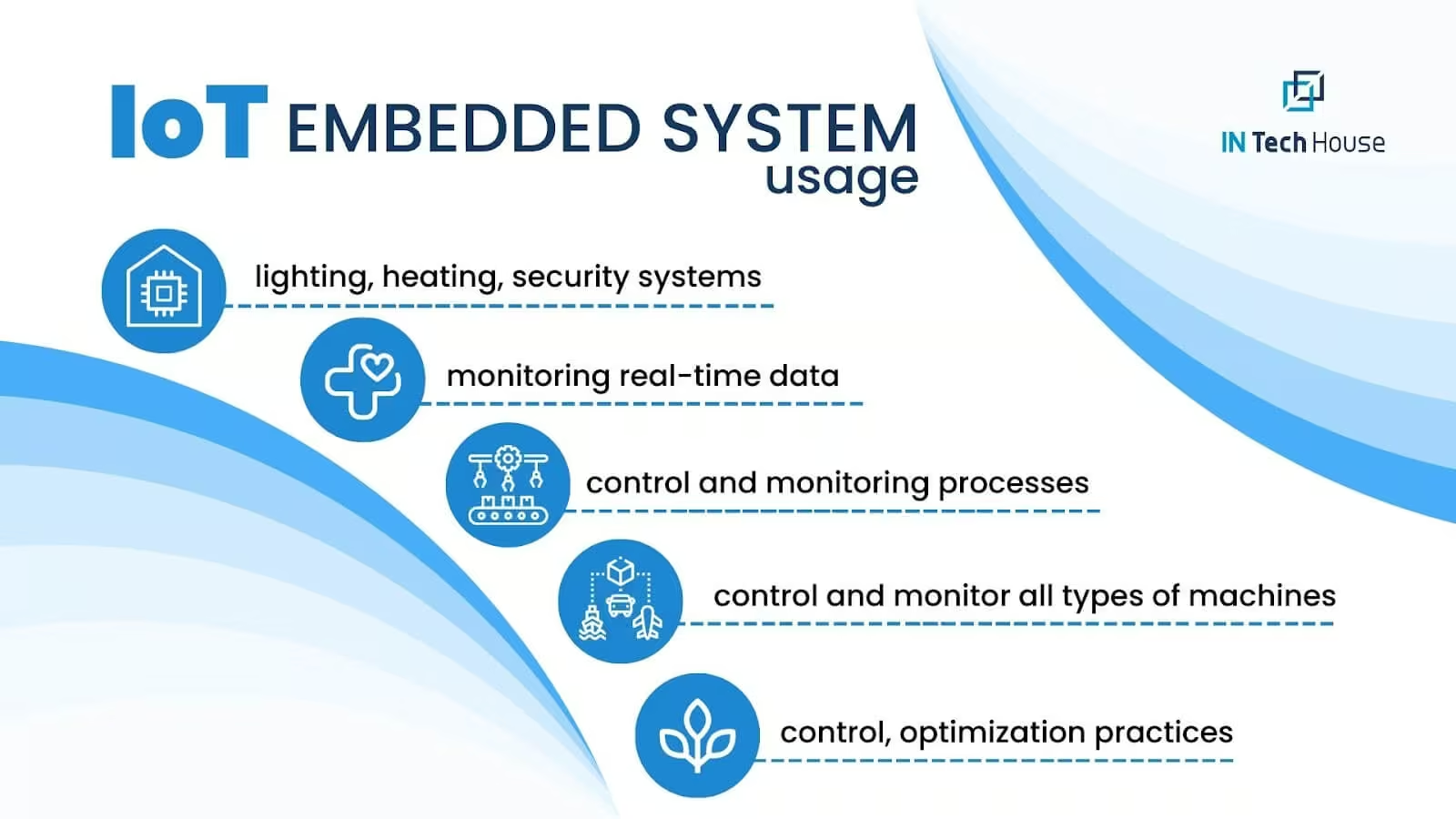
IoT embedded systems have a wide range of applications, from home automation to industrial control. Here are just a few examples:
Sensor selection, MCU headroom and radio choice decide whether your device survives its first firmware update in the field. We design that layer with the whole product lifecycle in mind.
Design the embedded layer of your IoT product
While IoT-embedded systems offer many benefits, they also present several challenges. These challenges include:
IoT-embedded systems are often connected to the internet, making them vulnerable to cyber-attacks. Ensuring the security of these systems is therefore essential.Reliability: IoT-embedded systems are often used in critical applications, such as healthcare and industrial control. Ensuring the reliability of these systems is therefore essential.
IoT embedded systems are often part of a larger network of devices. Ensuring that these devices can communicate with each other and scale up to meet the needs of the network is therefore essential.
IoT embedded systems are often powered by batteries, making power consumption a critical factor in their design.
We build the embedded controller, the firmware and the data path that connects it to your platform. Bring your use case and we will propose an architecture with concrete component choices.
See how we deliver IoT devices from sensor to cloud
IoT embedded systems are an essential component of the IoT ecosystem, enabling the collection, processing, and transmission of data from sensors and other devices. They have a wide range of applications, from smart homes to industrial control, and are programmed using a variety of languages and tools. However, they also present several challenges, including security, reliability, scalability, and power consumption. Overcoming these challenges will be essential to realizing the full potential of IoT-embedded systems.
To ensure the security of IoT embedded systems, it is essential to implement robust security measures, such as encryption, authentication, and access control. Additionally, regular security audits and updates can help to mitigate the risk of cyber attacks.
Ensuring the reliability of IoT embedded systems requires a thorough understanding of the application requirements, as well as careful design and testing. In critical applications, redundancy and failover mechanisms can help to ensure that the system continues to function in the event of a failure.
Scalability is another important consideration in the design of IoT-embedded systems. To ensure that devices can communicate with each other and scale up to meet the needs of the network, it is essential to use standard communication protocols and design the system with scalability in mind.
Finally, power consumption is a critical factor in the design of IoT-embedded systems. To maximize battery life, it is important to minimize power consumption wherever possible, for example by using low-power sensors and optimizing the software.
Not sure where to start? We work with companies at every stage, from early ideas to enterprise-level builds. A 30-minute call can save you months of guesswork.
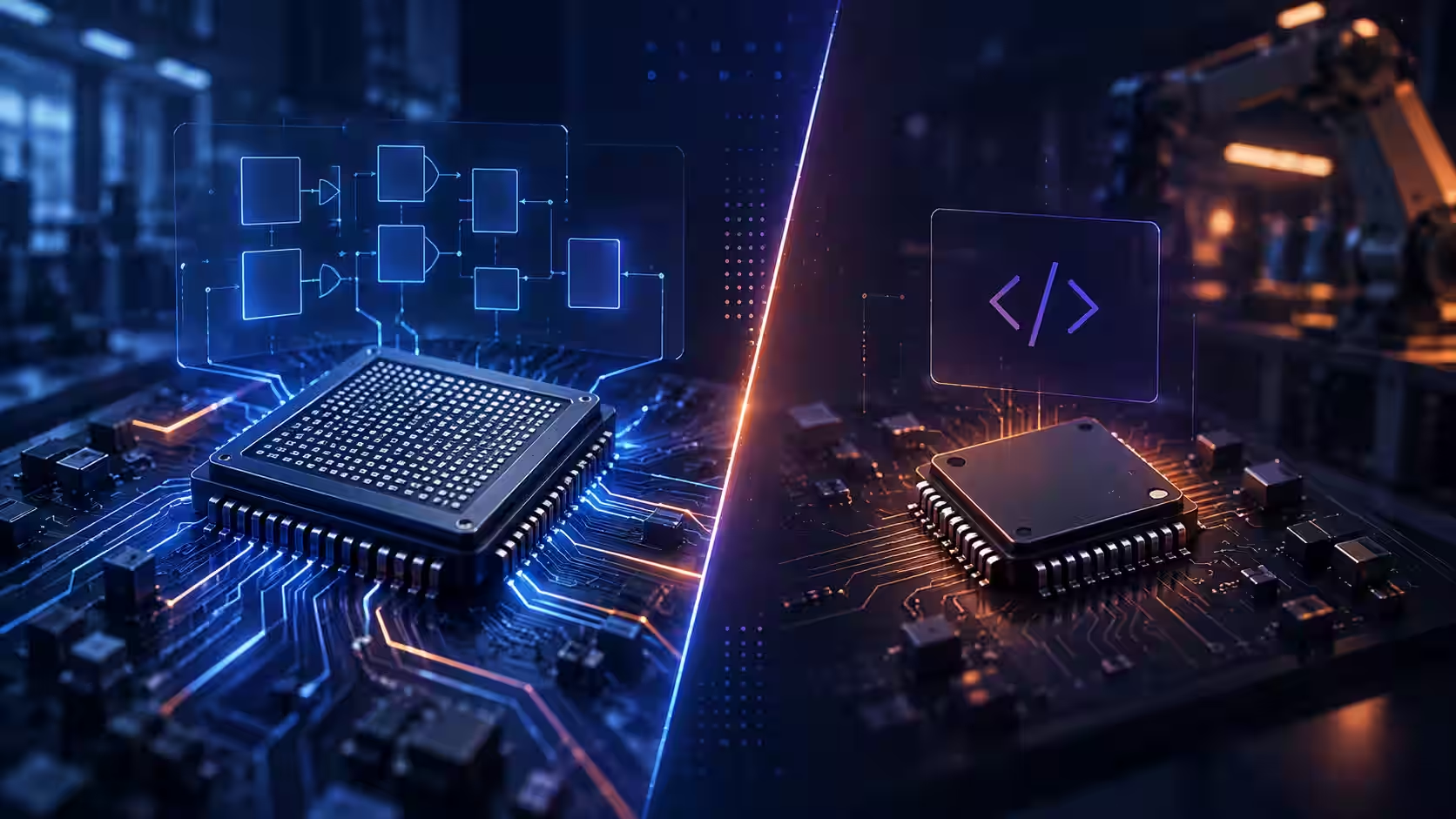
An IoT device should use a microcontroller when it mainly reads sensors, runs control logic and sends small messages, and an embedded Linux processor when it needs a rich network stack, cameras, displays, containers or heavy local processing. MCUs offer microamp sleep currents, instant boot and simpler certification. Linux-class processors need external DRAM and flash, boot in seconds, and require ongoing kernel and package maintenance. Many gateways combine both, with an MCU handling real-time I/O beside a Linux application processor.
The right IoT wireless technology depends on range, data rate and power budget. Wi-Fi suits mains-powered devices with high throughput inside buildings. Bluetooth Low Energy fits short-range, phone-connected and battery devices. Thread and Zigbee build low-power mesh networks for building automation, with Thread underpinning Matter. LoRaWAN sends small payloads over kilometres on years of battery, and LTE-M or NB-IoT offer similar reach over operator networks without a private gateway, at the cost of a subscription.
A battery-powered IoT sensor can run anywhere from weeks to ten years or more, depending almost entirely on average current rather than peak current. Battery life is capacity divided by average draw, which is dominated by sleep current and by how often and how long the radio transmits. A node that sleeps at a few microamps and sends a short LoRaWAN or BLE packet every few minutes can last years on a primary lithium cell; a device that holds a Wi-Fi connection cannot.
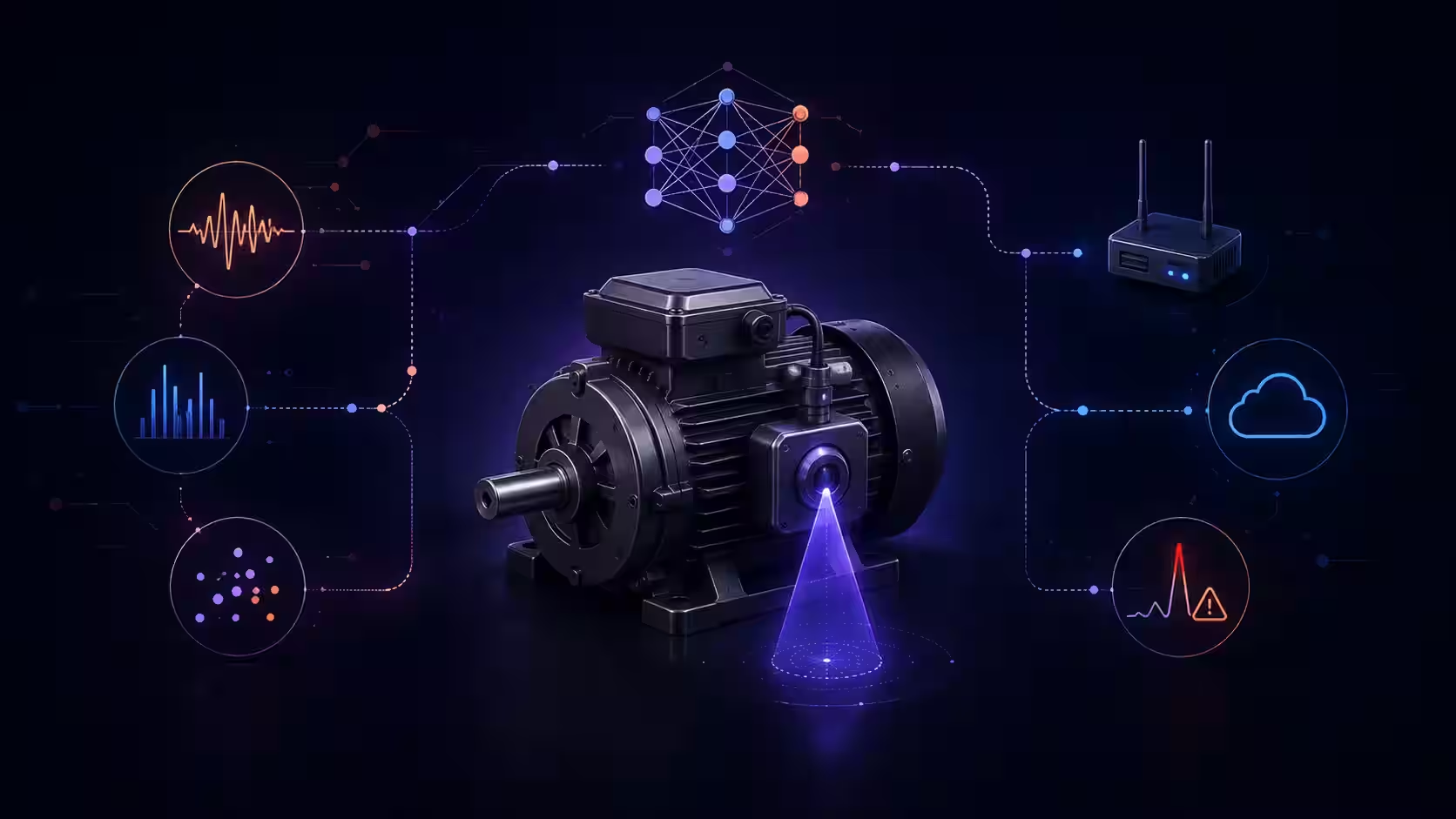
An IoT device should process data locally when bandwidth, latency, privacy or connectivity gaps make streaming raw data impractical. Typical edge work includes filtering and averaging, threshold alarms, event detection and compressed summaries, and increasingly small ML models for anomaly or vibration analysis. Local processing costs MCU headroom and energy per computation, but transmitting is usually the more expensive operation for battery devices. The cloud remains the right place for fleet-wide analytics, model training and long-term storage.
IoT devices most often send data to the cloud over MQTT, a lightweight publish-subscribe protocol running on TCP with TLS, which is supported by AWS IoT Core and Azure IoT Hub. Constrained devices on lossy links may use CoAP over UDP with DTLS, and LwM2M adds standard device management and firmware update on top of CoAP. HTTPS is simpler to integrate but carries more overhead per message, so it suits infrequent uploads from mains-powered devices.
Krzysztof Niedźwiedź is a Lead Embedded Systems and Hardware Engineer at InTechHouse with over 11 years of experience developing complex electronic and embedded products from system architecture through production.
He specializes in embedded software development, electronic system architecture, multilayer PCB design, hardware-software integration, system testing, and technical ownership of high-reliability engineering projects. His work spans requirements analysis, architecture and component selection, schematic and PCB design, bare-metal and RTOS firmware development, prototyping, troubleshooting, production documentation, and cooperation with mechanical and high-level software teams.
Krzysztof's project experience includes FPGA and SoC-based onboard computers for the space industry, embedded electronics for advanced optical equipment, low-power environmental-monitoring devices, UAV payloads for real-time air-quality measurement and sample collection, and connected medical and training devices.
He works with C and C++, STM32, LPC and AVR microcontrollers, ARM-based platforms, RTOS, Embedded Linux, FPGA and SoC architectures, DDR3, HDI PCB technology, and industrial communication interfaces including Ethernet, CAN, RS-485, SPI, I2C, UART, USB, Modbus, and MQTT.
Krzysztof holds bachelor's and master's degrees in Electronics and Telecommunications. He is an IPC Certified Interconnect Designer and has completed specialist training in Embedded GNU/Linux kernel internals and device drivers. He writes about embedded system architecture, firmware development, PCB design, MCU and FPGA integration, RTOS, hardware security, low-power electronics, and dependable electronic products.
From first prototype to production, our engineers can help you scope it, build it and get it certified.
This initial conversation is focused on understanding your product, technical challenges, and constraints.
No sales pitch - just a practical discussion with experienced engineers.
Share a few details about your product and context. We’ll review the information and suggest the most appropriate next step.