In today’s rapidly evolving technological landscape, the effective development and management of software applications are crucial for businesses to stay competitive. The Software Development Life C (SDLC Cycle) provides a structured framework that guides the entire process, from initial concept to final deployment and ongoing maintenance. Understanding the different phases and activities within the SDLC phases is essential for successful software development projects. This article aims to shed light on the key aspects of the SDLC, its benefits, and how it ensures the delivery of high-quality software solutions.
The software development life cycle (SDLC) is a systematic approach or process followed to develop software applications. It encompasses a series of phases, activities, and tasks that are executed in a specific order to ensure the successful development, deployment, and maintenance of software systems. The SDLC provides a structured framework that helps organizations streamline their software development processes, improve collaboration, manage risks, and deliver high-quality software solutions.
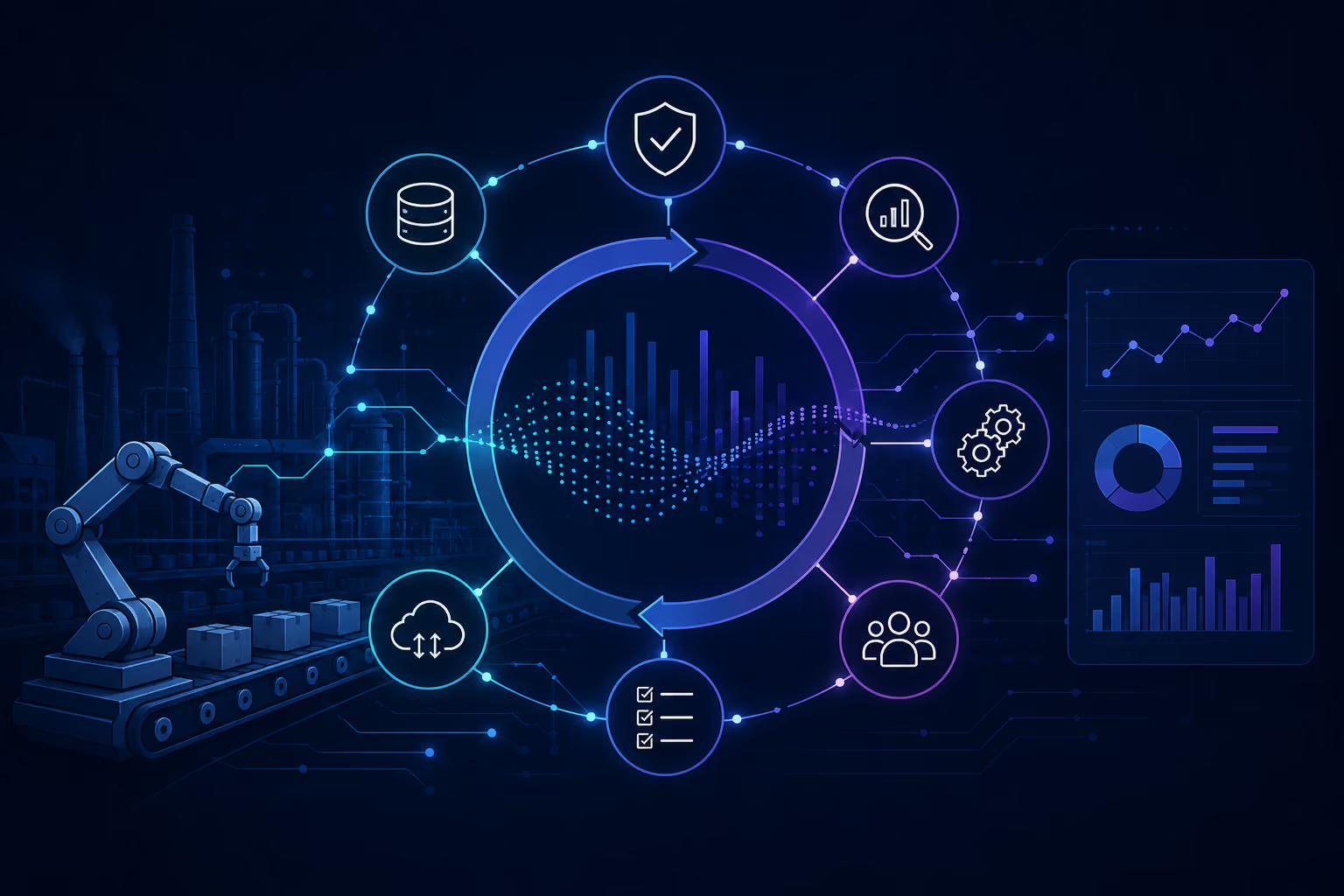
The SDLC typically consists of several stages, including requirements gathering, system design, implementation, testing, deployment, and maintenance. Each stage has its objectives, tasks, and deliverables, and the transition from one stage to another follows a well-defined process. The SDLC works by providing a structured approach to guide the development team through the entire software development process, from the initial concept to the final product.
The specific stages of the project life cycle may vary depending on the chosen methodology or approach, such as waterfall, agile, or DevOps. However, some common stages include:
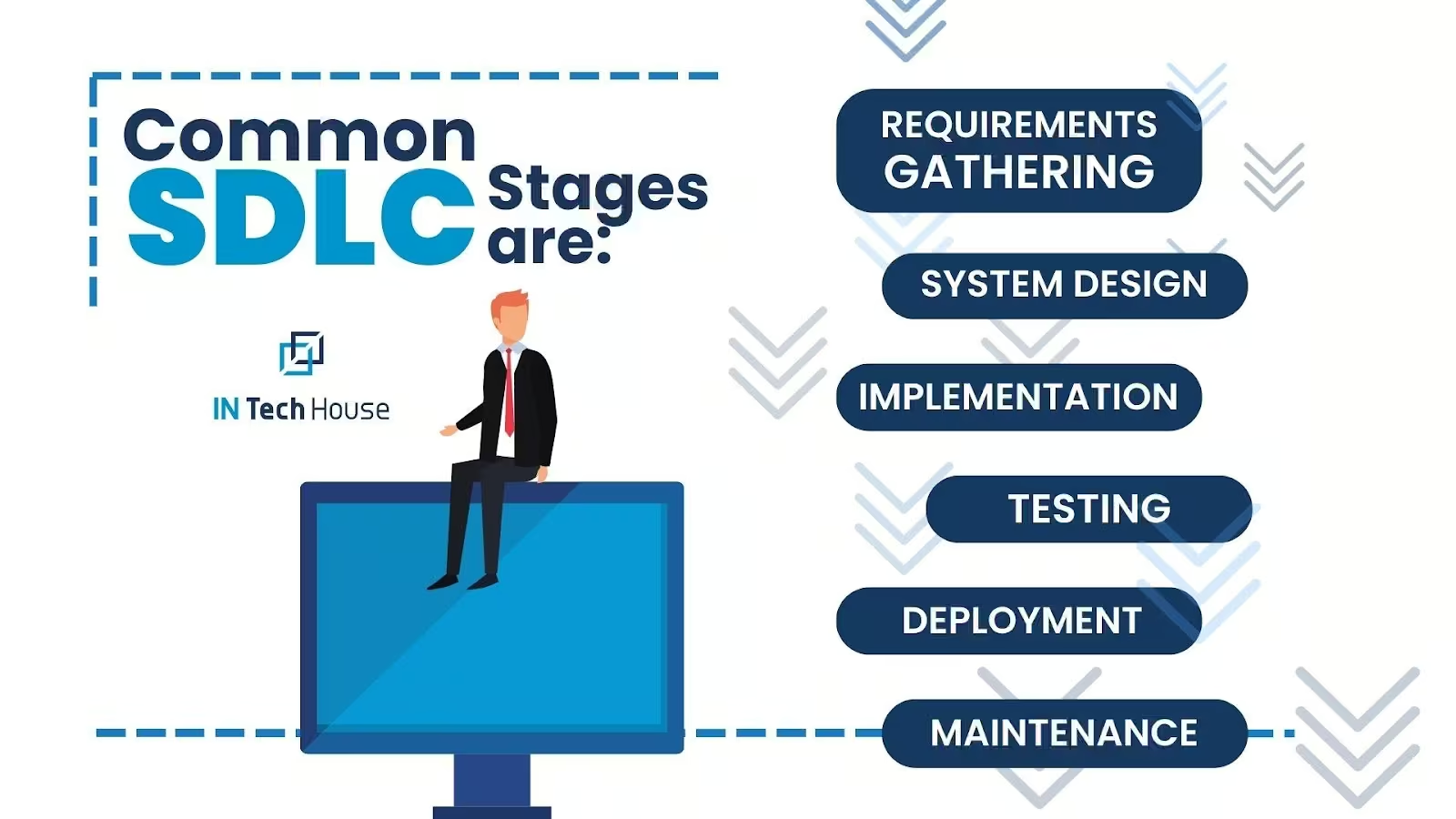
Each of these stages is now being reshaped by automation. Requirements analysis, code generation, test case design, and defect triage all have working machine learning support today, and how far that support actually reaches is examined in AI in software engineering. The stages themselves do not disappear, but the effort distributed across them changes considerably.
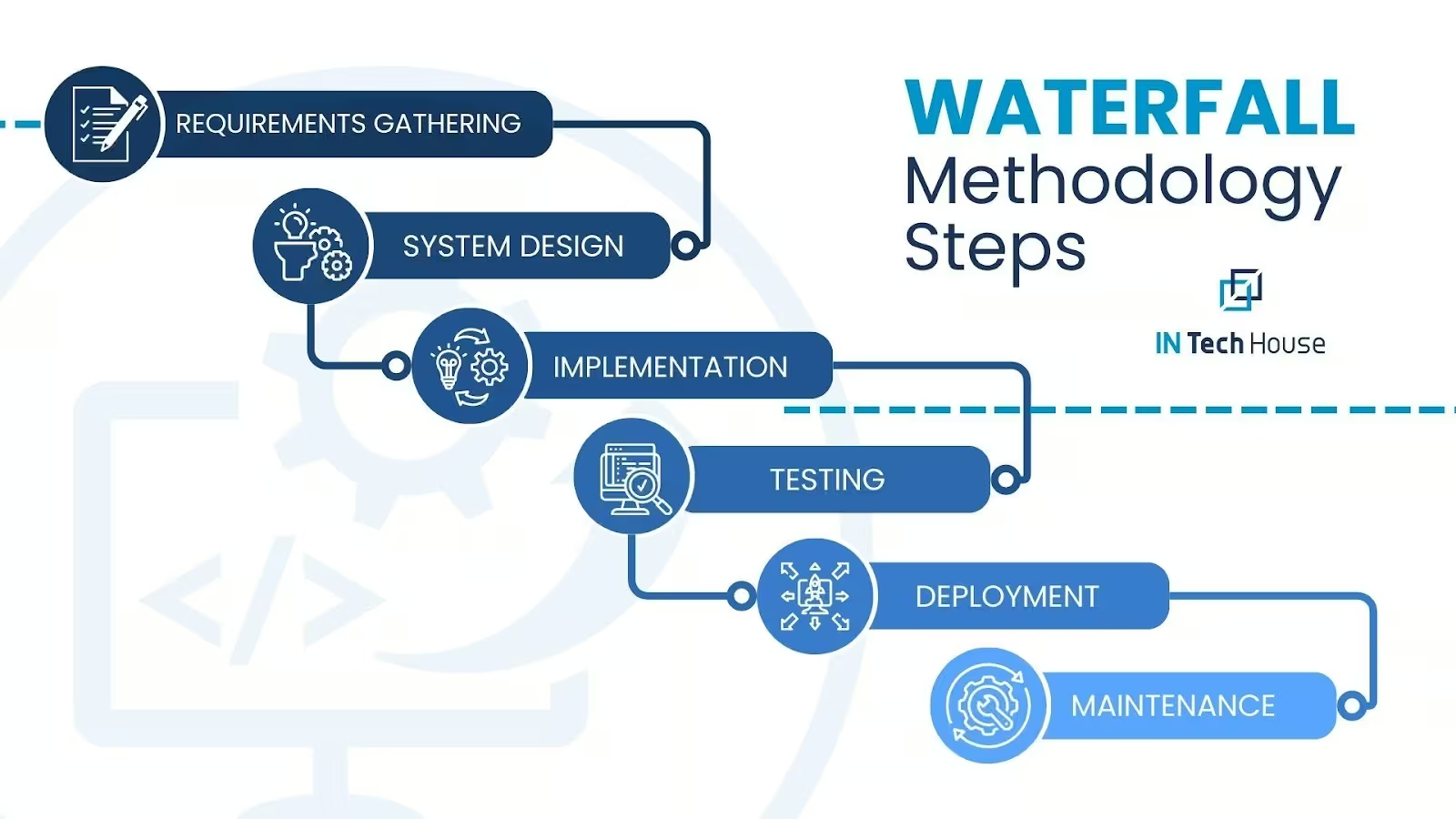
The waterfall methodology is a sequential approach to software development, where each stage is completed before moving on to the next. The typical stages in the waterfall SDLC life cycle include:
Waterfall Methodology Steps
Which Businesses Should Use Waterfall MethodologyThe Waterfall methodology is typically suited for projects with well-defined, stable requirements and a linear progression of tasks. It may be more appropriate for businesses in certain industries or scenarios that require a highly structured and controlled approach.
Here are a few examples:
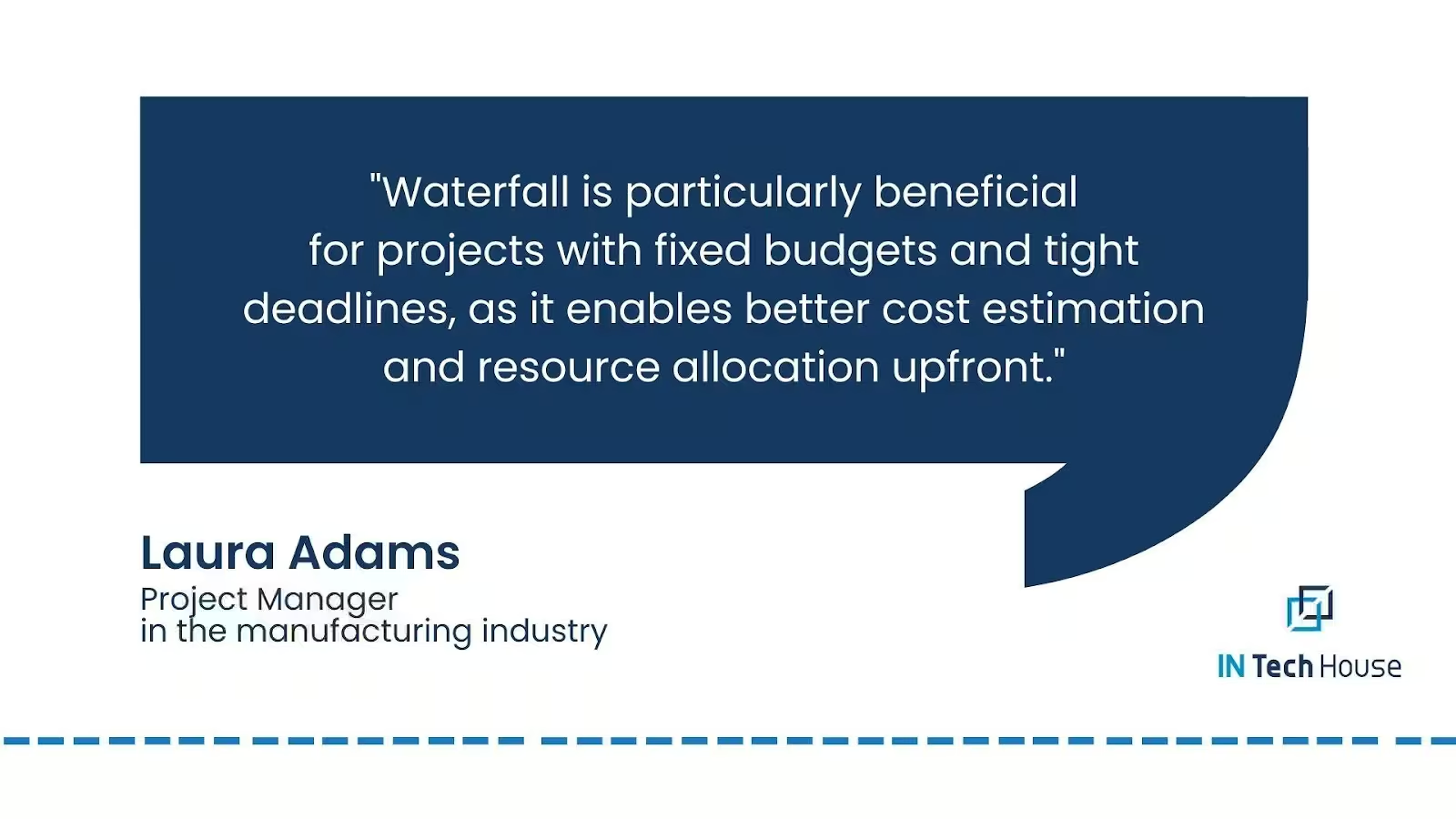
It’s important to note that even in these industries or scenarios, there has been a growing trend towards adopting more agile or hybrid methodologies to increase adaptability, stakeholder collaboration, and faster time-to-market.
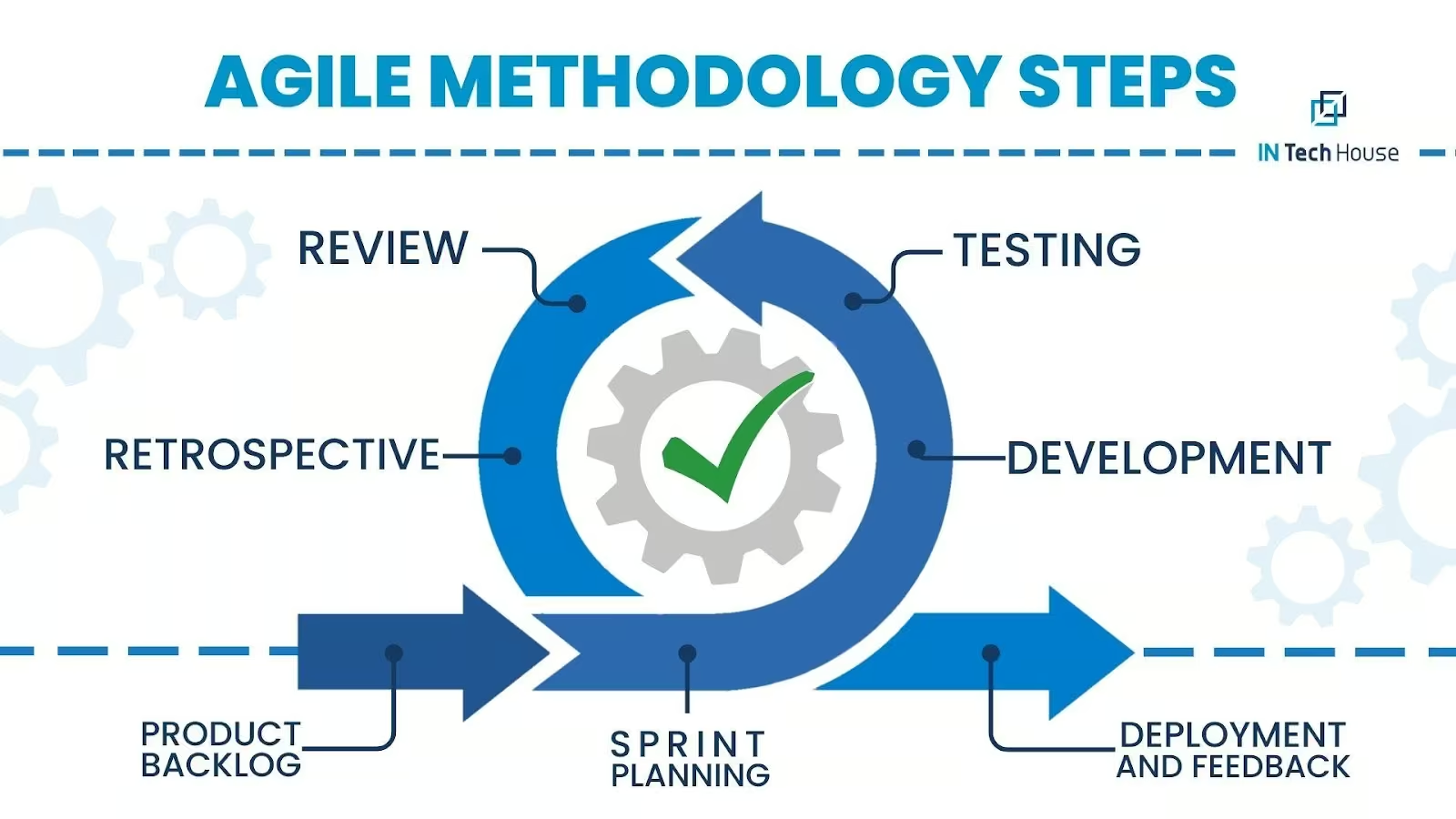
The agile methodology is an iterative and incremental approach that focuses on collaboration, adaptability, and customer feedback. The stages in the agile SDLC process, typically organized into iterations called sprints, include:
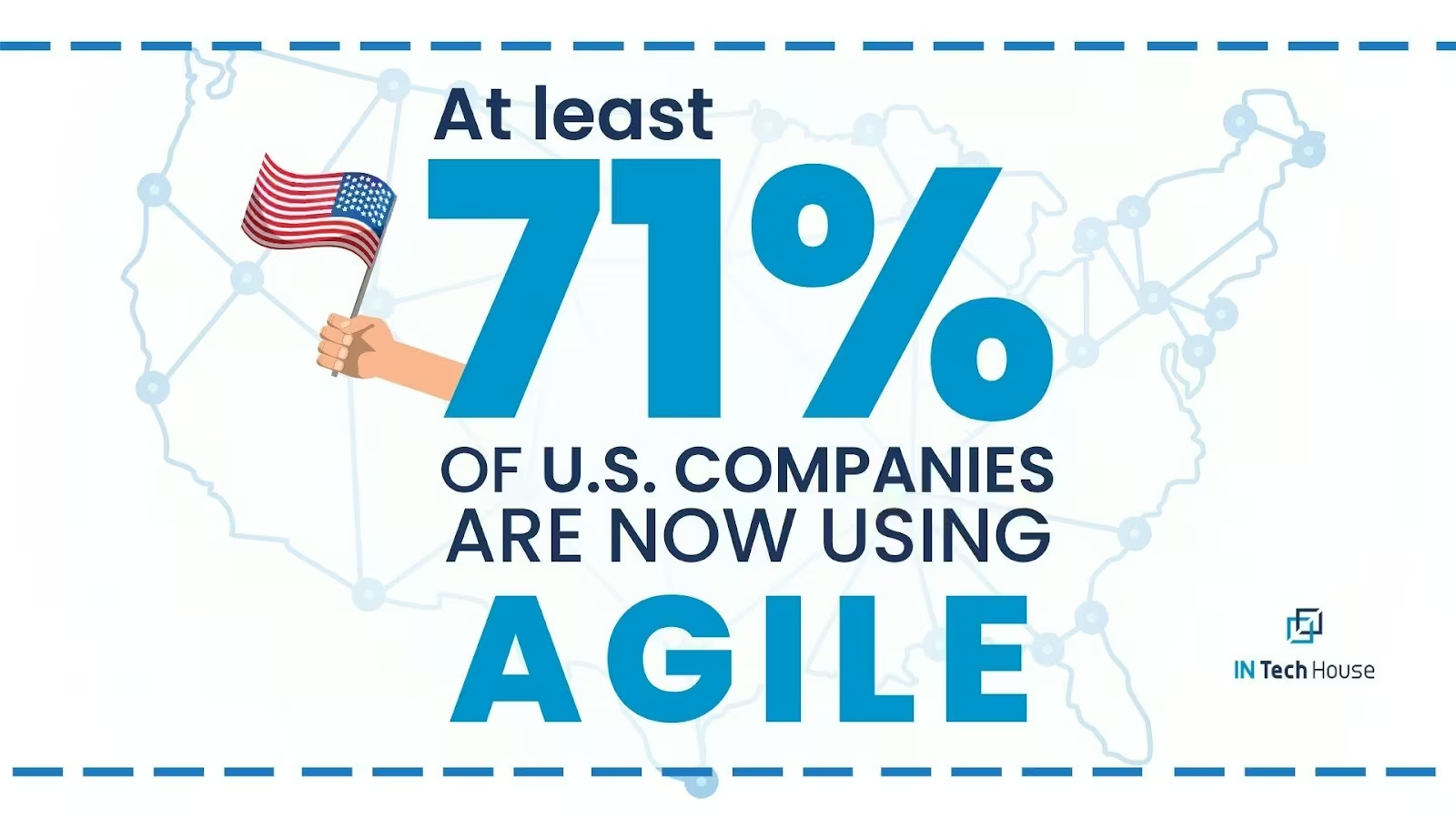
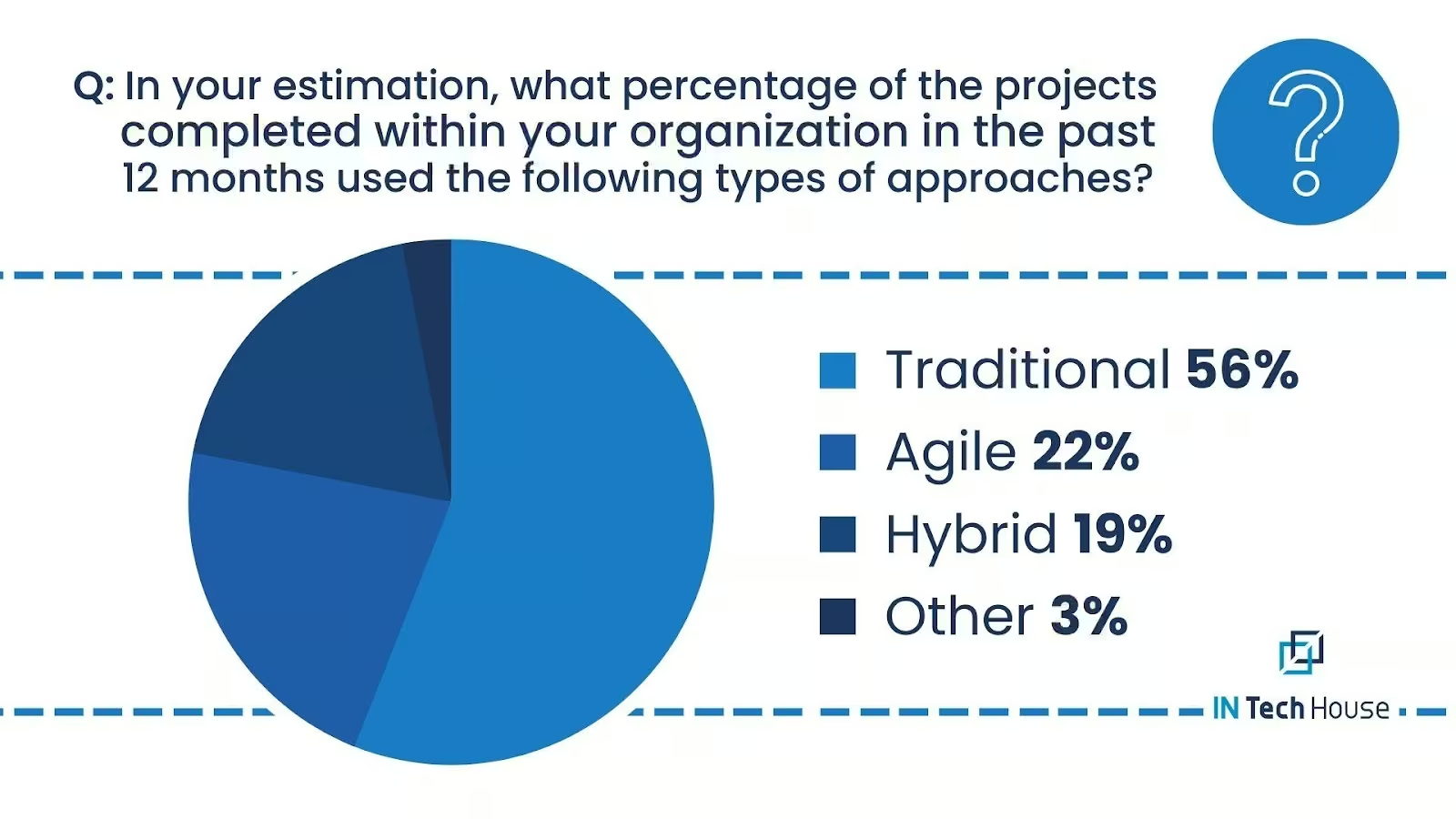
Source: Zippia
Here are some types of businesses that can benefit from adopting agile methodology:
It’s important to note that agile methodologies can be adapted and scaled to fit the unique needs of different businesses and industries.
Waterfall, agile and DevOps all break differently once hardware, firmware and certification enter the schedule. We run delivery models built for products where a design freeze is real.
See how we run engineering projects
The primary distinction between Waterfall and Agile methodologies lies in their approach to planning and adaptability. Unlike Waterfall, Agile methodology does not prioritize extensive upfront planning or the need for a perfect, detailed plan before starting a project.
Agile focuses on high-level objectives, goals, and deliverables outlined in a roadmap, but it embraces the fact that requirements and priorities can change during the project. It often involves breaking the project into iterations or sprints of a few weeks or months, allowing for continuous adaptation and adjustment of the project’s course.
While both Waterfall and Agile share some similarities in their fundamental process, Agile deviates from the linear order of phases found in Waterfall. In Agile, the stages are not fixed and sequential, and there is no definitive end to the requirements and planning phases. Instead, Agile teams constantly revisit and refine these aspects with the completion of each iteration.
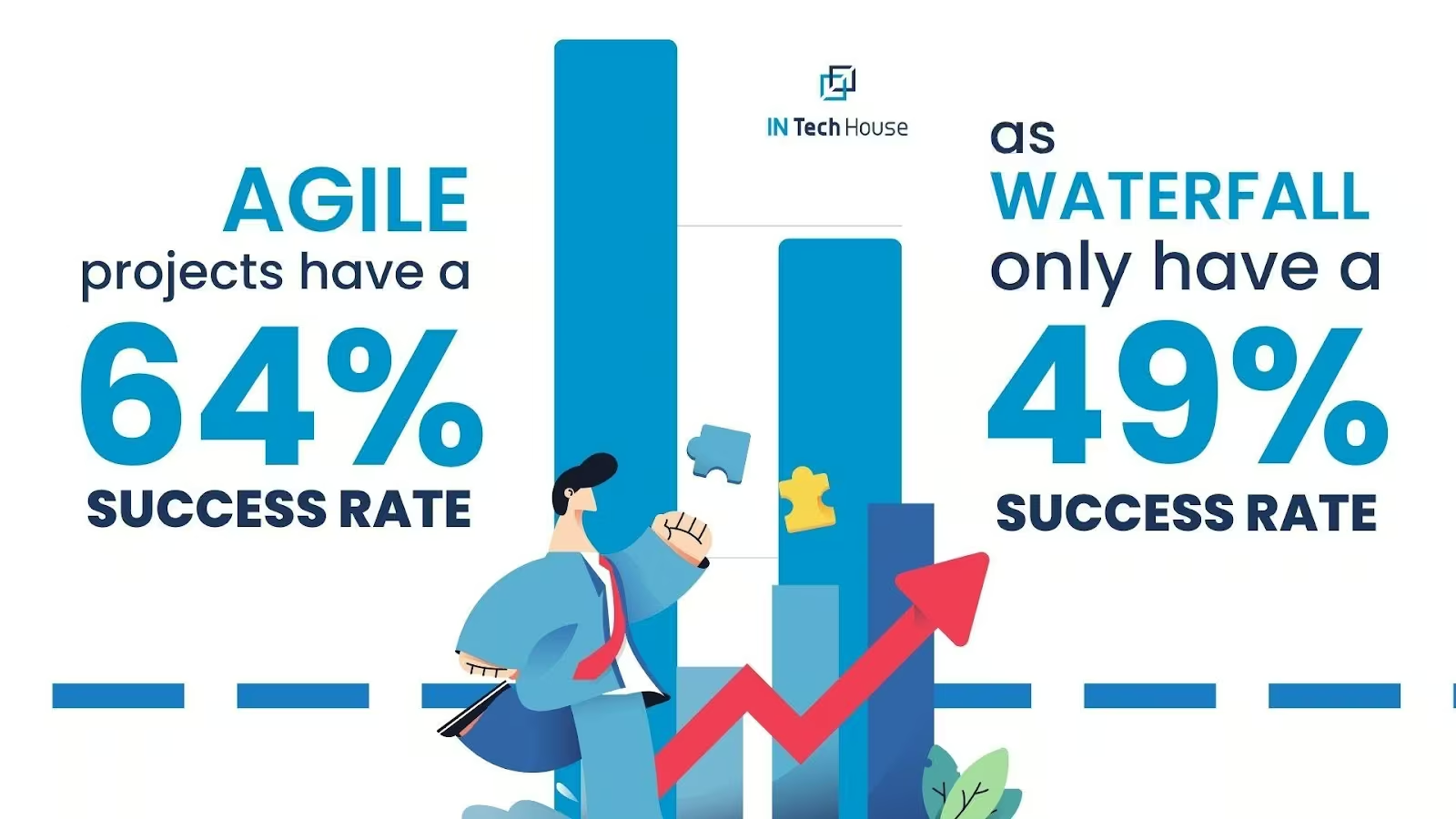
Agile also emphasizes the involvement of internal and external stakeholders throughout the process, which is not explicitly addressed in the Waterfall method. Additionally, Agile promotes self-organization within teams, with less reliance on top-down management directives.
While Agile and Waterfall primarily focus on the development process, DevOps is an approach that integrates development and operations, ensuring smooth and efficient software delivery and maintenance.
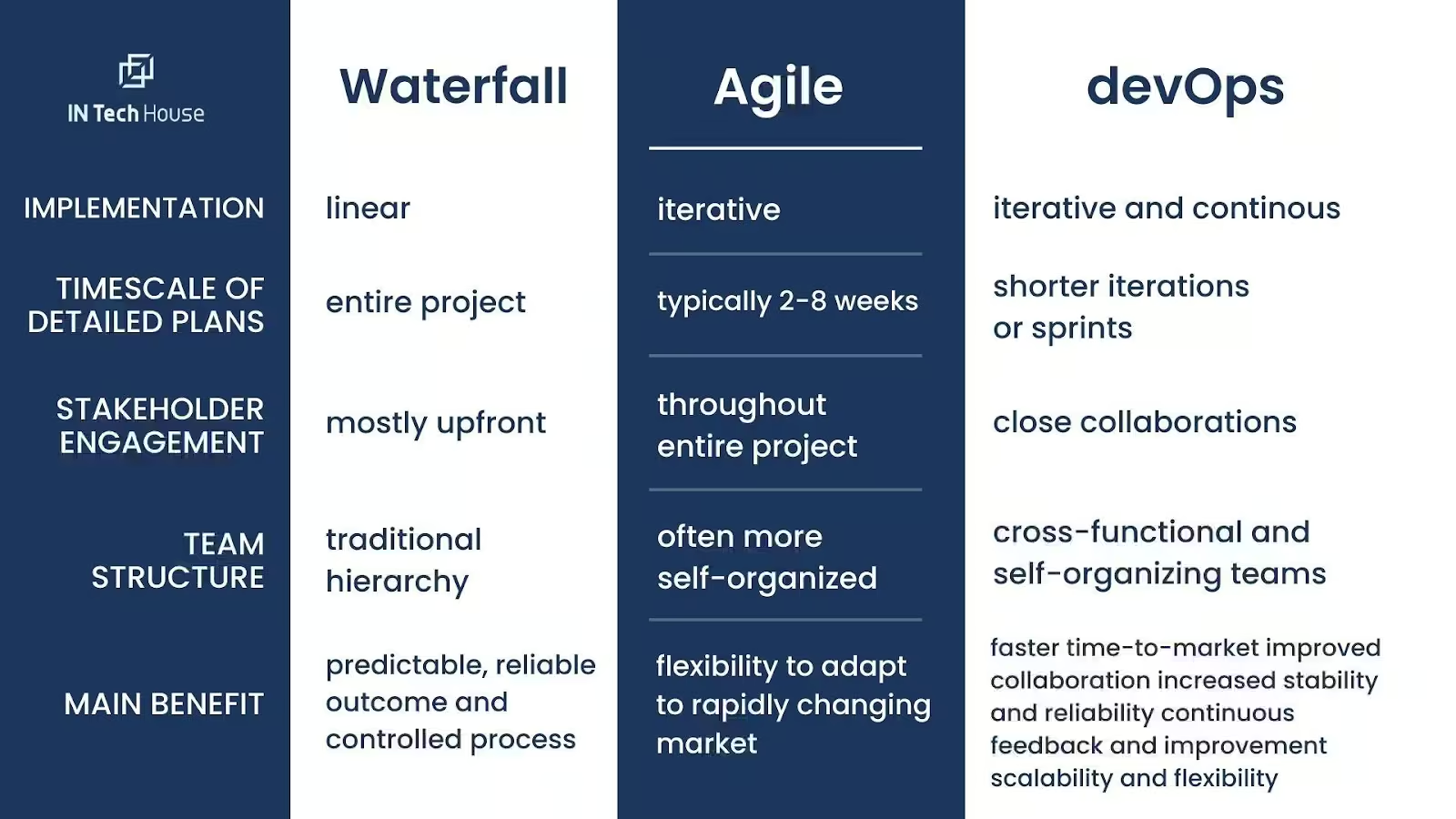
Overall, Agile methodology embraces flexibility, adaptability, and stakeholder collaboration, setting it apart from the more rigid and sequential nature of the Waterfall approach.
DevOps combines development (Dev) and operations (Ops) to ensure collaboration, automation, and continuous delivery. While DevOps focuses more on practices and principles rather than specific stages, the following components are integral to its implementation:
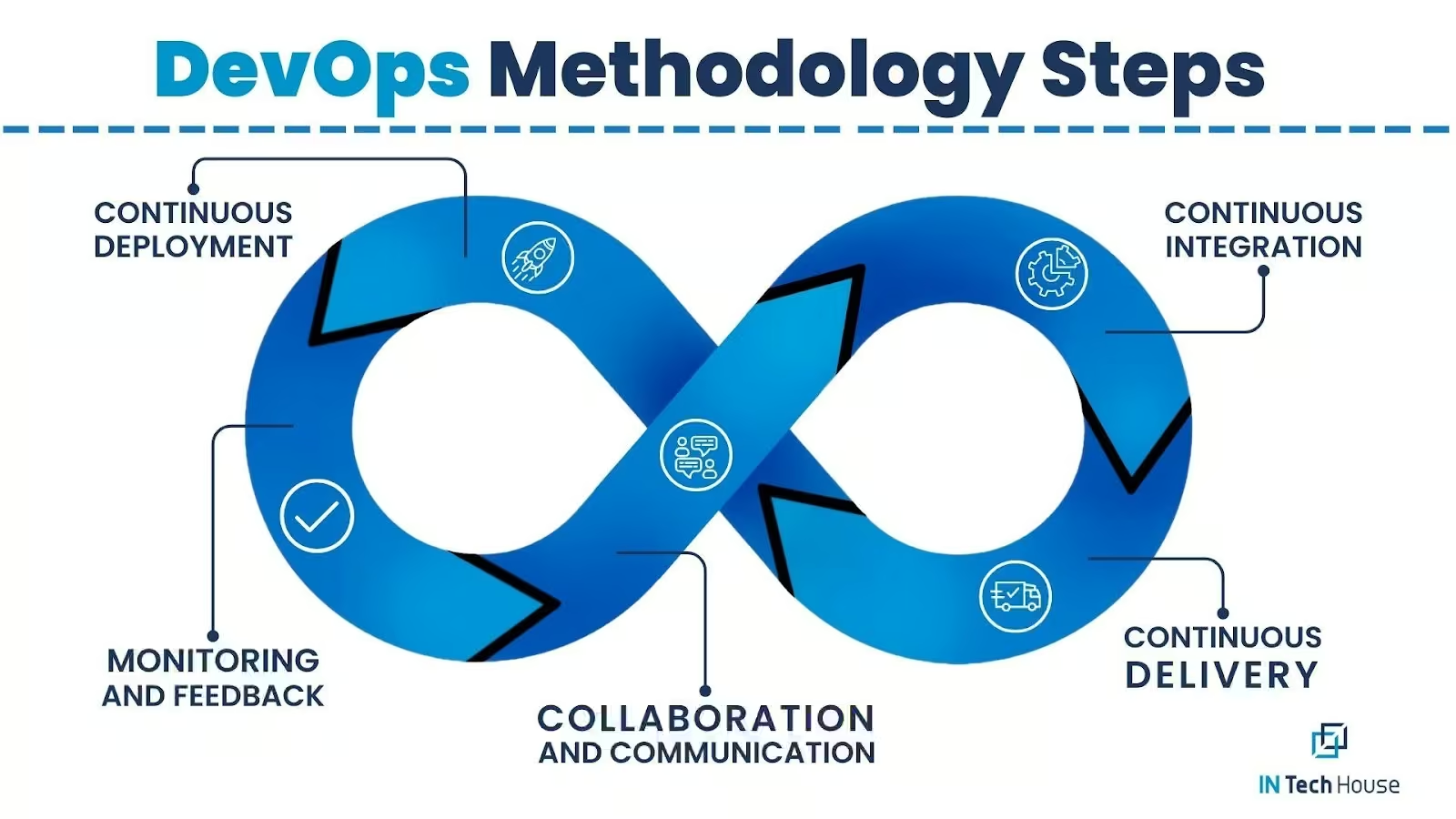
DevOps methodology is beneficial for businesses that seek to improve collaboration between development and operations teams, accelerate software delivery, enhance software quality, and ensure reliable and scalable deployments. It is particularly relevant for:
Read alo:
When it comes to choosing the right methodology for software development, there are several factors that companies should consider. Here are some key pieces of advice to help businesses make an informed decision:
Remember that there is no one-size-fits-all approach, and it’s possible to adopt a hybrid methodology or tailor an existing methodology to suit your specific needs. The key is to choose a methodology that aligns with your project requirements, team dynamics, and organizational goals, and be open to refining and adapting your approach over time.
The life cycle changes shape once firmware and physical prototypes enter the plan, because a hardware revision cannot be rolled back like a sprint. Projects run under our hardware and embedded engineering services schedule test benches, component lead times and certification windows next to the code milestones. Decide early which parts of your product follow a software cadence and which follow a hardware one.
Our teams work across hardware, embedded and data engineering, so the lifecycle we propose accounts for lead times, test rigs and compliance gates. Tell us your project shape and we will show the process we would use.
Ask about our delivery process
Not sure where to start? We work with companies at every stage, from early ideas to enterprise-level builds. A 30-minute call can save you months of guesswork.
The software development life cycle usually has six or seven phases: planning, requirements analysis, design, implementation, testing, deployment and maintenance. Some models merge planning with requirements, others split testing into integration and acceptance stages. The number matters less than the exit criteria of each phase, such as approved requirements, a reviewed architecture or a passed release test. In iterative models the same phases still exist, but they repeat in short cycles instead of running once.
The V-model is a sequential SDLC variant in which every development phase is paired with a matching test phase: requirements with acceptance tests, architecture with integration tests, detailed design with unit tests. It is common in safety-critical and regulated domains, such as automotive under ISO 26262, medical device software under IEC 62304 and aerospace under DO-178C, because it produces traceability from requirement to verification evidence. Many teams now run agile iterations inside a V-model frame.
A secure software development life cycle (SSDLC) builds security activities into every phase instead of testing for vulnerabilities only before release. Typical practices include threat modeling during design, secure coding standards, static and dependency scanning in CI, a software bill of materials (SBOM), penetration testing and a defined vulnerability response process. The NIST Secure Software Development Framework (SP 800-218) is a common reference. Regulations such as the EU Cyber Resilience Act make these practices mandatory for many connected products.
When a product includes hardware and firmware, the SDLC must accommodate long lead times, board revisions and certification windows that cannot be iterated as quickly as code. Hardware typically follows gated milestones (prototype, EVT, DVT, PVT), while software and firmware can run in sprints alongside. Interfaces between them, such as register maps and communication protocols, need to be frozen early. Test rigs and hardware-in-the-loop setups should be planned as deliverables, not as afterthoughts.
DevOps is not a replacement for the SDLC; it changes how the build, test, release and operate phases are executed. Continuous integration and delivery pipelines automate those phases so changes flow to production in small, frequent increments, while monitoring feeds operational data back into planning. Requirements, design and maintenance still happen. DevOps also shifts ownership, with development teams sharing responsibility for running what they build, which is as much an organizational change as a tooling one.
Jacek Suty is Head of Solution Architecture at InTechHouse, with more than 30 years of experience in system architecture, enterprise IT, infrastructure, information security, and complex digital transformation programs.
He specializes in designing enterprise and solution architectures, translating business and regulatory requirements into scalable technology platforms, and coordinating delivery across software, infrastructure, data, and security teams. His work covers enterprise architecture based on TOGAF, system modeling using UML and BPMN, cloud and on-premise infrastructure, CI/CD processes, data platforms, cybersecurity, and IT governance.
Jacek has contributed to large-scale technology programs for public institutions, finance, energy, education, healthcare, utilities, and digital archives. His project experience includes nationwide public digital infrastructure, distributed document-management and archiving systems, data-exploration platforms using machine learning and predictive analytics, and transaction systems combining blockchain, metadata standards, and computational intelligence.
He holds PRINCE2 Practitioner, Management of Risk, Scrum Master, ITIL Foundation, and ISO/IEC 27001 Lead Auditor qualifications. Jacek is currently pursuing a doctoral degree at Bydgoszcz University of Science and Technology, combining academic research with extensive experience in real-world architecture and technology delivery.
He writes about enterprise architecture, system design, digital transformation, data platforms, cloud infrastructure, cybersecurity, technology governance, and the practical application of AI in complex information systems.
Jacek Suty's academic and professional profiles:
https://pbs.edu.pl/pl/doktorant/uczelniania-rada-samorzadu-doktorantow
https://www.isep.pw.edu.pl/isep/zs/Aktualnosci/Kalendarium-wydarzen2/Seminarium-zakladowe-9.03.2021-Jacek-Suty
https://aionehealth.pl/wp-content/uploads/2026/04/Raport-2026-final.pdf
From first prototype to production, our engineers can help you scope it, build it and get it certified.
This initial conversation is focused on understanding your product, technical challenges, and constraints.
No sales pitch - just a practical discussion with experienced engineers.
Share a few details about your product and context. We’ll review the information and suggest the most appropriate next step.