
Advanced Data Analytics: Definition and Techniques
.avif)
In today’s digital age, data serves as the lifeblood of modern organisations, driving the need for sophisticated methods like advanced analytics. This vital resource is at the heart of an organisation’s ability to make informed decisions, predict trends, optimise operational efficiency, and realise strategic objectives. The rise of advanced data analysis represents a significant paradigm shift, transitioning from traditional business intelligence and analytics to more sophisticated and predictive models.
What is Advanced Analytics?
Today, data has the power to shape the whole world.
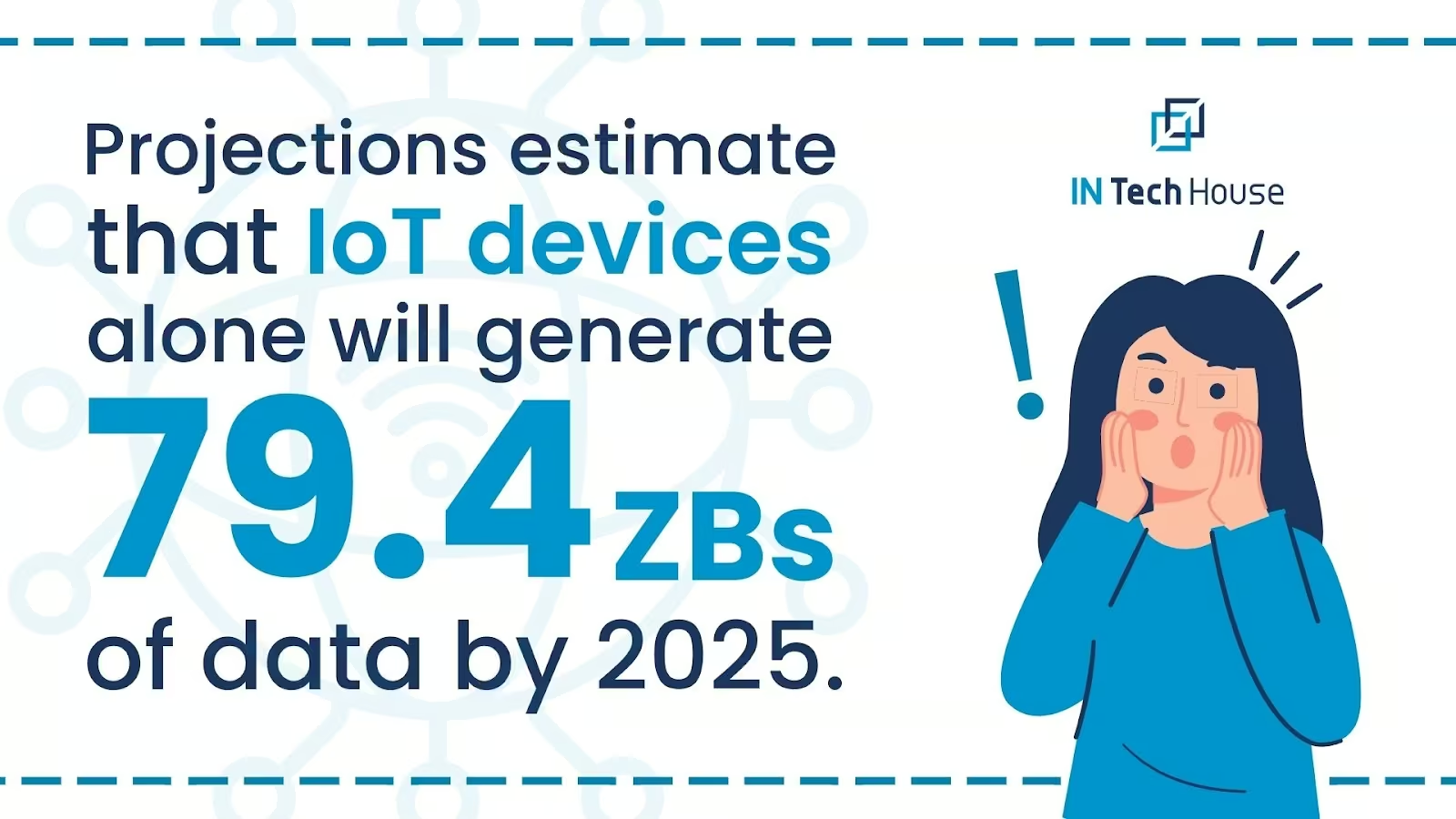
Source: BusinessWire
But, with all this data in reach, the next question is, what do people do with it?
To begin our exploration, we first need to establish a clear and precise defining advanced analytics.At its most fundamental level, advanced analytics refers to in-depth data analysis to extract meaningful insights, understand past trends, predict future events, and offer advice on possible future scenarios. This involves using statistical techniques, algorithms, and machine learning to identify patterns and trends that would remain hidden using traditional analytics methods. Yet, this simplistic definition only scratches the surface of the vast and varied world of advanced analytics.
In broad terms, advanced analytics refers to a set of analytical techniques that surpass traditional business intelligence solutions. These techniques enable various tasks, such as:
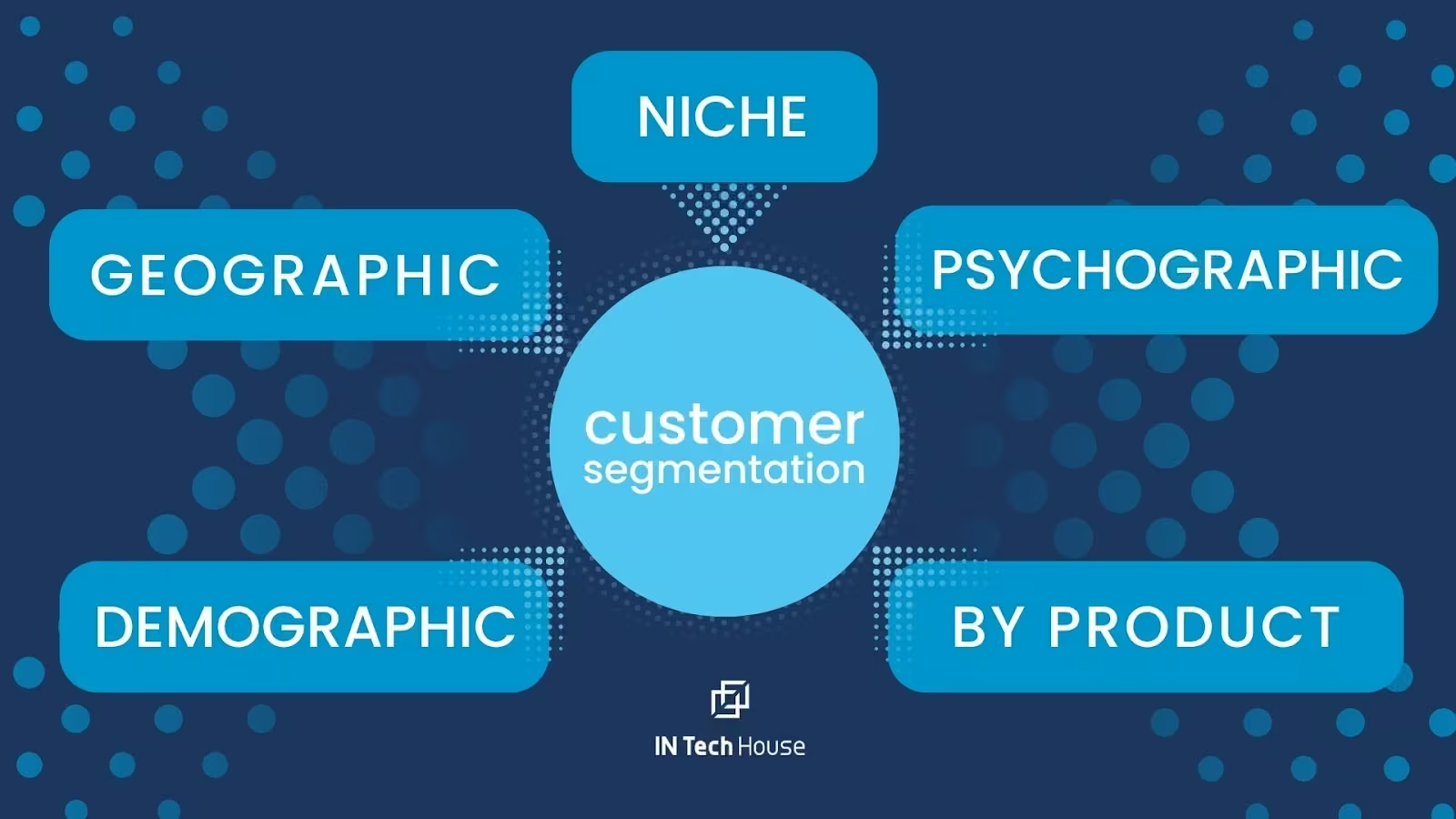
- Segmentation: Organizing items into groups based on their similarities.
- Classification: Sorting unclassified elements based on shared characteristics.
- Correlation: Identifying relationships between different properties of elements.
- Forecasting: Predicting future values and outcomes.
- Association: Identifying the frequency of joint occurrences and deriving rules like “C usually follows A and B”.
Broadening our perspective, advanced data analytics is an umbrella term for various techniques and methodologies. It encapsulates the idea of not only examining large and diverse data sets to uncover hidden patterns, unknown correlations, market trends, customer preferences, and other useful insights, but also the usage of advanced techniques such as data mining, predictive analytics, machine learning, and statistical analysis. These advanced analytic techniques are leveraged to predict future trends, behaviours, and outcomes, allowing businesses to conduct robust ‘what-if’ scenarios and make decisions based on knowledge and insights rather than guesswork.
Advanced Analytics vs Basic Analytics
When delving into the world of data analysis, one often encounters the question: ‘analytics vs advanced analytics‘ – what sets them apart? In essence, while traditional analytics help to understand past performance through descriptive methods, the definition of advanced analytics encompasses sophisticated techniques and tools to predict future trends and provide actionable, strategic insights. Understanding what differentiates ‘analytics’ from ‘advanced analytics‘ is crucial to our exploration. Basic analytics, or traditional analytics, typically refers to measuring, managing, analysing, and reporting data to understand past performance and drive business planning. These methods often involve descriptive techniques, such as reporting past events or creating dashboards for key performance indicators (KPIs).
On the other hand, advanced analytics stands as a more extensive, sophisticated form of data analysis, built on the same foundations we set out in what big data analytics is. The advanced analytics process involves using predictive models, analysing complex data sets, implementing machine learning algorithms, and processing real-time data. The key distinction lies in using advanced analytical tools and methodologies to anticipate and predict future trends, behaviours, and events. This ability to look forward and predict potential scenarios truly sets advanced analytics apart from traditional analytics.
5 Techniques in Advanced Data Analytics
The domain of advanced analytics is wide and varied, featuring many advanced analytics techniques and methods. Some of the most commonly used types of advanced analytics include:
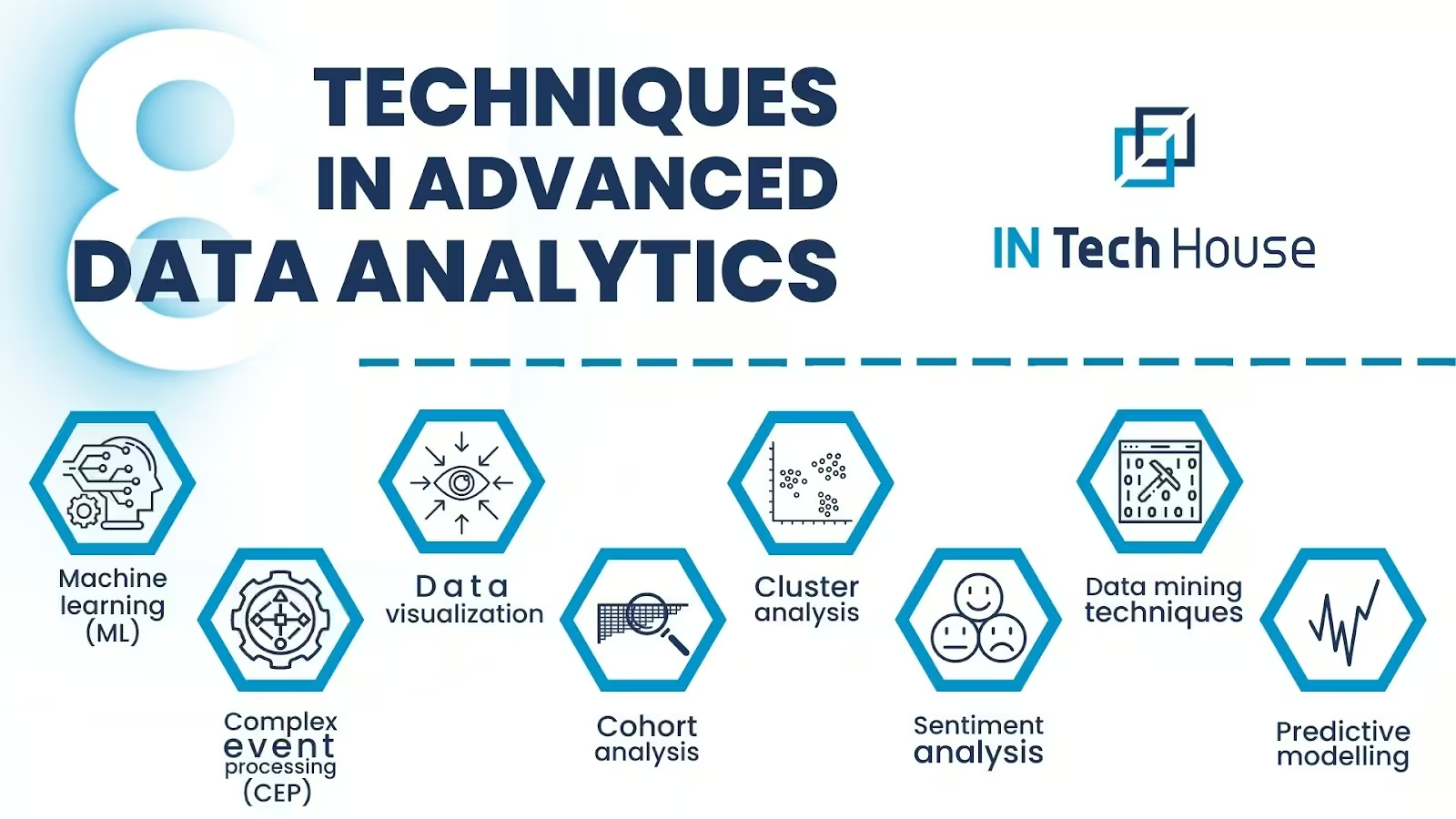
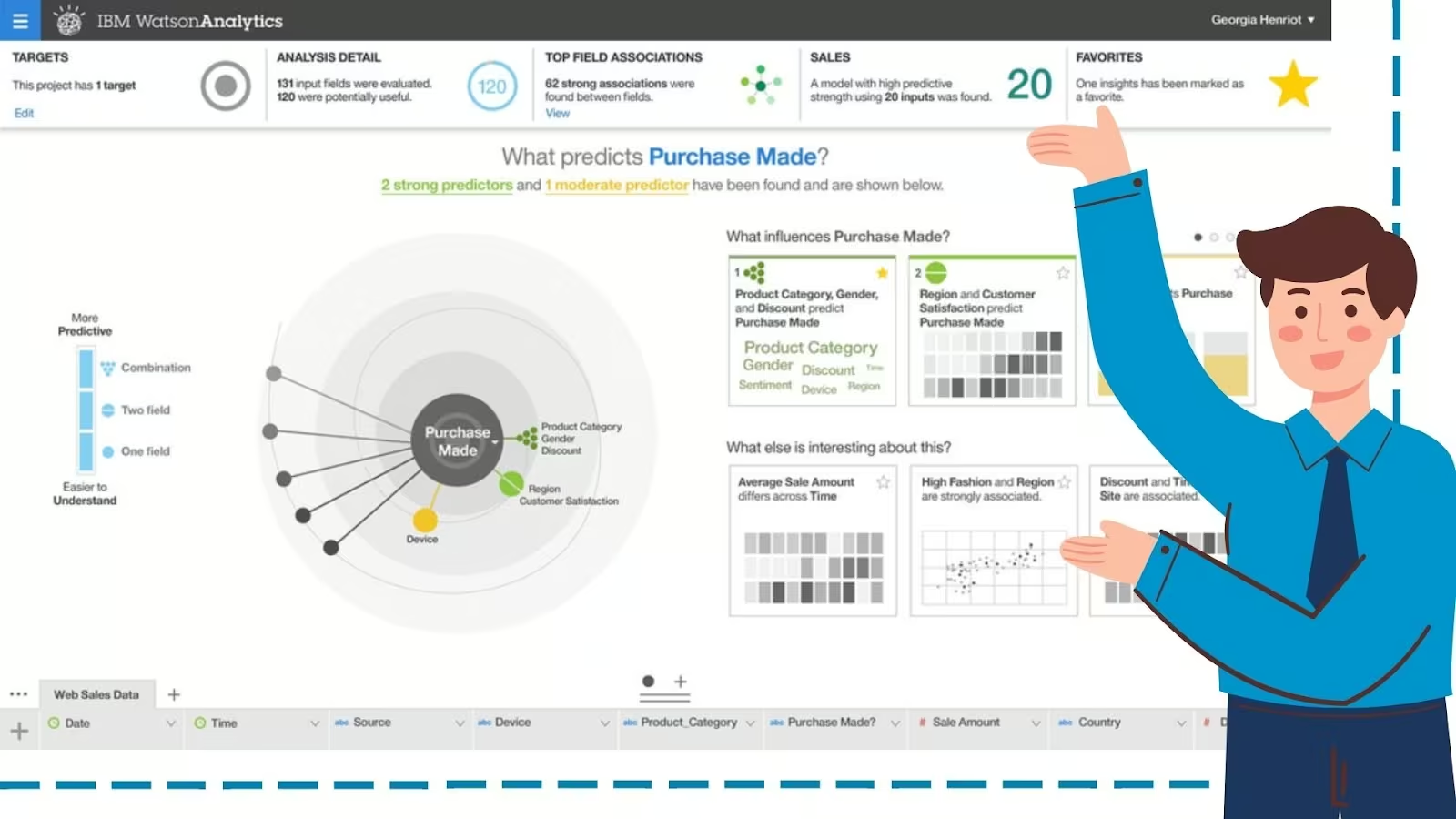
- Predictive modelling combines machine learning and data mining to forecast potential future outcomes using both current and historical data.
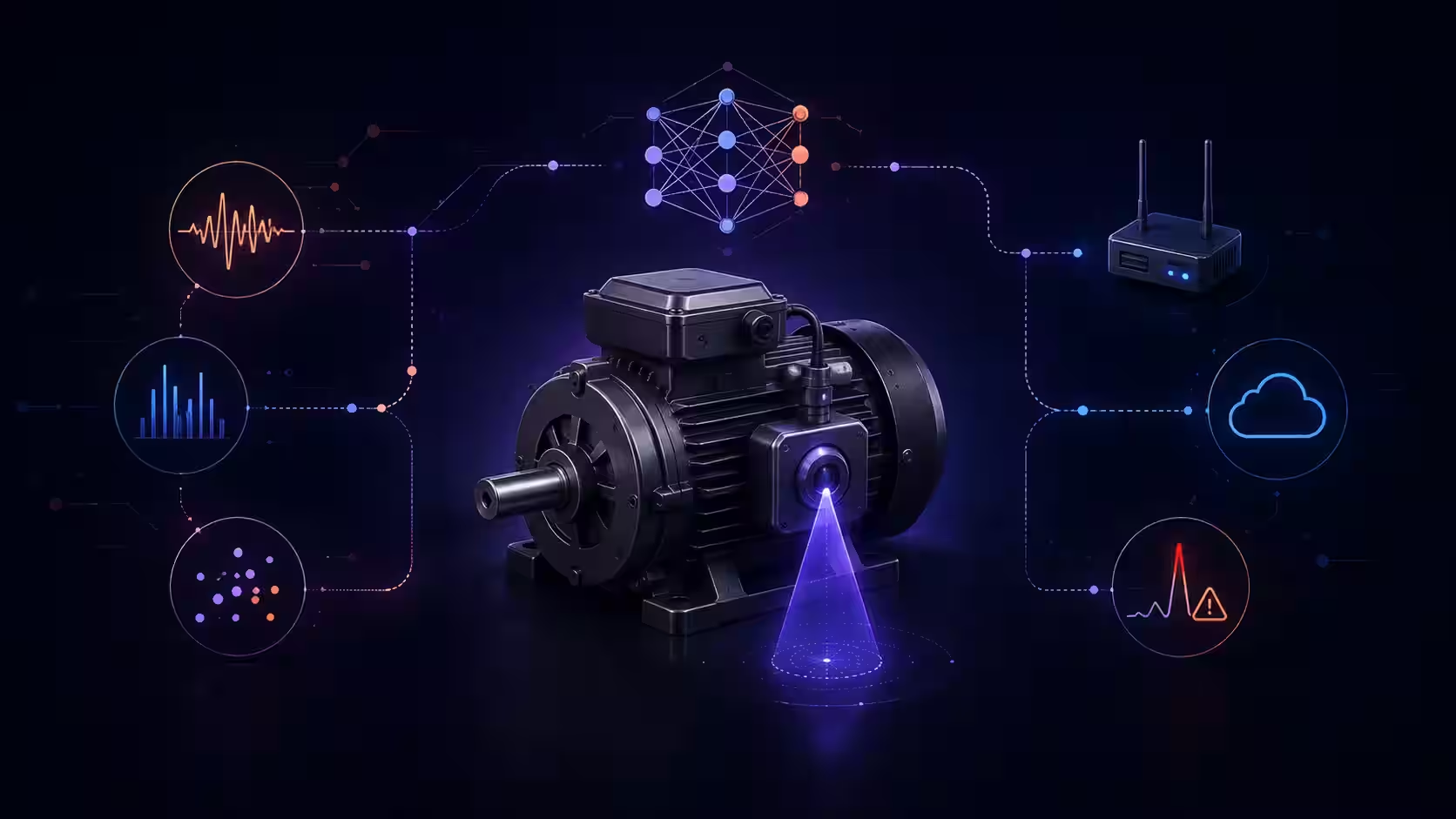
Segmentation, forecasting and anomaly detection only pay off when they run on your live operational data. We build and validate those models against your process signals.
An example of predictive analytics
- Predictive data mining involves identifying trends, patterns, and anomalies within data sets, and it often utilizes a blend of statistics, machine learning, and AI techniques.
- Sentiment analysis employs natural language processing (NLP) to mine text and decide whether the data expresses a negative, positive, or neutral sentiment. This helps businesses gauge how their brand might be perceived by potential customers.
- Cluster analysis involves analyzing data to identify clusters of related data points, often used for data classification, and it is an unsupervised algorithm in machine learning.
- Cohort analysis breaks down large data volumes into related groups or “cohorts,” frequently used by businesses to segment customer information for targeted marketing insights.
- Data visualization represents data graphically to convey findings through easily understandable visual representations, a common practice in data analytics.
- Complex event processing (CEP) tracks and analyzes data in real-time to derive actionable conclusions.
- Machine learning (ML), a form of artificial intelligence (AI), focuses on building analytic models that can autonomously learn. ML models are created by training algorithms with large data sets, which progressively refine the algorithm with each iteration.
Each of these techniques employs its own set of advanced analytical solutions and software tools. For instance, Python is frequently used for machine learning, R for statistical analysis, and SAS for advanced predictive analytics.
InTechHouse Advanced Data Analytics Cases
InTechHouse has many years of experience with different data analytics tools and predictive analysis that really work, and we compare the AI tools for data analysts we reach for most often. We want to show our advanced analytics use cases for you!Data Centralization SolutionOne of their most remarkable projects was the design and construction of IoT devices that revolutionized data collection and storage. InTechHouse collaborated with a large multinational corporation facing challenges with scattered data from various departments. The corporation’s internal employees found it difficult to access the information they needed, which hindered their decision-making processes.
Seeing an opportunity to transform their data management, InTechHouse got to work. They engineered state-of-the-art IoT devices capable of gathering and saving information about events in a centralized database. These devices were strategically deployed throughout the company, collecting real-time data from diverse sources.
With the new IoT infrastructure in place, the corporation’s internal employees experienced a groundbreaking change. They now had easy and streamlined access to the information they needed, making their workflows more efficient and productive. Moreover, InTechHouse implemented high-level external protection to ensure the data’s security and compliance with industry standards.
Data Analysis Standardisation
However, the most significant breakthrough came with a specific feature introduced by InTechHouse – the BI data event analysis ability. In the past, the corporation struggled to analyze its data effectively, missing valuable insights and patterns. With this new capability, they could unlock the true potential of their data.
The data analysis team at InTechHouse worked tirelessly to develop sophisticated algorithms that could process the data in real time, providing actionable insights. Patterns and correlations emerged, enabling the corporation to make data-driven decisions with confidence. The added BI data event analysis feature transformed their business operations, leading to increased efficiency and improved customer satisfaction.
As news of the successful project spread, more businesses sought InTechHouse’s expertise in advanced analytics. Their reputation as a trusted partner in harnessing the power of data continued to grow.
Recognizing the need for a transformative solution, InTechHouse introduced the concept of Data Mesh architecture. They worked closely with various companies to combine different data sources that had previously been separate islands.
The Impact of Advanced Business Analytics
In the business arena, applying advanced business analytics can provide organisations with a significant competitive advantage, once the basics of what business analytics is are actually in place. It achieves this by utilising advanced analytics capabilities to extract valuable insights from copious amounts of data. These insights drive the decision-making process, enhancing efficiency and increasing profitability.
Advanced business analytics can revolutionise various aspects of an organisation. For instance, marketing and sales can aid in understanding customer behaviour, optimising marketing strategies, and personalising customer experiences. It can help streamline processes, reduce costs, and enhance supply chain and operations efficiency.
Real-World Examples of Advanced Analytics
Theory aside, the true value of advanced analytics is best understood when put into practice. There are countless examples of advanced analytics in action across many industries.In the healthcare sector, for instance, advanced analytics can predict patient readmissions, identify disease risk factors, and optimise treatment plans. In retail, it is leveraged to forecast demand, optimise pricing, personalise marketing efforts, and enhance customer experiences. In the finance industry, advanced analytics aids in fraud detection, credit risk assessment, and customer segmentation.
The Future of Advanced Data Analytics
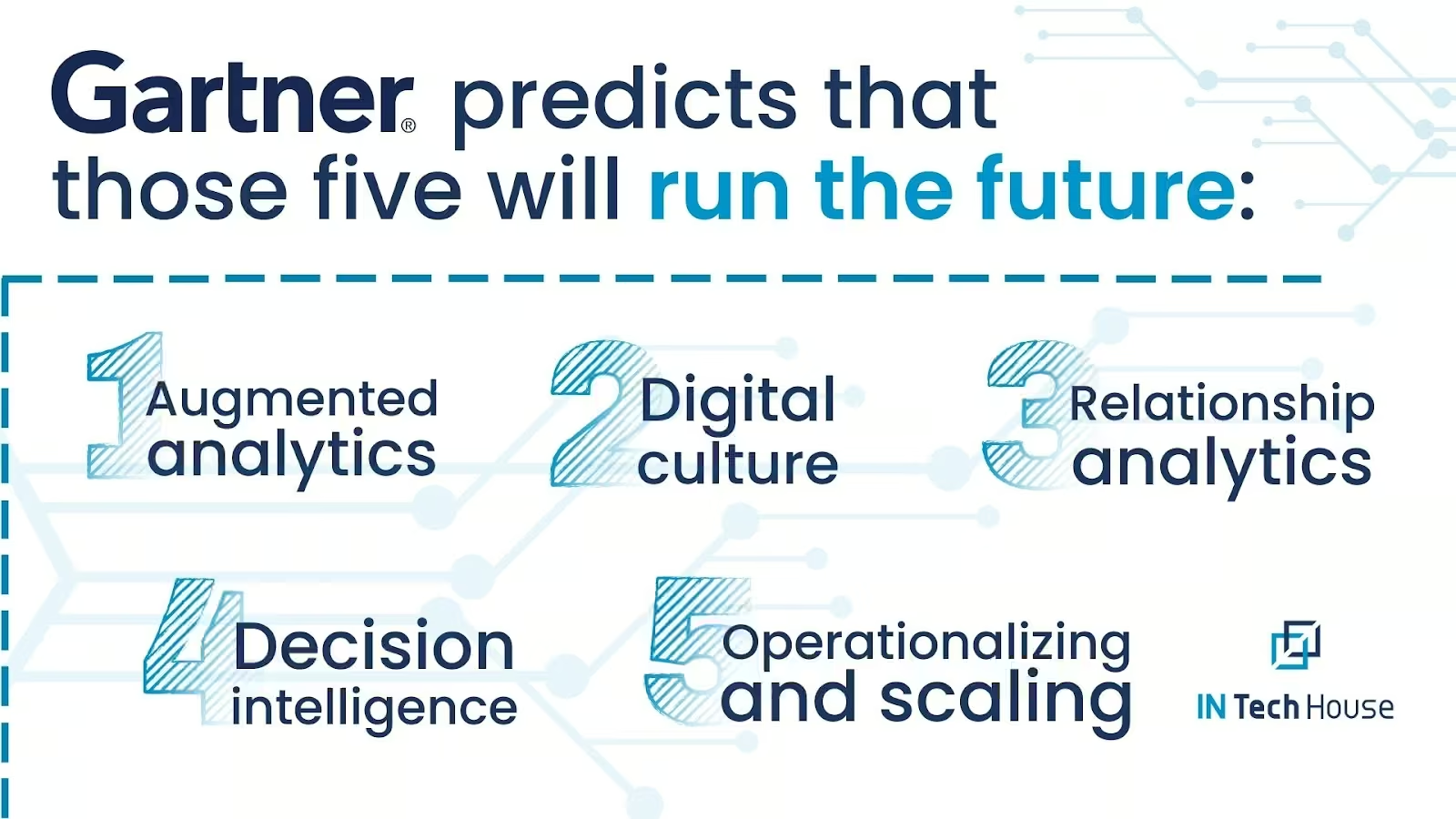
As we look toward the future, it’s clear that advanced analytics is not just a fleeting trend but a fundamental aspect that will continue to shape how we conduct business and make decisions. The scope of advanced data analysis is expanding, with advancements in advanced analytics technologies continuously pushing the boundaries of what we can achieve.There is a rising trend in integrating advanced analytics with other burgeoning technologies like the Internet of Things (IoT), Blockchain, and Augmented Reality (AR), to name a few. This symbiosis will likely lead to even more enhanced and sophisticated advanced analytical solutions, offering unparalleled insights and decision-making capabilities.In addition, the continued development and refinement of advanced analytics software will enable more businesses to tap into this powerful resource, democratising access to advanced data analysis tools. This means that even smaller organisations can leverage advanced analytics methodologies, levelling the playing field and driving innovation across sectors.
Read also:
- The role of machine learning in data analytics
- Big Data Analytics: What It Is And Why It Matters
- Predictive Analytics Services and Custom Data Platforms: Guide for Tech Business
Source: Datamation
Moreover, we can expect the evolution of more user-friendly tools, lowering the barrier to entry for those without deep technical expertise. This will enable a wider range of professionals to engage with advanced analytic techniques, further fostering a data-driven culture within organisations.As more businesses realise the potential benefits of integrating advanced analytics into their strategy, the demand for professionals skilled in advanced analytics will grow. As such, investing in training and development in this field is an excellent move for both individuals seeking a rewarding career path and organisations aiming to stay competitive in the digital age.
While the future of advanced analytics is undoubtedly exciting, it also calls for responsible and ethical use. With the increasing capacity to gather and analyse data, businesses must uphold strong data governance practices and respect individual privacy rights.
Conclusion
Though broad and multi-faceted, the advanced data analytics definition can be distilled into using sophisticated methods and technologies to predict future scenarios and make data-driven decisions. As advanced analytics generally refers to forward-looking methods, mastering these advanced analytics methodologies and tools can provide any business with an edge in today’s data-driven world.
So, whether you’re new to this field or looking to deepen your knowledge, understanding the fundamentals, capabilities, and real-world applications of advanced analytics is a step in the right direction. As the world continues to generate and rely on data, the importance and relevance of advanced analytics will only keep growing.
Our AI team documents assumptions, tests against held out production data and shows where a model stops being reliable. That is the difference between an analytics slide and an analytics system.
Let's talk about your next move
Not sure where to start? We work with companies at every stage, from early ideas to enterprise-level builds. A 30-minute call can save you months of guesswork.
FAQ
What makes analytics "advanced" rather than basic reporting?
Analytics becomes advanced when it estimates what is likely to happen or what action to take, instead of summarizing what already happened. Basic reporting aggregates historical data into KPIs and dashboards. Advanced analytics applies statistical models, machine learning, optimization or simulation, and its outputs carry uncertainty that must be quantified. A useful test is whether the result includes a probability, forecast interval or recommendation; if it only shows totals and trends, it is still descriptive reporting.
What data and skills are needed before starting advanced analytics?
Advanced analytics needs a sufficiently long, consistent history of the target variable, reliable timestamps and the features that plausibly drive it, before any modeling skill matters. For demand or failure prediction that usually means historical records covering several seasonal or maintenance cycles. The team needs statistics and machine learning skills in Python or R, plus domain experts who can label events and judge plausibility. Missing labels, such as undocumented failures, block more projects than algorithm choice.
When is cluster analysis more appropriate than cohort analysis?
Cluster analysis is more appropriate when the groups are unknown and must be discovered from the data, while cohort analysis fits when groups are defined in advance by a shared start event, such as signup month. Clustering, for example k-means or DBSCAN, is unsupervised and useful for finding customer segments or machine operating modes. Cohort analysis tracks how predefined groups behave over time, such as retention. Clusters need validation by domain experts because algorithms always return groups.
What is complex event processing used for?
Complex event processing (CEP) is used to detect meaningful patterns across streams of events in real time and trigger an action within milliseconds or seconds. Typical uses include fraud detection on payment streams, alarm correlation in industrial monitoring and SLA breach detection in logistics. A CEP rule might fire when three temperature warnings occur on one line within ten minutes. Engines such as Apache Flink or Esper evaluate these rules continuously instead of querying stored data afterwards.
How should an advanced analytics model be validated before the business relies on it?
An advanced analytics model should be validated on held-out data it never saw during training, ideally a later time period, and compared against a simple baseline such as last year's value or a moving average. If it cannot beat the baseline convincingly, it adds complexity without value. Validation should also document where the model fails, for example rare events or new product lines. After deployment, monitoring for data drift shows when retraining is needed.
Tomasz Andrysiak, DSc, PhD
Tomasz Andrysiak, DSc, PhD, is an Expert and a Professor at Bydgoszcz University of Science and Technology. He has more than 30 years of academic, research, R&D, and technology-implementation experience in artificial intelligence, computational intelligence, signal processing, anomaly detection, cybersecurity, and complex information systems.
His research focuses on machine-learning and computational-intelligence methods for analyzing signals, time series, network traffic, industrial data, and multimodal datasets. He specializes in anomaly and failure detection, predictive modeling, intelligent monitoring, critical-infrastructure security, smart metering, biomedical signal analysis, and the practical deployment of AI in industrial and public-sector systems.
Tomasz is the author or co-author of more than 75 scientific publications, including papers published in internationally recognized journals and conference proceedings indexed by Web of Science and Scopus. His research has covered network anomaly detection, cybersecurity of critical infrastructure, ECG signal analysis, machine learning, smart water networks, telecommunications, and intelligent industrial systems.
He has led and contributed to national and European R&D programs focused on cyber situational awareness, critical-infrastructure resilience, autonomous systems, Big Data, intelligent water management, blockchain-based transaction platforms, and industrial AI. He leads industrial-doctorate projects involving AI-based CMDB automation and machine-learning methods for knowledge discovery in Big Data.
Tomasz is an IEEE Senior Member and has served as an elected member of the Commission of Informatics and Automation of the Polish Academy of Sciences, Poznań Branch. He has participated in scientific committees and journal boards, supervised doctoral research, reviewed publications for international journals, and co-authored patents and patent applications related to signal detection and LoRa-based ECG monitoring. He writes about industrial AI, machine learning, anomaly detection, predictive analytics, cybersecurity, signal processing, time-series analysis, and intelligent infrastructure.
Tomasz Andrysiak's academic profiles:
https://orcid.org/0000-0001-8138-6619
https://ludzie.nauka.gov.pl/ln/profiles/fHOpojQ2lIF
https://link.springer.com/chapter/10.1007/978-3-642-32384-3_28
https://www.researchgate.net/profile/Tomasz-Andrysiak
https://scholar.google.com/citations?user=RHW7zx4AAAAJ&hl=pl
https://dblp.org/pid/41/6793.html
https://radon.nauka.gov.pl/dane/profil/6FFA1E51186802ECFFB49644209B5BE0EBD68C55
https://pbs.edu.pl/pl/pracownik/tomasz-andrysiak
https://www.youtube.com/watch?v=6e1GTqT5czM
Let's talk about your next project
From first prototype to production, our engineers can help you scope it, build it and get it certified.



Discuss your product with our R&D team
This initial conversation is focused on understanding your product, technical challenges, and constraints.
No sales pitch - just a practical discussion with experienced engineers.
Share a few details about your product and context. We’ll review the information and suggest the most appropriate next step.