
The role of machine learning in data analytics


In the modern world, businesses have access to vast amounts of information. However, extracting meaningful insights from this data can be a challenging task. This is where machine learning comes into play. Machine learning, a subset of artificial intelligence, empowers organizations to leverage data analytics in more advanced and impactful ways. In this blog post, we will explore the significant role of machine learning in data analytics, its benefits, and the ways it is revolutionizing industries.
What is Machine Learning (ML)?
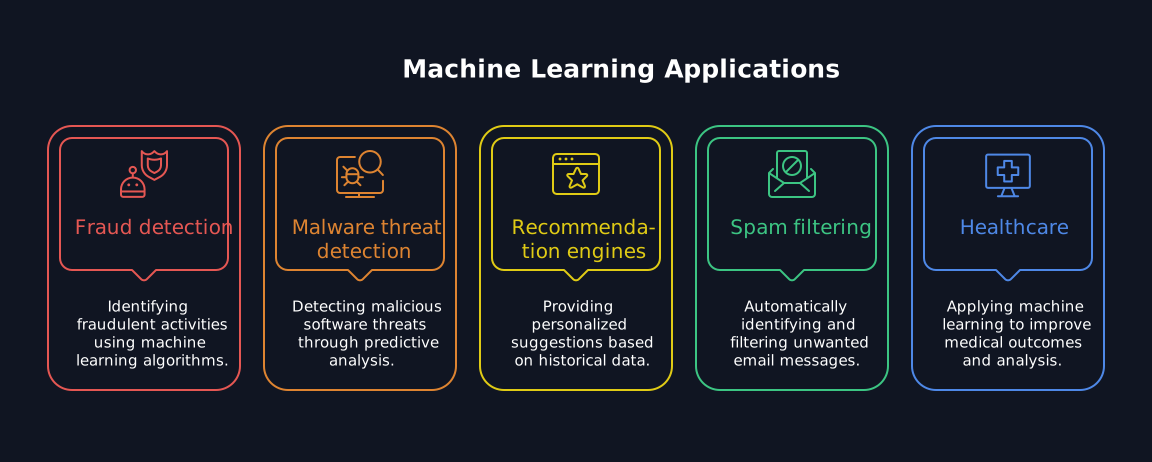
In simple words, we can explain Machine Learning (ML) is a subset of Artificial Intelligence (AI) that empowers software applications to enhance precision and accuracy in predicting outcomes. By utilizing historical data, machine learning algorithms can make predictions and produce output values. Various industries benefit from machine learning, including fraud detection, malware threat detection, recommendation engines, spam filtering, healthcare, and more.
Most analytics teams can train a model. The gap is retraining, monitoring and connecting it to a live data source. We close that gap on industrial and enterprise data.
Why is Machine Learning Important?
The importance of machine learning lies in the fact that data serves as the lifeblood of businesses and organizations. As the demand for data continues to grow, machine learning becomes crucial for data engineers and data scientists. This technology enables the analysis of large datasets and the calculation of risk factors efficiently. It has revolutionized data engineering by transforming data handling, extraction, and interpretation processes.
Do you know that businesses can save BILLION using Machine Learning?
Source: InTechHouse own Research, Abdalslam
What is Data Analytics and Data Science?
Anyone asking what big data analytics is can start here: data analytics is the practice of examining large and diverse datasets to uncover meaningful patterns, insights, and trends. It involves the application of statistical techniques, data mining, and machine learning algorithms to extract valuable information and knowledge from data. Data analytics helps organizations make informed decisions, optimize processes, identify opportunities, and mitigate risks.
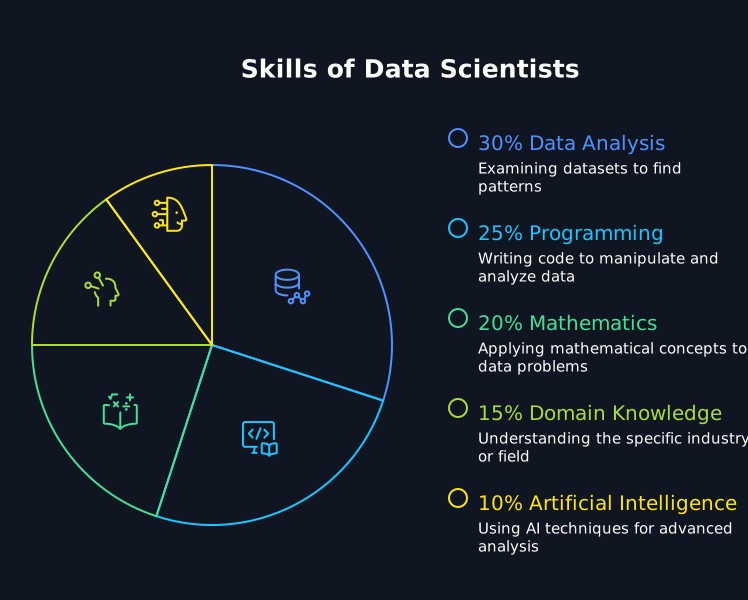
On the other hand, data science encompasses the broader domain of data analysis and goes beyond traditional statistical analysis. It involves utilizing modern techniques and tools to handle vast volumes of data, discover complex patterns, and derive actionable insights. Data science leverages scientific methods, statistics, data analysis, and artificial intelligence to extract precise value from data.In the realm of data science, complex machine learning algorithms are employed to build models that can automatically learn and make predictions from data. Data scientists and data engineers possess a diverse range of skills, combining their expertise in data analysis, programming, mathematics, and domain knowledge. They work together to collect and analyze data from various sources, including the web, customer interactions, and smartphones, in order to uncover valuable insights that drive business growth.
Data analytics and data science play instrumental roles in empowering organizations with data-driven decision-making capabilities. By leveraging advanced techniques and technologies, businesses can harness the power of data to gain a competitive advantage, optimize operations, enhance customer experiences, and fuel innovation. These disciplines continue to evolve as new methodologies, tools, and approaches emerge, opening up exciting possibilities for extracting deeper insights and value from data.
Machine learning rarely works in isolation from the reporting layer that business teams already rely on. Dashboards, KPIs and scheduled reports belong to business intelligence, and knowing what business intelligence is makes it easier to see where predictive models add value on top of historical reporting.
Read also:
- Advanced Data Analytics: Definition and Techniques
- The Future of Data Analytics
- Predictive Maintenance with Machine Learning: Models, Training, and Deployment
InTechHouse: Empowering Energy and Water Management with Media Consumption Analyzer
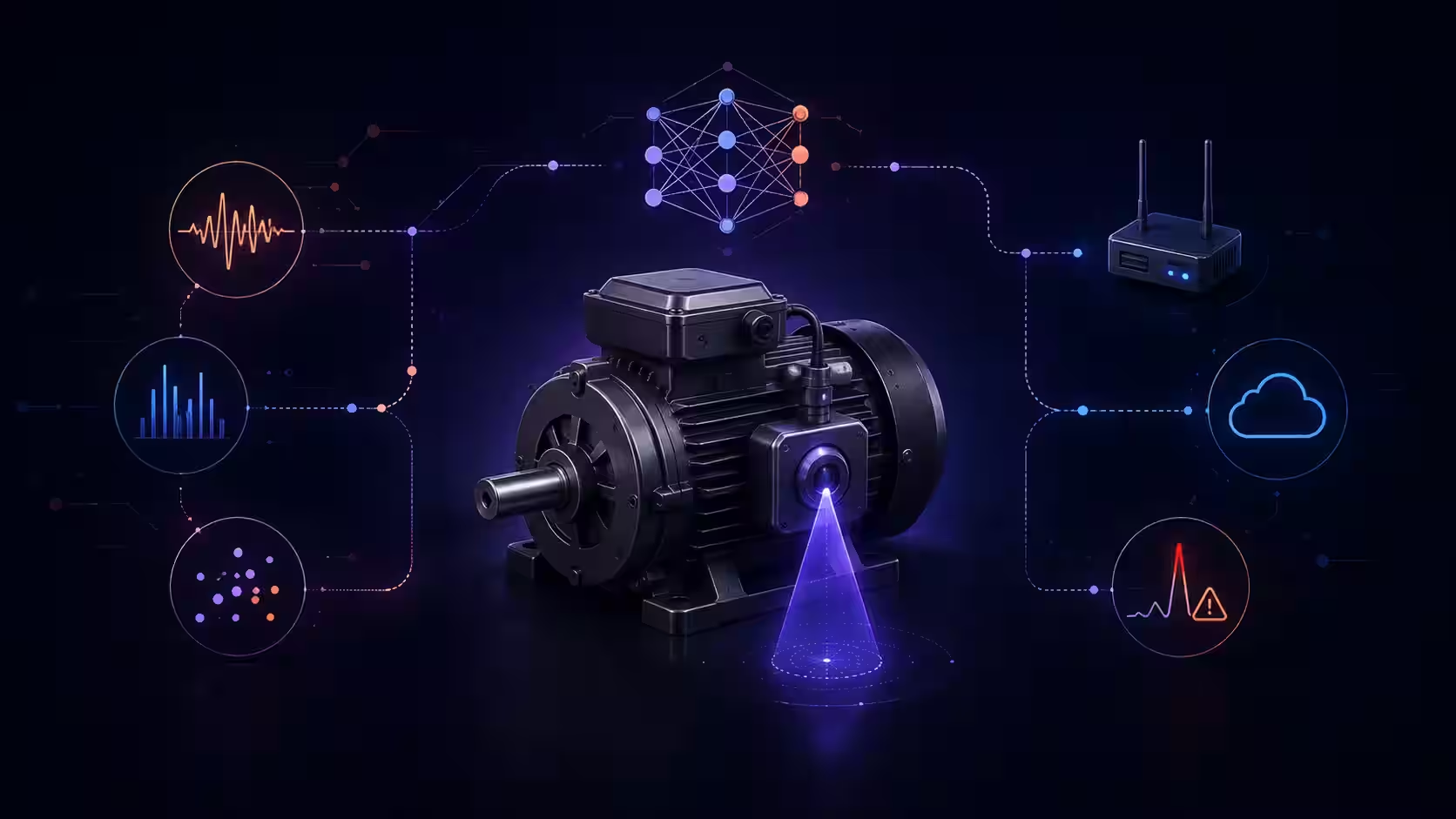
At InTechHouse, we are committed to developing innovative solutions using ML algorithms that drive efficiency and sustainability. One of our notable projects is the Media Consumption Analyzer, a cutting-edge system designed for analyzing energy and water consumption in managed buildings.The goal of this project was to create an autonomous device that could accurately collect, record, and analyze data from various devices within a single machine, installation, or switching station.
By leveraging advanced data collection, recording, and analysis capabilities, the Media Consumption Analyzer becomes a vital tool for effective energy and water management. It enables users to track consumption patterns, identify anomalies, and implement measures to reduce waste and enhance resource efficiency.
We have built anomaly detection, forecasting and risk scoring models on operational data where errors are expensive. Ask us how we validate a model before it drives a decision.
Let's talk about your next move
Not sure where to start? We work with companies at every stage, from early ideas to enterprise-level builds. A 30-minute call can save you months of guesswork.
FAQ
1. What is advanced data analytics?
Advanced data analytics techniques are the sophisticated methods and algorithms used to extract insights and patterns from complex and large-scale datasets. It goes beyond basic data analysis by incorporating techniques such as machine learning, predictive modeling, and data mining to gain deeper and more valuable insights.
2. What is the most-asked machine learning?
The most-asked machine learning algorithm is likely the "classification" algorithm, which is used to categorize data into different classes or groups based on patterns and features. Classification algorithms are widely applied in various domains, including image recognition, spam detection, and sentiment analysis.
3. What are machine learning aids?
Machine learning aids are tools, frameworks, or libraries that assist in the development and implementation of machine learning models. They provide pre-built algorithms, data preprocessing functionalities, and evaluation metrics to streamline the machine learning workflow and enhance model performance.
4. What is business intelligence?
Business intelligence (BI) refers to the process of collecting, analyzing, and presenting data to support business decision-making. It involves gathering data from various sources, transforming it into meaningful insights, and presenting it in visualizations or reports. BI tools enable organizations to monitor key performance indicators, identify trends, and make data-driven decisions to drive growth and success.
5. What are machine learning jobs?
Machine learning jobs encompass a range of roles and responsibilities related to developing, implementing, and maintaining machine learning models and systems. These jobs can include machine learning engineers, data scientists, research scientists, data analysts, and AI consultants. Machine learning professionals work on tasks such as data preprocessing, model development, training and evaluation, and deploying machine learning solutions in real-world applications.
Damian Ledziński, PhD Eng.
Damian Ledziński, PhD Eng., is an Applied Artificial Intelligence Expert and an Assistant Professor at Bydgoszcz University of Science and Technology. He has over 15 years of academic, research, software-engineering, and technology-development experience.
His work focuses on applying artificial intelligence, machine learning, deep neural networks, and data science to complex real-world systems. His principal research and engineering interests include autonomous unmanned aerial vehicles, drone navigation and swarm intelligence, biomedical engineering, medical signal and image analysis, predictive modeling, industrial IoT, and intelligent water-management systems.
Damian has contributed to multidisciplinary R&D initiatives including AI-assisted medical diagnostics, a Polish ventilator prototype, autonomous indoor drone systems for warehouse inventory, AI-supported water-consumption analysis, virtual medical assistants, and intelligent systems combining embedded devices with machine-learning models.
He is the author or co-author of more than 30 scientific publications. His work has appeared in international scientific publications covering artificial intelligence, biomedical engineering, signal analysis, autonomous systems, environmental monitoring, and data-driven infrastructure.
Damian is a co-creator of academic programs in Engineering in Medicine, AI in Medicine, and Data Science at Bydgoszcz University of Science and Technology. He combines scientific research with hands-on implementation, translating experimental AI methods into deployable technology. He writes about applied AI, machine learning, predictive analytics, autonomous UAV systems, AI in medicine, biomedical signal processing, industrial IoT, and intelligent models in real-world systems.
Damian Ledziński's academic profiles:
https://orcid.org/0000-0003-0796-4390
https://wtie.pbs.edu.pl/pl/pracownik/damian-ledzinski
https://www.researchgate.net/profile/Damian-Ledzinski
https://scholar.google.pl/citations?user=AlQpPB0AAAAJ&hl=pl
https://ludzie.nauka.gov.pl/ln/profiles/DN6pHXU6KZm/publications/f83a8833-6060-4fae-8628-3dbf57661394
Let's talk about your next project
From first prototype to production, our engineers can help you scope it, build it and get it certified.




Discuss your product with our R&D team
This initial conversation is focused on understanding your product, technical challenges, and constraints.
No sales pitch - just a practical discussion with experienced engineers.
Share a few details about your product and context. We’ll review the information and suggest the most appropriate next step.