Dutch public sector organization with complex workflows
A public sector organization in the Netherlands operating within a complex administrative environment where efficient communication and coordination are critical to delivering services at scale. Given the nature of government operations, solutions must not only be reliable but also aligned with formal processes and workflows that structure how teams collaborate and make decisions.
Why communication tools did not reflect real workflows
Improving communication alone was not sufficient, as the organization needed a way to reflect real-world processes within a digital environment.
Existing tools did not support the structure and complexity of internal workflows, making it difficult to coordinate activities, maintain consistency, and ensure that communication aligned with how work was actually performed across teams. As a result, video conferencing remained disconnected from business processes, limiting its effectiveness in supporting daily operations.
Requirements for workflow-based communication
To address these challenges, the organization required a solution that could:
- reflect real-life business workflows in a digital environment
- structure communication around processes rather than isolated interactions
- support complex organizational requirements
- scale across teams and use cases
The goal was to create a system that integrates communication directly into how work is executed.
Video conferencing platform built into business workflows
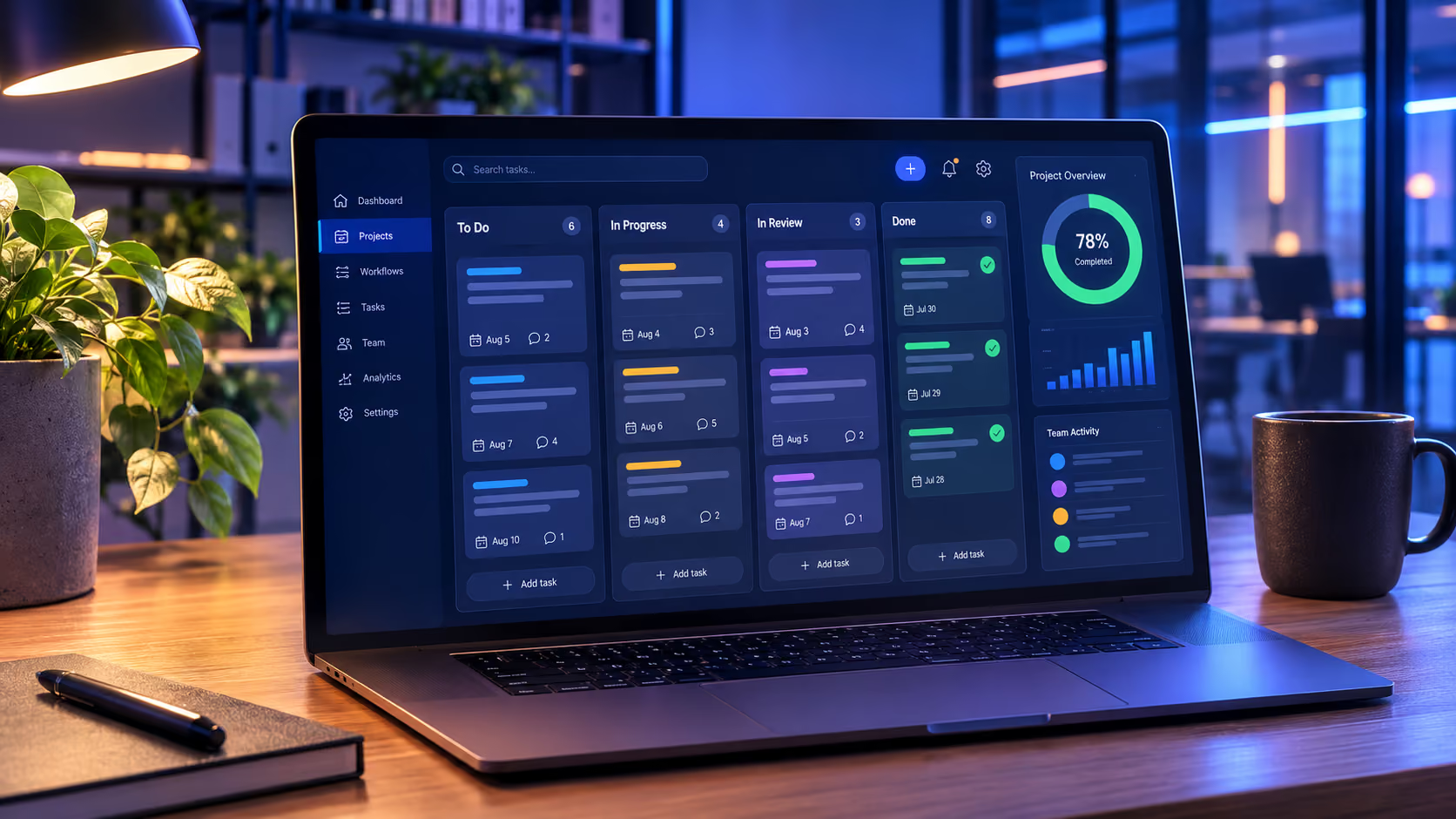
The project involved custom software development services to build a real-time video conferencing platform aligned with the organization's business workflows. Rather than treating video calls as standalone interactions, the application integrated communication into structured processes that reflected how teams worked.
Technology stack:
- Java, Kotlin
- Spring Boot
- Kubernetes
How video calls follow structured government processes
The platform enables real-time communication while embedding it within defined workflows, ensuring that interactions follow the structure of actual business processes rather than operating independently. This allows teams to coordinate activities more effectively, maintain context during communication, and ensure that decisions and actions remain aligned with organizational procedures. The system is intuitive in everyday use, while still supporting complex scenarios required in a public sector environment.
More structured collaboration across teams
The introduction of workflow-based communication improved how teams collaborate across the organization, making interactions more structured and aligned with real processes. Instead of relying on disconnected tools, users now operate within a system that reflects how work is actually performed, which reduces confusion and improves coordination. Communication becomes part of the workflow itself, rather than a separate layer.
Results: workflow-based communication with commercialization potential
The platform delivered measurable improvements across key areas:
- more structured and consistent communication
- improved coordination across teams
- reduced friction in daily operations
- better alignment between communication and processes
- new opportunities for product commercialization
Following the initial implementation, the solution demonstrated strong potential for further development and commercialization. The client has already begun expanding its use and exploring new markets, building on a platform that supports both internal efficiency and external growth.
Frequently asked questions
Can video conferencing be built into government business workflows rather than run as a standalone tool?
Yes, video calls can be embedded within defined workflows so interactions follow the structure of actual business processes. In this project, InTechHouse built the platform so that teams keep context during communication and decisions stay aligned with organizational procedures, while the system stays intuitive in everyday use.
Which technology stack supports a workflow-based video conferencing platform for the public sector?
Java and Kotlin with Spring Boot, deployed on Kubernetes, formed the stack of this Dutch government platform. In this project, InTechHouse used this stack to build real-time video conferencing designed to scale across teams and use cases and to support the complex scenarios required in a public sector environment.
Can a government video conferencing platform be commercialized beyond its first deployment?
Yes, the Dutch public sector platform showed strong potential for further development and commercialization after its initial implementation. In this project, InTechHouse delivered a workflow-based platform whose use the client has already begun expanding, while also exploring new markets for the product.
We’ll review your goals, technical constraints, and opportunities to design a solution that fits your organization.
Planning a data platform, analytics system, or AI solution? Our team can help design scalable architectures and deliver production-ready solutions tailored to your business.