Polish State Archives: over 70 units nationwide
The State Archives is a nationwide network of more than 70 organizational units responsible for collecting, preserving, and providing access to public records across Poland.
The institution manages archival materials from a wide range of sources, including government bodies, courts, local authorities, educational and religious institutions, industrial organizations, and private collections.
Why paper-era archiving could not handle electronic records
As public institutions increasingly moved toward digital documentation, the existing archival processes were no longer sufficient to manage the growing volume and complexity of electronic records.
The client needed a system capable of:
- securely storing large volumes of digital documents
- ensuring long-term preservation and integrity of records
- supporting access and search across distributed institutions
- operating at a national scale across thousands of entities
At the same time, strict requirements around data security, compliance, and reliability made this transition particularly complex.
Requirements for a national electronic records archive
To support the transition to digital records, the institution required a platform that could:
- handle high volumes of documents across multiple institutions
- ensure data immutability and long-term preservation
- provide fast and accurate search capabilities
- support integration with existing systems and workflows
- meet strict public sector security and compliance standards
The goal was to create a system that could serve as a foundation for nationwide digital archiving.
Archive of Electronic Documents built on microservices
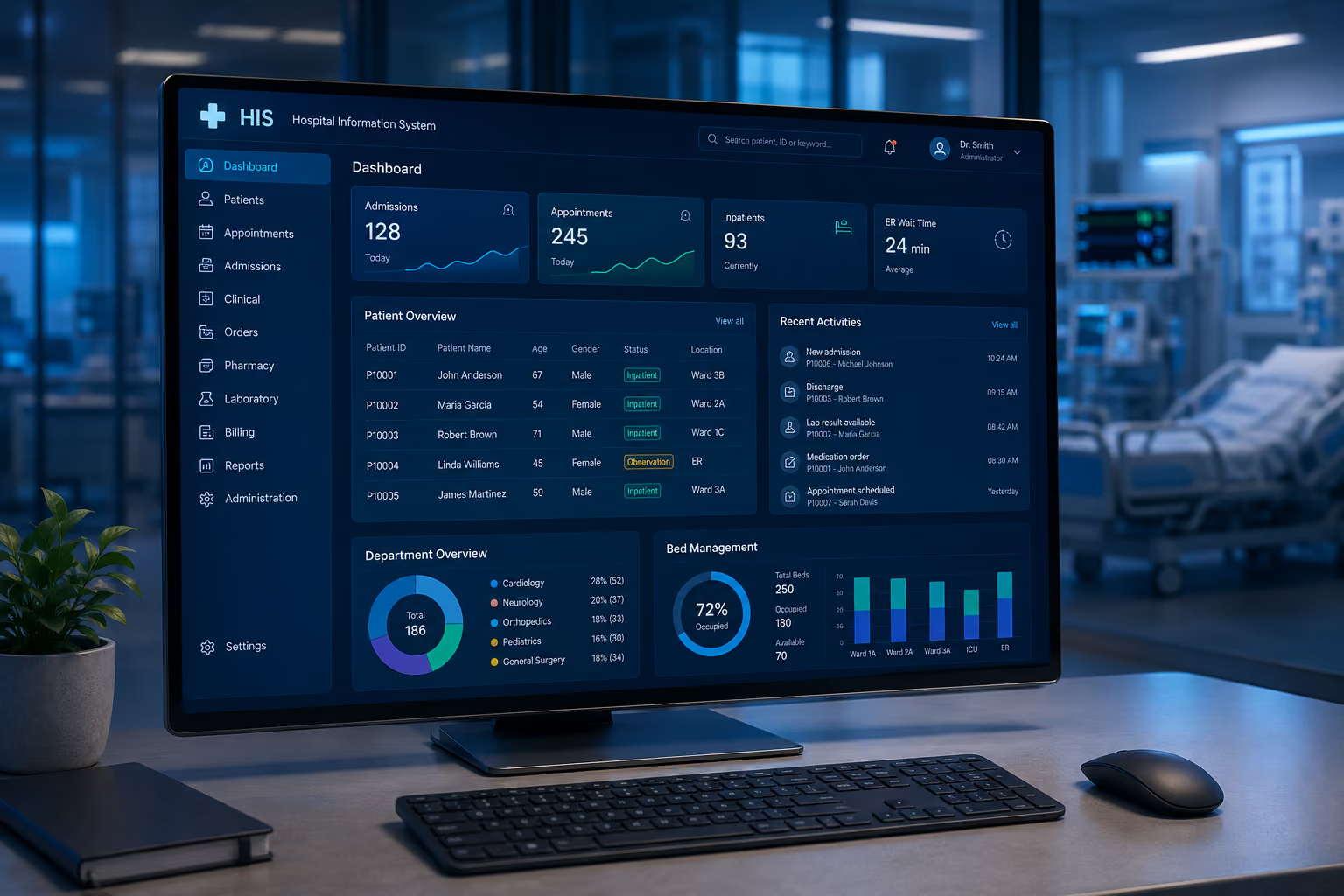
A large-scale digital archiving platform, known as the Archive of Electronic Documents (ADE), was developed to support secure and efficient document management across Poland.
The platform was built using a microservices architecture and modern software development practices, enabling independent deployment and maintenance of individual services while supporting the scalability and reliability of the overall system.
The platform integrates both custom-built components and selected open-source solutions, combining flexibility with proven technologies.
Designed for high performance and security, the system supports long-term storage, advanced search capabilities, and reliable access to archived documents across institutions.
The platform is built using enterprise-grade technologies:
- Java and Spring Framework for backend services
- Liferay Portal for user interface and content management
- PostgreSQL for structured data storage
- Elasticsearch for indexing and advanced search
- Business process engine for workflow management
- WORM (Write Once Read Many) storage for data immutability
- BI reporting server for analytics and reporting
How WORM storage and search keep records intact
The platform collects and stores electronic documents from multiple institutions in a centralized yet scalable system.
Microservices handle different parts of the process, including data ingestion, storage, indexing, and retrieval.
Documents are stored using WORM (Write Once Read Many) technology, ensuring that once data is recorded, it cannot be altered, supporting long-term integrity and compliance.
Advanced search capabilities, powered by indexing technologies, enable users to quickly locate relevant documents across large datasets.
From traditional to fully digital archiving nationwide
The platform enabled a smooth transition from traditional archiving to a fully digital system, supporting institutions across the country. By centralizing and structuring electronic records, the system improved access to information and reduced the complexity of managing distributed archives. Automation and standardization of processes improved consistency and reduced manual effort.
Results: one archive serving over 10,000 institutions
The platform delivered measurable improvements across key areas:
- Nationwide scalability, supporting over 10,000 institutions
- Secure and compliant data storage, ensuring long-term integrity
- Improved access to documents, through fast and accurate search
- Reduced complexity of archive management, through centralized systems
- Future-ready architecture, supporting ongoing system expansion
Frequently asked questions
How does WORM storage protect the integrity of electronic records in a national archive?
WORM (Write Once Read Many) storage ensures that once data is recorded, it cannot be altered. That property supports long-term integrity and compliance for archived public records. In this project, InTechHouse stored documents in the Archive of Electronic Documents on WORM storage, while separate microservices handle data ingestion, storage, indexing and retrieval for the Polish State Archives.
Why use microservices for a nationwide digital archive platform?
Microservices allow independent deployment and maintenance of individual services while supporting the scalability and reliability of the overall system. For an archive operating at national scale, each part of the process can be maintained on its own. In this project, InTechHouse combined custom-built components with selected open-source solutions, using Java and the Spring Framework for backend services and Liferay Portal for the user interface.
How can users search archived documents quickly across thousands of public institutions?
Through a dedicated indexing layer. In the Archive of Electronic Documents, Elasticsearch indexes records so users can quickly locate relevant documents across large datasets. In this project, InTechHouse paired Elasticsearch with PostgreSQL for structured data, a business process engine for workflow management and a BI reporting server for analytics, serving the State Archives network and over 10,000 institutions.
We’ll review your goals, technical constraints, and opportunities to design a solution that fits your organization.
Planning a data platform, analytics system, or AI solution? Our team can help design scalable architectures and deliver production-ready solutions tailored to your business.