


Nowadays businesses are increasingly recognizing the importance of tailored solutions to meet their unique challenges. At the forefront of this transformative journey is our company, InTechHouse, a leading custom software development company in Western Poland. In this article, we explore the realm of embedded systems and the pivotal role custom software plays in optimizing these systems for diverse industries.
Embedded systems are specialized computing systems embedded within larger devices to perform dedicated functions. These systems are prevalent in various industries, from healthcare to automotive, playing a crucial role in enhancing efficiency and functionality.
Custom software, in the context of embedded systems, refers to software solutions specifically crafted to meet the unique requirements of a particular device or application. Unlike off-the-shelf software, custom solutions are tailored to ensure seamless integration with the embedded hardware, providing optimized performance. What about the custom software development market?

The growth can indicate a strong trend towards custom software for its ability to provide increased efficiency and flexibility to companies.
When embarking on the development of embedded systems, understanding the specific requirements is paramount. Factors such as performance expectations, scalability needs, and compatibility with existing infrastructure should be thoroughly evaluated.
Custom software development for embedded systems necessitates a deep understanding of hardware constraints. InTechHouse excels in developing solutions that align with the capabilities and limitations of the embedded hardware, ensuring optimal performance and longevity.
InTechHouse’s expertise in custom software development extends across diverse industries, including healthcare, automotive, manufacturing, and more. By comprehensively assessing the unique needs of each industry, InTechHouse delivers solutions that not only meet but exceed expectations.
What sets InTechHouse apart is its collaborative approach to development. The team works closely with clients to gain insights into their business processes, challenges, and aspirations. This collaborative effort ensures that the custom software not only addresses current needs but is also scalable to accommodate future growth.
In the realm of embedded systems, the advantages of custom software development are manifold, offering tailored solutions that cater to specific application needs.
Custom software ensures that the embedded system performs optimally for its intended purpose, because it is built on the constraints that define embedded software engineering: timing, memory and direct hardware access. By fine-tuning the software to match the unique requirements of the hardware, InTechHouse enhances overall system efficiency, providing a competitive edge in performance.
Security is a paramount concern in embedded systems, especially in industries such as healthcare and finance. Custom software allows for the implementation of robust security measures tailored to the application’s specific needs. This approach enhances reliability, protecting against potential vulnerabilities.
While off-the-shelf solutions may seem cost-effective initially, they often fall short in meeting evolving requirements. Custom software, designed with scalability in mind, offers long-term cost savings by adapting to changing needs without requiring a full system overhaul. Maintenance is streamlined as updates are crafted with the system’s unique architecture in focus.
Developing custom software for embedded systems is a collaborative and meticulous process that ensures the alignment of software with hardware capabilities and application needs.
Custom software development and MVP (Minimum Viable Product) represent distinct approaches in the realm of software creation. Understanding the differences between these two concepts is crucial for organizations aiming to embark on software projects. Below is a comparison table along with short descriptions highlighting the key disparities.
Custom software development involves the creation of a unique, tailor-made software solution designed to address specific business needs. It is a comprehensive and fully-featured approach, where the final product is built to meet all requirements and specifications. Custom software is crafted to align precisely with the organization’s processes, workflows, and objectives.
A Minimum Viable Product (MVP) is a development strategy focused on delivering the core functionalities of a software product with the minimum set of features required for it to be usable. The primary goal of an MVP is to quickly bring a basic version of the product to market, allowing for rapid user feedback and validation of the concept. Additional features are then iteratively added based on user responses and evolving requirements.
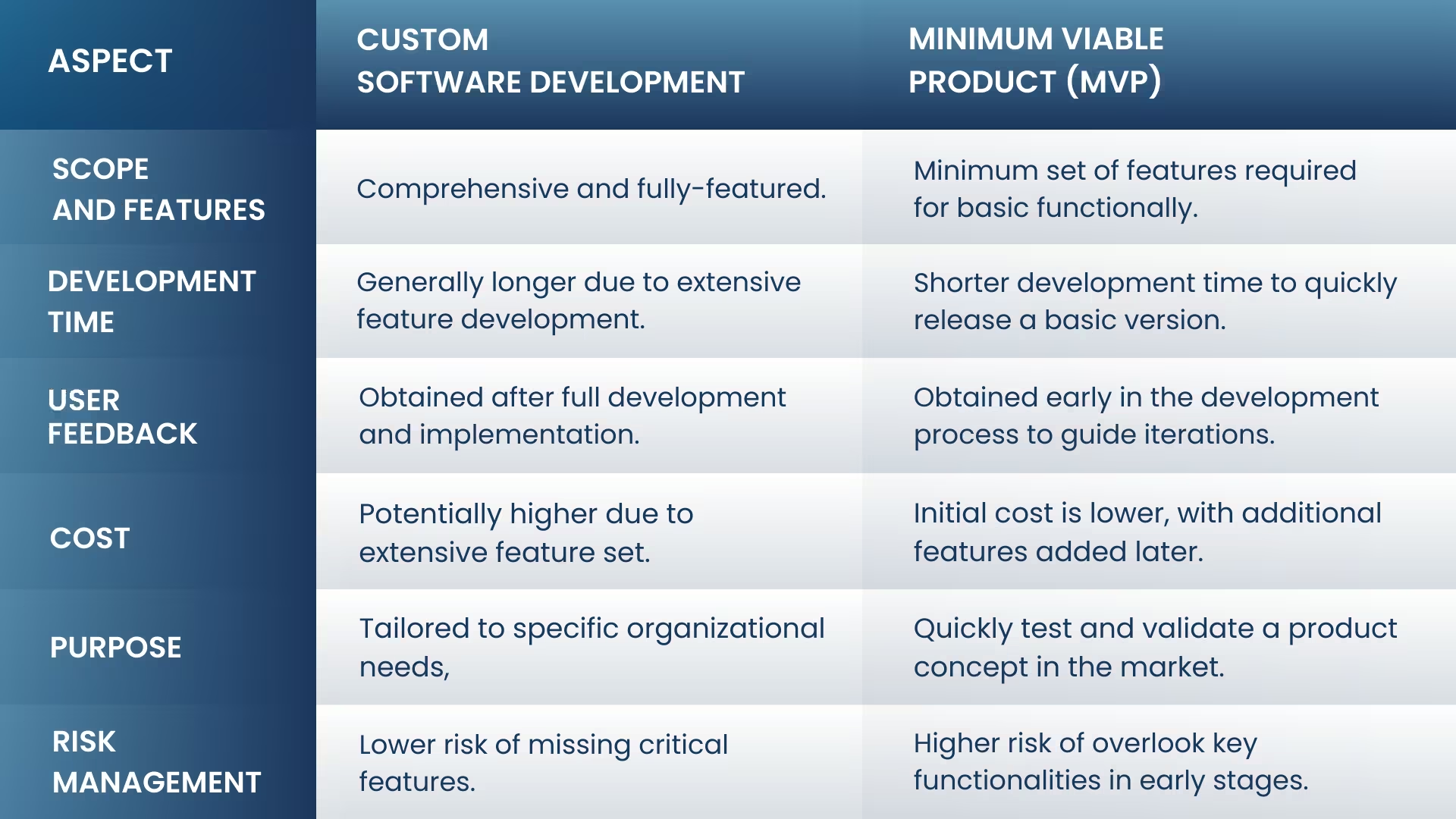
In summary, custom software development is ideal when precise and comprehensive solutions are required, while an MVP is suitable for organizations seeking a rapid and cost-effective way to test a product concept and gather user feedback before committing to full-scale development. The choice between these approaches depends on factors such as project goals, available resources, and the urgency of bringing a product to market.

Selecting the right software provider is pivotal in ensuring the success of your custom software development for embedded systems. Consider these key factors when making this crucial decision.
Look for a software provider with a proven track record and extensive experience in developing solutions for embedded systems. Assess their portfolio to gauge the complexity and diversity of projects they have undertaken. InTechHouse, with its wealth of experience, stands out as a reliable partner for your embedded software needs.
Understanding the intricacies of your industry is paramount for effective software development. A reputable provider, like InTechHouse, comprehends the unique challenges and requirements of different sectors. This industry-specific knowledge ensures that the custom software aligns seamlessly with your business goals.
The software development journey extends beyond the initial deployment. Choose a provider that offers robust post-development support and regular updates. InTechHouse is committed to ensuring the ongoing success of your embedded system by providing timely support and incorporating necessary updates to adapt to changing demands.
While custom software development for embedded systems offers tailored solutions, integrating them into existing systems can pose challenges. Here’s how InTechHouse tackles common integration challenges.
Integration challenges often arise due to differences in data formats, communication protocols, or system architectures. InTechHouse conducts a thorough analysis of existing systems to identify potential integration issues early in the development process.
To ensure a seamless integration process, InTechHouse employs strategies such as:
InTechHouse has demonstrated its expertise in custom software development through various successful implementations. Let’s delve into three notable case studies showcasing the effectiveness of their solutions in embedded systems.Predictive Maintenance Software
Overview: The solution involved the development of predictive maintenance algorithms, enabling proactive identification of potential issues before they led to system failures.Outcome:
Off the shelf software rarely fits a device with fixed memory, timing and power limits. Tell us the hardware constraints and we will scope what custom embedded software has to do.
Custom software development is becoming increasingly crucial for meeting specific needs in embedded systems, and staying informed about emerging trends is essential. Let’s delve into the key future trends shaping the development of custom software for embedded systems.
The future of embedded solutions will witness:
Custom software development has emerged as a cornerstone for market leaders across various sectors. Let’s delve into why market leaders are increasingly turning to custom software solutions and explore their impact on different industries.1. Tailored Solutions for Unique ChallengesMarket leaders often face challenges that are unique to their industry, and off-the-shelf software may not fully address these specific needs. Custom software solutions are crafted to tackle industry-specific challenges, providing a tailored approach that aligns with the nuances of the business.
Off-the-shelf software may not seamlessly adapt to the changing dynamics and growth trajectories of market leaders. Custom software solutions offer scalability and flexibility, ensuring that the technology backbone can expand alongside the organization’s evolving needs.
Custom software is designed with the workflow and processes of a particular industry in mind. This alignment results in increased operational efficiency and productivity, as employees can work with tools specifically optimized for their tasks, leading to streamlined processes and reduced manual efforts.
Market leaders often have established systems and technologies in place. Custom software solutions are developed to seamlessly integrate with existing infrastructure, ensuring a smooth transition and avoiding disruptions to ongoing operations.
In customer-centric industries, providing a personalized and seamless experience is paramount. Custom software allows market leaders to create unique customer journeys, implement loyalty programs, and enhance overall satisfaction by tailoring digital solutions to meet customer expectations. Do you know WHAT?
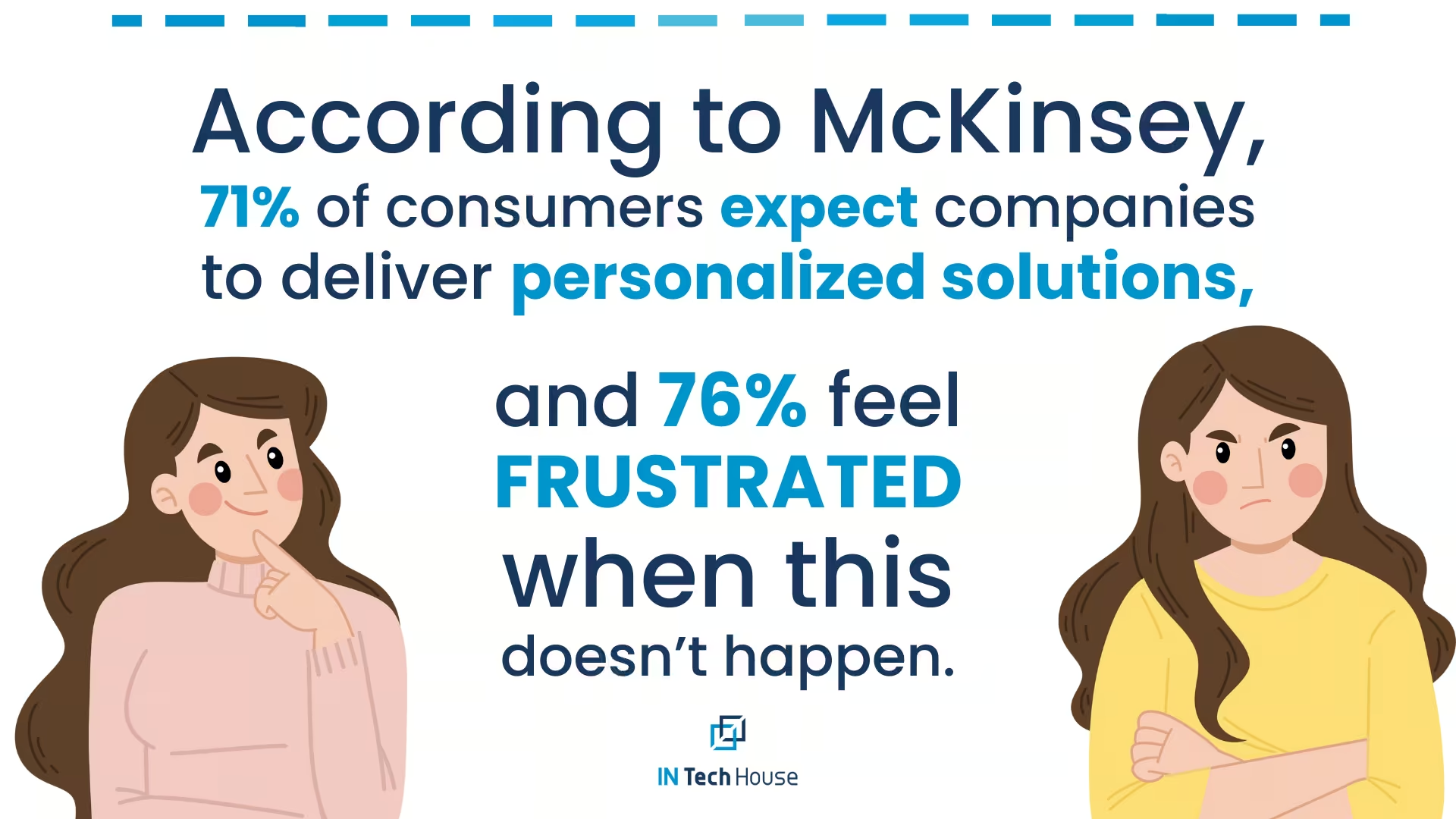
Source: McKinsey
See also:
What is Embedded Software Engineering?
Embedded System Software Essentials for Embedded Software Engineers
Optimizing Performance with Embedded Software Solutions
Industries dealing with sensitive data, such as finance and healthcare, prioritize data security and regulatory compliance. Custom software solutions enable organizations to implement robust security measures tailored to their specific requirements, ensuring data protection and adherence to industry regulations.
Custom software can provide a significant competitive advantage by offering features and functionalities that are not available in generic off-the-shelf solutions. This differentiation allows market leaders to stand out in the crowded marketplace and respond more effectively to changing industry trends.
Custom healthcare software facilitates electronic health record (EHR) management, patient scheduling, telehealth solutions, and data analytics tailored to the unique needs of healthcare providers.
In the finance sector, custom software is crucial for tasks such as algorithmic trading, risk management, compliance reporting, and secure customer interactions through banking applications.
Custom software optimizes manufacturing processes by providing real-time data analytics, supply chain management, quality control, and process automation, leading to increased efficiency and reduced costs.
Retailers leverage custom software for inventory management, e-commerce platforms, customer relationship management (CRM), and personalized marketing, enhancing the overall shopping experience.
Custom software in education supports e-learning platforms, student management systems, and educational resource management, fostering a more interactive and efficient learning environment.
In logistics, custom software aids in route optimization, fleet management, warehouse automation, and real-time tracking, improving overall operational efficiency and delivery timelines.
Custom software solutions in telecommunications enable network management, billing systems, customer support, and the development of innovative communication tools to stay ahead in a rapidly evolving industry.
In the energy sector, custom software assists in asset management, predictive maintenance, energy grid optimization, and compliance with environmental regulations.
InTechHouse made research where there is data available on the general costs associated with developing custom software, including mobile apps, which can provide insight into the investment levels of various companies.

These costs can be indicative of the level of investment by global brands in custom software development, as more complex and feature-rich applications would likely require a substantial financial commitment.
We work close to the hardware, with test evidence and documentation that survives certification and handover. Ask for a delivery example from healthcare, automotive or manufacturing.
As of 2023, some of the most popular and widely adopted technologies in the custom software development industry include:

Not sure where to start? We work with companies at every stage, from early ideas to enterprise-level builds. A 30-minute call can save you months of guesswork.
InTechHouse is a custom software development company based in Western Poland that builds software for embedded systems and other business applications. According to the article, its work spans healthcare, automotive, manufacturing and other industries, and its described projects include predictive maintenance software, a voice-controlled medical interface and an HR application for Mondi. The company presents custom development as an alternative to off-the-shelf software when hardware constraints or integration needs make generic products a poor fit.
Custom software development builds a complete solution to a defined set of requirements, while a minimum viable product (MVP) delivers only the core features needed to test a concept with real users. An MVP is faster and cheaper and suits uncertain markets; full custom development suits cases where requirements are known and the product must meet all of them, for example certified embedded devices. Many projects start as an MVP and move to full development once the concept is validated.
A custom embedded software project typically moves through requirement analysis, design, development, testing and deployment. Requirement analysis defines what the device must do and under which hardware constraints; design fixes the architecture for performance, scalability and compatibility; development builds the software against the target hardware; testing verifies behavior inside the real system; and deployment installs it on production units. In embedded work the stages overlap, because prototype hardware usually arrives while the software is already being written.
When choosing an embedded software development provider, check three things: relevant embedded experience, understanding of your industry, and post-development support. Ask for projects on similar hardware classes and for evidence such as test reports or documentation from past deliveries. Industry knowledge matters because standards such as IEC 62304 or ISO 26262 shape the whole process. Support terms matter because embedded products need security patches and updates for years after launch.
Integration problems in custom software projects usually come from mismatched data formats, communication protocols or system architectures, and they are cheapest to fix when identified during analysis. Common strategies are compatibility testing against the existing systems, well-defined APIs between components and incremental deployment that replaces or connects one part at a time. Incremental rollout limits disruption to ongoing operations and allows each step to be verified before the next one depends on it.
Krzysztof Niedźwiedź is a Lead Embedded Systems and Hardware Engineer at InTechHouse with over 11 years of experience developing complex electronic and embedded products from system architecture through production.
He specializes in embedded software development, electronic system architecture, multilayer PCB design, hardware-software integration, system testing, and technical ownership of high-reliability engineering projects. His work spans requirements analysis, architecture and component selection, schematic and PCB design, bare-metal and RTOS firmware development, prototyping, troubleshooting, production documentation, and cooperation with mechanical and high-level software teams.
Krzysztof's project experience includes FPGA and SoC-based onboard computers for the space industry, embedded electronics for advanced optical equipment, low-power environmental-monitoring devices, UAV payloads for real-time air-quality measurement and sample collection, and connected medical and training devices.
He works with C and C++, STM32, LPC and AVR microcontrollers, ARM-based platforms, RTOS, Embedded Linux, FPGA and SoC architectures, DDR3, HDI PCB technology, and industrial communication interfaces including Ethernet, CAN, RS-485, SPI, I2C, UART, USB, Modbus, and MQTT.
Krzysztof holds bachelor's and master's degrees in Electronics and Telecommunications. He is an IPC Certified Interconnect Designer and has completed specialist training in Embedded GNU/Linux kernel internals and device drivers. He writes about embedded system architecture, firmware development, PCB design, MCU and FPGA integration, RTOS, hardware security, low-power electronics, and dependable electronic products.
From first prototype to production, our engineers can help you scope it, build it and get it certified.
This initial conversation is focused on understanding your product, technical challenges, and constraints.
No sales pitch - just a practical discussion with experienced engineers.
Share a few details about your product and context. We’ll review the information and suggest the most appropriate next step.