Multinational healthcare company with a large diagnostic lab network
A multinational healthcare company operating across multiple countries and serving millions of patients, where efficient and reliable laboratory operations are essential to maintaining service quality and supporting large-scale diagnostics.
No real-time visibility across multi-site laboratory operations
Distributed laboratory operations limited visibility, efficiency, and process control.
The laboratory network was spread across multiple buildings and locations, each operating under strict safety procedures and handling complex diagnostic processes.
Managing equipment and workflows across sites required coordination of multi-hour processes, often without real-time visibility, which made it difficult to monitor operations, prevent errors, and provide compliance with safety protocols.
At the same time, reliance on manual and paper-based processes created inefficiencies, limited access to historical data, and reduced the ability to optimize workflows.
The combination of geographic distribution and lack of digitalization made consistent process management increasingly difficult.
Requirements for remote monitoring of diagnostic equipment
To improve efficiency and operational control, the client needed a system that could:
- provide real-time visibility into laboratory processes across locations
- enable remote monitoring without physical access to restricted areas
- centralise data from diagnostic equipment
- digitise workflows and eliminate paper-based records
- support planning and coordination of equipment usage
The goal was to create a unified, data-driven environment across the entire laboratory network.
Digital tools connecting lab equipment data and workflows
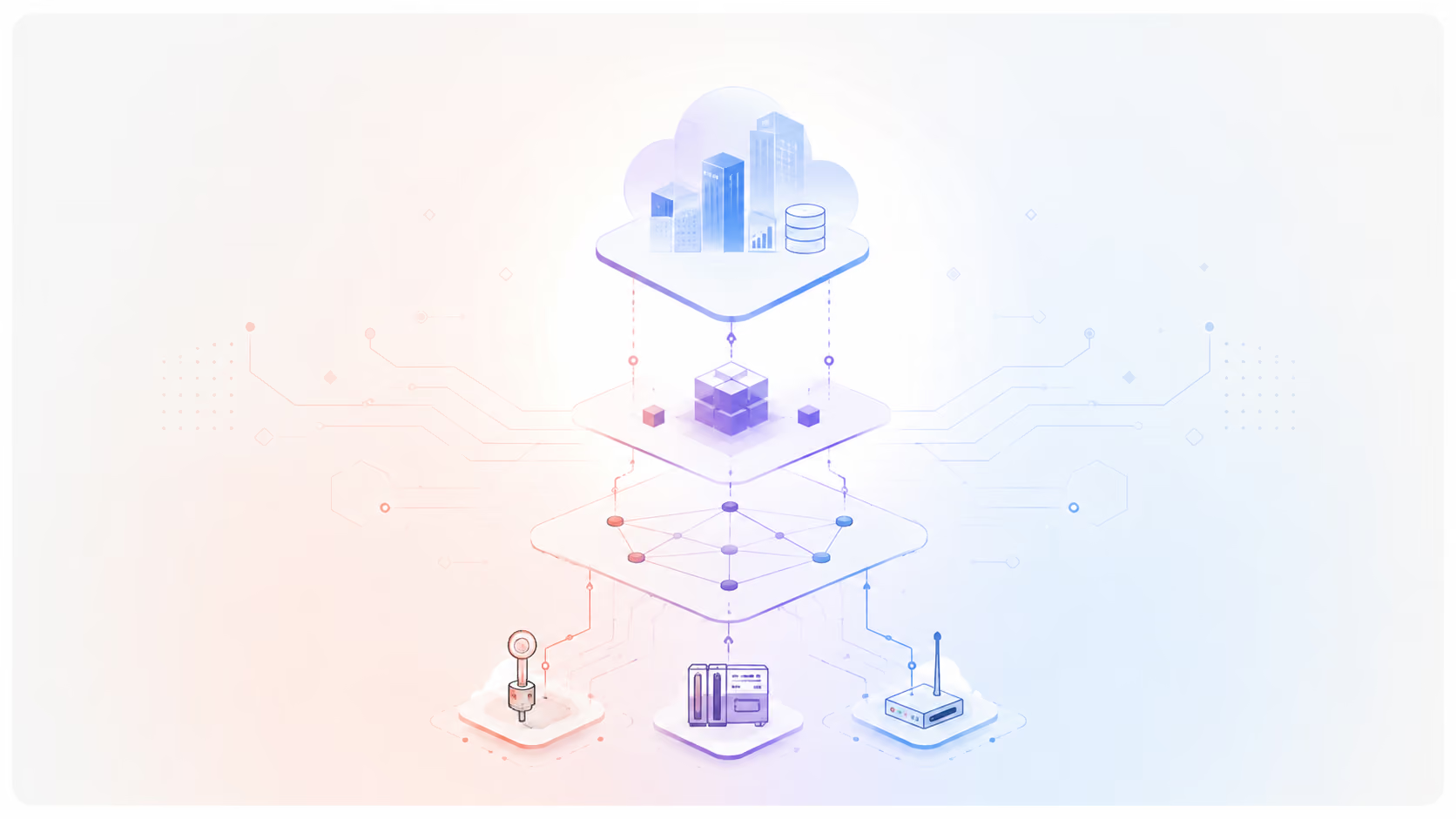
A set of digital tools was introduced to support monitoring, data collection, and workflow management across laboratory sites. Applying principles used in industrial data platforms and OT/IT integration, the solution connects diagnostic equipment data with digital monitoring and workflow management tools. This enables remote access to laboratory processes, reduces the need for physical presence in controlled environments, and creates a centralized view of operations.
Key functionalities include:
- remote process monitoring
- electronic reservation of laboratory equipment
- digital operational logs
- historical data collection and analysis
Together, these components create a connected and scalable laboratory management environment.
Connecting laboratory equipment with centralized software requires reliable data exchange, consistent information access, and careful integration planning. Similar architectural considerations are explored in our guide to OT/IT integration architecture, which explains how operational systems can be connected with modern data platforms.
The platform is built using scalable cloud and data technologies:
- AWS Serverless architecture for infrastructure and scalability
- Node.js for backend services
- React.js for the user interface
- GraphQL (AWS AppSync) for efficient data access
- AWS Cognito for authentication and access control
- DynamoDB for flexible data storage
- Terraform for infrastructure as code
- GitLab pipelines for CI/CD
How labs monitor processes and book equipment remotely
The platform collects and processes data from laboratory equipment and workflows across multiple locations.
Users can monitor ongoing processes remotely, track equipment availability, and access historical records to support decision-making.
Digital logs replace manual documentation, ensuring consistency and traceability of all activities.
The system improves coordination between teams by providing a shared and up-to-date operational view.
Fewer entries into controlled laboratory areas
Digitalization improved visibility across the laboratory network, enabling teams to monitor processes and equipment in real time.
Remote access reduced the need to enter controlled environments, improving both efficiency and compliance with safety procedures.
Automation of workflows reduced manual effort and improved consistency of operations.
Results: less manual work and better equipment utilization
The system delivered measurable improvements across key areas:
- Reduced manual workload, through digital workflows and automation
- Improved visibility across locations, enabling better coordination
- More efficient equipment utilisation, supported by reservation systems
- Faster and more reliable processes, reducing operational delays
- Access to historical data, enabling continuous optimisation
- Improved service delivery, through better planning and availability
Frequently asked questions
Can diagnostic laboratory processes be monitored remotely without entering restricted areas?
Yes. Connecting diagnostic equipment data to a central monitoring platform lets staff follow ongoing processes from outside controlled environments. In this project, InTechHouse delivered remote process monitoring across a multinational healthcare company's laboratory sites, which reduced entries into controlled areas and supported compliance with safety procedures, while digital operational logs replaced manual documentation to keep all activities traceable.
What cloud architecture suits a multi-site laboratory equipment monitoring platform?
InTechHouse used a serverless AWS architecture for this diagnostic laboratory network. In this project, InTechHouse combined AWS Serverless with Node.js backend services, a React.js user interface, GraphQL through AWS AppSync for data access, AWS Cognito for authentication and access control, DynamoDB for data storage, Terraform for infrastructure as code and GitLab pipelines for CI/CD.
How does electronic equipment reservation improve utilization in a diagnostic lab network?
Electronic reservation lets teams plan and coordinate equipment usage across sites instead of relying on paper. In this project, InTechHouse added equipment reservation alongside remote monitoring and historical data collection, giving laboratory teams a shared, up-to-date view of equipment availability. The results included more efficient equipment utilization, supported by the reservation system, and access to historical data for continuous optimization.
We’ll review your goals, technical constraints, and opportunities to design a solution that fits your organization.
Planning a data platform, analytics system, or AI solution? Our team can help design scalable architectures and deliver production-ready solutions tailored to your business.