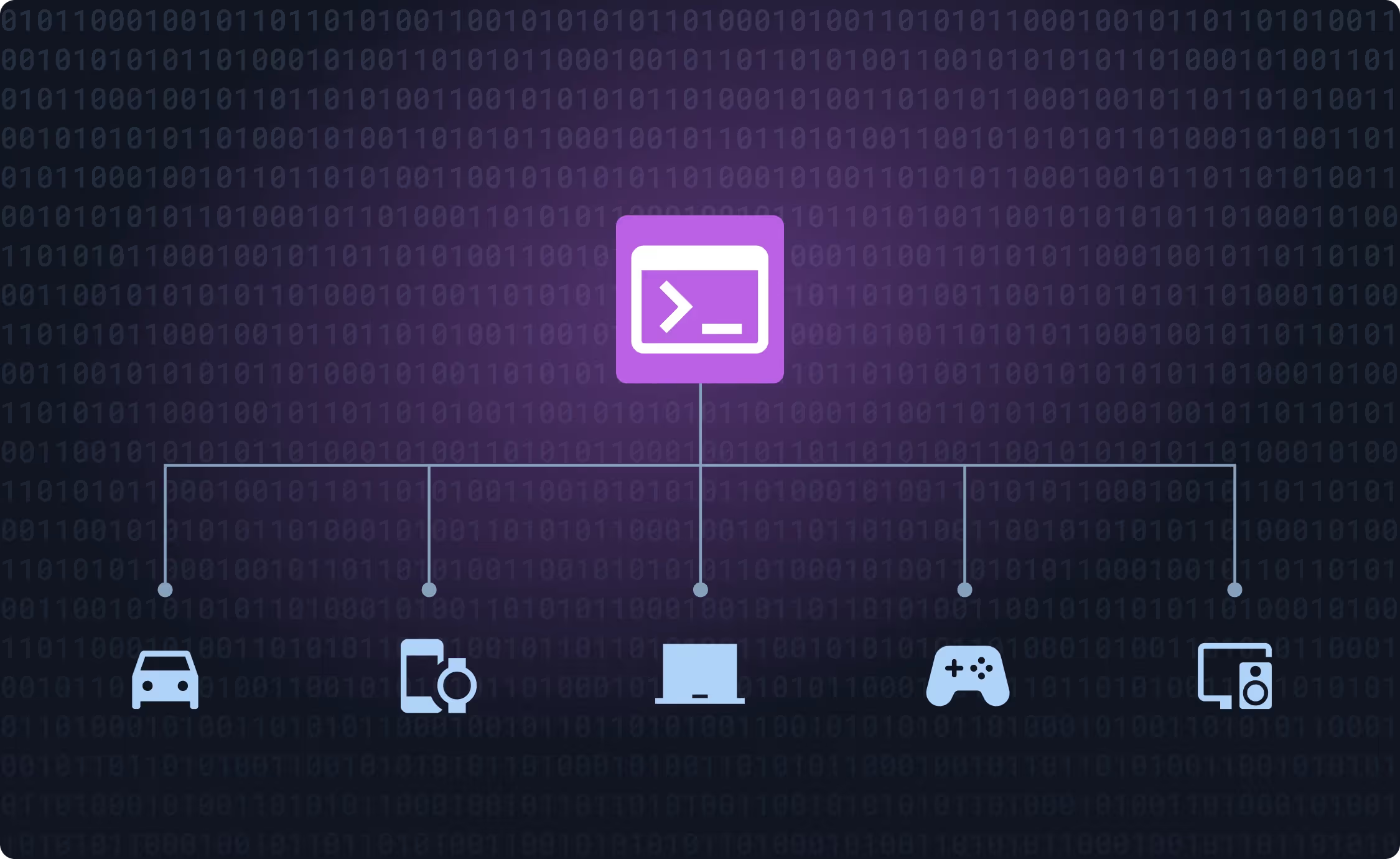
In modern technology, embedded software forms the backbone of many electronic devices, which makes embedded software engineering a prerequisite skill for anyone building them. Although it often goes unnoticed, it is precisely this software that enables our everyday gadgets, such as smartphones, televisions and cars, to perform their functions. Embedded software encompasses not only simple control programs but also advanced systems responsible for critical processes in medicine, industry and aviation.
"Embedded software development requires a unique blend of creativity and technical expertise to bring complex systems to life."
– as said David Brown, CTO at ImYoo. In this article, InTechHouse will explore what embedded software is, its applications, tools and functions associated with its creation and implementation.
Embedded software is a type of programming specifically tailored to oversee and execute particular and constrained functions. Unlike the software used in general-purpose computers, which can be modified or transferred between different machines with ease, embedded software is closely linked to the hardware it operates. It is crafted to carry out distinct, dedicated tasks.
Embedded systems software is written to control the embedded system to perform one or a few dedicated functions, making it specific in functionality and not meant for multi-purpose use. These systems often operate under strict resource constraints, including limited memory, processing power and energy, so the software is designed to be highly efficient and compact. Many embedded systems must operate in real-time, requiring tasks to be completed within a guaranteed time frame. Real-time operating systems (RTOS) are commonly used in such scenarios to manage hardware resources and system tasks efficiently.
Furthermore, embedded systems software is closely integrated with the hardware it runs on. It often includes hardware drivers and is developed with a deep understanding of the hardware’s capabilities and limitations. Given that embedded systems often perform critical functions, such as controlling medical devices or automotive braking systems, the software is designed for high reliability and stability. Lastly, embedded software might not be updated frequently and needs to be maintainable for long periods, often several years, without significant changes.
Embedded software refers to software operating within an embedded system, which encompasses both software and hardware, and the embedded system software essentials follow from that pairing. Simply put, embedded software is a part of an embedded system. Here are the main components of an embedded system:
Read more about embedded systems design.
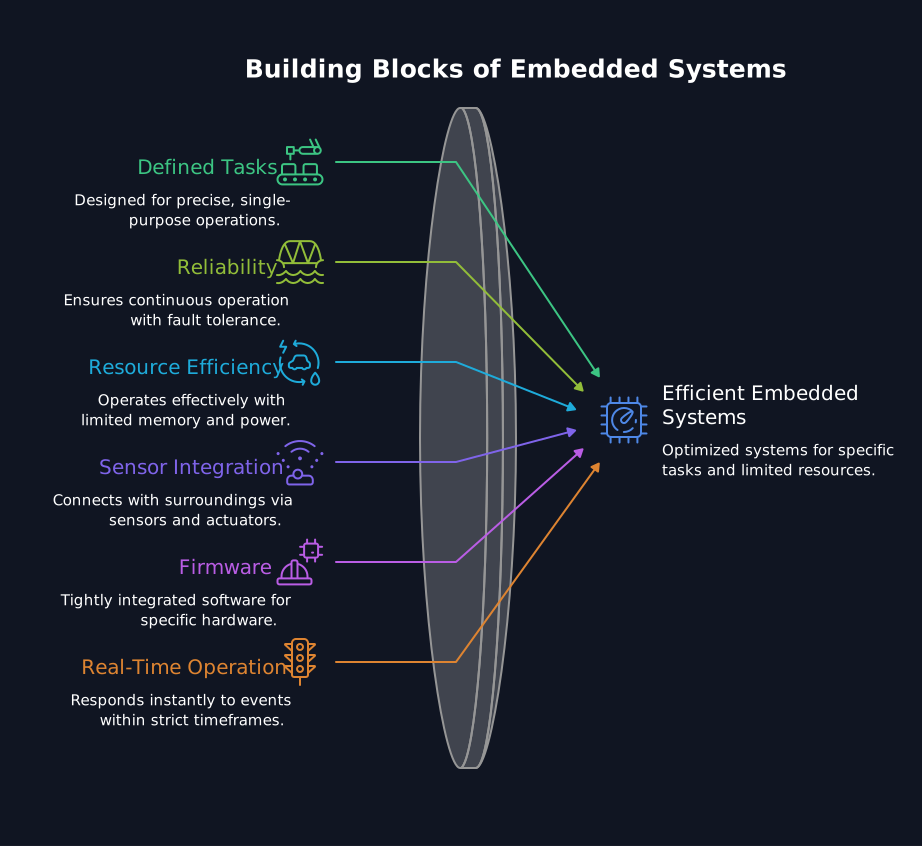
It is important to remember that embedded systems have a range of characteristic features that distinguish them from other computer systems. They are designed to perform strictly defined tasks or functions, optimized for specific applications such as controlling the operation of a washing machine, ABS systems in cars or flight control in airplanes. Due to their often critical applications, embedded systems must be highly reliable and stable, operating without interruption for long periods and frequent incorporating built-in redundancy and fault tolerance mechanisms.
Moreover, typically operating in environments with limited resources, such as restricted memory, processing power and energy, embedded systems are designed to work efficiently within these constraints. They interact with their surroundings through various sensors and actuators, including temperature sensors, pressure sensors, motion detectors, as well as motors, relays and other mechanisms. The software of embedded systems, known as firmware, is an integral part of the system and is tightly integrated with the hardware. Firmware is usually written specifically for the given device and is rarely updated.
Many embedded systems require real-time operation, meaning they must respond to events within strictly defined time frames, as seen in traffic control systems or medical devices. Additionally, many embedded systems, especially those powered by batteries, must be designed for low power consumption to extend operation time on a single charge. Often compact and highly integrated, embedded systems integrate many functions into a single chip (SoC – System on Chip), saving space and production costs. They also frequently use specialized communication interfaces, such as I2C, SPI, UART and CAN which enable efficient data exchange between different components of the system.
See also:
What is Embedded Software Engineering?
Embedded Systems Architecture
InTechHouse reminds that types of embedded systems software can be classified in several ways, depending on their function, application or degree of integration with hardware. Here are some of them:
In embedded systems, middleware serves as an intermediary layer between application software and the system or hardware layer. It facilitates application development by providing services such as data management, inter-process communication and event handling.
Developing software for embedded systems requires specialized tools that support developers at various stages of the development process. InTechHouse experts know it very well and present the most commonly used types of tools for creating embedded systems software:
Embedded software fails when it is written against a datasheet instead of the board. Our engineers write drivers and application layers alongside the hardware team.
Get firmware that matches the hardware it runs on
Example no. 1: Boschand itsElectronic Stability Program (ESP) Systems
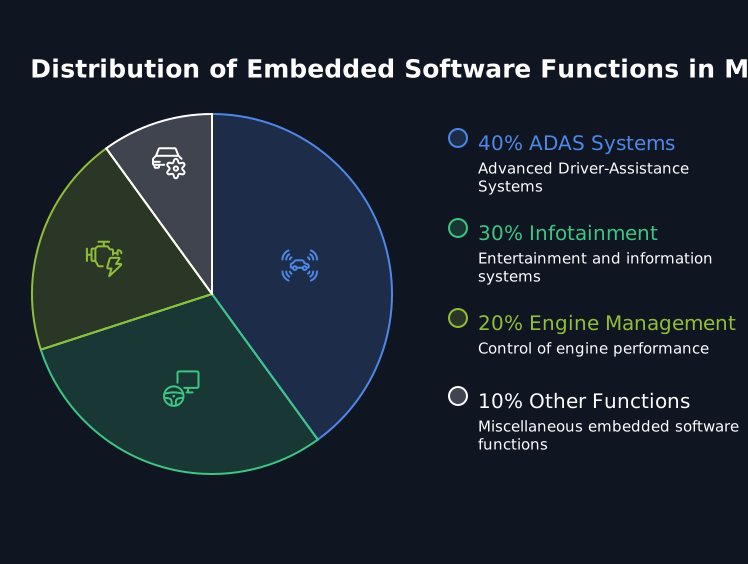
Bosch is a leader in producing embedded systems for the automotive industry. The ESP system in cars monitors wheel speed, steering angle, lateral acceleration and other parameters to prevent skidding. The embedded software in ESP analyzes data in real-time and adjusts braking force on individual wheels and engine torque as needed to maintain vehicle stability. Overall, it is estimated that in the automotive industry, approximately 90% of modern cars already contain embedded software responsible for functions such as ADAS systems, infotainment and engine management.
Example no. 2: Philips HealthcareandMRI (Magnetic Resonance Imaging) Systems
Philips manufactures advanced MRI devices used in medical diagnostics. The embedded software in MRI systems manages image acquisition, signal processing, scan sequence control and the user interface. This software enables precise imaging of the internal structures of a patient's body, which is crucial for medical diagnosis.
Example no. 3: Caterpillarand its CAT Product Link Telematics Systems
Caterpillar develops telematics systems for its construction and mining machinery. The embedded software in CAT Product Link monitors and collects data on machine location, fuel consumption, operating hours, technical condition and maintenance. This allows operators and fleet managers to efficiently manage equipment, plan maintenance and optimize machine operation.
InTechHouse is a specialist in embedded systems, as evidenced by the Airdron project. This device features a microcontroller with built-in memory and additional external memory in the form of a microSD card. It has various I/O interfaces and sensors communicating via SPI and I2C, as well as communication modules using UART. Airdron has a USB interface and can be powered by both battery and an external power supply. The user interface is mainly provided through a tablet application, and the robust aluminum enclosure ensures durability.The real-time operating system (RTOS) and application software for embedded devices, such as SoftBlue GCS and SoftBlue Reports, are integral parts of Airdron. During the development of this project, we used a cross-compiler, debugger, development kits, an integrated development environment (IDE) with a cross-compiler, and code analysis tools (Cppcheck). Airdron also utilizes our proprietary bootloader, highlighting our advanced expertise in embedded systems.
We deliver firmware for medical, automotive and industrial devices that has to run unchanged for years, with the test strategy built in from the start. Ask for our approach document.
See how we build and test embedded software
The future of embedded software is not just about the further development of existing technologies but also about innovations that can completely change the way we interact with the world. The introduction of the Internet of Things (IoT), autonomous vehicles, smart cities and advanced medical systems are just some of the areas where embedded software will play a crucial role.
Every step forward in the field of embedded software is a step towards a more connected, automated and advanced world, where technology serves not just as a tool but as an integral part of our daily lives. For engineers and programmers, this means a continuous need for learning and adaptation to meet the growing demands of the market. For end-users, it means more intelligent, safer and more efficient devices that make everyday life easier.
InTechHouse is a leader in modern technological solutions, specializing in embedded systems. Our experience and innovative approach make us the ideal partner for companies seeking reliable and efficient embedded software solutions. We offer comprehensive services, from design and prototyping to implementation and technical support. By partnering with InTechHouse, you gain access to the latest technologies and experts who can help you realize even the most demanding projects. Join our satisfied clients and discover how our solutions can contribute to the success of your company.
Not sure where to start? We work with companies at every stage, from early ideas to enterprise-level builds. A 30-minute call can save you months of guesswork.
Embedded software is designed to perform specific tasks and is closely integrated with the hardware it controls. It often operates in real-time and must be highly reliable and efficient. General-purpose software, on the other hand, is designed for broader, more versatile applications and typically runs on general-purpose computers.
Challenges include resource constraints (limited memory and processing power), real-time performance requirements, hardware-software integration, ensuring reliability and stability and managing power consumption. Developers must also consider the specific requirements and constraints of the hardware platform.
Testing embedded software involves various methods such as unit testing, integration testing, system testing, and acceptance testing. Hardware-in-the-loop (HIL) testing and simulation tools are often used to test how the software interacts with the hardware. Additionally, real-time testing is crucial to ensure the software meets performance requirements.
An RTOS manages the execution of tasks in an embedded system, ensuring that real-time performance requirements are met. It provides features like task scheduling, resource management and inter-task communication, which are critical for applications that need to operate within strict timing constraints.
Trends shaping the future include the increasing use of Internet of Things (IoT) devices, advancements in artificial intelligence and machine learning, the growing importance of cybersecurity, the development of more powerful and energy-efficient microcontrollers and the adoption of model-based design and development methodologies. Additionally, the integration of 5G technology is expected to expand the capabilities of embedded systems.
Krzysztof Niedźwiedź is a Lead Embedded Systems and Hardware Engineer at InTechHouse with over 11 years of experience developing complex electronic and embedded products from system architecture through production.
He specializes in embedded software development, electronic system architecture, multilayer PCB design, hardware-software integration, system testing, and technical ownership of high-reliability engineering projects. His work spans requirements analysis, architecture and component selection, schematic and PCB design, bare-metal and RTOS firmware development, prototyping, troubleshooting, production documentation, and cooperation with mechanical and high-level software teams.
Krzysztof's project experience includes FPGA and SoC-based onboard computers for the space industry, embedded electronics for advanced optical equipment, low-power environmental-monitoring devices, UAV payloads for real-time air-quality measurement and sample collection, and connected medical and training devices.
He works with C and C++, STM32, LPC and AVR microcontrollers, ARM-based platforms, RTOS, Embedded Linux, FPGA and SoC architectures, DDR3, HDI PCB technology, and industrial communication interfaces including Ethernet, CAN, RS-485, SPI, I2C, UART, USB, Modbus, and MQTT.
Krzysztof holds bachelor's and master's degrees in Electronics and Telecommunications. He is an IPC Certified Interconnect Designer and has completed specialist training in Embedded GNU/Linux kernel internals and device drivers. He writes about embedded system architecture, firmware development, PCB design, MCU and FPGA integration, RTOS, hardware security, low-power electronics, and dependable electronic products.
From first prototype to production, our engineers can help you scope it, build it and get it certified.
This initial conversation is focused on understanding your product, technical challenges, and constraints.
No sales pitch - just a practical discussion with experienced engineers.
Share a few details about your product and context. We’ll review the information and suggest the most appropriate next step.