
As we move into the year 2023, it’s clear that augmented reality (AR) and virtual reality (VR) are continuing to grow in popularity. These two technologies have been around for a while, but with the advancements in hardware, software, and network infrastructure, they are becoming more accessible and powerful than ever before.
Both AR and VR have unique capabilities and are being used in different ways by various industries. In this article, we’ll explore what AR and VR are, their key differences, and how they are shaping up to be the main trends of 2023.
What is Augmented Reality (AR)?
AR refers to the overlaying of digital content onto the real world, creating an interactive experience. It allows users to interact with both physical and digital elements simultaneously. AR can be experienced through smartphones, tablets, or smart glasses.
AR has a wide range of applications, from entertainment and gaming to education, healthcare, and retail. In retail, for example, AR can help customers visualize how a product will look in their home before they buy it. In education, AR can be used to create interactive learning experiences, bringing static images to life and enhancing engagement.
Augmented reality has seen a significant increase in popularity and usage over the past few years. Here are some of the current trends in augmented reality:
- Mobile AR: With the increasing use of smartphones, mobile phone AR has become more prevalent. Popular mobile AR applications include games, social media filters inside the phone’s camera, and shopping experiences.
- E-commerce AR: Many retailers are incorporating augmented reality into their online stores to provide a more immersive shopping experience. Customers can use AR technology to see how products would look in their homes before making a purchase.
- AR in education: AR is being used in education to create interactive learning experiences. AR technology can be used to bring history, science, and other subjects to life.
- AR in healthcare: AR is being used in healthcare to assist with surgeries and to help medical professionals visualize and understand complex medical data.
- AR in advertising: AR is being used in advertising to create interactive ads that engage customers and provide a more memorable experience.
- AR in tourism: AR is being used in tourism to create interactive experiences that enhance visitors’ understanding and appreciation of a destination’s history, culture, and natural beauty.
- AR glasses: The AR glasses development makes it easier for people to use AR in their real-life environment. AR glasses provide a hands-free experience and can be used in a variety of industries, including manufacturing and logistics.
These are just a few of the many trends in augmented reality. As technology continues to evolve, we can expect to see even more innovative uses of AR in the future.
What is Virtual Reality (VR)?
VR, on the other hand, is an immersive experience that completely transports users to a virtual environment. It is achieved through a VR headset or other hardware that covers the user’s eyes and ears, blocking out the physical world and replacing it with a digital one.
VR has gained popularity in the gaming industry, where it allows users to fully immerse themselves in a game’s world. But it has also found applications in other areas, such as training simulations for professionals in fields like aviation and medicine.
Virtual Reality Headset Popularity and Trends
Virtual reality headsets have gained significant popularity in recent years, particularly in the gaming and entertainment industries. However, they are also finding applications in other areas, such as education, healthcare, and even military training.
Gaming is currently the most popular use case for a VR headset, with the technology allowing users to immerse themselves in virtual worlds and interact with them in ways that were previously impossible.
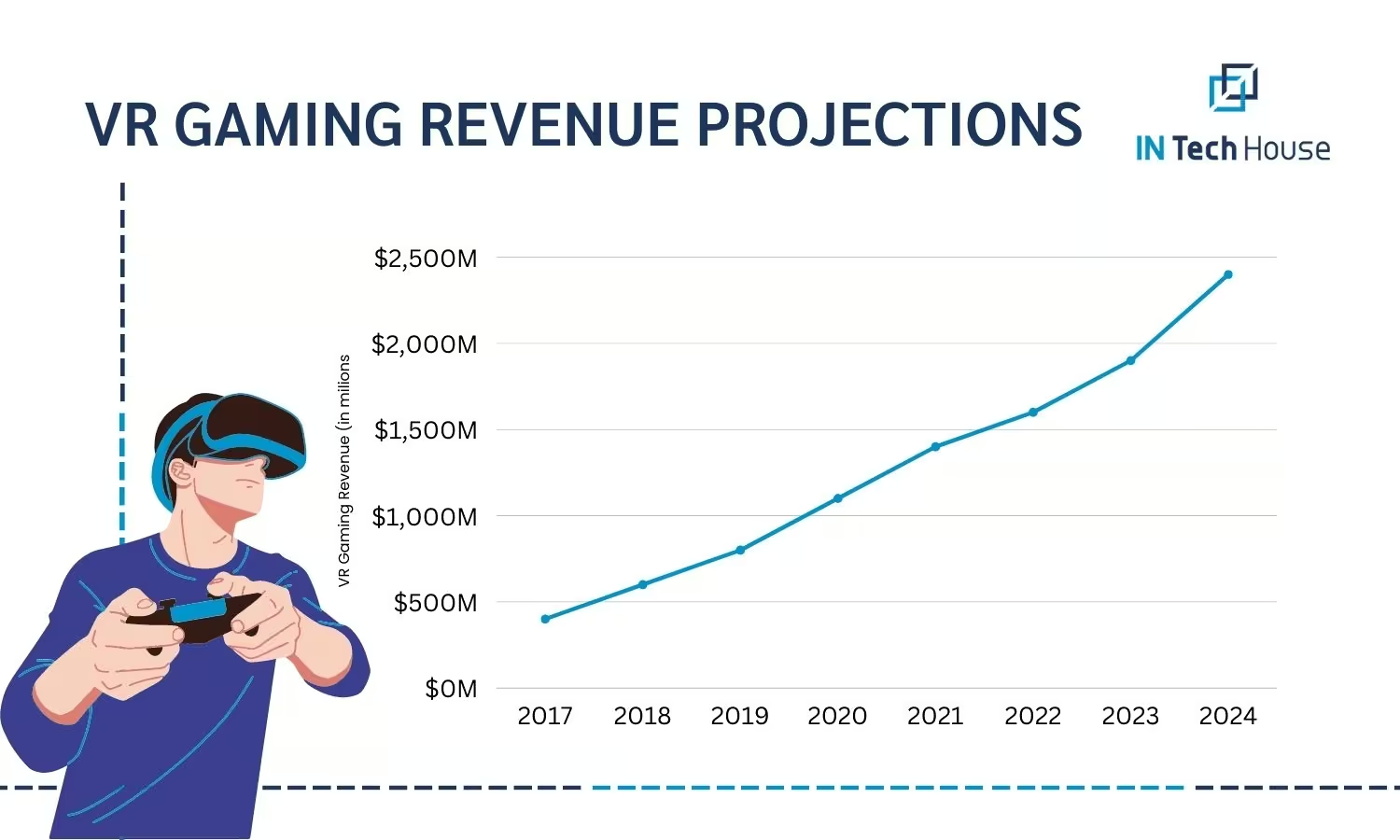
Popular VR gaming platforms include the Oculus Rift, HTC Vive, and PlayStation VR.In education, VR is being used to enhance traditional learning methods by allowing VR users to experience virtual simulations of complex concepts. For example, medical students can practice surgical procedures in a virtual environment, while history students can visit important historical sites without leaving the classroom.

Source: Statista
In healthcare, virtual reality replaces patients who overcome phobias and anxiety disorders, such as a fear of heights or flying. It is also being used to train medical professionals in a variety of settings, from emergency response to surgical procedures.
Military training is another area where VR is finding applications. It allows soldiers to experience realistic combat scenarios in a safe and controlled environment, which can help improve their training and preparedness.
Overall, VR technology is still in its early stages, but it is expected to continue growing in popularity as more applications are developed. Some emerging VR trends to watch for in the future include increased use of haptic feedback (allowing users to feel physical sensations in the virtual world), advances in eye-tracking technology, and the integration of AI to create more realistic and immersive virtual environments.
Need to create VR or AR apps?
We have something interesting to offer!
Key Differences between AR and VR
Augmented reality and virtual reality are two related but distinct technologies that can be used for different purposes.
Augmented reality involves overlaying digital information or imagery onto the real world. This can be done using a variety of devices, such as smartphones or specialized AR glasses. The digital information is typically displayed on top of the real-world environment, allowing users to see both the physical world and the digital information simultaneously. AR can be used in various applications, such as gaming, education, and training.
Virtual reality, on the other hand, involves creating a fully immersive digital environment that users can interact with. This is typically done using a headset or other specialized equipment that completely blocks out the real world and replaces it with a digital environment. Users can move around and interact with objects in the digital environment as if they were really there. VR is often used in gaming and entertainment, as well as in training and simulation applications.In summary, augmented reality adds digital information to the real world, while virtual reality creates a fully immersive digital environment.
Common AR and VR Main Trends in 2023
AR and VR are already making waves in various industries, and their growth is set to continue in 2023.

Source: Statista Global

Nowadays, in the USA there are more than 65 million VR users and over 110 AR lovers. In the world, these statistics are going crazy with billions of users on both sides.
With the continued development of hardware and software, these technologies will become even more accessible and affordable, allowing more people to experience them.
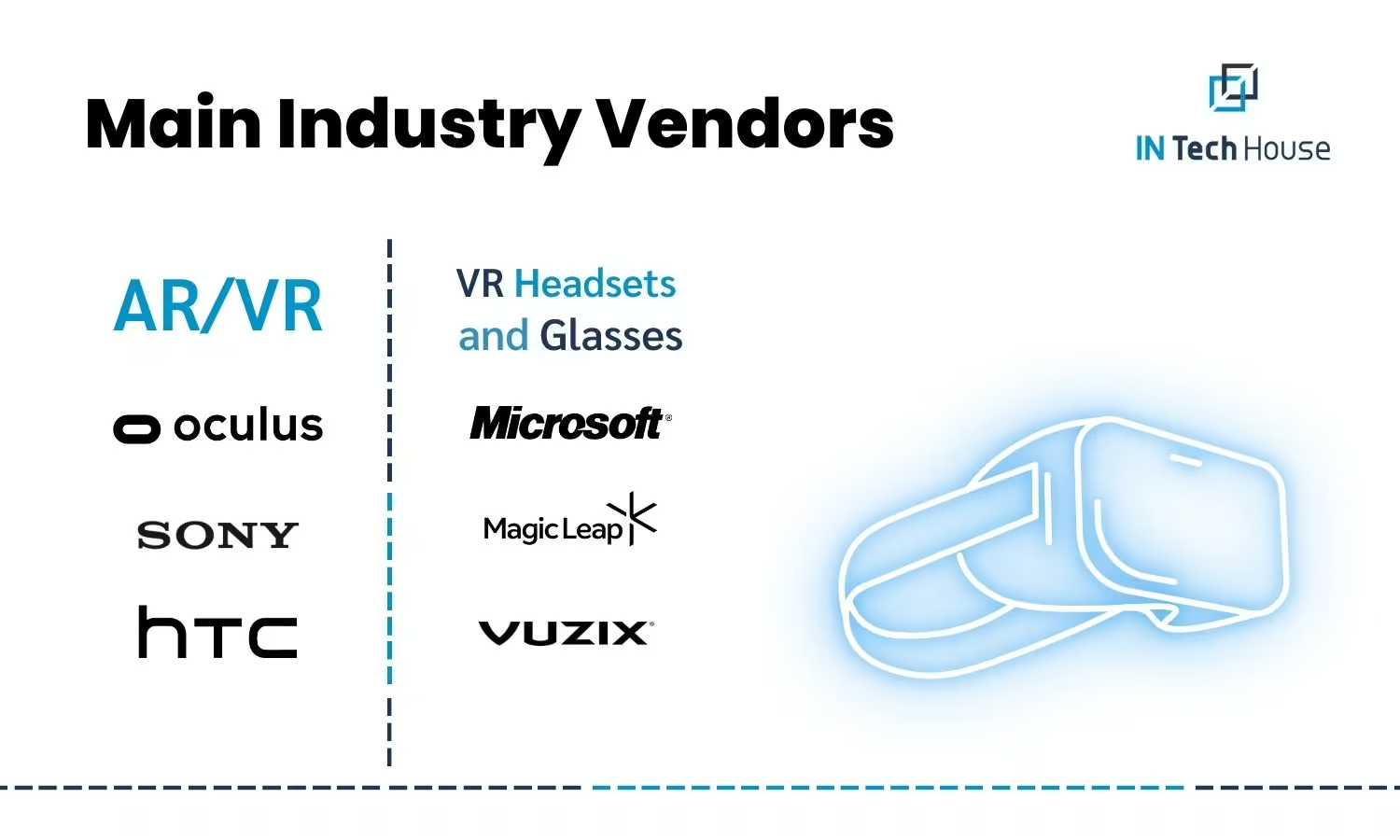
One area where AR and VR are likely to grow is e-commerce. As more people shop online, retailers seek ways to enhance the online shopping experience. AR can help customers see how products will look in their homes, while VR can create immersive shopping experiences that rival physical stores.In healthcare, VR is already being used for training simulations and pain management. As the technology improves, it could be used for more advanced applications, such as virtual surgeries or therapy sessions.
The entertainment industry is also likely to continue to explore the possibilities of AR and VR. From immersive video games to virtual concerts, these technologies offer new ways for people to experience entertainment.
The global extended reality which includes augmented reality (AR), virtual reality (VR), and mixed reality (MR) is going to grow very fast in a few years.
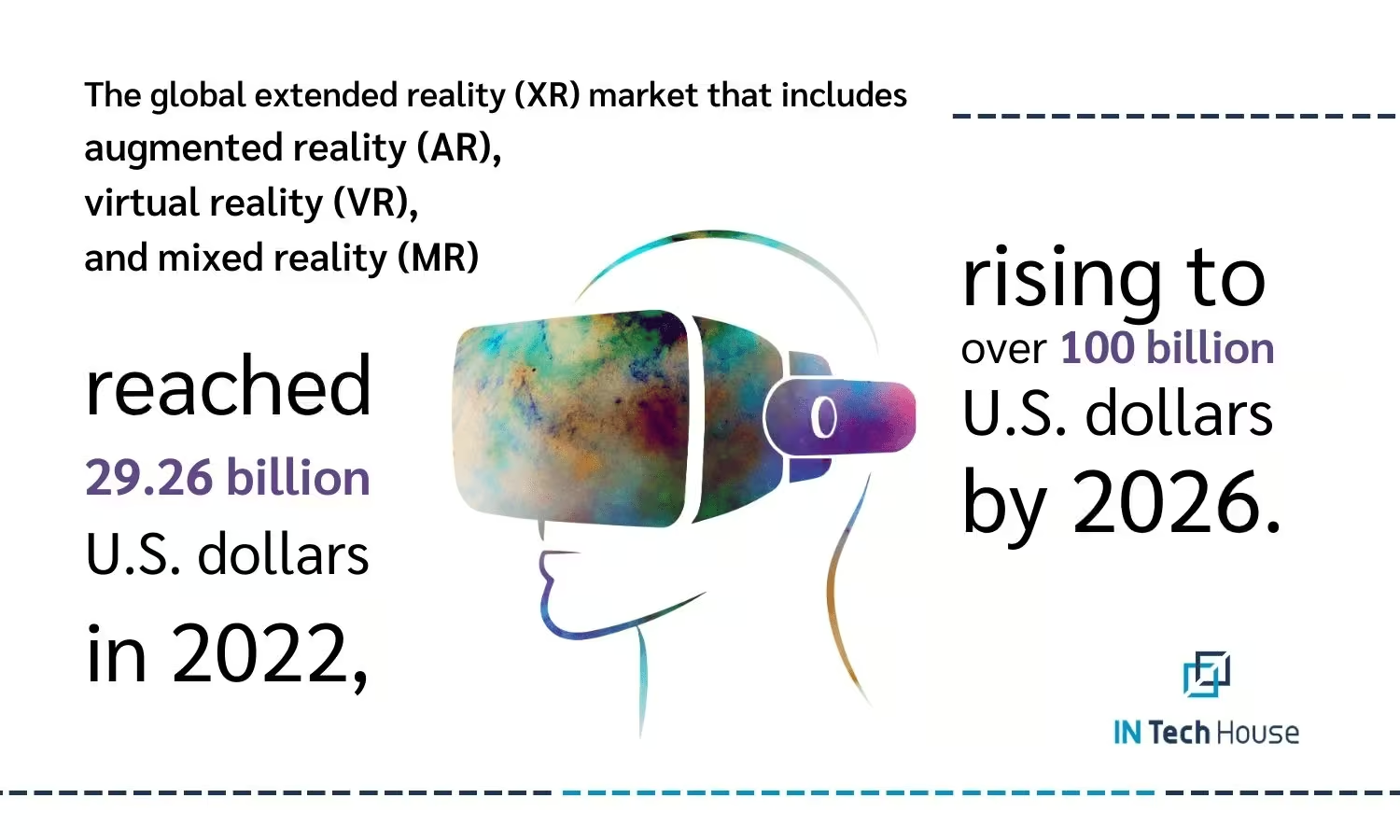
Source: Statista, FornuteBusinessInsights
In conclusion, AR and VR are set to be the main trends of 2023, offering unique experiences and opportunities in various industries. As technology continues to evolve, we can expect to see even more innovative applications of these exciting technologies.
What is Metaverse?
The term “metaverse” refers to a hypothetical future version of the internet that is an immersive, shared, and persistent virtual space, typically accessed through virtual reality (VR) or augmented reality (AR) technology. It is often described as a fully realized virtual world, where users can interact with each other and with digital objects in a way that is similar to how they interact in the physical world.

Immersive pilots stall when no live operational data feeds them. We connect plant data and models so the visual layer shows something an operator can act on.
Source: Statista
The metaverse is expected to be an interconnected network of virtual spaces and communities, where users can engage in a variety of activities, such as gaming, socializing, learning, shopping, and more. The concept of the metaverse is still evolving, and it remains to be seen how it will be developed and realized in the coming years.
Have troubles with Metaverse and its system requirements?
We have A-class talents to solve various tech issues!
Metaverse Trends in 2023
The concept of the metaverse is still in its early stages in 2023. This new branch already has several trends widely used in various industries and businesses. Despite the fact that for many business owners, the metaverse is something mysterious and incomprehensible, the bravest of them, once they have tried what it is, tend to stay with the metaverse and its advantages for a long time. So let’s look at the trends in more detail:
Metaverse with Virtual Reality
The growth of virtual reality technology is a key driver of the metaverse.
The concept of a Metaverse with Virtual Reality has gained significant attention in recent years due to its potential to create immersive, interactive and interconnected digital worlds where people can socialize, work, learn, play, and conduct business in ways that are not possible in the physical world.
The idea of a Metaverse is not new, but recent advances in technology, such as Virtual Reality (VR), have made it possible to create more realistic and engaging virtual environments that can be accessed from anywhere in the world. VR technology can provide a fully immersive experience, allowing users to feel like they are truly present in the virtual environment, interacting with others and objects as if they were in the physical world. As VR headsets become more advanced and affordable, they are making it possible for users to experience immersive virtual worlds.
One of the reasons why the idea of a Metaverse with VR is so popular is that it offers new and exciting opportunities for entertainment, socialization, and commerce. For example, users could attend virtual concerts, participate in online games, shop in virtual stores, and even attend virtual meetings and conferences, all from the comfort of their own homes.
Additionally, the idea of a Metaverse with VR has captured the imaginations of many because it holds the promise of a world without physical limitations. People with disabilities or living in remote areas could potentially have access to experiences and opportunities that they would not be able to access in the physical world.
Blockchain and NFTs
Blockchain and NFTs (Non-Fungible Tokens) are two significant metaverse trends that have gained significant attention in recent years.
Blockchain technology is a decentralized and distributed ledger system that records transactions securely and transparently. It has many potential applications in the metaverse, including providing a secure and transparent way to track ownership and transactions of virtual assets such as land, buildings, and other digital goods.NFTs, on the other hand, are digital assets that use blockchain technology to verify ownership and authenticity. NFTs are unique and cannot be replicated or exchanged for something else. They are commonly used to represent digital art, music, videos, and other forms of creative content in the metaverse.
Together, blockchain and NFTs can enable a more secure and transparent economy within the metaverse, allowing users to buy, sell, and trade virtual assets with confidence. This could lead to new opportunities for creators to monetize their digital creations and for users to invest in virtual assets with real-world value.
Social Interaction
Social interaction is a fundamental aspect of the metaverse, which is essentially a virtual space where people can interact with each other in various ways. There are several ways in which social interaction can take place in the metaverse:
- Avatars: In the metaverse, users can create their avatars, which are digital representations of themselves. Avatars allow users to interact with each other in a more immersive way, as they can see and communicate with each other through their avatars.
- Chatting and Messaging: Most metaverse platforms allow users to chat and message each other, either through text or voice. This enables users to communicate with each other in real-time, similar to how they would in the physical world.
- Multiplayer Games: Many metaverse platforms feature multiplayer games that allow users to play with each other in real-time. This provides an opportunity for users to socialize and connect with each other while engaging in a shared activity.
- Virtual Events: The metaverse also provides an opportunity for virtual events, such as concerts, conferences, and parties. These events can bring people together from all over the world, providing an opportunity for social interaction in a more immersive and interactive way.
- Virtual Communities: Metaverse platforms can also enable users to form and join virtual communities based on shared interests, hobbies, or goals. These communities provide a space for users to connect with others who share their interests and engage in discussions, collaborations, and activities.
Gaming
The gaming industry has been experiencing a rapid transformation in recent years, with new trends emerging and gaining popularity. One of the most significant trends is the emergence of the metaverse, which is a virtual world where users can interact with one another and experience a variety of digital content.
The metaverse is expected to become a major part of the gaming industry, as it offers a unique and immersive experience for gamers. It allows players to interact with one another in real-time, explore new virtual worlds, and participate in a range of activities such as gaming, socializing, and commerce.
Virtual Commerce and Restaurants
Virtual e-commerce and restaurant menus in the metaverse are two examples of how businesses are starting to take advantage of the opportunities offered by this emerging technology.In the virtual e-commerce space, businesses can create virtual storefronts within the metaverse, where users can browse and purchase virtual goods and services. These virtual storefronts can be accessed from anywhere in the world and can be designed to mimic the look and feel of physical storefronts, giving customers a familiar shopping experience.
For example, a clothing brand could create a virtual store where users can browse and purchase virtual versions of their clothing. This could include virtual try-on experiences and the ability to customize items to suit individual preferences. Users could then purchase these virtual items using virtual currency or real-world money, depending on the platform.
Similarly, virtual restaurant menus in the metaverse can offer users an immersive dining experience without leaving the comfort of their own homes. Users could access a virtual restaurant within the metaverse, where they can browse a virtual menu, place an order, and have it delivered to their virtual table.
This could include interactive menus that allow users to see photos of each dish, read reviews, and even see the ingredients used in each dish. Users could then pay for their meals using virtual currency or real-world money.
Overall, virtual e-commerce and restaurant menus in the metaverse represent exciting opportunities for businesses to reach new audiences and offer innovative experiences to their customers. As technology continues to develop, we can expect to see more businesses exploring these opportunities and creating new ways to engage with customers in the virtual world.
How Virtual Reality and Augmented Reality can Help Businesses
Virtual reality (VR) and augmented reality (AR) technologies can be used by businesses to improve their operations, customer experiences, and more. Here are some ways VR and AR can help businesses:
- Training and Education: VR and AR can provide immersive training and educational experiences. For example, VR can be used to simulate dangerous or complex scenarios in a safe, controlled environment.
- Product Development: VR and AR can be used to prototype and test products before they are built. This can save time and money by identifying design flaws early in the development process.
- Sales and Marketing: VR and AR can be used to create interactive product demos and virtual showrooms. This can give customers a more engaging and memorable experience.
- Customer Service: AR can be used to provide customers with real-time support and guidance. For example, an AR app could be used to guide customers through a complex assembly process.
- Remote Collaboration: VR and AR can be used to enable remote teams to collaborate in a shared virtual space. This can be especially useful for teams that are geographically dispersed.
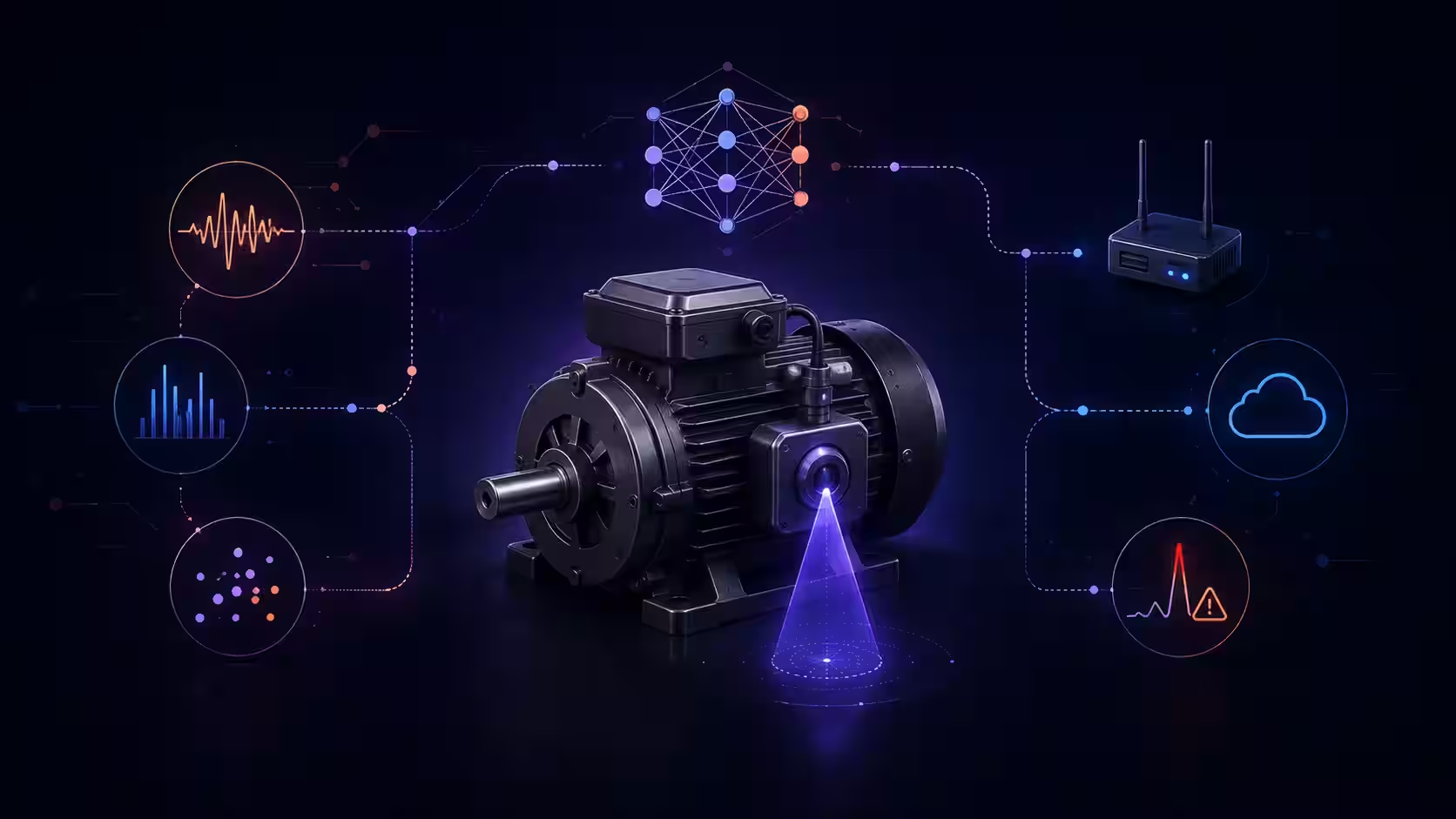
In industrial settings AR and VR rarely work alone. A headset becomes useful only when it is fed with live data from machines and production lines, which is where industrial AI solutions come in, turning sensor streams into the predictions and alerts an operator sees inside the visor. Companies that pair an immersive interface with an analytics layer get decisions, not just visualisations.
Read also:
- The Future of AI: How Artificial Intelligence Will Change the World
- The Role of AI in Software Engineering
- 5 Top Embedded System Trends to Watch in 2025
Which Industries Should Use Virtual Reality and Augmented
- Some of the best industries to try VR and AR include: Real Estate: VR and AR can be used to create virtual tours of properties, allowing customers to view homes or offices from anywhere in the digital world
- Retail: VR and AR can be used to create virtual storefronts and showrooms, allowing customers to browse and purchase products in a more immersive way
- Healthcare: VR and AR can be used to simulate medical procedures, allowing healthcare professionals to practice and improve their skills using computer-generated simulation
- Education: VR and AR can be used to create immersive educational experiences, allowing students to explore new realities and learn in a more engaging way
- Entertainment: VR and AR can be used to create immersive entertainment experiences, such as virtual concerts or theme park rides.Overall, VR and AR have the potential to transform many industries by providing new ways to engage with customers, improve operations, and more
InTechHouse Experience
VR (Virtual Reality) technology has been gaining a lot of attraction in the education sector in recent years, thanks to its ability to provide immersive and engaging learning experiences. Our company has been on the market for more than 20 years and we always follow VR technology. We have extensive experience in developing educational applications, including using technologies.
We want to tell you about one of our published cases. We helped the company create specialized OHS training for power engineers. Working as a power engineer means exposure to particular risks, including work on electrical poles, on basket elevators, or in medium and high-voltage switching stations. So, our solution was a VR training system including additional elements to enhance the real-world experience:
- controlled wind blast,
- safety vest with vibration mechanics (signalling a trainee’s mistake),
- basket elevator simulator with movement in two axes and a pneumatic actuator.
Conclusion
In conclusion, VR (Virtual Reality) and AR (Augmented Reality) technologies have become increasingly powerful tools in the tech world, transforming the way we interact with the digital world and providing new opportunities for learning, entertainment, and communication. With the rapid pace of technological advancement and the growing demand for immersive experiences, it’s likely that VR and AR will continue to play a significant role in our lives, and it’s possible that we may soon find it difficult to imagine a world without them. As we continue to explore the possibilities of these cutting-edge technologies, we can expect to see even more exciting innovations emerge in the years to come.
Our team scopes industrial AI against measurable targets such as scrap rate, downtime and inspection time rather than against trend cycles.
Let's talk about your next move
Not sure where to start? We work with companies at every stage, from early ideas to enterprise-level builds. A 30-minute call can save you months of guesswork.
FAQ
How does mixed reality differ from AR and VR?
Mixed reality (MR) differs from AR and VR by anchoring digital objects in the physical space so they can interact with real surfaces and stay in place as the user moves. AR overlays information on the real view, often on a phone or tablet; VR replaces the view entirely with a simulated environment. MR sits between them and needs spatial mapping sensors in the headset. Extended reality (XR) is the umbrella term for all three.
Where do AR and VR deliver measurable value in industry?
AR and VR deliver measurable value in industry mainly in training for hazardous or rare tasks, remote expert assistance, guided assembly and maintenance, and design reviews before physical prototypes exist. VR suits situations too dangerous or expensive to rehearse for real, such as work at height near live equipment. AR suits hands-on tasks where step-by-step instructions or sensor readings appear next to the machine. Value is easiest to prove where training time, error rates or travel costs are already measured.
What technical constraints matter when building a VR training simulator?
A VR training simulator must keep motion-to-photon latency low, commonly cited as under 20 ms, and render at a stable 72 to 120 Hz to avoid motion sickness. Physical elements raise realism but add engineering: motion platforms, haptic vests, airflow or real hand tools tracked in the scene. Each must be synchronized with the virtual environment and made safe for the trainee. Scenario logging and scoring are just as important, because the training value comes from repeatable, measurable exercises.
What does an industrial AR application need beyond the headset?
An industrial AR application needs reliable spatial tracking, a content pipeline for 3D models and work instructions, and live data from the equipment it overlays. That data typically comes from PLCs, historians or IoT platforms through OPC UA or MQTT. Devices must also work in poor lighting, with gloves, on limited Wi-Fi and under site IT security rules. Without the data layer, AR shows static manuals in a more expensive format.
How should a company scope an AR or VR pilot?
An AR or VR pilot should be scoped around one task, one user group and a baseline metric captured before the pilot starts, for example training hours, first-time-fix rate or assembly errors. A pilot of eight to twelve weeks with a small group is usually enough to see whether the metric moves. Hardware procurement, content creation effort and IT approval should be estimated up front, since they often cost more than the software itself.

Tomasz Kierul
Co-founder responsible for scaling operations and ensuring the efficient delivery of technology projects. He brings extensive experience in advanced technologies, with a strong focus on artificial intelligence, which enables him to translate business needs into practical, scalable AI solutions that deliver measurable value.
Building on this background, he manages complex R&D projects and leads engineering teams in environments where quality, timeliness, and compliance with regulatory requirements are critical.
His approach is centered on delivering tangible business outcomes, rather than focusing solely on technology. In his work with international clients, he supports technology transformation initiatives and the implementation of AI-driven solutions aligned with real operational needs.
Let's talk about your next project
From first prototype to production, our engineers can help you scope it, build it and get it certified.





Discuss your product with our R&D team
This initial conversation is focused on understanding your product, technical challenges, and constraints.
No sales pitch - just a practical discussion with experienced engineers.
Share a few details about your product and context. We’ll review the information and suggest the most appropriate next step.