
Staff Augmentation Model: Transforming Team Augmentation for Success


In the dynamic landscape of business, adaptability and agility are paramount. The need to scale up or down quickly to meet evolving demands can present a challenge when it comes to maintaining a proficient and well-rounded team. This is where the Staff Augmentation Model steps in, offering a novel approach to team augmentation that promises to reshape the way businesses optimize their workforce.
According to a Staffing Industry analyst market report
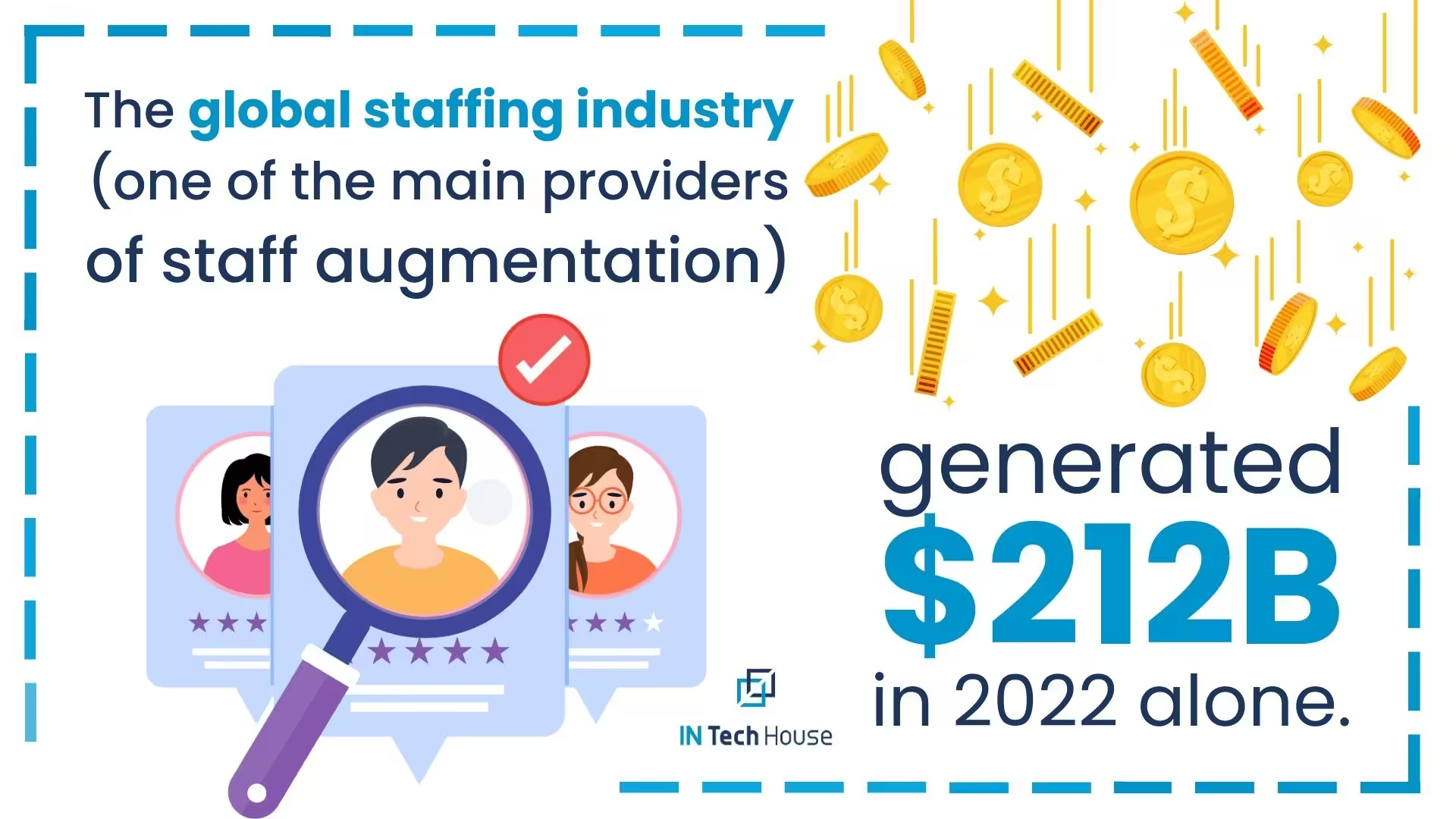
Source: PGCG
Staff Augmentation Model: A New Way to Team Augmentation
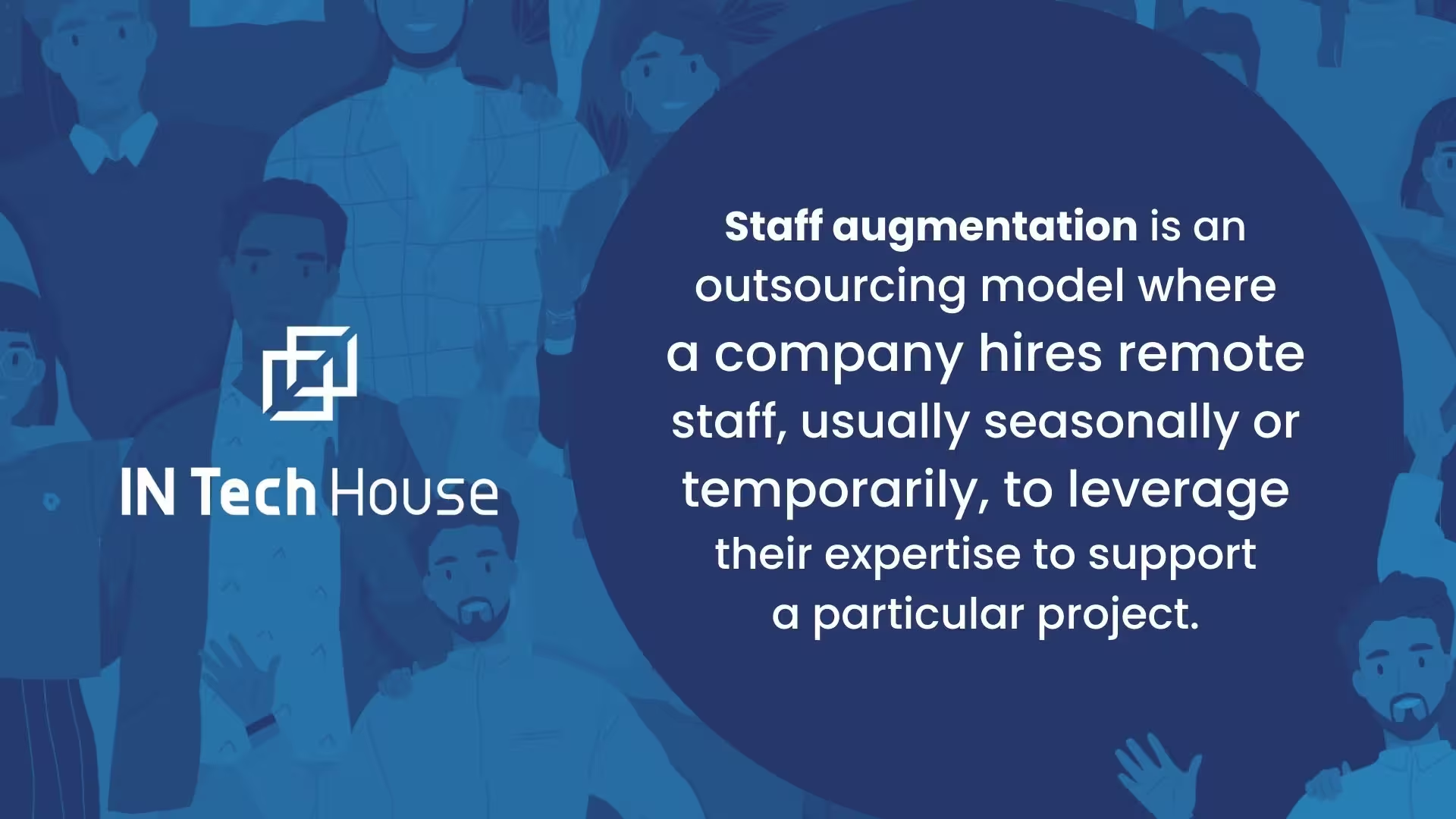
In essence, staff augmentation services entail strategically supplementing your existing team with external resources, and that scope is exactly what the staff augmentation vs managed services comparison turns on. Instead of the traditional hiring model, where new employees are brought on board permanently, staff augmentation provides a more flexible solution. External professionals, possessing the required skill sets and expertise, are seamlessly integrated into your team temporarily.
The Pros of Staff Augmentation
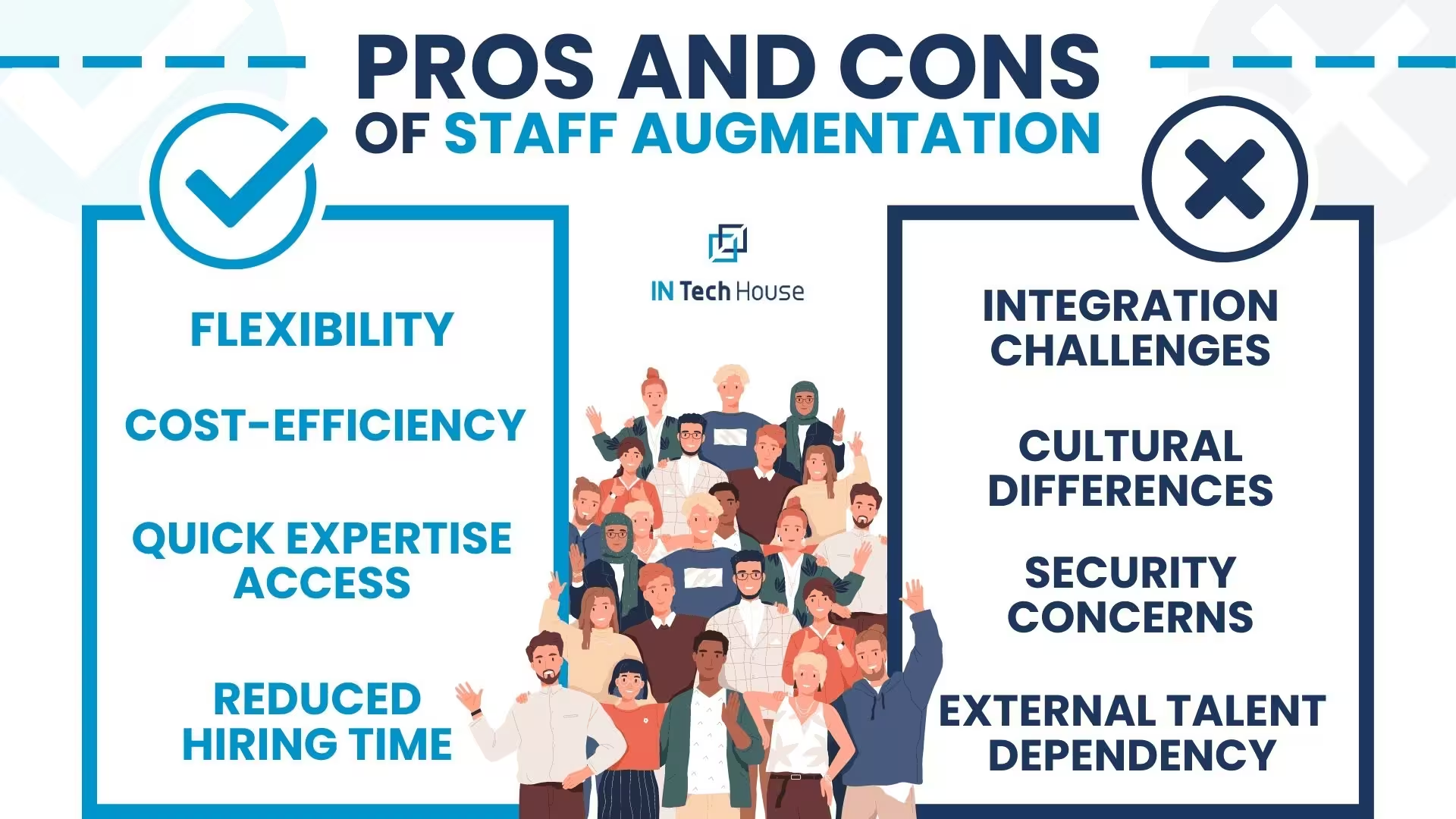
- Flexibility: One of the standout advantages of staff augmentation is its flexibility. Whether you require additional manpower for a short-term project or specialized skills for a particular task, you can easily scale your team up or down as needed. This adaptability enhances your company's ability to respond swiftly to market changes. The same scaling logic applies to hardware and embedded engineering services, where specialists are often needed only for specific project phases.
- Cost-Efficiency: Hiring full-time employees involves expenses beyond just salaries, such as benefits and overhead costs. With staff augmentation, you only pay for the specific skills and time required, making it a more cost-effective option in the long run.
- Quick Access to Expertise: Sometimes, your projects may require niche skills that your current team doesn't possess. Staff augmentation allows you to tap into a vast pool of specialized professionals who can bring their expertise to the table and contribute to your project's success.
- Reduced Hiring Time: Traditional hiring processes can be time-consuming, often leading to delays in project execution. Staff augmentation mitigates this by swiftly providing skilled professionals who can start contributing from day one.
The Cons of Staff Augmentation
- Integration Challenges: Integrating external team members seamlessly into your existing team might require additional effort in terms of communication, coordination, and team dynamics.
- Cultural Alignment: Different professionals might have varied work styles and cultural backgrounds, potentially leading to clashes in team dynamics and work methodologies.
- Security Concerns: Sharing sensitive company information with external resources requires robust security measures to safeguard data integrity and confidentiality.
- Dependency on External Talent: While staff augmentation offers quick solutions, it may lead to over-dependence on external professionals, reducing your in-house team's capacity to acquire new skills and knowledge.
Staff Augmentation is About Specific Needs…So, if you need something extra, staff augmentation is one of the best services we can provide.
Generic contractors slow down when the work involves a board bring up or a certification deadline. Our augmented engineers come from delivery projects, not from a bench.
Augment your team with engineers who ship hardware
What is InTechHouse Staff Augmentation Services?
InTechHouse Staff Augmentation Services offer a transformative approach to enhancing your team's capabilities and meeting your project requirements with precision. With a deep understanding of the ever-evolving business landscape, InTechHouse provides tailored solutions that align seamlessly with your organization's unique needs.
Our Staff Augmentation Services empower you to leverage a curated pool of highly skilled professionals who possess the exact expertise you require. Whether you need specialized technical skills, industry-specific knowledge, or additional resources to tackle a project, our services ensure that you have access to the right talent at the right time.
The InTechHouse Advantage:
- Expertise On Demand: Our services give you immediate access to professionals with the specific skills and experience needed for your projects. This eliminates the time-consuming process of recruiting, hiring, and training.
- Flexibility and Scalability: Adapt to changing project requirements and demands by seamlessly scaling your team up or down as needed. Whether it's a short-term project or an ongoing endeavour, our flexible model caters to your needs.
- Cost-Effective Solutions: Avoid the overhead costs associated with full-time hires. With InTechHouse Staff Augmentation Services, you only pay for the expertise and time required, optimizing your budget without compromising on quality.
- Enhanced Efficiency: Integrate our skilled professionals seamlessly into your existing team to accelerate project timelines, improve productivity, and ensure timely project delivery.
- Industry Diversity: From technology and engineering to finance and healthcare, InTechHouse offers professionals with diverse industry backgrounds, ensuring that you get the expertise you need, no matter your sector.
- Collaborative Approach: Our professionals collaborate effectively with your in-house team, fostering a dynamic environment where ideas and expertise are exchanged seamlessly.

* It was a great case. But we cannot mention any names and details because it's a strict NDA with a big global enterprise.
In a rapidly changing business environment, InTechHouse Staff Augmentation Services provide a strategic edge that enables you to respond swiftly to market demands, optimize costs, and tap into specialized skills without the constraints of traditional hiring. With InTechHouse as your partner, you can transform challenges into opportunities and take your projects to new heights. Elevate your team's potential with InTechHouse Staff Augmentation Services today.
Choosing the Right Staff Augmentation Model
It doesn't matter what short or long-term projects you are doing. The steps of implementing SA in your business are vital. Learn how to do it with your InTechHouse expert!
1. Define Your Project Scope and Needs
The foundation of choosing the right staff augmentation model lies in a clear understanding of your project's scope and specific requirements. Are you seeking specialized skills for a finite project, or do you anticipate ongoing demands? Clarifying the scope helps identify whether short-term or long-term augmentation is appropriate.
2. Evaluate the Skills Gap
Identify the skills your internal team lacks but are critical for project success. This evaluation will guide you in selecting professionals with the precise expertise needed to seamlessly integrate into your team and contribute effectively.
3. Consider Flexibility and Scalability
Does your project's scope fluctuate over time? Opt for a model that offers flexibility, allowing you to swiftly scale your team up or down as project demands evolve. This adaptability ensures optimal resource allocation and budget management.
4. Assess Communication and Collaboration
Effective integration of augmented professionals hinges on seamless communication and collaboration within your team. Consider how well potential staff augmentation providers facilitate this integration, ensuring that external resources align seamlessly with your in-house team's dynamics.
5. Delve into Provider Expertise
Research and evaluate potential staff augmentation providers' reputation, experience, and track record. A provider with a diverse pool of skilled professionals and a history of successful project deliveries is more likely to meet your expectations.
6. Embrace Cost-Efficiency
Dive into the financial aspect of your decision. Compare the costs associated with staff augmentation against traditional hiring. Staff augmentation's appeal lies in its cost-efficiency, enabling you to pay for the skills and time you require without enduring long-term commitments.
7. Match the Model to Your Project Type
Different projects demand different models. If your project has a well-defined scope and requirements, a Fixed Price Model might be suitable. For projects with evolving demands, a Time & Material Model offers adaptability. Explore models such as Dedicated Teams for long-term collaboration and Research and Development for innovative endeavors. Where requirements are still moving, the billing mechanics and control points of a time and material model decide how much flexibility the client actually gets.
8. Seek Alignment with Your Strategy
Select a staff augmentation model that aligns with your overarching business strategy. Consider the potential impact on your team's dynamics, project outcomes, and long-term goals when making your decision.
Staff augmentation is one option inside a wider catalogue of contracting formats, and the choice only makes sense when you see all of them. Our overview of IT engagement models sets out how dedicated teams, project outsourcing and time based cooperation differ in control and cost. Start there if you are still deciding what kind of relationship the project actually needs. Readers new to the vocabulary of vendors, contracts and delivery responsibility may find it easier to start from outsourcing basics before comparing individual models.
When It's a Good Idea: Choosing the Right Staff Augmentation Model
While the Staff Augmentation Model offers a multitude of benefits, it's essential to make an informed decision about when and how to implement it effectively.
- Project-Based Needs: If your company faces a sudden surge in project demands or requires specialized skills for a short-term endeavour, staff augmentation can be an ideal solution. It enables you to swiftly onboard professionals with the precise expertise you need, without the commitment of a full-time hire
- Limited Budget: For businesses with budget constraints, staff augmentation offers a cost-efficient approach. You can allocate resources to specific projects as necessary, eliminating the financial strain of hiring full-time employees with additional benefits and overhead costs
- Skill Gap Filling: When your team lacks specific skills crucial for a project's success, staff augmentation provides a swift remedy. Instead of dedicating time to training, you can bring in professionals who possess the exact competencies required.Choosing the Right Staff Augmentation Model
- Define Your Needs: Understand your project's requirements thoroughly. Identify the skills and expertise you lack within your team and ascertain whether these are needed for the short term or the duration of the project.
- Evaluate Expertise: Look for reputable staff augmentation providers or freelancers with proven expertise in your industry. A strong track record and positive testimonials can offer insights into their reliability.
- Communication and Collaboration: Ensure that the chosen professionals can seamlessly integrate with your existing team. Effective communication and a collaborative mindset are crucial for successful staff augmentation.
- Contracts and Agreements: Establish clear contracts and agreements outlining roles, responsibilities, deliverables, timelines, and costs. The clarity in these aspects prevents misunderstandings and conflicts down the line.
Responsibilities and Costs Using Staff Augmentation
With the Staff Augmentation Model, the responsibilities and costs are significantly streamlined compared to traditional hiring methods.
- Responsibilities: Your organization is responsible for providing the necessary resources, tools, and a supportive work environment to enable the augmented professionals to perform effectively. Regular communication and integration within the team also fall within your purview
- Costs: The costs associated with staff augmentation are straightforward and transparent. You pay for the specific skills and hours worked, without the added expenses of benefits, training, and overhead costs. This simplicity ensures better financial control and planning.
In the ever-evolving landscape of business, the Staff Augmentation Model emerges as a versatile tool that empowers companies to respond dynamically to changing demands. By understanding its nuances, carefully selecting external resources, and ensuring seamless integration, businesses can leverage the model's benefits while mitigating potential challenges. Ultimately, the Staff Augmentation Model represents a paradigm shift in team augmentation, offering a tailored approach to addressing skill gaps and project requirements in an efficient, cost-effective manner.
What is the Forrester Wave and Why it's Important?

The Forrester Wave is a renowned research and analysis methodology developed by Forrester Research, a prestigious global research and advisory firm. This methodology is designed to assess and compare various technology vendors, products, or services within a specific market segment. It means the winner of this research has the best quality expertise in the IT and consulting industry.
We are not the winners. Yet!

Read also:
- Staff Augmentation and Managed Services
- IT Engagement Models: Meaning and Types
- What Is An Offshore Development Center and How To Set Up One
Source: Google
Is it Possible to Deliver a 400% ROI by Using the Right Consulting and Best Software?
The success stories of companies that have embraced staff augmentation models are numerous, and PROS stands as a prime example. With PROS solutions, organizations have reported remarkable returns on investment, with a staggering 400% ROI realized. This remarkable achievement underscores how harnessing the right expertise, at the right time, can propel companies toward exponential growth.
Dedicated In-House Team vs. Staff Augmentation: Comparison
While the traditional in-house team model has been the cornerstone of business operations, the emergence of staff augmentation introduces a compelling alternative. Here's a succinct comparison between the two:
Dedicated In-House Team:
- Long-Term Commitment: In-house teams represent a long-term commitment, often requiring exhaustive time and resources for recruitment and training.
- Fixed Skill Set: The skill set of in-house teams is usually fixed, which might limit your ability to adapt to changing project requirements. Bringing in outside skills for a defined piece of work is often handled through fixed-price contracts with a clear scope.
- Higher Overhead: Employing full-time staff involves overhead costs, such as benefits, office space, and equipment.
- Limited Expertise: In-house teams might not possess the specialized expertise needed for certain projects.
Staff Augmentation:
- Flexibility: Staff augmentation provides flexibility to swiftly scale up or down based on project demands, without the burden of long-term commitments.
- Specialized Skills: You gain access to technical skills and expertise without the need for lengthy training or hiring processes.
- Cost-Efficiency: Staff augmentation optimizes costs, as you pay only for the skills and time required, reducing overhead and long-term commitments.
- Agility: Staff augmentation allows for quick adaptation to changing project needs and industry trends.
Conclusion
The rise of the Staff Augmentation Model marks a transformative shift in how businesses optimize their workforce. The PROS success story underscores the tangible benefits of leveraging external expertise, demonstrating that choosing the right model can drive substantial returns on investment. As the business landscape continues to evolve, the comparison between dedicated in-house teams and staff augmentation reflects the growing need for flexibility, specialized skills, and cost-efficiency in a dynamic and competitive market. The future belongs to those who can adeptly navigate these shifts, leveraging the right strategies and solutions to propel their organizations toward success.
Integration and cultural fit are the two failure points of this model, so we handle onboarding, documentation and handover as part of the engagement. Ask us how a typical ramp up looks.
See how we onboard augmented engineers
Let's talk about your next move
Not sure where to start? We work with companies at every stage, from early ideas to enterprise-level builds. A 30-minute call can save you months of guesswork.
FAQ
How quickly can augmented engineers become productive?
Augmented engineers typically start contributing within days and reach full productivity within a few weeks, depending on how prepared the client is. The main delays are access rights, development environments, codebase familiarization and, for embedded work, the availability of development kits or prototype boards. Clients that prepare onboarding documentation, a working build setup and a first well-defined task shorten the ramp-up considerably. Engineers with experience on the same processor family or toolchain also become effective faster.
Who manages augmented engineers day to day?
In staff augmentation, the client manages augmented engineers day to day, assigning tasks, setting priorities and reviewing their work within its own processes and tools. The provider remains the formal employer or contractor and handles contracts, payroll, equipment policy, performance issues and replacement if someone leaves. Clear roles matter because the provider does not take responsibility for delivery. Some providers add a light account-management layer, but technical direction stays with the client's leads.
What should a staff augmentation contract include?
A staff augmentation contract should define roles and seniority, rates and billing periods, working hours and location, notice periods on both sides, and replacement terms if an engineer leaves or underperforms. It must assign IP created by the engineers to the client and include confidentiality obligations that cover subcontractors. Non-solicitation terms, equipment and security requirements, and conditions for converting an engineer to direct employment are also common. For regulated projects, include access and training requirements for the client's quality system.
How do you prevent knowledge loss when augmented engineers leave?
Knowledge loss from departing augmented engineers is prevented by treating documentation and shared ownership as part of the work from the start. Code reviews, pair work with internal engineers and design notes kept in the client's repository spread knowledge across the team. Contracts should require reasonable notice and an overlap period with the replacement. Avoid making an augmented engineer the only person who understands a subsystem, especially for firmware or hardware test setups that are hard to reverse-engineer.
When is staff augmentation better than hiring in-house engineers?
Staff augmentation is better than hiring in-house when the need is urgent, temporary or requires skills the company will not use continuously, such as FPGA design, a specific RTOS or certification testing. Recruiting senior embedded engineers can take months, while augmentation can supply someone within weeks. Hiring in-house is better for long-term core roles, where accumulated product knowledge and retention matter more than flexibility. Many teams combine both, using augmentation to bridge gaps while permanent hiring continues.
Tomasz Kierul
Co-founder responsible for scaling operations and ensuring the efficient delivery of technology projects. He brings extensive experience in advanced technologies, with a strong focus on artificial intelligence, which enables him to translate business needs into practical, scalable AI solutions that deliver measurable value.
Building on this background, he manages complex R&D projects and leads engineering teams in environments where quality, timeliness, and compliance with regulatory requirements are critical.
His approach is centered on delivering tangible business outcomes, rather than focusing solely on technology. In his work with international clients, he supports technology transformation initiatives and the implementation of AI-driven solutions aligned with real operational needs.
Let's talk about your next project
From first prototype to production, our engineers can help you scope it, build it and get it certified.


Discuss your product with our R&D team
This initial conversation is focused on understanding your product, technical challenges, and constraints.
No sales pitch - just a practical discussion with experienced engineers.
Share a few details about your product and context. We’ll review the information and suggest the most appropriate next step.