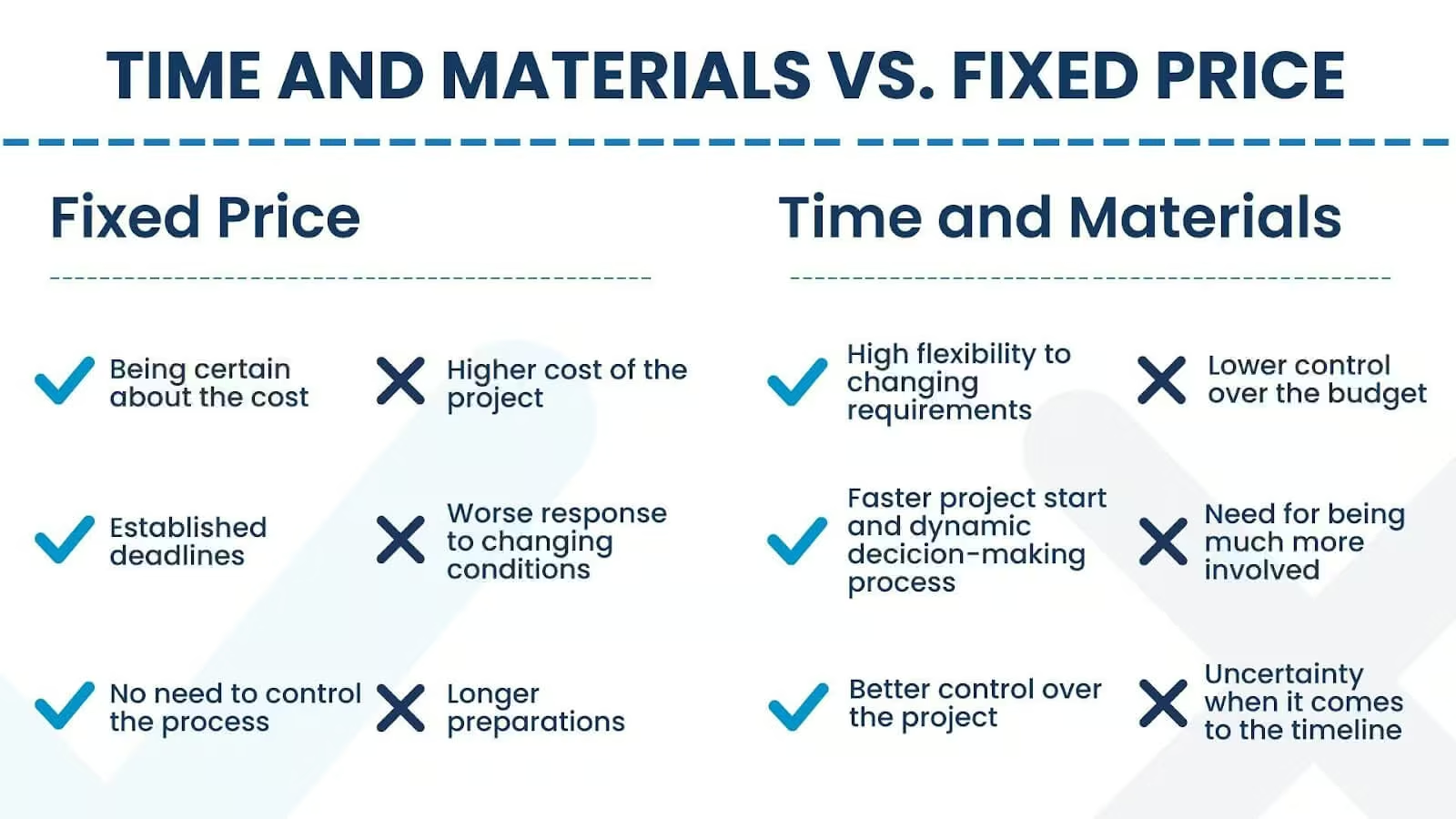
In the world of project development and outsourcing, various cooperation models are used to cater to the diverse needs of businesses and clients. One such model gaining popularity is the Time and Material (T&M) cooperation model, usually judged through the time and materials vs fixed price comparison. In this article, we’ll explore the advantages, disadvantages, and examples of implementing the Time and Material cooperation model.
T&M meaning is very important.
The Time and Material cooperation model is a flexible modern approach where the client pays for the actual time and resources invested in a project. Unlike fixed-price models, T&M allows for greater adaptability and transparency, making it ideal for projects with dynamic requirements or evolving scopes.
T&M is not the only way to structure a software contract, and it is rarely evaluated in isolation. Seen against the full range of IT engagement models, it sits between rigid fixed scope agreements and fully dedicated teams. Knowing where it sits makes the pros and cons below easier to weigh.
The Time and Material (T&M) cooperation model has a long history and has been used by various industries for different types of projects. While it is challenging to pinpoint the exact first companies that started using this model, its origins can be traced back to the early days of project outsourcing and professional services.In the 19th and early 20th centuries, industries like construction and engineering began to adopt a form of T&M model for their projects. Clients would pay contractors based on the actual time and materials used to complete the project. This approach allowed for greater flexibility, especially when dealing with complex and unpredictable construction projects.In the mid-20th century, the T&M model gained popularity in the field of consulting and professional services. Consulting firms started billing clients based on the actual time their consultants spent on projects, along with any expenses incurred during the engagement. This model allowed clients to have a transparent view of the consulting firm’s efforts and the costs involved.
As the information technology industry emerged, the T&M model found its way into software development and IT services. During the 1970s and 1980s, software development projects were often difficult to estimate accurately, given the dynamic nature of programming and evolving client requirements. The T&M model offered a suitable alternative, as it allowed clients to pay for actual development hours and resources used, providing them with greater control over the project’s direction.In the 21st century, with the rise of digitalization and outsourcing, the T&M model expanded to various industries, including marketing, design, and digital services. Companies found this model particularly valuable for projects with uncertain or evolving scopes, as it allowed them to adapt to changing market demands and requirements. That shift tracks the wider history of IT services, and a clear definition of what outsourcing is helps place T&M among the other contract forms.
Today, the Time and Material cooperation model continues to be widely adopted by companies around the world. Its flexibility, transparency, and adaptability make it a preferred choice for businesses engaged in projects with dynamic needs and evolving priorities. While other cooperation models exist, the T&M model’s historical success and proven track record have solidified its position as a reliable approach for businesses seeking agility and control in their projects. Companies that want the same agility while managing engineers directly often pair T&M billing with team augmentation, adding specialists to an existing in-house group.
T&M works when the scope of a hardware or embedded project cannot be frozen upfront, which is most R&D work. We will walk you through how we report hours, milestones and change requests.
Scope a Time and Material engagement with our team

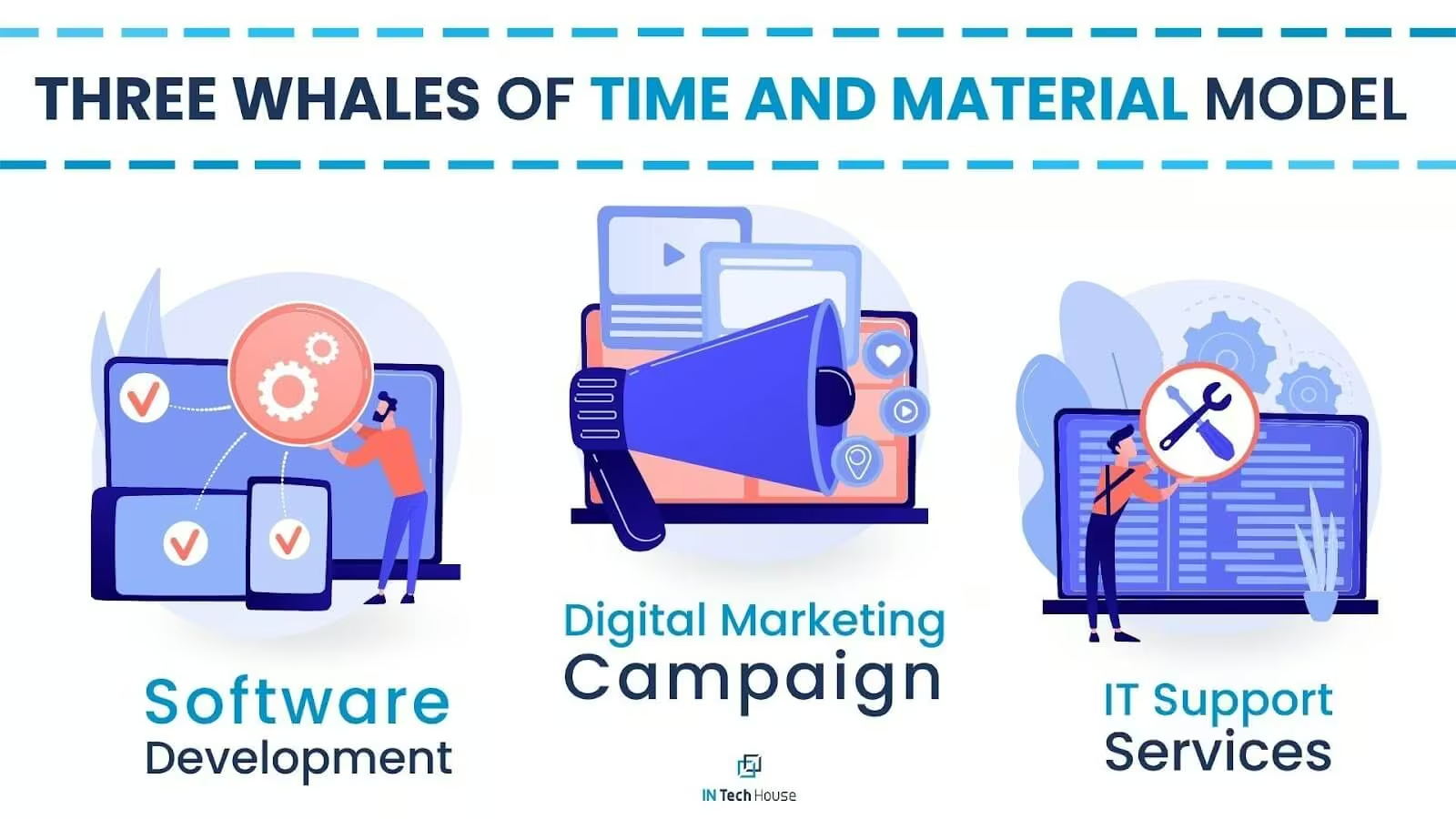
There are three popular ways of using time and material cooperation model:
Companies can save money using the Time and Material (T&M) cooperation model for several reasons:
In summary, the Time and Material cooperation model offers cost-saving advantages due to its flexibility, transparency, and adaptability. By paying for actual work performed and resources utilized, companies can optimize their spending, effectively manage budgets, and achieve successful project outcomes without unnecessary financial burden.
InTechHouse business advice suggests that the Time and Material (T&M) cooperation model is a suitable choice under certain circumstances. Here are scenarios where it’s easy to choose the T&M model:
InTechHouse advises considering the T&M model when your project aligns with these criteria. However, each project is unique, and it’s essential to evaluate the specific requirements, risk tolerance, and budget considerations before making a final decision. Discussing your project needs with InTechHouse or any other service provider will help you determine the most suitable cooperation model for your business objectives.
Read also:
A Time and Material (T&M) contract typically outlines the terms and conditions of the engagement between the client and the service provider. While specific details may vary based on the project and the parties involved, here are the common elements you would find in a T&M contract:
Keep in mind that T&M contracts can be tailored to suit the specific needs and complexities of each project. It’s essential to have a clear understanding of the terms before entering into any contractual agreement, and legal counsel is recommended to review and finalize the contract.
The Time and Material cooperation model offers numerous advantages in terms of flexibility, transparency, and adaptability. While it may not be suitable for every project, it proves invaluable for endeavors where requirements evolve, and close collaboration with the vendor is essential. Businesses must carefully evaluate their project needs and risk tolerance to determine if the T&M model aligns with their objectives and budgeting preferences. When executed with clarity and effective communication, the Time and Material model can lead to successful project outcomes and satisfied clients.
Every engagement comes with named engineers, weekly progress reporting and a transparent burn rate. Ask us for a sample statement of work from a project close to yours.
Request an estimate for your project
Not sure where to start? We work with companies at every stage, from early ideas to enterprise-level builds. A 30-minute call can save you months of guesswork.
A time and materials contract is billed for the hours or days actually worked by each role, at agreed rates, plus the cost of materials and expenses used on the project. Invoices are usually issued monthly or per sprint, supported by timesheets and a summary of completed work. Rates differ by role and seniority. Scope changes do not require renegotiating the contract, but every change still consumes hours, so it affects the total cost.
In a time and materials engineering project, materials cover the physical and third-party items the work consumes, billed at cost or with an agreed handling fee. For hardware and embedded projects, this typically includes prototype PCB fabrication and assembly, components, development kits, test fixtures, enclosures and external lab or certification test fees. Software licenses, cloud resources and travel may also be included. The contract should state which items need client approval above a set value.
A time and materials budget stays under control through frequent visibility and regular re-estimation. The client should receive burn-rate reports per sprint or month, compare them with a rolling forecast of the remaining work, and reprioritize the backlog when the forecast drifts. Agreeing on a monthly budget ceiling and requiring approval before it is exceeded adds a hard limit. Short iterations with demonstrable results let the client judge value delivered, not just hours spent.
Under a time and materials model, project management is shared: the client typically owns priorities and scope through a product owner, while the vendor supplies a project manager or technical lead who organizes the team and reports progress. Because the client pays for effort rather than a fixed result, its active involvement in planning and reviews directly affects cost and outcome. The contract should state who approves scope changes, releases and additional resources.
Time and materials is common for R&D and prototyping because the work involves unknowns that cannot be estimated reliably in advance. Board revisions, component changes, test results that force a redesign and evolving requirements are normal in early product development. A fixed price would either include a large risk buffer or lead to repeated change requests. Time and materials lets the team follow what the prototypes reveal, while the client controls spending through priorities and iteration reviews.

Co-founder responsible for scaling operations and ensuring the efficient delivery of technology projects. He brings extensive experience in advanced technologies, with a strong focus on artificial intelligence, which enables him to translate business needs into practical, scalable AI solutions that deliver measurable value.
Building on this background, he manages complex R&D projects and leads engineering teams in environments where quality, timeliness, and compliance with regulatory requirements are critical.
His approach is centered on delivering tangible business outcomes, rather than focusing solely on technology. In his work with international clients, he supports technology transformation initiatives and the implementation of AI-driven solutions aligned with real operational needs.
From first prototype to production, our engineers can help you scope it, build it and get it certified.
This initial conversation is focused on understanding your product, technical challenges, and constraints.
No sales pitch - just a practical discussion with experienced engineers.
Share a few details about your product and context. We’ll review the information and suggest the most appropriate next step.