In today’s dynamic business landscape, companies often face the challenge of meeting their growing demands for specialized skills and expertise. As a result, they must explore different strategies to bridge the gaps in their workforce. Two popular approaches that have gained traction are staff augmentation and managed services. While both methods serve as viable solutions, understanding their differences and implications is crucial in making informed decisions for your business. A third route is a dedicated nearshore engineering team in Poland or a full offshore development center, both of which sit between short-term augmentation and fully outsourced delivery.
The staff augmentation model is a strategic outsourcing arrangement where companies engage external talent to complement their existing workforce. In this arrangement, businesses can temporarily hire skilled professionals to work on specific projects, tasks, or for a fixed period. The augmentation process enables companies to scale their team up or down as per project requirements without the long-term commitment of permanent hires.
When Staff Augmentation BeganStaff augmentation as a business strategy emerged in the 1970s and gained prominence in the following decades. It was primarily driven by the growing demand for specialized skills in the technology sector, coupled with the need for cost-effective solutions. As businesses sought to access specific expertise for temporary projects without committing to permanent hires, staff augmentation became an attractive option.
Several technology companies were pioneers in adopting staff augmentation as a business model. Some notable early adopters included:
These companies, among others, paved the way for the widespread adoption of staff augmentation across various industries and sectors. Over time, the model evolved, and numerous specialized staffing agencies and consulting firms emerged, catering to the increasing demand for flexible and skilled workforce solutions. Today, staff augmentation continues to be a popular approach for businesses seeking agility, scalability, and access to specialized expertise without the commitments of traditional permanent hires.
Select staff augmentation if flexibility and time are crucial for your business.

Businesses should consider staff augmentation in the following scenarios:
Staff augmentation works when you still own the architecture and managed services work when you do not want to. We staff both ways with hardware, embedded and data engineers.
Add engineers without losing control of the build
Managed services, on the other hand, involve outsourcing specific functions or processes to external service providers. Rather than hiring individual professionals, companies engage managed service providers (MSPs) to take full responsibility for managing and delivering particular services. MSPs are specialized organizations that offer end-to-end solutions, often with a focus on a specific domain or industry.
There are many managed services advantages you should know.
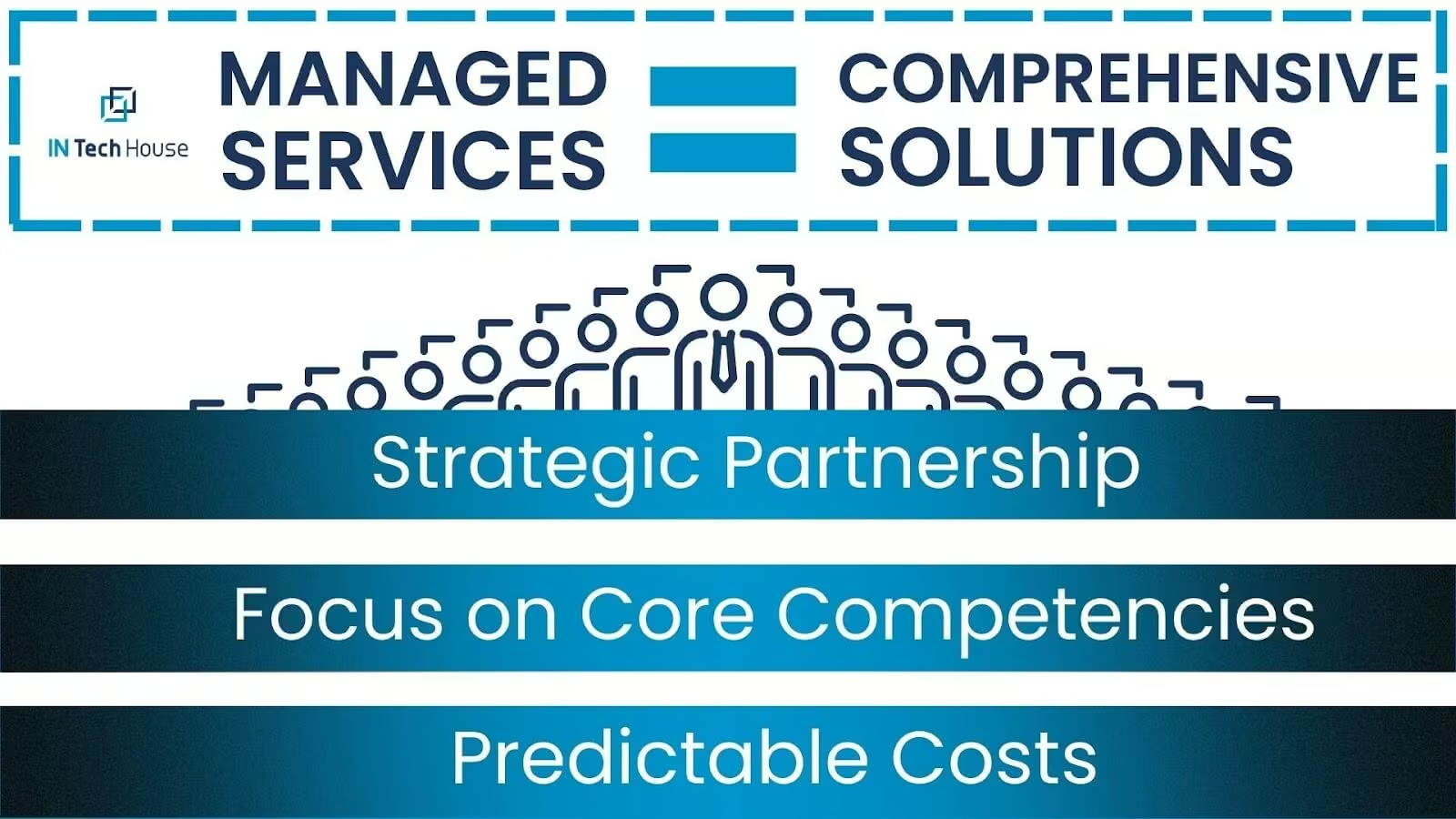
Managed services as a business model began to emerge in the late 1990s and early 2000s. The rapid advancement of technology and the increasing complexity of IT infrastructure led to a demand for comprehensive and outsourced IT management solutions. Managed services offered a proactive approach to IT support, focusing on preventing issues and maintaining the health of IT systems, rather than just reacting to problems when they arise.
Several technology companies were pioneers in adopting managed services company and offering them to their clients. Some notable early adopters of the managed services model include:
These companies, among others, paved the way for the widespread adoption of managed services as a preferred model for IT management and support. As technology continued to evolve, the scope of managed services expanded beyond traditional IT to include various domains, such as cloud services, cybersecurity, data management, and more. Today, managed services are offered by a wide range of companies, from global IT giants to specialized managed service providers, to help businesses effectively manage their IT infrastructure and stay competitive in the ever-changing technological landscape.
Both options answer a broader question: how you contract engineering capacity in the first place. Read them next to the other IT engagement models and the trade off becomes concrete, because control, cost predictability and management overhead shift with every model. Choose the one that matches how much delivery risk you want to keep in house.
Remember, communication is vital in staff augmentation, and fluency in English should be one of the criteria when selecting the right team member.

Source: EF
While choosing your team player, look for smart, outgoing individuals with high qualifications and skills. Embracing staff augmentation will allow you to fully enjoy its advantages over the managed services model for your desired project.
InTechHouse advises being attentive to feedback and activities of a company when choosing managed services or staff augmentation cooperation. Evaluate the managed capacity versus staff augmentation based on experience and real proofs.
Read also:
Choosing managed capacity over staff augmentation may come with higher costs due to the risks involved, but it is a common practice, with expenses increasing by an average of 30 percent.In summary, the difference between staff augmentation and managed services lies in control, where staff augmentation offers specific “input” at a defined price, while managed services focus on delivering outcomes.
In the competition between managed services and staff augmentation, there is no particular winner. The true prize lies in choosing the right model that aligns with your business goals and utilizing it correctly.

Source: MWDN
Whether you opt for staff augmentation or managed services, finding a reliable software development outsourcing contractor is essential. Take your time to research reputable companies with a high reputation, a common vision, and definitely rates. Look for contractors with relevant experience and industry expertise, first, then look at the rates!
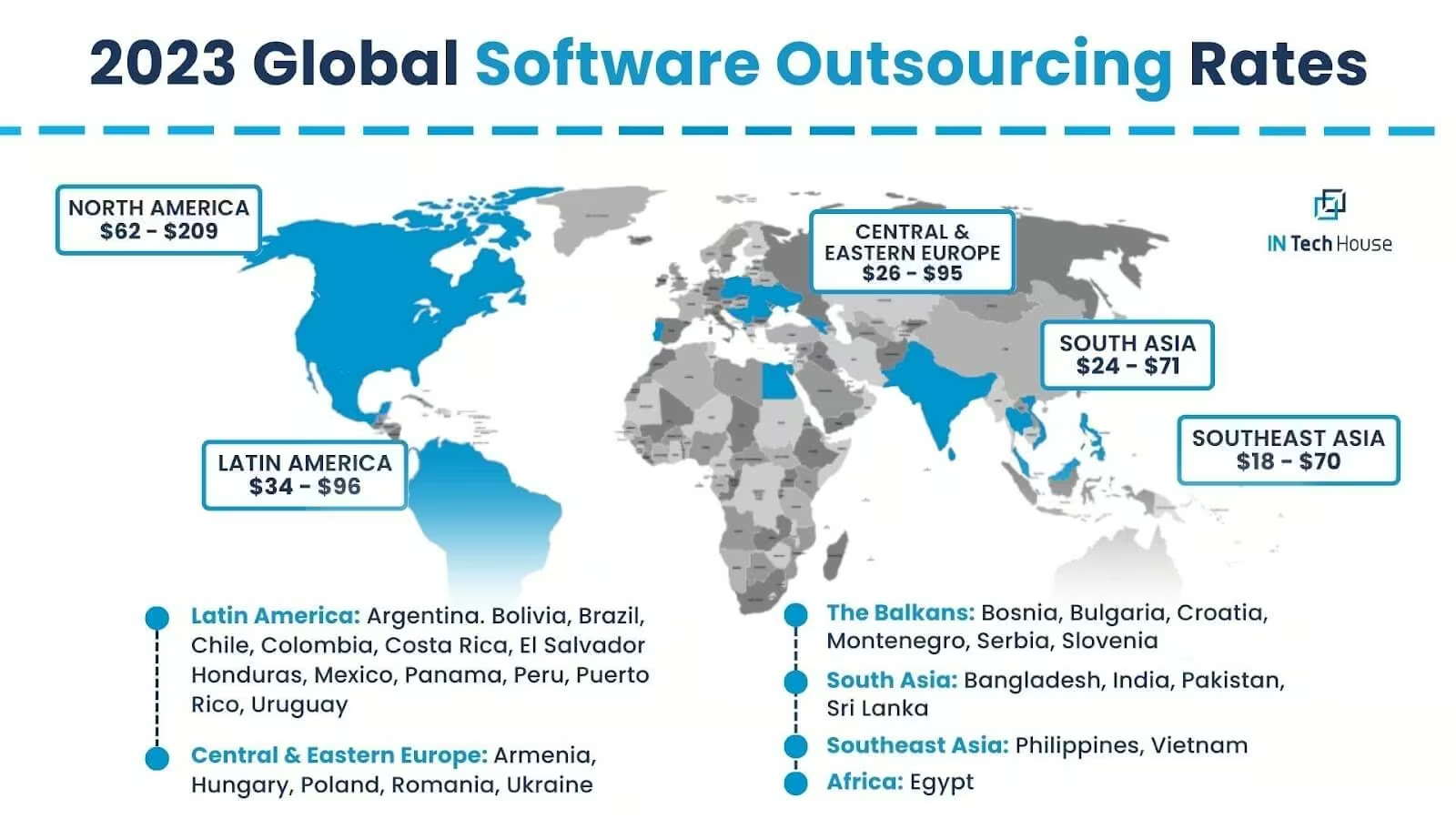
InTechHouse recommends prioritizing quality over cheap services. Choosing a vendor that values projects over profit will lead to more productive and successful partnerships in the long run.
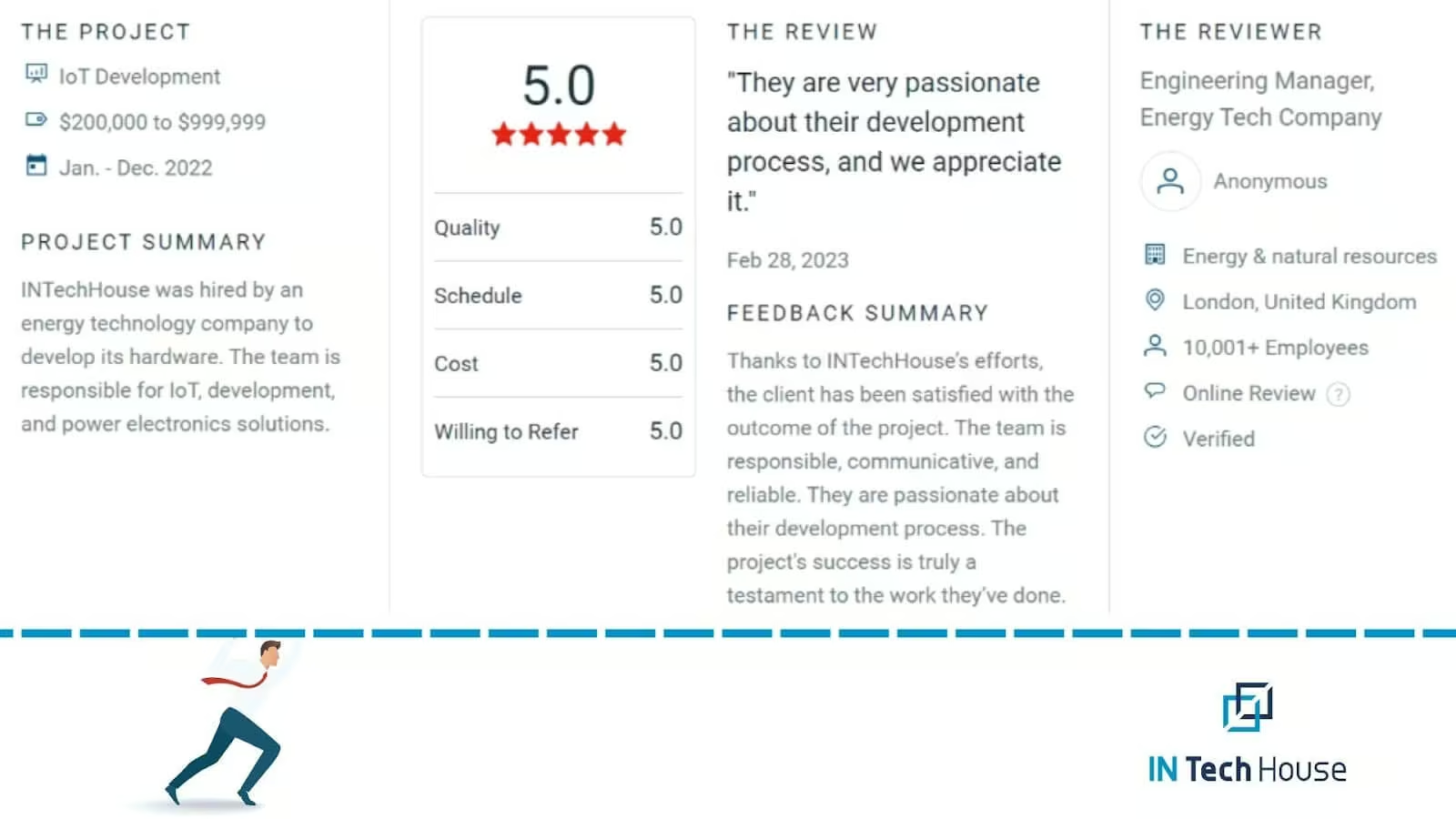
Some of InTechHouse Clutch Reviews
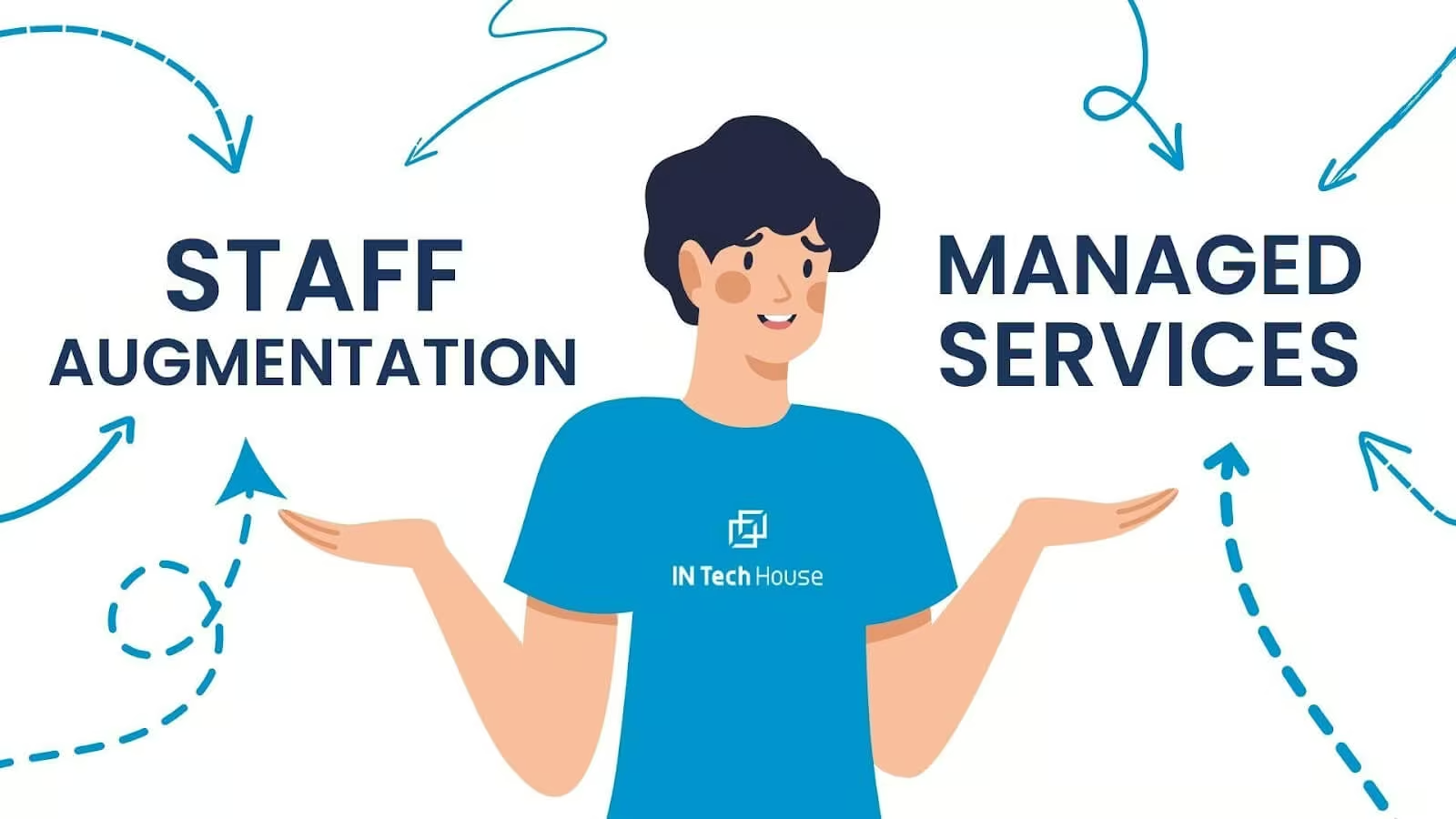
The decision between staff augmentation and managed services depends on your company’s unique needs and goals. Staff augmentation is ideal when you require specific skills for a finite duration, and you want to maintain direct control over the project. On the other hand, managed services are beneficial when you seek comprehensive solutions and want to offload specific functions to specialized external partners.
Ultimately, both staff augmentation and managed services can significantly impact your business’s growth and success. By understanding their distinctions and implications, you can make well-informed choices that align with your company’s vision and aspirations.
Choosing between augmenting your team and handing over a workstream comes down to who carries delivery risk. Talk to us and we will scope both options against your roadmap.
See how we scope an engagement
Not sure where to start? We work with companies at every stage, from early ideas to enterprise-level builds. A 30-minute call can save you months of guesswork.
The difference between staff augmentation and managed services is who manages the work and who is accountable for the result. In staff augmentation, external engineers join the client's team, and the client directs tasks, priorities and quality. In managed services, the provider takes responsibility for a defined function or outcome, manages its own people and is measured against service levels. Staff augmentation buys capacity; managed services buy an outcome, with more risk transferred to the provider.
Staff augmentation is usually priced per engineer, as an hourly, daily or monthly rate for each role, so cost scales directly with headcount. Managed services are typically priced as a fixed periodic fee or per unit of service, tied to agreed service levels and scope. The managed services fee usually includes a margin for the delivery risk and management the provider takes on. Comparing the two requires adding the client's own management effort to the staff augmentation cost.
A team should consider moving from staff augmentation to managed services when a workstream has become stable, measurable and no longer needs daily direction from internal leads. Typical examples are long-term firmware maintenance, regression testing or DevOps for an established product. If internal managers spend significant time coordinating augmented engineers on routine work, handing over the outcome frees them for product decisions. The move works only if service levels and acceptance criteria can be defined clearly.
The main risks of managed services are reduced visibility into how work is done, dependency on a single provider and contracts that adapt poorly to changing needs. Knowledge may accumulate with the provider rather than the client. These risks are reduced by regular reporting against defined metrics, access to repositories and documentation, periodic reviews of scope and pricing, and exit clauses with a structured knowledge-transfer phase. Keeping an internal owner for each managed function preserves the ability to judge performance.
ITIL applies mainly to IT service management, covering processes such as incident, problem and change management, and it is widely used by providers of managed IT services. For managed engineering services such as firmware maintenance or test operations, parts of it transfer well, especially incident severity levels, change control and service reporting. Product development itself is better governed by engineering processes and standards. Organizations wanting certification of service management usually look at ISO/IEC 20000 rather than ITIL itself.

Co-founder responsible for scaling operations and ensuring the efficient delivery of technology projects. He brings extensive experience in advanced technologies, with a strong focus on artificial intelligence, which enables him to translate business needs into practical, scalable AI solutions that deliver measurable value.
Building on this background, he manages complex R&D projects and leads engineering teams in environments where quality, timeliness, and compliance with regulatory requirements are critical.
His approach is centered on delivering tangible business outcomes, rather than focusing solely on technology. In his work with international clients, he supports technology transformation initiatives and the implementation of AI-driven solutions aligned with real operational needs.
This initial conversation is focused on understanding your product, technical challenges, and constraints.
No sales pitch - just a practical discussion with experienced engineers.
Share a few details about your product and context. We’ll review the information and suggest the most appropriate next step.