In the world of business, contracts are essential for outlining the terms, conditions, and responsibilities of a project or agreement. One common type of contract is the fixed price contract, which has gained popularity for its straightforward nature and predictable rate structure without cost increases. In this article, we will explore what fixed-price contracts are, provide some examples, and delve into the benefits they offer for both clients and service providers.
A fixed price is only one way to structure cooperation with a software partner. The full map of IT engagement models also covers dedicated teams, staff augmentation and time based billing, and the right pick depends on how stable your scope really is.
A fixed price is a contract type of agreement where the total cost of the project is predetermined and remains constant throughout the project’s duration, regardless of any fluctuations in labour or material costs, which is the core difference in time and materials vs fixed price. In other words, the price is “fixed” and agreed upon by both parties before the project begins. This type of contract is commonly used in various industries, including construction, software development, consulting, and more.
Examples of Fixed Price Contracts:A simplified version of a fixed-price contract could look like this:
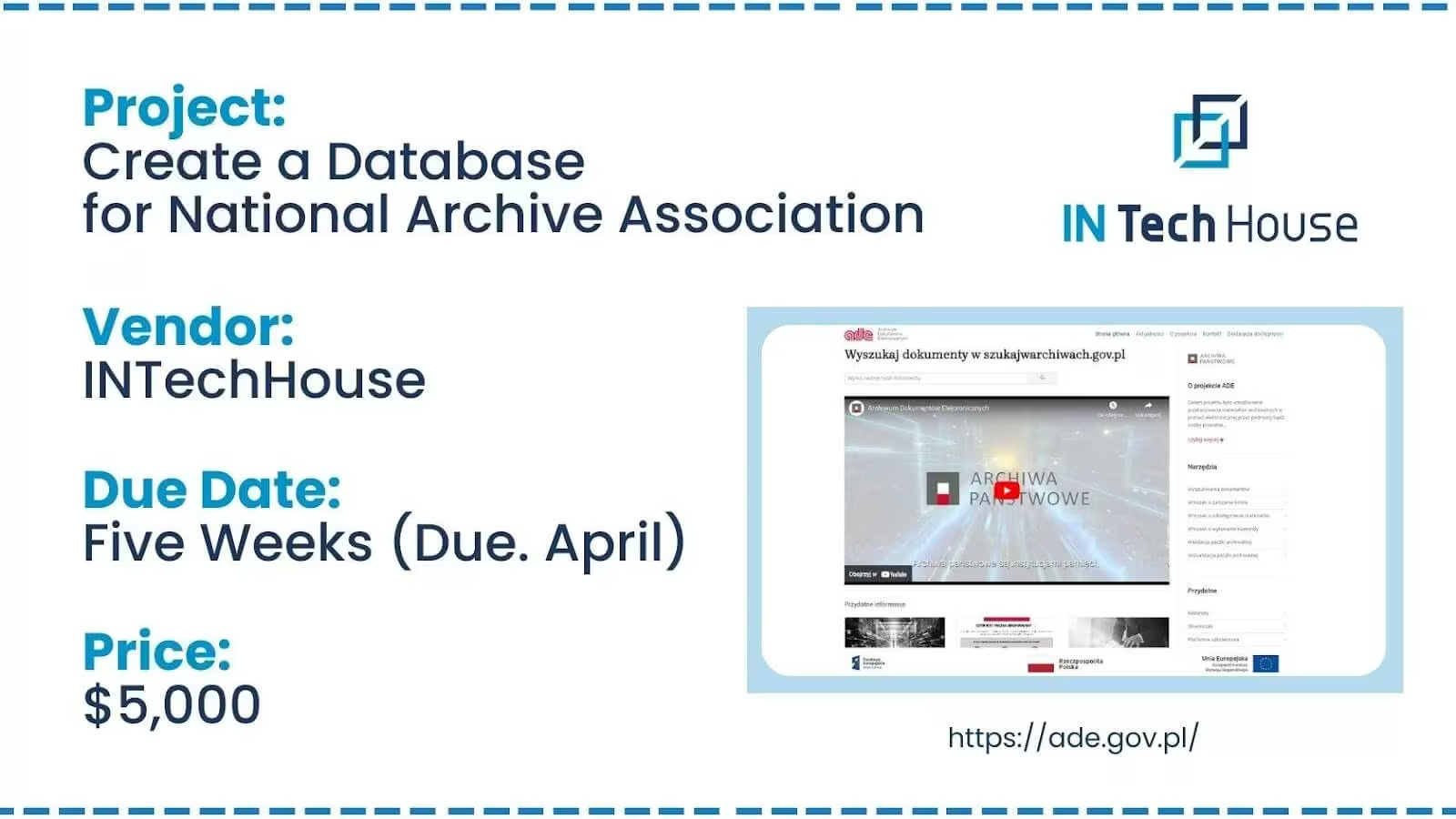
Notice, the contract doesn’t discuss the steps InTechHouse will take to develop the database. That’s because no matter how many steps are needed, the price remains $5,000.

It’s an excellent indicator for less experienced vendors because the fixed-price contract is a more challenging way of having clients! Use a fixed-price contract only with experts!
Fixed price protects your budget only when the requirements were engineered before the contract was signed. We run that scoping phase so the number holds.
Scope a fixed price engineering project properly
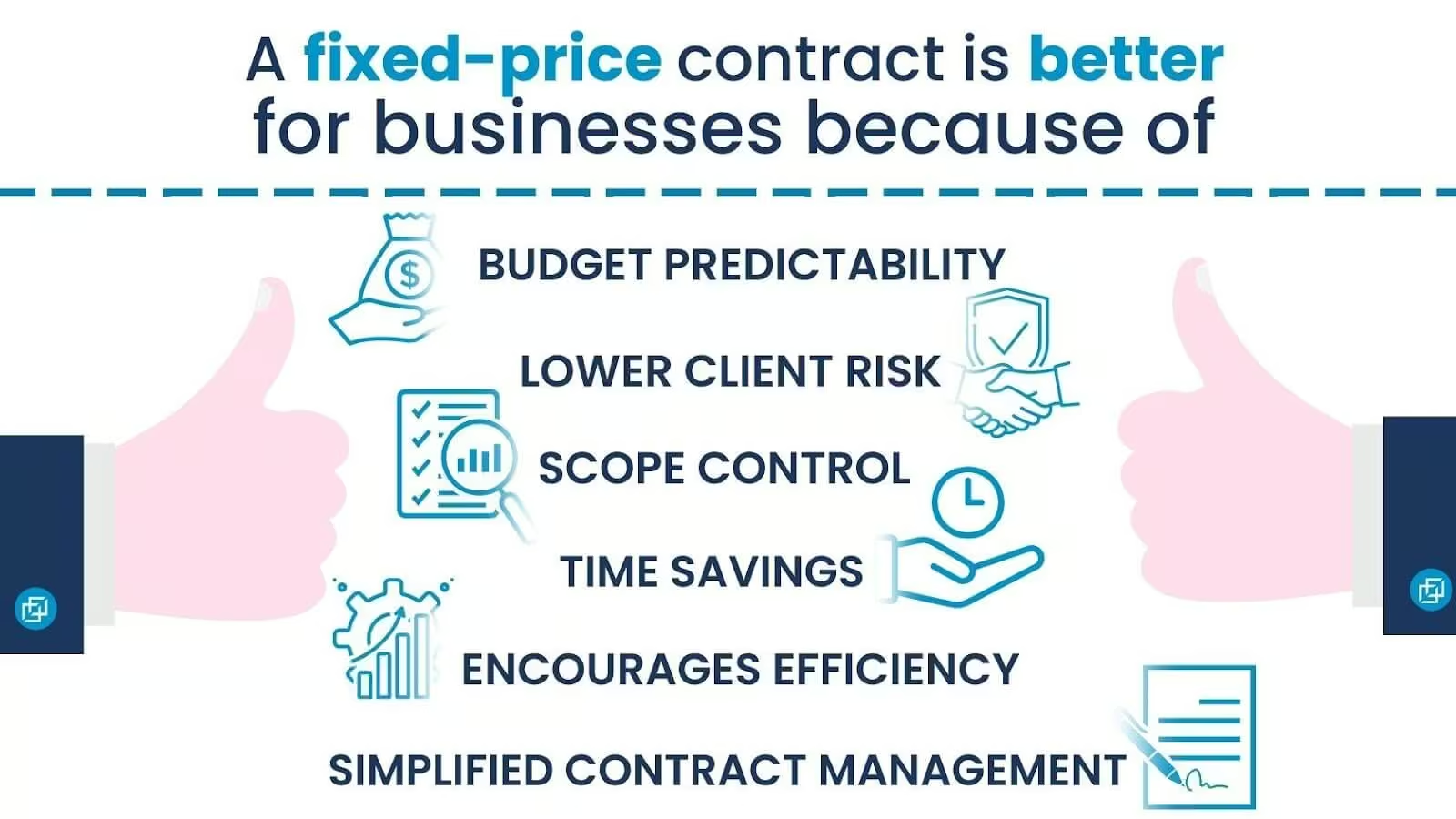
Fixed price contracts work for a specific purpose in project management and business agreements. It is designed to provide both clients and service providers with clarity, predictability, and risk mitigation throughout the project lifecycle. It’s a clear and firm price with a price agreement!
This contract type is particularly well-suited for certain scenarios and industries where well-defined scopes, budgets, and timelines are essential. Let’s explore the purpose of fixed-price contracts and the types of companies that can benefit from them.
Fixed price stops working when requirements change every sprint. In that case the time and material cooperation model is the usual answer, because it bills the hours actually worked instead of a scope both sides know will be renegotiated.
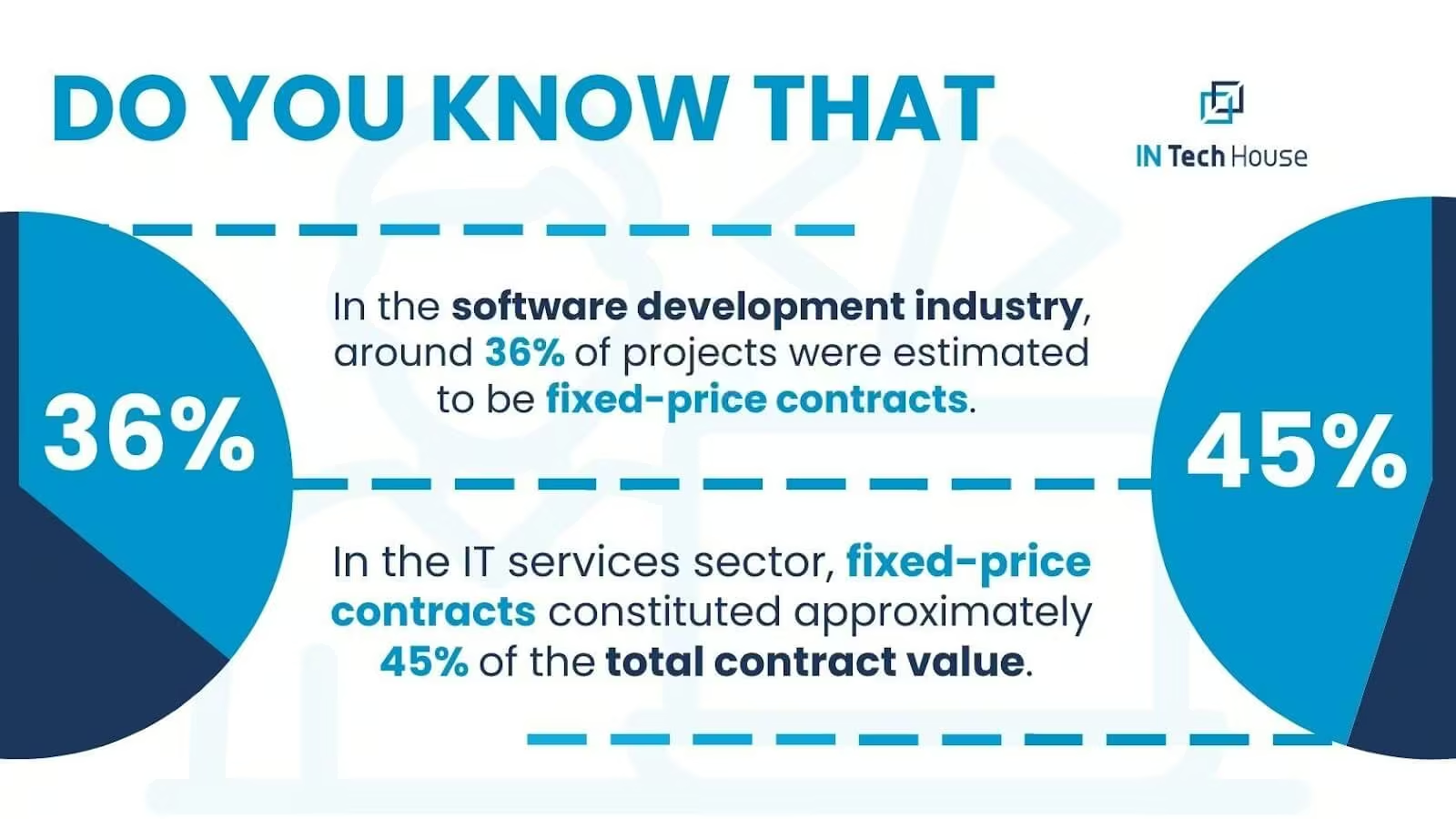
Source: Altexsoft, Statista, International Association of Outsourcing Professionals (IAOP)
In conclusion, the purpose of a fixed-price contract is to provide cost predictability, risk allocation, and efficient project execution. Companies that require clear project budgets, well-defined scopes, and minimized project risks can benefit from fixed-price contracts. However, it’s essential to carefully assess the project’s nature and requirements to determine if a fixed-price contract is the most suitable option.
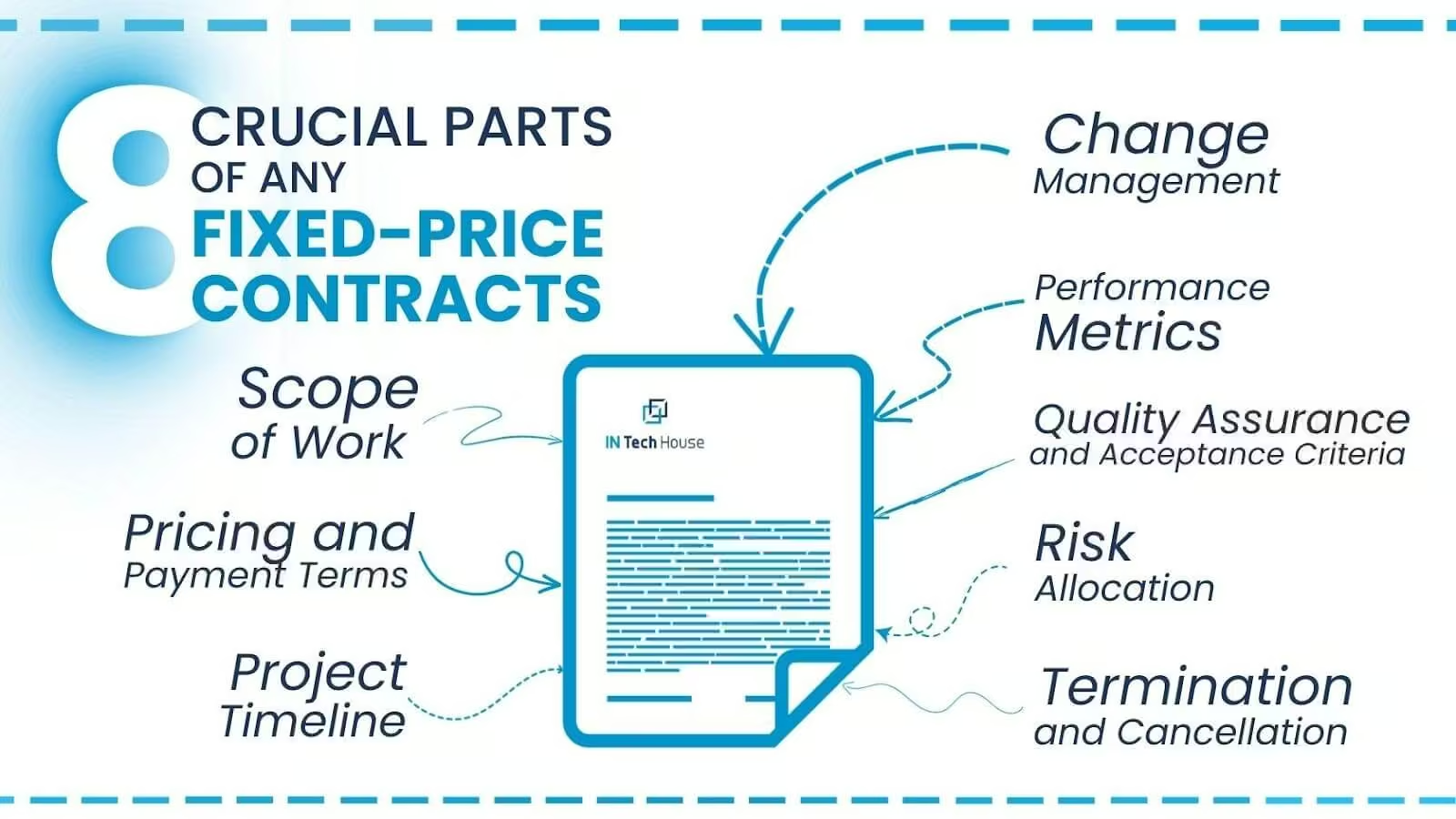
It’s important to carefully consider these crucial parts and limitations when drafting and entering into a fixed-price contract. Both parties should engage in thorough discussions and negotiations to ensure that the contract accurately reflects the project’s requirements, expectations, and potential risks.
Signing the most efficient fixed-price contract requires careful planning, negotiation, and attention to detail. Here’s some advice from InTechHouse to help you navigate the process:
By following these steps and seeking professional guidance when needed, you can sign an efficient fixed-price contract that sets the stage for a successful project collaboration between you and your service provider.
Managing fixed-price contracts is crucial.
At InTechHouse, we prioritize delivering tailored solutions that meet our client’s specific needs. One notable success story involves a client who opted for a fixed-price contract model. Faced with a project requiring apparent budget predictability and well-defined scope, our client chose this approach to ensure precise cost control and on-time delivery. With our team’s expert project management and technical prowess, we navigated the complexities of the project, adhering to the agreed-upon scope while exceeding quality expectations. This collaboration underscored the effectiveness of the fixed-price contract model in achieving tangible results and client satisfaction.
Read also:
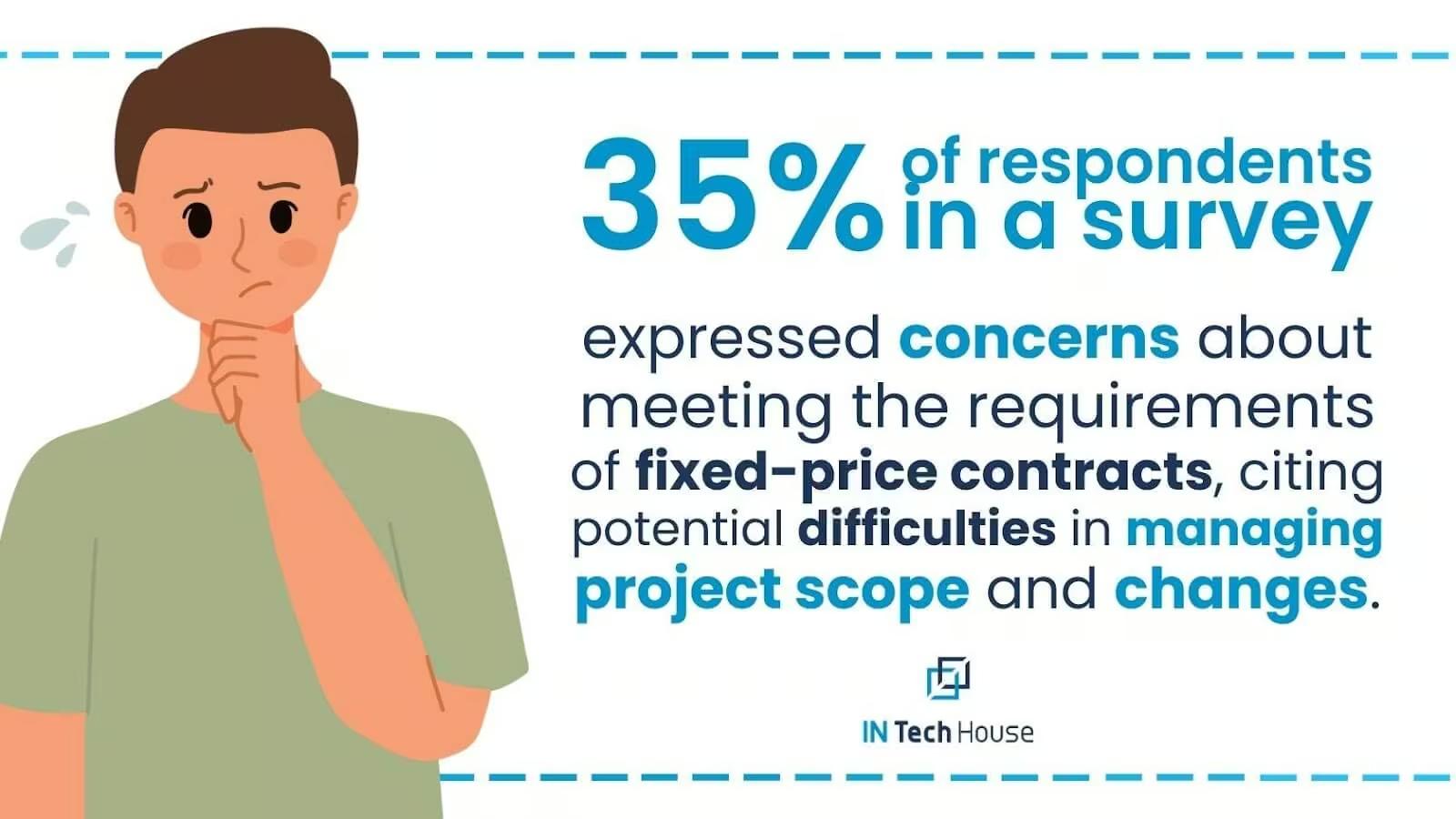
Source: Deloitte
How to have benefits from fixed-price project? The answer is simple. You need to manage it right. InTechHouse knows some secrets and is ready to share them.
Managing fixed-price projects requires careful planning, effective communication, and proactive risk management. Here’s a step-by-step guide on how to successfully manage fixed-price projects:
Thorough Project Planning:
By following these steps and best practices, you can effectively manage fixed-price projects, deliver successful outcomes, and ensure client satisfaction.
We know how to create and run successful fixed-price contract. Our examples are

Source: InTechHouse
Fixed-price contracts offer a level of certainty and predictability that can be highly beneficial for both clients and service providers. With well-defined scope and budget constraints, these contracts provide a solid foundation for successful project execution. Clients can rest assured that they will receive deliverables within the agreed-upon budget, while service providers are motivated to deliver high-quality results to meet contractual obligations.
However, it is essential to recognize that fixed-price contracts may not be suitable for every project. Complex and innovative endeavors with evolving requirements may face challenges under this model. Effective scope management and clear communication are crucial to prevent scope creep and ensure project success.
We deliver electronics and embedded work under fixed price, time and materials and dedicated team setups. Ask which one matches the risk profile of your programme.
Request a fixed-scope estimate for your project
Not sure where to start? We work with companies at every stage, from early ideas to enterprise-level builds. A 30-minute call can save you months of guesswork.
Before signing a fixed price engineering contract, both sides need a requirements specification detailed enough to estimate, a list of deliverables, acceptance criteria and a documented set of assumptions. For hardware and embedded work, assumptions should cover the target hardware, when prototype boards will be available, which interfaces and protocols are in scope, and who supplies test equipment. Explicit exclusions matter as much as inclusions. A short paid discovery phase often produces this baseline when it does not yet exist.
Scope changes under a fixed price contract are handled through a formal change request process. Either party submits a written request, the vendor assesses its effect on cost, schedule and risk, and the change is implemented only after both sides approve the updated price and dates. Without this process, small additions accumulate informally and end in disputes. For engineering projects, a hardware revision or new certification requirement typically counts as a change and should be priced separately.
Vendors add a risk buffer to fixed price quotes because they carry the cost of any estimation error for the agreed scope. The size of the buffer reflects how uncertain the requirements are: a well-specified driver set needs little, while a first-of-its-kind device with unfinished hardware needs much more. Clients can reduce the buffer by providing detailed specifications, stable hardware and clear acceptance tests, or by running uncertain phases under time and materials first.
Payments in a fixed price contract are usually split across milestones rather than paid in one amount at the end. Typical milestones in an engineering project are signed-off requirements, completed design review, working prototype, and final acceptance. Each payment is tied to an objective deliverable, which protects the client and keeps the vendor's cash flow steady. Some contracts include an upfront payment for mobilization or a retention held until the warranty period ends.
Acceptance criteria are essential in fixed price projects because they define when the vendor has earned payment and the client must accept the work. Good criteria are objective and testable, for example a list of requirements each verified by a named test procedure, with measurable limits such as boot time or current consumption. Vague criteria like "works as expected" invite disputes. Agreeing on the acceptance test plan before development starts also shapes how the vendor designs and verifies the product.

Co-founder responsible for scaling operations and ensuring the efficient delivery of technology projects. He brings extensive experience in advanced technologies, with a strong focus on artificial intelligence, which enables him to translate business needs into practical, scalable AI solutions that deliver measurable value.
Building on this background, he manages complex R&D projects and leads engineering teams in environments where quality, timeliness, and compliance with regulatory requirements are critical.
His approach is centered on delivering tangible business outcomes, rather than focusing solely on technology. In his work with international clients, he supports technology transformation initiatives and the implementation of AI-driven solutions aligned with real operational needs.
From first prototype to production, our engineers can help you scope it, build it and get it certified.
This initial conversation is focused on understanding your product, technical challenges, and constraints.
No sales pitch - just a practical discussion with experienced engineers.
Share a few details about your product and context. We’ll review the information and suggest the most appropriate next step.