Understanding the nuanced differences and similarities between software and hardware development is essential. While software development focuses on agility and rapid iteration, hardware development emphasizes precision, thorough testing, and robust production processes. Both disciplines demand a deep commitment to quality, innovation, and customer satisfaction. Let's examine how businesses benefit from this mutual symbiosis.
The difference between hardware and software is fundamental in computer engineering and information systems. Hardware refers to the physical components of a computer and peripheral devices, such as processors, RAM, hard drives, enclosure, and input/output devices like sensors. These components are responsible for performing physical operations and providing the platform for software operation. Software, on the other hand, is a set of instructions and data that manage and coordinate the operation of hardware, encompassing operating systems, applications, and drivers. As Bill Gates said,
"Software is a great combination between artistry and engineering".
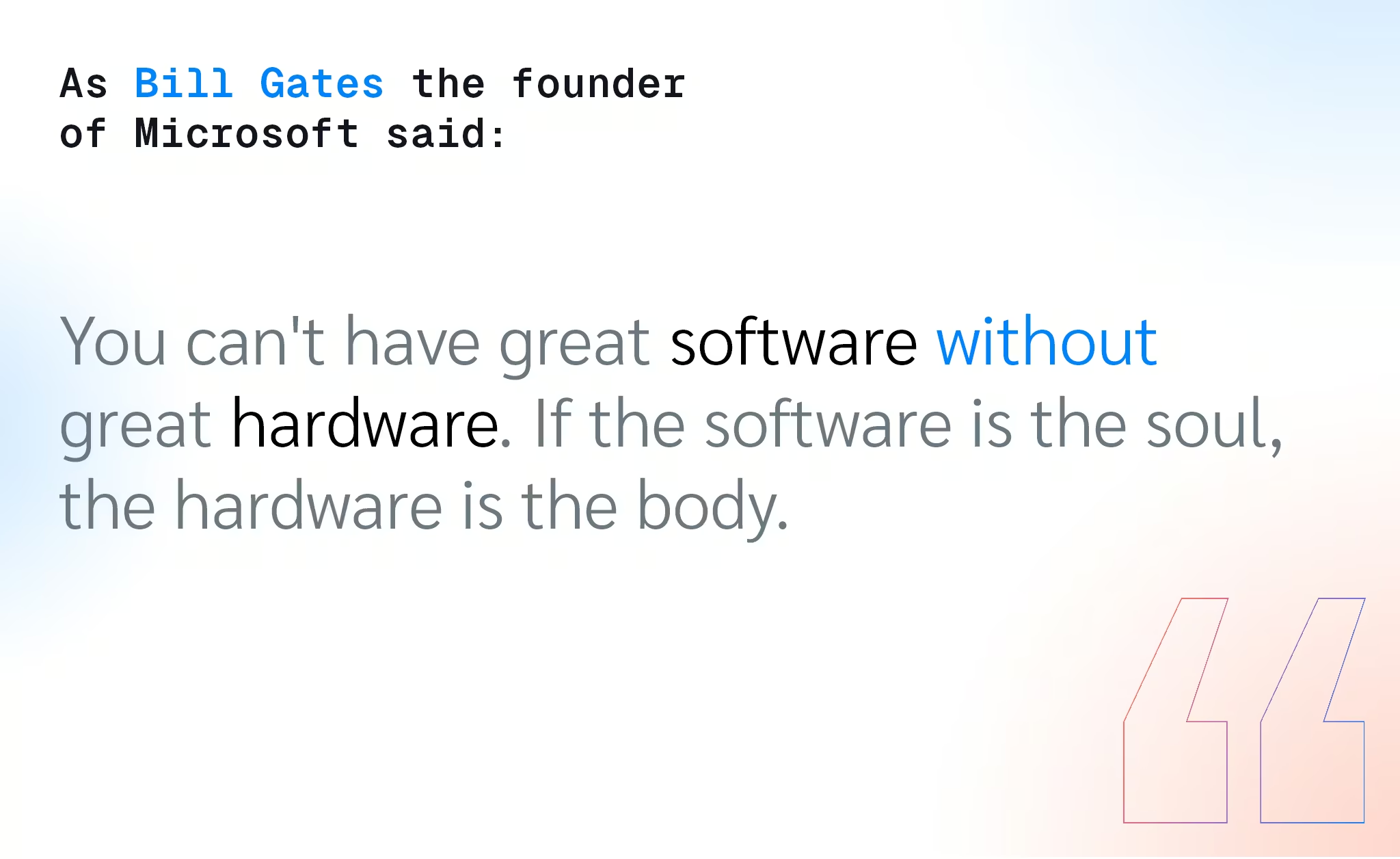
Furthermore, the development of hardware and software often goes hand in hand, as new hardware technologies require software updates, and advanced software features may require new or more powerful custom hardware. As the founder of Microsoft said,
"You can't have great software without great hardware. If the software is the soul, the hardware is the body".
The software development process consists of several key stages, starting with requirements analysis, followed by design, implementation, testing, deployment, and maintenance. Initially, requirements analysis involves gathering detailed information from stakeholders, often using techniques such as user stories, use cases, and requirements workshops. Next, architecture and detailed designs are created using UML diagrams and design patterns.
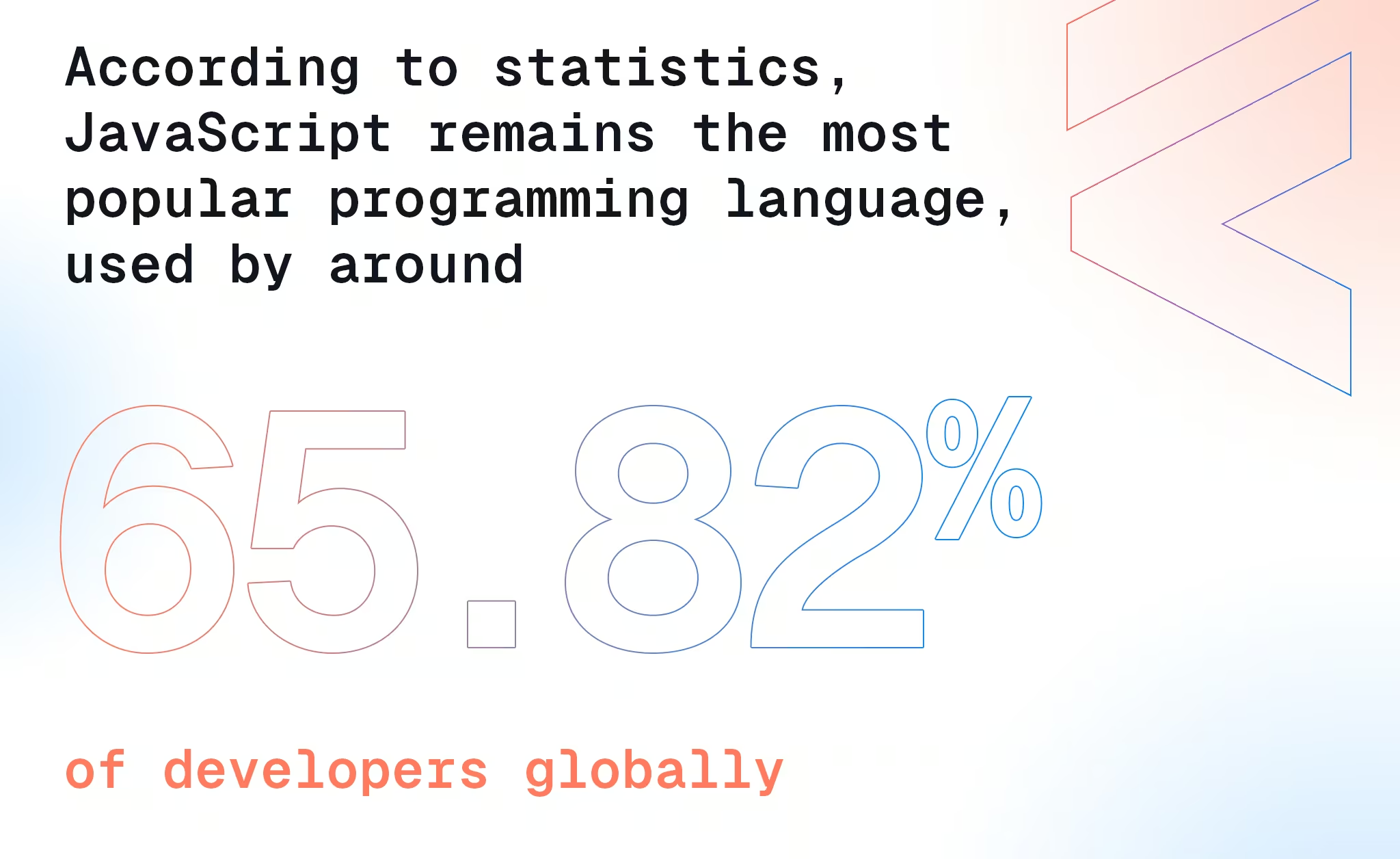
However, implementation involves writing code in programming languages such as Java, Python, or C++, using frameworks like Spring or Django, and IDEs like IntelliJ IDEA or Visual Studio Code. According to statistics, JavaScript remains the most popular programming language, used by around 65.82% of developers globally. A crucial element of this process is testing, which includes various types of tests: unit tests (JUnit, pytest), integration tests, system tests, and acceptance tests (Selenium, JMeter). Then, deployment automation is achieved using CI/CD tools such as Jenkins, GitLab CI, Docker, and Kubernetes. After that, software is continuously maintained, which involves fixing bugs, adding new features, and improving performance through regular updates.
Splitting the board and the firmware across two vendors is where schedules and blame both go missing. We take the product from schematic through prototype to production with one engineering team accountable.
Get hardware and firmware from one team
So what about hardware development? As claims Alan Kay - the winner of the A.M. Turing Award,
"The best way to predict the future is to invent it".
Above all, hardware development involves many activities such as requirements analysis, conceptual design, detailed design, prototyping, testing and validation, production, and maintenance and support. At the beginning of the process, requirements analysis involves gathering detailed specifications based on client needs, documented in design briefs and functional specifications. Meanwhile, conceptual design involves creating initial concepts using CAD software such as SolidWorks or AutoCAD.The next stage is design, where detailed schematics and PCB layouts are created using tools like Altium Designer or Eagle. Prototyping involves building and testing prototypes to validate designs using rapid prototyping techniques and 3D printing. The testing and validation stage cannot be overlooked either. They include extensive environmental, stress, and compliance tests to ensure reliability and adherence to standards. Once testing is complete, the hardware is produced on a mass scale, requiring supply chain management and logistics. In the maintenance and support phase, hardware is supported through updates, repairs, and upgrades.
| Aspect | Software Development | Hardware Development |
| Focus | Agility, rapid iteration | Precision, thorough testing, robust production processes |
| Components | Operating systems, applications, drivers | Processors, RAM, hard drives, I/O devices |
| Processes | Analysis, design, implementation, testing, deployment, maintenance | Analysis, conceptual design, detailed design, prototyping, testing and validation, production, maintenance and support |
| Design Tools | UML diagrams, design patterns | CAD software (SolidWorks, AutoCAD), PCB layout tools (Altium Designer, Eagle) |
| Implementation Tools | Programming languages (Java, Python, C++), frameworks (Spring, Django), IDEs (IntelliJ IDEA, Visual Studio Code) | Rapid prototyping, 3D printing |
| Testing Tools | Unit tests (JUnit, pytest), integration tests, system tests, acceptance tests (Selenium, JMeter) | Environmental tests, stress tests, compliance tests |
| Deployment | CI/CD tools (Jenkins, GitLab CI, Docker, Kubernetes) | Mass production, supply chain management, logistics |
| Maintenance | Fixing bugs, adding new features, performance improvements | Updates, repairs, upgrades |
Tab. 1 Comparison software development vs. hardware development
Optimization of Operational Processes: Implementing advanced technological solutions allow for the automation of many operational processes. This increases work efficiency by reducing the time required for repetitive tasks and minimizing the risk of human errors. For example, implementing ERP systems integrated with current structures will enable better resource management.
Product Innovation: SHDS empowers the development of new, innovative products that can become a key part of business offering. Integrating the latest technologies into product support to meet the changing needs of the market and increase competitiveness.
Scalability and Technological Flexibility: Investments in software and hardware development make it possible to scale operations as the company grows. Flexible technological solutions facilitate easy adaptation of the infrastructure to increasing demand without significant additional costs. An example is the use of cloud computing, which offers scalable IT resources according to current needs. Also, FPGA, or Field-Programmable Gate Array, is a type of programmable logic device that can be configured after manufacturing. An FPGA consists of a matrix of logic blocks that can be interconnected in various ways through programmable connections. This allows the device to be tailored to specific tasks and functions.
Data Management and Analysis: Advanced analytical tools developed within SHDS can provide valuable insights into company operations, customer preferences, and market trends. This enables more informed strategic decisions. For example, Big Data analysis can support marketing, logistics, and sales activities.
Reduction of Operational Costs: Automation and optimization of processes using modern technological solutions lead to a reduction in operational costs. Lower maintenance costs of IT infrastructure, minimized human error costs, and optimized resource management directly translate into improved company financial performance.
Read more about this project here.
We encourage you to explore the project details.
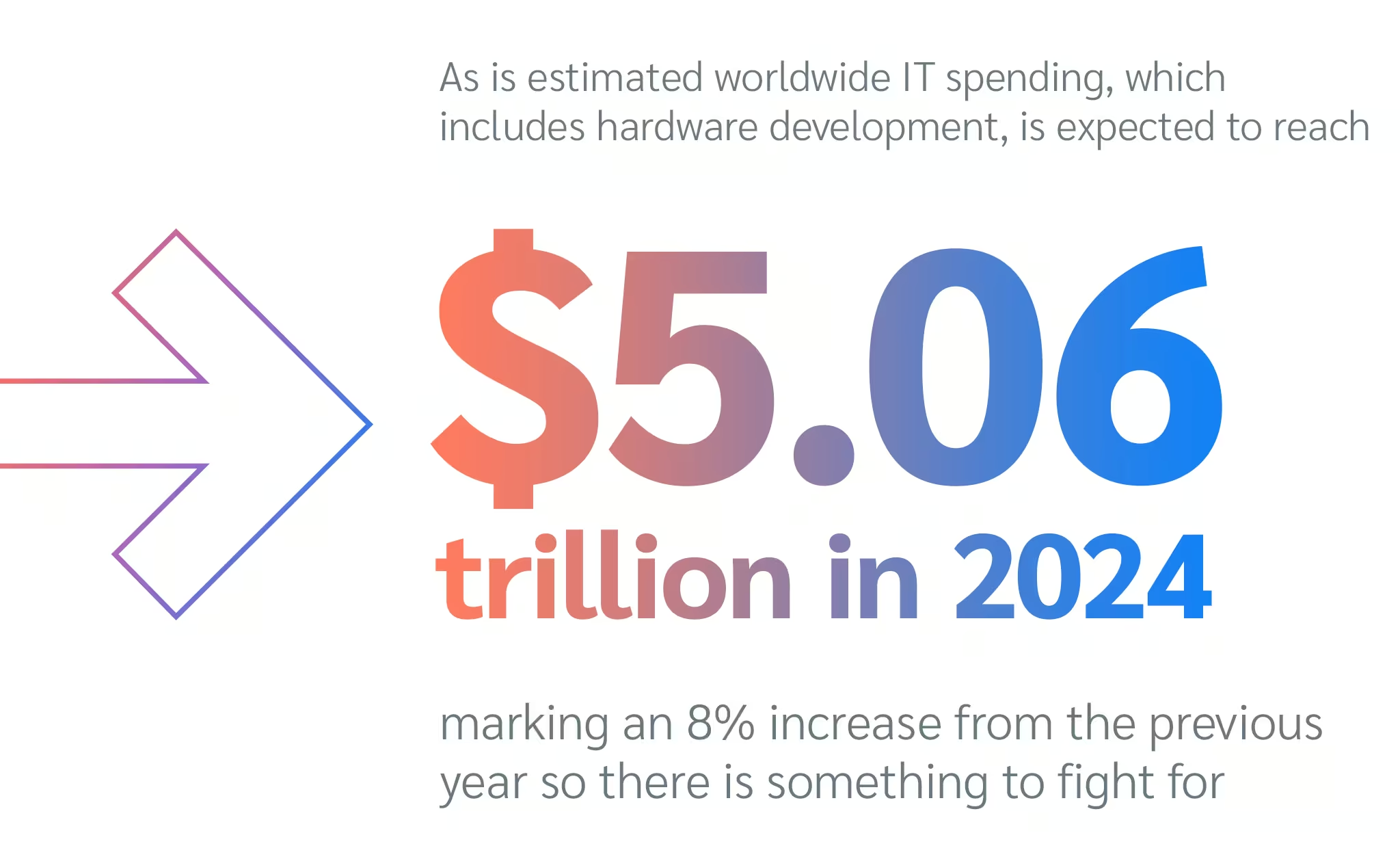
Software and hardware design and development services are integral to modern business operations, driving innovation, efficiency, and competitive advantage. It's a sophisticated and arduous process that demands only the best specialist. As is estimated worldwide IT spending, which includes hardware development, is expected to reach $5.06 trillion in 2024, marking an 8% increase from the previous year so there is something to fight for.
By leveraging these services, companies can develop high-quality solutions that meet specific business needs and adapt to evolving market demands. The seamless integration of software and hardware not only enhances product functionality but also ensures a cohesive technology infrastructure, positioning businesses for sustained prosperity in the digital age.
InTechHouse is a leader in software and hardware development, offering comprehensive solutions tailored to the unique needs of our clients. Our strength is under one roof, you have specialists in both hardware and software, allowing you to provide innovative technologies that will accelerate the growth of your business. Our experience in integrating hardware and software ensures the complete consistency of your products. By choosing InTechHouse, you gain a partner who supports you at every stage of the project – from design services and prototyping to implementation and maintenance. Trust us and let our passion for technology become the foundation of your success!
Hardware punishes late changes, so our process front loads requirements, design reviews and test planning. Ask us to walk you through how a device moves from concept to a manufacturable design.
See our hardware development process
Not sure where to start? We work with companies at every stage, from early ideas to enterprise-level builds. A 30-minute call can save you months of guesswork.
Software and hardware development services are outsourced engineering covering both the physical electronics of a product and the code that runs on it or around it. The hardware side includes architecture, schematics, PCB layout, prototyping and production support; the software side includes firmware, drivers, embedded Linux, and the cloud or desktop applications that use device data. Companies use them to add capacity or specialist skills, such as FPGA, RF or power design, without building a full in-house team.
Using one vendor for hardware and firmware reduces integration risk, because pin mappings, power states and timing assumptions stay inside one team and one issue tracker. It also removes disputes over whether a fault sits in the board or in the code. Splitting the work can still make sense when a specialist is needed for one layer, such as a certified RF module or a safety-rated software stack, provided both parties share interface specifications and joint integration milestones.
Hardware and software lifecycles differ mainly in the cost and speed of change. A software fix can be built, tested and deployed in hours, while a hardware change requires a new board revision with fabrication, assembly and retesting, usually several weeks per spin, plus possible recertification. As a result, hardware front-loads requirements, reviews and simulation, whereas software can keep iterating after release. Products combining both should freeze hardware interfaces early and keep flexibility in firmware.
Outsourcing hardware and software development makes sense when specific skills are needed for a limited period, when the in-house team lacks a discipline such as FPGA, power or high-speed design, or when the schedule cannot absorb months of hiring. It makes less sense for the core technology that differentiates the product long term. A common middle path is outsourcing development while an internal engineer owns the requirements, design reviews and the master design files.
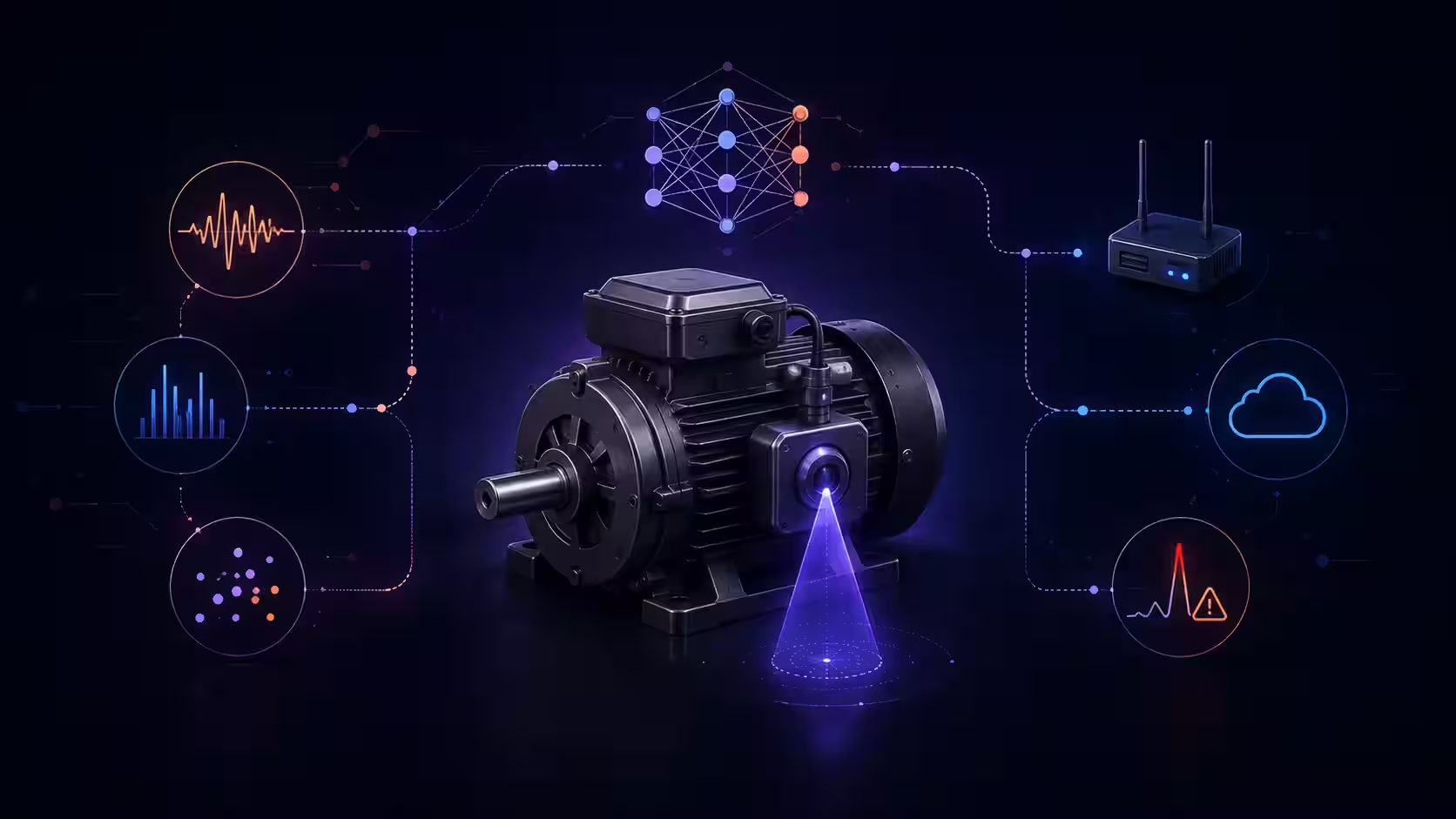
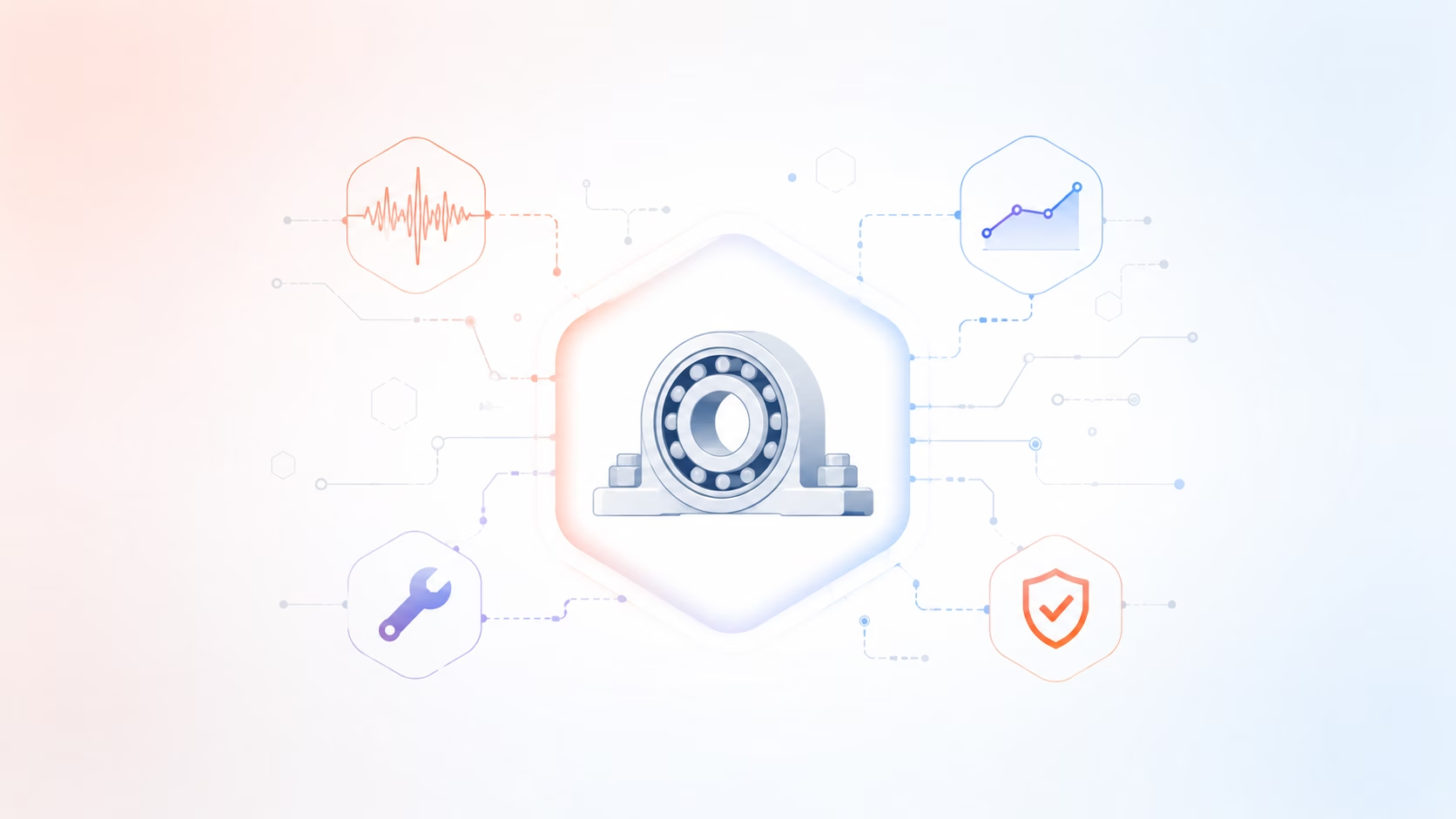
Predictive maintenance requires device hardware that measures the right physical signals and moves the data reliably. Typical elements are sensors for vibration, temperature, current or pressure sampled fast enough to capture the failure mode, local storage to buffer data during connectivity gaps, and enough processing to filter signals or run a small anomaly detection model at the edge. Retrofitting sensing later is expensive, so sensor, power and connectivity budgets belong in the architecture stage.
Adam Szychulec is Deputy CTO at InTechHouse and an electronics and embedded systems engineer with over 13 years of experience in hardware development, FPGA-based systems, embedded software, and technical leadership.
He specializes in electronic system architecture, analog and digital PCB design, FPGA and SoC development, embedded C/C++ software, and managing the complete lifecycle of complex engineering products - from early feasibility studies and technical architecture through development, testing, production introduction, and product modernization.
Adam has extensive experience leading multidisciplinary R&D teams and coordinating electronics, embedded software, mechanical engineering, testing, and project delivery. His responsibilities have included technical decision-making, project planning, risk and change management, budgeting, product testing, new product introduction, and mid-life upgrades of existing electronic systems.
His project experience includes FPGA modules for space applications, electronic systems and payloads for unmanned aerial vehicles, environmental monitoring and multispectral imaging platforms, power electronics, DC-DC converter assessment, and embedded systems developed for demanding industrial and defence-related applications.
Adam works with FPGA and SoC platforms, Xilinx Zynq, VHDL, Vivado, Altium Designer, ARM microcontrollers, embedded C/C++, Linux, digital electronics, and power electronics. He holds bachelor's and master's degrees in Electrical Engineering and is an IPC Certified Interconnect Designer. He writes about FPGA architectures, electronics design, embedded systems, hardware product development, technical risk management, UAV electronics, power electronics, and engineering leadership.
This initial conversation is focused on understanding your product, technical challenges, and constraints.
No sales pitch - just a practical discussion with experienced engineers.
Share a few details about your product and context. We’ll review the information and suggest the most appropriate next step.