
As businesses continue to expand and globalize, the need for cost-effective and efficient development models has become increasingly important. Three popular development models that companies often consider are nearshoring, offshoring, and onshoring. In this article, we will explore the differences between these models and help you decide which one is best for your business.
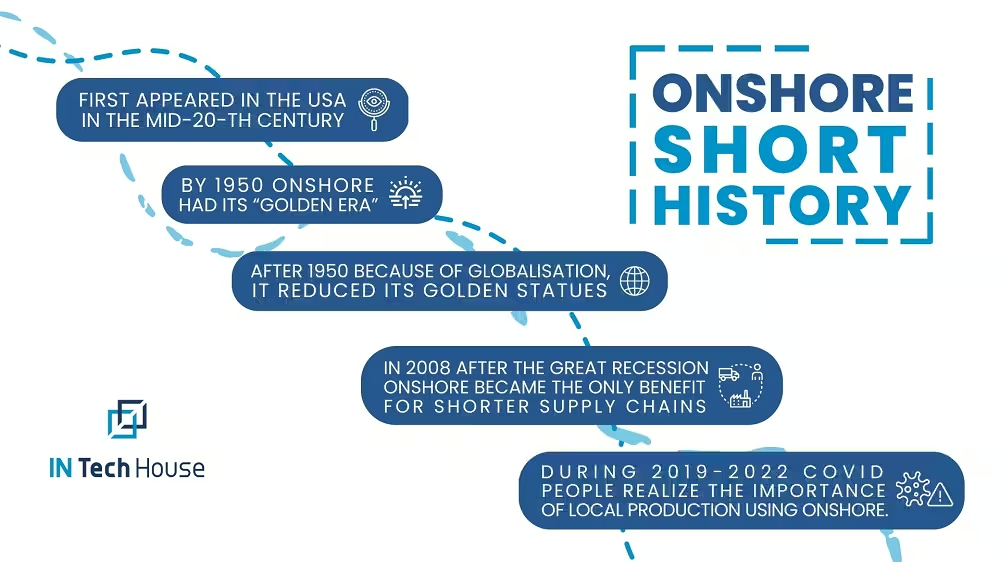
Let’s start our story with onshoring. This cooperation business model was the first one which appeared on the development market when the technologies arise.
Onshoring, also known as domestic sourcing, involves outsourcing development to a company within the same country. This is typically done to maintain greater control over the development process, reduce risks associated with communication and cultural differences, and support local businesses and communities.
Before comparing locations it helps to settle the term underneath all three. Onshoring, nearshoring, and offshoring are variants of the same delegation decision, so if you want the definition, the scope, and the contract types first, start with what outsourcing means in practice. Everything below then reduces to one question: where the provider sits.
Onshoring, also known as domestic sourcing, has a long history in the United States. It was the primary method of production for most goods in the country until the mid-20th century. For European companies, the modern counterpart of domestic sourcing is often a nearshore engineering team in Poland, which keeps time zones, travel and legal frameworks close to home.
However, the advent of globalization and the rise of offshoring and nearshoring caused a decline in onshoring in the latter half of the 20th century. Companies began to move their manufacturing and production to countries with labour cost reduction and fewer regulations, to increase profits and have a competitive advantage.
This trend continued throughout the 1990s and early 2000s until the Great Recession of 2008 prompted a reevaluation of outsourcing strategies. Many companies began to recognize the benefits of onshoring, such as shorter supply chains, better communication and collaboration, and more control over the quality and consistency of their products in their own country.In recent years, onshoring has become increasingly popular as companies have faced challenges in offshoring and nearshoring, such as rising labour costs, supply chain disruptions, and geopolitical instability. The COVID-19 pandemic also highlighted the importance of local production and the impact of nearshoring on the supply chain, further accelerating the trend towards onshoring.
Today, onshoring is seen as a viable alternative to offshoring and nearshoring, particularly for industries like manufacturing, construction, and agriculture. It allows companies to support local economies, provide jobs for domestic workers, and maintain greater control over the production process.
Nearshoring is a business model where a company outsources work to a neighbouring or nearby country (but the same region), often to take advantage of lower labour costs while still maintaining cultural and linguistic similarities. The goal is to achieve cost savings while minimizing the challenges associated with offshoring, such as cultural and time-zone differences.
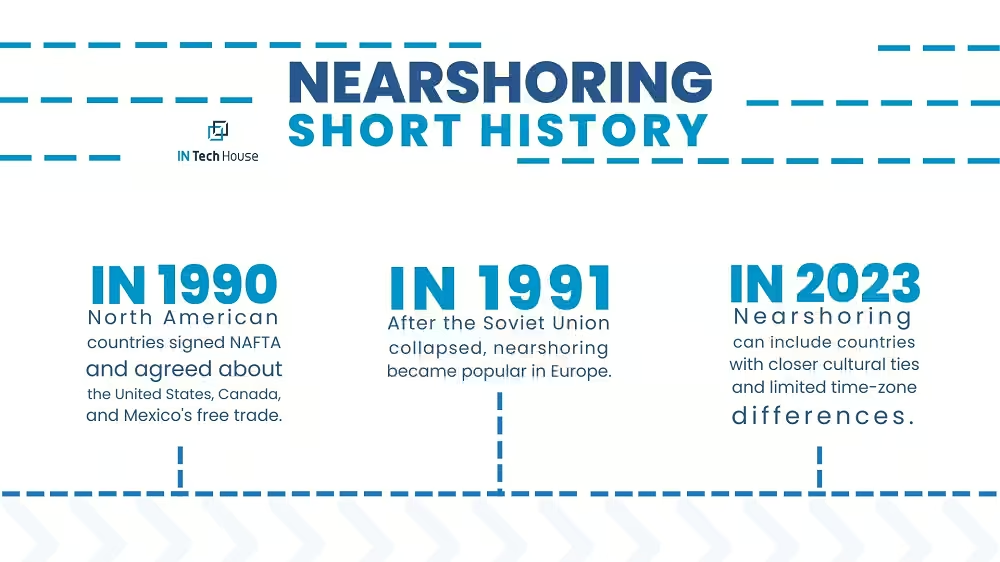
Short Nearshoring HistoryThe history of nearshoring can be traced back to the early 1990s, when the North American Free Trade Agreement (NAFTA) was signed between the United States, Canada, and Mexico. This agreement created a free trade zone between the three countries, which made it easier for companies to outsource work to Mexico.
In the late 1990s and early 2000s, as the European Union expanded and the Soviet Union collapsed, nearshoring became more popular in Europe. Companies in Western Europe began outsourcing work to countries in Eastern Europe, such as Poland, Romania, and Ukraine, which offered lower costs and a highly skilled workforce without language barriers and a perfect geographical location.
Today, nearshoring is a popular alternative to offshoring, and the choice between offshoring vs nearshoring for IT companies comes down to lower labour costs against closer cultural and linguistic ties to the home country. It is particularly popular in industries such as software development, customer service, and manufacturing, where communication and collaboration are key to success. Some popular nearshoring destinations include Mexico, Canada, Eastern Europe, and South America.
Offshoring is a business model where a company outsources work to a foreign country, often to take advantage of lower labour costs, access to specialized skills, and other factors such as favourable tax policies or regulatory environments. The goal is to achieve cost savings while increasing efficiency and productivity.
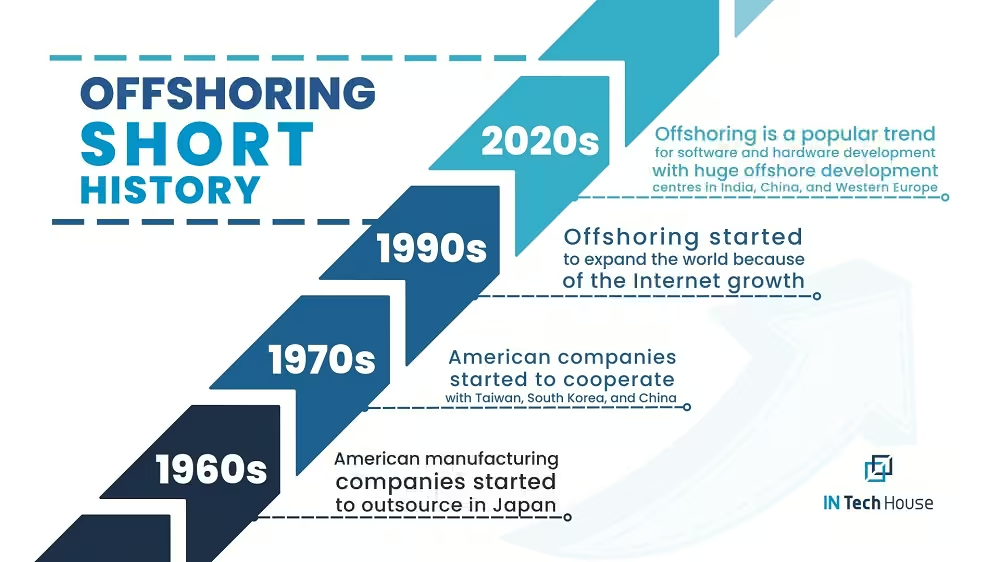
The history of offshoring can be traced back to the late 1960s when U.S. manufacturing companies began outsourcing work to Japan, which was emerging as a significant industrial power at the time. This trend continued into the 1970s and 1980s, as U.S. companies began outsourcing work to other countries in Asia, such as Taiwan, South Korea, and China.
In the 1990s and 2000s, offshoring became even more popular, as the internet and advances in communication technology made it easier for companies to outsource work to countries around the world. India became a major destination for offshoring, particularly for call centres and software development, due to its large pool of highly educated and skilled workers who were proficient in English.
Today, offshoring remains a popular option for companies in many industries, such as manufacturing, software development, and customer service. It allows companies to access lower labour costs and specialized skills, while also providing opportunities for economic growth in developing countries. Some popular offshoring destinations include India, China, the Philippines, and Western Europe. However, it also presents challenges such as cultural and time-zone differences, communication barriers, and geopolitical risks.
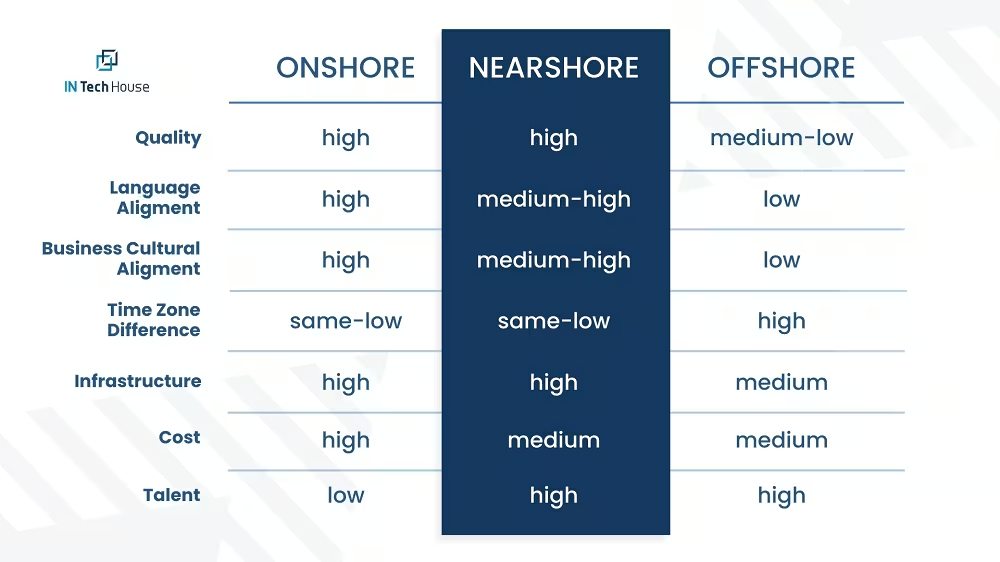
Onshore, nearshore, and offshore are three different business models for outsourcing work to external partners. They differ based on the geography of the partner, ease and speed of collaboration, cost, and infrastructure. Here are the key differences:
Onshore outsourcing involves partnering business processes with a company in the same country or nearby town as the client company.
Nearshore outsourcing involves partnering with companies based in a neighbouring or nearby country, often with similar time zones, languages, and cultural values.
Offshore outsourcing involves partnering with a company in a different region or continent, often with significant differences in time zones, languages, and cultural values.
Onshore outsourcing provides the easiest and fastest collaboration due to proximity and similar culture, language, and infrastructure.
Nearshore outsourcing also offers relatively easy and fast real-time collaboration but may have slight language, cultural or time-zone differences.
Offshore outsourcing may present challenges in terms of communication, collaboration, and time differences.
Onshore outsourcing generally has the highest cost due to the higher total cost and operational costs in developed countries.
Nearshore outsourcing has a moderate cost due to lower labour and operational costs in neighbouring countries.
Offshore outsourcing has the lowest cost due to significantly lower labour and operational costs in developing countries. Lower rates are only part of the picture, since setting up an ODC adds legal, management and knowledge-transfer costs of its own.
Onshore outsourcing often involves partnering with companies that have access to the same or similar infrastructure, such as reliable internet, power supply, transportation, and logistics.
Nearshore outsourcing may also have access to similar infrastructure, but offshore outsourcing may have limitations in terms of infrastructure and technology.
Want to see everything in one place?
Courses and books build a career, not a product roadmap. If you need ARM Cortex, Linux and RTOS competence on a project starting this quarter, our embedded team already has it.
Skip the hiring cycle and get the expertise now
Knowing about the different outsourcing options is only the first step; choosing the right outsourcing model for your project depends on your specific needs and requirements.
This decision may involve factors such as your budget, project scope, management and location. When considering offshoring, nearshoring, or onshoring, each option has its advantages and disadvantages.
For instance, offshoring and nearshoring may be a good fit if you need cost-effective services or top-tier professional skills in developing countries.
Alternatively, onshoring is recommended if you value in-person collaboration and quick travel. It is also possible to combine outsourcing models, known as multisource or hybrid outsourcing, to optimize costs and find the best talent for your app development needs.
The answer also depends on what you are outsourcing, not only on where. Embedded and firmware work carries hardware dependencies, lab access, and certification cycles that a pure software project never faces, which is why it is worth reading how embedded software outsourcing works before you lock in a location model. For a web platform those constraints rarely apply, and the geography argument carries far more weight.

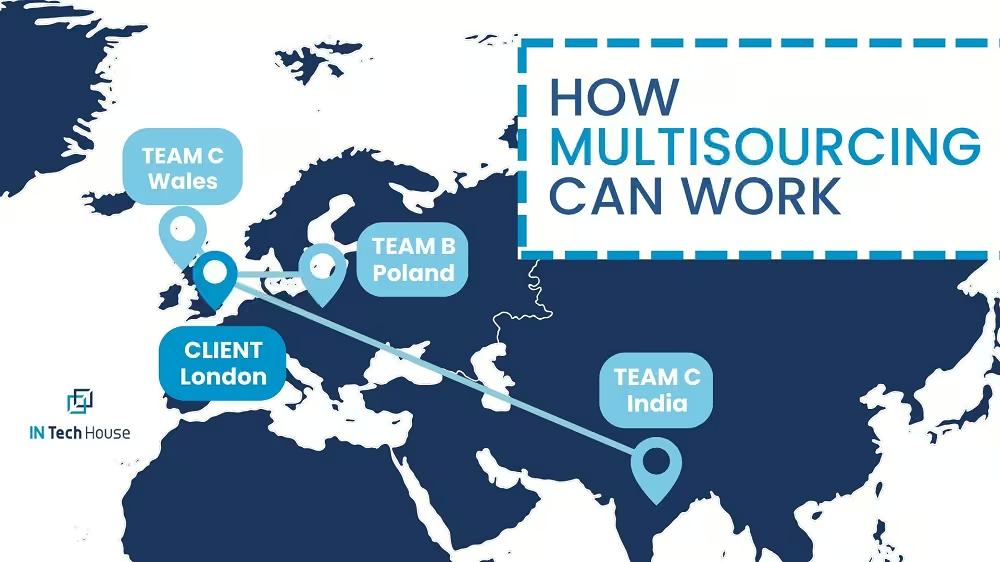
Multisourcing can be the key when outsourcing because it allows you to take advantage of the best aspects of each outsourcing model. For instance, you can hire an onshore team for high-level strategic work that requires in-person collaboration, a nearshore team for design work, and an offshore team for development work. By using multiple outsourcing models, you can optimize your costs, find the best talent where it matters, and ensure a successful outcome for your project. Multisourcing can also offer more flexibility and scalability as you can adjust your outsourcing strategy based on changing project needs.
For example, let’s say your company isbased in central London. You can hire a subject matter expert to optimize operational activities from the UK (Wales) simply because they’re the best onshoring. For hardware design, you can hire an agency in Poland (nearshoring), and then outsource the development work to India, which is exactly how offshoring works in a multisourcing setup.Multisourcing enables you to find the best outsourcing approach for each aspect of your production. You can get the best hardware engineering talent where it matters while still optimizing your costs.
Outsourcing your software or hardware development to Poland, one of the best countries to outsource software development, can offer several benefits, and the full list of advantages of outsourcing to Poland is worth weighing before you settle on a location. Poland has a highly skilled workforce, with a reputation for producing top-quality software developers. The country has a well-established IT industry and is recognized as a hub for nearshore software development in Eastern Europe. Polish developers are known for their technical expertise, problem-solving skills, and ability to deliver high-quality work.
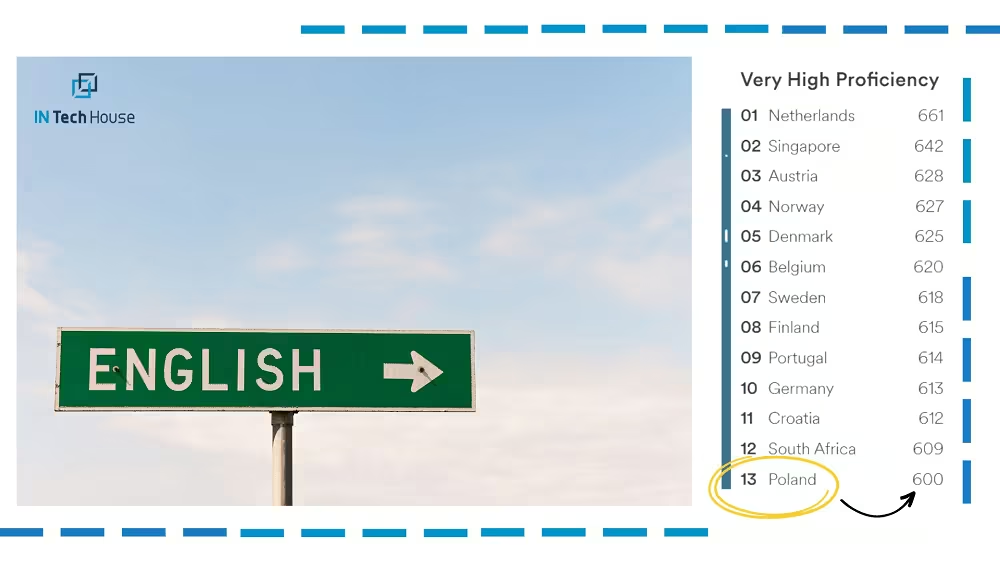
Poland’s location in the heart of Europe is also a plus, as it provides easier access to European and US markets. The country is a member of the European Union, which means it follows the EU laws and regulations that facilitate outsourcing. Additionally, Poland ranks highly in terms of English proficiency, making communication easier. The English proficiency level became even stronger. In 2019 Polish specialists were in 16th place, now they have 13th.
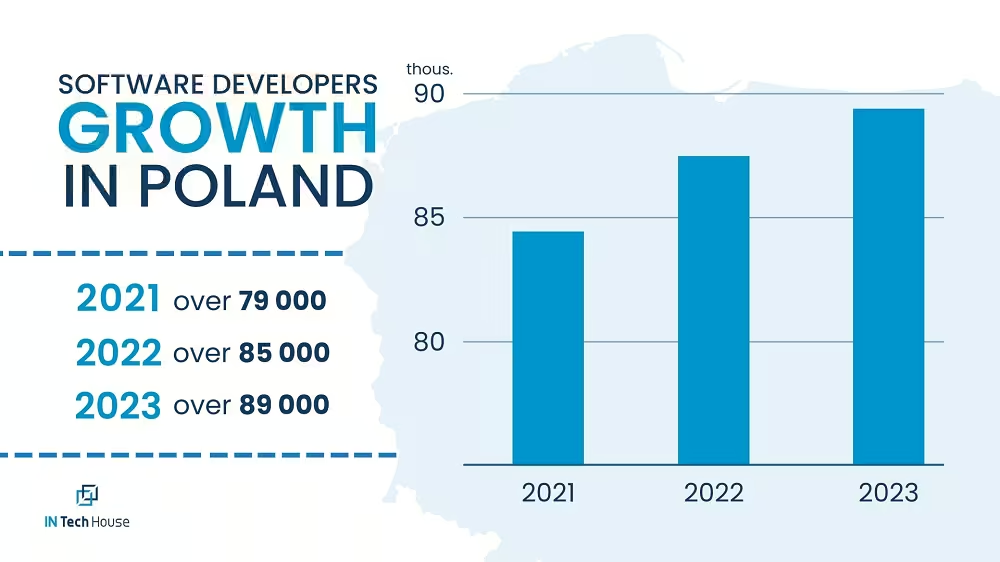
Source: IBISWorld
The choice of model becomes concrete once you look at what is actually being delivered. InTechHouse runs nearshore teams from Poland for clients across Europe, covering hardware and embedded engineering services from schematics and PCB design through firmware to industrial software, which is exactly the work that suffers most when the time zone gap is too wide
InTechHouse is a reliable and experienced company delivering engineering software development in Poland and high-quality outsourcing services to businesses around the world. With a highly skilled and dedicated team of developers, designers, and project managers, InTechHouse delivers customized solutions that meet the specific needs of each client. Their focus on agile methodologies, continuous learning, and innovation ensures that they stay ahead of the curve in terms of technology trends and best practices. With a proven track record of successful projects and satisfied clients, choosing InTechHouse as an outsourcing partner can help businesses accelerate their growth and achieve their goals.
Read also:
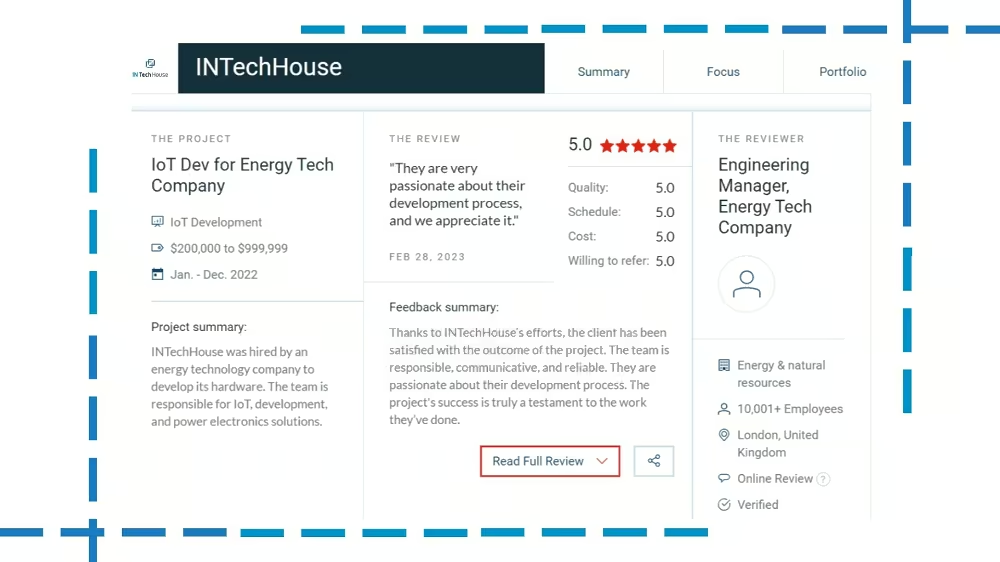
Source: Clutch
There is no one-size-fits-all solution when it comes to choosing between nearshoring, offshoring, and onshoring for your business. Each approach has its advantages and disadvantages, and the best option will depend on a variety of factors such as project requirements, budget, cultural compatibility, and time zone differences.
Nearshoring is a popular business process for businesses looking to access high-quality talent at a lower cost while maintaining cultural and geographical proximity.
Offshoring can be a cost-effective option for businesses looking to tap into a wider talent pool but may come with challenges related to communication and cultural differences.
Onshoring, while more expensive, can provide businesses with greater control over their projects and closer collaboration with their development teams.
Ultimately, the key to success is to carefully weigh the pros and cons of each option and choose the approach that aligns best with your business goals and needs.
Our engineers work across automotive, IoT and industrial systems, with certifications and shipped devices behind them rather than a course list. See what the team covers.
See the embedded competences we bring to a project
Not sure where to start? We work with companies at every stage, from early ideas to enterprise-level builds. A 30-minute call can save you months of guesswork.
Onshoring, nearshoring and offshoring differ only in where the delivery partner sits relative to the client. Onshoring keeps the work in the same country, nearshoring moves it to a nearby country within a few hours' flight and a small time difference, and offshoring moves it to another continent. The contract can be identical in all three cases; what changes is working-hour overlap, travel time, legal jurisdiction and labor cost, and those factors shape how the engagement behaves day to day.
Hardware and embedded projects usually favor onshore or nearshore delivery because they depend on physical prototypes, lab equipment and frequent joint debugging. Board bring-up, EMC pre-compliance and field-issue analysis often require shipping boards back and forth or putting engineers in the same lab within days. Offshoring can still work for well-specified, hardware-independent tasks such as test automation, desktop tooling or cloud backends. The more a workstream depends on real silicon and fast feedback, the stronger the case for proximity.
An outsourced engineering team usually needs at least 3 to 4 overlapping working hours per day for real-time collaboration on active development. That window covers daily stand-ups, design discussions and live debugging sessions without anyone working evenings. With 1 to 2 hours of overlap, teams shift to written handovers and asynchronous reviews, which works for stable, well-documented tasks but slows decisions on ambiguous problems. Integration and bring-up phases are the most sensitive to limited overlap, because each blocked question can cost a full day.
Onshoring justifies its higher cost when the work needs constant physical presence, strict regulatory control or protection that is simplest under domestic law. Typical cases are defense or export-controlled programs, projects needing daily access to the client's own test facilities, and early concept work where requirements change hourly. Domestic partners also simplify contracts, audits and on-site support. For well-scoped development with occasional travel, the premium is harder to justify, and a nearshore team with good overlap often delivers similar control at lower cost.
Multisourcing means splitting one program across several providers, often in different locations, with each assigned the work it does best. An R&D program might keep system architecture onshore, place hardware design and firmware with a nearshore team, and send well-defined test or software tasks offshore. It makes sense when workstreams are cleanly separable and interfaces are documented. The trade-off is integration overhead: someone must own the architecture, interface control documents and the combined test plan, or defects surface late.
Adam Szychulec is Deputy CTO at InTechHouse and an electronics and embedded systems engineer with over 13 years of experience in hardware development, FPGA-based systems, embedded software, and technical leadership.
He specializes in electronic system architecture, analog and digital PCB design, FPGA and SoC development, embedded C/C++ software, and managing the complete lifecycle of complex engineering products - from early feasibility studies and technical architecture through development, testing, production introduction, and product modernization.
Adam has extensive experience leading multidisciplinary R&D teams and coordinating electronics, embedded software, mechanical engineering, testing, and project delivery. His responsibilities have included technical decision-making, project planning, risk and change management, budgeting, product testing, new product introduction, and mid-life upgrades of existing electronic systems.
His project experience includes FPGA modules for space applications, electronic systems and payloads for unmanned aerial vehicles, environmental monitoring and multispectral imaging platforms, power electronics, DC-DC converter assessment, and embedded systems developed for demanding industrial and defence-related applications.
Adam works with FPGA and SoC platforms, Xilinx Zynq, VHDL, Vivado, Altium Designer, ARM microcontrollers, embedded C/C++, Linux, digital electronics, and power electronics. He holds bachelor's and master's degrees in Electrical Engineering and is an IPC Certified Interconnect Designer. He writes about FPGA architectures, electronics design, embedded systems, hardware product development, technical risk management, UAV electronics, power electronics, and engineering leadership.
From first prototype to production, our engineers can help you scope it, build it and get it certified.
This initial conversation is focused on understanding your product, technical challenges, and constraints.
No sales pitch - just a practical discussion with experienced engineers.
Share a few details about your product and context. We’ll review the information and suggest the most appropriate next step.