
How to Successfully Outsource Embedded Software Development
Identifying a trustworthy embedded software outsourcing partner can be a daunting endeavor for many businesses. The search for the right embedded development partner can be even more complex given the specialized skills the work demands. As indicated by research, the largest sectors utilizing embedded software outsourcing are the automotive industry, medical sector and consumer electronics, collectively accounting for approximately 65% of the total market. However, regardless of the branch, once you have identified software and hardware developers who meet your evaluation criteria, half of the overall success will rely on your efforts. The effectiveness of project management, the thoroughness of the testing process and the seamless knowledge transfer between your in house team and the outsourced embedded software developers are key activities that will demand your significant involvement.
Unlock Efficiency: Outsource Embedded Software Development
Outsourcing embedded development refers to the practice of hiring an external outsourcing provider to handle various aspects of software development rather than managing embedded projects internally. This can include a wide range of activities, such as coding, testing, maintenance and support. Companies choose embedded software outsourcing services for several key reasons. Firstly, not every organization has the specialized skills this field demands in house. However, human resources are not the only obstacle. Adequate experience is also required, which allows experienced engineers to quickly and effectively resolve even the most complex technical problems. A strong grasp of software architecture principles, event-driven systems and UML modeling is essential. Combining this knowledge with the flexibility to learn new concepts and adapt quickly can significantly enhance the development of high-quality firmware and hardware development from scratch. One practical advantage of working with an external embedded development partner is the ability to switch vendors if expectations aren't met, a level of flexibility that's much harder to replicate with a permanent in house team.
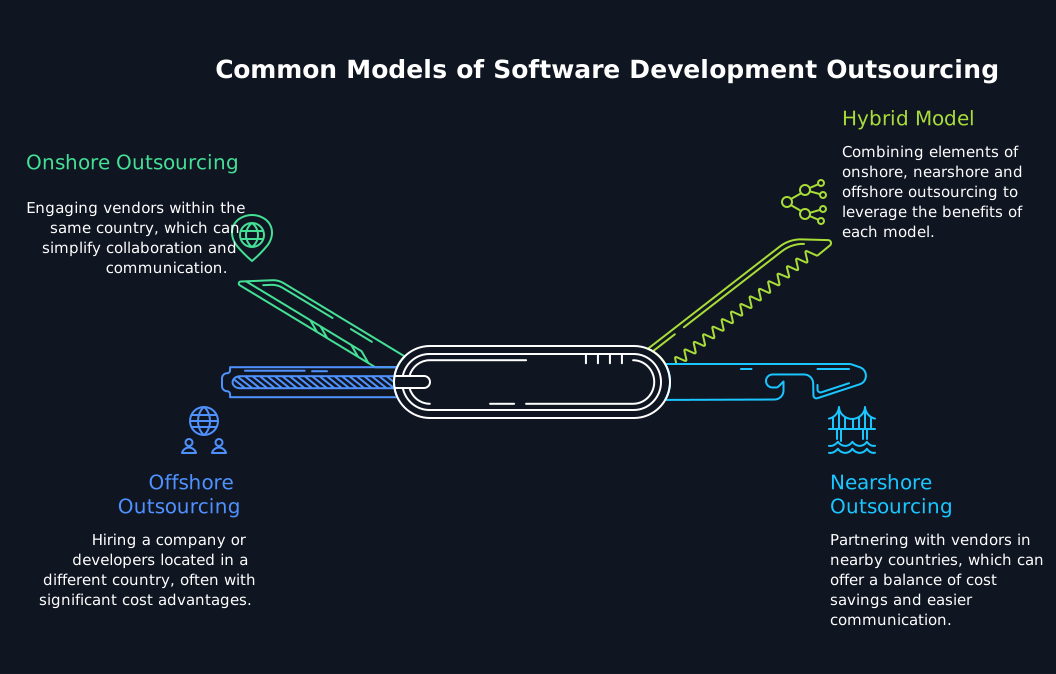
Common Models of Software Development Outsourcing:
- Offshore Outsourcing: Hiring a company or developers located in a different country, often with significant cost advantages.
- Nearshore Outsourcing: Partnering with vendors in nearby countries, which can offer a balance of cost savings and easier communication due to closer time zones and cultural similarities.
- Onshore or Domestic Outsourcing: Engaging vendors within the same country, which can simplify collaboration and communication.
- Hybrid Model: Combining elements of onshore, nearshore and offshore outsourcing to leverage the benefits of each model.
These models are variations on a much older commercial pattern, and the vocabulary around them is easy to misread. If the terminology is new to your team, start with what outsourcing means in practice and then map each model onto your own project.
Why it's Worth? Benefits of Embedded Software Outsourcing
Outsourcing embedded software development offers numerous benefits that can significantly enhance a company's operational efficiency, product quality and market competitiveness, provided the CTO understands how embedded software outsourcing works before the first contract is signed. Here are some key advantages:
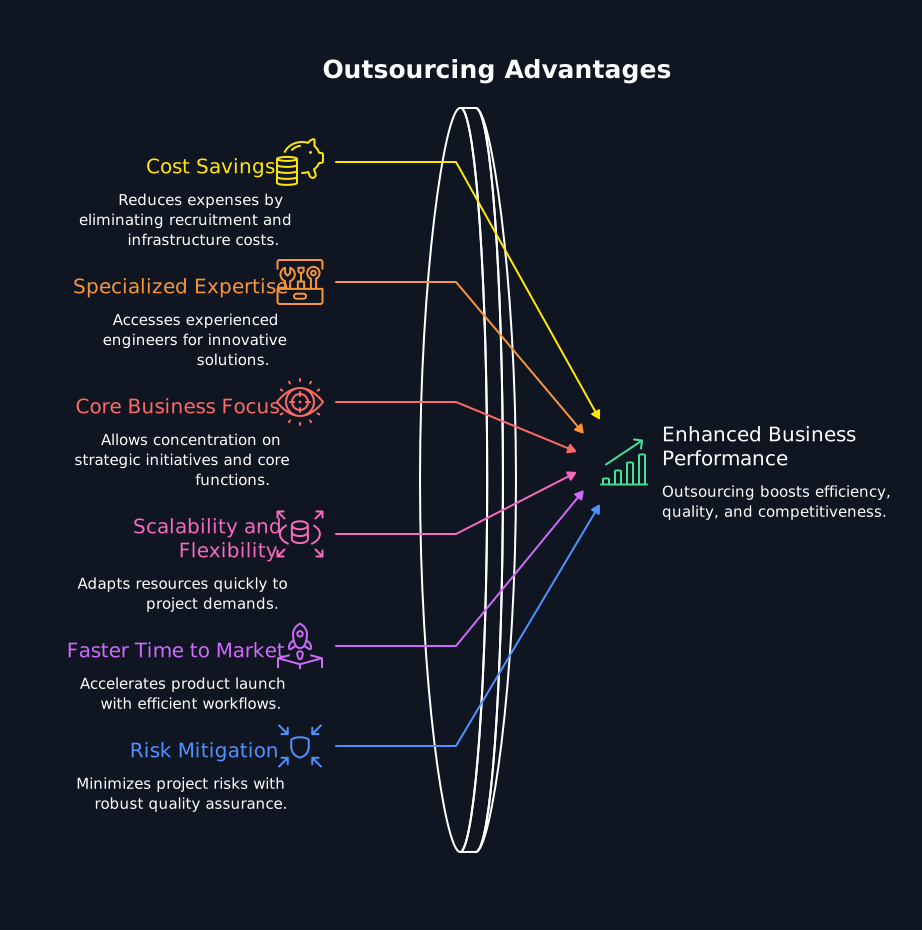
Cost Savings
Outsourcing can be more cost-effective than maintaining an in-house development team. It eliminates the need for investing in recruitment, training, salaries, benefits and infrastructure. Companies can leverage the cost advantages of offshore or nearshore outsourcing to further reduce expenses.
Development Partner: Access to Specialized Expertise
An embedded software outsourcing partner often has a pool of experienced engineers with extensive experience especially in embedded computing solutions. These specialists bring in-depth knowledge and technical skills that may not be available in an in house team. This expertise ensures innovative solutions and creative approaches to complex hardware projects.
Focus on Core Business Activities
By outsourcing companies can concentrate on their core business functions and strategic initiatives. This focus can lead to improved overall business performance and efficiency, as internal resources are not diverted to manage software development tasks.
Scalability and Flexibility
Outsourcing provides the flexibility to scale development efforts up or down based on project requirements. Companies can quickly adjust team size and resources without the long-term commitment associated with hiring full-time employees. This scalability is particularly beneficial for projects with fluctuating demands.
Faster Time to Market Thanks to Embedded Development Outsourcing
Experienced outsourcing partners can accelerate the development process, helping companies bring products to market more quickly. Their familiarity with industry best practices, efficient workflows and established processes can significantly reduce development timelines.
Risk Mitigation
Outsourcing can help mitigate risks associated with the development of this kind of equipment. Professional embedded development partners follow robust project management and quality assurance practices, reducing the likelihood of project delays and failures. Testing and quality assurance should always involve a dedicated QA team, not just the developers who wrote the code, to catch issues an outsourcing provider's own engineers might otherwise overlook. Additionally, they often have contingency plans in place to handle unforeseen challenges, including budget limitations or shifting performance targets partway through a project.
Access to Advanced Technologies of Embedded System
Outsourcing companies are typically up-to-date with the latest technologies and tools in the field of embedded software development. Partnering with them gives companies access to cutting-edge technologies without the need for continuous investment in training and tool acquisition.
Improved Product Quality
High-quality development practices, rigorous testing and adherence to industry standards are hallmarks of reputable outsourcing firms. This focus on quality ensures that the final product is reliable, efficient and meets all specified requirements.
Enhanced Innovation of Embedded Software Development Services
Outsourcing partners can bring fresh perspectives and innovative ideas to the table. Their diverse experience across various projects and industries can lead to creative solutions and enhancements that might not have been considered by an internal team. Additionally, like InTechHouse, they may have their own Research and Development Center, which is an added advantage.
Regulatory Compliance
Many industries, such as automotive, healthcare and aerospace, have strict regulatory requirements for embedded systems. Vendor experience with safety-critical development is essential for these industries - a reputable embedded software outsourcing partner should be well-versed in the relevant regulations and ensure that the developed software complies with all necessary standards and certifications.
Game Changer: Rules of Choosing Development Services Provider
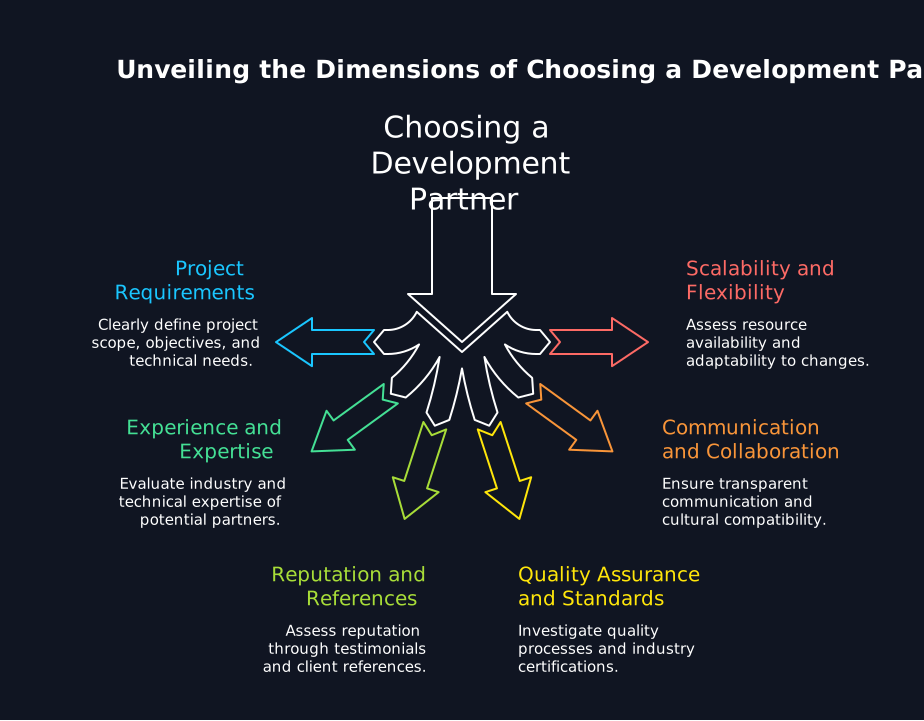
Before you begin the search for an outsourcing partner, it is essential to have a clear understanding of your project requirements. This includes:
- Project Scope and Objectives: Define the scope of the project, including specific features, functionalities and performance requirements. Establish clear objectives and expected outcomes.
- Technical Requirements: Identify the technical skills and expertise needed. This may include knowledge of specific programming languages, development tools, hardware platforms and industry standards.
- Budget and Timeline: Determine your budget constraints and the desired timeline for project completion. This will help you narrow down potential partners who can deliver within these parameters.
Evaluating Potential Partners
Once you have a clear understanding of your needs, the next step is to evaluate potential outsourcing companies. Consider the following factors:
- Experience and Expertise:
- Industry Experience: Look for companies with a proven track record in your industry. Their familiarity with industry-specific challenges and standards can be invaluable.
- Technical Expertise: Ensure the software development company has expertise in the specific technologies and tools required for your project. Review their past projects and case studies to assess their capabilities.
- Reputation and References:
- Client Testimonials: Seek out client testimonials and reviews to gauge the company’s reputation. Positive feedback from previous clients is a good indicator of reliability and quality.
- References: Request references from the company and contact previous clients to get firsthand insights into their experiences. InTechHouse has been securing top positions in the Clutch rankings for years. Moreover, you can read the reviews from our satisfied clients: https://clutch.co/profile/intechhouse-0?sort_by=date_desc#reviews
- Quality Assurance and Standards:
- Quality Processes: Investigate the company’s quality assurance processes and adherence to industry standards. A robust QA process ensures the delivery of reliable and high-quality software.
- Certifications: Check for relevant certifications, such as ISO 9001 for quality management and ISO 26262 for automotive software.
- Communication and Collaboration:
- Communication Channels: Effective communication is crucial for successful outsourcing. Ensure the outsourcing provider offers a transparent communication process with clear, open channels. Regular meetings and progress reports significantly enhance the communication process with an outsourced team, especially across time zones.
- Cultural Fit: Consider the cultural compatibility between your organization and the outsourcing company. A good cultural fit can enhance successful collaboration and reduce misunderstandings.
- Scalability and Flexibility:
- Resource Availability: Assess the company’s ability to scale resources up or down based on project needs. Flexibility is essential for handling changes in project scope or timelines.
- Adaptability: Evaluate the company’s adaptability to new technologies and methodologies. This is important for staying current with industry trends and innovations.
The hard part of outsourcing embedded work is proving the supplier can debug on real hardware, not just write code. Bring your requirements and we will walk you through how we staff and test the work.
Ask us the vendor questions from this article
Legal and Security Considerations
When outsourcing embedded software development, legal and security aspects are paramount:
- Intellectual Property (IP) Protection: Ensure that the outsourcing company has robust IP protection measures in place. This includes clear IP ownership agreements and confidentiality clauses. It's worth confirming upfront that the partner will provide all source material and IP rights upon project completion, rather than treating this as an afterthought once the project has already wrapped.
- Data Security: Verify the company’s data security policies and practices. They should comply with relevant data protection regulations and implement strong cybersecurity measures.
- Contracts and Agreements: Carefully review all contracts and agreements. Include clauses that cover project scope, deliverables, timelines, payment terms, and dispute resolution mechanisms.
Pilot Projects and Trials
Before fully committing to an embedded software outsourcing partner, consider starting with a pilot project or trial period. This allows you to test prototypes, evaluate the company's performance, communication and quality of work on a smaller scale before committing to larger hardware projects. Use the pilot project to:
- Assess Technical Competence: Verify the company’s technical capabilities and expertise in a real-world scenario.
- Evaluate Communication: Observe the effectiveness of communication and collaboration during the project.
- Measure Quality: Assess the quality of deliverables and whether the solution meets agreed performance targets and adherence to deadlines.
- Negotiate and establish reasonable notice periods: It's crucial to determine these conditions with the vendor in the contract to guarantee efficient and effective project execution.
How to Evaluate a Vendor's Reliable Embedded Development Services
To evaluate whether an embedded software provider has fulfilled the contract and delivered high-quality software in accordance with the initial specifications, several key steps need to be taken.Firstly, it's essential to thoroughly compare the delivered software with the initial specification agreements. This allows assessment of whether the software operates as expected in terms of both functional and non-functional requirements specified in the specification.
Next, it's important to evaluate the quality of the source code and technical documentation provided by the supplier. Well-written code should be clear, compliant with accepted standards and protected against basic errors. Technical documentation should be comprehensive and understandable, including user manuals, architecture descriptions and test reports.
Another crucial element is verifying whether the supplier has conducted appropriate unit, integration and system testing. Test reports should confirm that the software functions as expected and is free from significant defects. It's also important to assess how the supplier responded to reported issues and problems (debugging). If the embedded software needs to comply with specific norms and standards (e.g., ISO 9001:2015, ISO 27001:2013, GDPR, PCI DSS or HIPAA), it should be checked whether the supplier ensured compliance with these requirements.
Additionally, evaluating the flexibility and scalability of the delivered solution is valuable. The software should be designed with future modifications and expansions in mind, particularly for embedded systems. Another aspect is also assessing the efficiency and performance of the software. The delivered solution should operate efficiently and meet performance requirements, especially if it involves real-time operating systems.
Finally, it's essential to check if the supplier offers adequate technical support after deployment and how quickly and effectively they can respond to any post-deployment issues.
Analyzing these aspects allows for a substantive evaluation of the quality of embedded software delivered by the supplier, comparing what was delivered with what was agreed upon in the contract and specification. This is a critical step in ensuring that the software meets expectations and is ready for further development stages or deployment.
Read also:
- How Embedded Software Development Outsourcing Works - Guide for CTOs
- Top Embedded Software & Firmware Development Companies 2026
- How To Write An RFP For Embedded Software Development Project?
Summary
Outsourcing the product development offers numerous benefits such as accessing highly skilled talent, improving project scalability, and achieving more predictable financial outcomes. It is no surprise, that the global market for embedded software outsourcing has grown from approximately $9.5 billion in 2019 to a projected value of over $12 billion in 2024. However, the success of an outsourced embedded software project largely depends on the expertise, experience, and knowledge of the embedded engineers you choose to partner with. Therefore, it is crucial to adhere to these fundamental principles when selecting a remote embedded team for outsourcing embedded software projects.
At InTechHouse, we excel in the field of embedded software development, boasting a team of software engineers with extensive experience and a proven track record in delivering high-quality solutions. Whether you need firmware development, IoT device integration or real-time embedded systems, our experts are equipped to handle diverse project requirements with precision and efficiency. By partnering with InTechHouse, you can leverage our deep technical expertise, dedication to quality and commitment to meeting deadlines to ensure the success of your embedded software projects. Join numerous satisfied clients who have benefited from our tailored solutions and trusted partnership approach. Let us help you navigate the complexities of embedded software development and achieve your project goals seamlessly.
You can familiarize with our recent projects on the website.
We run embedded projects with named engineers, documented test evidence and a defined knowledge transfer at handover. Ask for a sample delivery plan from a comparable project.
See how our embedded software delivery works
Let's talk about your next move
Not sure where to start? We work with companies at every stage, from early ideas to enterprise-level builds. A 30-minute call can save you months of guesswork.
FAQ
1. Why should I consider outsourcing embedded software development?
Outsourcing embedded firmware and software development services can provide access to specialized expertise, reduce development costs and accelerate time-to-market. It allows your company to focus on core competencies while leveraging external resources for specific tasks.
2. How do I manage intellectual property (IP) when outsourcing embedded software development?
Protecting IP involves creating detailed contracts that specify ownership rights, confidentiality agreements and security measures. Ensure the outsourcing partner understands and complies with your IP policies.
3. What kind of support can I expect after the embedded software is developed?
Post-development support typically includes maintenance, updates, bug fixes and potentially future enhancements. It's important to discuss and agree upon the scope of post-development support during the contract negotiation phase.
4. How do I handle communication with the outsourced team?
Effective communication can be managed through regular meetings, progress reports and using collaboration tools like project management software, video conferencing and instant messaging. Establishing clear communication protocols at the beginning is crucial.
5. Can I outsource only a part of my embedded software development project?
Yes, you can choose to outsource specific parts of your project, such as design, coding, testing or maintenance. This flexibility allows you to leverage external expertise where needed while retaining control over other aspects of the project.
6. What happens if I'm not satisfied with my outsourcing partner's work?
A well-structured contract should allow you to switch vendors if expectations aren't met, which is one reason a pilot project or trial period is worth insisting on before committing to a larger engagement. It's also worth confirming in advance that the partner will provide all source material and full IP rights upon project completion, so switching to a new embedded software outsourcing partner, or bringing the work in house, doesn't leave you starting from scratch.

Tomasz Kierul
Co-founder responsible for scaling operations and ensuring the efficient delivery of technology projects. He brings extensive experience in advanced technologies, with a strong focus on artificial intelligence, which enables him to translate business needs into practical, scalable AI solutions that deliver measurable value.
Building on this background, he manages complex R&D projects and leads engineering teams in environments where quality, timeliness, and compliance with regulatory requirements are critical.
His approach is centered on delivering tangible business outcomes, rather than focusing solely on technology. In his work with international clients, he supports technology transformation initiatives and the implementation of AI-driven solutions aligned with real operational needs.
Let's talk about your next project
From first prototype to production, our engineers can help you scope it, build it and get it certified.



Discuss your product with our R&D team
This initial conversation is focused on understanding your product, technical challenges, and constraints.
No sales pitch - just a practical discussion with experienced engineers.
Share a few details about your product and context. We’ll review the information and suggest the most appropriate next step.