

In today’s globalized economy, IT companies increasingly seek to expand their operations overseas to reduce costs, access new markets, and tap into pools of talented workers. Two popular outsourcing strategies are offshoring and nearshoring. In this article, we’ll explore the difference between these two approaches and help you decide which is right for your IT company.
IT businesses outsource for various reasons, including cost savings, access to specialized skills and expertise, improved efficiency and productivity, scalability, access to new technology, and risk mitigation. By outsourcing non-core activities to specialized providers, businesses can focus on their core competencies and achieve their strategic goals more effectively.
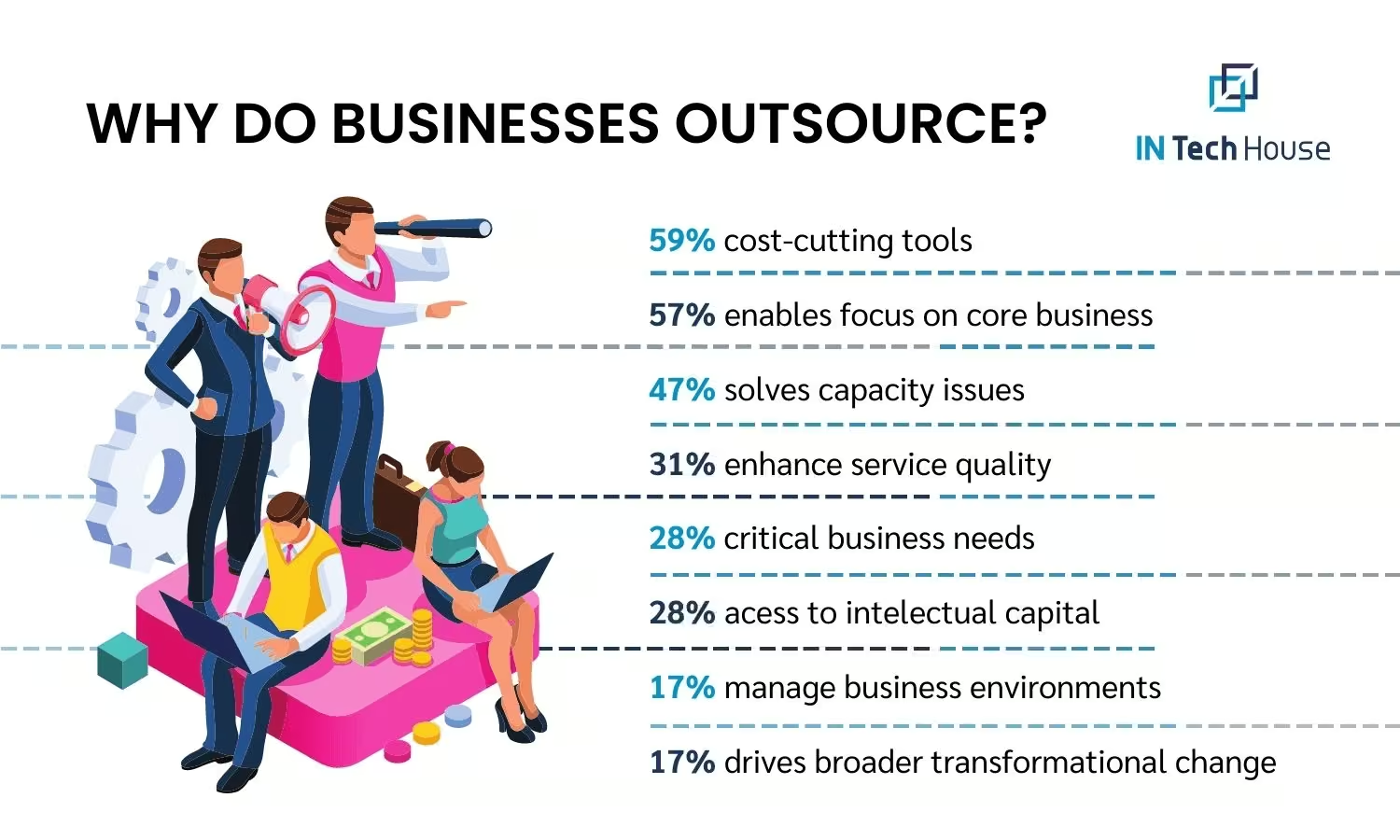
Statista created a special outsourced team attractiveness where you can see four main reasons for outsourcing services global usage:
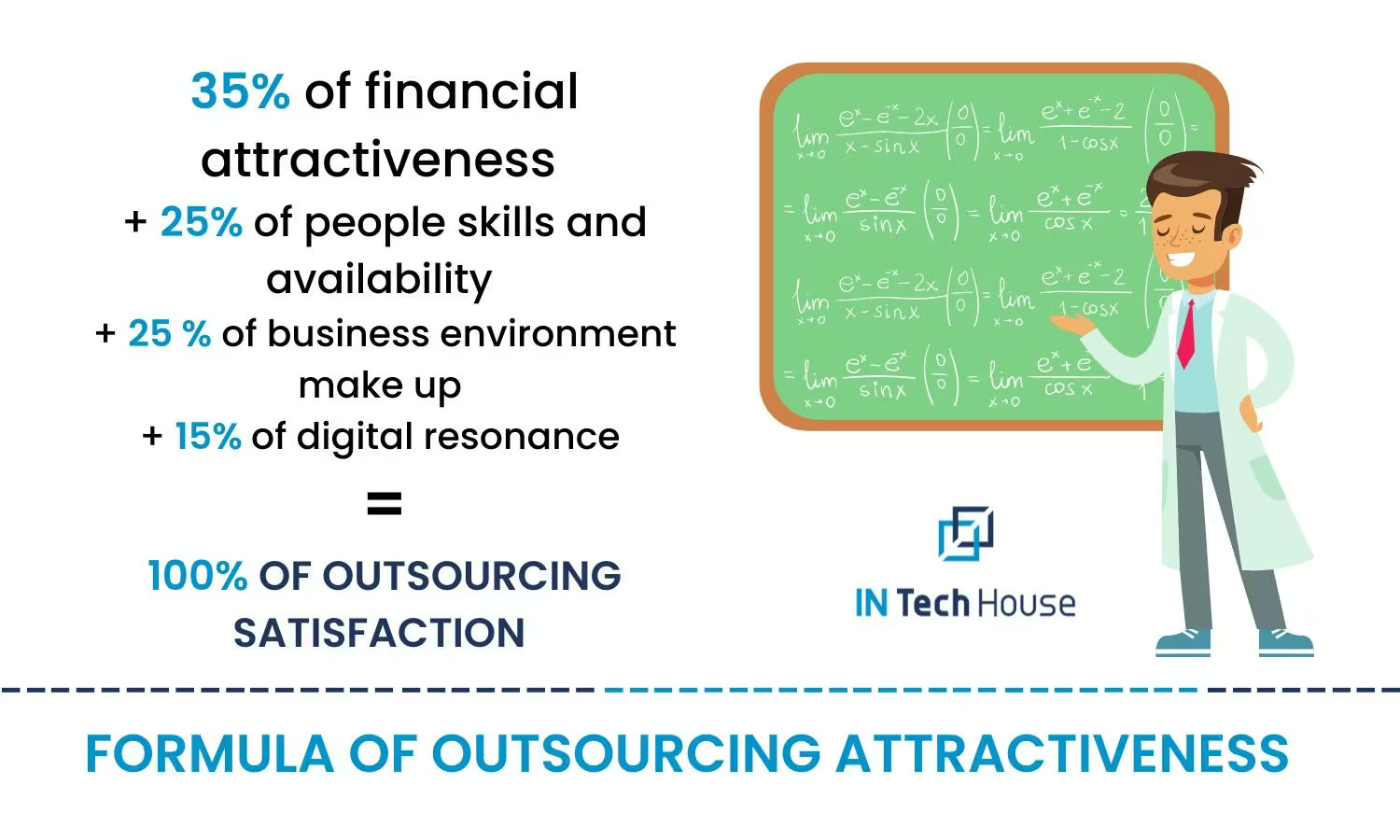
Source: Statista1) 35% of financial attractiveness2) 25% of people skills and availability3) 25 % of the business environment make up4) 15% of digital resonance
Nearshoring, on the other hand, refers to the practice of outsourcing work to a software development company located in a nearby country, often in the same time zone or a nearby time zone. The primary motivation for nearshoring is to reduce costs while maintaining close collaboration and control over the work being done.
By nearshoring, IT software development companies can take advantage of lower labour costs in nearby countries, many of which rank among the best countries to outsource software development, without having to deal with the challenges of working with a company on the other side of the world. This can make communication and collaboration easier, as well as reduce the risk of intellectual property theft and quality control issues.
One of the key benefits of nearshoring is that it can help IT companies to build long-term relationships with their outsourcing partners. By working with a company in a nearby country, it may be easier to visit the partner’s offices, build trust, and develop a deep understanding of the partner’s capabilities and working style.
Nearshoring is another popular outsourcing business model used by software development companies, which involves outsourcing to geographically close countries, often in the same region. Here are some of the pros and cons of IT nearshoring:

In conclusion, IT nearshoring offers several advantages, including cultural similarities, similar time zones, and proximity, and that same proximity is what drives the impact of nearshoring on the supply chain. However, it also has some disadvantages, such as higher costs, a limited talent pool, competition for resources, and limited flexibility. Companies should carefully evaluate the pros and cons of nearshoring before deciding whether it is the best outsourcing strategy for their IT services.
Offshoring is the process of outsourcing software development to a business in a foreign nation, sometimes on a different continent. Offshoring is frequently done to save costs since labour usually is less expensive in places like India, China, and the Philippines than it is in places like the United States, Europe, or Australia. Tech businesses may benefit from this cost difference by outsourcing to reduce costs and raise profit margins.

Cost per hour is the easiest number to compare and the least useful one when hardware bring-up slips by a quarter. We will map your project risks to the sourcing model that absorbs them best.
Compare sourcing models against your actual delivery risk
Source: Statista
According to Deloitte, global spending on offshore outsourcing services were over $700 billion in 2022 and is projected to reach $731 billion in 2023. IT outsourcing is the most popular type of outsourcing, accounting for 72% of all spending on business operations.
Companies can successfully reach new markets and talent pools via offshoring. To service the Indian market and access the nation’s extensive pool of highly qualified software development engineers, a firm with headquarters in the United States may choose to open an office there. This may be especially helpful in fields like financial services and healthcare where local knowledge and proficiency are crucial.
Offshoring, though, can also pose substantial difficulties. Time differences, cultural differences, and language limitations can all make it more challenging to communicate and work together. Offshoring can also result in a loss of control over intellectual property and quality since contracted workers might not be as involved in the company’s success as full-time staff would be.
According to a Clutch survey, 90% of small US businesses plan to outsource business processes in 2022, a 10% increase from 2021. This suggests that businesses must look for development process providers with high-quality services, aim for high flexibility, and leverage updated technology while outsourcing in 2023.

Roughly 300,000 U.S. jobs are outsourced each year. The global outsourcing market is valued at $92.5 billion, with the U.S. market bringing in $62 billion of the total international revenue. Most global outsourcing revenue is generated through the information technology sector. U.S. businesses are increasingly outsourcing to China, Western Europe such as Poland and other countries in Asia. The outsourcing market is expected to grow at a compound annual growth rate of 4% between 2021 and 2025.
Offshoring is a popular outsourcing strategy used by IT companies to reduce costs and access a large talent pool. However, some drawbacks to offshoring should be considered. Here are some of the pros and cons of IT offshoring:

In conclusion, IT offshoring can offer significant benefits to companies, including cost savings, access to a broader talent pool, and faster time-to-market. However, it also comes with challenges like communication and quality control issues, time zone differences, and security risks. Companies should carefully evaluate the pros and cons of offshoring before deciding whether to outsource their IT services.
Looking for a reliable offshore software development team?
We can help! Book a call
When deciding between offshoring and nearshoring, or the wider set of options in nearshoring vs offshoring vs onshoring, IT companies should consider several factors, including:
The decision to offshore or nearshore depends on a variety of factors, including the nature of the work being outsourced, the level of control the company wants to maintain, and the level of cost savings the company hopes to achieve.
Deciding whether to offshore vs nearshoring to Poland depends on various factors that IT companies should consider. Here are some of the factors to consider:

Read also:
The choice between nearshoring vs offshoring relies on the type of work involved and the degree of cooperation needed. Due to the same time zones and cultural affinities, nearshoring to Poland could be a preferable choice if the job necessitates regular contact and collaboration. Offshoring to Poland may be an alternative if the job is more independent because of the country’s cheaper development team costs and larger talent pool.In conclusion, the choice between nearshoring and offshoring to Poland should be made after considering several development process variables, such as cost, talent pool, time zone, cultural similarity, communication and collaboration, and political and economic stability.
InTechHouse is a software and hardware development company based in Poland that has experience with both nearshoring vs offshoring. Here is a brief overview of their experience with these outsourcing strategies.
SoftBlue has experience with nearshoring to other countries in Western and Eastern Europe including France, the UK, Germany, the Netherlands, and Ukraine. According to our clients’ opinion, they found that nearshoring has many business process advantages, including cultural similarity, similar time zones, and proximity, which makes it easier to travel to visit their outsourcing partners without having ocean freight.
InTechHouse has also experience with offshoring to countries such as the USA, Qatar, and Hong Kong. Our clients choose us not because of the lower rates but for having an access to a larger talent pool, and 24/7 availability for certain services.
Overall, we think both nearshoring and offshoring can be effective outsourcing strategies, depending on the specific needs of the company and the project. Our company believes that choosing the right outsourcing partner and investing in effective communication and management practices are critical to success with both nearshoring and offshoring.
Outsourcing has become a popular strategy for IT businesses looking to reduce software development team costs, access specialized skills and expertise, and improve efficiency and software development process productivity. Two common outsourcing strategies are offshoring and nearshoring, each with its own set of advantages and disadvantages.
Offshoring provides cost savings through lower labour costs and access to a larger talent pool, but can also present challenges such as language and cultural barriers. Nearshoring provides cultural similarities, similar time zones, and proximity, but can be more expensive and have a smaller talent pool.Despite the benefits, some tech companies may still have fears about outsourcing due to potential risks such as loss of control, quality issues, and cultural differences. However, businesses can mitigate these risks by carefully selecting outsourcing partners, investing in effective communication and management practices, and setting clear expectations and goals.
Ultimately, businesses should not let fear hold them back from exploring the potential benefits of outsourcing. With the right strategy and management approach, outsourcing can provide a competitive advantage and help businesses achieve their goals more effectively.
InTechHouse delivers hardware, embedded and industrial data projects from Poland, with overlapping working hours and engineers you meet by name. Book an intro call with our delivery leads.
Talk to an EU nearshore engineering partner
Not sure where to start? We work with companies at every stage, from early ideas to enterprise-level builds. A 30-minute call can save you months of guesswork.
Poland is a nearshore location for Western European and Nordic clients and an offshore location for North American clients. For companies in Germany, the UK or Scandinavia, it offers a time difference of zero to one hour and short flights. For US companies, the six to nine hour gap and transatlantic travel make it offshore in practice, although a partial overlap with the East Coast remains. The same vendor can therefore serve both models, and the collaboration setup should reflect which one applies.
A large time zone difference can be an advantage for work that benefits from round-the-clock coverage, such as follow-the-sun support, monitoring or long automated test runs. One team can hand over at the end of its day and find results or fixes waiting the next morning. For active development with frequent design decisions, the same gap usually becomes a cost, because questions wait a full cycle. The advantage holds only when handovers are well structured and tasks are independent.
Nearshoring can cost less overall because total cost includes coordination, rework, travel and delay, not just hourly rates. Closer collaboration shortens feedback loops, so misunderstandings are caught in hours instead of days. Fewer handover documents and review cycles are needed, and senior engineers on the client side spend less time managing the vendor. For hardware-dependent projects, faster access to prototypes and labs reduces schedule slips. The balance favors offshoring mainly for large volumes of stable, well-specified work.
IP and security risks differ mainly through legal jurisdiction and the practical ability to enforce contracts. A nearshore vendor inside the EU works under GDPR and the EU trade secrets directive (2016/943), which EU clients already understand and can litigate. Offshore locations vary widely in how reliably courts enforce IP and confidentiality agreements. In both cases, controls such as client-owned repositories, access restrictions and ISO/IEC 27001 practices matter more than geography, but enforceability is the fallback when controls fail.
The main limitations of nearshoring are higher rates than distant offshore locations, a smaller talent pool for niche specializations, and competition for senior engineers from other companies in the same region. Rates in popular nearshore markets have risen as demand grew, narrowing the cost gap with onshore teams. Scaling a large team quickly can be harder than in very large offshore markets. For rare skills such as FPGA or safety-certified firmware, the partner's existing team matters more than the country.
Co-founder responsible for scaling operations and ensuring the efficient delivery of technology projects. He brings extensive experience in advanced technologies, with a strong focus on artificial intelligence, which enables him to translate business needs into practical, scalable AI solutions that deliver measurable value.
Building on this background, he manages complex R&D projects and leads engineering teams in environments where quality, timeliness, and compliance with regulatory requirements are critical.
His approach is centered on delivering tangible business outcomes, rather than focusing solely on technology. In his work with international clients, he supports technology transformation initiatives and the implementation of AI-driven solutions aligned with real operational needs.
From first prototype to production, our engineers can help you scope it, build it and get it certified.
This initial conversation is focused on understanding your product, technical challenges, and constraints.
No sales pitch - just a practical discussion with experienced engineers.
Share a few details about your product and context. We’ll review the information and suggest the most appropriate next step.