
8 Ways Hardware Consulting Services Benefits Your Company

Boost Business Growth: Consulting and Hardware as a Service
In the current dynamic technological environment, companies are continually exploring methods to maintain their competitiveness and enhance efficiency. As Stewart Brand famously said: "Once a new technology rolls over you, if you’re not part of the steamroller, you’re part of the road". One often overlooked but crucial aspect of maintaining this mentioned steamroller is the effective management and utilization of hardware. These types of consulting services provide businesses with expert advice and solutions tailored to their specific needs, ensuring optimal performance and cost-efficiency. InTechHouse indicates how hardware consulting can benefit your company. Consulting often reaches its limit when the right device does not exist yet, and that is the point where hardware product design services take over from advice.

End-to-End Client: How Can a Hardware Consultant Be Useful for You?
A hardware consultant specializes in providing advice and technological support related to computer hardware. The main areas in which they can assist include:
- Selection of appropriate computer equipment, servers, network devices, and other hardware components,
- Recommending hardware according to the company's business requirements and budget,
- Installing new computer devices,
- Configuring hardware to ensure its optimal performance,
- Assessing needs and planning the modernization of existing IT infrastructure,
- Installing additional components and expanding systems,
- Diagnosing hardware problems,
- Repairing damaged appliances or coordinating repairs with suppliers,
- Planning the devices' lifecycle, including purchasing, maintenance, upgrades, and disposal,
- Managing equipment inventory and cost control,
- Analyzing IT performance and identifying optimization opportunities,
- Implementing solutions to increase computer system efficiency and performance,
- Implementing physical and logical hardware security measures,
- Conducting hardware security audits and providing recommendations for improvements,
- Providing technical support to company employees regarding devices usage,
- Resolving ongoing hardware issues,
- Conducting training sessions for employees on the operation and maintenance services of appliances,
- Educating on best practices for tool usage and security,
- Configuration hardware with software,
- Resolving issues related to hardware and software compatibility.
The scope of that advice widens as soon as the equipment has to run inference on site rather than send data to a server. When a consultant specifies compute for a vehicle, a production line, or any installation where a wrong output has physical consequences, price lists stop being the deciding factor and vendor capability takes over, which is the whole point of choosing an Edge AI development company that can deliver hardware and software together.
1. Consultancy Handyman: Expertise and Specialized Knowledge
Hardware consultants bring extensive knowledge and expertise to your business. They are well-versed in the latest hardware design services, technologies and trends, ensuring that your company benefits from cutting-edge solutions. Their specialized knowledge allows them to evaluate your current IT infrastructure, identify areas for improvement, and recommend the best computer equipments to meet your business needs.
2. Successful Purchases, That is Cost Savings
One of the most significant benefits of consulting is cost savings. Consultants can help you avoid unnecessary expenses by recommending devices that fit your budget and performance requirements. They can also oversee warranty and assist in negotiating better deals with hardware vendors, ensuring you get the best value for your investment. Additionally, by optimizing your hardware infrastructure, consultants can reduce maintenance and operational costs in the long run.
3. Enhanced Performance and Efficiency for Manufacturers and Service Providers
Hardware consultants can identify bottlenecks and inefficiencies in your current system. By recommending and implementing upgraded solutions, they can significantly enhance the performance and efficiency of your operations. This can lead to faster processing times, improved productivity, and a smoother workflow, ultimately contributing to better business outcomes.
4. Procurement Under Control: Scalability
As your business grows, your hardware needs will evolve. IT consultants can help you design a scalable infrastructure accommodating future growth. They can recommend equipment that is easily upgradable and flexible, ensuring that your system can handle increased workloads without requiring a complete overhaul.
5. Ensuring End Users Safety: Risk Management and Security
Security is a top priority for any business, and hardware plays a crucial role in safeguarding both data and operations. Consultants can assess your current security measures and recommend IT solutions that enhance the company's overall security posture. This includes implementing secure servers, firewalls, and other protective measures to safeguard business against cyber threats and data breaches.

Component selection, lifecycle risk and compliance exposure are decided early and cost the most to reverse. Our engineers advise on those decisions with the production reality in mind.
Bring in a hardware consultant before you commit to a design
6. Streamlined Operations: Optimize Efficiency with Our Consulting
Efficient equipment management can streamline your business operations. InTechHouse experts can help you implement automated systems and processes that reduce manual intervention and errors. This not only saves time but also allows your employees to focus on more strategic tasks, further boosting productivity and efficiency.
7. Strategic Planning and Future-Proofing Help You Navigate
Hardware consultants don’t just focus on immediate needs; they also help with long-term strategic planning. By understanding your business goals and objectives, they can recommend computer solutions that align with your plans. This ensures that your IT infrastructure is future-proof and capable of supporting your business as it evolves.
8. When Troubles Emerge: Reducing Downtime
Utilizing IT consulting reduces downtime in companies through regular maintenance and equipment updates, preventing failures. Continuous system monitoring allows for quick detection and resolution of problems before they impact company operations. Implementing contingency systems such as failover, and having spare components on hand, minimizes the time needed to restore functionality after a failure. Consultants also develop and test contingency plans, preparing the company for unexpected incidents. Training staff in equipment operation and diagnostics enables quick on-site problem-solving.
InTechHouse: A Trusted Partner in Cutting-Edge Technologies
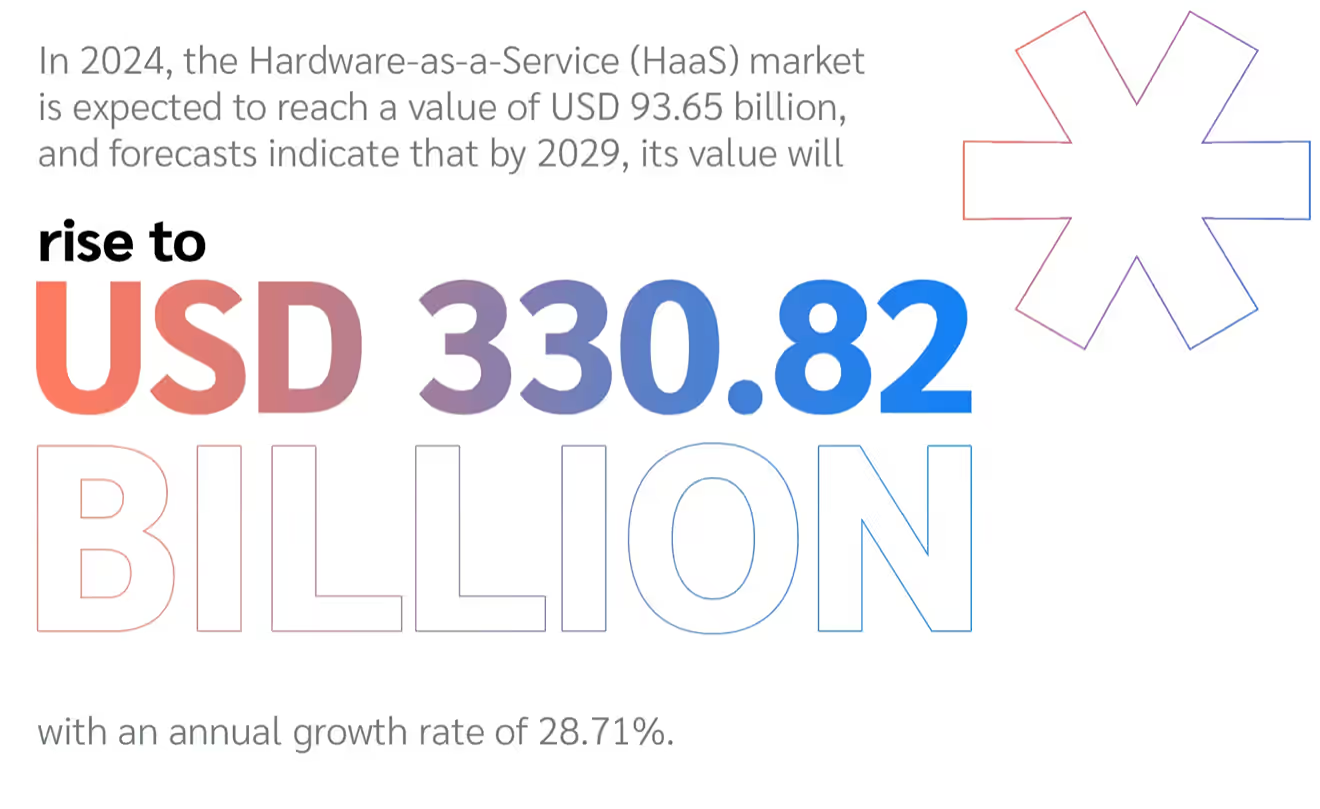
Investing in hardware consulting is a smart move for any business looking to optimize its operations, reduce costs, and stay ahead of the competition. According to Kentley Insight, the IT consulting market will reach a value of 811.4 billion USD in 2024. By leveraging the expertise of hardware consultants, you can ensure that your IT infrastructure is robust, and aligned with your business goals. Whether you’re a small business or a large enterprise, the benefits of hardware consulting are clear. Don’t let outdated or inefficient hardware hold your business back - partner with a consultant and unlock your company’s full potential.

Read also:
- How Hardware Design and Engineering Service Shape Product Evolution
- Best Hardware Design Companies Ranking 2026
- What is a hardware developer
Let's take advantage of InTechHouse's comprehensive services. We offer not only hardware consulting but also advanced IT solutions, software support, and strategic technological advice. Our team of experts adapts to the individual needs of your business, ensuring efficiency and innovation. Trust InTechHouse and discover new growth opportunities with modern technologies and reliable support.
Consulting answers what to buy and how to run it; building the device itself is a different competence. If your roadmap includes custom boards, firmware, or sensor-driven products, the next question is where to find world-class expertise in embedded engineering services and how to verify it. It is worth checking that capability before the specification is frozen, not after.
We do not stop at recommendations. The same team that audits your hardware can design the schematic, run the prototype and take it through certification, so the advice is accountable.
See what an engineering-led hardware consultancy delivers
Let's talk about your next move
Not sure where to start? We work with companies at every stage, from early ideas to enterprise-level builds. A 30-minute call can save you months of guesswork.
FAQ
Is hardware consulting suitable for small companies?
Hardware consulting is often most valuable for small companies, because they rarely employ specialists in every area a product or infrastructure decision touches. A short engagement, such as an architecture review or component selection check, can prevent an expensive commitment that a larger firm would catch internally. The key is a narrow, well-defined scope with a clear deliverable. Open-ended retainers suit organizations with continuous hardware decisions, not a single purchase or one product.
What is the difference between IT hardware consulting and product hardware consulting?
IT hardware consulting advises on equipment a company buys and operates, such as servers, network devices, workstations and their lifecycle, security and support. Product hardware consulting advises on electronics a company designs and sells, covering architecture, component selection, power and thermal budgets, compliance and manufacturability. The skill sets overlap little. A buyer should confirm which one a consultant actually offers, because a strong infrastructure advisor is not necessarily qualified to review a PCB design.
When should a company bring in a hardware consultant on a product project?
A hardware consultant adds the most value before the architecture and key components are frozen, typically during requirements and concept work, and again at design reviews before the first prototype build. Decisions made then, such as processor family, power architecture, radio module and certification route, are the costliest to reverse later. A consultant brought in after a failed prototype or a failed EMC test can still help, but mainly by diagnosing problems rather than preventing them.
How are hardware consulting engagements usually priced?
Hardware consulting engagements are usually priced in one of three ways: hourly or daily rates for open advisory work, a fixed fee for a defined deliverable such as a design review or feasibility study, or a monthly retainer with a set number of hours. Fixed-fee work suits bounded questions with clear inputs. Retainers suit ongoing programs with recurring decisions. Whatever the model, the statement of work should specify deliverables, response times and how extra scope is handled.
How can you check that a hardware consultant's advice is vendor-neutral?
Ask the consultant directly whether they hold reseller agreements, referral commissions or partner status with any vendor they might recommend, and get the answer in writing. Neutral advice typically compares at least two viable options with stated trade-offs in cost, availability, lifecycle and support. Be cautious if every recommendation points to the same manufacturer or distributor. Paying for the advice itself, rather than accepting free consulting bundled with a purchase, is the simplest safeguard.
Adam Szychulec
Adam Szychulec is Deputy CTO at InTechHouse and an electronics and embedded systems engineer with over 13 years of experience in hardware development, FPGA-based systems, embedded software, and technical leadership.
He specializes in electronic system architecture, analog and digital PCB design, FPGA and SoC development, embedded C/C++ software, and managing the complete lifecycle of complex engineering products - from early feasibility studies and technical architecture through development, testing, production introduction, and product modernization.
Adam has extensive experience leading multidisciplinary R&D teams and coordinating electronics, embedded software, mechanical engineering, testing, and project delivery. His responsibilities have included technical decision-making, project planning, risk and change management, budgeting, product testing, new product introduction, and mid-life upgrades of existing electronic systems.
His project experience includes FPGA modules for space applications, electronic systems and payloads for unmanned aerial vehicles, environmental monitoring and multispectral imaging platforms, power electronics, DC-DC converter assessment, and embedded systems developed for demanding industrial and defence-related applications.
Adam works with FPGA and SoC platforms, Xilinx Zynq, VHDL, Vivado, Altium Designer, ARM microcontrollers, embedded C/C++, Linux, digital electronics, and power electronics. He holds bachelor's and master's degrees in Electrical Engineering and is an IPC Certified Interconnect Designer. He writes about FPGA architectures, electronics design, embedded systems, hardware product development, technical risk management, UAV electronics, power electronics, and engineering leadership.
Let's talk about your next project
From first prototype to production, our engineers can help you scope it, build it and get it certified.


Discuss your product with our R&D team
This initial conversation is focused on understanding your product, technical challenges, and constraints.
No sales pitch - just a practical discussion with experienced engineers.
Share a few details about your product and context. We’ll review the information and suggest the most appropriate next step.