Subsea control system with an obsolete power transformer
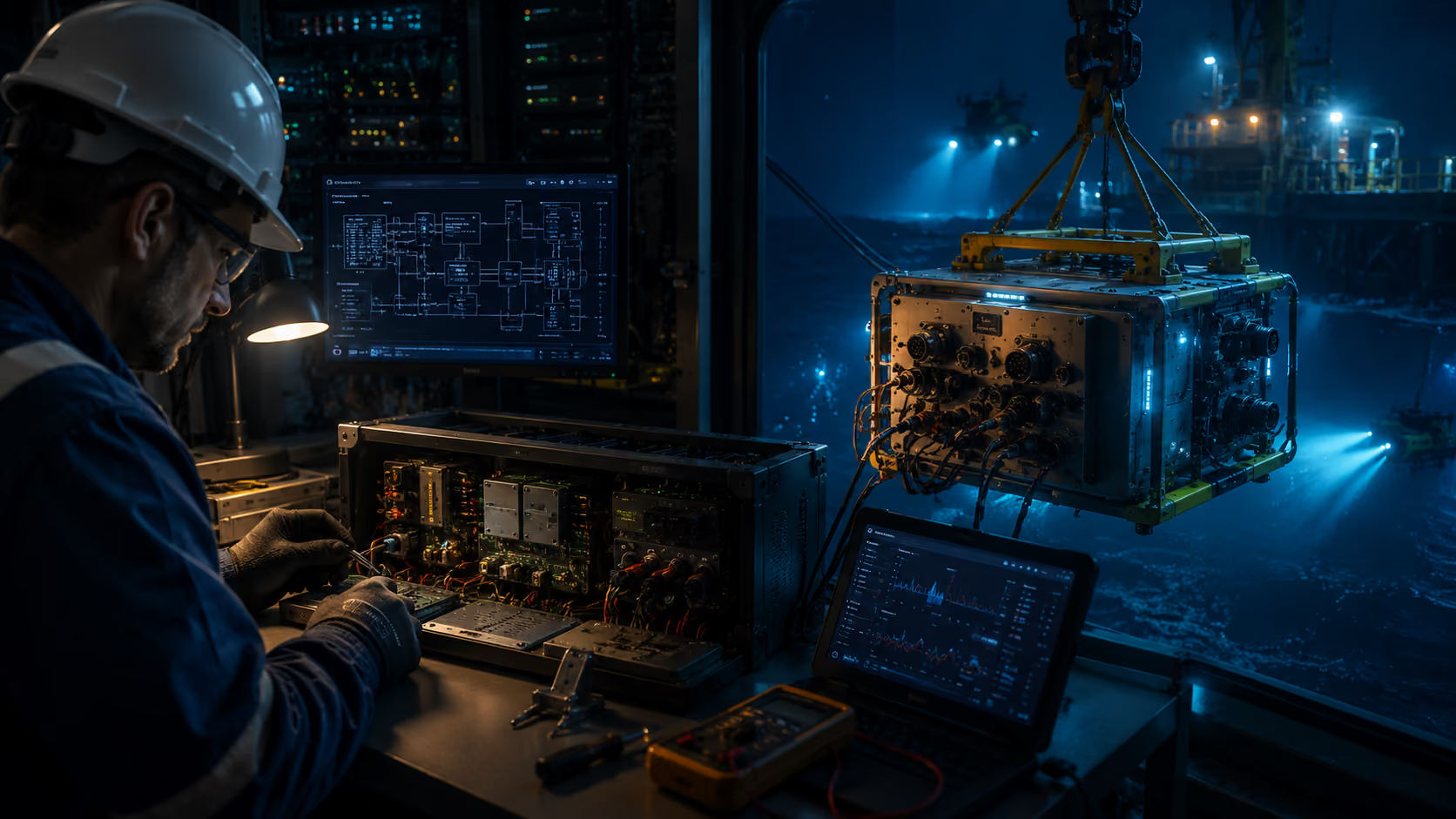
A global oil and gas company specializing in subsea production systems, operating in environments where reliability and durability of electronic components are critical to safe and continuous operations.
Why the SEM transformer core could not be sourced
The Subsea Electronics Module (SEM) Power Transformer is a key component responsible for power delivery and isolation within subsea control systems.
As the original design aged, the client faced a critical issue: essential components, including the transformer core, were no longer available on the market.
At the same time, incomplete documentation made it difficult to reproduce or upgrade the component accurately. Any redesign also had to maintain compatibility with existing systems, including physical dimensions and operational parameters, while ensuring reliable performance in harsh subsea conditions. Replacing the entire system was not a viable option due to cost and operational impact.
Requirements for rebuilding the transformer to original dimensions
To maintain system functionality and extend its lifecycle, the solution needed to:
- replace obsolete components with modern equivalents
- recreate missing technical documentation
- maintain compatibility with existing system architecture
- ensure reliable operation in harsh subsea environments
- improve long-term durability and performance
The goal was to modernize the component without requiring a full system redesign.
Reverse engineering and redesign of the transformer core
A structured reverse engineering and redesign process was implemented to recreate and upgrade the SEM Power Transformer. Instead of replacing the entire system, the focus was on rebuilding the critical component using modern materials and manufacturing techniques while preserving its original functionality and dimensions.
The transformer core was redesigned based on available specifications, ensuring that it met required electrical and insulation properties. The project required hardware design services covering custom magnetics and chassis development to ensure compatibility with the existing SEM architecture.
The upgraded design was validated through rigorous testing to ensure reliability and stability under subsea operating conditions.
The project also demonstrates how component selection, electrical design, and compatibility requirements influence the modernization of legacy electronics. These considerations are covered in more detail in our guide to embedded hardware design.
Technology stack:
- Custom magnetics design and manufacturing
- Reverse engineering methodologies
- Advanced electrical and mechanical design techniques
How the redesigned transformer powers valves and sensors
The redesigned transformer delivers power and isolates critical control systems, including valves and sensors, maintaining the same operational role as the original component.
By combining modern materials with a validated design approach, the system achieves consistent performance while improving durability and long-term availability. The component integrates directly into existing subsea modules without requiring structural changes.
Key capabilities:
- Reverse-engineered transformer core design
- Custom magnetics tailored to subsea requirements
- Compatibility with existing SEM architecture
- Reliable power delivery and isolation
- Improved durability for harsh environments
- Seamless integration without system redesign
Subsea operations continue without infrastructure changes
The modernization of the transformer allowed the client to maintain continuity of subsea operations without disrupting existing infrastructure. By ensuring compatibility with legacy systems, the solution avoided complex integration challenges and reduced downtime risk.
At the same time, improved reliability and availability of components increased confidence in long-term system performance.
Results: lifecycle extension without replacing the SEM
The solution delivered measurable improvements across key areas:
- Avoided full system replacement costs, significantly reducing investment
- Resolved component obsolescence, ensuring continued production
- Extended system lifecycle, supporting long-term operations
- Improved reliability, in harsh subsea environments
- Reduced operational risk, through validated design
- Enabled future scalability, with modernized components
The upgraded transformer provides a foundation for further modernization of subsea systems, allowing the client to continue evolving its infrastructure without major redesigns. The approach can be applied to other critical components facing similar obsolescence challenges.
Frequently asked questions
Can an obsolete subsea transformer be rebuilt when the original core is no longer on the market?
Yes. The core can be redesigned based on available specifications using modern materials and manufacturing techniques, as long as it meets the required electrical and insulation properties. In this project, InTechHouse rebuilt the SEM Power Transformer through a structured reverse engineering and redesign process, preserving the original functionality and dimensions so the component fits existing subsea modules.
How is a redesigned SEM power transformer validated for subsea use?
Through rigorous testing for reliability and stability under subsea operating conditions. Validation matters because the transformer delivers power and isolates critical control systems, including valves and sensors. In this project, InTechHouse validated the upgraded SEM Power Transformer design through testing, which reduced operational risk and supported reliable performance in harsh subsea environments.
Why rebuild a single SEM component instead of replacing the whole subsea control system?
Because replacing the entire system was not a viable option due to cost and operational impact. Rebuilding only the critical component keeps compatibility with existing physical dimensions and operational parameters. In this project, InTechHouse delivered hardware design covering custom magnetics and chassis development, which let the client avoid full system replacement costs, resolve component obsolescence, and continue subsea operations without infrastructure changes.
We’ll review your goals, technical constraints, and opportunities to design a solution that fits your organization.
Planning an electronics, embedded, or FPGA project? Our engineers can help with hardware design, firmware, and testing - from first prototype to production.