


In the fast-paced and dynamic business environment of 2024, having a robust Business Continuity Plan (BCP) is more crucial than ever. As technology evolves and market dynamics shift, it’s imperative for organizations to revisit and update their BCP to ensure resilience in the face of unforeseen disruptions. This article provides insights into the fundamentals of BCP, Business Impact Analysis (BIA), Recovery Time Objectives (RTOs), and Recovery Point Objectives (RPOs), and explores how these components need to adapt to the evolving landscape.
Business Continuity Planning (BCP) is a comprehensive strategy designed to ensure that an organization can continue its critical operations and functions during and after a disruptive incident. The goal of BCP is to minimize downtime, protect assets, and maintain business operations to the greatest extent possible in the face of various disruptions, such as natural disasters, cyberattacks, or other unforeseen events.

Source: Invenioit
So, it’s a good idea to think forward about the action that can prevent such money loss. What do you think? Key components of a Business Continuity Plan may include:
A Disaster Recovery Plan (DRP) is a subset of BCP that specifically focuses on the restoration of an organization’s IT infrastructure and data after a disruptive event. While BCP encompasses a broader range of business functions, a DRP is tailored to address IT systems and data recovery.
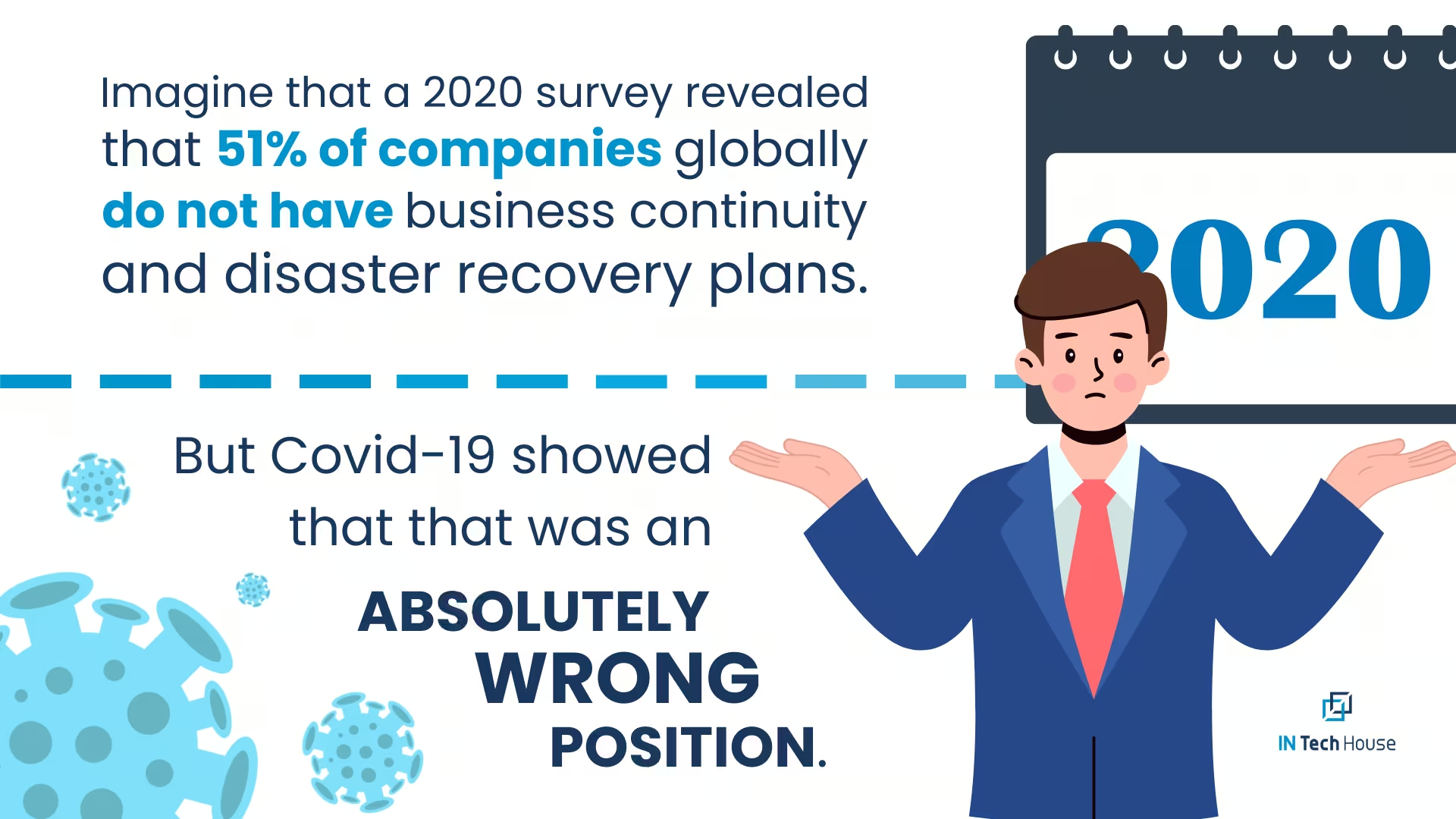
But Covid-19 showed that that was an ABSOLUTELY WRONG POSITION.
The pandemic forced over 100,000 small businesses in the U.S. to close permanently, highlighting the necessity of being prepared for unexpected situations. This global case turned us all to the idea – WE NEED TO THINK FURNER about our businesses. It’s not about money, this is about value, reputation and all people involved. Components of a Disaster Recovery Plan include:
A Business Impact Analysis (BIA) is a critical step in the Business Continuity Planning (BCP) process. It helps organizations identify and assess the potential impact of disruptions on their critical business functions. By conducting a BIA, you can:
The frequency of updating a Business Continuity Plan (BCP) depends on various factors, including organizational changes, industry regulations, and the evolving threat landscape. However, as a general guideline:
Regular updates ensure that the BCP remains current, relevant, and effective in addressing potential risks and disruptions.
As we transition from one year to the next, reflecting on the lessons learned is a crucial step in fortifying our strategies for the future. The rapidly evolving business landscape, coupled with unforeseen challenges, has emphasized the importance of robust Business Continuity Plans (BCP) in 2023. In this article, we’ll explore key insights gained in the past year and discuss how businesses can incorporate these lessons into their 2024 BCP for enhanced resilience.

A Business Continuity Plan (BCP) is a comprehensive strategy outlining how a business will continue operating during and after a disruption. It involves identifying potential risks, conducting a Business Impact Analysis (BIA), and developing strategies to mitigate those risks. The BIA evaluates the potential impact of disruptions on critical business functions, helping organizations prioritize their recovery efforts.
Recovery Time Objectives (RTOs) and Recovery Point Objectives (RPOs) are critical components of any BCP. RTO refers to the targeted duration within which a business process must be restored after a disruption. RPO, on the other hand, signifies the maximum tolerable data loss in the event of a disruption. Understanding these objectives is essential for creating a BCP that aligns with business needs and regulatory requirements
RTOs and RPOs are promises about data, so they can only be kept if the underlying systems were designed to replicate and restore inside those windows. Recovery targets therefore belong in the scope of industrial data platform development, not in a document written once the platform is already live. Set the numbers first, then confirm that the architecture can actually hold them.
A continuity plan is only as strong as the data platform behind it. We design ingestion, historian and backup layers with defined RTO and RPO targets so critical process data survives a site failure.
Technological Advancements: The integration of advanced technologies, such as cloud computing, artificial intelligence, and data analytics, has reshaped the way businesses operate. Updating your BCP to leverage these technologies can enhance agility, scalability, and the overall effectiveness of recovery strategies.
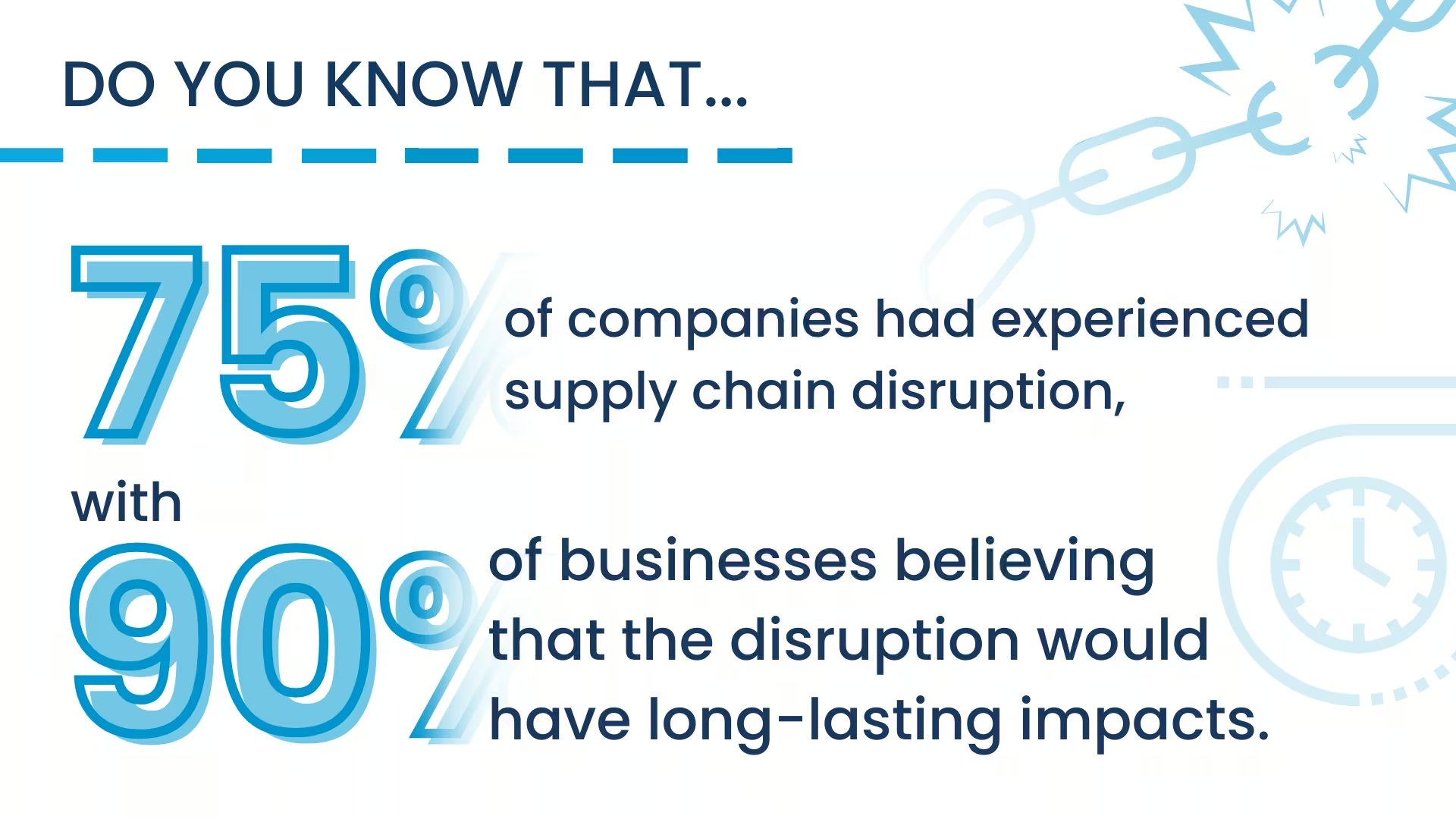
Market Dynamics: Shifts in market dynamics, including globalization, supply chain complexities, and the rise of remote work, have introduced new challenges to business continuity. Adapting your BCP to address these dynamics ensures a holistic approach to resilience.
Examining Potential Vulnerabilities and Consequences:
The case study from InTechHouse details the development of an unmanned flying platform for environmental observation and study for the Polish Armaments Group, a state-owned defence conglomerate in Poland. The project’s challenge was to create a complex platform with varied functionality.
Our solution entailed the development of various types of Unmanned Aerial Vehicle Operator (UAVO) platforms, each equipped with specialized instruments, including:
The technology stack for this project included software running on Linux in C++ and Python, device firmware in C, and applications developed in a Qt environment using C++ and QML languages. The communication protocols used in the project ranged from ISM and GPS to USB, Ethernet over ISM, and others.
In the case study from InTechHouse, our client, a multinational US corporation with a significant global presence, faced a challenge with a product that had been sold since the early 2000s. The product was still in high demand, but its future was uncertain due to the diminishing availability of spare parts. The task at hand was to rejuvenate the product by preserving its original functionality and reliability while also integrating modern hardware and software solutions to ensure its longevity.
To address this challenge, we provided a comprehensive solution that included:
The technologies used in the project included Embedded C/C++, software debugging, ARM Cortex-M4 microcontrollers, and FPGA.
Read also:
In the ever-changing landscape of business operations, keeping Business Continuity Plans (BCP) and Business Impact Analysis (BIA) up-to-date is crucial for resilience. Explore the best practices for seamless updates to enhance preparedness and responsiveness.
Regularly updating Business Continuity Plans (BCP), Business Impact Analysis (BIA), Recovery Time Objectives (RTOs), and Recovery Point Objectives (RPOs) is paramount for ensuring the resilience and adaptability of businesses in today’s dynamic landscape. This ongoing process helps organizations stay prepared for emerging risks, technological advancements, and market shifts.
Key Points:
Our teams have rebuilt data pipelines for harsh environment and remote monitoring systems where downtime is not an option. Ask us to review your current architecture against your BIA findings.
Not sure where to start? We work with companies at every stage, from early ideas to enterprise-level builds. A 30-minute call can save you months of guesswork.
A business continuity plan (BCP) covers how the whole organization keeps critical operations running during a disruption, including people, facilities, suppliers, communication and manual workarounds. A disaster recovery plan (DRP) is the IT subset: how systems, applications and data are restored after an outage, with defined steps, responsibilities and recovery targets. A company can have a perfect DRP and still stop operating if, for example, a single supplier or key site fails without a continuity plan.
Realistic RTO and RPO values are set from the business impact analysis by estimating how losses grow over time when a process stops and how much data loss the business can tolerate. The recovery time objective must fit within the maximum tolerable period of disruption. The recovery point objective determines backup and replication design: an RPO near zero needs synchronous replication, while daily backups imply up to 24 hours of lost data. Each target should be validated in a recovery test.
ISO 22301 is the international standard for business continuity management systems, defining requirements for planning, implementing, testing and improving continuity arrangements, and it is certifiable. ISO/TS 22317 gives guidance specifically on business impact analysis, and ISO/IEC 27031 addresses ICT readiness for continuity. Using the standards as a structure helps even without certification, because customers and auditors recognize the terminology and the evidence they expect to see.
A business continuity plan should be tested with escalating exercises: document walkthroughs, tabletop exercises where teams talk through a scenario, functional tests of specific procedures, and full failover tests that actually switch systems or sites. Tests should run at least annually and after major changes. Each exercise should produce a list of gaps, owners and deadlines. Restoring backups in a test environment is essential, because an untested backup is only an assumption.
A business impact analysis should cover people, key roles and single points of knowledge, facilities, critical suppliers and logistics, regulatory obligations, and dependencies between processes, not only IT systems. For each critical process it records the impact over time, the maximum tolerable disruption, required resources and upstream dependencies. Manufacturers should include spare parts, tooling and long lead-time components. IT recovery targets are then derived from the business needs instead of the other way round.
In the EU, the NIS2 Directive requires essential and important entities to maintain business continuity measures, including backup management, disaster recovery and crisis management, as part of their cybersecurity risk management. DORA sets detailed ICT business continuity and testing requirements for financial entities and applies from January 2025. Sector rules in healthcare, energy and telecommunications add their own obligations. Even where no law applies, large customers increasingly request continuity evidence during supplier audits.
Jacek Suty is Head of Solution Architecture at InTechHouse, with more than 30 years of experience in system architecture, enterprise IT, infrastructure, information security, and complex digital transformation programs.
He specializes in designing enterprise and solution architectures, translating business and regulatory requirements into scalable technology platforms, and coordinating delivery across software, infrastructure, data, and security teams. His work covers enterprise architecture based on TOGAF, system modeling using UML and BPMN, cloud and on-premise infrastructure, CI/CD processes, data platforms, cybersecurity, and IT governance.
Jacek has contributed to large-scale technology programs for public institutions, finance, energy, education, healthcare, utilities, and digital archives. His project experience includes nationwide public digital infrastructure, distributed document-management and archiving systems, data-exploration platforms using machine learning and predictive analytics, and transaction systems combining blockchain, metadata standards, and computational intelligence.
He holds PRINCE2 Practitioner, Management of Risk, Scrum Master, ITIL Foundation, and ISO/IEC 27001 Lead Auditor qualifications. Jacek is currently pursuing a doctoral degree at Bydgoszcz University of Science and Technology, combining academic research with extensive experience in real-world architecture and technology delivery.
He writes about enterprise architecture, system design, digital transformation, data platforms, cloud infrastructure, cybersecurity, technology governance, and the practical application of AI in complex information systems.
Jacek Suty's academic and professional profiles:
https://pbs.edu.pl/pl/doktorant/uczelniania-rada-samorzadu-doktorantow
https://www.isep.pw.edu.pl/isep/zs/Aktualnosci/Kalendarium-wydarzen2/Seminarium-zakladowe-9.03.2021-Jacek-Suty
https://aionehealth.pl/wp-content/uploads/2026/04/Raport-2026-final.pdf
From first prototype to production, our engineers can help you scope it, build it and get it certified.
This initial conversation is focused on understanding your product, technical challenges, and constraints.
No sales pitch - just a practical discussion with experienced engineers.
Share a few details about your product and context. We’ll review the information and suggest the most appropriate next step.