Municipal water and sewage company with a distributed network
A municipal water and sewage management company responsible for maintaining critical infrastructure and ensuring continuous access to water services. Operating across a distributed network, the organization relies on accurate and accessible technical documentation to support maintenance, repairs, and investment processes.
Paper technical documentation slowing field repair teams
The organization faced a growing challenge related to managing large volumes of paper-based technical documentation, which was difficult to access, time-consuming to process, and often unavailable when needed in the field.
Repair teams frequently had to rely on outdated or incomplete information, while employees spent significant time locating, borrowing, and returning documents.
At the same time, the lack of integration between documentation and GIS systems limited the ability to work with location-based data, making it harder to plan and execute field operations efficiently. As the scale of infrastructure and documentation grew, these limitations increasingly affected operational efficiency and decision-making.
Requirements for digitized, GIS-linked network documentation
To improve access and streamline operations, the organization needed a system that could:
- digitize large volumes of archival documentation
- centralize access to technical data across teams
- integrate documentation with GIS systems
- provide mobile access for field teams
- automate workflows related to documentation and investments
- support long-term data storage and scalability
The goal was to replace fragmented, paper-based processes with a structured and accessible digital environment.
Digital documentation platform integrated with GIS
A comprehensive platform was implemented to support industrial data digitalization, centralizing technical documentation and combining software, infrastructure, and workflow management into a single solution.
The platform integrates directly with GIS systems, allowing users to access documentation in a spatial context, while also supporting multimedia archives such as video records of sewer inspections. At the same time, dedicated modules were developed to manage archival processes and support large-scale digitization efforts, ensuring that legacy data could be transformed into a structured and usable format.
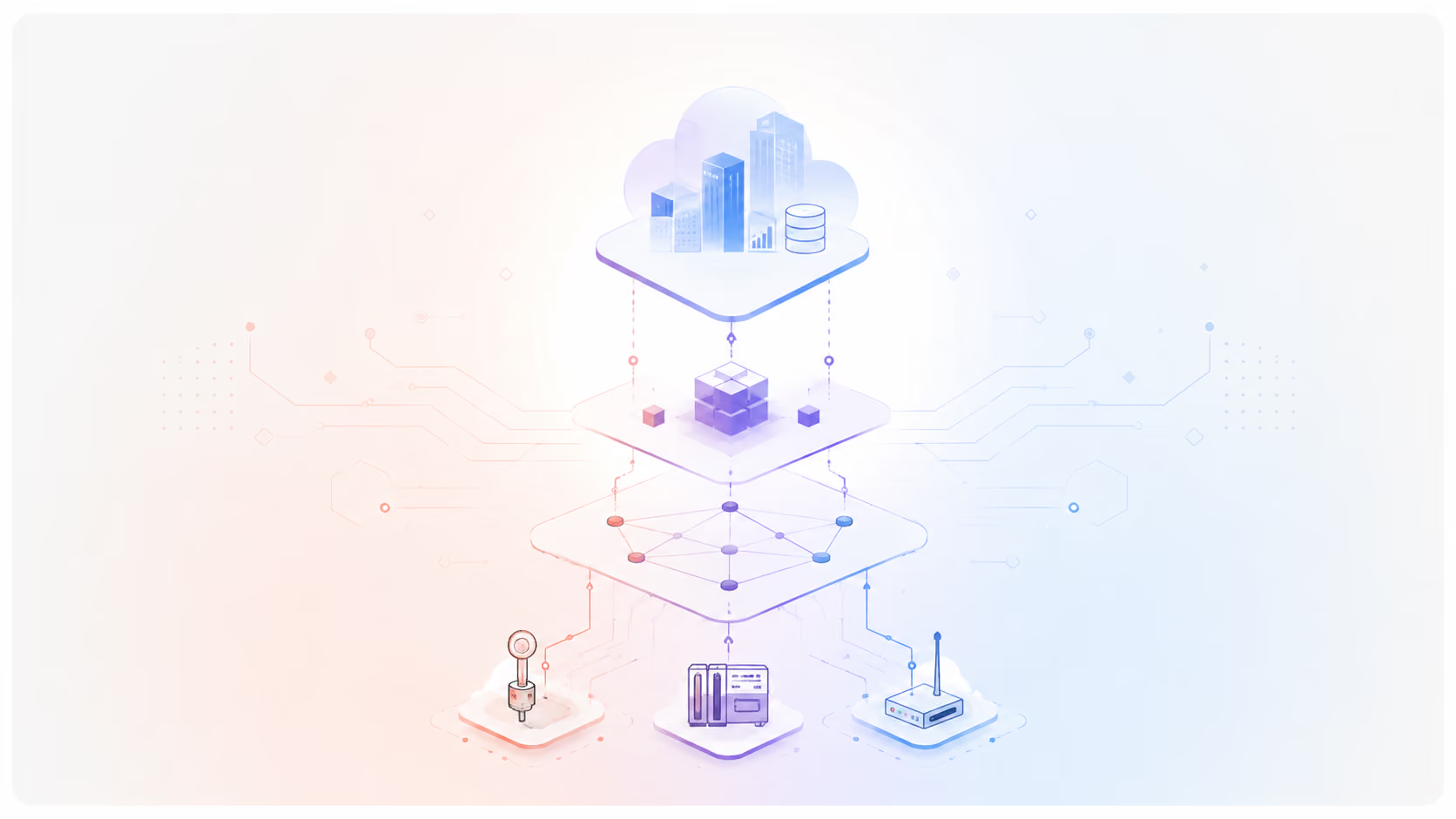
Modernizing existing infrastructure often begins with making legacy information accessible to digital systems. While this project focused on documentation and GIS integration rather than machinery retrofitting, similar challenges arise in brownfield IoT modernization, where organizations need to connect existing assets with modern data and monitoring capabilities.
Technology stack:
- Java for backend services
- PostgreSQL for data storage
- Elasticsearch for search and indexing
- Kafka for data processing and integration
- Jasper Reports for reporting
- Kubernetes for scalable infrastructure
- Bentley ProjectWise for document management
- FME Server for data integration
Infrastructure setup:
As part of the project, a high-performance infrastructure environment was delivered, enabling large-scale data processing and storage:
- 12-server computing cluster with virtualization
- 100 TB block storage
- 0.5 PB object storage
- Full server room setup, including cabling, cabinets, and KVM systems
How field teams access documentation on mobile devices
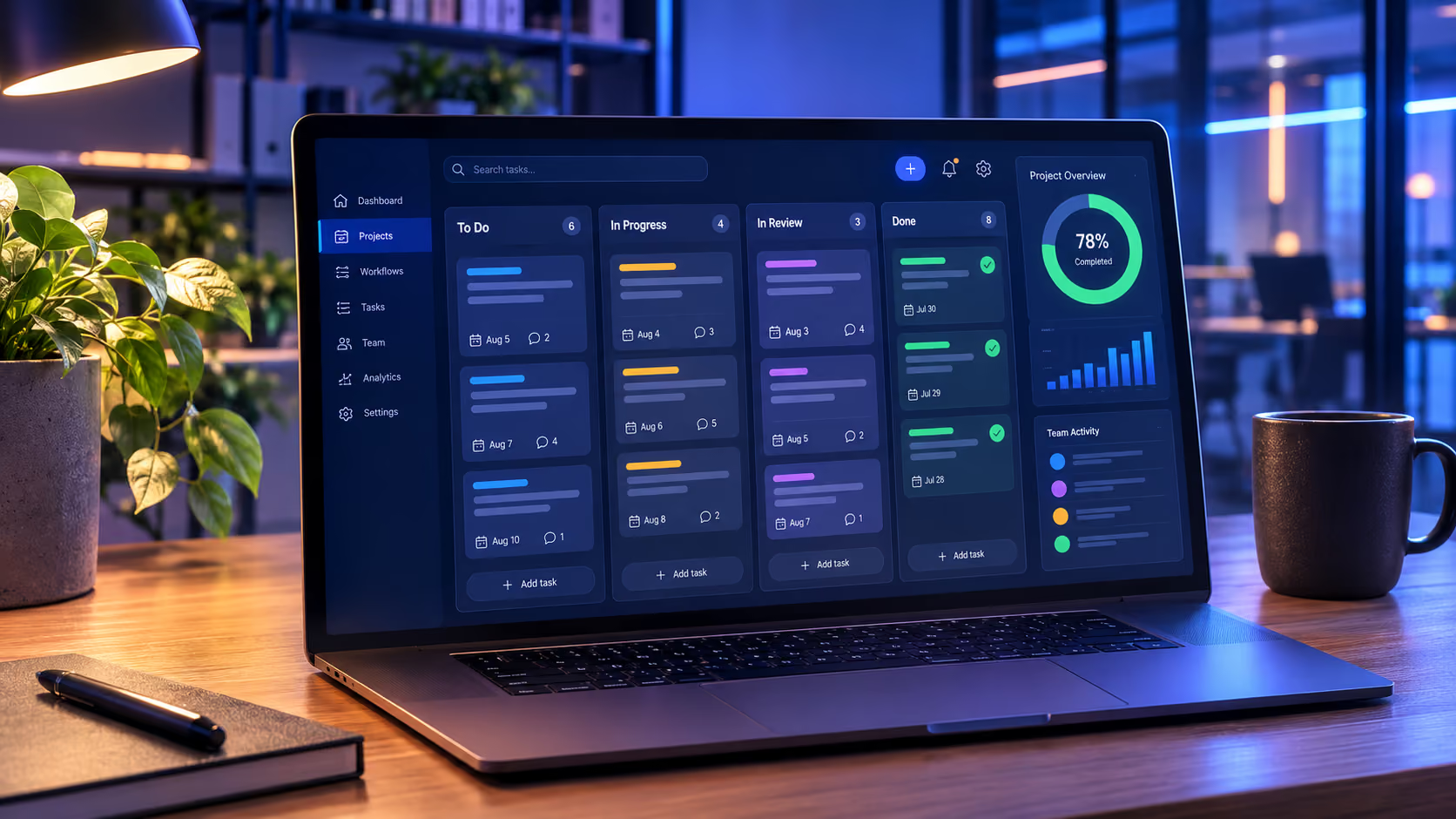
Documentation is digitized, processed, and stored in a centralized system, where it can be accessed by users across the organization. Integration with GIS enables location-based access, allowing field teams to retrieve relevant information directly on mobile devices while working on-site.
Workflows related to documentation and investment processes are automated, reducing manual effort and improving consistency. The system also supports data calibration, multimedia integration, and standardized access to archival resources, creating a unified environment for managing infrastructure data.
Key capabilities
- Centralized technical documentation management
- Large-scale digitization of archival records
- Integration with GIS for location-based access
- Mobile access for field teams
- Multimedia archive (e.g. sewer inspection recordings)
- Workflow automation for documentation and investment processes
- Calibration of raster maps with current base maps
Up-to-date documentation on site for maintenance crews
The shift from paper-based processes to a fully digital system significantly improved access to documentation and reduced time spent on administrative tasks. Field teams can now retrieve up-to-date information directly on-site, eliminating delays and improving the accuracy of maintenance and repair work.
At the same time, integration with GIS and automation of workflows improved coordination across teams, making it easier to manage both day-to-day operations and long-term infrastructure projects.
Results: full documentation digitized in 180 days
The platform delivered measurable improvements across key areas:
- Full digitization of documentation in 180 days, accelerating transformation
- Real-time access to data in the field, improving operational efficiency
- Elimination of paper-based processes, reducing delays and errors
- Improved productivity, through automation and centralized access
- Better decision-making, supported by integrated and structured data
- Scalable infrastructure, supporting long-term growth and future use cases
The platform continues to support ongoing initiatives related to document management and digitalization, providing a foundation for further development of smart infrastructure solutions. As new requirements emerge, the system can be extended to support additional processes, locations, and use cases.
Frequently asked questions
Can water network documentation be accessed by field crews on mobile devices through GIS?
Yes, GIS integration gives location-based access to documentation, so field teams can retrieve relevant records on mobile devices while on-site. That removes time spent locating, borrowing and returning paper files. In this project, InTechHouse integrated the municipal water and sewage company's digitized documentation with GIS and added calibration of raster maps with current base maps.
What infrastructure does large-scale digitization of utility documentation require?
Compute and storage sized for large archives, including multimedia. In this project, InTechHouse delivered a 12-server computing cluster with virtualization, 100 TB block storage and 0.5 PB object storage, plus a full server room setup with cabling, cabinets and KVM systems, so the municipal water and sewage company could process and store its digitized records.
Can sewer inspection videos be stored alongside technical documentation in one system?
Yes, the platform supports multimedia archives such as video records of sewer inspections next to digitized technical documentation. Keeping both in one system gives standardized access to archival resources. In this project, InTechHouse built dedicated modules for archival processes and large-scale digitization, with Elasticsearch for search and Jasper Reports for reporting, for the municipal water and sewage company.
We’ll review your goals, technical constraints, and opportunities to design a solution that fits your organization.
Planning a data platform, analytics system, or AI solution? Our team can help design scalable architectures and deliver production-ready solutions tailored to your business.