

Manufacturing, energy, and logistics companies are under constant pressure to make operations faster, safer, and more efficient. Predictive maintenance powered by the Internet of Things (IoT) has become one of the most effective ways to achieve that.By monitoring the real-time health of equipment, it helps prevent unexpected breakdowns, cut maintenance costs, and keep assets performing at their best. With networks of sensors, data analytics, and AI models, predictive maintenance services can spot irregularities long before they turn into failures. Teams can then make informed decisions – replacing parts when needed rather than following rigid schedules.
Need Expert IoT Solutions?
Our engineers have designed predictive maintenance systems across multiple industries, combining IoT data with machine-learning models to cut costs and extend machine life. Find out how we can help you build a reliable system that actually works.
IoT predictive maintenance combines sensor data with AI-driven analytics to move from reactive to proactive upkeep. Sensors constantly measure vibration, pressure, or temperature in equipment, while gateways collect and send that information for analysis. Platforms then identify patterns and calculate metrics like Remaining Useful Life (RUL), so maintenance happens only when it’s truly needed.A typical setup includes:
The result is a closed feedback loop: machines detect anomalies, algorithms confirm patterns, and engineers act before something fails.
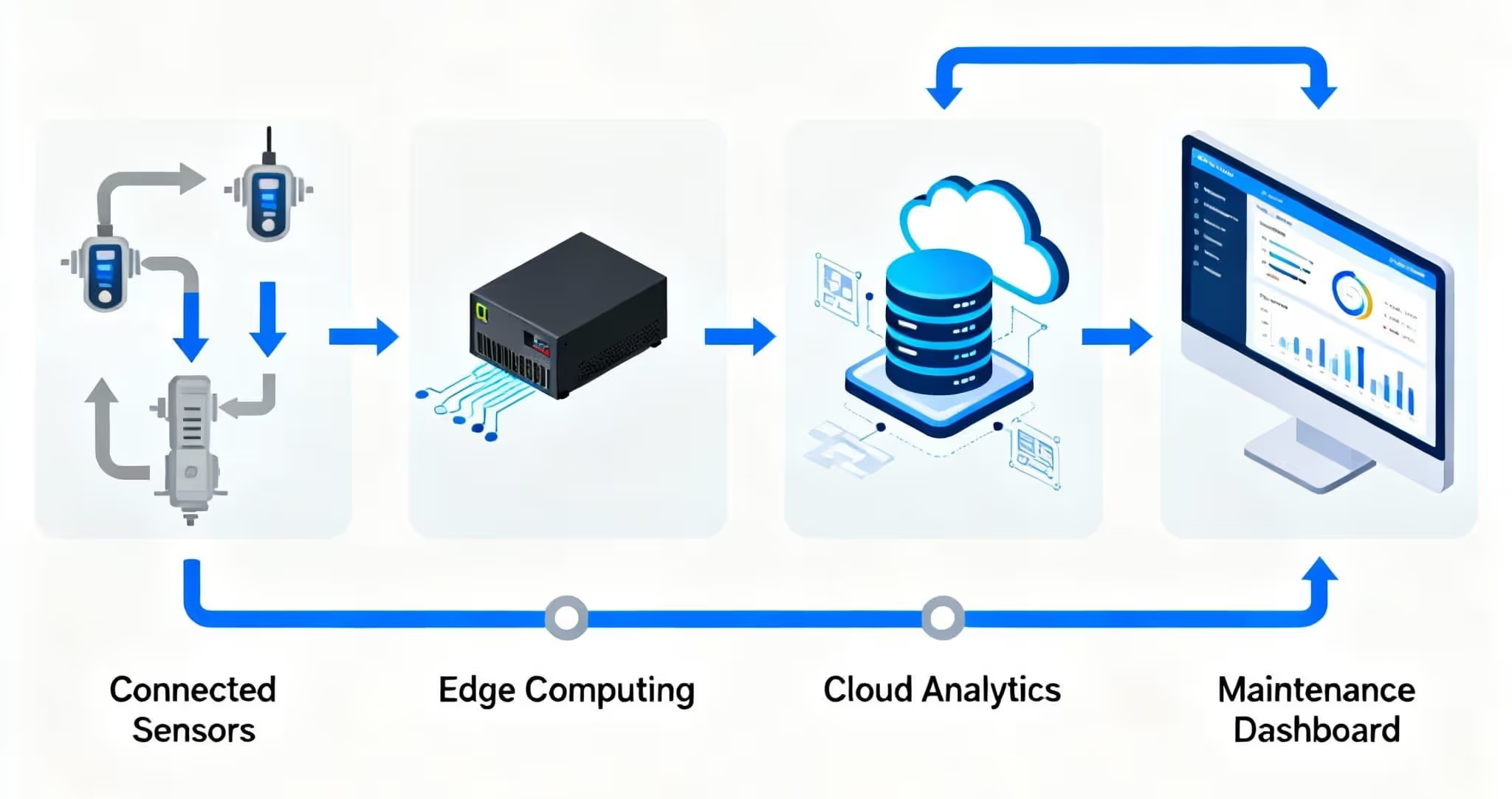
Several core technologies power predictive maintenance systems:
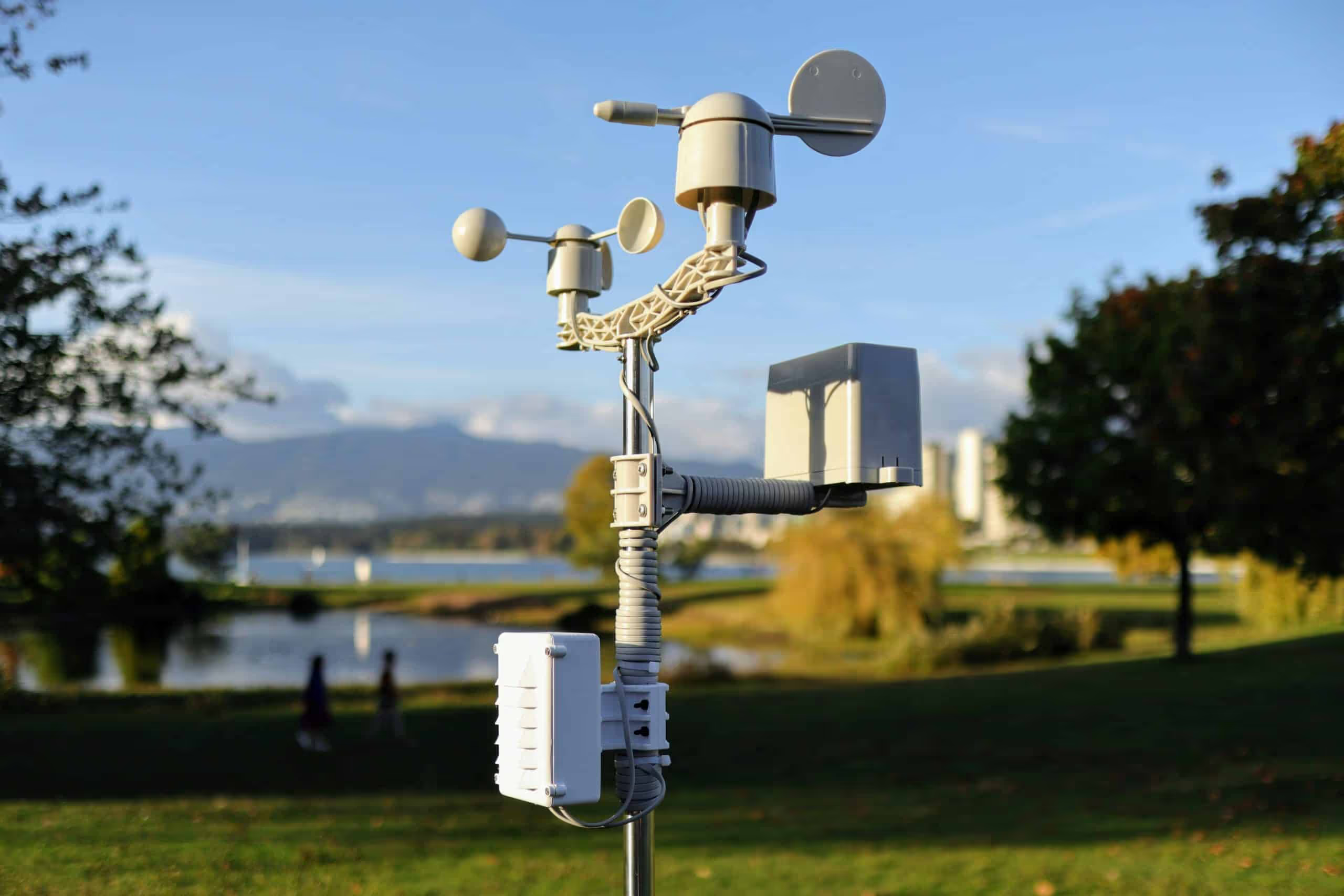
Businesses adopting IoT predictive maintenance typically see major improvements across performance, cost, and reliability. Studies show asset lifespans extending by 20–40%, while maintenance costs fall by 35–50% thanks to smarter scheduling and early fault detection. Unplanned downtime – often the most expensive kind – can drop by as much as 70%.Energy savings are another clear benefit. When IoT systems identify and correct inefficient operating conditions, facilities report 10–15% reductions in energy use. Safety also improves as potential hazards are caught early, leading to fewer accidents and compliance issues.
See How Industrial Clients Benefit from IoT
Explore real predictive-maintenance projects delivered by our engineers. From factory floors to offshore installations, we design edge solutions that deliver measurable ROI.
Each industry adapts predictive maintenance to its own systems, data realities, and operational risks:
At InTechHouse, we’ve built and deployed advanced IoT and predictive-analytics solutions that show how powerful this approach can be.One example is our Expert Water Analysis System, designed to solve slow detection problems in traditional water networks. It combines IoT sensors with AI algorithms to identify leaks, bursts, or abnormal usage within 15–30 minutes – minimising damage and enabling fast intervention. The system monitors thousands of water meters and supports predictive analysis across multiple device types, helping utilities reduce losses and use resources more sustainably.We also redesigned the user interface for an IoT-based aquarium monitoring system. The new design made it easier for users to track alerts and system status while maintaining precise IoT control of water-quality parameters. It’s a good example of how accurate data and thoughtful design can work together to improve reliability and user experience.
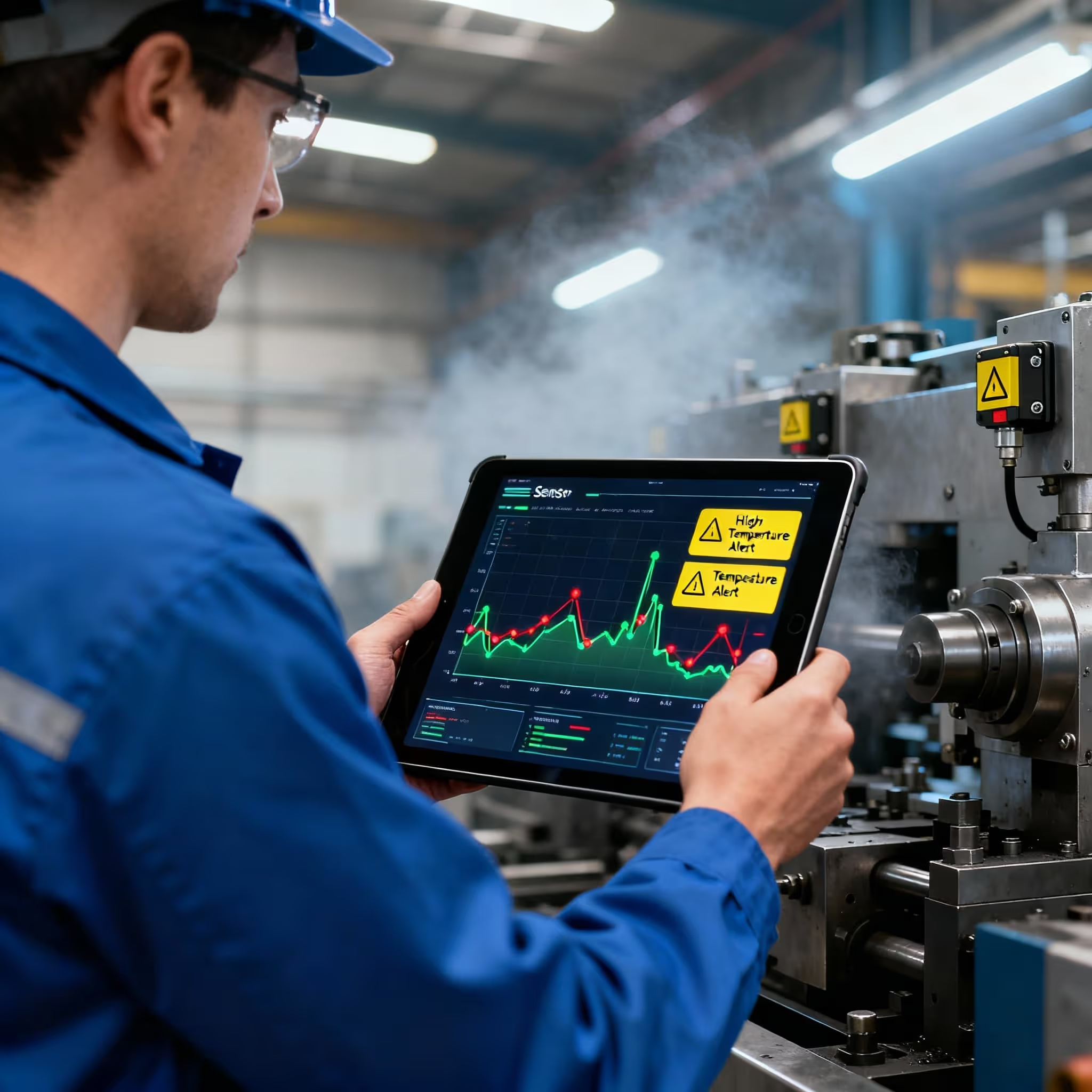
Getting predictive maintenance right isn’t just about having the latest sensors or the most powerful algorithms – it’s about execution, integration, and long-term reliability. Many projects fail not because the technology doesn’t work, but because the surrounding processes and systems aren’t ready to support it.Data quality remains one of the biggest and most underestimated challenges. Sensors can drift out of calibration, environmental conditions like temperature or vibration can distort readings, and inconsistent network coverage can cause data gaps. Even minor inaccuracies can lead to false positives or missed anomalies. To prevent this, systems need automated validation routines, redundancy in key measurement points, and ongoing calibration schedules. It’s not enough to collect data – you need to know that data is clean, consistent, and contextually accurate.Integration is another major pressure point. Predictive maintenance systems don’t operate in isolation; they sit alongside ERP, MES, and CMMS platforms that already run day-to-day operations. If integration is clumsy, the entire workflow breaks down – engineers miss alerts, data sits in silos, and decision-making slows. The key is to design open, modular architectures where APIs handle smooth data exchange between IoT layers and enterprise systems. Often this means tailoring dashboards and notification logic to match the way teams actually work, not the way the technology vendor imagines they do.Then there’s cybersecurity, which has quickly become a board-level concern. As IoT networks expand across multiple sites and devices, each new endpoint becomes a potential entry point for attackers. A predictive maintenance system is only as strong as its weakest node. Network segmentation, encrypted communication channels, device authentication, and strict access control are all essential to protect both operational continuity and sensitive data. Regular security audits and firmware updates should be part of the maintenance plan from day one – not an afterthought once the system is live.Beyond these three, there’s also a cultural challenge: getting teams to trust automated insights over traditional instincts. Maintenance engineers often rely on experience and intuition built over years on the job. Introducing predictive analytics requires a mindset shift – from reactive problem-solving to proactive prevention. That transition only sticks when leadership supports it, data proves its worth, and the tools are simple enough to use in real operational contexts.
IoT predictive maintenance marks a real shift towards data-driven operations that cut costs and risks while keeping performance high. To make it work, you need clear planning, the right technology, and a mindset of continuous improvement.Companies that get it right enjoy more reliable assets, lower maintenance spend, and stronger safety performance across the board.
Transform Your Maintenance Strategy Today
See how our IoT predictive-maintenance solutions have helped industrial clients extend asset lifecycles by 40% and cut unplanned downtime by half. Get expert guidance on how to make it work in your operation.
This initial conversation is focused on understanding your product, technical challenges, and constraints.
No sales pitch - just a practical discussion with experienced engineers.
Share a few details about your product and context. We’ll review the information and suggest the most appropriate next step.