
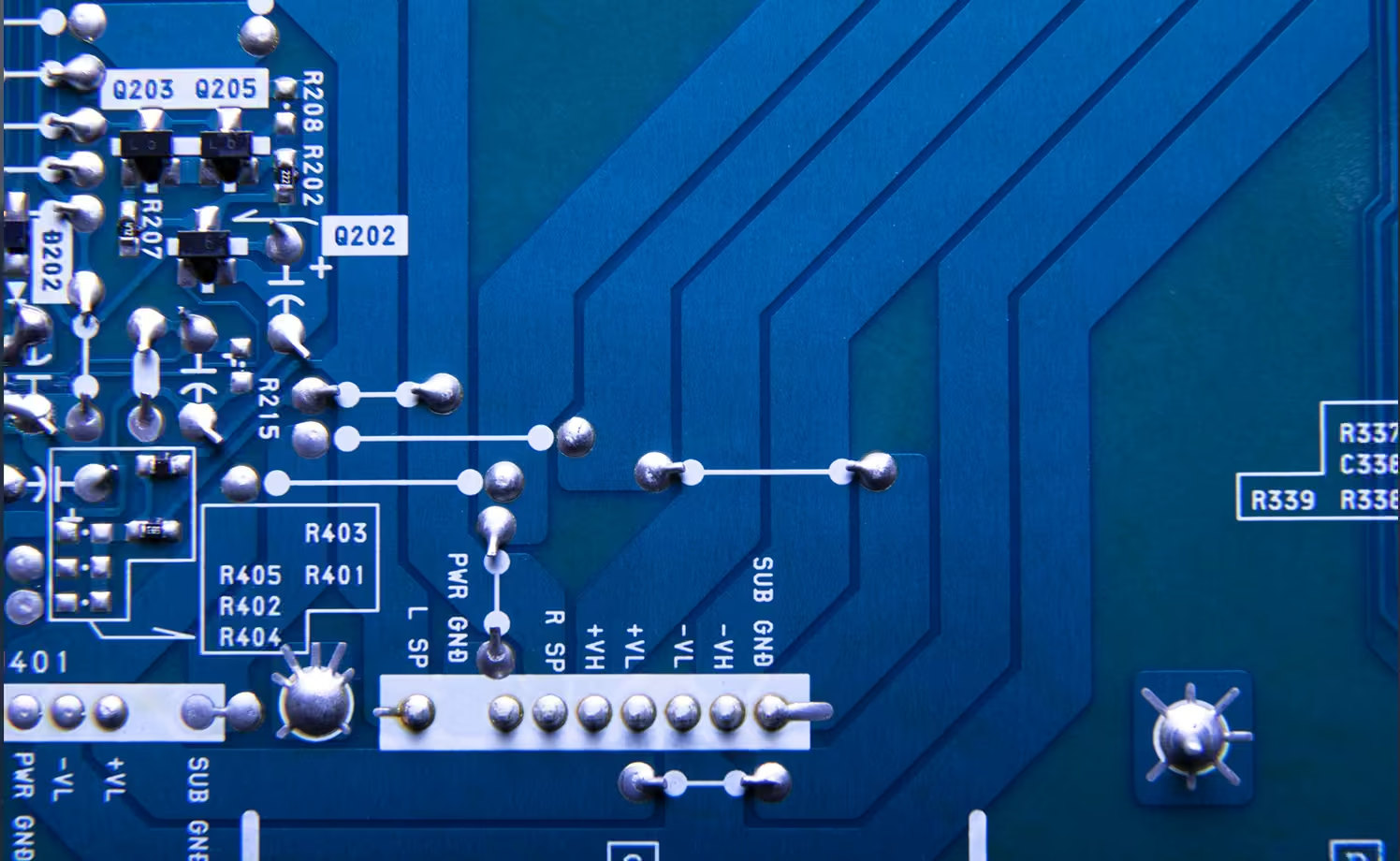
Step into the realm of InTechHouse, where sparks of innovation ignite revolutions in power electronics design. In this exclusive insight, we unveil the alchemy behind our engineers’ craft, shaping the future of electrical power systems with creativity, precision, and an unwavering commitment to sustainability.
What is Power Electronics Design?
Power electronics design is the backbone of modern electrical engineering, influencing applications from renewable energy solutions to electric vehicles and industrial automation. At InTechHouse, our dedicated team of power electronic engineers is at the forefront of crafting cutting-edge solutions that harness, control, and optimize electrical power for a sustainable and efficient tomorrow. In practice, power electronics rarely stands alone, and the same projects usually draw on hardware development services for the control boards, sensing and firmware around the power stage.
What Do Power Electronic Engineers Do?

Source: Gminsights
Precision Switching: Optimizing Performance Dynamics
In our commitment to business efficiency, power electronics engineers at InTechHouse master the precision switching of semiconductor devices. This strategic choreography of circuits optimizes performance dynamics, ensuring that every pulse aligns with the strategic objectives of our clients and stakeholders.
Control Systems Leadership: Orchestrating Operational Excellence
In the realm of power electronics, control systems are the strategic orchestrators of operational excellence. InTechHouse engineers implement sophisticated control strategies, using feedback loops and algorithms to conduct a harmonious symphony that aligns with the strategic goals of our clientele.
Thermal Management Excellence
Within our strategic approach to power electronics, thermal management in PCB design is not just a necessity but a core competency. Our engineers deploy cutting-edge thermal management techniques, ensuring that heat dissipation aligns with the strategic imperatives of system reliability and longevity.
Switching losses, gate drive layout and thermal headroom decide whether a converter survives its duty cycle. Our engineers design and validate power stages against real load profiles, not datasheet conditions.
Solve efficiency and heat problems in your power stage
Strategic Efficiency Optimization
Efficiency is the currency of business success. InTechHouse engineers continuously optimize the efficiency of power conversion, strategically minimizing energy losses to create systems that align with the sustainable goals and financial objectives of our clients.
Risk Mitigation through Safety and Reliability
At InTechHouse, we understand the strategic significance of risk mitigation. Our power electronic engineers integrate safety features and fail-safe mechanisms strategically, ensuring that our power systems are not only efficient but resilient in the face of unforeseen challenges.
Strategic Application Development
Applications are not merely functional; they are strategic assets. Our engineers craft applications strategically, from uninterruptible power supplies to electric vehicle powertrains, aligning with the diverse strategic needs of industries ranging from manufacturing to renewable energy.
Synergistic Collaboration: Strategic Integration of Expertise
Collaboration is a strategic imperative at InTechHouse. Power electronic engineers seamlessly integrate their designs with other engineering disciplines, fostering a collaborative synergy that strategically aligns with the comprehensive goals of large-scale systems and infrastructure.
What Are the Skills and Duties Required for Electronics Engineer?
An electronics design engineer is a professional who specializes in designing and developing electronic systems and components. These engineers play a crucial role in various industries, including telecommunications, consumer electronics, medical devices, automotive, and more. Their work involves designing circuits, systems, and devices that meet specific requirements and standards. Here’s an overview of what electronics design engineers do, along with the skills and duties required for the role:
Roles and Responsibilities of an Electronics Design Engineer
Circuit Design: Designing and developing electronic circuits to meet specific performance, size, and power requirements.
System Architecture: Defining the overall architecture of electronic systems, considering the integration of various components and modules.
Component Selection: Choosing appropriate electronic components such as microcontrollers, sensors, actuators, and integrated circuits based on performance, cost, and other specifications.
Prototyping: Building and testing prototypes of electronic systems to evaluate their functionality and performance.
Schematic Capture: Creating detailed schematics and circuit diagrams using design tools to guide the PCB layout process.
PCB Layout: Collaborating with PCB designers to create the physical layout of printed circuit boards (PCBs) based on the schematic design.
Programming and Firmware Development: Writing and testing code for microcontrollers and embedded systems to control the behavior of electronic devices.
Testing and Debugging: Conducting thorough testing of electronic systems to identify and troubleshoot issues, ensuring that designs meet specifications.
Compliance and Standards: Ensuring that electronic designs comply with industry standards, regulations, and safety requirements.
Collaboration: Working closely with cross-functional teams, including mechanical engineers, software engineers, and project managers, to ensure seamless integration of electronic components into larger systems.
Documentation: Creating comprehensive documentation, including design specifications, test plans, and user manuals.
Continuous Learning: Staying updated on the latest advancements in electronics and technology to incorporate innovative solutions into designs.
What about the salary?


Note: Salaries vary depending on the role, with the highest income reported in marketing/sales and general management. The median starting income in the field is $75,000, which can more than double with over 25 years of experience. But you can find talents with more reasonable rates in Poland!
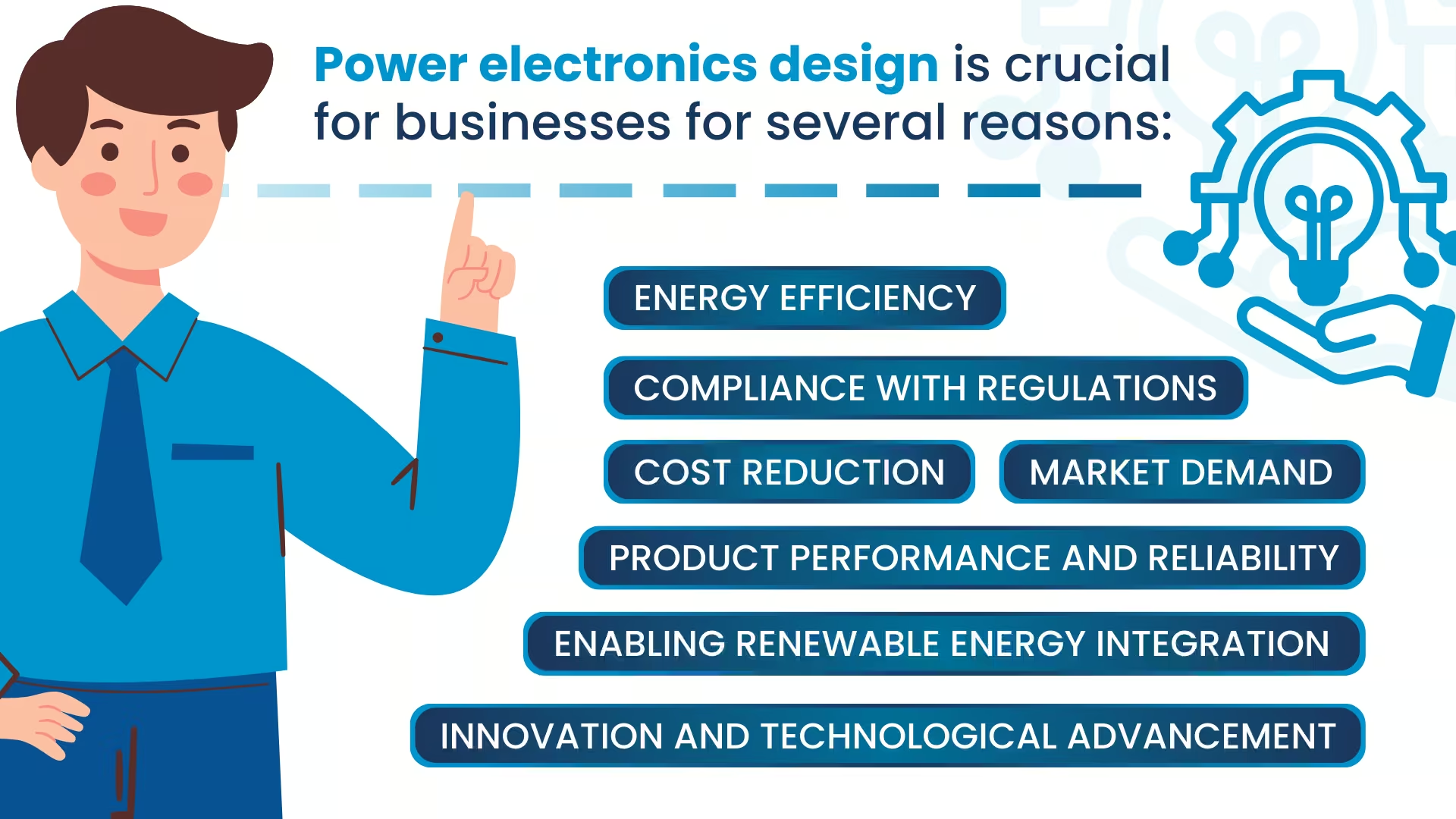
The Benefits of Power Electronics
Energy Efficiency:
- Power electronics optimizes energy usage by enabling efficient conversion, control, and distribution of electrical power.
- Devices such as inverters and converters contribute to minimizing energy losses in various applications.
Renewable Energy Integration:
- Power electronics facilitates the integration of renewable energy sources like solar and wind into the power grid.
- Solar inverters and wind converters convert DC power from solar panels or wind turbines into usable AC power.
Compact and Lightweight Designs:
- Power electronics allows for the creation of compact and lightweight electronic devices by efficiently managing power conversion processes. Achieving that compactness still depends on board-level hardware design fundamentals such as layout, thermal paths and component placement.
- Applications like laptops, smartphones, and electric vehicles benefit from the compact designs enabled by power electronics.
Motor Control in Industrial Applications:
- Power electronics govern the speed and torque of electric motors in industrial applications.
- Adjustable speed drives and motor control units optimize energy consumption in manufacturing processes.
Uninterruptible Power Supplies (UPS):
- UPS systems use power electronics to provide a seamless transition from grid power to battery backup during power outages.
- Critical systems such as data centers, hospitals, and telecommunications rely on UPS units for uninterrupted operation.
High Voltage Direct Current (HVDC) Transmission:
- Power electronics enables efficient long-distance transmission of electrical power through HVDC systems.
- HVDC technology reduces power losses in transmission lines, making it suitable for large-scale energy distribution.
Electric Vehicle Powertrains:
- Power electronics is a fundamental component in electric vehicle powertrains.
- Motor controllers and power inverters manage the flow of electricity, optimizing the performance of electric vehicles.
Consumer Electronics:
- Power electronics is prevalent in consumer electronics such as TVs, laptops, and smartphones.
- Switch-mode power supplies efficiently convert AC power from outlets into the DC power needed by these devices.
Examples of Power Electronics
Switched-Mode Power Supplies (SMPS):
- Found in various electronic devices for efficient AC to DC power conversion.
Variable Frequency Drives (VFD):
- Control the speed of electric motors, optimizing energy consumption.
Voltage Regulators:
- Stabilize and regulate voltage levels in electronic circuits.
Power Inverters:
- Convert DC power from batteries or solar panels into AC power for household appliances and grid integration.
Rectifiers:
- Convert AC power to DC power, commonly used in electronic devices and battery charging.
Do Electronics Use Ac or Dc?
AC (Alternating Current):
- AC is commonly used for power distribution in electrical grids.
- Many household outlets provide AC power, which is then converted to DC for use in electronic devices.
DC (Direct Current):
- DC is prevalent in electronic devices, as components like transistors and integrated circuits operate on DC power.
- Batteries supply DC power to portable electronic devices.
Skills Required for Electronics Engineers:
Technical Proficiency: Strong understanding of electronics, circuit theory, and analog and digital systems.
Programming Skills: Proficiency in programming languages (such as C, C++, or Python) for embedded systems and microcontroller-based applications.
CAD Tools: Experience with computer-aided design (CAD) tools for schematic capture and PCB layout (e.g., Altium, KiCad, Eagle).
Problem-Solving: Analytical and problem-solving skills to troubleshoot and resolve issues during the design and testing phases.
Communication Skills: Effective communication skills for collaborating with interdisciplinary teams and presenting design concepts.
Project Management: Ability to manage projects, set priorities, and meet deadlines within a team environment.
Understanding of Standards: Knowledge of industry standards, regulations, and compliance requirements relevant to electronic design.
Adaptability: Flexibility to adapt to evolving technologies and changing project requirements.
Testing and Measurement: Familiarity with electronic test equipment and measurement tools for validating and verifying designs.
Attention to Detail: Precision and attention to detail in design, documentation, and testing processes.
Creativity: The ability to think creatively to develop innovative solutions to design challenges.
What is Thermal Design?
Thermal design involves the planning and implementation of measures to manage and control the heat generated within electronic components and systems. It aims to prevent overheating, ensure optimal performance, and enhance the reliability and lifespan of electronic devices.
Importance: Electronic components, especially semiconductors, generate heat during operation. Excessive heat can lead to performance degradation, reduced lifespan, and even permanent damage. Thermal design is crucial in preventing these issues and maintaining the efficient operation of electronic systems.
Key Aspects of Thermal Design:
- Heat Sink Design: Choosing and designing effective heat sinks to dissipate heat from components.
- Thermal Interface Materials: Selecting appropriate materials to enhance heat transfer between components and heat sinks.
- Airflow Management: Planning for proper ventilation and airflow within electronic enclosures.
- Thermal Modeling: Using simulation tools to predict and analyze thermal behavior.
- Cooling Systems: Implementing active cooling solutions such as fans or liquid cooling when needed.
What is Power Converter?
A power converter is an electronic device that transforms electrical energy from one form to another. It is essential for adapting power to meet the specific requirements of different devices, applications, or systems.
Necessity:
- Voltage Transformation: Power converters enable the transformation of voltage levels, allowing compatibility between devices with different voltage requirements.
- DC to AC Conversion: Inverters, a type of power converter, convert direct current (DC) to alternating current (AC), essential for many applications.
- AC to DC Conversion: Rectifiers convert AC to DC, necessary for devices that require direct current power.
- Power Quality Improvement: Power converters help enhance power quality by regulating voltage and current.
Types of Power Electronic Circuits
- AC-DC Converters (Rectifiers): Convert alternating current (AC) to direct current (DC).
- DC-DC Converters: Transform one DC voltage level to another, crucial for various applications such as battery-powered devices.
- DC-AC Converters (Inverters): Convert DC to AC, essential for applications like solar inverters, motor drives, and uninterruptible power supplies (UPS).
- AC-AC Converters: Change the amplitude, frequency, or phase of AC voltage.
- Cycloconverters: Convert AC power at one frequency to AC power at another frequency.
- Resonant Converters: Utilize resonant components to achieve soft switching and improve efficiency.
- PWM (Pulse Width Modulation) Converters: Use pulse width modulation techniques to control the output voltage.
Power Electronics Design Notes
- Efficiency Optimization: Power electronics design focuses on maximizing the efficiency of energy conversion processes to minimize losses.
- Reliability and Safety: Ensuring designs incorporate features for reliability and safety is paramount.
- Integration with Control Systems: Collaboration with control system engineers is crucial for seamless integration and coordinated operation.
- Thermal Management: Effective heat dissipation strategies are essential for preventing overheating and maintaining system reliability.
- Applications Development: Power electronics engineers work on diverse applications, including motor drives, renewable energy systems, and power supplies.
Conclusion
In conclusion, “Power Electronics Design: How it Works in InTechHouse” provides a comprehensive look into the sophisticated world of power electronics, illustrating how InTechHouse harnesses this technology to offer innovative solutions. From conceptualization to implementation, InTechHouse demonstrates unparalleled expertise and a commitment to advancing the field. For those seeking expertise in power electronics design, InTechHouse stands as a leader , ready to transform challenges into successful technological innovations.
We have built converters, drives and UPS-class supplies for industrial and mobility clients, including control loops, protection and pre-compliance work. Ask us how we would run your build.
Let's talk about your next move
Not sure where to start? We work with companies at every stage, from early ideas to enterprise-level builds. A 30-minute call can save you months of guesswork.
FAQ
What does power electronics design involve?
Power electronics design is the engineering of circuits that convert and control electrical energy using semiconductor switches, such as DC-DC converters, inverters, motor drives and battery chargers. It involves choosing a topology (buck, boost, flyback, LLC and others), sizing switches and magnetics, designing the control loop and gate drive, and managing losses, heat and EMI. Safety isolation, protection against overcurrent and overvoltage, and validation across line, load and temperature complete the design.
How do SiC and GaN transistors compare with silicon MOSFETs?
Silicon carbide (SiC) and gallium nitride (GaN) are wide-bandgap semiconductors that switch faster and with lower losses than silicon MOSFETs. SiC suits high-voltage, high-power designs such as EV traction inverters, onboard chargers and solar inverters, typically rated from 650 V to 1200 V and above. GaN excels at lower voltages, commonly up to 650 V, and high switching frequencies, enabling compact chargers and power supplies. Both need careful gate drive and layout, because fast edges amplify parasitic inductance and EMI.
How is the switching frequency of a power converter chosen?
The switching frequency of a power converter is a trade-off between component size and losses. A higher frequency shrinks inductors, transformers and capacitors, but increases switching and gate drive losses and pushes more energy into higher EMI bands. Designers also place the frequency with EMC limits in mind; some choose a fundamental just below 150 kHz, where CISPR conducted emission limits begin. Spread-spectrum frequency modulation is another way to lower the peak emissions measured by the receiver.
Which safety standards affect power supply and converter design?
Power supply and converter design is shaped mainly by the safety standard of the end product, such as IEC 62368-1 for audio, video and IT equipment, IEC 61010-1 for measurement and laboratory equipment, or IEC 60601-1 for medical devices. These standards define insulation levels, creepage and clearance distances, touch current limits and single-fault tests. Isolation requirements affect transformer construction, the choice of optocouplers or digital isolators, and PCB spacing, so they must be known before layout begins.
How is thermal design validated in a power electronics stage?
Thermal design in a power electronics stage is validated by comparing calculated losses with measured temperatures under worst-case conditions. Engineers estimate conduction and switching losses, derive junction temperature from datasheet thermal resistances and heat sink performance, then verify on hardware with thermocouples or a thermal camera at maximum load and maximum ambient temperature. The remaining margin to the rated maximum junction temperature in the datasheet drives derating decisions, heat sink sizing and, if needed, a change of device.

Robert Obiała
Robert Obiała is a Senior Embedded Systems and Hardware Engineer at InTechHouse with over 12 years of hands-on experience in electronic product development. He specializes in embedded hardware design, multilayer PCB development, firmware engineering, EMC compliance, system integration, and troubleshooting complex electronic devices.
Robert works across the complete product development lifecycle - from system architecture and component selection through schematic and PCB design, embedded software development, prototyping, testing, pre-compliance validation, and preparation for production.
His project experience includes FPGA-based onboard computers for the space industry, low-power IoT and telemetry devices, industrial data acquisition systems, UAV payload electronics, power electronics, and embedded hardware and software for advanced optical equipment. He has designed systems based on STM32, ESP32, AVR, ARM, and AMD Xilinx Zynq platforms, using C, C++, Embedded Linux, and communication technologies including Ethernet, CAN, RS-485, SPI, I2C, UART, Wi-Fi, BLE, MQTT, and LTE-M.
Robert holds an Engineer's Degree in Electronics and Telecommunications and has completed specialist training in EMC-aware electronics design. He writes about practical hardware development, embedded systems, PCB design, firmware engineering, EMC testing, FPGA-based architectures, and bringing reliable electronic products from concept to production.
Let's talk about your next project
From first prototype to production, our engineers can help you scope it, build it and get it certified.
Discuss your product with our R&D team
This initial conversation is focused on understanding your product, technical challenges, and constraints.
No sales pitch - just a practical discussion with experienced engineers.
Share a few details about your product and context. We’ll review the information and suggest the most appropriate next step.