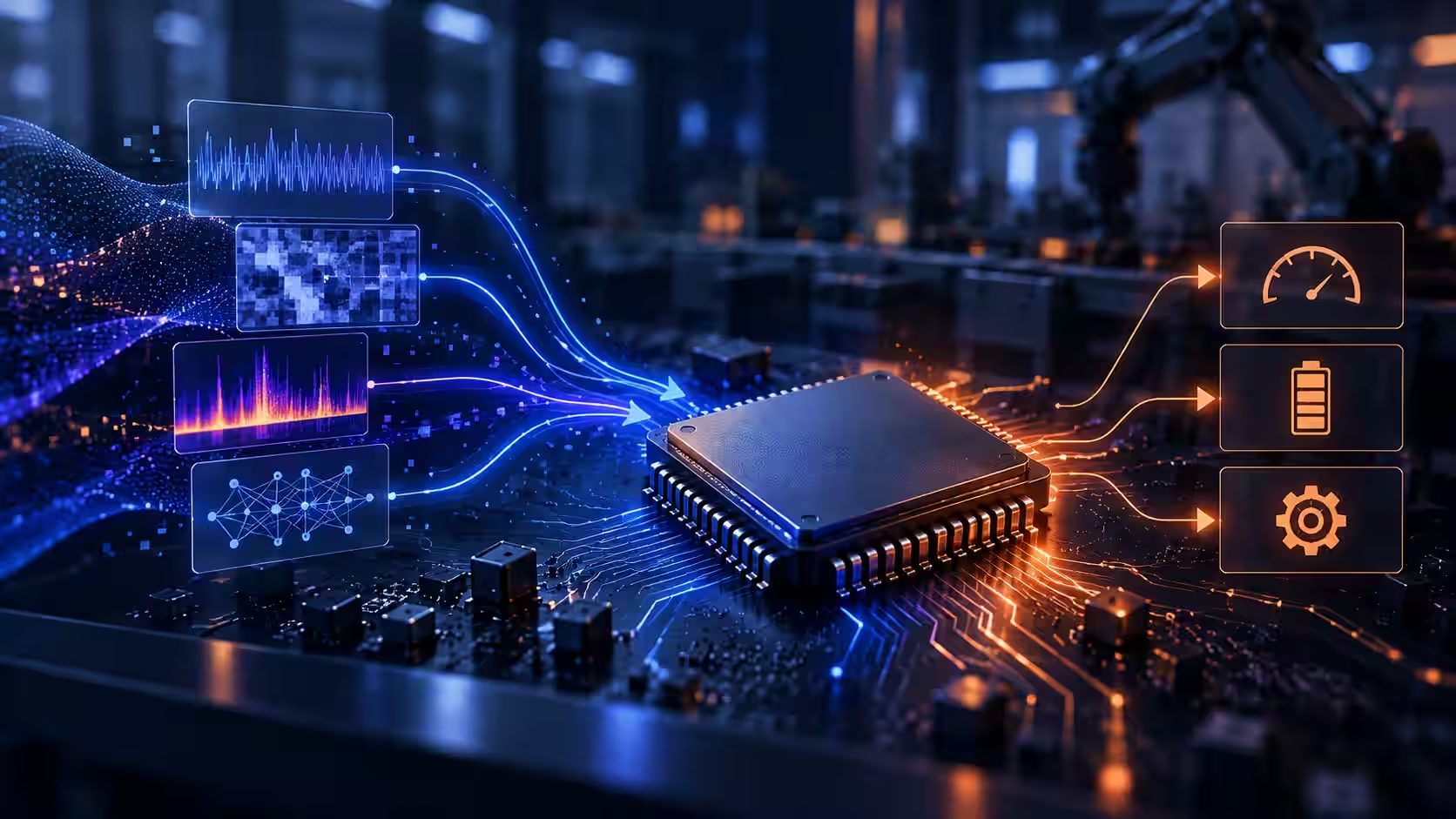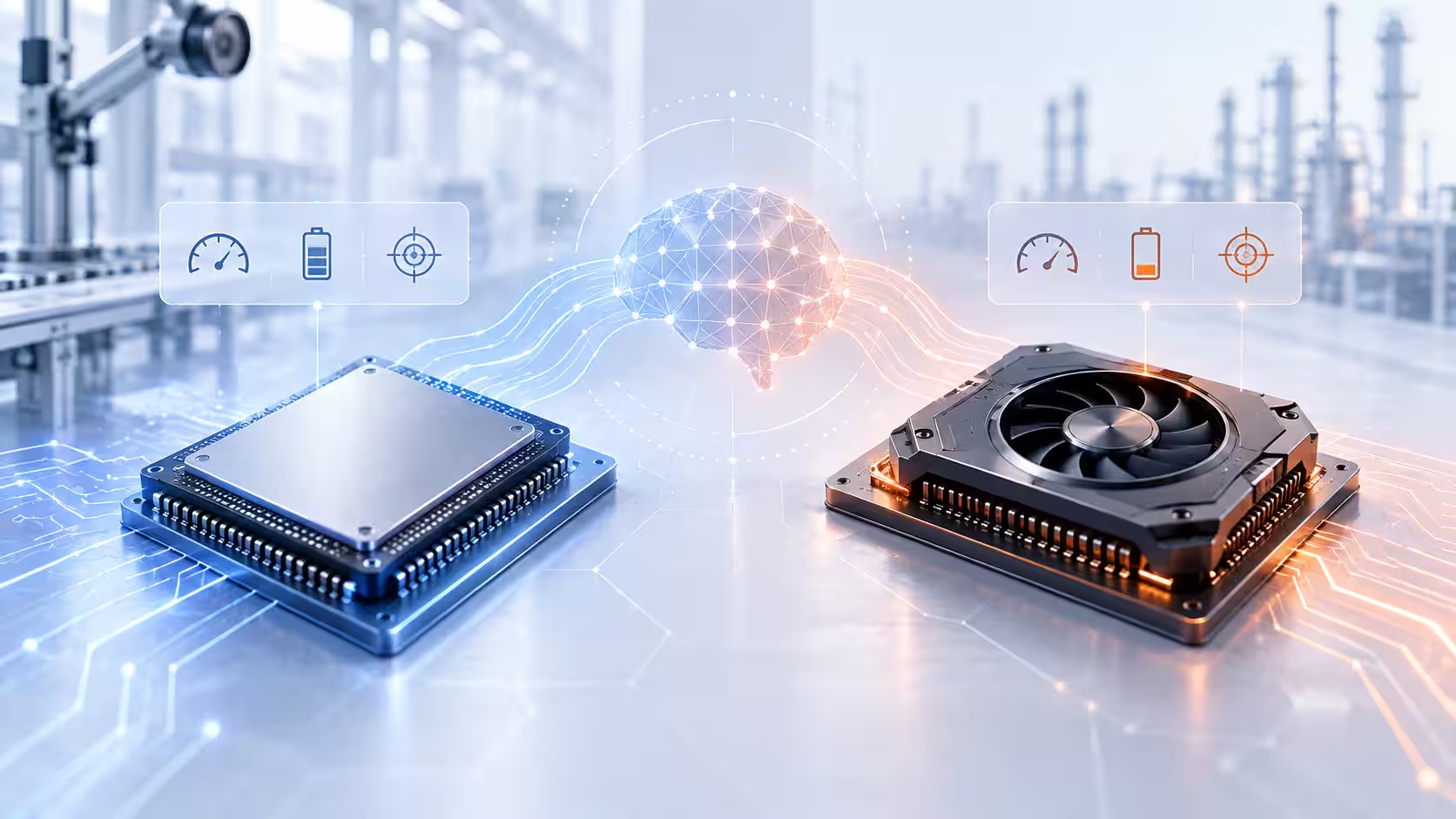
Although embedded systems' capabilities grow every year, few users realize how significant power management strategies is in their design. This is where the real challenge lies: how to make a device operate longer without compromising functionality. Contrary to popular belief, it's not just about the batteries but also how the system communicates, processes data, and utilizes available resources. As highlighted in the report by Silicon Laboratories,
"optimizing embedded systems for low power consumption requires developers to find a balance between performance and power usage"
If you're wondering how energy reduction impacts modern technologies and why it’s more important than it might seem, this article will clear up your doubts. We present six practical methods to help designers create more efficient and energy-saving devices.
Code optimization is a crucial factor that can significantly reduce power consumption in embedded systems by minimizing processor workload and improving overall execution efficiency. Every improvement in this area translates directly to shorter processor runtime and fewer operations. By selecting resource-efficient algorithms, such as Dijkstra's algorithm, Huffman Coding, or LZ77, you can significantly reduce the number of clock cycles required to complete tasks, conserving energy with each operation.
I/O operations, often one of the most power usage - intensive processes, should be minimized whenever possible to conserve energy. For instance, using interrupts instead of polling reduces the processor's active time and ensures it only activates when necessary. During compilation, optimization flags such as -O2 or -O3 in GCC can automatically refine the code, improving execution optimization and conserving power.
Thoughtful selection of data structures contributes remarkably to energy savings by minimizing memory usage and reducing reliance on costly operations such as dynamic allocation. Eliminating unnecessary loops, conditions, and dead code simplifies the program and reduces the processor's workload. Finally, profiling the code to identify its most energy-intensive sections enables targeted optimizations, resulting in a leaner and more energy-efficient system.
Power-saving performance in embedded systems starts with thoughtful hardware design. From energy-efficient microcontrollers to optimized PCB layouts and thermal management in PCB design, every decision in the design process contributes to building systems that are both powerful and sustainable. What InTechHouse advises?
Read more about hardware product development process.
Accessing RAM and Flash memory is often one of the most energy-intensive operations in embedded systems. Reducing the frequency of access to these memory types lowers energy consumption, as both read and write operations require considerably more power than accessing processor registers. Cache memory plays a pivotal role here, as it reduces both latency and the number of energy-intensive external memory accesses.
What's more, avoiding dynamic memory allocation during runtime not only reduces energy consumption but also mitigates risks of memory fragmentation. Careful design of data structures is equally important. Smaller, well-optimized structures reduce storage requirements and minimize the processing workload. This approach goes hand in hand with data compression, by reducing the size of stored information, it also decreases the number of power-intensive input/output (I/O) operations, ultimately extending the device's operational time while maintaining low power consumption.
For devices requiring data retention after power loss, low-power non-volatile memory like FRAM (Ferroelectric RAM) offers an excellent solution. However, simply using the right type of memory is just the beginning - the key lies in regular system profiling, which helps identify the most energy-intensive operations, such as frequent manipulation of large buffers. This enables the implementation of effective optimizations that not only reduce power consumption but also enhance the overall performance of the device.
If your battery life target is missed by 30 percent, the cause is usually split between sleep modes, regulator choice and peripheral duty cycles. We measure the real current profile and show where the milliamps go.
Get a power budget review for your device
Designing circuits in embedded systems is a process where every decision can impact the energy consumption of the entire device. To start, it's important to focus on the resistance of PCB traces, ensuring appropriate width and thickness, especially in power supply sections, helps minimize energy losses. Shorter power supply traces not only reduce these losses but also improve the efficiency of the circuit. A helpful tip? Place decoupling capacitors near integrated circuits to stabilize voltage, which helps limit transient spikes in energy demand. Proper grounding and avoiding interference loops further enhance energy efficiency by eliminating losses caused by electromagnetic disturbances.Instead of traditional linear regulators, high-efficiency DC-DC converters can significantly reduce heat-related energy losses, making them a more effective choice.
Additionally, their flexibility in adjusting the output voltage allows for better alignment with the requirements of powered components, further optimizing energy consumption in the system.Moreover, it's worth mentioning that incorporating technologies like power management units or smart transistor switches allows for intelligent control of energy flow within the device. Eventually, testing prototypes ensures that the circuit’s efficiency is validated in practice, allowing for adjustments before full production, leading to a more energy-efficient final product.
If you are interested in this topic, we encourage you to read the article on PCB design software for modern electronics development. Circuit-level savings only hold when the code cooperates, so sleep modes and clock gating are planned during embedded firmware development rather than added after layout.
A proper approach to designing and optimizing components can significantly reduce the energy burden on the entire system. Here are some of our proven tips:
Power management in embedded systems is all about delivering energy where it’s needed while avoiding unnecessary waste. A key strategy is dynamic voltage and frequency scaling (DVFS), which adjusts the processor's performance to match the current workload, helping to save energy when full power isn’t required. It enables more precise allocation of energy resources based on system priorities. Implementing DVFS in embedded systems allows for energy savings of up to 20% with minimal impact on system performance.
Beyond that, power controllers enable precise control over individual components, allowing unused modules to be powered down in real time. To streamline this process, systems often rely on Power Management Integrated Circuits (PMICs), which centralize control and optimize energy distribution across the device. Efficient voltage regulators also play a crucial role, reducing heat losses and enabling efficient utilization and delivery of energy harvested particularly in battery-powered systems.
Battery monitoring systems take this a step further by predicting energy usage and adapting system operation to maximize runtime. This is especially critical in devices utilizing multiple power sources such as solar panels and batteries. Through intelligent switching between energy sources, these systems ensure efficient and sustainable energy management, optimizing usage based on the availability of each resource. In conclusion, ongoing profiling of the system’s energy consumption helps identify areas where improvements can be made, ensuring that the system remains as efficient as possible under different operating conditions.
Read more about challenges in embedded system design.
InTechHouse has been successfully creating embedded systems for years. This time, we are proud to present our energy-efficient system developed as part of the helipad lighting control and monitoring project, designed to ensure the safe landing of helicopters. This project was based on advanced embedded technology, utilizing several key solutions that enabled energy savings and operational efficiency:
With this solution, InTechHouse has not only improved energy efficiency but also contributed to sustainable development and reduced operational costs.
The future belongs to technologies that work smarter, not just faster. Energy efficiency in embedded systems goes beyond being a technical aspect of design - it’s a philosophy of creating devices that are more efficient, durable, and environmentally friendly. No matter how small, each optimization contributes to building systems that are better for users and more sustainable. In a world where the number of embedded devices is growing at an unprecedented rate, a responsible approach to energy management is not just a necessity - it’s an obligation.
InTechHouse is a team of experienced specialists who combine advanced technological expertise with a passion for creating innovative solutions. If you’re looking for a partner to help you design efficient and energy-saving embedded systems, execute an IoT project, or implement modern technologies in your business, InTechHouse is the ideal choice. We invite everyone interested to take advantage of a free consultation.
Our hardware team designs power stages, sleep architectures and sensor subsystems for industrial and medical devices that have to run for years on limited energy. Design decisions are verified on the bench, not assumed.
See how we design low power hardware from schematic to production
Not sure where to start? We work with companies at every stage, from early ideas to enterprise-level builds. A 30-minute call can save you months of guesswork.
DVFS adjusts the processor's performance to current needs by reducing voltage and frequency during periods of lower workload. This significantly lowers energy consumption, as the power the processor uses is proportional to the square of the voltage.
Absolutely. Low-power microcontrollers, such as the ARM Cortex-M0+ or STM32L series, offer advanced energy-saving modes that greatly reduce power consumption while maintaining performance.
Well-designed PCB traces with low resistance and appropriate width minimize power consumption and energy losses in the circuit. Shorter power traces and careful component placement improve the system's overall power efficiency.
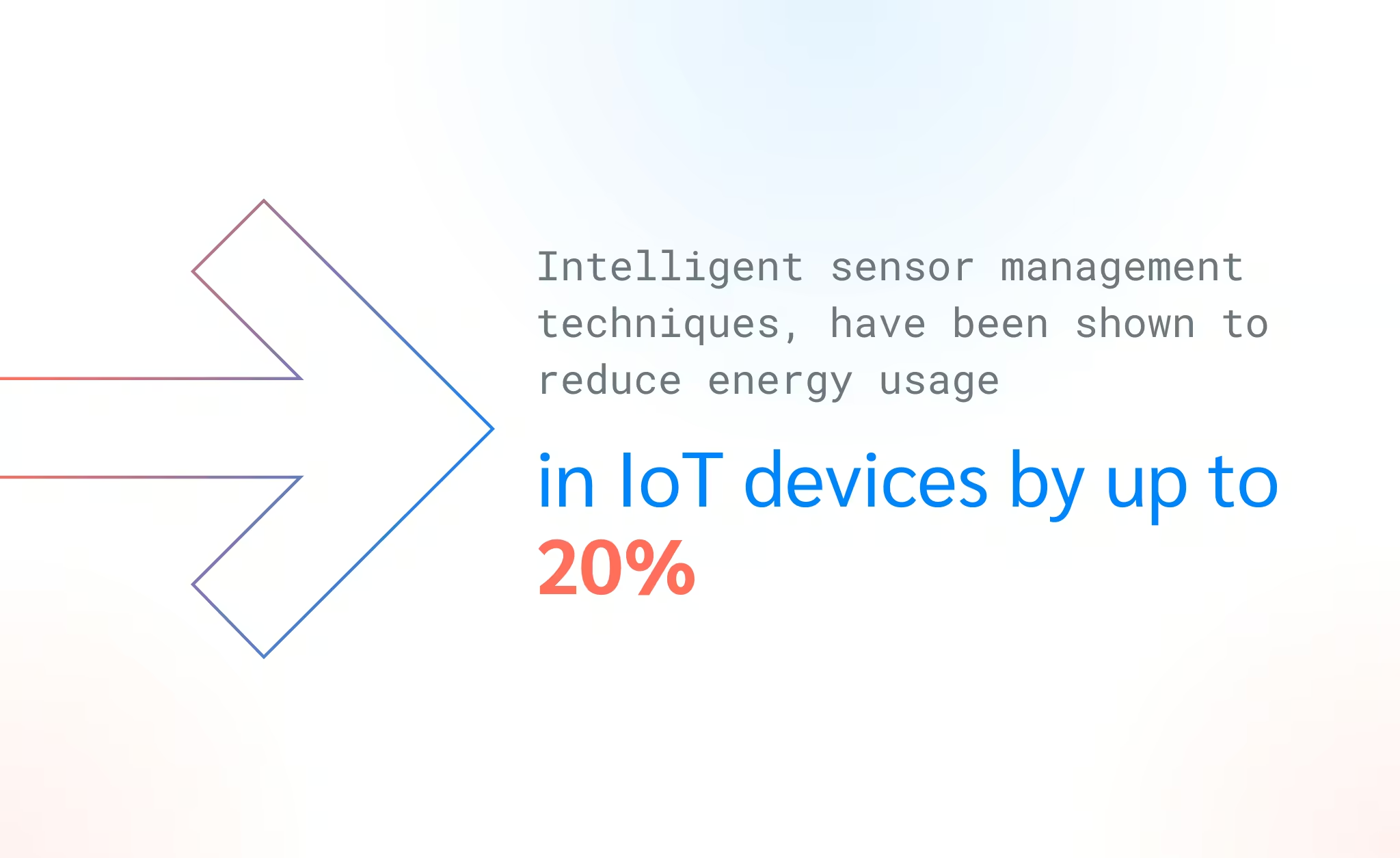
Not necessarily. Many techniques, such as DVFS, intelligent sensor management, and the use of more efficient components, allow energy savings without compromising performance. The key is to find a balance between energy efficiency and the system’s requirements.
Krzysztof Niedźwiedź is a Lead Embedded Systems and Hardware Engineer at InTechHouse with over 11 years of experience developing complex electronic and embedded products from system architecture through production.
He specializes in embedded software development, electronic system architecture, multilayer PCB design, hardware-software integration, system testing, and technical ownership of high-reliability engineering projects. His work spans requirements analysis, architecture and component selection, schematic and PCB design, bare-metal and RTOS firmware development, prototyping, troubleshooting, production documentation, and cooperation with mechanical and high-level software teams.
Krzysztof's project experience includes FPGA and SoC-based onboard computers for the space industry, embedded electronics for advanced optical equipment, low-power environmental-monitoring devices, UAV payloads for real-time air-quality measurement and sample collection, and connected medical and training devices.
He works with C and C++, STM32, LPC and AVR microcontrollers, ARM-based platforms, RTOS, Embedded Linux, FPGA and SoC architectures, DDR3, HDI PCB technology, and industrial communication interfaces including Ethernet, CAN, RS-485, SPI, I2C, UART, USB, Modbus, and MQTT.
Krzysztof holds bachelor's and master's degrees in Electronics and Telecommunications. He is an IPC Certified Interconnect Designer and has completed specialist training in Embedded GNU/Linux kernel internals and device drivers. He writes about embedded system architecture, firmware development, PCB design, MCU and FPGA integration, RTOS, hardware security, low-power electronics, and dependable electronic products.
From first prototype to production, our engineers can help you scope it, build it and get it certified.
This initial conversation is focused on understanding your product, technical challenges, and constraints.
No sales pitch - just a practical discussion with experienced engineers.
Share a few details about your product and context. We’ll review the information and suggest the most appropriate next step.